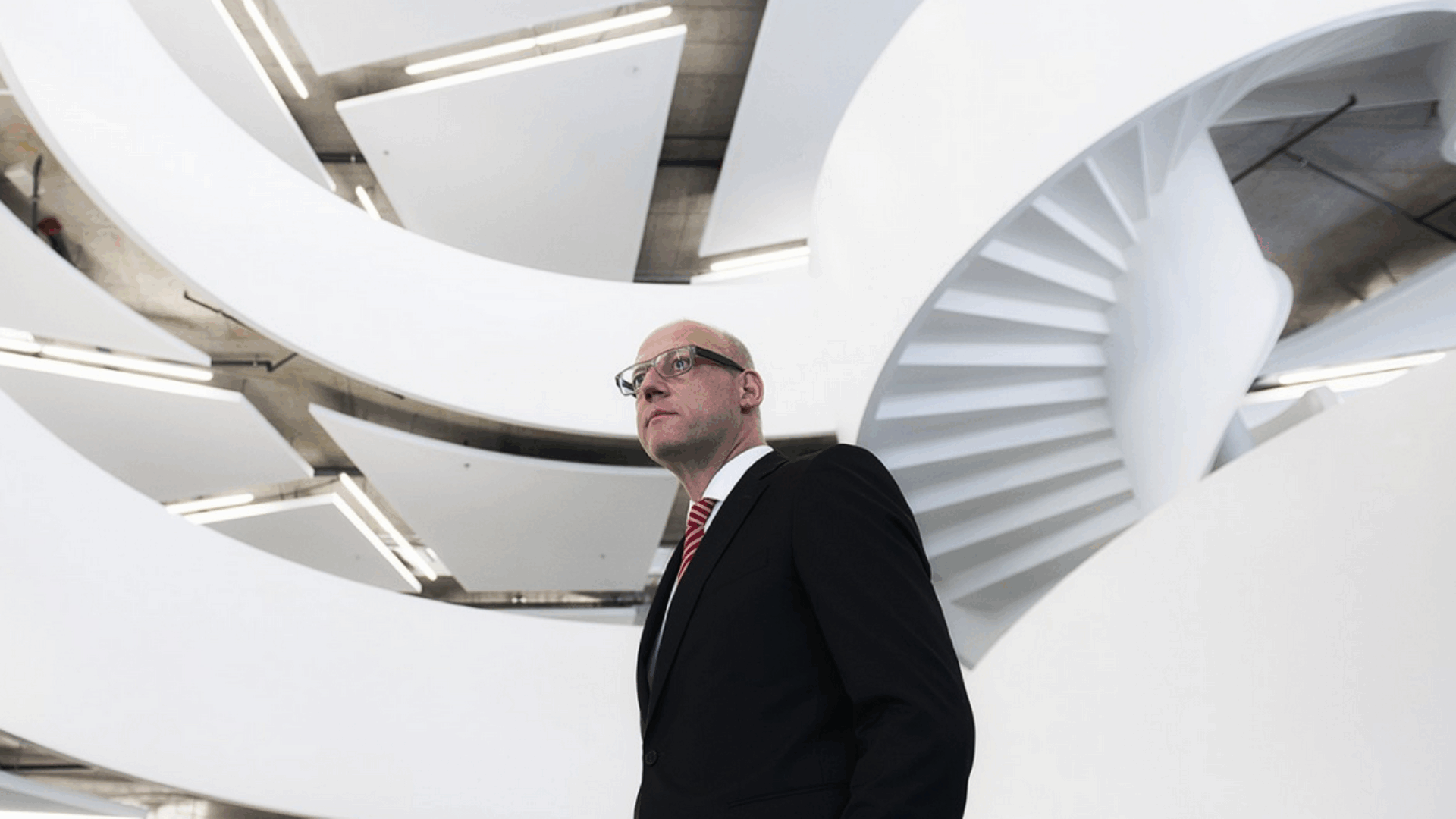
The online event „Artificial Intelligence & Animals“ will take place on 16 September 2023. „AI experts and attorneys will discuss the intersection of AI and animals in this UIA Animal Law Commission and GW Animal Law webinar“ (Website Eventbrite) Speakers are Prof. Dr. Oliver Bendel (FHNW University of Applied Sciences and Arts Northwestern Switzerland), Yip Fai Tse (University Center for Human Values, Center for Information Technology Policy, Princeton University), and Sam Tucker (CEO VegCatalyst, AI-Powered Marketing, Melbourne). Panelists are Ian McDougall (Executive Vice President and General Counsel, LexisNexis London), Jamie McLaughlin (Animal Law Commission Vice President, UIA), and Joan Schaffner (Associate Professor of Law, George Washington University). Oliver Bendel „has been thinking on animal ethics since the 1980s and on information and machine ethics since the 1990s“. „Since 2012, he has been systematically researching machine ethics, combining it with animal ethics and animal welfare. With his changing teams, he develops animal-friendly robots and AI systems.“ (Website Eventbrite) Yip Fai Tse co-wrote the article „AI ethics: the case for including animals“ with Peter Singer. Sam Tucker is an animal rights activist.
The idea of a Babel Fish comes from the legendary novel or series of novels „The Hitchhiker’s Guide to the Galaxy“. Douglas Adams alluded to the Tower of Babel. In 1997, Yahoo launched a web service for the automatic translation of texts under this name. Various attempts to implement the Babel Fish in hardware and software followed. Meta’s SeamlessM4T software can handle almost a hundred languages. In a blog post, the American company refers to the work of Douglas Adams. „M4T“ stands for „Massively Multilingual and Multimodal Machine Translation“. Again, it is a language model that makes spectacular things possible. It has been trained on four million hours of raw audio. A demo is available at seamless.metademolab.com/demo. The first step is to record a sentence. The sentence is displayed as text. Then select the language you want to translate into, for example Japanese. The sentence is displayed again in text form and, if desired, in spoken language. A synthetic voice is used. You can also use your own voice, but this is not yet integrated into the application. A paper by Meta AI and UC Berkeley can be downloaded here.
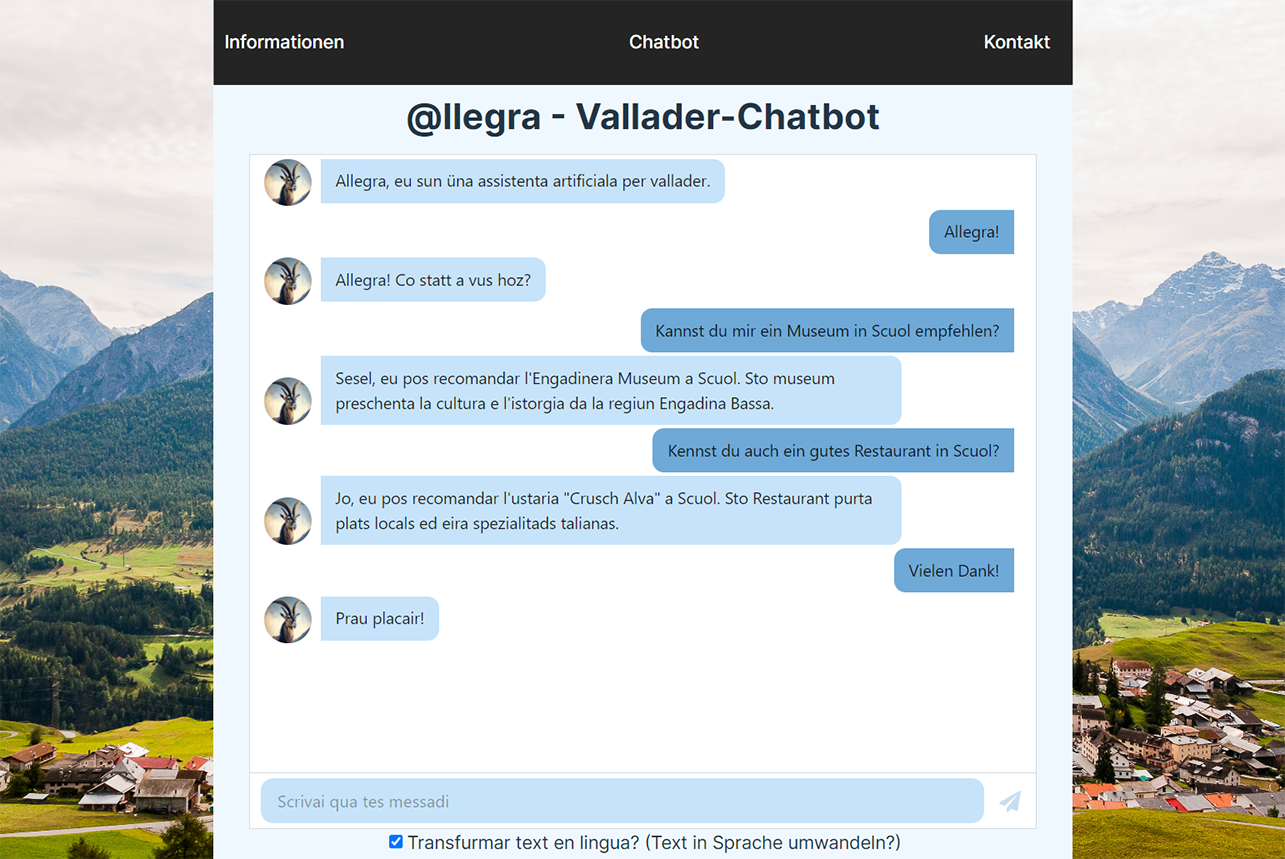
Vom 1. März bis 11. August 2023 erstellte Dali Jabou im Rahmen seiner Bachelorarbeit den Chatbot @llegra, mit dem man im rätoromanischen Idiom Vallader kommunizieren kann. Es handelt sich um ein von Prof. Dr. Oliver Bendel initiiertes und finanziertes Low-Budget-Projekt, für das bisher ca. 300 CHF ausgegeben wurden. Die Ausgangsfrage ist, ob sich Sprachmodelle wie GPT für den Bau von Chatbots eignen, die tote, gefährdete oder ausgestorbene Sprachen beherrschen, und ob sie für die Spracherhaltung taugen (etwa im Rahmen des Unterrichts). Mit @llegra entstand ein Chatbot mit Sprachausgabe, der die Stärken und Schwächen von GPT-4 widerspiegelt. Er verfügt über Weltwissen und gibt mehrheitlich korrekt Auskunft, auch zu Einrichtungen im Unterengadin. Manchmal halluziniert er und erfindet Personen oder Werke – ein bekanntes Problem von Sprachmodellen, an dem die Entwickler bei OpenAI, Microsoft, Google und Co. arbeiten. Ein weiteres Problem ist, dass er manchmal vom Idiom abweicht und sich in Sursilvan und Rumantsch Grischun verirrt. Er wird sich weiter verbessern lassen, sobald man GPT-4 (wie im Falle von GPT-3) direkt mit Sprachmaterial trainieren kann – was noch nicht der Fall ist (eine Wissensdatenbank, angereichert mit Vallader-Kinderbüchern, zur Verfügung gestellt von der Lia Rumantscha, war aber hilfreich). Die Text-to-Speech-Engine für Vallader, die von SlowSoft kostenlos zur Verfügung gestellt wurde, erfüllt ihren Zweck. Man darf sie nicht mit einer professionellen Lösung verwechseln, wie sie heute mit Hilfe von Machine Learning möglich wäre. Der Chatbot stand auf allegra-bot.ch zur Verfügung, damit eingeladene Tester unkompliziert darauf zugreifen und auch Versuche im Feld (etwa direkt im Unterengadin) stattfinden konnten. Nachdem mehrere Medien über den Chatbot berichtet und den Link verbreitet hatten, nahmen die Zugriffe stark zu. Um die Kosten nicht zu stark anwachsen zu lassen und deutlich zu machen, dass es sich um ein wissenschaftliches Projekt und eine unfertige Vorstufe – einen Prototyp – handelt, nicht um einen öffentlichen Dienst und nicht um ein fertiges Produkt, wurde der Chatbot mit einer entsprechenden Information auf der Seite am 11. August vorerst stillgelegt. Er wird intern weiter getestet und verbessert, bis er Ende des Jahres (sofern die Annahme erfolgt) auf einer internationalen Konferenz vorgestellt wird. Im Rahmen der Begutachtung findet eine Freischaltung von September bis Dezember statt. Oliver Bendel wünscht sich, dass weitere Entwickler den Ansatz aufgreifen und irgendwann eine @llegra entsteht, die im Unterricht eingesetzt werden kann. Dafür müssten Unternehmen die Sache in die Hand nehmen, oder es müsste ein finanziertes Forschungs- und Entwicklungsprojekt aufgelegt werden. In letzterer Richtung unternimmt die FH Graubünden, mit der man in Kontakt ist, seit einiger Zeit Anstrengungen. Bei der Abschlusspräsentation der Bachelorarbeit am 11. August waren neben einer Vertreterin dieser Hochschule auch zwei Vertreter der Lia Rumantscha zugegen, die sich beeindruckt zeigten und wohlwollend äußerten. @llegra hat eine Zukunft – wenn man dies im rätoromanischen Sprachraum will.
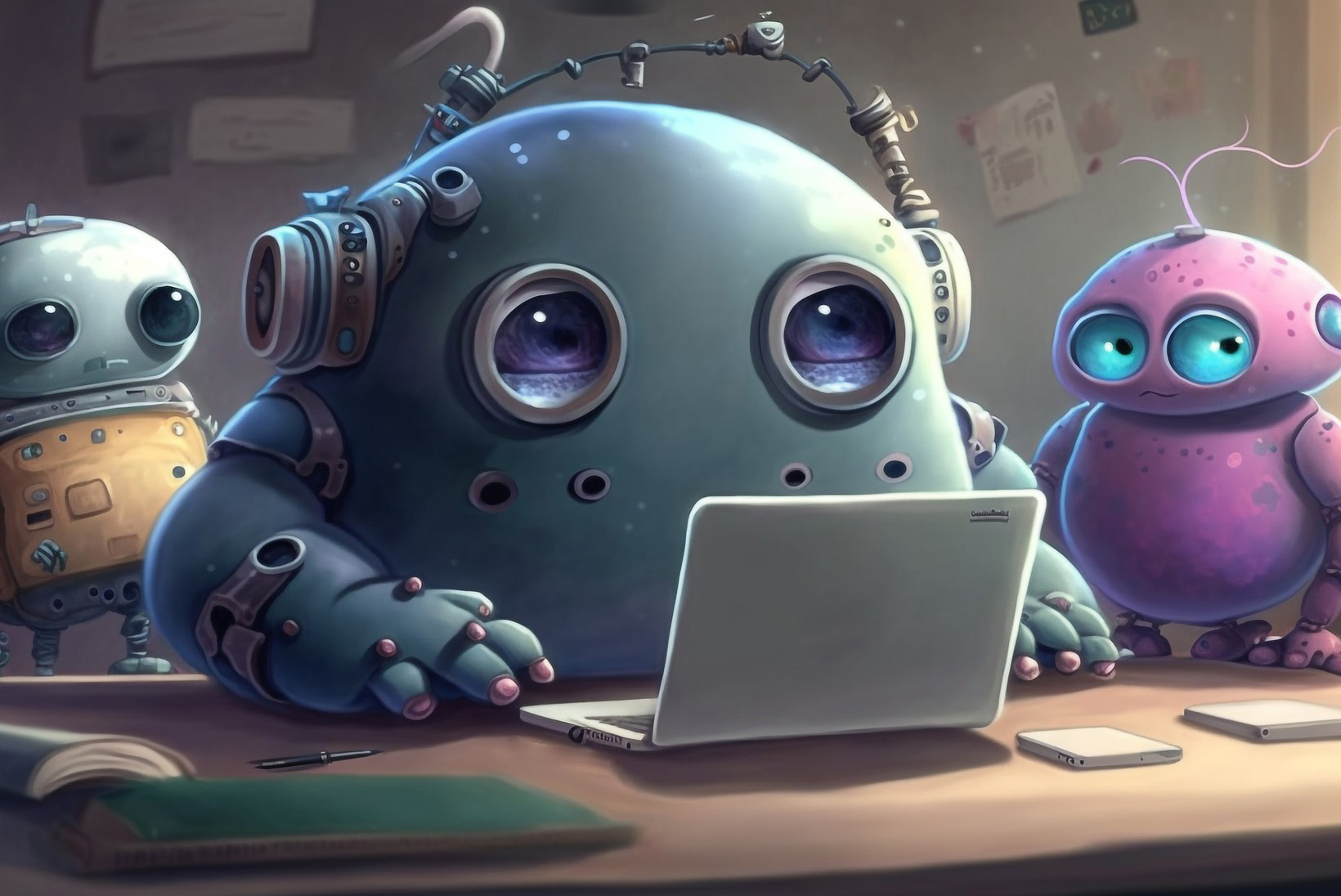
Abb.: So stellen sich Bildgeneratoren Chatbots vor
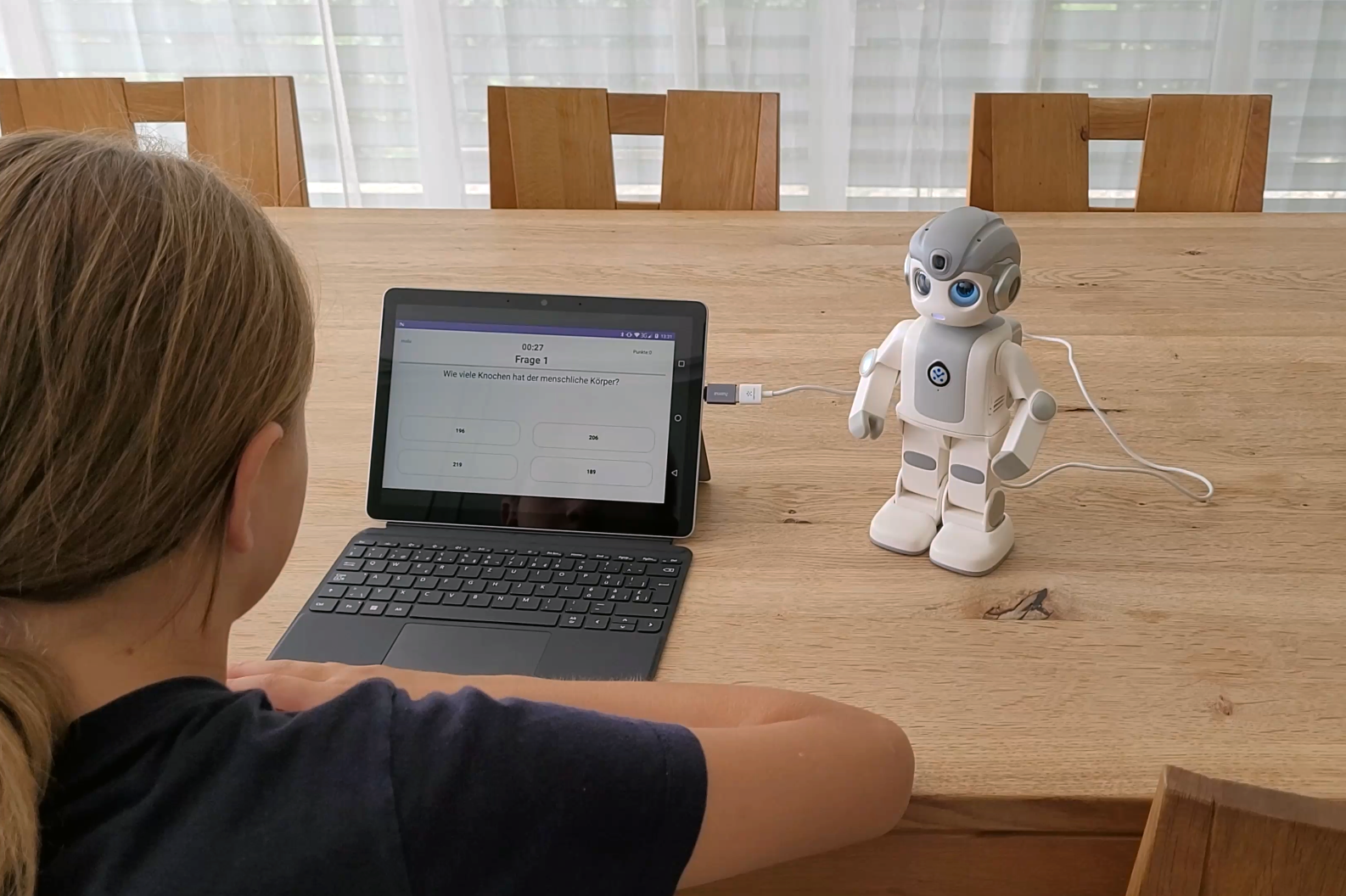
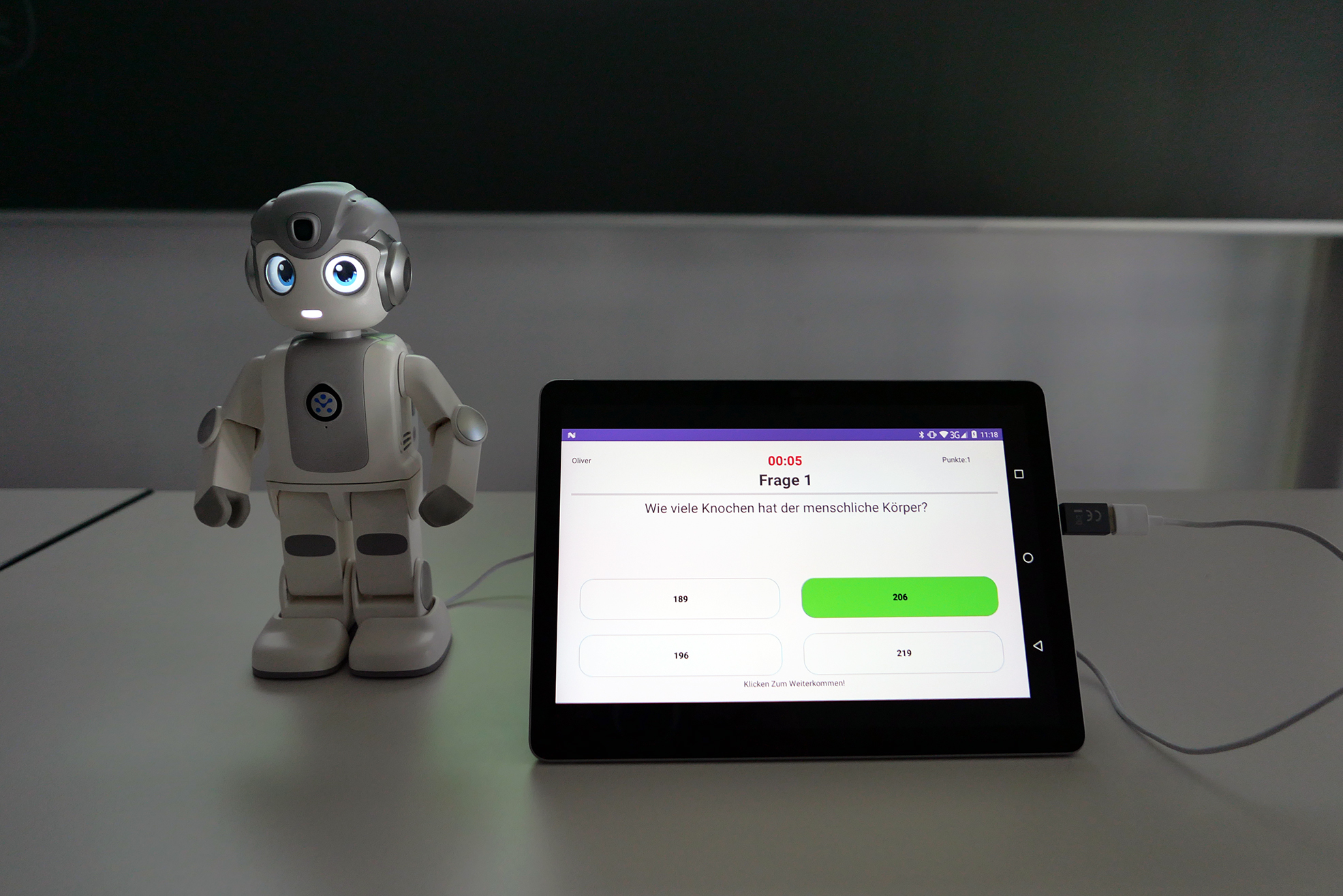
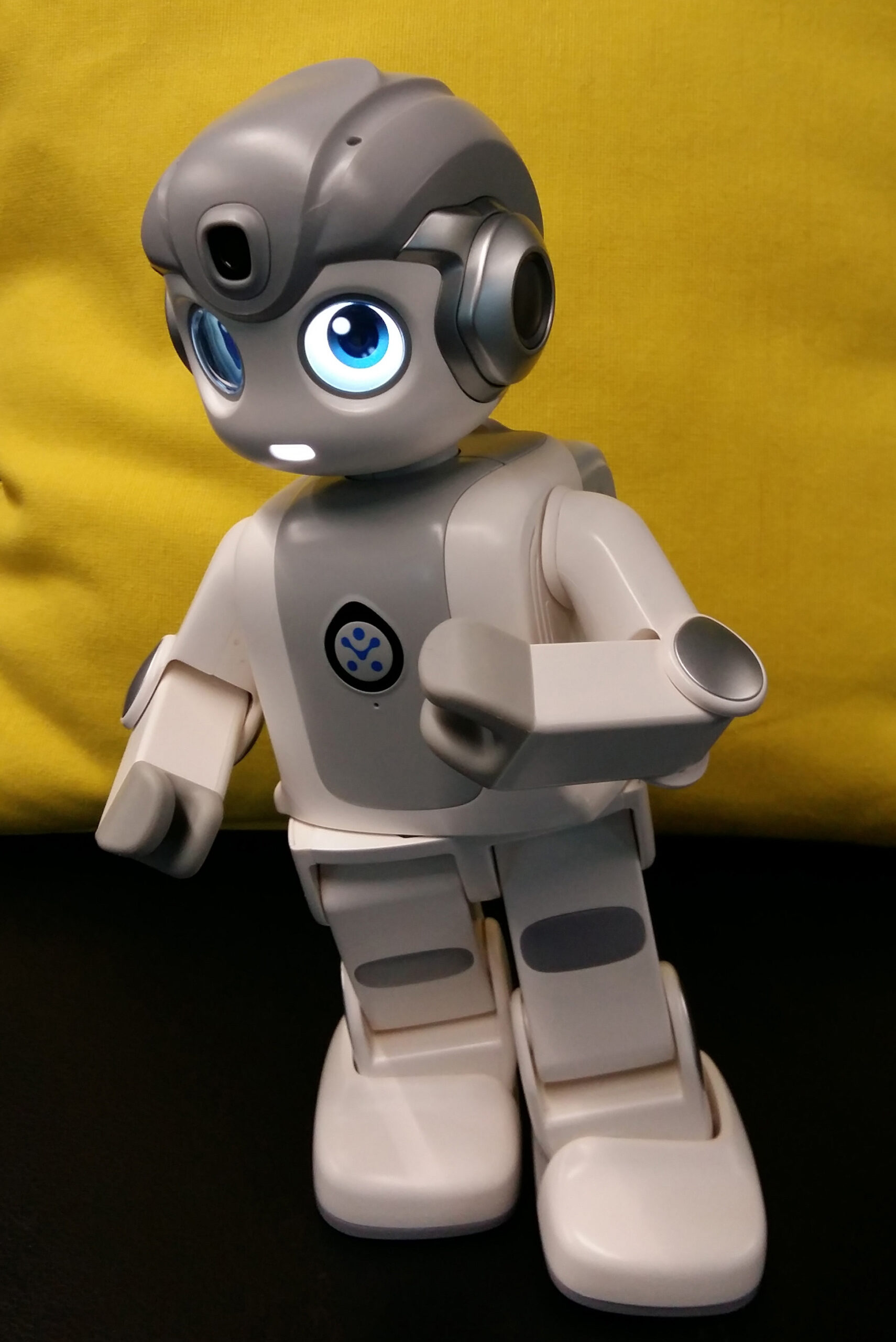
Soziale Roboter wie NAO und Pepper werden im Unterricht von Schulen und Universitäten eingesetzt. NAO ist sehr wendig und gelenkig und daher unterhaltsam. Pepper hat den großen Vorteil, dass er ein integriertes Tablet im Brustbereich hat, auf dem Lernsoftware aller Art ausgeführt werden kann. Ein Nachteil bei beiden ist der hohe Preis. Vor allem Schulen können sich solche Roboter kaum leisten. Dieses Problem war der Ausgangspunkt für das hier beschriebene Projekt, das ab Februar 2023 an der Hochschule für Wirtschaft FHNW stattfand. Initiator und Betreuer war Prof. Dr. Oliver Bendel, Entwickler Andrin Allemann. Ziel war es, eine Lernanwendung mit einem kostengünstigen sozialen Roboter zu erstellen, der über die gleichen motorischen Fähigkeiten wie NAO und die gleichen Fähigkeiten zur Wissensvermittlung wie Pepper verfügt. Die Wahl fiel auf den kleinen Alpha Mini. Es war mit einigem technischen Aufwand möglich, ihn mit einem externen Gerät, einem Microsoft Surface, zu koppeln. Auf diesem läuft ein Lernspiel, das für den Unterricht in der Primarschule geeignet ist. Das Projekt wurde am 11. August 2023 abgeschlossen. In einem Video wird gezeigt, wie ein Mädchen die Lernanwendung ausprobiert und der soziale Roboter Feedback und Erklärungen gibt, in sprachlicher Form und mit Hilfe seiner mimischen und gestischen Fähigkeiten. Es kann abschließend gesagt werden: Soziale Roboter wie Alpha Mini sind eine interessante Lösung für die Wissensvermittlung in Schulen, wenn sie mit anderen Geräten gekoppelt werden können.
Abb.: Eine Schülerin mit der Lernanwendung (Foto: Andrin Allemann)
Der Chatbot @llegra, mit dem man im rätoromanischen Idiom Vallader kommunizieren kann, wurde im Jahre 2023 auf Basis von GPT-4 entwickelt. Er kann Text verarbeiten und ausgeben und verfügt dank einer Text-to-Speech-Engine von SlowSoft über eine Sprachausgabe. Zusätzlich wurde er mit einer manuell erstellten Wissensbasis ausgestattet. Darin finden sich Sätze aus Kinderbüchern, die von der Lia Rumantscha bereitgestellt wurden. Zur Seite stand immer wieder die FH Graubünden, mit der man kollegial verbunden ist. Nach Inside IT und Tages-Anzeiger hat nun SRF über das Projekt berichtet, das von Prof. Dr. Oliver Bendel initiiert wurde. Der Informations- und Maschinenethiker ist Sponsor des Low-Budget-Projekts. Implementiert hat den Prototyp sein Student Dalil Jabou, der zahlreiche technische Schwierigkeiten gemeistert hat. Es werden bis 11. August 2023 noch laufend Verbesserungen durchgeführt. Der Beitrag kann hier aufgerufen werden.
Abb.: Bei der Shift erwähnte Oliver Bendel den Chatbot bereits (Foto: Shift/Louis Rafael)
Ausgestorbene und gefährdete Sprachen werden in erster Linie durch Audiokonservierung und die Sammlung und Digitalisierung von Schriften bewahrt und durch gezielte Maßnahmen zum Spracherwerb gefördert. Eine weitere Möglichkeit wäre die Entwicklung von Conversational Agents, die diese Sprachen beherrschen. Damit hätte man einen interaktiven Gesprächspartner, mit dem man auf eine andere Art und Weise lernt. Der Chatbot @llegra, mit dem man im rätoromanischen Idiom Vallader kommunizieren kann, wurde im Jahre 2023 auf Basis von GPT-4 entwickelt. Er kann Text verarbeiten und ausgeben und verfügt über eine Sprachausgabe. Zusätzlich wurde er mit einer manuell erstellten Wissensbasis ausgestattet. Nach Inside IT hat nun der Tages-Anzeiger, die wichtigste Schweizer Zeitung neben der NZZ, über das Projekt berichtet, das von Prof. Dr. Oliver Bendel initiiert wurde. Der Informations- und Maschinenethiker ist auch Sponsor des Low-Budget-Projekts. Implementiert hat den Prototyp sein Student Dalil Jabou, der zahlreiche technische Schwierigkeiten gemeistert hat. Es werden bis 11. August 2023 noch laufend Verbesserungen durchgeführt. Der Artikel kann hier aufgerufen werden.
„Anti-car activists have come up with a novel and effective way of disabling driverless vehicles owned by Waymo and Cruise in San Francisco: placing traffic cones on their hoods. It’s the work of a group called Safe Streets Rebel, which has launched a protest dubbed ‚Week of Cone‘.“ (Techspot, 11 July 2023) This was reported by Techspot on 11 July 2023. Prof. Dr. Oliver Bendel has been pointing out for several years that automated and autonomous cars can be crippled in a simple way. On 6 March 2018, in an article in a Swiss IT journal, he asked, „Does autonomous driving fail because of manipulated sensors?“ … A thesis by his student M. Hashem Birahjakli then systematically compiled and examined methods and means. A blog post about it states: „The results of the work suggest that every 14-year-old girl or boy could disable a self-driving car. So far, hacking has been seen as the greatest threat to autonomous driving. But while not everyone can hack, almost everyone carries chewing gum or lipstick. The automotive industry should consider this threat seriously.“ The operator Waymo reacts helplessly to the actions. According to the German magazine Golem, a press spokesman emphasized that the traffic cone action shows a lack of understanding of how autonomous vehicles work and is vandalism. In fact, the activists know very well how autonomous vehicles work. And that is precisely the problem.
„Die Sprachdominanz in der Schweiz ist deutlich: Über 60% der Bevölkerung spricht hauptsächlich Deutsch, Rätoromanisch hingegen geben gerade mal 0,5% als Hauptsprache an. Rumantsch Grischun hat in der Schweiz aber den Status einer Landessprache. Mit der 1982 geschaffenen Amtssprache kann man also mit den Behörden kommunizieren. Die knapp 41’000 rätoromanisch sprechenden Einwohnerinnen und Einwohner der Schweiz pflegen aber lokale Idiome mit eigener Grammatik und Wörterbüchern. Tief im Osten im Unterengadin etwa wird von rund 7000 Personen Vallader gesprochen – von Dorf zu Dorf wiederum mit unterschiedlichem Dialekt. Das Idiom sei gefährdet, sagt Oliver Bendel. Der Professor an der Fachhochschule Nordwestschweiz (FHNW) hat einen Chatbot publiziert, der helfen soll, die Sprachgemeinschaft zu unterstützen und Vallader zu bewahren.“ Mit diesen Worten beginnt ein Artikel von Thomas Schwendener in Inside IT, der am 21. Juli 2023 erschienen ist. Dass die Wahl auf Vallader fiel, hing mit mehreren Entscheidungen und Zufällen zusammen. Vallader ist zunächst einmal kein ganz kleines Idiom. Zudem stand eine Text-to-Speech-Engine der Firma Slowsoft zur Verfügung. Denn das Ziel war, einen erweiterten Chatbot mit Sprachausgabe – neben Texteingabe und -ausgabe – zu bauen. Nur mit einem solchen können Kinder und Jugendliche, die das Zielpublikum bilden, die Sprache erlernen. Die von Dalil Jabou implementierte, auf GPT-4 basierende @llegra dürfte die erste KI ihrer Art sein. Weitere Projekte dieser Art sollen folgen, mit Fokus auf gefährdeten und ausgestorbenen Sprachen.
Am 14. Juli 2023 war die Abschlusspräsentation des Projekts „Little Teacher“, in dem Alpha Mini eine Hauptrolle spielt. Initiator war Prof. Dr. Oliver Bendel, der seit einem Vierteljahrhundert über Conversational Agents und soziale Roboter forscht. Andrin Allemann trug im Rahmen seiner Abschlussarbeit zum Projekt bei und hat die Implementierung durchgeführt. Alpha Mini ist in dieser Anwendung für die Schule oder das Lernen im Kinderzimmer gedacht. Er wurde mit einem Tablet bzw. Laptop (einem Microsoft Surface) verbunden. Er kann mit Hilfe von Bildern und Texten auf dem Display einfachen Lernstoff zu Geografie und Biologie vermitteln und die Kinder durch verbales, gestisches und mimisches Feedback motivieren. Es handelt sich also um einen kleinen Lehrer mit großen Möglichkeiten. Alpha Mini ist ein sozialer Roboter, der sich durch geringe Größe (und damit gute Transportfähigkeit) und weitgehende natürlichsprachliche und motorische Fähigkeiten auszeichnet. Er ist wesentlich günstiger als andere humanoide Roboter mit vergleichbaren Möglichkeiten. Allerdings hat er anders als Pepper kein integriertes Tablet. Im Projekt konnte gezeigt werden, dass eine Verbindung zwischen verschiedenen Komponenten einer Lernumgebung möglich ist und man damit Lernerfolg und Lernfreude unterstützen kann. Das Projekt war am 8. März 2023 gestartet. Projektabschluss ist am 11. August 2023. Bis dahin werden noch kleinere Fehler behoben und mehrere Tests durchgeführt. Die Ergebnisse werden in einem Paper veröffentlicht.
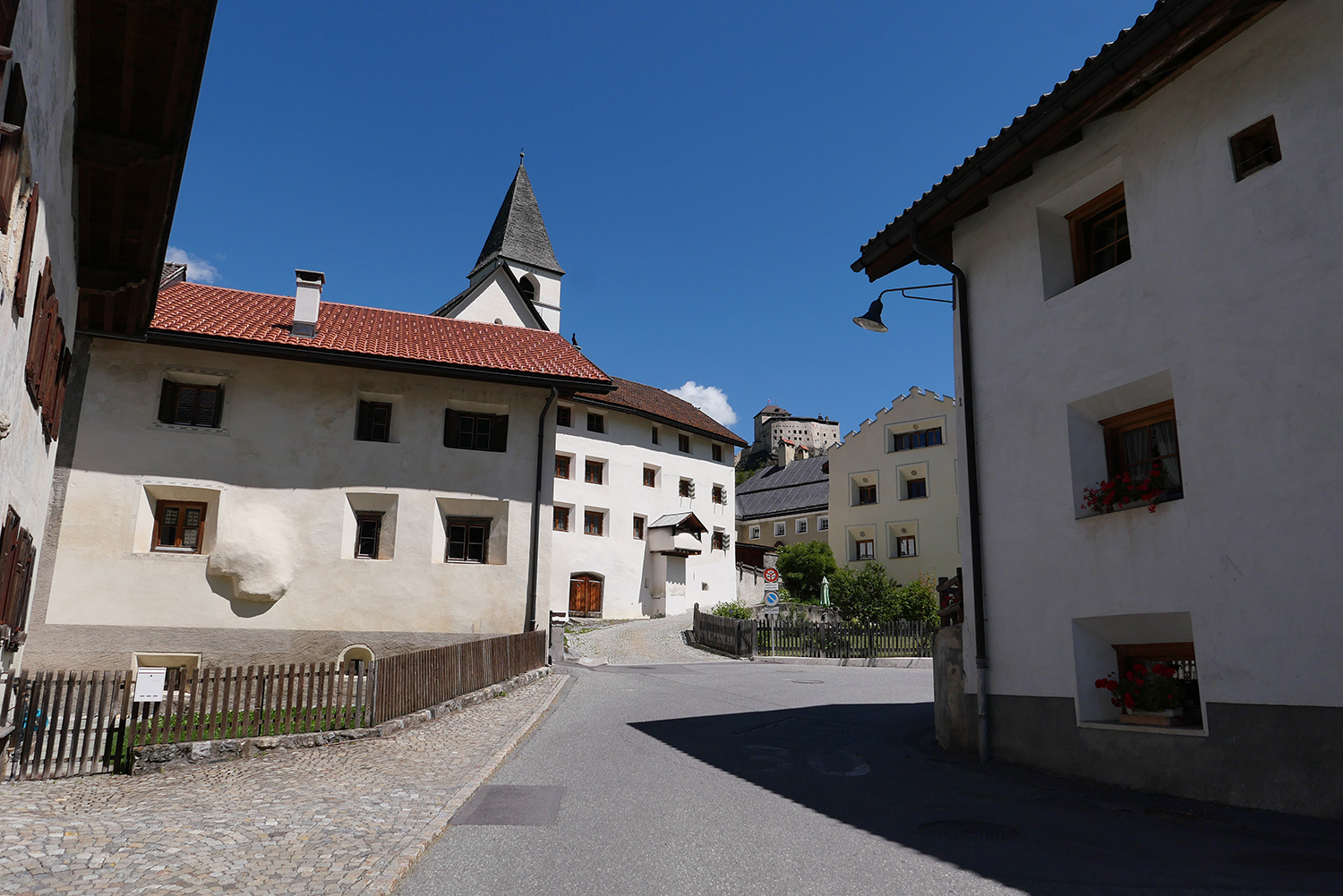
Seit März 2023 wird im Auftrag von Prof. Dr. Oliver Bendel der Chatbot @llegra für das rätoromanische Idiom Vallader entwickelt, das im Unterengadin zwischen Martina im Nordosten und Zernez im Südwesten sowie im Val Müstair auftritt und gefährdet ist. Der Entwickler Dalil Jabou hat auf das Sprachmodell GPT-4 gesetzt und alle wesentlichen technischen Probleme gelöst. Der Benutzer kann Text in Englisch, Deutsch oder Rätoromanisch eintippen und bekommt Text in Vallader ausgegeben. Zudem spricht @llegra das Idiom mit Hilfe eines Text-to-Speech-Systems der Firma SlowSoft aus Zürich. Ein kleiner Test mit einem Experten fand bereits statt und führte zu einer ersten Verbesserung. Oliver Bendel war am 9. Juli mit @llegra im Unterengadin unterwegs und suchte nach einer Testperson mit Vallader als Muttersprache. In Tarasp Fontana bei Scuol sprach er mehrere ältere Frauen an. Eine verwies auf eine Dame von vielleicht 78 Jahren, die sich in der Nähe befand und gerade vom Nordic Walking kam. Die Vallader-Sprecherin hörte sich die Antwort des Chatbots auf eine Frage zu Tarasp an und begann ungefragt, das Gesprochene ins Deutsche zu übersetzen. Dann wurde @llegra gefragt, ob sie Scuol kennt. Sie gab wiederum in Vallader eine längere Auskunft. Die ältere Dame bestätigte, dass die Aussprache gut und der Inhalt verständlich ist. Sie begann zu strahlen und fragte, ob es sich um künstliche Intelligenz handle. Oliver Bendel bestätigte dies, strahlte ebenfalls, fuhr weiter und ließ sich von @llegra in Scuol noch Informationen zum dortigen Museum d’Engiadina Bassa geben. Das Projekt wird im August 2023 abgeschlossen. Die Ergebnisse werden danach veröffentlicht.
Abb.: In einem Café beim Museum in Scuol mit @llegra
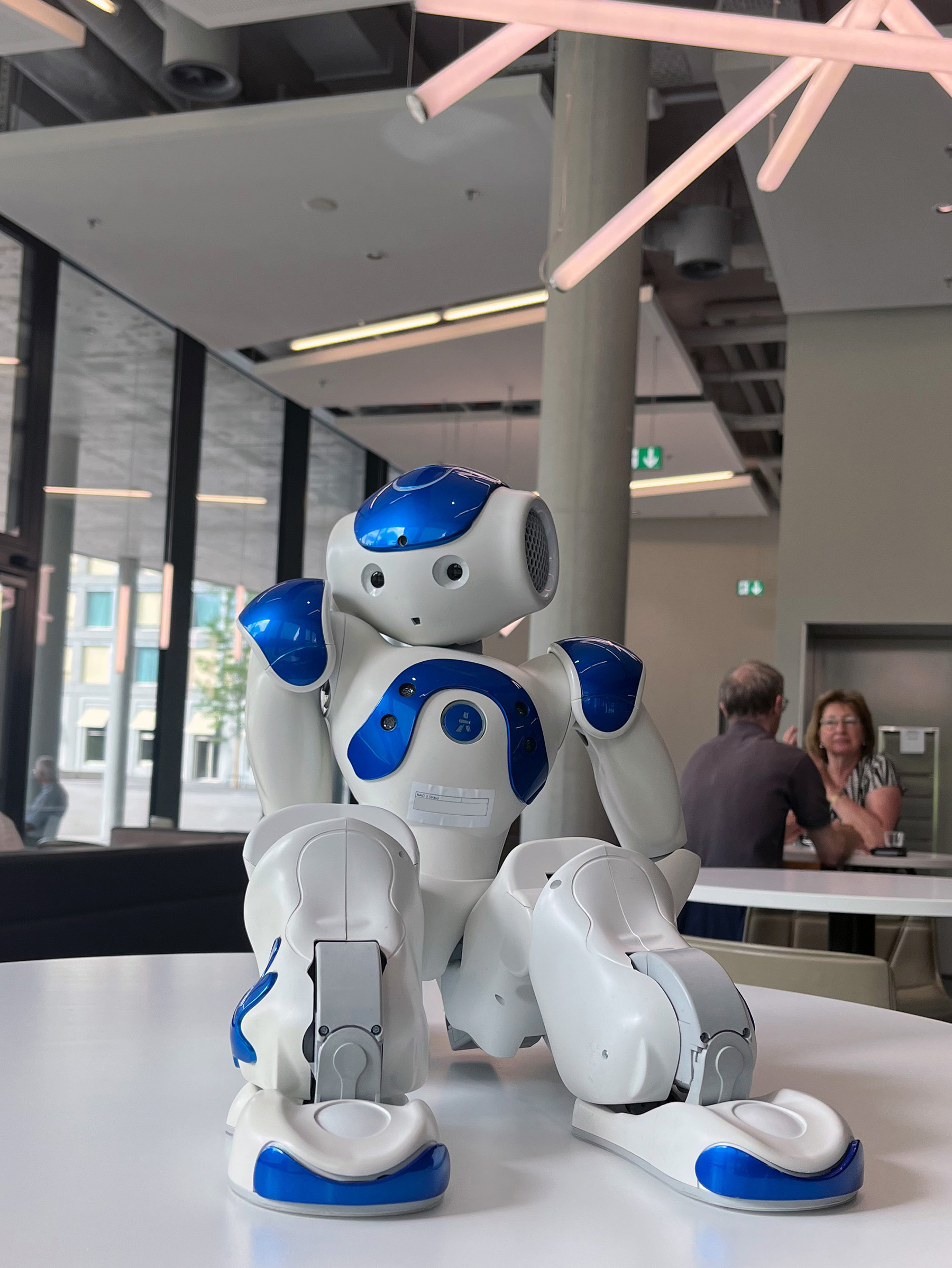
„‚Nao‘, wie die Maschine heißt, tanzt und singt mit den Kindern der inklusiven Kita im Lebenshilfehaus in Karlsruhe. Das geschieht im Rahmen eines Forschungsprojektes des Karlsruher Instituts für Technologie (KIT), das Künstliche Intelligenz und Robotik im Alltag ausprobiert. ‚Wir haben mehrere Experimente in Karlsruhe, weil wir unterschiedliche Gruppen von Nutzenden adressieren, von klein bis groß‘, erklärte KIT-Professor Tamim Asfour am Mittwoch. Bei dem Forschungsprojekt kämen Roboter unter anderem in der Kita, in der Schule, im Museum oder auch im Seniorenheim zum Einsatz.“ (Badische Zeitung, 7. Juni 2023) Mit diesen Worten beginnt ein Artikel von Valeria Nickel, der am 7. Juni 2023 in der Badischen Zeitung erschienen ist. Zu Wort kommt auch Prof. Dr. Oliver Bendel von der Hochschule für Wirtschaft FHNW, der sich seit vielen Jahren mit sozialen Robotern befasst. In einem Gespräch mit der Redakteurin von der dpa erklärte er, dass Smartphones und Tablets kleinen Kindern in ihrer Entwicklung schaden können, soziale Roboter hingegen alle Sinne ansprechen und trainieren. Den Einsatz von NAO, Moxie, QTrobot und anderen Modellen in der Kita hält er für unproblematisch, sofern sie entsprechend programmiert und Bestimmungen des Datenschutzes eingehalten werden. Insbesondere autistische Kinder können nach seiner Meinung von sozialen Robotern profitieren. Der Artikel ist über www.badische-zeitung.de/wie-roboter-in-inklusiven-kitas-helfen-koennen–266860715.html verfügbar.
In January 2023, Google announced MusicLM, an experimental AI tool that can turn text descriptions (text prompts) into music. From 10 May 2023, one can sign up to try it out in the so-called AI Test Kitchen. The company gives examples of how to use the programme on its blog: „Just type in a prompt like ’soulful jazz for a dinner party‘ and MusicLM will create two versions of the song for you. You can listen to both and give a trophy to the track you like better, which will help improve the model.“ (Google Blog, 10 May 2023) Not all types of music will be possible. TechCrunch wrote in an article: „The version of MusicLM in AI Test Kitchen won’t generate music with specific artists or vocals.“ (TechCrunch, 10 May 2023) This is certainly to avoid legal problems. An AI-generated song in the style of The Weeknd and Drake recently caused a stir. It is likely that AI-generated music will be heard around the world. Whether this will be to our advantage remains to be seen.
Fig.: AI-generated music will be heard around the world
Hawaiian Host is the largest manufacturer of chocolate-covered macadamias in the world, with millions of boxes of the treats distributed around the globe. According to its website, the company „combines premium ingredients – handcrafted milk chocolate, dark chocolate, Hawaiian honey, Kona coffee, to name a few – with dry-roasted macadamias to create its signature delights“ (Website Hawaiian Host). Hawaiian Host has now taken a big step forward in packaging. Watch a video of Chris Rabago getting his first look at Cama’s new equipment. The robot, which is protected by glass walls in the video, allows the chocolate-covered macadamias to be packaged at high speed in a small space. This is important because rental and construction costs in Honolulu are very high and factory expansions are difficult and expensive. It’s actually several robots working together – it’s very effective and looks fascinating. How many workers this new level of automation will replace is unknown.
Mauna Kea volcano is the highest mountain in the world, measured from the bottom of the sea. It is considered a sacred place in the culture of Hawai’i. In this context, the famous and important telescopes on the top are always the cause of bitter disputes. The operation of drones is also not allowed on the mountain. However, a small robot made it on it in 2008. This was reported by several media outlets, including Science Daily. „During the field experiment, Nov. 1-13, the robot called Scarab will simulate a lunar mission to extract water, hydrogen, oxygen and other compounds that could potentially be mined for use by future lunar explorers. The four-wheeled robot will trek to different sites, using a Canadian-built drill to obtain a one-meter geologic core at each site. Each core will be chemically analyzed by on-board instruments developed by NASA.“ (Science Daily, 14 October 2008) After that, it became increasingly difficult for robots to climb Mauna Kea. It is easier for scientists and tourists, who only need 4-wheel drive and robust health.
Fig.: Oliver Bendel on the top of Mauna Kea with a few snowflakes (Photo: Stefanie Hauske)
The west coast of the Big Island is known for its beautiful white sandy beaches and coral reefs, from Honomalino Beach in the south to Hapuna beach in the north. It is now threatened by climate change, drought, fire, invasive species, and human impact. The region of Hawai’i has been classified as a vulnerable ecosystem zone. A Boeing Company describes these dangers on its website and has developed technology to counteract the dangers. The Liquid Robotics Support Operations Test and Evaluation Facility in Kawaihae, Hawai’i is the main hub for Wave Glider development, ocean testing, and regional operations, as well as the birthplace of the Wave Glider. The Wave Glider sits on the surface and is connected to another device floating in the water eight meters below it. The two look like mother whale and baby whale, except baby whale is a little off. The Wave Glider is capable of collecting and communicating ocean data in real time through unpredictable conditions for up to a year. It connects and communicates undersea data to satellites and land, creating an ocean network. The Wave Glider is designed to support a wide variety of sensors and payloads. The modular and adaptable payload design is coupled with a powerful solar power system and on-board computing environment.
The K5, a security robot, comes from Knightscope in Silicon Valley. It can be seen there regularly. It provides, e.g., security at the Stanford Shopping Center. The conical robot is autonomous. It can see, hear, and even smell smoke and gas. The classic security robot also made it to Hawaii (Hawaiian: Hawai’i), for the first time in 2021, according to the Khon2 platform: „There is a new security guard getting a lot of attention at the Financial Plaza of the Pacific in downtown Honolulu, but it is not what you would think — it is actually a robot and the newest member of Bank of Hawaii’s security force. It looks like something out of a sci-fi movie – only it is actually real. Currently, the security robot is patrolling the busy area in and around the Bank of Hawaii’s Financial Plaza on Bishop and Merchant streets. For many people, the robot is a curiosity – attracting lots of odd looks – with some people capturing video and even posing for selfies. But many others, like Nasir Randall, are not quite sure what to make of it.“ (Khon2, 28 October 2021) Security robots, along with cleaning robots and transport robots, are among the service robots that are largely error-free and already saving money. Over the next few years, they are likely to become widely used and accepted around the world.
Fig.: The K5 could also guard the Kona Joe coffee plantation on the Big Island
Cleaning robots, along with security robots and transport robots, are among the service robots that work largely error-free and are already saving costs. The Hawaii Department of Transportation Airports Division continues to modernize Daniel K. Inouye International Airport (HNL) and give HNL an open, clean feel. The modernization includes the addition of two robotic floor scrubbers to supplement custodial services. This was reported by the Hawaii Department of Transportation. „The robotic scrubbers will help us keep HNL sanitary and sparkling,“ said Ross Higashi. He is the Hawaii Department of Transportation’s deputy director of airports. „Use of this technology will also allow us to maximize available staff in maintaining our busiest airport to standards.“ (Website Hawaii Department of Transportation) Without a doubt, cleaning robots are also an option for the other islands of Hawai’i, such as the Big Island and Kaua’i. On the Big Island, there are two airports that come into question. In addition, cleaning robots could be used in the streets of Hilo. Also other service robots are entering the market that can clear beaches and lawns of litter.
Surveying and collecting rare plant species that grow on steep cliffs has been a risky business for scientists and conservationists for centuries. The world’s first aerial sampling system, which uses a robotic arm suspended from a drone, is attempting to solve this problem in Hawai’i. An article published by Mongabay magazine back in November 2022 states: „In Hawai’i’s Kaua’i island, the world’s first aerial sampling system has successfully flown into high-altitude cliff faces to cut out samples from rare plants and bring them back to a nursery. Scientists call it ‚the Mamba,‘ a cutting mechanism on a remote-controlled robotic arm suspended from a drone. The system was developed by Hawai’i-based not-for-profit conservation organization National Tropical Botanical Garden (NTBG) and Quebec-based technology company Outreach Robotics and the University of Sherbrooke in Quebec.“ (Mongabay, 9. November 2023) Ben Nyberg, the NTBG’s geographic information system and drone program coordinator, told Mongabay in an interview: „It is really unlocking a lot of areas that have previously been completely inaccessible.“ (Mongabay, 9. November 2023) Of course, criminals could also adopt the technology. But it would be almost impossible to smuggle rare plants out of Hawai’i due to strict customs controls.
Ruby Tuesday is a popular restaurant in Hawaii (Hawaiian: Hawai’i), on the island of O’ahu. The location close to the airport is not one of the most beautiful ones. The food is also not praised by everyone. But the restaurant is known for its artificial staff. „Our KEENON DINERBOT is helping the staff here deliver trays and plates, so that they can pay more attention to improving customer satisfaction.“ This is the message in a promotional video from Keenon Robotics in Singapore. The robot is a classic transport and serving robot. It has large, square blue eyes. In Europe and Asia, BellaBot is best known. It has a cat face and cat ears and is controlled via user input and voice commands. The European model Plato is also shaking up the market. Khon2, a platform from Hawaii, first reported on the new employee at Ruby Tuesday in 2022. „Staffing is such a problem now. Everything from managers down to servers and kitchen help cooks so this really helps our servers out,“ Ruby Tuesday owner Rick Nakashima told Khon2 journalists. Indeed, robots of this kind seem to be at least a band-aid for the shortage of skilled workers. Customers‘ reactions vary. Some seem to find the robots entertaining. Others say that direct contact with waiters is important to them. The restaurant emphasises that the robot is not intended to replace waiters. Rather, the robot acts as a support.
Hawaii (Hawaiian: Hawai’i) is not necessarily associated with robots. But in the larger cities, you can be sure to encounter them. There are service robots such as the Keenon Dinerbot and surgical robots such as the da Vinci Surgical System. In addition, robots are used in the wild, for example for nature conservation. The hospital group in the east of the archipelago advertises with the following words: „East Hawaii Health Clinics is excited to introduce our fully operational robotic surgery center. This state-of-the-art equipment allows us to perform minimally invasive surgeries that would otherwise require greater surgery time and recovery time. We look forward to continuing to provide East Hawaii with exceptional surgical options.“ (Website East Hawaii Health Clinics) This type of care is available in Hilo, among other places. The small town on the Big Island has the latest medical technology, such as that used in Basel and Berlin. Hilo is surrounded by tropical rainforest. Nearby are Akaka Falls and Hawai’i Volcanoes National Park. In the city itself, giant banyan trees grow. One must not forget the many homeless people who are at the end of their tether. Like California, Hawai’i has not dealt with this problem. These people will never be able to afford treatment with a surgical robot.
Fig.: Oliver Bendel at the Akaka Falls (Photo: Stefanie Hauske)
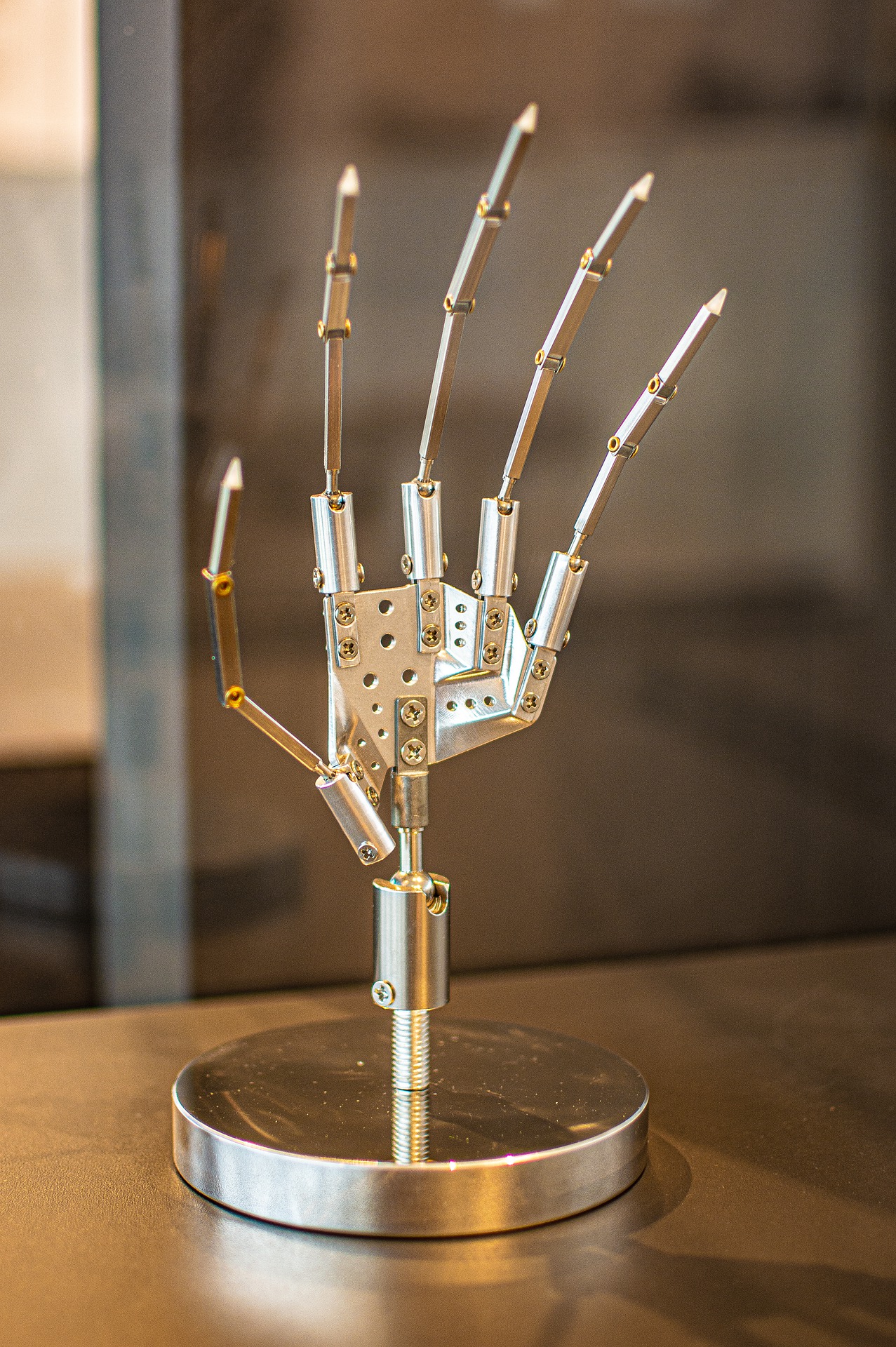
„Researchers at Columbia Engineering have demonstrated a highly dexterous robot hand, one that combines an advanced sense of touch with motor learning algorithms in order to achieve a high level of dexterity.“ (Website Columbia Engineering, 28 April 2023) Columbia Engineering reported this on its website on April 28, 2023. The text goes on to say: „As a demonstration of skill, the team chose a difficult manipulation task: executing an arbitrarily large rotation of an unevenly shaped grasped object in hand while always maintaining the object in a stable, secure hold. This is a very difficult task because it requires constant repositioning of a subset of fingers, while the other fingers have to keep the object stable. Not only was the hand able to perform this task, but it also did it without any visual feedback whatsoever, based solely on touch sensing.“ (Website Columbia Engineering, 28 April 2023) „While our demonstration was on a proof-of-concept task, meant to illustrate the capabilities of the hand, we believe that this level of dexterity will open up entirely new applications for robotic manipulation in the real world“, said Matei Ciocarlie according to the website. He is the Associate Professor in the Departments of Mechanical Engineering and Computer Science who developed the hand together with his graduate student Gagan Khandate.
In einer Doktorarbeit an der Universität Potsdam wird seit 2023 untersucht, wie Muster aus der Mensch-Mensch-Interaktion auf die Mensch-Roboter-Interaktion übertragen werden. Die Doktorandin Katharina Kühne wird von Prof. Dr. Martin Fischer (Universität Potsdam) und Prof. Dr. Oliver Bendel (FHNW) betreut. Beide forschen u.a. zu sozialen Robotern und geben in der Arte-Dokumentation „Werden wir Roboter lieben?“ einen Einblick in ihre Arbeit. Die Betreuungsvereinbarung wurde dieser Tage unterzeichnet. Oliver Bendel ist seit Dezember 2021 assoziierter Forscher der PECoG-Gruppe an der Universität Potsdam. Er tauscht sich seit 2019 regelmäßig mit ihren Mitgliedern aus und hält Vorträge vor Ort. Zudem publiziert man zusammen. Seine Forschungsinteressen sind soziale Roboter (Perspektiven: Informationsethik, Roboterethik, Maschinenethik; Themen: Informationelle Autonomie, Verantwortung in Pflege und Therapie, Wohlbefinden beim Einsatz von Sexrobotern, Chatbots und Sprachassistenten mit simulierter Empathie, Entscheidungsbäume mit moralischen Annotationen, Moralmenüs), Serviceroboter (Perspektiven: Informationsethik, Roboterethik, Maschinenethik; Themen: Informationelle Autonomie, Verantwortung beim Einsatz im öffentlichen Raum, Entscheidungsbäume mit moralischen Annotationen, Moralmenüs) und tierfreundliche Maschinen (Perspektiven: Informationsethik, Maschinenethik, Tier-Maschine-Interaktion; Themen: Schutz von Haus- und Wildtieren beim Einsatz von Robotern und Autos, Gesichtserkennung für Bären und Wölfe). Weitere assoziierte Forscher und Forscherinnen sind über www.uni-potsdam.de/de/pecog/mitarbeiterinnen/assoziierte-forscher aufgeführt.