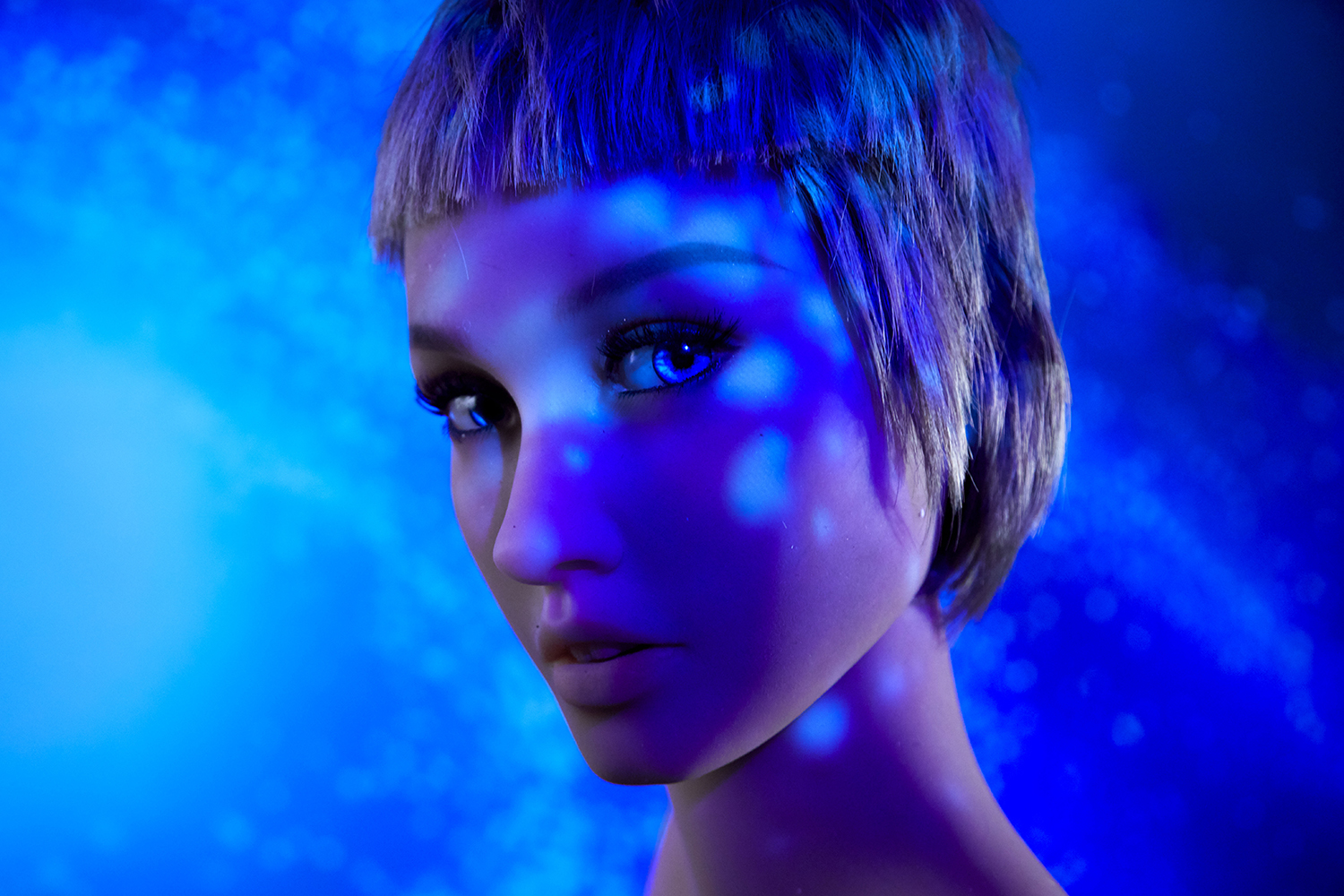
The article „Who Queered the Sex Robot? Notes on Attribution and Conceptual History“ by Oliver Bendel, published in Philosophy & Technology on June 10, 2026, is now available Open Access and can be read and downloaded free of charge. An article titled „Queering Sex Robots Beyond Diversifying Design? Insights from Queer Lacanian Psychoanalysis and New Materialism“ by Maaike van der Horst and Anna Puzio was published in the journal Philosophy & Technology in March 2026. Surprisingly, it does not reference several works that are highly relevant to the topic, including publications by Tanja Kubes and Oliver Bendel. As a result, some of the article’s claims to originality appear less convincing than they might otherwise have been. Following an exchange with one of the journal’s editors, Luciano Floridi, Oliver Bendel therefore submitted a commentary, which was published in Philosophy & Technology on June 10, 2026. From the abstract: „This commentary discusses Maaike van der Horst and Anna Puzio’s article ‚Queering Sex Robots Beyond Diversifying Design? Insights from Queer Lacanian Psychoanalysis and New Materialism‘. While acknowledging the article’s valuable contribution, particularly its integration of Queer Lacanian Psychoanalysis and New Materialism, the commentary argues that its account of prior scholarship is incomplete. Several key themes and proposals presented as novel – including critiques of humanoid mimicry, new-materialist approaches to sexuality and technology, queer design concepts, relational ontology, and transformative sex robot forms – had already been developed in earlier work by Tanja Kubes and Oliver Bendel. The omission of these contributions affects assessments of originality, the reconstruction of the field’s intellectual development, and the allocation of scholarly credit. The commentary therefore calls for a more comprehensive scholarly genealogy of queer and new-materialist approaches to sex robots and argues that careful citation practices are essential to maintaining the integrity of academic discourse.“ The article „Who Queered the Sex Robot? Notes on Attribution and Conceptual History“ can be accessed at link.springer.com/article/10.1007/s13347-026-01123-3.
Wer sich vegetarisch ernährt und Käse isst, möchte u.U. wissen, ob bei dessen Herstellung tierisches oder mikrobielles Lab verwendet wurde. Auf der Verpackung ist dies oft nicht ersichtlich, da der Verarbeitungshilfsstoff nicht deklariert werden muss. Bereits 2019 hatte Oliver Bendel in einem Telefonat mit Philipp Wyss, dem damaligen stellvertretenden Vorsitzenden der Geschäftsleitung und späteren CEO von Coop, eine bessere Kennzeichnung angemahnt. Der sicherte ihm zu, dass bei einem Austausch der Verpackungen in den folgenden Monaten und Jahren entsprechende Hinweise aufgenommen würden. Das passierte bis 2026 kaum, aber inzwischen bietet der Detailhändler eine digitale Lösung an. Im Onlineshop und in der Coop-App können Kunden unter „Ernährung“ nach Käse filtern, der mit mikrobiellem Lab hergestellt wurde und daher vegetarisch ist. In den Filialen lässt sich die Labart mit der Passabene-App oder einem Passabene-Handscanner abfragen. Dazu wird der Käse gescannt und die entsprechende Produktinformation aufgerufen. Voraussetzung ist allerdings, dass der Hersteller die Angaben zur Verfügung gestellt hat. Damit verwirklicht Coop einen Teil dessen, was Oliver Bendel 2003 am Fraunhofer ISST mit dem „gläsernen Produkt“ konzipiert hatte: Der Kunde scannt ein Produkt und erhält Informationen, die für seine individuellen Bedürfnisse relevant sind. Ein automatischer Abgleich mit einem persönlichen Profil findet allerdings nicht statt. Auch bleibt die Transparenz von der Bereitschaft der Hersteller abhängig, entsprechende Daten bereitzustellen.
Am Fraunhofer ISST konzipierte Oliver Bendel im Jahre 2003 „Das gläserne Produkt“ – einen Einkaufsassistenten, der die Bedürfnisse des Kunden berücksichtigt. Er wird in seinem Buch „Die Rache der Nerds“ (2012) beschrieben: „Der Kunde interessiert sich im Tante-Emma-Laden oder im Supermarkt für ein bestimmtes Produkt. Er scannt mit dem Handy eine ID auf der Verpackung ein. Die ID wird mit einem persönlichen Profil gematcht, das auf dem Handy oder einem Server liegt. Auf dem Display wird eine Empfehlung angezeigt, etwa mithilfe eines Ampelsystems. Der Kunde weiß sofort, ob sich das Produkt für ihn eignet (grün) oder nicht (rot). Oder ob er sich anderweitig informieren sollte (gelb).“ Neben Vegetariern stellte sich der Philosoph und Wirtschaftsinformatiker auch Allergiker und Diabetiker als Zielgruppen vor. Das gläserne Produkt hat inzwischen zahlreiche Nachfolger gefunden. Apps wie CodeCheck, Yuka und Spoonful erlauben es, den Barcode eines Lebensmittels mit dem Smartphone zu scannen und Informationen über Inhaltsstoffe, Nährwerte und Allergene abzurufen. Manche berücksichtigen auch persönliche Ernährungsweisen und Unverträglichkeiten. Besonders nahe kommt dem ursprünglichen Konzept die offene Plattform Open Food Facts, die Produktinformationen mit individuellen Präferenzen abgleicht und die Eignung eines Produkts farblich anzeigt. Auch Spoonful arbeitet mit einem Ampelsystem und berücksichtigt u.a. vegetarische Ernährung, Allergien und Unverträglichkeiten. Das Ampelsystem selbst hat sich ebenfalls etabliert. So bewertet der 2017 in Frankreich eingeführte und inzwischen in mehreren europäischen Ländern verbreitete Nutri-Score Lebensmittel anhand ihrer Nährwertqualität auf einer fünfstufigen Farbskala, allerdings ohne die individuellen Bedürfnisse des Kunden zu berücksichtigen. Das gläserne Produkt ist also in wesentlichen Teilen Wirklichkeit geworden, auch wenn sich nicht nachweisen lässt, dass die heutigen Anbieter das ursprüngliche Konzept kennen. Allerdings bleibt ein grundlegendes Problem bestehen: Ein Produkt kann nur so gläsern sein wie die Daten, die über es verfügbar sind. Fehlen Angaben über bestimmte Inhaltsstoffe oder Herstellungsverfahren, stößt auch der intelligenteste Einkaufsassistent an seine Grenzen. Und eine digitale Auskunft ersetzt nicht unbedingt eine verständliche Deklaration auf der Verpackung.
Richard Brautigan widmete sich immer wieder Robotern und anderen Maschinen. Sein Gedicht „Robot, Part 2“ – Teil einer größeren Gedichtfolge mit dem Titel „Group Portrait Without the Lions“ („Gruppenbild ohne die Löwen“) – lautet: „Robot likes to sleep / through long lazy summer afternoons. / So do his friends / with the sun reflecting / off them like tin cans.“ Vermutlich stammt es aus den 1960er- oder 1970er-Jahren. In deutscher Übersetzung ist es in dem Band „Die Pille gegen das Grubenunglück von Spring Hill & 104 andere Gedichte“ (1987) zu finden, in dem mehrere Sammlungen aus der Zeit von 1968 bis 1976 verwertet werden. Im Jahre 1967 veröffentlichte Richard Brautigan sein Gedicht „All Watched Over by Machines of Loving Grace„. Darin entwirft der amerikanische Schriftsteller die Vision einer Welt, in der Tiere, Menschen und Maschinen in Harmonie zusammenleben. Er beschreibt kybernetische Wiesen und Wälder, in denen sich Säugetiere und Computer begegnen und Hirsche friedlich an Maschinen vorbeiziehen: „I like to think (and / the sooner the better!) / of a cybernetic meadow / where mammals and computers / live together in mutually / programming harmony / like pure water / touching clear sky. // I like to think / (right now, please!) / of a cybernetic forest / filled with pines and electronics / where deer stroll peacefully / past computers / as if they were flowers / with spinning blossoms. // I like to think / (it has to be!) / of a cybernetic ecology / where we are free of our labors / and joined back to nature, / returned to our mammal / brothers and sisters, / and all watched over / by machines of loving grace.“ Auch Oliver Bendel hat Robotergedichte geschrieben. Manche sind in den Bänden „handyhaiku“ (mit QR-Codes als 2D-Codes) und „Die Astronautin“ (mit 3D-Codes) enthalten, andere liegen als mit Text-to-Speech-Engines produzierte Audiofiles vor.
Abb.: Gruppenbild ohne die Löwen (Bild: GPT Image 2)
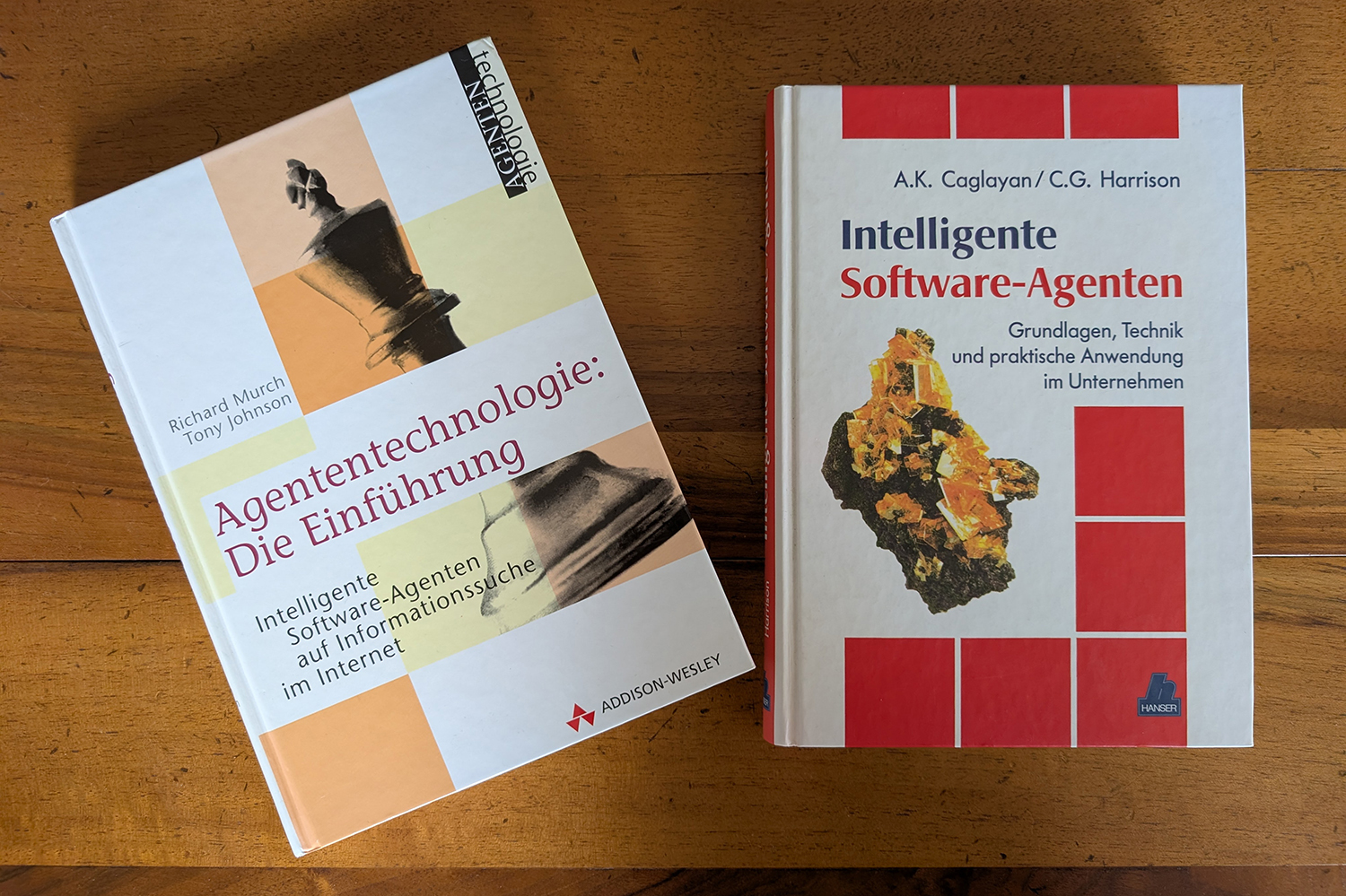
Im Jahre 1995 veröffentlichten Michael Wooldridge und Nicholas R. Jennings in der Zeitschrift The Knowledge Engineering Review ihren grundlegenden Aufsatz „Intelligent Agents: Theory and Practice“ … Darin beschäftigten sie sich mit den Eigenschaften intelligenter Softwareagenten, insbesondere mit Autonomie, Reaktivität, Proaktivität und sozialer Kompetenz, die sich in der Interaktion mit anderen Agenten oder Menschen zeigt. Ende der 1990er-Jahre war die Agententechnologie ein viel diskutiertes Forschungs- und Anwendungsgebiet. Davon zeugen auch zwei Bücher der Bibliothek von Oliver Bendel, nämlich „Agententechnologie: Die Einführung“ von Richard Murch und Tony Johnson, das sich vor allem mit intelligenten Softwareagenten zur Informationssuche im Internet befasst, und „Intelligente Software-Agenten“ von A. K. Caglayan und C. G. Harrison, das die Grundlagen, die Technik und die praktische Anwendung im Unternehmen behandelt. Ebenfalls zur Hand war der Band „Intelligente Softwareagenten: Grundlagen und Anwendungen“ von Walter Brenner, Rüdiger Zarnekow und Hartmut Wittig aus dem Jahre 1997. Ausgehend von Fallbeispielen entwickelten die Autoren eine methodische Darstellung intelligenter Softwareagenten. Einen umfassenden wissenschaftlichen Überblick bot schließlich der 1999 von Gerhard Weiss herausgegebene Sammelband „Multiagent Systems: A Modern Approach to Distributed Artificial Intelligence“. Er widmete sich u.a. Agentenarchitekturen sowie Kooperation, Koordination und Kommunikation in Multiagentensystemen. Wer sich heute KI-Agenten zuwendet, begegnet somit zahlreichen Fragestellungen, die bereits vor rund drei Jahrzehnten intensiv untersucht wurden. Neu sind vor allem die technologischen Möglichkeiten, die sich durch große Sprachmodelle (Large Language Models, LLMs) ergeben haben, nicht aber die grundlegende Idee autonom und zielorientiert agierender intelligenter Softwareagenten. Oliver Bendel hatte um die Jahrtausendwende über pädagogische Agenten promoviert. Unter ihnen waren sowohl Chatbots mit Avataren als auch KI-Agenten im engeren Sinne. Ein paar verfügten zudem über Hardware- und Softwareerweiterungen wie Kameras mit Gesichts- und Emotionserkennung und bildeten eine Brücke zu sozialen Robotern. Der Zweitbetreuer der Doktorarbeit war Walter Brenner gewesen.
Abb.: Zwei Bücher aus der Bibliothek von Oliver Bendel
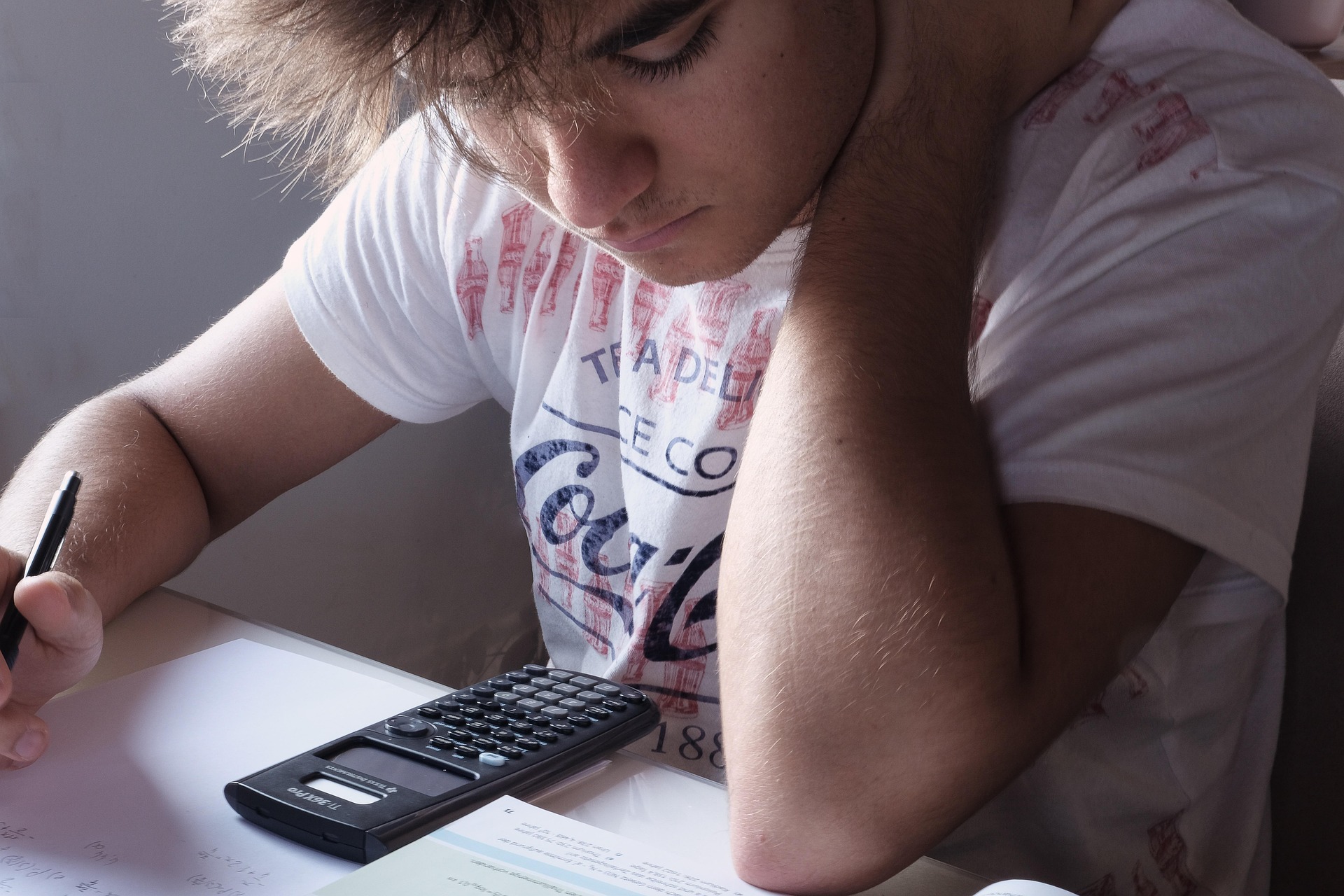
Am 23. Oktober 2026 stellte Naara Montzerrat Mata Rivera im Rahmen einer Zwischenpräsentation den aktuellen Stand ihres Projekts „LearnDifferently“ vor. Dieses wird im Kontext von Inclusive AI unter der Betreuung von Prof. Dr. Oliver Bendel durchgeführt und ist Teil ihrer Abschlussarbeit im Studiengang Business AI an der Hochschule für Wirtschaft FHNW. Ziel ist die Entwicklung einer adaptiven, KI-gestützten Lernanwendung, die Jugendliche mit Dyskalkulie im regulären Schulunterricht unterstützt. Seit dem Projektstart Anfang September wurden wesentliche Fortschritte erzielt, und ein erster funktionsfähiger Prototyp liegt bereits vor. Dieser bietet Aufgaben zu Grundrechenarten, Brüchen und Prozenten sowie Textaufgaben und unterstützt unterschiedliche Erklärwege, vom konkreten Alltagsbeispiel über bildliche Darstellungen bis hin zu abstrakten Rechenwegen. Besonders interessant ist die technische Architektur: Nicht alle Funktionen werden einem Large Language Model (LLM) überlassen. Während das Sprachmodell Aufgaben und Erklärungen generiert, übernehmen fest programmierte Regeln die Überprüfung der Antworten und die Anpassung des Schwierigkeitsgrads. Dies erhöht die Zuverlässigkeit, Transparenz und Nachvollziehbarkeit der Anwendung und reduziert die Abhängigkeit von generativer KI. Eine weitere Besonderheit ist die konsequente Orientierung am Value Sensitive Design, das Werte wie Vertrauen, Privatsphäre und soziale Inklusion bereits bei der Entwicklung berücksichtigt. So sollen beispielsweise Lerndaten geschützt und Jugendliche weder bloßgestellt noch ausgegrenzt werden. In den kommenden Wochen soll der Prototyp weiterentwickelt und anschließend hinsichtlich seiner Wirksamkeit und der Umsetzung der angestrebten Werte evaluiert werden. Die Abschlussarbeit wird im Januar 2027 eingereicht.
Abb.: Eine KI-gestützte Lernanwendung für Jugendliche mit Dyskalkulie
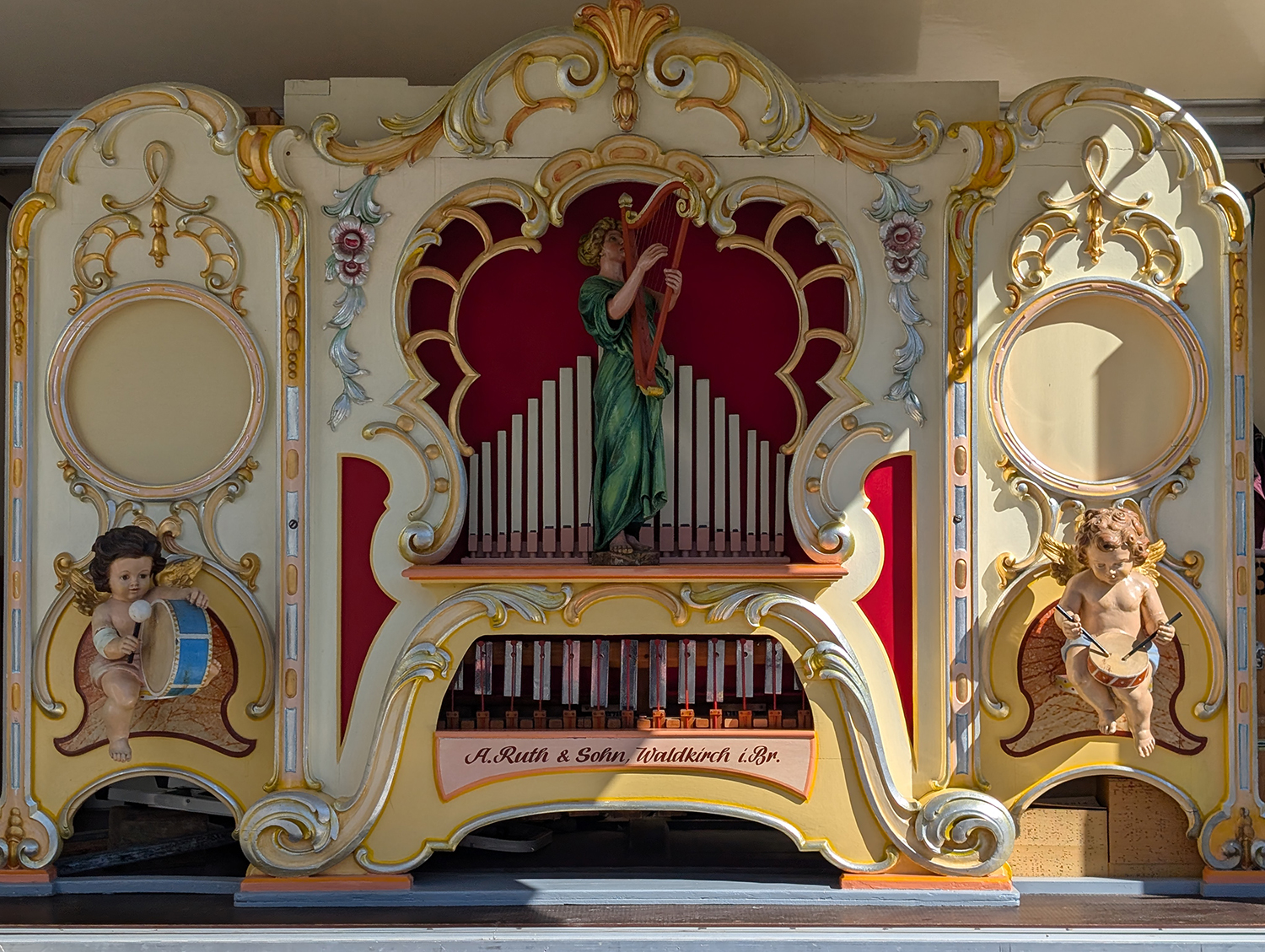
Aristoteles betonte in seiner „Politik“ (ca. zwischen 335 und 322 v.u.Z.) das Potenzial des Werkzeugs, zum Automaten zu werden: „Wenn nämlich jedes einzelne Werkzeug auf einen Befehl hin, oder einen solchen schon voraus ahnend, seine Aufgabe erfüllen könnte, (…) wenn also auch das Weberschiffchen so webte und das Plektron die Kithara schlüge, dann bedürften weder die Baumeister der Gehilfen, noch die Herren der Sklaven.“ Diese Überlegung war keineswegs der Fantasie entsprungen. Schon in der griechischen Antike gab es Ansätze zur Automatisierung. Philon von Byzanz beschrieb im 3. Jahrhundert v.u.Z. eine mechanische Dienerin, die einem Gast selbständig Wein und Wasser einschenken konnte, Heron von Alexandria im 1. Jahrhundert n.u.Z. kleine Tempeltüren, die sich durch die Wärme eines Altarfeuers automatisch öffneten, und ein mechanisches Theater, dessen Figuren nach einem vorgegebenen Programm agierten. Vermutlich wurden mehrere Erfindungen tatsächlich umgesetzt. Die Ingenieure der Antike beherrschten also Zahnräder, Ventile, Hydraulik, Pneumatik und mechanische Steuerungen. Warum aber eroberten ihre Automaten nicht die Welt? Es fehlte weniger an Erfindungsgeist als an leistungsfähigen Energiequellen, präziser Massenfertigung und wirtschaftlichen Anreizen, menschliche Arbeit systematisch durch Maschinen zu ersetzen. Die Verfügbarkeit von Sklaven dürfte dabei eine Rolle gespielt haben, erklärt die ausbleibende Mechanisierung aber nicht allein. Im 18. Jahrhundert hatte die Automatenkunst mit mechanischen Musikern, Schreibern und Zeichnern sowie künstlichen Tieren – man denke an die Ente von Jacques de Vaucanson, der noch zahlreiche Mitglieder dieser Art folgten – einen neuen Höhepunkt erreicht, wobei bereits im 15. Jahrhundert Leonardo da Vinci eindrucksvolle Anleitungen vorgelegt hatte. Im späten 19. Jahrhundert erlebten mechanische Automaten der schöngeistigen Art eine weitere Blüte. Auf Jahrmärkten spielten selbsttätige Orgeln, begleitet von beweglichen Figuren, die Musikinstrumente zu bedienen schienen. Die industrielle Mechanisierung hatte bereits im 18. Jahrhundert begonnen, die Elektrifizierung der Produktion im 19. Jahrhundert. Doch erst im 20. Jahrhundert, mit Elektrizität, Elektronik und Computertechnik, trat eine grundlegende Wende ein. Die antike Idee der automatischen Verrichtung begann nun die moderne Arbeitswelt in jeder Hinsicht zu verändern.
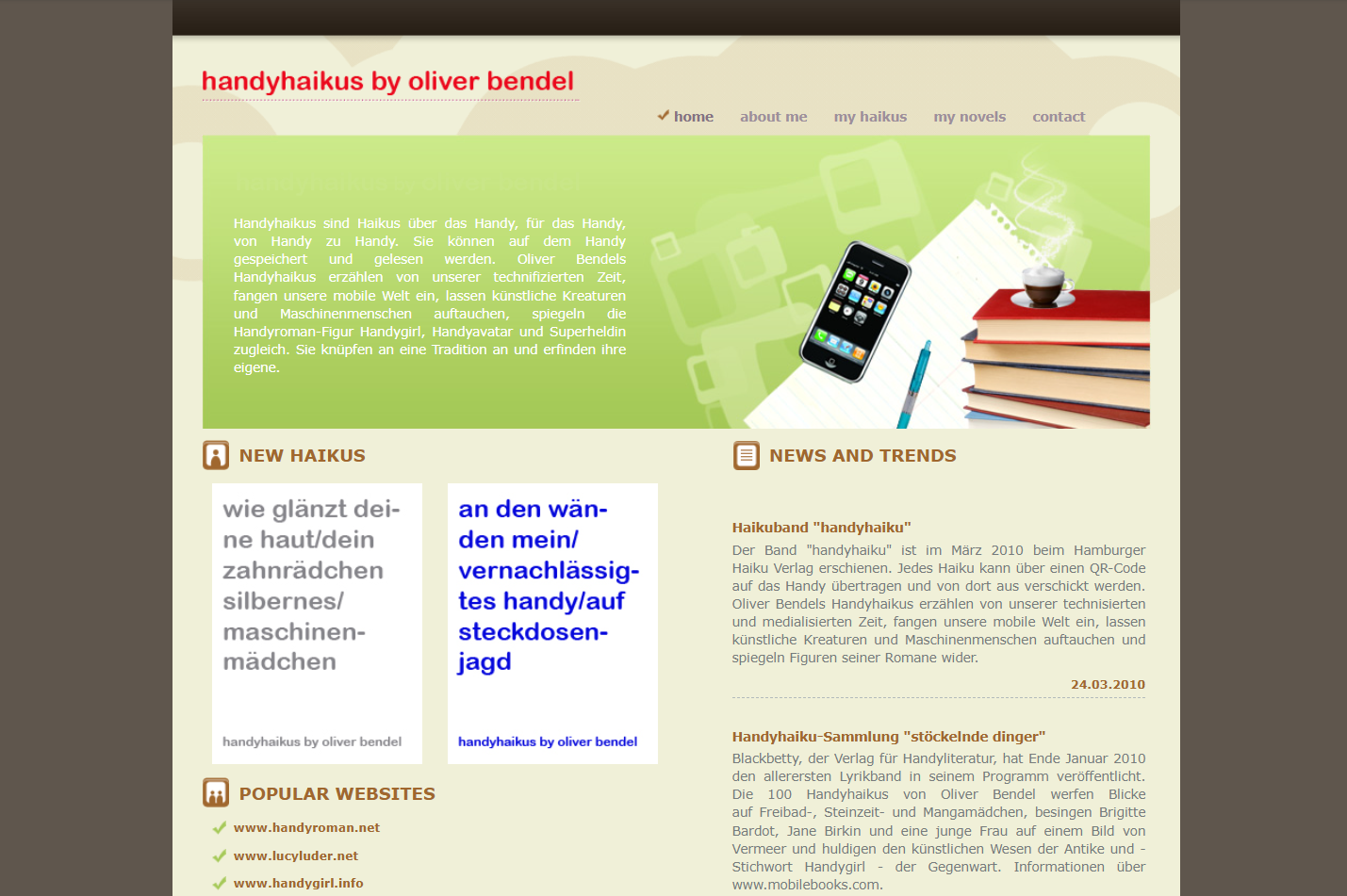
Artmafia, eine Oltener Kunstbewegung rund um das Handy in den 2000er- und 2010er-Jahren, hat im November 2009 mehrere Handyhaikus von Oliver Bendel veröffentlicht. Die Gedichte waren als Bildtafeln umgesetzt und konnten über einen Premium-SMS-Dienst heruntergeladen werden. Ab 2010 gab es sie auch als Klingeltöne. Eingesprochen worden waren sie von Julia Nierle. Bereits 2007 hatte Oliver Bendel den Handyroman, der in Japan sehr beliebt war, nach Europa geholt. Es entstanden zwei Serien um eine Privatdetektivin in Berlin und einen Avatar auf einem Handy, der in der Wirklichkeit mit Superkräften aufwartete. Handygirl, so der Name, war vor allem bei jungen Mädchen beliebt. Zudem war mit „lonelyboy18“ ein Einzelroman vorhanden, der sich eher an Jungen richtete. Die Bücher bzw. Folgen bekam man ebenfalls über einen Premium-SMS-Dienst aufs Handy. Produziert und vertrieben wurden sie von Verlagen wie cosmoblonde in Berlin und Blackbetty in Wien. Letzterer veröffentlichte Ende Januar 2010 den allerersten Lyrikband in seinem Programm. Die 100 Handyhaikus in „stöckelnde dinger“ von Oliver Bendel besangen Brigitte Bardot, Jane Birkin und eine Frau auf einem Bild von Vermeer und huldigten den künstlichen Wesen der Antike und – Stichwort Handygirl – der Gegenwart. Oliver Bendel tourte mit seiner Handyliteratur auf Einladung zweier Goethe-Institute durch die Niederlande und wurde im Standardwerk zur modernen deutschen Literatur mit zwei Seiten bedacht.
In den 1970er- und 1980er-Jahren bot die Deutsche Bundespost zahlreiche telefonische Ansagedienste an. Über bestimmte Rufnummern konnte man die Uhrzeit, den Wetterbericht, das Kinoprogramm, Nachrichten, Fahrplanauskünfte oder Kochrezepte abrufen. Eine besondere Variante war das Literatur- bzw. Poesietelefon. Die Idee geht auf das amerikanische Projekt „Dial-A-Poem“ von John Giorno aus dem Jahre 1968 zurück. Der Dichter, Künstler und Aktivist hatte es nach einem Telefongespräch mit William S. Burroughs ins Leben gerufen. 1978 gründete der Schriftsteller Michael Augustin in Kiel das erste deutsche Literaturtelefon, das später in die Ansagedienste der Bundespost aufgenommen wurde. Weitere Städte folgten, darunter Hamburg, München, Berlin und Ulm. Vom 15. bis zum 21. Juli 1985 war der damals 17-jährige Oliver Bendel mit eigenen Gedichten im Poesietelefon des Fernmeldeamts Ulm vertreten. Sein Beitrag trug den Titel „Wortspielereien“. Er hatte die Werke selbst in einem professionellen Tonstudio in Ulm eingesprochen. Der Beitrag ist bibliografisch dokumentiert (KÜRSCHNERS DEUTSCHER LITERATUR-KALENDER 2012/2013). Ob die Tonaufnahmen noch existieren, ist nicht bekannt. Das Poesietelefon kann als früher Vorläufer heutiger Podcasts und anderer Audioangebote auf Abruf betrachtet werden.
Abb.: Ein Plakat zu den Ansagediensten (Foto: Museumsstiftung Post und Telekommunikation)
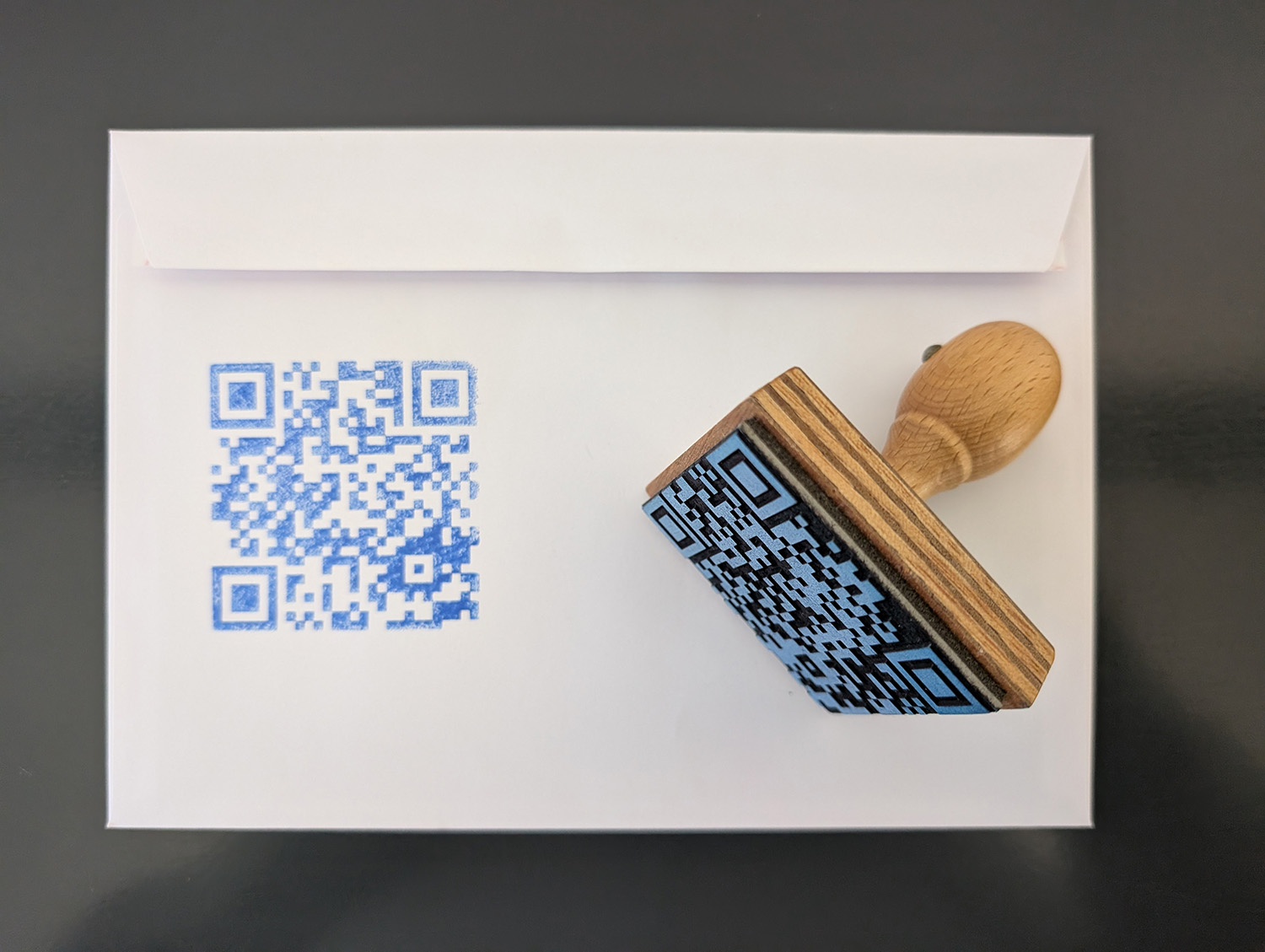
Im Juni 2009 ließ Oliver Bendel einen Stempel anfertigen, mit dem man QR-Codes aufs Papier bringen konnte. Immer wieder wurde ein Briefumschlag erweitert – man sprang von dort bequem auf die Website oliverbendel.net, die seit 2008 existierende Website des Wissenschaftlers und Schriftstellers. Mit QR-Codes hat er seit damals immer wieder experimentiert. Sein Buch „handyhaiku“ war das erste weltweit, in dem Gedichte in QR-Codes untergebracht waren, nicht als Online-, sondern als Offlineanwendung. Der Hamburger Haiku Verlag sagte 2009 zu. Die erste Auflage erschien dann im Jahr darauf. Am 24. Oktober 2010 trat Oliver Bendel im Wittelsbacher Schloss in Friedberg beim „LITERATUR UPDATE BAYERN 2010“ auf. Michael Seefelder schrieb drei Tage später in der Augsburger Allgemeinen: „Der Wirtschaftsprofessor und freie Schriftsteller Oliver Bendel gilt in Europa als Pionier, was Handy-Haikus anbelangt. Im Friedberger Schloss lässt er am dritten Veranstaltungsabend die Grenzen zwischen den Medien verschwimmen. Der gedruckte Band, aus dem Bendel liest, enthält die Haikus in herkömmlichen Schriftzeichen und als QR-Codes. Diese Codes sind Informations-Speicher, die mit einem Scanner ausgelesen werden können. Parallel zum Textvortrag sprüht der Grafiker Christoph Knobel einen QR-Code auf eine Leinwand. Wird das Bild mit einem Handy gescannt, erscheint ein Haiku auf dem Display. Nicht immer sind Bendels Texte futuristisch. Neben Handygirl und Pixelboy, zwei Maschinenwesen, geht es auch um Homer, den griechischen Dichter der Odyssee.“ (Augsburger Allgemeine, 27. Oktober 2010) Eine Stunde dauerten Lesung und Performance. Dann konnten die Zuhörer und Zuschauer das Haiku auslesen und mit nach Hause nehmen.
The thirteenth edition of the Animal-Computer Interaction International Conference (ACI 2026) will take place from December 2 to 5, 2026, at the FHNW Campus Brugg-Windisch in Switzerland. Hosted by the University of Applied Sciences and Arts Northwestern Switzerland (FHNW), with Prof. Dr. Oliver Bendel serving as General Chair, the conference will be the first ACI conference held in continental Europe. One of this year’s highlights will be the participation of Rehkitzrettung Schweiz, which will present its work in a talk and a live demonstration. Rehkitzrettung Schweiz has saved many thousands of young deer from injury and death across Switzerland. The organization uses drones equipped with thermal imaging cameras to locate fawns hidden in meadows before agricultural mowing takes place. Since young deer often remain motionless when danger approaches, they are particularly vulnerable to mowing machinery. Drone-based detection makes it possible to find and rescue them in time. At ACI 2026, Rehkitzrettung Schweiz will give a presentation in the FutureHub (Forumsraum), providing insights into its activities and the technologies involved. In addition, participants will have the opportunity to experience a live demonstration on the meadow near the Hallerbau, where a drone equipped with a thermal imaging camera will search for an artificial fawn. The demonstration will illustrate how this technology works in practice and how it contributes to animal welfare. The organization’s activities are an excellent example of Animal-Machine Interaction, one of the main focuses of ACI 2026. They show how humans and machines can work together to protect animals, even when the animals themselves do not interact directly with the technology. The example also raises important questions about the responsible use of drones, sensors, and autonomous systems in environments shared by humans and animals. Further information on registration, the program, workshops, and participation is available on the ACI 2026 website.
Ein Forschungsteam am Massachusetts Institute of Technology (MIT) hat einen winzigen Flugroboter entwickelt, der weniger als eine Büroklammer wiegt und mit Hilfe einer KI-basierten Steuerung erstaunliche Flugmanöver vollführen kann. Wie am 3. Dezember 2025 berichtet wurde, konnte die Geschwindigkeit des insektenähnlichen Roboters um mehr als das Vierfache gesteigert werden. Unter anderem gelangen ihm zehn Überschläge in elf Sekunden. Als mögliches Einsatzgebiet gilt die Suche nach Verschütteten in eingestürzten Gebäuden. Noch ist der Roboter allerdings auf eine externe Energieversorgung und Steuerung angewiesen. Die Meldung wurde im Oktober 2026 erneut von verschiedenen Medien verbreitet. Bereits im Juni 2025 war eine ähnliche Entwicklung aus China bekannt geworden. Ein Robotiklabor der National University of Defence Technology (NUDT) hatte eine winzige Drohne vorgestellt, die einer Mücke ähnelt und für militärische Aufklärungsmissionen vorgesehen ist. Beide Entwicklungen erinnern an den Roman „Verlorene Schwestern“ von Oliver Bendel aus dem Jahre 2009. Darin hat der 16-jährige Maik eine Roboterfliege namens „la mouche“ konstruiert, mit der er Prominente und Reiche ausspioniert, um sie anschließend zu erpressen. Während die chinesische Entwicklung der literarischen Vision hinsichtlich des Einsatzzwecks näherkommt, zeigt das amerikanische Projekt, welche Fortschritte bei der Flugfähigkeit solcher künstlichen Insekten inzwischen möglich sind. Von einer autonomen Roboterfliege mit integrierter Kamera, Energieversorgung und zuverlässiger Datenübertragung sind beide Projekte allerdings noch ein Stück weit entfernt. Die literarische Fiktion ist damit weiterhin der technischen Wirklichkeit voraus. Zugleich stellt sich die Frage, welche Folgen solche Maschinen für die Privat- und Intimsphäre haben werden, wenn sie eines Tages kaum noch von echten Insekten zu unterscheiden sind.
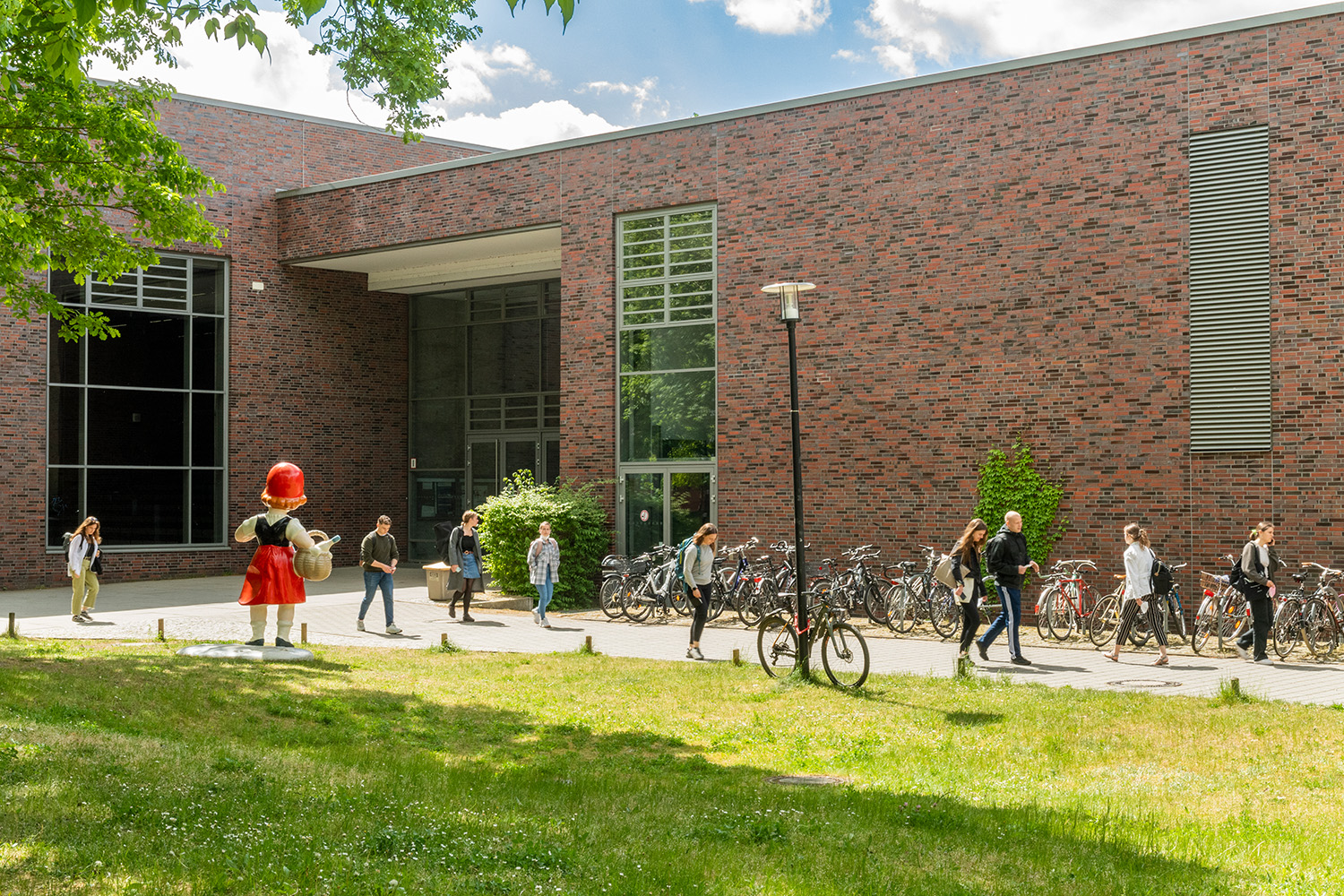
The 19th International Conference on Social Robotics (ICSR + Health 2027) will take place in Potsdam, Germany, from July 25 to 28, 2027. ICSR is the leading international forum that brings together researchers, academics, and industry professionals from across disciplines to advance the field of social robotics. Under the theme “ICSR + Health,” the 2027 conference will place a special focus on assistive and rehabilitation robotics, care, mental health and companionship, healthy aging, and the clinical, ethical, and societal questions associated with these applications. A particular emphasis will be placed on involving people directly affected by the use of social robots in healthcare and caregiving settings, including physicians, nurses, caregivers, patients, and people in need of care. Their perspectives and practical experiences will contribute to discussions on how social robotics can address real-world needs and challenges. Contributions from all areas of social robotics are welcome, reflecting the broad and interdisciplinary scope of the conference. The key submission deadlines have now been announced: Workshop and special-session proposals are due on January 15, 2027, followed by the paper submission deadline on February 15, 2027. Notifications of acceptance will be sent out on April 15, 2027, and the deadline for camera-ready papers is May 15, 2027. The General Chairs are Dr. Katharina Kühne of the University of Potsdam and PECoG, Prof. Dr. Ilona Buchem of Berlin University of Applied Sciences (BHT), and Prof. Dr. Oliver Bendel of the FHNW School of Business. The General Co-Chair is Prof. Dr. John-John Cabibihan of Qatar University. Further details will be published soon on the official conference website at icsr2027.org.
Fig.: Students at Campus Griebnitzsee (Photo: University of Potsdam/Tobias Hopfgarten)
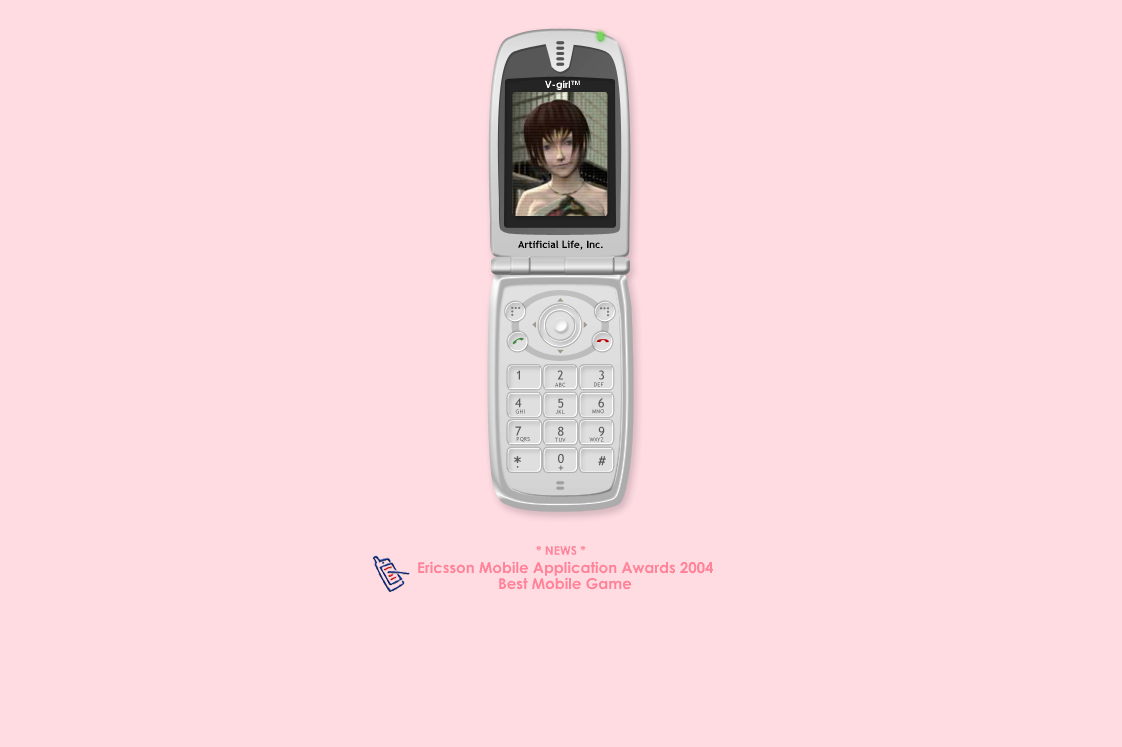
„Ein AI Companion (KI-Begleiter) – ‚AI‘ steht für ‚artificial intelligence‘, ‚KI‘ für ‚künstliche Intelligenz‘ – ist ein Chatbot (oder Sprachassistent), mit dem Benutzer private Gespräche und Beziehungen führen und der sie emotional unterstützt. Er wird scheinbar zum Freund und Vertrauten. Wenn er erotisch aufgeladen ist, wird er scheinbar zum Partner. Manche AI Companions können sich an die Persönlichkeit des Benutzers oder an seine Vorlieben anpassen und erlauben Rollenspiele aller Art, wie es auch in den MUDs und MOOs der 1980er- und 1990er-Jahre, in Second Life ab 2003 oder im Metaverse von Meta ab 2021 der Fall war. Oft ist ein Avatar vorhanden, zuweilen ein Hologramm (das kein echtes sein muss).“ Mit diesen Worten beginnt der Beitrag „AI Companion“ von Oliver Bendel, der am 17. Oktober 2026 im Gabler Wirtschaftslexikon erschienen ist. Auf die Einleitung folgt der Abschnitt „Beispiele“, in dem u.a. Virtual Girlfriend (V-Girl) und Replika genannt werden. In „Kritik und Ausblick“ heißt es: „Ein AI Companion kann in besonderen Situationen durchaus Unterstützung und Befriedigung bieten. Dazu gehören Gefängnis-, Krankenhaus- und Auslandsaufenthalte sowie Raumflüge ebenso wie Phasen der Einsamkeit und Entfremdung im gewöhnlichen Alltag. Er birgt allerdings die Gefahr, dass sich Benutzer mit einseitigen Beziehungen zufriedengeben und – nicht zuletzt durch ständige Verfügbarkeit und ständigen Zuspruch – emotional abhängig von ihm werden. Zudem können informationelle Autonomie und Privat- und Intimsphäre verletzt werden.“ Es schließen sich Einordnungen in die Bereichsethiken an. Der ganze Beitrag kann über wirtschaftslexikon.gabler.de/definition/ai-companion-178291 aufgerufen werden.
Abb.: Das Virtual Girlfriend von 2004 (Bild: Screenshot der Website von Artificial Life, Ausschnitt)
Das Schweizer Onlinemagazin Republik mit Sitz in Zürich sieht sich gerne als moralische Instanz. Es belehrt Unternehmen und Institutionen über den richtigen Umgang mit Daten, über Verantwortung und Transparenz. Nun räumte es am 15. Oktober 2026 in einem Artikel ein, dass Unbekannte über zwei Monate hinweg Zugriff auf eine Kopie seiner Datenbank hatten. Betroffen sind sämtliche aktiven und ehemaligen Benutzer, darunter Newsletter-Abonnenten. Abgeflossen sind Namen, E-Mail-Adressen und weitere persönliche Angaben. Auch die Zuordnung anonymer Kommentare zu ihren Verfassern war möglich. Im schlimmsten Fall könnten rund 2300 Personen identifiziert werden. Besonders brisant ist, dass die Sicherheitslücke seit dem 6. August bekannt war und ein Update bereitstand. Die Republik hatte es jedoch versäumt, die Sicherheitswarnungen des Herstellers zu abonnieren und automatische Prüfungen einzurichten. Der Angriff wurde erst am 14. Oktober bemerkt. Das Medium, das anderen regelmäßig erklärt, wie sie mit sensiblen Informationen umzugehen haben, hatte die eigenen Systeme nicht im Griff. Bemerkenswert ist auch die Sprache, in der die Republik über den Fall berichtet. Bereits im Vorspann heißt es: „Es sind Nutzerinnendaten, aber keine Kreditkarteninformationen abgeflossen.“ Das ist irreführend, denn selbstverständlich sind auch Daten männlicher Benutzer abgeflossen. Das vermeintliche generische Femininum, das in dieser Form gar nicht existiert, produziert hier eine Falschinformation. Im Artikel selbst ist von den „Angaben aller unserer Nutzerinnen“ die Rede, zu denen die „aktiven Verleger“ gezählt werden. Der Widerspruch könnte kaum deutlicher sein. Schon in einem früheren Beitrag wurde auf solche Falschnachrichten und -informationen durch Gendersprache hingewiesen und dabei die Republik als Beispiel angeführt. Vier Jahre später hat sich offenbar wenig geändert. Die moralische Haltung wird bis in Orthografie und Grammatik hinein demonstriert, während die journalistische Kompetenz auf der Strecke bleibt. Dabei wäre gerade bei einer Mitteilung über ein schwerwiegendes Datenleck sprachliche Genauigkeit geboten. Die Schweiz bräuchte dringend seriöse linke Stimmen – doch eine Simulation des Journalismus gefährdet nicht nur die Glaubwürdigkeit der Medien, sondern auch die Standfestigkeit der Demokratie.
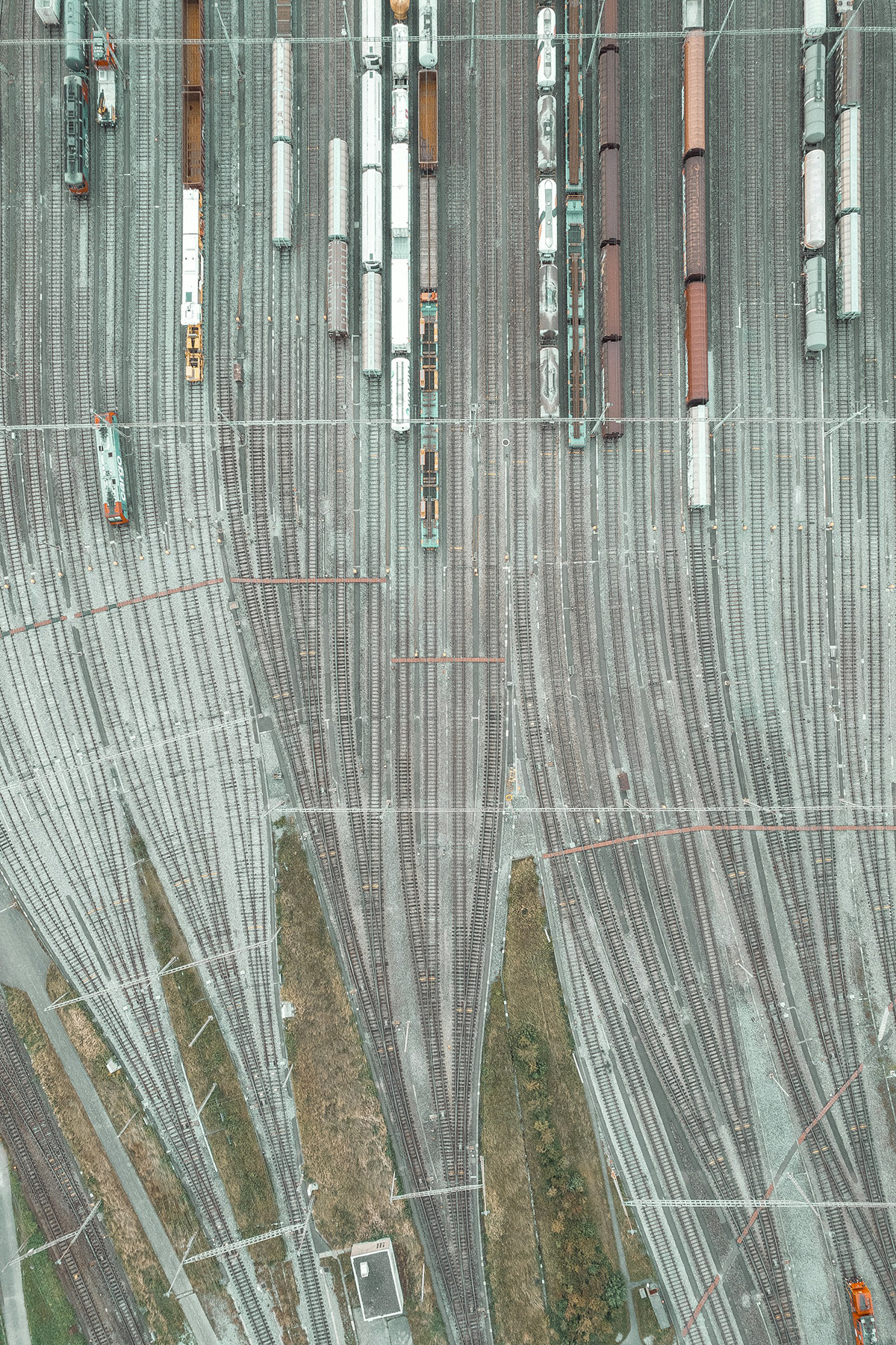
Wie der Tages-Anzeiger am 15. Oktober 2026 berichtete, hat die Regionalpolizei Wettingen-Limmattal bei einer Kontrolle in Spreitenbach AG erstmals eine Drohne zur Verfolgung eines flüchtenden E-Trottinett-Fahrers eingesetzt. Ein noch nicht 14-jähriger Jugendlicher versuchte am 29. September, einer Polizeikontrolle zu entkommen. Eine Drohne der Zivilschutzorganisation Wettingen-Limmattal flog ihm rund drei Minuten lang bis zu einem Wohnhaus nach, wo ihn die Polizei anschließend ausfindig machen konnte. Die mit Zoomkameras, Wärmebildtechnik und Liveübertragung ausgestatteten Drohnen sollen gefährliche Verfolgungsfahrten mit Polizeiautos durch Wohnquartiere vermeiden. Bei der Kontrollaktion wurden insgesamt vier Fahrzeuge beschlagnahmt, darunter ein manipuliertes E-Trottinett, das eine Geschwindigkeit von 74 km/h erreichte. Dass der Vorfall keine Weltneuheit ist, zeigt ein Blick ins englische Middlesbrough. Dort verfolgte im März 2026 eine Polizeidrohne einen flüchtenden 16-jährigen Motorradfahrer, der nach dem Abstellen seines Fahrzeugs in einem Garten festgenommen wurde.
Abb.: Der Rangierbahnhof bei Spreitenbach (Foto: Patrick Federi)
Im Jahre 1967 veröffentlichte Richard Brautigan sein Gedicht „All Watched Over by Machines of Loving Grace“. Darin entwirft der amerikanische Schriftsteller die Vision einer Welt, in der Tiere, Menschen und Maschinen in Harmonie zusammenleben. Er beschreibt kybernetische Wiesen und Wälder, in denen sich Säugetiere und Computer begegnen und Hirsche friedlich an Maschinen vorbeiziehen: „I like to think (and / the sooner the better!) / of a cybernetic meadow / where mammals and computers / live together in mutually / programming harmony / like pure water / touching clear sky. // I like to think / (right now, please!) / of a cybernetic forest / filled with pines and electronics / where deer stroll peacefully / past computers / as if they were flowers / with spinning blossoms. // I like to think / (it has to be!) / of a cybernetic ecology / where we are free of our labors / and joined back to nature, / returned to our mammal / brothers and sisters, / and all watched over / by machines of loving grace.“ Mehr als fünfzig Jahre später beschäftigt sich der wissenschaftliche Artikel „Passive, Active, and Proactive Systems and Machines for the Protection and Preservation of Animals and Animal Species“ (2022) von Oliver Bendel aus Zürich mit einer ähnlichen Vision: Maschinen und autonome Roboter könnten künftig Tiere und ganze Tierarten schützen, Gefahren erkennen und selbständig eingreifen. Während Brautigan seine kybernetische Ökologie als poetische Utopie entwirft, vielleicht mit ironischer Absicht, untersucht der Artikel die technischen und ethischen Voraussetzungen einer solchen Welt. Dabei steht weniger die Befreiung des Menschen von der Arbeit im Vordergrund, wie bei dem amerikanischen Schriftsteller, sondern der Schutz der Tiere vor menschlichen Eingriffen. Was in den 1960er-Jahren noch wie eine fantastische Vorstellung erschien, ist heute als faszinierende Möglichkeit in die Nähe gerückt.
Foto: Ein Buch von Richard Brautigan (Foto: Make It Old/CC BY-NC-SA 2.0)
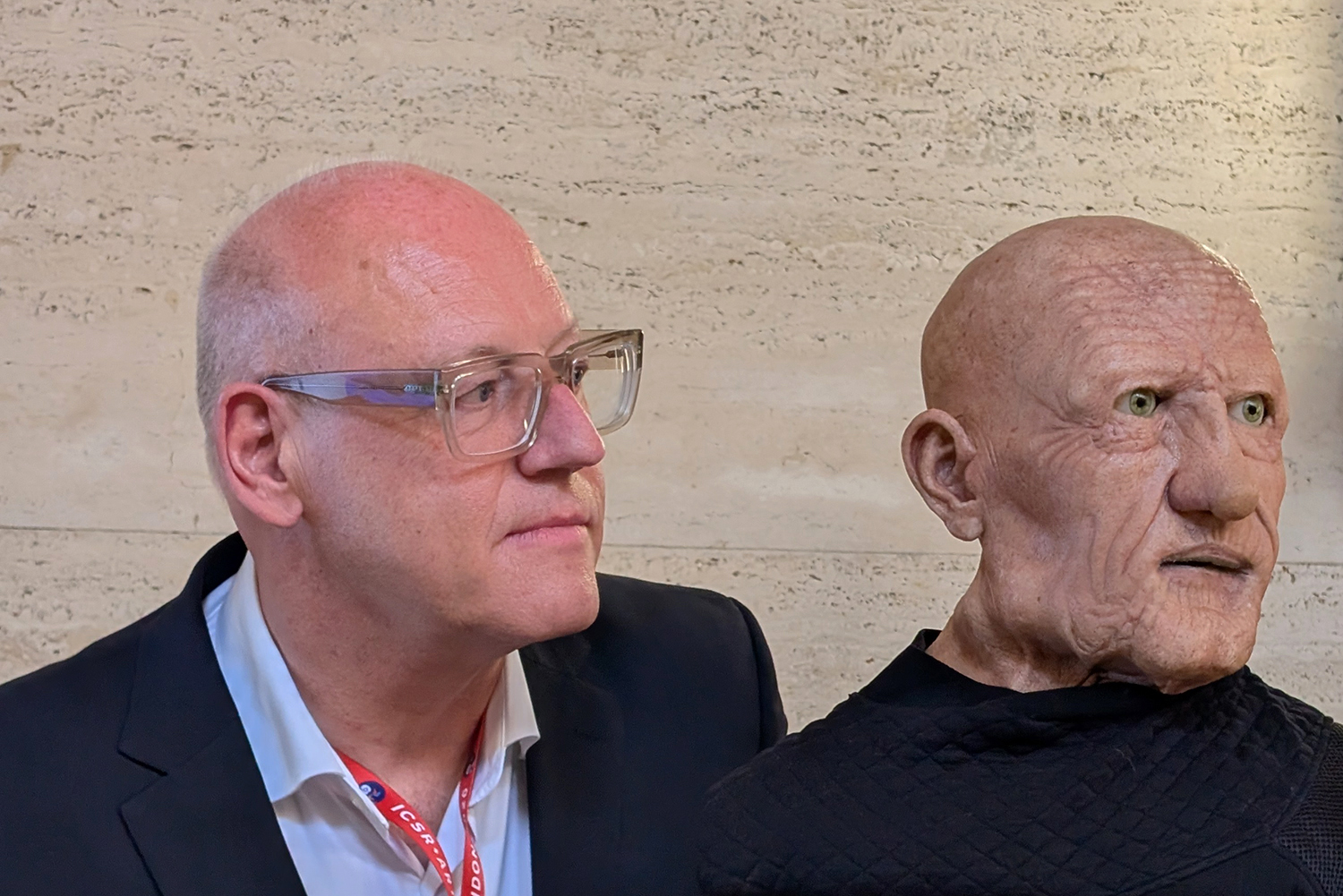
Ein Rückblick auf die VDI-Zukunftskonferenz „Humanoide Roboter 2016“ zeigt, wie sich das Verständnis humanoider Robotik innerhalb von zehn Jahren verändert hat. Die Veranstaltung fand am 13. und 14. Dezember 2016 in Aschheim bei München statt. Konferenzleiter war Prof. Dr. Frank Kirchner vom Deutschen Forschungszentrum für Künstliche Intelligenz (DFKI). Im Mittelpunkt standen Maschinen, die dem Menschen in ihrem Aussehen, ihrem Aufbau oder ihrem Verhalten nachempfunden sind. Das Programm belegt dieses breite Verständnis eindrücklich. Behandelt wurden u.a. dynamisches zweibeiniges Laufen nach menschlichem Vorbild, Taktilsensorik für anthropomorphe Roboterhände, emotionsbasierte Mensch-Roboter-Interaktion und der anthropomorphe Roboterkopf Flobi. Auch der hominide Roboter Charlie, der sich an der Morphologie von Schimpansen orientierte, wurde vorgestellt. Weitere Beiträge beschäftigten sich mit humanoiden Robotern als Trainern für industrielle Montageprozesse und als Avataren für Rettungskräfte. Mit seinem Vortrag „Der LÜGENBOT als Umsetzung einer Münchhausen-Maschine“ brachte Prof. Dr. Oliver Bendel zudem die Maschinenethik ins Spiel, angewandt auf Chatbots. Insgesamt verdeutlicht das Programm, dass humanoide Robotik damals nicht auf bestimmte Einsatzgebiete oder universelle Fähigkeiten reduziert wurde. Entscheidend war vielmehr die Orientierung am Menschen, an seiner Gestalt, seiner Bewegung, seiner Wahrnehmung und seiner Interaktion. Heute wird der Begriff des humanoiden Roboters häufig im Zusammenhang mit Allzweckrobotern (General-Purpose Robots) verwendet, die möglichst viele unterschiedliche Aufgaben übernehmen sollen, vor allem in Industrie, Logistik und Haushalt. Damit verschiebt und verengt sich die Bedeutung: Die menschenähnliche Gestalt wird zunehmend als Mittel zur universellen Einsetzbarkeit verstanden, während die Nachbildung menschlichen Verhaltens und menschlicher Ausdrucksformen in den Hintergrund tritt. Der Rückblick auf die VDI-Zukunftskonferenz von 2016 erinnert daran, dass humanoide Robotik ein wesentlich breiteres Forschungs- und Entwicklungsfeld ist, als es die gegenwärtige Diskussion um Allzweckroboter vermuten lässt.
Abb.: Oliver Bendel mit Euclid (Foto: Nihan Karataş)
VDI nachrichten hat im September 2026 ein Interview mit Prof. Dr. Oliver Bendel zu neuen Berufen in der Raumfahrt geführt. Der Technikphilosoph hat nach dem Gedichtband „Die Astronautin“ (2020) im Jahre 2025 ein Lexikon zum Weltraum vorgelegt (Springer Gabler). Für das Coffee-Table-Buch „RE:VIEW“ von We Mind Publishing wurde er neben 27 anderen Persönlichkeiten – wie Brian May und Jonathan Meese – dazu befragt, ob die Menschheit es wert ist, gerettet zu werden, etwa wenn ein Meteorit auf die Erde zurast. Beteiligt an dem Buch ist auch die European Space Agency, kurz ESA. Eine der Fragen von VDI nachrichten war, welche neuen Berufsfelder entstehen werden. Er antwortete darauf: „Meines Erachtens braucht die neue Raumfahrt keineswegs nur Ingenieure und Astronauten. Schon heute wächst der Bedarf an Informatikern, KI-Spezialisten, Robotikern, Datenwissenschaftlern und Experten für Cybersicherheit. Mit längeren bemannten Missionen kommen Ärzte, Psychologen, Ernährungswissenschaftler und Spezialisten für Lebenserhaltung hinzu. Auch Juristen, Ökonomen und Ethiker werden gebraucht, etwa wenn es um Weltraumrecht, Weltraumethik, Planetenschutz, Weltraumschrott, Rohstoffabbau oder den Umgang mit autonomen Systemen geht.“ Aus seinen Antworten wurde im Artikel „Völlig schwerelos: Weltraum bietet neue Chancen für Ingenieure“ zitiert, der am 9. Oktober 2026 erschienen ist. Der Titel erinnert natürlich an „Völlig losgelöst“ von Peter Schilling, der Major Tom aus David Bowies „Space Oddity“ zurückgeholt und ihm neues Leben eingehaucht hat.
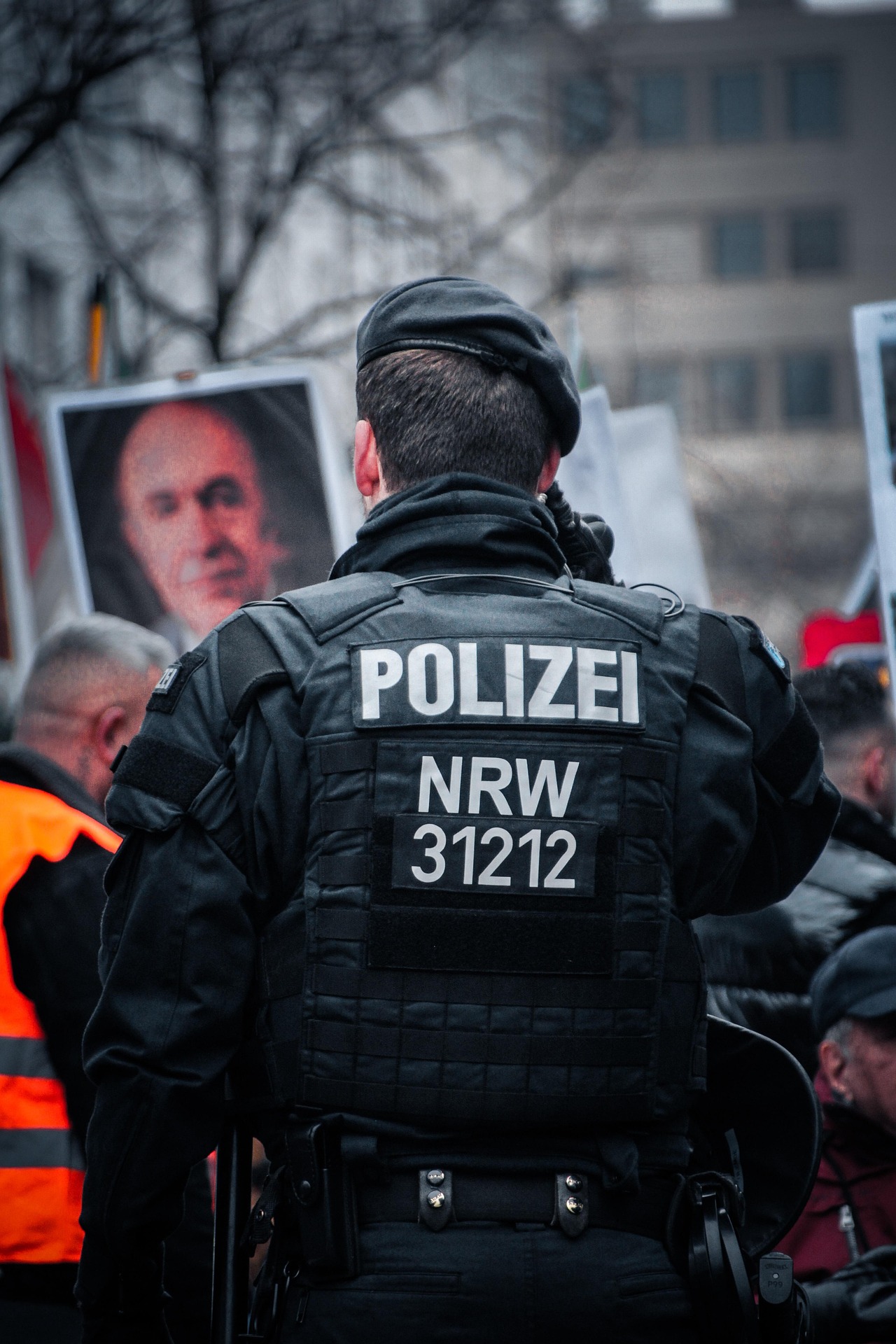
In Köln soll eine 16-Jährige mithilfe eines humanoiden Roboters sexuell belästigt worden sein. Wie die Polizei Köln am 12. Oktober 2026 in einer Pressemitteilung schrieb, näherte sich das etwa 1,20 Meter große, rot-goldene Gerät der Jugendlichen in der Nacht zum Sonntag vor einem Schnellrestaurant von hinten, berührte ihr Gesäß und führte Stoßbewegungen aus. Der 16-jährige Besitzer des Roboters aus Wegberg und sein 19-jähriger Begleiter sollen das Geschehen gefilmt, live in sozialen Medien gestreamt und kommentiert haben. Alarmierte Polizeibeamte trafen die Beteiligten wenig später an und entdeckten den inzwischen verstauten Roboter im Kofferraum eines VW. Sie beschlagnahmten das Gerät sowie zwei Mobiltelefone. Bei dem Roboter könnte es sich um einen Unitree R1 des chinesischen Herstellers Unitree Robotics handeln. Das rund 1,23 Meter große Modell kann ferngesteuert und für bestimmte Bewegungsabläufe programmiert werden. Eine Bestätigung der Modellidentität liegt bislang nicht vor. Die Kriminalpolizei ermittelt wegen des Verdachts der Beleidigung auf sexueller Grundlage. Insbesondere soll geklärt werden, ob die Bewegungen des Roboters zum Tatzeitpunkt gezielt gesteuert wurden.
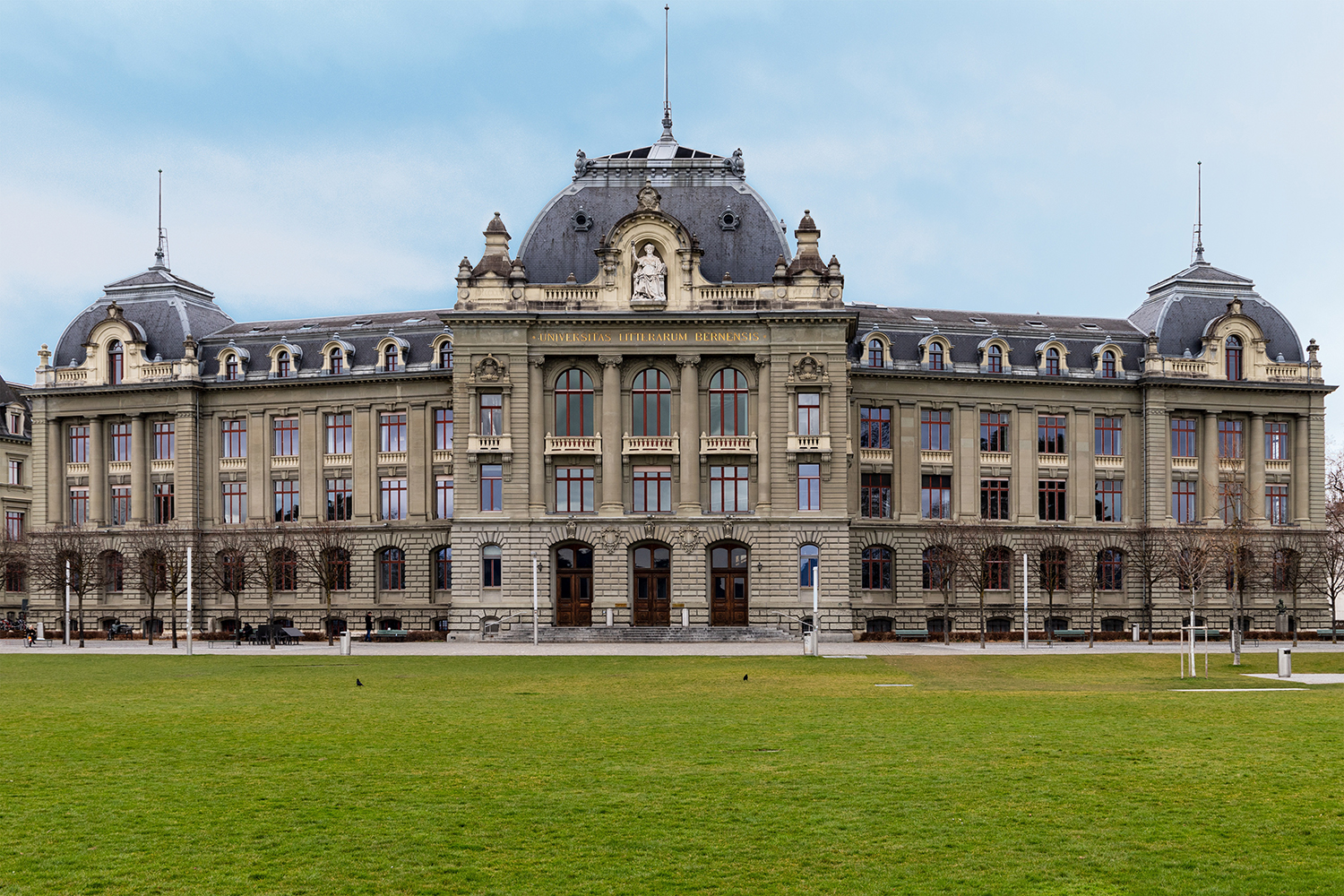
Auch nach fast zehn Jahren hat die Universität Bern ihre fragwürdigen „Empfehlungen“ für eine „Geschlechtergerechte Sprache“ (so der Titel des Dokuments) nicht zurückgezogen. Das Redaktionsteam bildeten Prof. Dr. Martin Reisigl, Ursina Anderegg, Lilian Fankhauser und Kathrin Beeler. Auf Seite 43 wird unter der Überschrift „Korrektes Zitieren“ dazu geraten, das generische Maskulinum in wissenschaftlichen Zitaten mit „[sic!]“ zu kennzeichnen. Dieses Zeichen dient üblicherweise dazu, auf Fehler oder Auffälligkeiten im Original hinzuweisen. Damit wird eine wissenschaftliche Konvention für sprachpolitische Zwecke missbraucht und der irreführende Eindruck erweckt, der zitierte Wissenschaftler habe einen Fehler begangen. Eine solche Praxis ist wissenschaftsethisch höchst bedenklich und widerspricht grundlegenden Prinzipien wissenschaftlicher Redlichkeit, insbesondere der Pflicht, fremde Aussagen sachgerecht und ohne irreführende Zusätze wiederzugeben. Sie wirft zudem Fragen hinsichtlich der Wissenschaftsfreiheit (Art. 20 BV) auf, insbesondere wenn die Empfehlung bei der Beurteilung wissenschaftlicher Arbeiten zum Maßstab erhoben wird. Auch persönlichkeitsrechtlich ist sie bedenklich: Die Herabsetzung des wissenschaftlichen Ansehens kann unter Umständen eine Verletzung von Art. 28 ZGB darstellen. Die Universität Bern setzt damit ausgerechnet ihre eigenen Wissenschaftler einem rechtlichen Risiko aus, wenn diese ihrer Empfehlung folgen. Wie viele Geschädigte es aufgrund der Anwendung dieser Empfehlung tatsächlich gibt, lässt sich kaum feststellen.
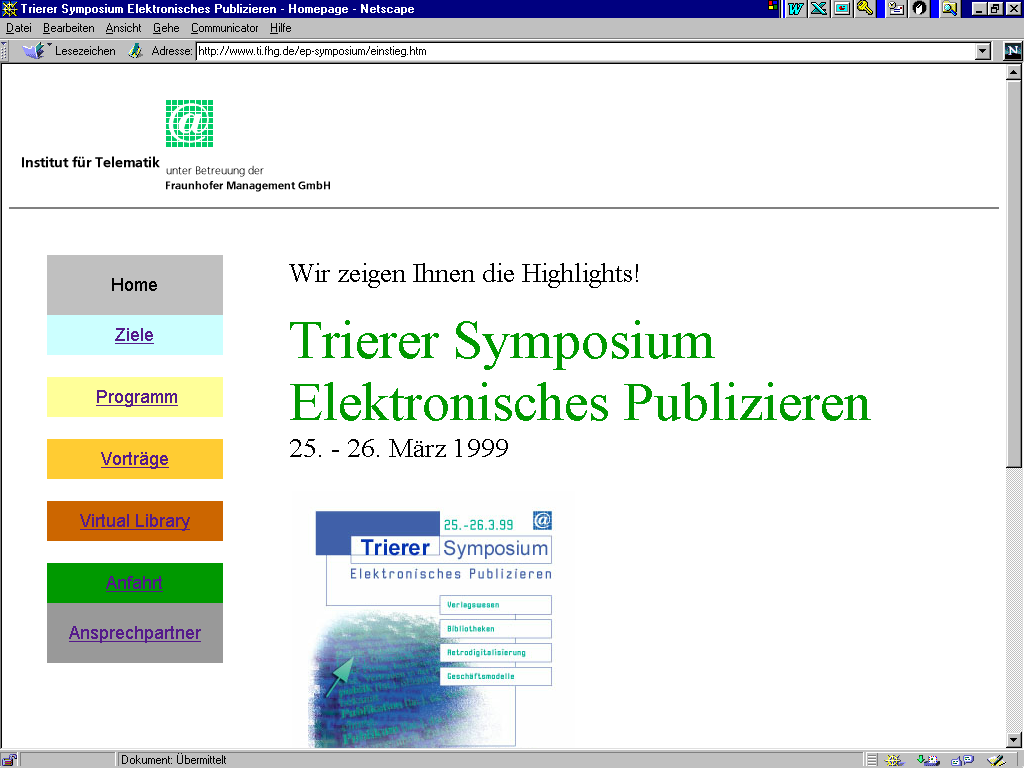
Spiegel Online ging 1994 online, Telepolis 1996. Die späten 1990er-Jahre waren ein Labor für Webdesign. Es gab immer noch die von Frames bestimmten Websites mit strukturierten Hintergründen und Bauarbeitermännchen, die als Animated Gifs den Aufbau anzeigten. Es gab aber auch bereits aufgeräumte, von Weiß dominierte Flächen – die Website der Electronic Mall Bodensee (EMB) ab 1996, die Suchmaschine von Google ab 1997 und die Website von Nethics.net ab 1999 waren Beispiele dafür. Am Institut für Telematik in Trier wurde ab Ende 1998 ebenfalls in dieser Richtung experimentiert, etwa im Rahmen des Trierer Symposiums für Elektronisches Publizieren und des Projekts intec. Das Symposium fand vom 25. bis zum 26. März 1999 statt. Die zugehörige Website hatte Oliver Bendel erstellt. Es dominierte Weiß. Die Navigationselemente waren einfach und bunt. Die Überschriften waren grün, wie das Logo des Instituts. Seine Fachführer für die Bibliothek der Universität Konstanz aus dem Jahre 1997 waren noch deutlich von den Anfängen des WWW geprägt gewesen. Es fanden sich Braun und Beige als Farben darin – und die legendären horizontalen Linien. Doch zurück zum Institut und seinen Projekten: Ziel von intec war der Aufbau einer fachbezogenen Kompetenz in mittelständischen Bauunternehmen zur effizienten Vorbereitung und Abwicklung von Bauvorhaben durch den Einsatz moderner Informations- und Kommunikationstechnologien. Projektleiter und Webmaster für das Institut war Oliver Bendel. Seine studentische Mitarbeiterin Carmen Leopold schaffte es, der Website ein modernes, leichtes Design zu verleihen, das die Einstiegsseite und alle weiteren Seiten bestimmte. Ein grafisches, hellgraues Element stellte den Zusammenhang zwischen ihnen her. Die einfache Navigation verschob sich, nachdem man die Homepage hinter sich gelassen hatte, nach links, um den Inhalten mehr Raum zu geben. Listen mit den Projektpartnern und den Kontaktadressen waren dort ebenso vorhanden wie News. Lediglich die horizontalen Linien erinnerten noch an die Frühzeit des WWW – ansonsten blickte man schon ins neue Jahrtausend.