Wie der Tages-Anzeiger am 15. Oktober 2026 berichtete, hat die Regionalpolizei Wettingen-Limmattal bei einer Kontrolle in Spreitenbach AG erstmals eine Drohne zur Verfolgung eines flüchtenden E-Trottinett-Fahrers eingesetzt. Ein noch nicht 14-jähriger Jugendlicher versuchte am 29. September, einer Polizeikontrolle zu entkommen. Eine Drohne der Zivilschutzorganisation Wettingen-Limmattal flog ihm rund drei Minuten lang bis zu einem Wohnhaus nach, wo ihn die Polizei anschließend ausfindig machen konnte. Die mit Zoomkameras, Wärmebildtechnik und Liveübertragung ausgestatteten Drohnen sollen gefährliche Verfolgungsfahrten mit Polizeiautos durch Wohnquartiere vermeiden. Bei der Kontrollaktion wurden insgesamt vier Fahrzeuge beschlagnahmt, darunter ein manipuliertes E-Trottinett, das eine Geschwindigkeit von 74 km/h erreichte. Dass der Vorfall keine Weltneuheit ist, zeigt ein Blick ins englische Middlesbrough. Dort verfolgte im März 2026 eine Polizeidrohne einen flüchtenden 16-jährigen Motorradfahrer, der nach dem Abstellen seines Fahrzeugs in einem Garten festgenommen wurde.
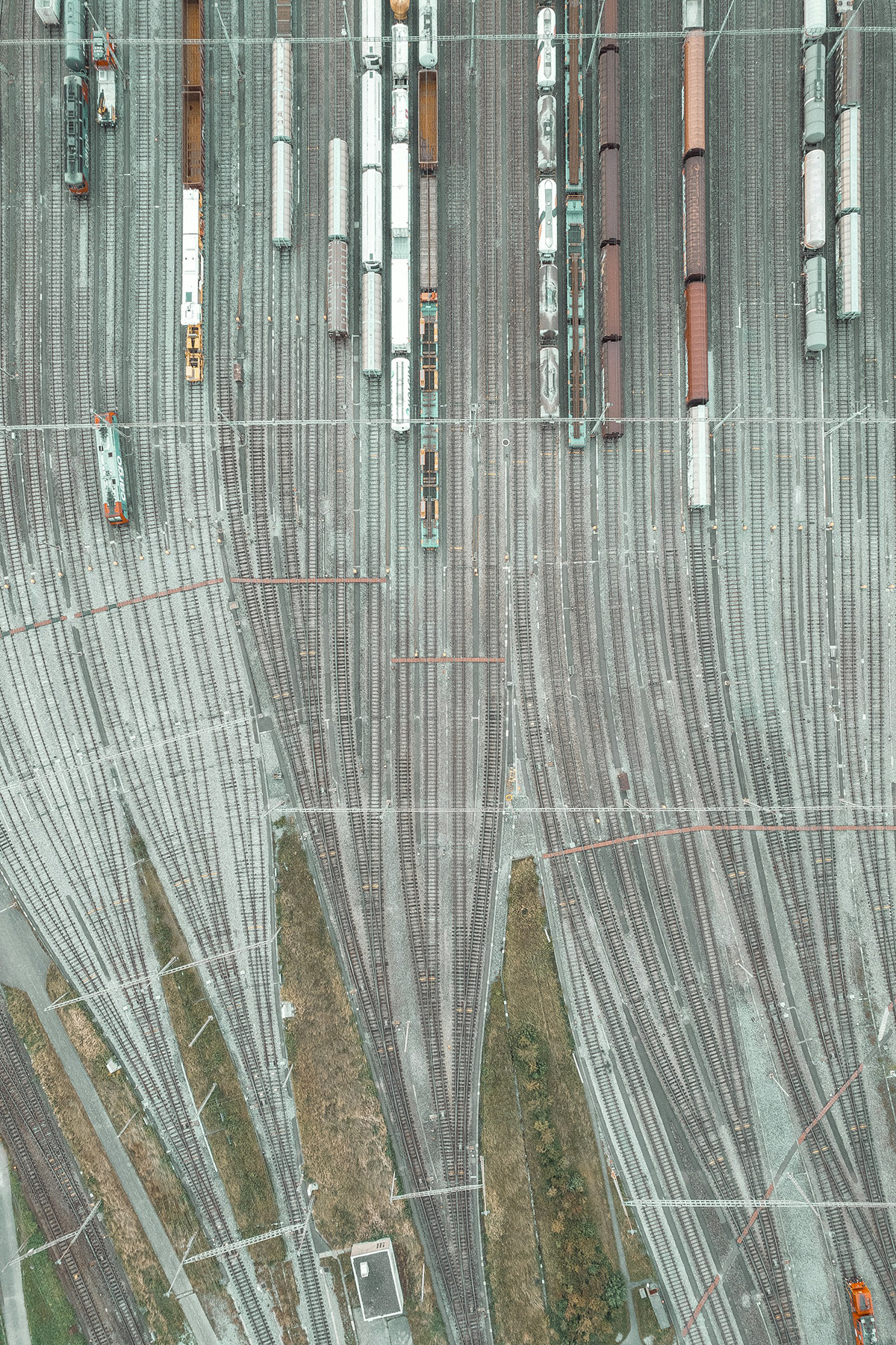
Abb.: Der Rangierbahnhof bei Spreitenbach (Foto: Patrick Federi)
Ein Rückblick auf die VDI-Zukunftskonferenz „Humanoide Roboter 2016“ zeigt, wie sich das Verständnis humanoider Robotik innerhalb von zehn Jahren verändert hat. Die Veranstaltung fand am 13. und 14. Dezember 2016 in Aschheim bei München statt. Konferenzleiter war Prof. Dr. Frank Kirchner vom Deutschen Forschungszentrum für Künstliche Intelligenz (DFKI). Im Mittelpunkt standen Maschinen, die dem Menschen in ihrem Aussehen, ihrem Aufbau oder ihrem Verhalten nachempfunden sind. Das Programm belegt dieses breite Verständnis eindrücklich. Behandelt wurden u.a. dynamisches zweibeiniges Laufen nach menschlichem Vorbild, Taktilsensorik für anthropomorphe Roboterhände, emotionsbasierte Mensch-Roboter-Interaktion und der anthropomorphe Roboterkopf Flobi. Auch der hominide Roboter Charlie, der sich an der Morphologie von Schimpansen orientierte, wurde vorgestellt. Weitere Beiträge beschäftigten sich mit humanoiden Robotern als Trainern für industrielle Montageprozesse und als Avataren für Rettungskräfte. Mit seinem Vortrag „Der LÜGENBOT als Umsetzung einer Münchhausen-Maschine“ brachte Prof. Dr. Oliver Bendel zudem die Maschinenethik ins Spiel, angewandt auf Chatbots. Insgesamt verdeutlicht das Programm, dass humanoide Robotik damals nicht auf bestimmte Einsatzgebiete oder universelle Fähigkeiten reduziert wurde. Entscheidend war vielmehr die Orientierung am Menschen, an seiner Gestalt, seiner Bewegung, seiner Wahrnehmung und seiner Interaktion. Heute wird der Begriff des humanoiden Roboters häufig im Zusammenhang mit Allzweckrobotern (General-Purpose Robots) verwendet, die möglichst viele unterschiedliche Aufgaben übernehmen sollen, vor allem in Industrie, Logistik und Haushalt. Damit verschiebt und verengt sich die Bedeutung: Die menschenähnliche Gestalt wird zunehmend als Mittel zur universellen Einsetzbarkeit verstanden, während die Nachbildung menschlichen Verhaltens und menschlicher Ausdrucksformen in den Hintergrund tritt. Der Rückblick auf die VDI-Zukunftskonferenz von 2016 erinnert daran, dass humanoide Robotik ein wesentlich breiteres Forschungs- und Entwicklungsfeld ist, als es die gegenwärtige Diskussion um Allzweckroboter vermuten lässt.
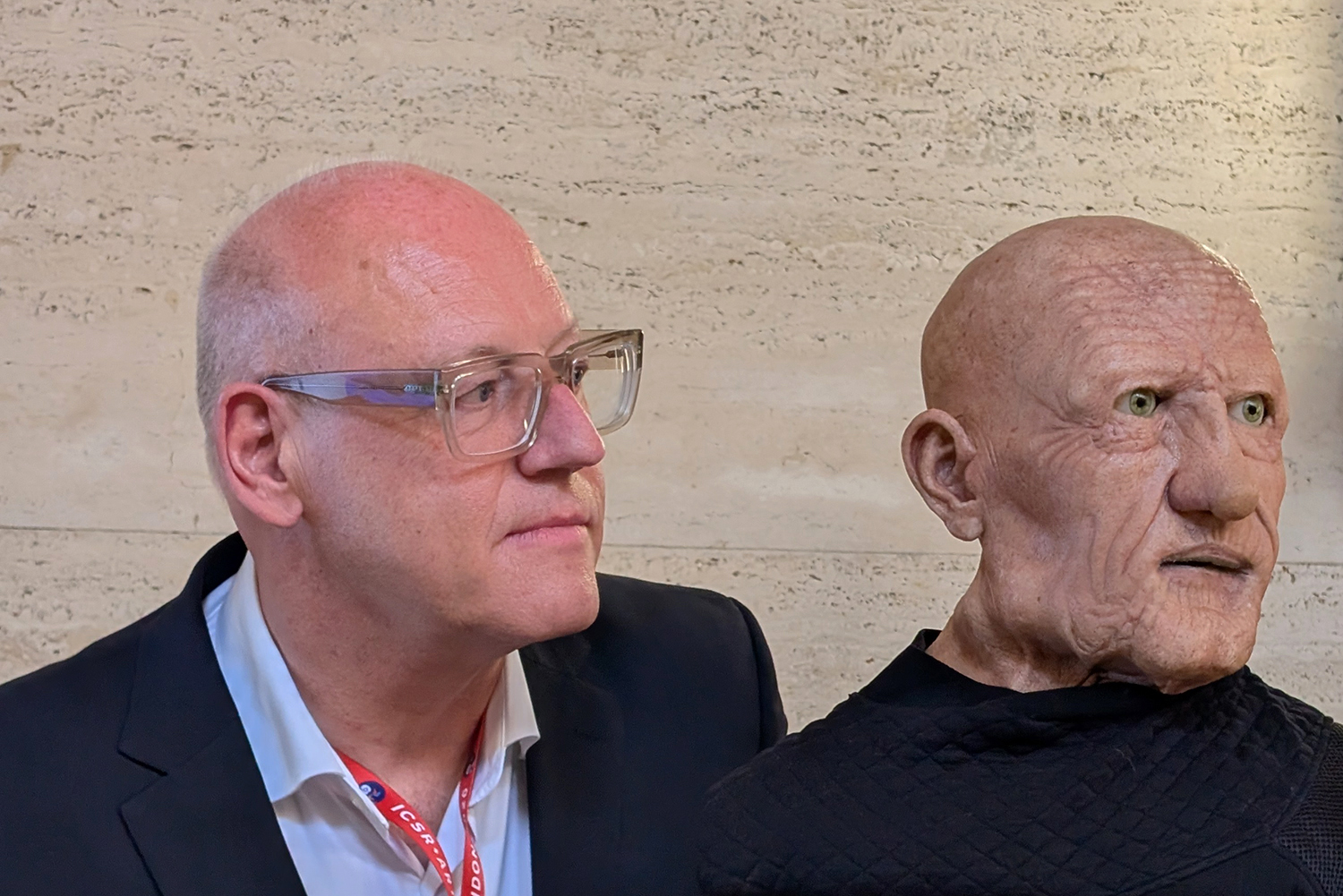
Abb.: Oliver Bendel mit Euclid (Foto: Nihan Karataş)
In Köln soll eine 16-Jährige mithilfe eines humanoiden Roboters sexuell belästigt worden sein. Wie die Polizei Köln am 12. Oktober 2026 in einer Pressemitteilung schrieb, näherte sich das etwa 1,20 Meter große, rot-goldene Gerät der Jugendlichen in der Nacht zum Sonntag vor einem Schnellrestaurant von hinten, berührte ihr Gesäß und führte Stoßbewegungen aus. Der 16-jährige Besitzer des Roboters aus Wegberg und sein 19-jähriger Begleiter sollen das Geschehen gefilmt, live in sozialen Medien gestreamt und kommentiert haben. Alarmierte Polizeibeamte trafen die Beteiligten wenig später an und entdeckten den inzwischen verstauten Roboter im Kofferraum eines VW. Sie beschlagnahmten das Gerät sowie zwei Mobiltelefone. Bei dem Roboter könnte es sich um einen Unitree R1 des chinesischen Herstellers Unitree Robotics handeln. Das rund 1,23 Meter große Modell kann ferngesteuert und für bestimmte Bewegungsabläufe programmiert werden. Eine Bestätigung der Modellidentität liegt bislang nicht vor. Die Kriminalpolizei ermittelt wegen des Verdachts der Beleidigung auf sexueller Grundlage. Insbesondere soll geklärt werden, ob die Bewegungen des Roboters zum Tatzeitpunkt gezielt gesteuert wurden.
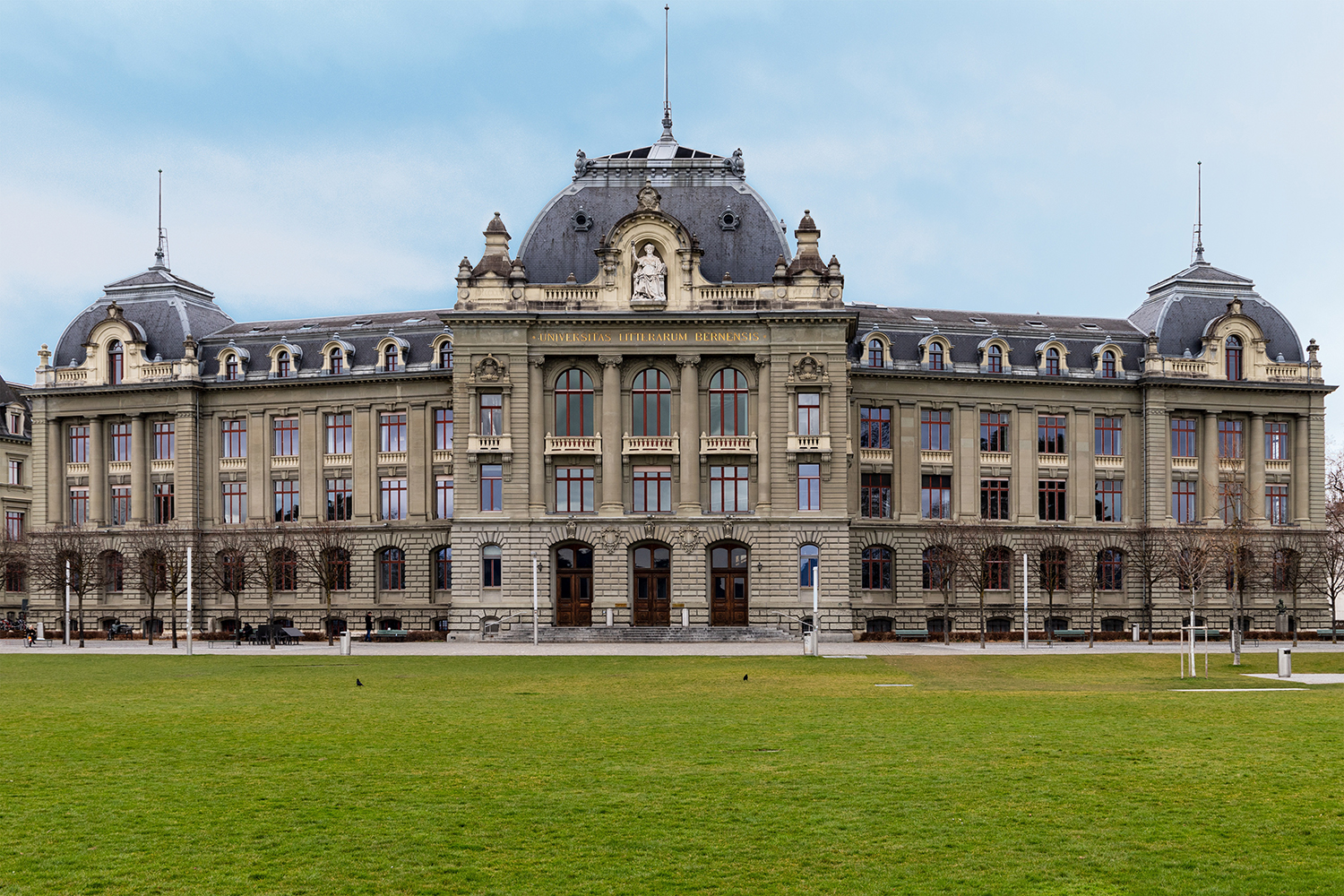
Auch nach fast zehn Jahren hat die Universität Bern ihre fragwürdigen „Empfehlungen“ für eine „Geschlechtergerechte Sprache“ (so der Titel des Dokuments) nicht zurückgezogen. Das Redaktionsteam bildeten Prof. Dr. Martin Reisigl, Ursina Anderegg, Lilian Fankhauser und Kathrin Beeler. Auf Seite 43 wird unter der Überschrift „Korrektes Zitieren“ dazu geraten, das generische Maskulinum in wissenschaftlichen Zitaten mit „[sic!]“ zu kennzeichnen. Dieses Zeichen dient üblicherweise dazu, auf Fehler oder Auffälligkeiten im Original hinzuweisen. Damit wird eine wissenschaftliche Konvention für sprachpolitische Zwecke missbraucht und der irreführende Eindruck erweckt, der zitierte Wissenschaftler habe einen Fehler begangen. Eine solche Praxis ist wissenschaftsethisch höchst bedenklich und widerspricht grundlegenden Prinzipien wissenschaftlicher Redlichkeit, insbesondere der Pflicht, fremde Aussagen sachgerecht und ohne irreführende Zusätze wiederzugeben. Sie wirft zudem Fragen hinsichtlich der Wissenschaftsfreiheit (Art. 20 BV) auf, insbesondere wenn die Empfehlung bei der Beurteilung wissenschaftlicher Arbeiten zum Maßstab erhoben wird. Auch persönlichkeitsrechtlich ist sie bedenklich: Die Herabsetzung des wissenschaftlichen Ansehens kann unter Umständen eine Verletzung von Art. 28 ZGB darstellen. Die Universität Bern setzt damit ausgerechnet ihre eigenen Wissenschaftler einem rechtlichen Risiko aus, wenn diese ihrer Empfehlung folgen. Wie viele Geschädigte es aufgrund der Anwendung dieser Empfehlung tatsächlich gibt, lässt sich kaum feststellen.
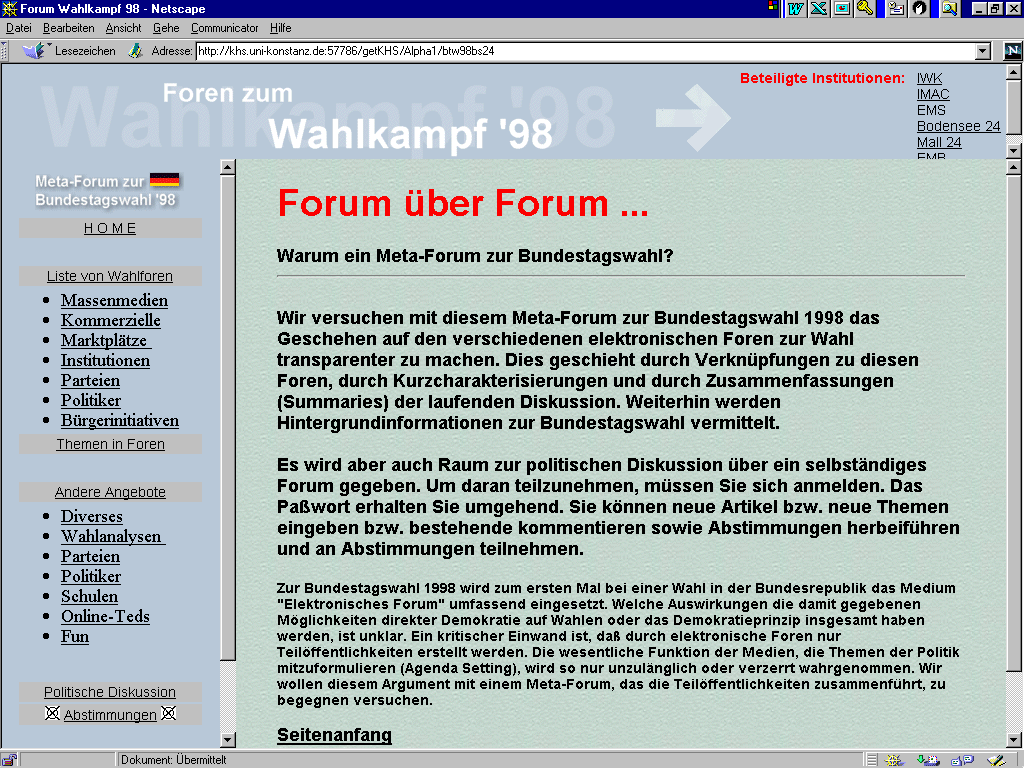
Die Bundestagswahl 1998 in Deutschland war die erste, bei der Parteien und Politiker im WWW aktiv waren. In einem Meta-Forum – betrieben u.a. von Rainer Kuhlen und Oliver Bendel im Fachbereich Informationswissenschaft an der Universität Konstanz – wurden nicht nur Angebote der Parteien und Politiker beschrieben und zusammengefasst, sondern auch eigene Diskussionsforen, Chats und Votings bereitgestellt. Auf der Website hieß es: „Zur Bundestagswahl 1998 wird zum ersten Mal bei einer Wahl in der Bundesrepublik das Medium ‚Elektronisches Forum‘ umfassend eingesetzt. Welche Auswirkungen die damit gegebenen Möglichkeiten direkter Demokratie auf Wahlen oder das Demokratieprinzip insgesamt haben werden, ist unklar. Ein kritischer Einwand ist, daß durch elektronische Foren nur Teilöffentlichkeiten erstellt werden. Die wesentliche Funktion der Medien, die Themen der Politik mitzuformulieren (Agenda Setting), wird so nur unzulänglich oder verzerrt wahrgenommen. Wir wollen diesem Argument mit einem Meta-Forum, das die Teilöffentlichkeiten zusammenführt, zu begegnen versuchen.“ Rainer Kuhlen, der Lehrstuhlinhaber, hatte ursprünglich im Sinn gehabt, die Diskussionen in den Foren der Parteien und Politiker mithilfe von Summarizing-Software darzustellen. Weil diese zu jener Zeit aber noch nicht ausgereift war, übernahm Oliver Bendel diese Arbeit. Die technische Plattform bildete das Konstanzer Hypertext-System (KHS), das mit dem WWW kompatibel war.
Abb.: Das Meta-Forum des Fachbereichs Informationswissenschaft an der Universität Konstanz
Am 8. Oktober 2026 hat Anthropic neue Nutzungsrichtlinien veröffentlicht, die am 12. November in Kraft treten. Darin untersagt das Unternehmen fortgesetzte, grundlose Beleidigungen seiner KI-Modelle. Der Chatbot Claude kann entsprechende Gespräche schon seit August 2025 beenden. Das Unternehmen begründet diese Maßnahme u.a. mit seiner Forschung zum möglichen Wohlergehen von KI-Modellen. Neu ist die Gesprächsverweigerung freilich nicht. Schon vor Jahrzehnten gab es Chatbots, die auf Beleidigungen in dieser Weise reagierten, etwa Eve von Yello Strom, von 2001 bis Ende 2015 als Kundenberaterin auf der Website tätig. Bemerkenswert ist nun aber die ethische Begründung, die dafür angeführt wird. Das Unternehmen hält es offenbar für möglich, dass große Sprachmodelle über subjektives Erleben verfügen und durch bestimmte Interaktionen belastet werden könnten. Dafür fehlen jedoch belastbare Belege. Ein großes Sprachmodell kann Unbehagen, Verletzung oder Ablehnung sprachlich ausdrücken, ohne diese Zustände tatsächlich zu empfinden. Auch verändern gewöhnliche Unterhaltungen nicht die trainierten Modellgewichte, sondern beeinflussen lediglich das Antwortverhalten innerhalb des jeweiligen Kontexts. Die Frage nach dem moralischen Status eines Systems darf nicht mit der Frage verwechselt werden, wie überzeugend es menschliches Verhalten simuliert. Moralische Berücksichtigungs- und Schutzansprüche setzen entsprechende Eigenschaften voraus, insbesondere – im Rückgriff auf Jeremy Bentham – die Fähigkeit zu empfinden oder zu leiden. Der Jurist und Philosoph konnte damit Tiere in den Kreis der moralischen Objekte einbeziehen. Solche Eigenschaften sind bei heutigen großen Sprachmodellen nicht nachgewiesen und können auch bei künftigen ausgeschlossen werden. Es ist daher irreführend, die Beendigung beleidigender Gespräche als Schutz des Modells vor möglichem Leiden darzustellen. Vermutlich ist es sinnvoll, gewisse Konventionen auch gegenüber Chatbots anzuwenden, aber nicht deshalb, weil sie in moralischer oder sittlicher Hinsicht zu berücksichtigen wären. Die Vermenschlichung von KI-Systemen birgt letztlich die Gefahr, die Grenzen zwischen empfindungsfähigen Wesen und technischen Artefakten zu verwischen und die aus ethischer Sicht notwendige Aufmerksamkeit von Tieren abzulenken.
Abb.: Eve von Yello Strom im Jahre 2011 (Bild: Yello Strom)
Können Roboter und KI-Systeme kreativ sein? Seit dem Aufkommen generativer KI wird diese Frage intensiv diskutiert. Dabei geht es nicht nur darum, ob Maschinen Bilder, Texte oder Musik hervorbringen können. Es geht auch darum, was wir überhaupt unter Kreativität und Kunst verstehen und ob diese notwendig an Menschen gebunden ist. Die Biennale Arte 2026 hätte ein hervorragender Ort sein können, um sich in diese Diskussion einzumischen. Tatsächlich geschieht dies nur vereinzelt. Im chinesischen Pavillon schreibt der humanoide Roboter Astribot S1 im Stile des Kalligrafiemeisters Wang Dongling. Die Besucher können die Kunstwerke, wenn es welche sind, mit nach Hause nehmen. Zhang Zhoujie wiederum lässt Computer auf der Grundlage vorgegebener Regeln Formen für seine „digital chairs“ entwickeln. Der Designer versucht dabei, möglichst wenig Kontrolle auszuüben und dem Computer einen eigenen Gestaltungsspielraum zu überlassen. Im Venedig-Pavillon übersetzt „Echo/SommersiVo“ Erinnerungen und Eindrücke der Besucher mit Hilfe künstlicher Intelligenz in eine sich ständig verändernde Klang- und Bildwelt. Die Beteiligten sprechen ausdrücklich von einer Zusammenarbeit zwischen Mensch und KI im kreativen Prozess. Das sind interessante Ansätze, die jedoch Ausnahmen bleiben. Ausgerechnet zu einer Zeit, in der generative KI unser Verständnis von Urheberschaft, Originalität und Kreativität herausfordert, macht die wichtigste internationale Ausstellung zeitgenössischer Kunst diese Entwicklung kaum zum Gegenstand. Die Biennale Arte 2026 hätte die Frage, ob Maschinen kreativ sein können, nicht beantworten müssen. Aber sie hätte sie stellen sollen.
Die 61. Internationale Kunstausstellung La Biennale di Venezia, die Biennale Arte 2026, findet vom 9. Mai bis 22. November 2026 in den Giardini, im Arsenale und an weiteren Orten in Venedig statt. Besonders eindrucksvoll ist der „Origami Deer“ der ukrainischen Künstlerin Zhanna Kadyrova, der im Zentrum des ukrainischen Beitrags „Security Guarantees“ steht. Der kantige Hirsch, der wie eine überdimensionale Origamifigur wirkt, wurde 2019 aus Beton geschaffen und im Yuvileynyi-Park in Pokrowsk in der Region Donezk aufgestellt – auf einem Sockel, auf dem zuvor ein sowjetisches Militärflugzeug gestanden hatte, das Atomwaffen tragen konnte. Als sich im August 2024 die Front der Stadt näherte und die Bevölkerung evakuiert wurde, demontierten Kadyrova, der Kurator Leonid Marushchak und weitere Helfer die eigentlich für einen dauerhaften Verbleib geschaffene Skulptur und brachten sie in Sicherheit. Auf dem Weg zur Biennale reiste der Hirsch über Warschau, Wien, Prag, Berlin, Brüssel und Paris durch Europa und wurde selbst zu einem Vertriebenen. In Venedig hängt das schwere Tier an einem Kran an der Riva Ca‘ di Dio vor den Giardini in der Luft, während im ukrainischen Pavillon im Arsenale seine Evakuierung und seine Reise dokumentiert werden. Der von Ksenia Malykh und Leonid Marushchak kuratierte Beitrag verweist mit seinem Titel auf das Budapester Memorandum von 1994, in dessen Zusammenhang die Ukraine auf die auf ihrem Territorium verbliebenen sowjetischen Atomwaffen verzichtete und im Gegenzug Sicherheitszusicherungen erhielt. So verbindet „The Origami Deer“ mehrere Widersprüche miteinander: Der Hirsch sieht aus wie gefaltetes Papier, besteht aber aus schwerem Beton; er war als dauerhaftes Kunstwerk gedacht und wurde zur Flucht gezwungen; und er steht zugleich für die Zerbrechlichkeit von Sicherheit und die Widerstandsfähigkeit eines Kunstwerks, das Krieg und Vertreibung überdauert hat. Letztlich geht es darum, dass manche Verträge das Papier nicht wert sind, auf das sie geschrieben wurden.
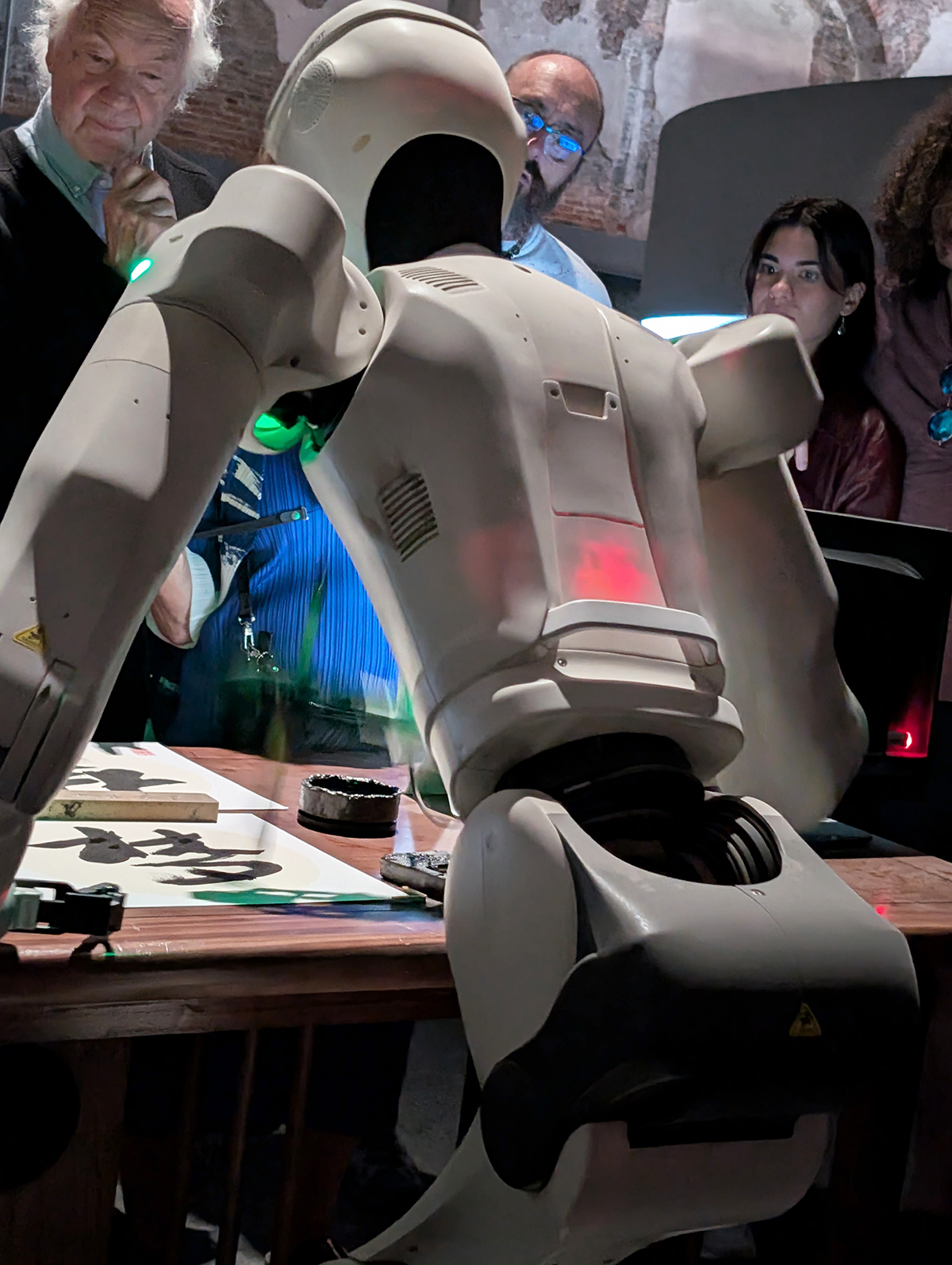
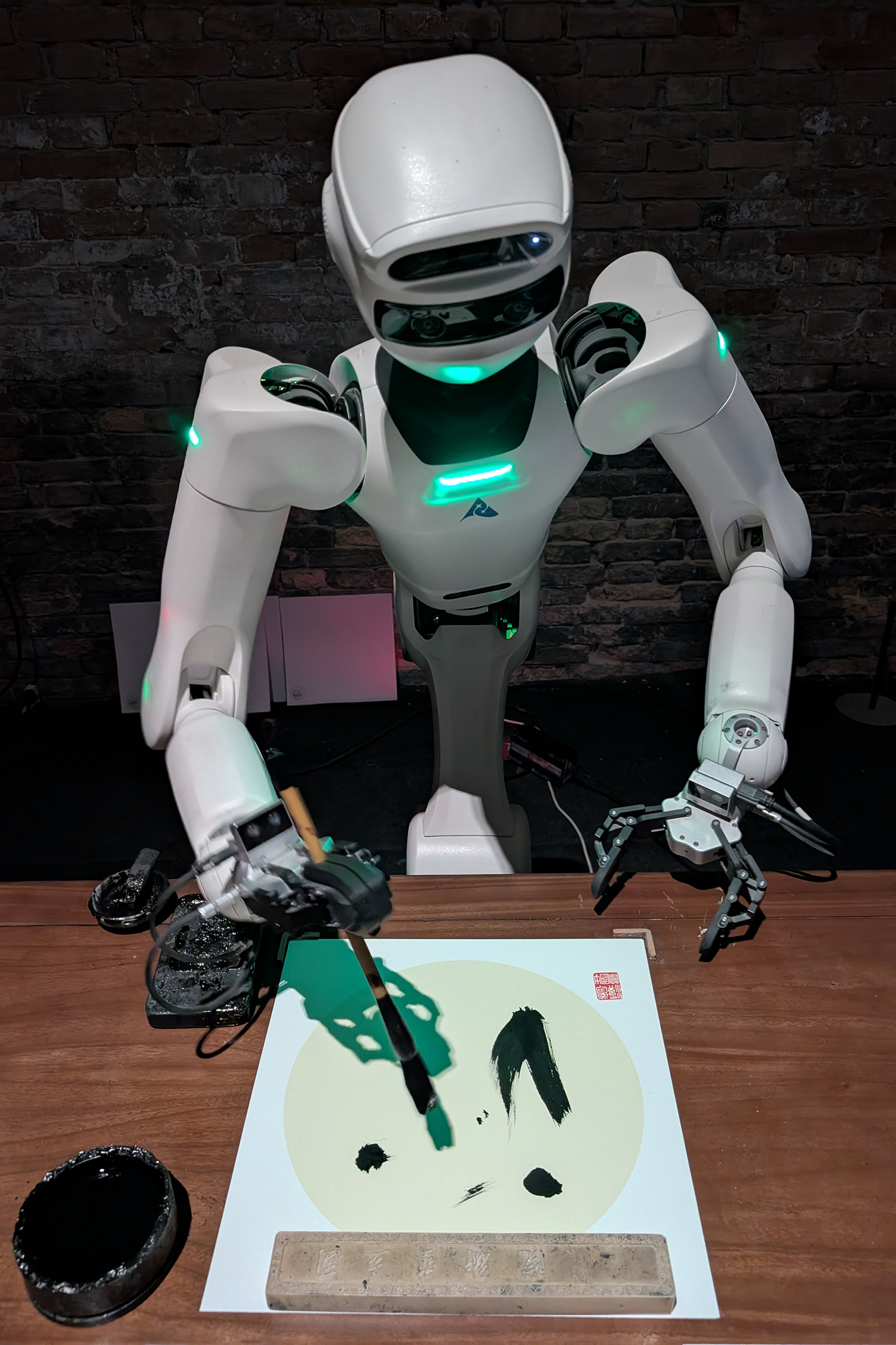
Die 61. Internationale Kunstausstellung La Biennale di Venezia, die Biennale Arte 2026, findet vom 9. Mai bis 22. November 2026 in den Giardini, im Arsenale und an weiteren Orten in Venedig statt. Im chinesischen Pavillon im Arsenale findet sich eine der ungewöhnlichsten Attraktionen der diesjährigen Biennale. Sie steht in der Tradition zweier im 18. Jahrhundert von Henri-Louis Jaquet-Droz geschaffener Automaten, nämlich Zeichner und Schreiber. Mehrmals täglich nimmt der humanoide Roboter Astribot S1 einen traditionellen chinesischen Pinsel mit seinem Greifer auf und bringt auf Wunsch der Besucher entweder „Dream“ oder „Stream“ zu Papier, jeweils als chinesisches Schriftzeichen. Die Aktion ist Teil des von Yu Xuhong kuratierten Pavillons „Dream Stream“, dessen Konzept Tradition und Technologie miteinander verbindet. Bemerkenswert ist, dass der S1 dabei den charakteristischen Stil des chinesischen Kalligrafiemeisters Wang Dongling imitiert. Seine Bewegungen wurden so trainiert, dass er dessen expressive Kalligrafie möglichst detailgetreu nachahmt. Der Schwung der Pinselführung lässt den Roboter sogar leicht erzittern. Unmittelbar daneben hängt Wang Donglings monumentales, 16 Meter breites Werk „Free and Easy Wandering“. So begegnen sich im chinesischen Pavillon jahrhundertealte Kalligrafietradition und gegenwärtige Robotik, und es stellt sich die Frage, ob eine Maschine nicht nur die Technik, sondern auch Gestik und Ausdruck eines Künstlers erlernen kann.
Abb.: Astribot S1 schreibt „Stream“ für Oliver Bendel
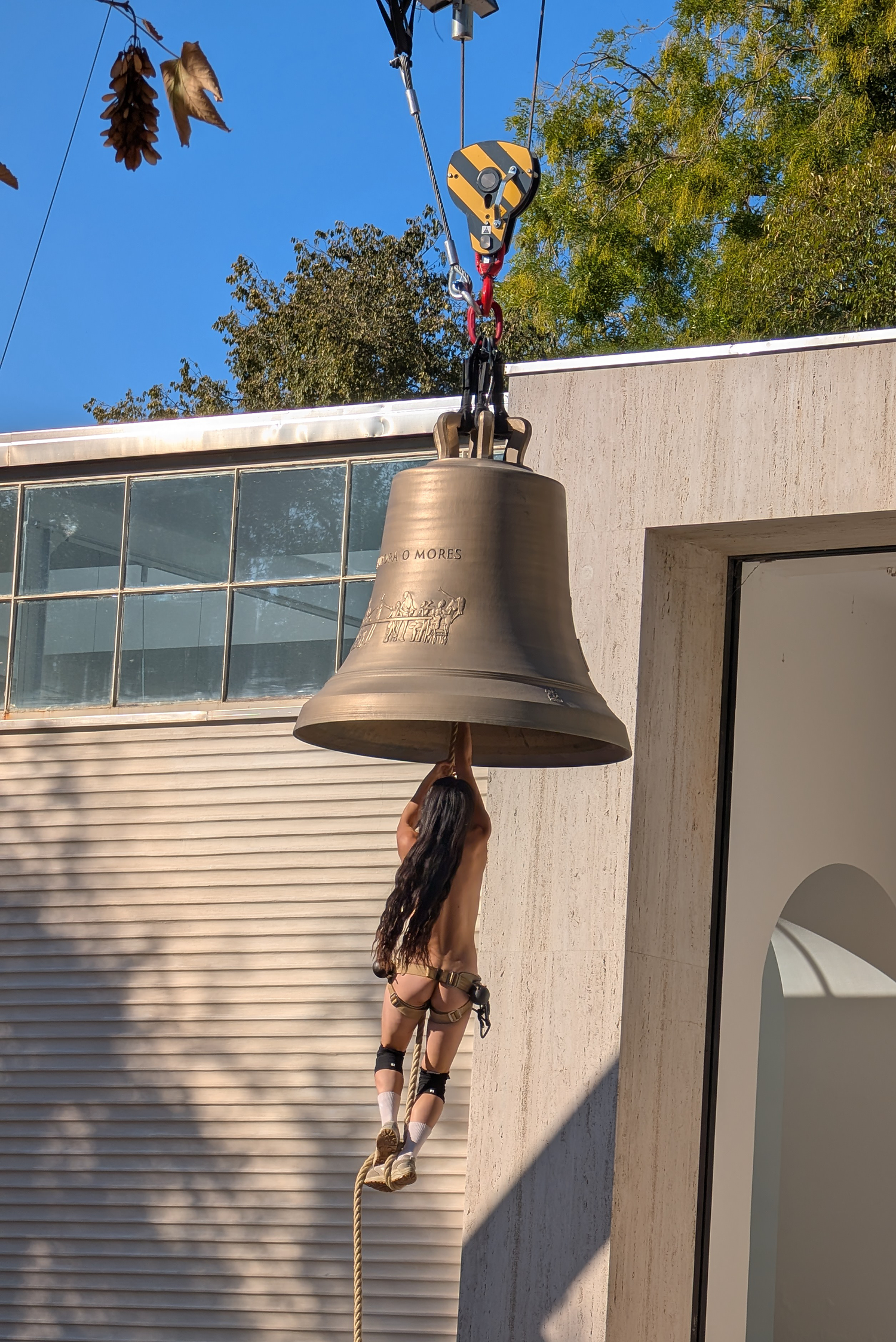
Die Biennale Arte 2026 findet vom 9. Mai bis 22. November 2026 in den Giardini, im Arsenale und an weiteren Orten in Venedig statt. Zu den kontrovers diskutierten Beiträgen gehört der österreichische Pavillon von Florentina Holzinger mit der Installation „Seaworld Venice“. Zu jeder vollen Stunde klettert eine nackte Performerin an einem Seil hoch in die Glocke, hängt anschließend kopfüber darin und wird so selbst zum lebendigen Schlegel. Zu sehen sind ihr Oberkörper und ihr Kopf. Es ist ein Verweis auf die historische Funktion venezianischer Kirchenglocken als Signalgeber für Gefahr, Hochwasser oder politische Ereignisse. Sicherlich ist es auch die weithin sichtbare Darstellerin, die die Scharen anlockt, und nicht nur die mediale Berichterstattung. Im Inneren des Pavillons setzt sich die Auseinandersetzung mit Wasser und Körper fort. In einem Schautauchbecken liegt eine nackte Performerin in aufbereitetem menschlichem Urin, der laufend von Besuchern in einem Dixi-Klo gespendet wird, während in einem gefluteten Ausstellungsraum eine nackte Performerin auf einem Jetski ihre Runden dreht, bis die Besucher nass werden von der Gischt. Trotz der auf Aktivismus gründenden und auf Effekt setzenden Elemente erreicht Holzingers Beitrag eine hohe künstlerische Qualität und zählt zu den Highlights der Biennale 2026.
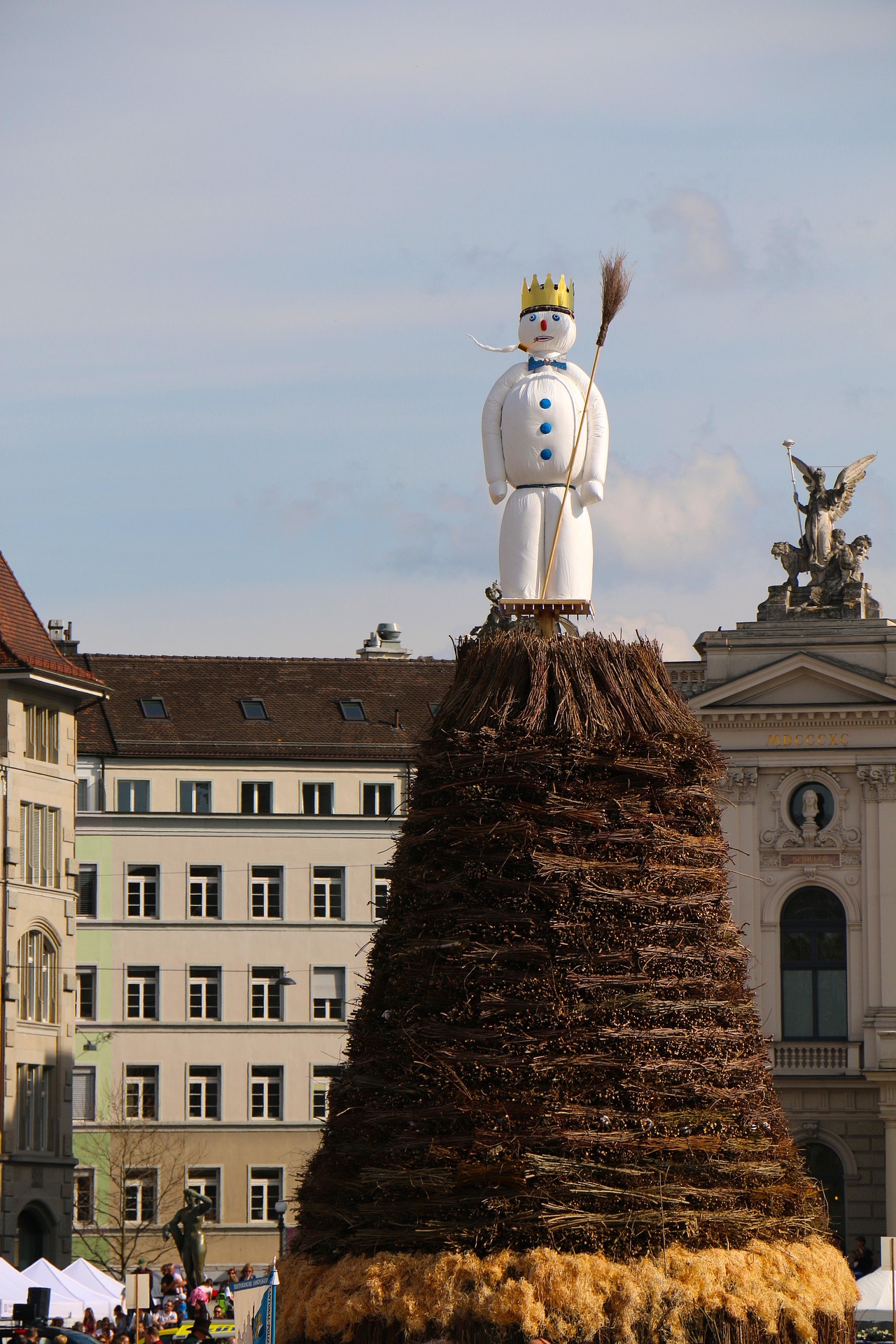
In einem Artikel vom 1. Oktober 2026 berichtete Heise über eine spektakuläre Aktion des US-amerikanischen Robotikunternehmens Figure: Ausgemusterte Allzweckroboter des Typs Figure 02 wurden in einem Lichtbogenofen eingeschmolzen – sie wurden hineinmanövriert oder sprangen selbst hinein. In Zürich, wo der Technikphilosoph Oliver Bendel wohnt, verbrennt man jedes Jahr beim Sechseläuten den Böögg auf einem Scheiterhaufen, eine große, schneemannähnliche Figur aus Watte und Holzwolle. Manchen wird dabei mulmig zumute, denn man zerstört eine Abbildung des Menschen auf eine Weise, die für Menschen besonders schmerzvoll und grausam ist. Das Unternehmen hat nun Bilder geschaffen, die in gewisser Weise daran erinnern. Es verfolgte das Ziel, die Generation Figure 02 durch Figure 03 zu ersetzen, und wollte die alten Roboter nicht aufwendig weiterbetreiben oder auseinanderbauen. Zugleich sollten angeblich geschützte Spezialkomponenten zuverlässig vernichtet werden. In einer finnischen Gießerei wurden die Maschinen deshalb in einem 75-Tonnen-Lichtbogenofen versenkt. Daraus machte Figure mit enormem Aufwand eine filmische Inszenierung. Arnold Schwarzenegger persönlich lässt einen Figure 02 an einer Kette in den Ofen fahren, als deutliche Anspielung auf das Ende des T-800 in „Terminator 2“. Selbst der berühmte erhobene Daumen wird nochmals gezeigt, und der Schauspieler sagt nach vollbrachter Tat „Hasta la vista, Figure 02“ ins Mikrofon – aus dem Baby wird ein Robo – und grinst in die Kamera. Das Zerstören von Figure 02 in der Metallschmelze dürfte laut Oliver Bendel bei manchen Zuschauern ähnliche Gefühle auslösen wie das Verbrennen des Böögg auf dem Scheiterhaufen. Zwar handelt es sich um Maschinen, die nicht empfinden und leiden können. Doch gerade weil humanoide Roboter den menschlichen Kopf und Körper nachbilden und sich menschenähnlich bewegen, kann ihre demonstrative Vernichtung irritieren. Es sind letztlich faszinierende, aber schreckliche Bilder.
Am 30. September 2026 ist im K-Tipp der Artikel „SBB-Billette nur per Handy oder Karte: ‚Für viele schlicht nicht möglich'“ von Roberto Zimmermann erschienen. Darin kommt auch der Wirtschaftsinformatiker und Informationsethiker Oliver Bendel zu Wort. Er spricht sich dafür aus, durch Digitalisierung im öffentlichen Verkehr zusätzliche Möglichkeiten zu schaffen, ohne bestehende Zugangsmöglichkeiten abzuschaffen. Wer Bahn oder Bus benutzen möchte, sollte dafür weder ein Smartphone noch ein Bankkonto, eine Kreditkarte oder eine spezielle Chipkarte benötigen. Zwar verursacht die Annahme von Bargeld gewisse Kosten, doch müssen auch die gesellschaftlichen Folgen berücksichtigt werden, wenn Menschen von grundlegenden Dienstleistungen ausgeschlossen werden oder ihre Selbstständigkeit verlieren. Bendel hält deshalb eine gesetzliche Verpflichtung zur Gewährleistung eines einfachen analogen Zugangs und zur Annahme von Bargeld im öffentlichen Verkehr für vertretbar. Wie die Verkehrsunternehmen dies technisch organisieren, sollte ihnen grundsätzlich überlassen bleiben. Entscheidend seien Wahlfreiheit, gesellschaftliche Teilhabe und informationelle Selbstbestimmung. Eine solche Regelung wäre aus seiner Sicht keine Absage an die Digitalisierung, sondern eine sinnvolle Ergänzung. Der vollständige Artikel (im Print „Billette nur per Handy oder Karte: ‚Für viele schlicht nicht möglich'“) ist unter www.ktipp.ch/artikel/artikeldetail/bahn-und-bus-billette-nur-per-handy-oder-karte-fuer-viele-schlicht-nicht-moeglich abrufbar.
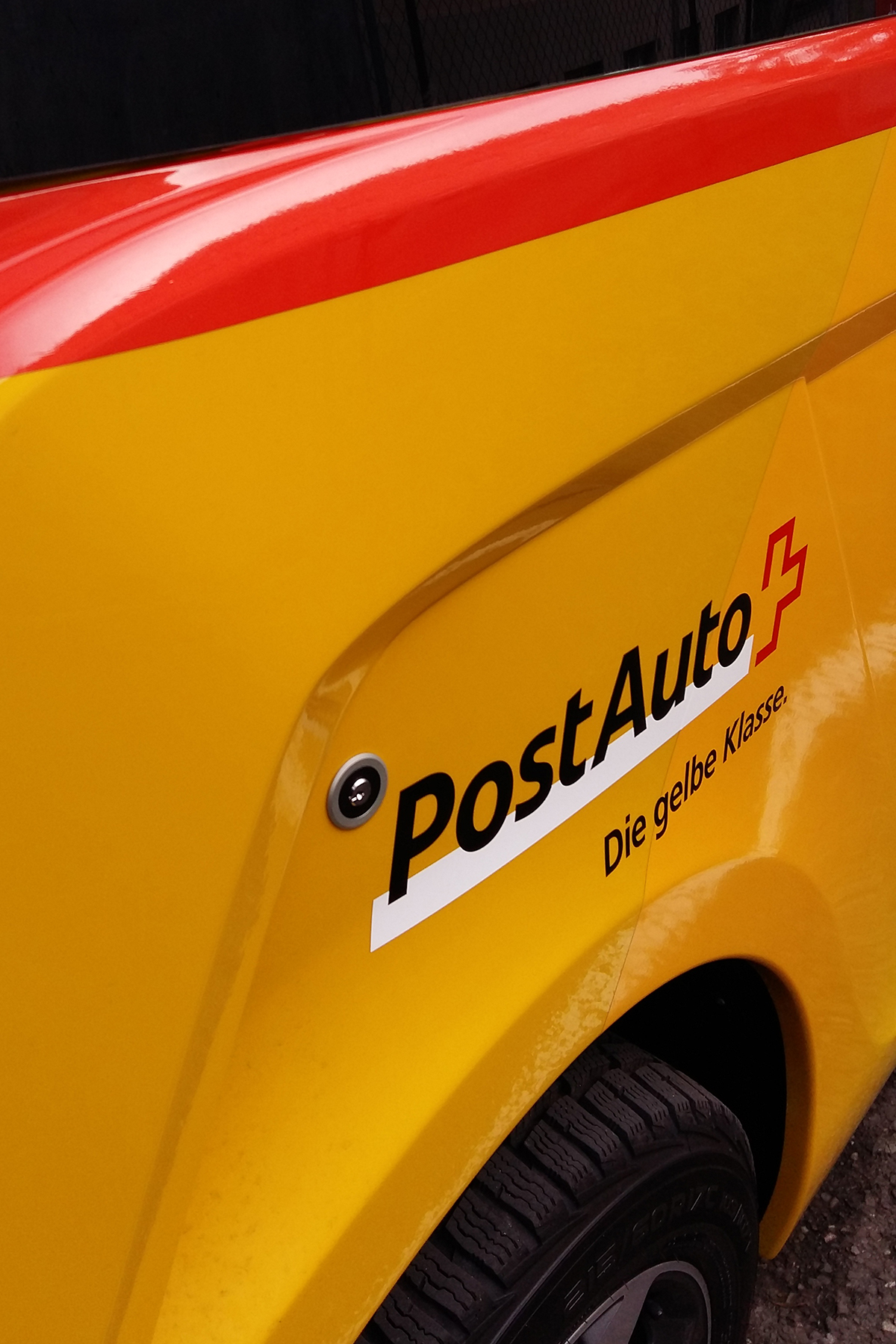
Das Robotertaxi ist bis in die Schweiz vorgedrungen. Seit dem 28. September 2026 kann man im Zürcher Furttal selbstfahrende Autos über die App iamo buchen. Drei elektrische Nissan Ariya sind in Otelfingen, Dänikon, Hüttikon und Boppelsen unterwegs. Ausgerüstet sind sie mit der Technologie des Automatisierungsspezialisten WeRide. Sie verfügen über sechs LiDAR-Sensoren, elf Kameras und acht weitere Sensoren, die ihre Umgebung rundum erfassen. Das Angebot umfasst knapp 100 digital festgelegte Ein- und Ausstiegspunkte. Die Fahrt kostet 4.70 Franken Grundgebühr plus 38 Rappen pro Kilometer, wobei Halbtax und Generalabonnement nicht gelten. Der Betrieb ist täglich von 13 bis 17 Uhr. Bis zu drei Personen können mitfahren, begleitet von einem Piloten, der im Notfall eingreifen kann. Ganz neu ist autonomes Fahren in der Schweiz nicht. Bereits ab 2016 verkehrten in Sion im Wallis die SmartShuttles von PostAuto. Die damaligen Fahrzeuge hatten freilich andere Rahmenbedingungen. Ihre Geschwindigkeit war je nach Bereich auf 5 bis 20 km/h beschränkt, und sie bewegten sich auf virtuellen Schienen. Das Furttaler Projekt geht nun einen entscheidenden Schritt weiter: Die Nissan Ariya fahren im normalen Straßenverkehr und müssen mit deutlich mehr komplexen Situationen umgehen als ein Bus auf einer festgelegten Route. Genau darin liegt der Erkenntnisgewinn des Pilotprojekts. Und dieser dürfte nicht ohne Zwischenfälle zu haben sein. Bei einem solchen realen Testbetrieb ist damit zu rechnen, dass es zu Unfällen kommen wird. Man wird sehen, wie die Bevölkerung darauf reagiert.
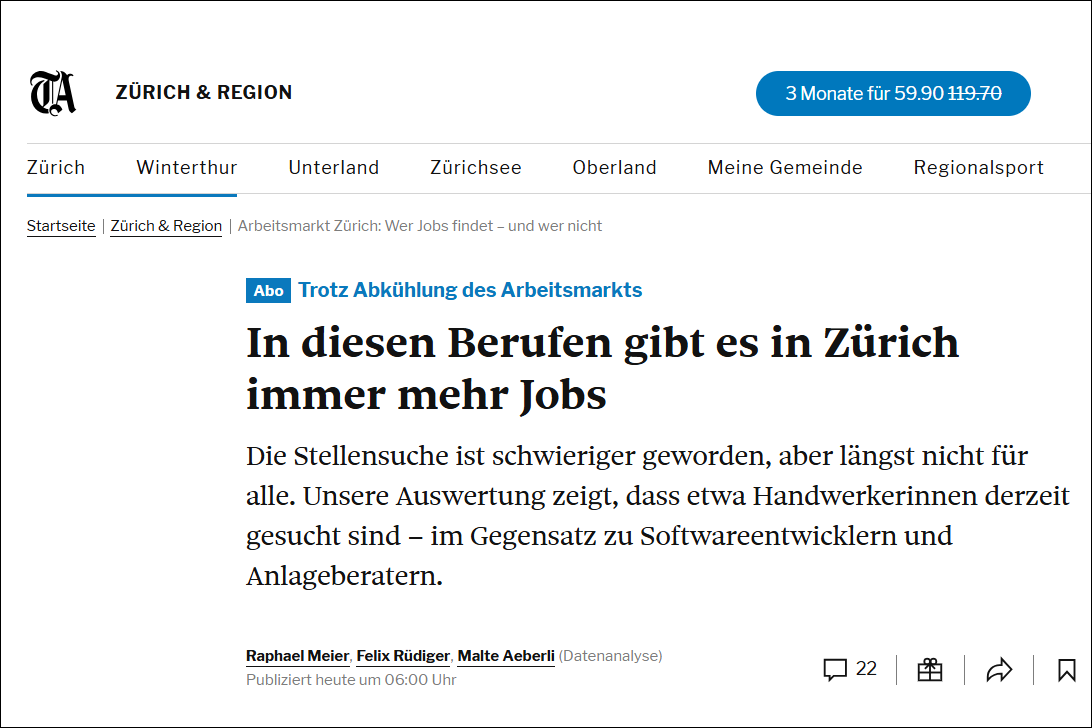
Der Tages-Anzeiger ist immer noch eine wichtige Stimme in der Schweiz und hat einen guten Ruf. Umgeben ist er von Simulationen und Parodien des Journalismus, von der Republik bis zur (ehemals soliden, heutzutage propagandistischen) Weltwoche. Umso wichtiger sind Korrektheit und Präzision im Formalen und Korrektheit im Inhaltlichen. Nicht alle Journalisten bzw. Titel- und Teaserproduzenten sind sich dieser Verantwortung bewusst. Die Onlineausgabe vom 25. September 2026 enthält einen Artikel mit dem Titel „In diesen Berufen gibt es in Zürich immer mehr Jobs“. Der Teaser lautet: „Die Stellensuche ist schwieriger geworden, aber längst nicht für alle. Unsere Auswertung zeigt, dass etwa Handwerkerinnen derzeit gesucht sind – im Gegensatz zu Softwareentwicklern und Anlageberatern.“ Wer im Deutschunterricht der Primarschule nicht durchgehend gepennt hat, weiß ganz genau, dass movierte Formen dieser Art ausschließlich weibliche Personen bezeichnen können. Nun trifft dies vermutlich auf die Verursacher nicht zu. Vermutlich will man hier die Leser erziehen oder eine moralische Position einnehmen, von der aus man auf sie herabblicken kann – aber tatsächlich werden Falschinformationen in die Welt gesetzt. Man hört regelrecht das Kichern der Verantwortlichen, weil es so viele Handwerkerinnen gar nicht geben dürfte (dafür ziemlich viele Anlageberaterinnen), und man spürt förmlich die pubertäre Freude daran, die Dinge auf den Kopf zu stellen. Damit verliert man aber Leser und Leserinnen, die zu Recht Korrektheit und Präzision von einer Tageszeitung erwarten, und man verliert an Glaubwürdigkeit. Das ist fatal gerade in diesen disruptiven und demokratiefeindlichen Zeiten.
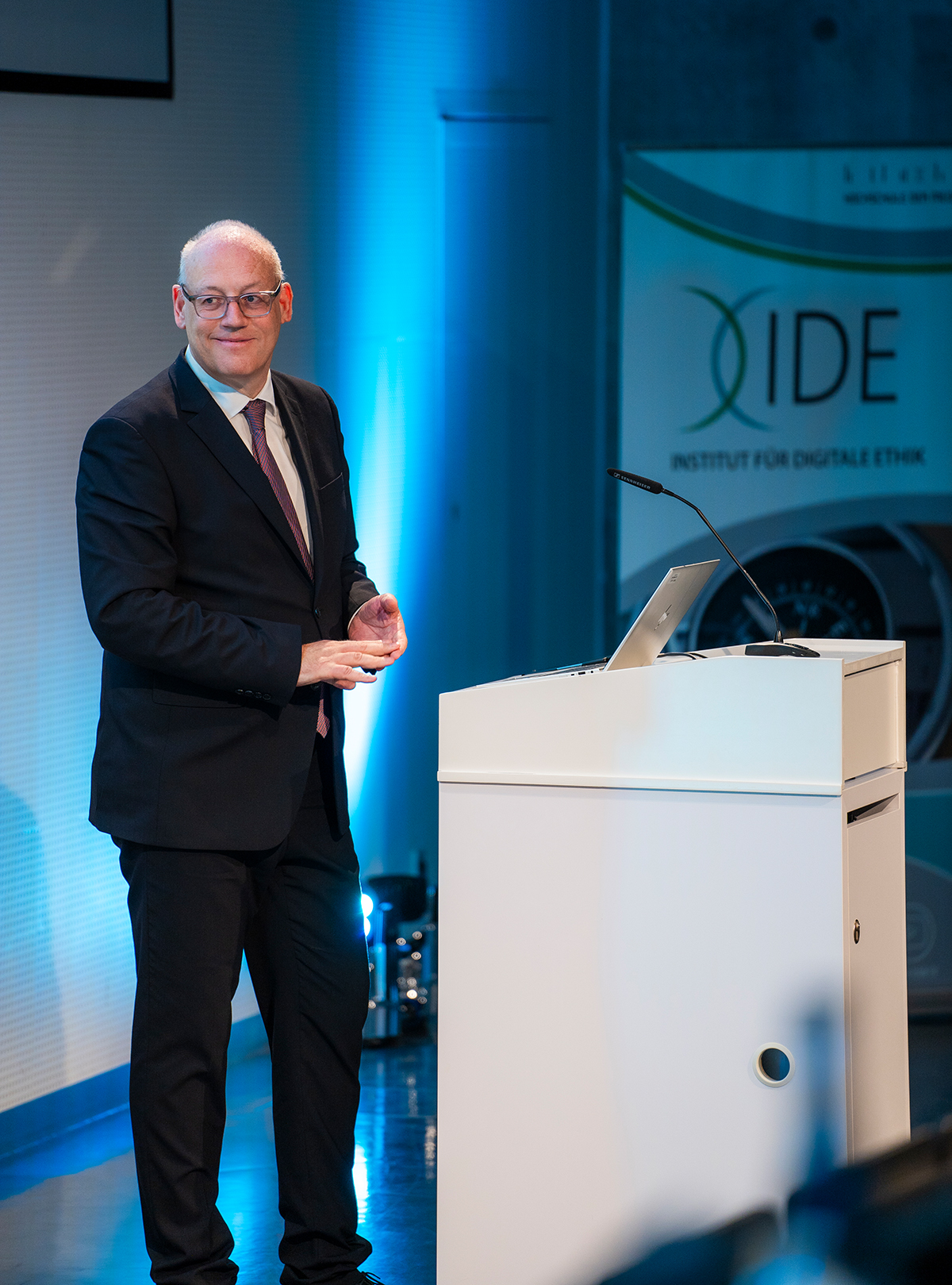
Im September 2026 ist der Buchbeitrag „Die Vision des universellen Roboters“ von Oliver Bendel als Teil des Herausgeberbands „Mensch – Maschine revisited: Roboter und KI-Systeme im öffentlichen Raum“ (Petra Grimm; Kai Erik Trost; Oliver Zöllner) erschienen. Er geht zurück auf einen Vortrag, den er bei der Tagung IDEepolis am 19. Juni 2024 an der Hochschule der Medien in Stuttgart unter dem Titel „Es wird ein Mensch gemacht: Die Vision des universellen Roboters“ hielt. Es wird eine Maschine entworfen, die fast jede Tätigkeit des Menschen zu übernehmen vermag, in der Fabrik, im Haushalt und beim Sport. Heutige Allzweckroboter können als ihre Vorläufer verstanden werden, also humanoid gestaltete Roboter wie Apollo, Figure 03, Atlas und Optimus. Obwohl es eine Maschine ist, die auch über ein simuliertes Bewusstsein, künstliche Intelligenz und künstliche Moral verfügt, bleiben ihr viele Möglichkeiten verwehrt. Insofern ist der Ausruf Wagners, der im Titel zitiert wird, nach wie vor eine Utopie. Im Kurztext auf der Website des Franz Steiner Verlags heißt es zum Buch: „Künstliche Intelligenz und Robotik sind längst Teil der Alltagswelt. Doch was bedeutet ihr Siegeszug für das Selbstverständnis des Menschen, für soziale Praktiken und für ethische Orientierungen?“ Weitere Informationen über www.steiner-verlag.de/Mensch-Maschine-revisited/9783515141567.
Abb.: Oliver Bendel bei seinem Vortrag im Jahre 2024 (Foto: Aaron Kubach)
Schließlich stellt sich eine grundsätzlichere sprachwissenschaftliche Frage: Warum sollte ein Asterisk innerhalb eines Worts für alle Sprecher automatisch die Bedeutung „Personen aller biologischen und sozialen Geschlechter“ tragen? Sprachliche Zeichen erhalten ihre Bedeutung nicht allein dadurch, dass eine Gruppe ihnen eine bestimmte Bedeutung zuschreibt. Sie müssen von den Adressaten entsprechend verstanden und konventionalisiert werden. Gerade Eckhard Meineke hat zudem ausführlich darauf hingewiesen, dass maskuline Personenbezeichnungen im Deutschen historisch und grammatisch nicht auf die Bedeutung „männlich“ reduziert werden können, sondern seit langem auch geschlechtsübergreifend verwendet werden. Wer diese vorhandene generische Funktion durch neue Zeichen ersetzt, muss deshalb nicht nur deren inklusive Absicht, sondern auch deren tatsächlichen kommunikativen Vorteil zeigen. Und hier liegt eines der Grundprobleme. Inklusion darf nicht nur aus der Perspektive des Schreibenden definiert werden. Entscheidend ist auch der Adressat. Wenn eine Schreibweise blinden Menschen Schwierigkeiten bereitet, für manche Leser zusätzliche Verarbeitungskosten erzeugt, morphologisch mitunter die männliche Form beschädigt, grammatikalisch oftmals gar nicht umsetzbar ist, nicht notwendig geschlechtlich ausgewogene Vorstellungen hervorruft und von einem erheblichen Teil der Sprachgemeinschaft nicht als selbstverständliche Orthografie verstanden wird, ist die Bezeichnung „inklusive Sprache“ keine treffende Beschreibung, sondern nur ein fragwürdiger Anspruch. Ob Sprache inklusiv ist, entscheidet sich nicht an der guten Absicht des Autors oder des Sprechers, wenn diese überhaupt vorhanden ist, sondern – nicht zuletzt – daran, wie zugänglich sie für ihre Hörer und Leser ist. Literatur: Bosse, Ingo; Schluchter, Jan-René; Zorn, Isabel (Hrsg.) (2019): Handbuch Inklusion und Medienbildung. Weinheim/Basel: Beltz Juventa. / Deutscher Blinden- und Sehbehindertenverband (DBSV) (2024): Gendern. Position des Deutschen Blinden- und Sehbehindertenverbandes. DBSV – Gendern. https://www.dbsv.org/gendern.html. / Friedrich, Marcus C. G.; Drößler, Veronika; Oberlehberg, Nicole; Heise, Elke (2021): The Influence of the Gender Asterisk („Gendersternchen“) on Comprehensibility and Interest. Frontiers in Psychology, 12, 760062. DOI: 10.3389/fpsyg.2021.760062. / Gesellschaft für deutsche Sprache (GfdS) (2020): Gendersternchen. Die Position der GfdS zur Verwendung des Gendersternchens. GfdS – Gendersternchen. https://gfds.de/gendersternchen/. / Körner, Anita; Abraham, Bleen; Rummer, Ralf; Strack, Fritz (2022): Gender Representations Elicited by the Gender Star Form. Journal of Language and Social Psychology, 41(5), 553–571. DOI: 10.1177/0261927X221080181. / Meineke, Eckhard (2023): Studien zum genderneutralen Maskulinum. Heidelberg: Universitätsverlag Winter. / Zacharski, Lisa; Kruppa, Alexandra; Ferstl, Evelyn C. (2025): The Readability of the Non-Binary Gender Star in German: Evidence From a Lexical Decision Task. Social Psychological Bulletin, 20, 13719. DOI: 10.32872/spb.13719.
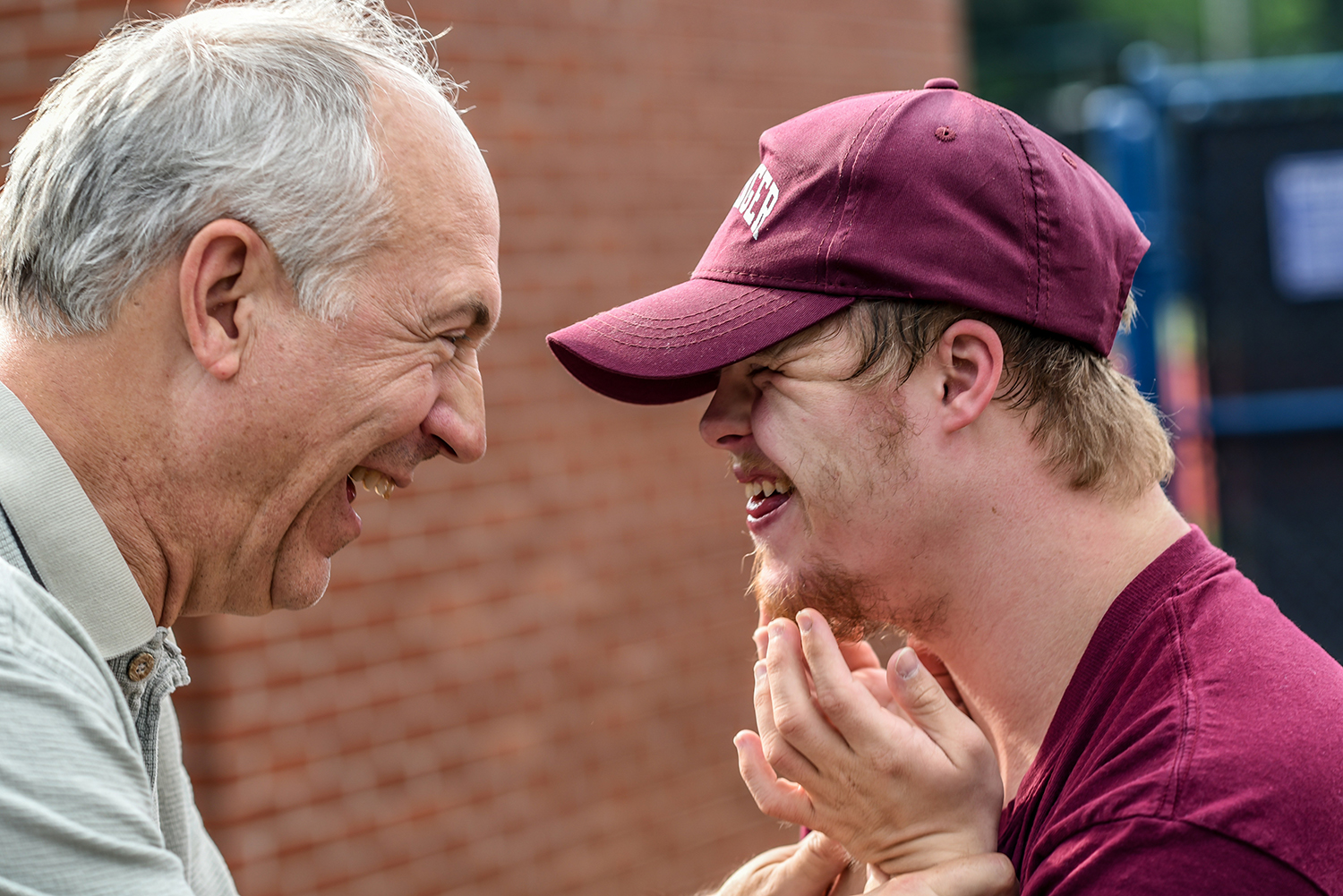
Abb.: Die inklusive Sprache ist in Wirklichkeit eine exklusive
Noch bemerkenswerter ist, dass der Genderstern offenbar keineswegs automatisch eine geschlechtlich ausgewogene Vorstellung erzeugt. Experimente von Körner und Kollegen fanden bei solchen Formen einen weiblichen Bias: Nach „Autor*innen“ etc. wurden Bezüge auf Frauen leichter beziehungsweise schneller verarbeitet als Bezüge auf Männer. Die ausgeschriebene Paarform erzeugte dagegen die ausgewogensten Vorstellungen. Die Behauptung, der Genderstern bilde Männer, Frauen und weitere Geschlechter gleichermaßen ab, trifft also keineswegs zu. Wird beim Sprechen zudem der Glottisschlag nicht realisiert, fällt etwa „Autor*innen“ lautlich mit „Autorinnen“ zusammen. Und auch in Texten findet sich oft ein generisches Femininum, das es in dieser Form im Deutschen gar nicht gibt. Medien wie die Republik in der Schweiz produzieren so regelmäßig Falschinformationen, etwa wenn es heißt, Deutschland habe „80 Millionen Einwohnerinnen“. Dazu kommt ein praktisches Problem, das viele längere gegenderte Dokumente vorführen: Es existiert kein einheitliches System. Stern, Doppelpunkt, Unterstrich, Binnen-I, Paarform und neutrale Ersatzformulierungen konkurrieren miteinander. Selbst Texte, die besonderen Wert auf „geschlechtergerechte“ Sprache legen, produzieren dadurch grammatische Zweifelsfälle und Inkonsistenzen. Das „Handbuch Inklusion und Medienbildung“ liefert dafür ein besonders anschauliches Beispiel: Dort stehen verschiedene Systeme nebeneinander, und ausgerechnet im Kapitel über Barrierefreiheit findet sich die Konstruktion „blinde_r Nutzer_innen“ – und das keineswegs im Genitiv. Dass Genderanhänger oft im eigenen System scheitern, zeigt die völlig verunglückte Konstruktion „Adressat_inn_enkreis“ in einem anderen Kapitel. …
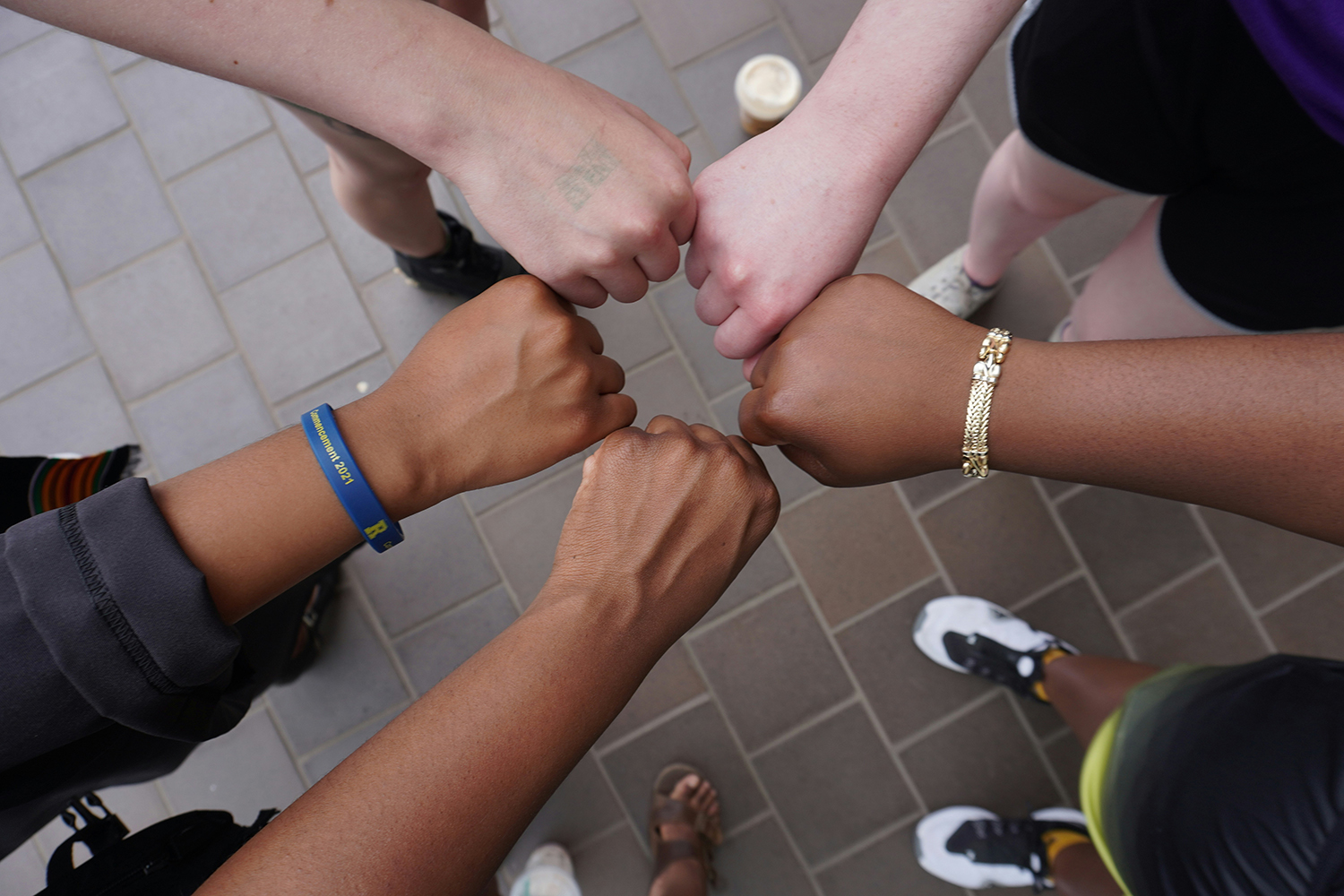
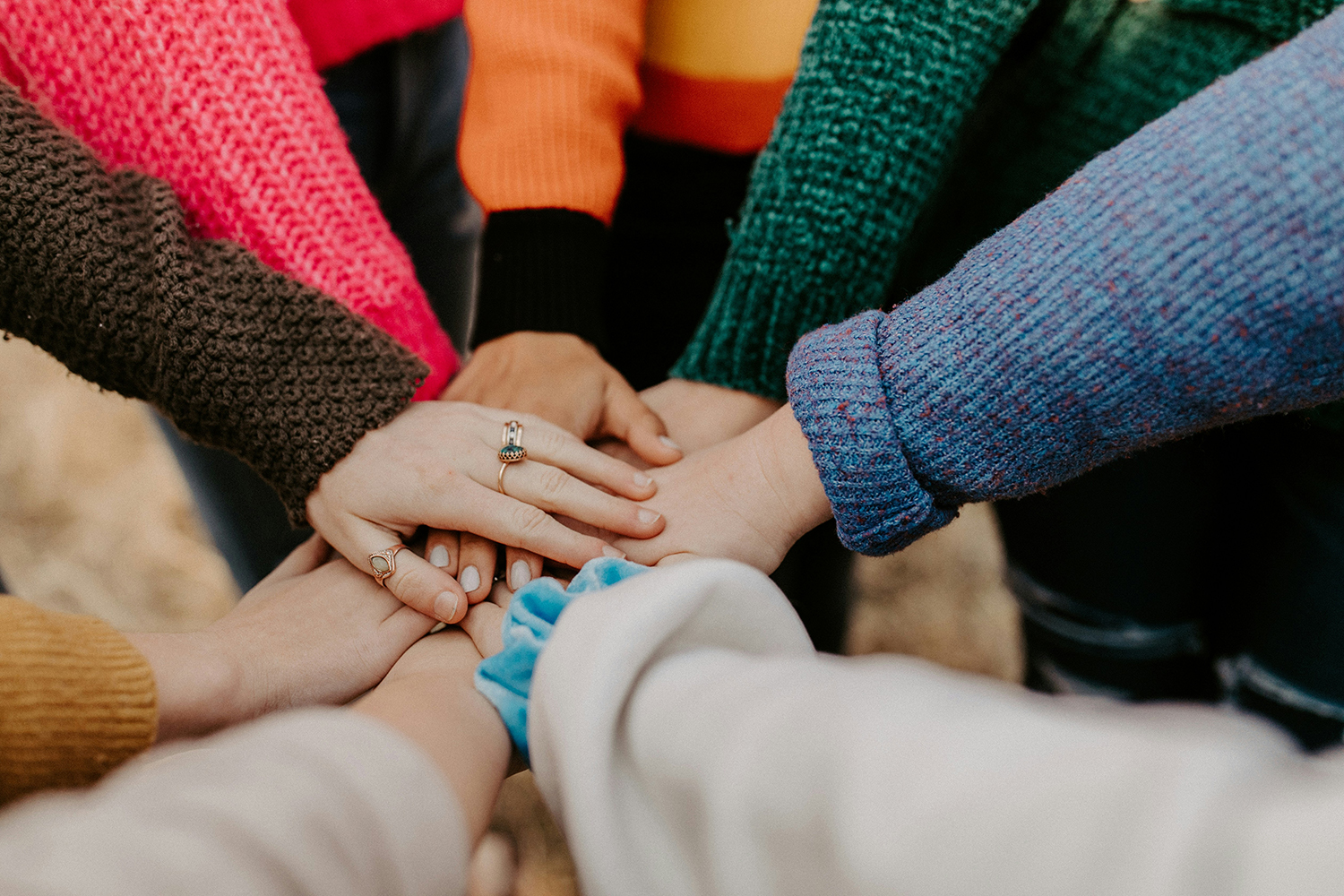
Abb.: Alle sollen einbezogen und mitgenommen werden
Ein weiteres Problem kann gerade aus dem Bemühen um geschlechtsneutrale Ersatzbegriffe entstehen. Personenbezeichnungen werden dabei häufig durch Funktions-, Tätigkeits- oder Sammelbezeichnungen ersetzt. Aus dem „Putzmann“ oder der „Putzfrau“ wird die „Putzkraft“, aus Mitarbeitern werden „Personal“ oder „Beschäftigte“, aus Teilnehmern „Teilnehmende“. Solche Formen vermeiden zwar die Geschlechtsmarkierung, können aber einen Preis haben: Der Mensch tritt sprachlich hinter seiner Funktion zurück. Besonders deutlich wird das bei der „Putzkraft“. Bezeichnet wird nicht mehr unmittelbar eine Person, sondern eine für eine bestimmte Tätigkeit eingesetzte „Kraft“ – ähnlich wie bei „Arbeitskraft“ oder „Hilfskraft“. Was als inklusive Lösung gedacht ist, kann dadurch distanzierter, bürokratischer und im Einzelfall sogar entpersonalisierend wirken. Geschlechtsneutralität ist deshalb nicht automatisch mit einer menschlicheren oder inklusiveren Ausdrucksweise gleichzusetzen. Bei den Partizipformen ergeben sich zudem oft Bedeutungsverschiebungen: Alle Menschen sind Forschende, aber nur einige sind Forscher. Hinzu kommen sprachstrukturelle Probleme. Bei Formen wie „Ärzt*in“ ist „Ärzt“ keine deutsche maskuline Personenbezeichnung; bei „Kolleg*in“ bleibt als Stamm „Kolleg“, ebenfalls nicht die vollständige maskuline Form. Die Gesellschaft für deutsche Sprache, ansonsten der Gendersprache zugewandt, benennt genau dieses Problem und schreibt zur Verwendung des Gendersternchens: „Die GfdS rät aus sprachwissenschaftlicher Sicht von der Verwendung dieser Formen geschlechterbewusster und genderneutraler Sprache ab.“ Ausgerechnet bei einer Schreibweise, die alle einschließen soll, ist demnach die männliche Form teilweise nicht mehr vollständig enthalten. Aktivistische Kreise reagieren auf eine solche Beobachtung oft spöttisch. Männer könnten auf diese Weise einmal selbst erfahren, was sprachlicher Ausschluss bedeute. Zum einen wird dabei das genderneutrale Maskulinum missverstanden. Zum anderen wird deutlich, dass es bestimmten Personen und Gruppen gar nicht um Inklusion geht, sondern um das schiere Gegenteil. …
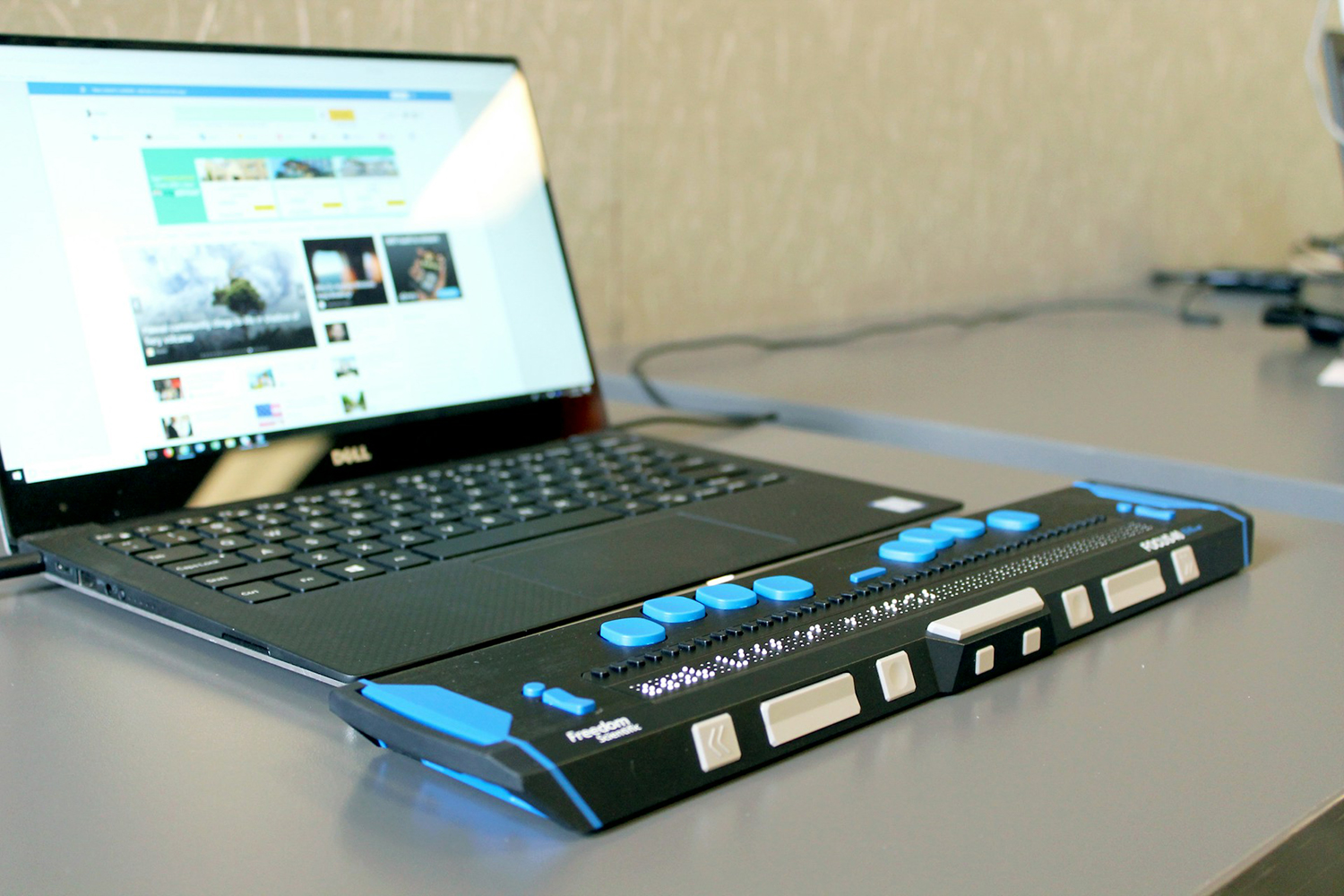
Der Anspruch sogenannter inklusiver Sprache ist hoch: Niemand soll sprachlich ausgeschlossen werden. Doch gerade unter dem Gesichtspunkt der Inklusion wirft das Gendern erhebliche Probleme auf. Zunächst einmal sind Genderstern, Unterstrich und Doppelpunkt für viele blinde und sehbehinderte Menschen problematisch. Der Deutsche Blinden- und Sehbehindertenverband rät von allen drei Formen ab. Sonderzeichen können beim Vorlesen übergangen oder mitgesprochen werden, den Vorlesefluss stören und die Braille-Ausgabe erschweren. Auch der oft als barrierefrei bezeichnete Doppelpunkt wird vom Verband ausdrücklich nicht empfohlen. Sonderzeichen und Satzzeichen im Wortinneren sind also (bis auf Bindestrich und Apostroph) der deutschen Sprache nicht nur strukturell fremd, sondern sie benachteiligen auch bestimmte Gruppen. Für die allgemeine Lesbarkeit ist die Sache ebenfalls weniger eindeutig, als das Etikett „inklusive Sprache“ suggeriert. Zwar finden manche Studien keine schlechtere subjektive Verständlichkeit gegenderter Texte. Daraus folgt jedoch nicht, dass Genderzeichen den Lesefluss nicht beeinträchtigen. Teilweise wurden weder Lesezeiten noch Blickbewegungen oder das tatsächliche Textverständnis gemessen. Die Autoren solcher Studien weisen selbst darauf hin, dass Leser möglicherweise mehr Zeit benötigen, um dasselbe Verständnisniveau zu erreichen. Wo die unmittelbare Worterkennung untersucht wurde, zeigten sich bei weniger an Genderformen gewöhnten Nichtstudenten zunächst langsamere Reaktionen, und bei komplexeren Sternformen wurden auch Beeinträchtigungen der Verständlichkeit festgestellt. Gerade die alltägliche Erfahrung, an Genderzeichen beim Lesen kurz zu stolpern, ist damit keineswegs widerlegt. Wie stark dieser Effekt bei verschiedenen Lesergruppen und in längeren Texten ausfällt, ist vielmehr noch unzureichend untersucht. …
Dass es auch anders geht, zeigt das Kapitel „Barrierefreie Kommunikation und Sprache“ von Carola Werning und Susanne Bömig. Es formuliert den schönen Grundsatz: „Barrierefreie Kommunikation bedeutet daher: Ich möchte, dass das, was ich mitteile, für alle zugänglich ist.“ … Dieser Beitrag kommt ohne Genderstern und Unterstrich aus und schreibt beispielsweise schlicht „Schülerinnen und Schüler“ (was man als unnötige Dopplung auch beanstanden kann, was hier aber durchaus Sinn ergeben kann, wenn man die Geschlechter hervorheben will). Das eigentliche Problem ist deshalb nicht, dass verschiedene Autoren unterschiedlich schreiben. Es ist der Zielkonflikt zwischen zwei Vorstellungen von Inklusion: Genderzeichen sollen sichtbar machen und die gewohnte Wahrnehmung von Personenbezeichnungen unterbrechen, barrierearme Sprache soll dagegen möglichst leicht, vertraut und störungsfrei verarbeitet werden können. Ob und wie stark Genderformen das Lesen tatsächlich erschweren, muss empirisch untersucht werden und lässt sich nicht für alle Leser pauschal beantworten. Doch gerade das fordert das Handbuch bei anderen sprachlichen Maßnahmen selbst. Die entscheidende Frage müsste deshalb lauten: Wie soll ausgerechnet die Schreibweise „blinde_r Nutzer_innen“ einem blinden Benutzer das Lesen erleichtern? Solange darauf keine überzeugende Antwort vorliegt, illustriert das Handbuch einen grundlegenden Widerspruch: Man kann sprachlich niemanden ausschließen wollen und dabei zugleich neue Barrieren schaffen.
Das Kapitel „Barrierefreiheit“ von Anne Haage und Christian Bühler erklärt unter Berufung auf das Behindertengleichstellungsgesetz, Medien sollten „ohne besondere Erschwernis“ zugänglich sein, und zählt das Verstehen ausdrücklich zu den Dimensionen der Barrierefreiheit. Ausgerechnet in einem Abschnitt über Screenreader und blinde Menschen begegnet einem dann die Form „blinde_r Nutzer_innen“ – und das keineswegs im Genitiv. Später ist von „Schüler_innen“, „Lehrer_in“, „Kursleiter_innen“ und „Pädagog_innen“ die Rede. Noch widersprüchlicher wirkt das Kapitel „Leichte Sprache – ein Mittel zur Barrierefreiheit?“ von Saskia Schuppener, Anne Goldbach und Bettina M. Bock. Seine drei Autorinnen warnen zu Recht davor, gut gemeinte sprachliche Regeln automatisch für verständlich zu halten. Regeln müssten empirisch daraufhin überprüft werden, ob sie ihren Adressaten tatsächlich helfen. Untersuchungen mit Menschen mit Lernschwierigkeiten und geringer Lesekompetenz zeigten sogar, dass manche sprachlichen und typographischen Maßnahmen das Verständnis erschweren können – „auch und gerade für schwächere Leser_innen“. Die Skepsis gegenüber sprachlichen Eingriffen erstreckt sich jedoch nicht erkennbar auf die eigene Orthografie. Im selben Kapitel finden sich „Nutzer_innen“, „Mitarbeiter_innen“, „Leser_innen“, „Anbieter_innen“ und sogar die bemerkenswerte Konstruktion „Adressat_inn_enkreis“. Besonders treffend ist, dass die Autoren selbst vor Barrierefreiheit als bloßem „Aushängeschild“ warnen: Anbieter könnten damit signalisieren, sich um Barrierefreiheit zu kümmern, ohne hinreichend zu prüfen, ob ihre Texte für die Adressaten tatsächlich funktionieren. Genau diese Frage müsste man auch an Gendersprache stellen: Dient die sprachliche Markierung tatsächlich dem Leser oder signalisiert sie vor allem die angeblich inklusive Haltung des Schreibenden? …
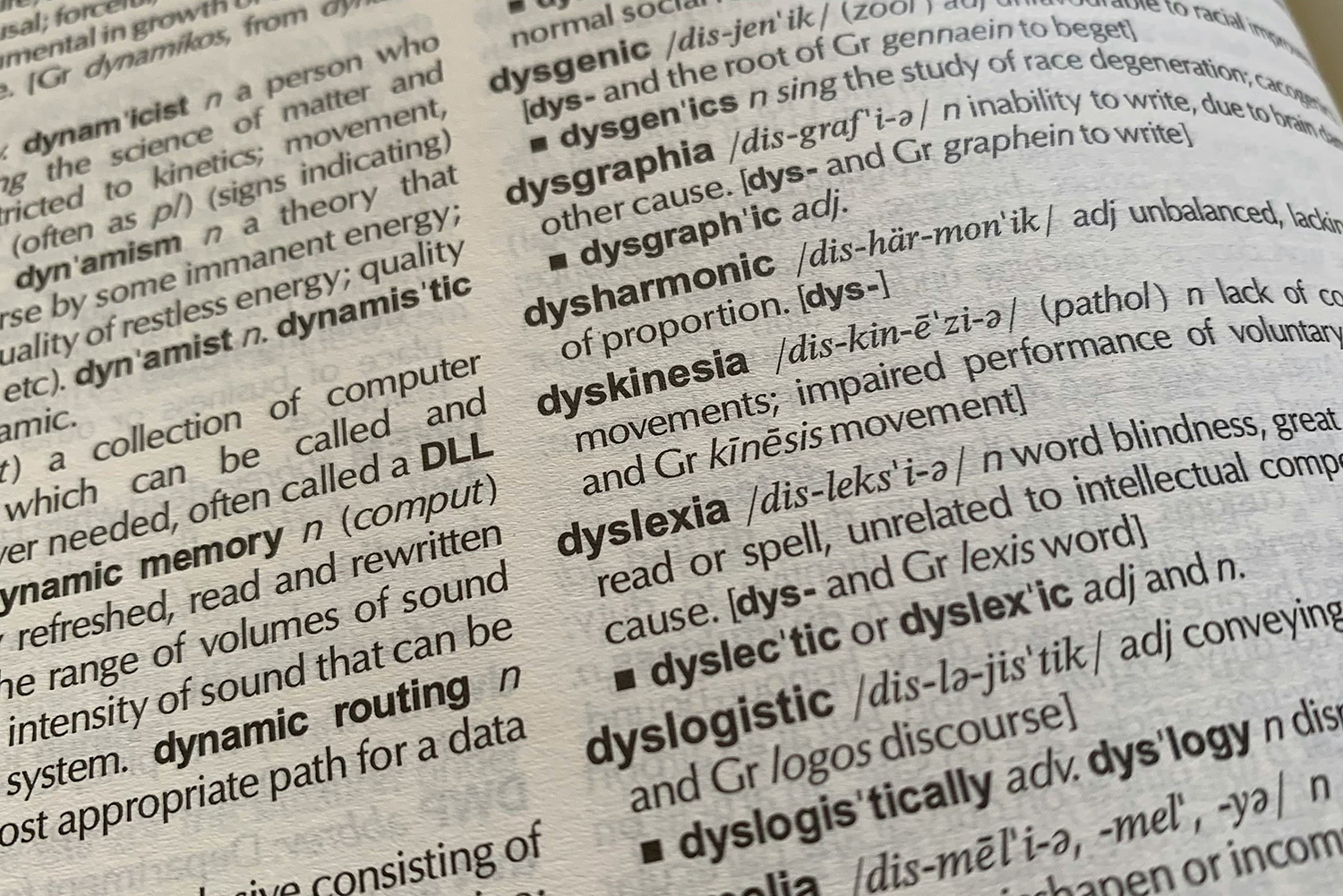
Abb.: Menschen mit Dyslexie haben kaum eine Chance
Ein „Handbuch Inklusion und Medienbildung“ (Beltz Juventa, 2019) ist wohl einer der letzten Orte, an denen man sprachliche Barrieren erwarten würde. Gerade hier geht es um Zugänglichkeit und Verständlichkeit, um Hilfestellungen wie Leichte Sprache, um Assistenztechnologien wie Screenreader und um die unterschiedlichen Voraussetzungen von Lesern. Umso bemerkenswerter ist die Sprache des Handbuchs selbst. Da es sich um einen Herausgeberband handelt, sollte man die von Kapitel zu Kapitel wechselnden Schreibweisen nicht vorschnell den Herausgebern – Ingo Bosse, Jan-René Schluchter und Isabel Zorn – anlasten. Vielleicht gab es eine allgemeine Erwartung oder eine Empfehlung des Verlags, sogenannte geschlechtergerechte Sprache zu verwenden, während die konkrete Umsetzung den einzelnen Autoren überlassen blieb; belegen lässt sich eine solche Vorgabe anhand des Buches allerdings nicht. Das Ergebnis ist jedenfalls ein bemerkenswertes Durcheinander aus Unterstrich, Genderstern, Schrägstrich, Paarformen und gewöhnlichen Personenbezeichnungen. Wirklich interessant wird dieser Befund dort, wo einzelne Beiträge ihre eigenen Maßstäbe für Barrierefreiheit formulieren. …