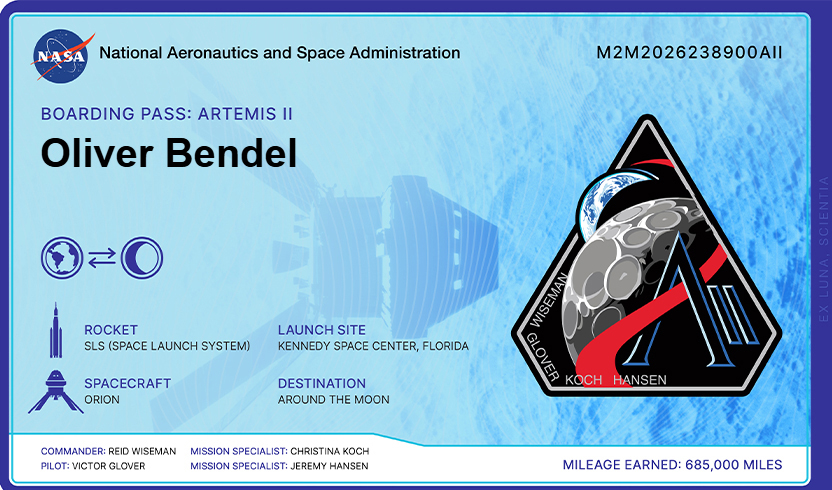
NASA’s Artemis II mission will send four astronauts around the Moon and back in 2026 – the first crewed flight of the Artemis program. Astronauts Reid Wiseman, Victor Glover, Christina Koch, and Canadian astronaut Jeremy Hansen will fly aboard the Orion spacecraft, launched by the Space Launch System (SLS) rocket from Kennedy Space Center in Florida. Over approximately 10 days, the crew will test Orion’s systems in Earth orbit before heading toward the Moon in a figure-eight path that takes them over 230,000 miles from Earth. At their farthest point, they’ll travel 4,600 miles beyond the Moon. The mission will carry scientific payloads to study radiation, human health, and space communication – all key for future missions to Mars. Orion will return with a high-speed reentry and splashdown in the Pacific Ocean. You can add your name to fly aboard Artemis II by signing up at: www3.nasa.gov/send-your-name-with-artemis/.
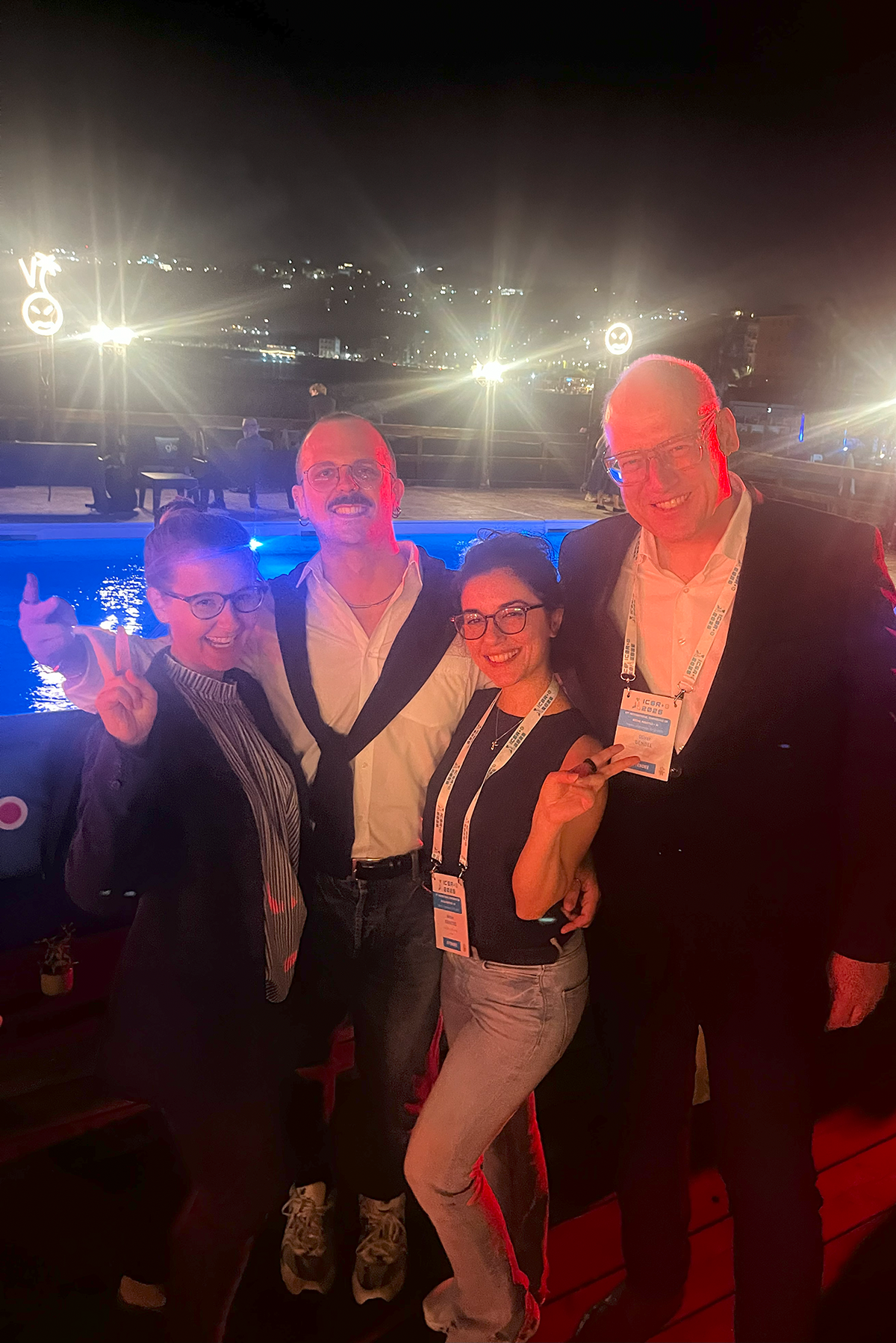
After three days of hard work, the evening of 12 September was reserved for pleasure. And so, the final day of ICSR 2025 ended with a seaside party. Attendees sipped cocktails or mocktails, exchanged contact information, and shared early memories of the conference. As always, conference host Mariacarla Staffa had chosen an exciting venue, complete with tasteful music and a stunning view of the Gulf of Naples. At one point, some attendees persuaded Oliver Bendel to demonstrate his AIBI – a wearable social robot he had discussed earlier that day during his talk on the topic. The philosopher of technology was initially reluctant – the evening was meant for relaxing, and AIBI’s battery was dead – but when a colleague handed him a power bank, he could no longer refuse. Once revived, the small robot delighted the crowd. Meanwhile, the party continued, bringing together generations from Gen Z to Gen X – and, reportedly, even a Boomer or two. The evening lingered well into the night.
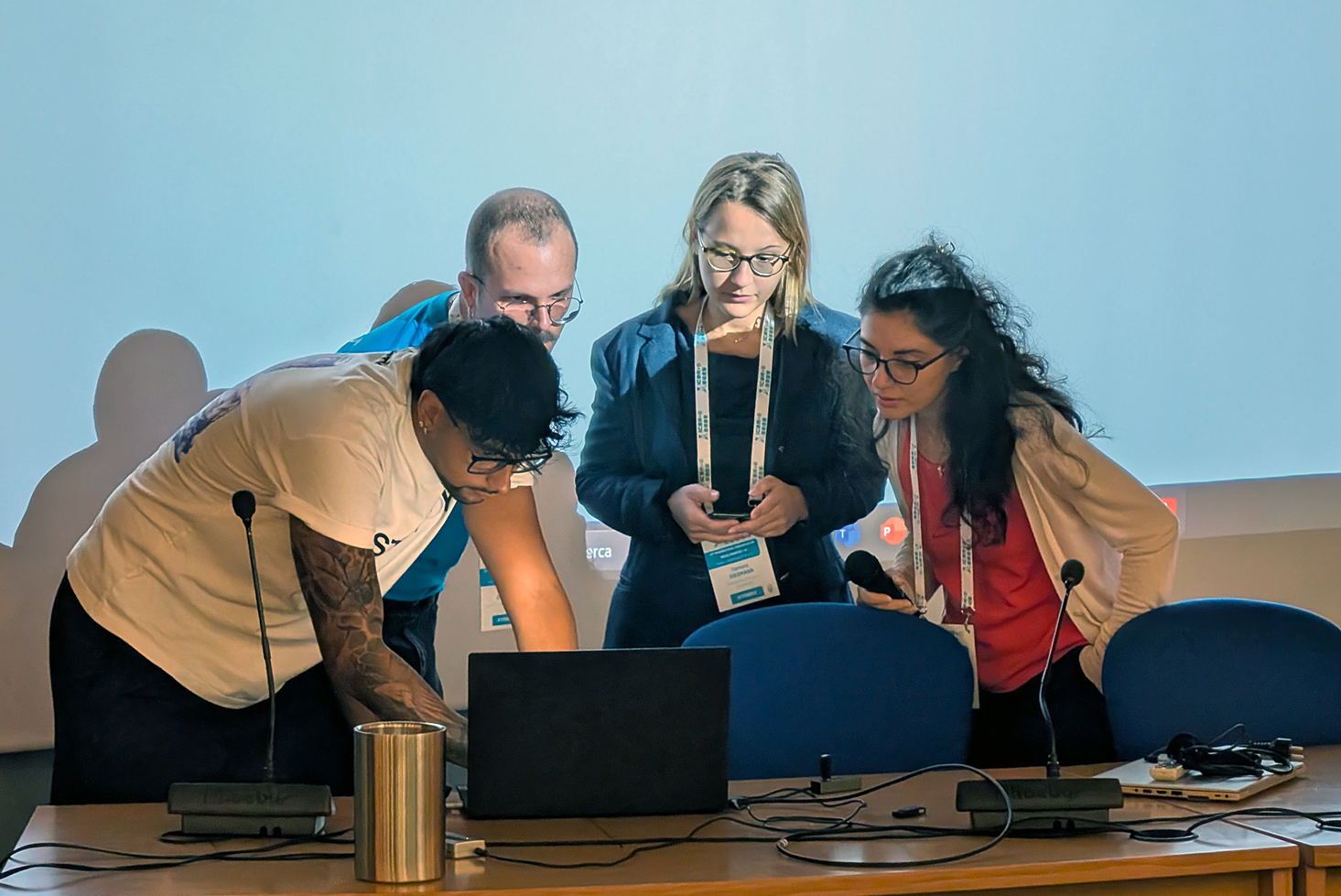
Fig.: Tamara Siegmann, Lorenzo D’Errico, Nihan Karataş, and Oliver Bendel (Photo: ICSR)
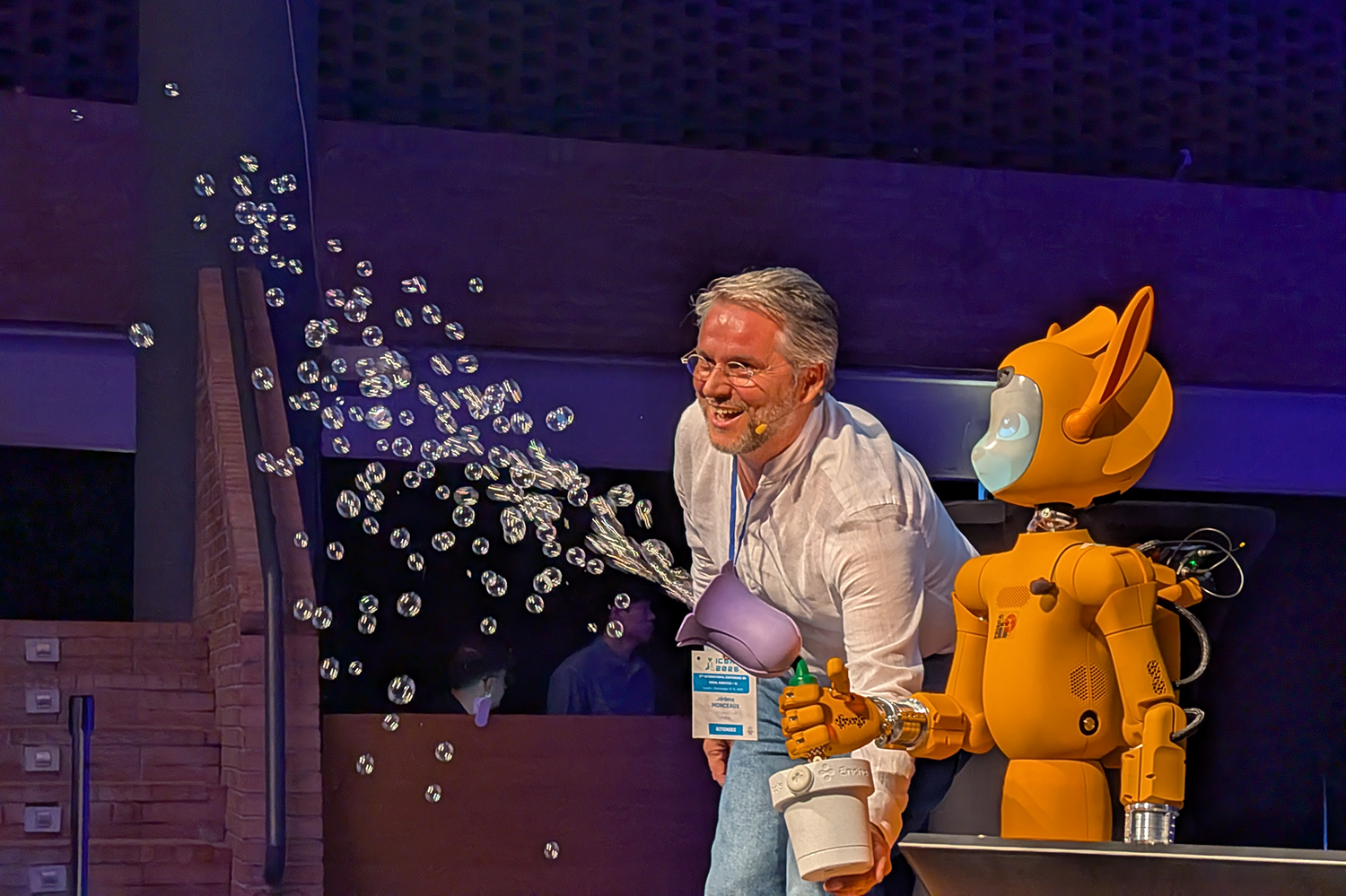
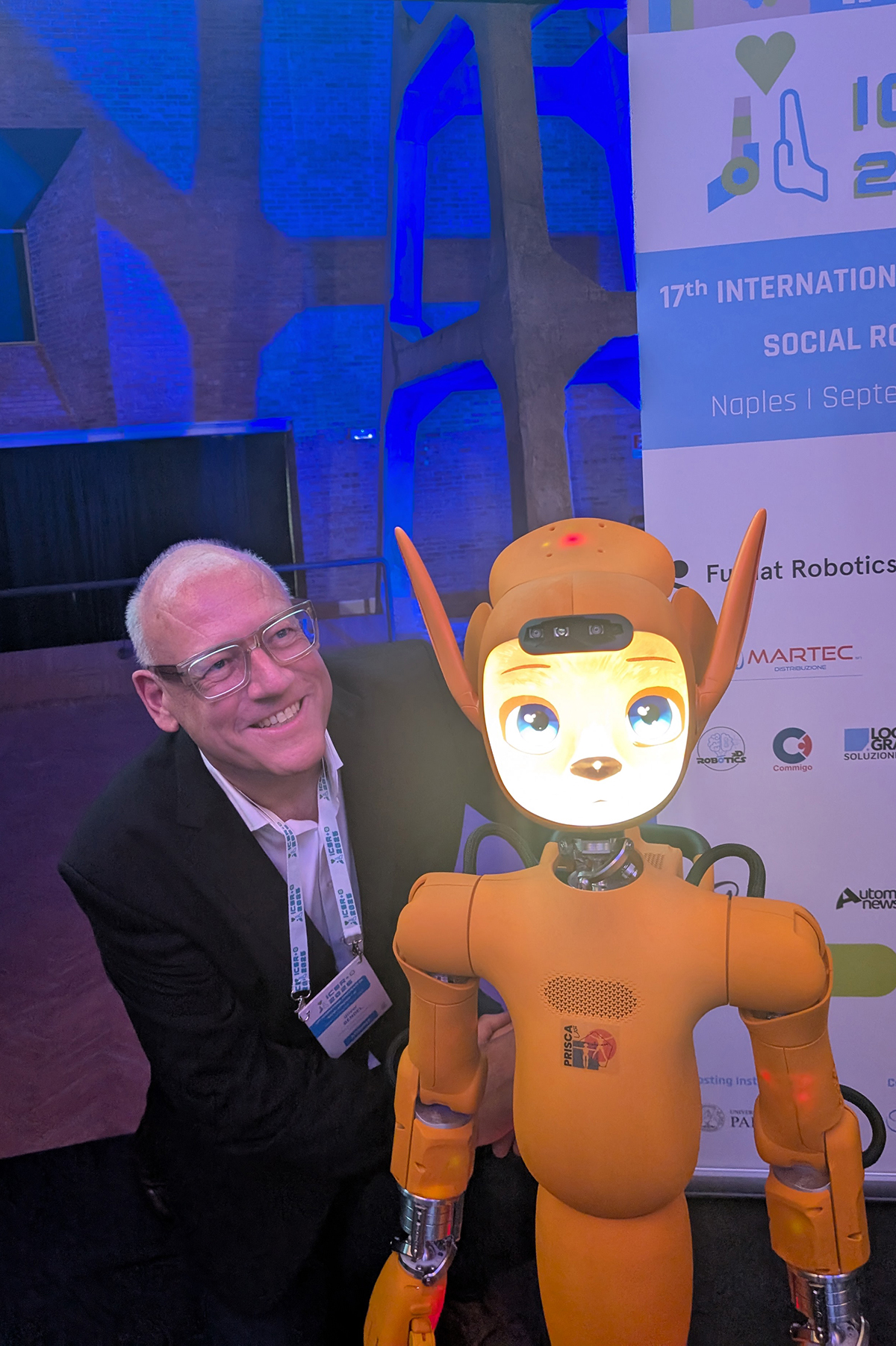
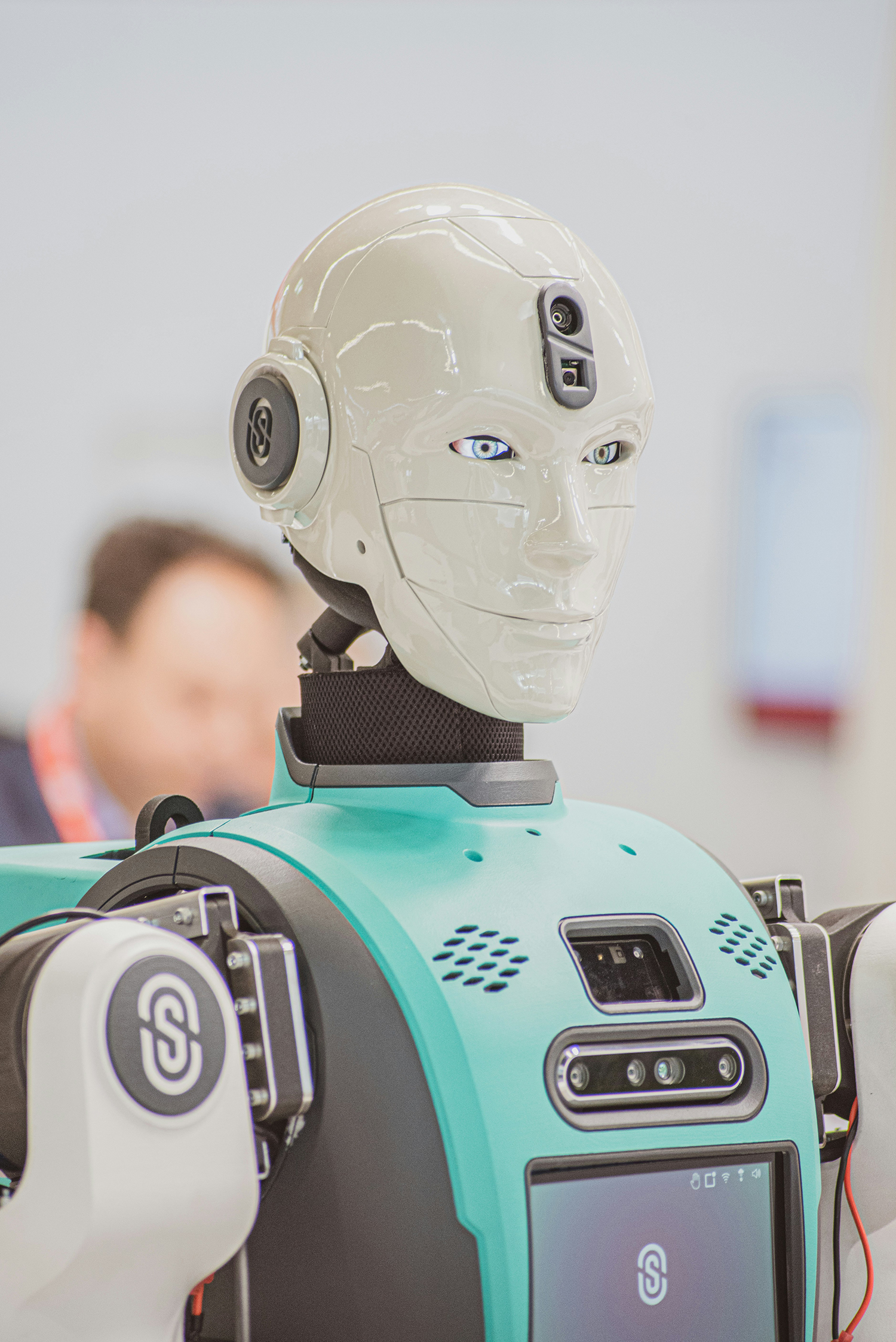
One of the highlights of ICSR 2025 was the presentation of Miroka, a member of the Mirokaï robot family developed by Enchanted Tools. She can grasp and manipulate objects with her hands. During the demonstration, she used these skills to operate her Bubble Flower – a potted artificial plant that can blow soap bubbles. In videos, Jérôme Monceaux, founder and CEO of Enchanted Tools, showed Miroka grasping various objects and even pulling a cart. The Mirokaï robots are placed within a narrative context through storytelling. As explained on the company’s website: „By creating the Mirokaï – a species driven by advanced technology and true altruism – we aim to inspire self-reflection and foster a deeper understanding of otherness. By bringing poetry into technology, we make working and living with robots more pleasant.“ (Website Enchanted Tools, Own Translation) Several hundred participants watched the activities of Miroka, who had come to Earth and enchanted everyone.
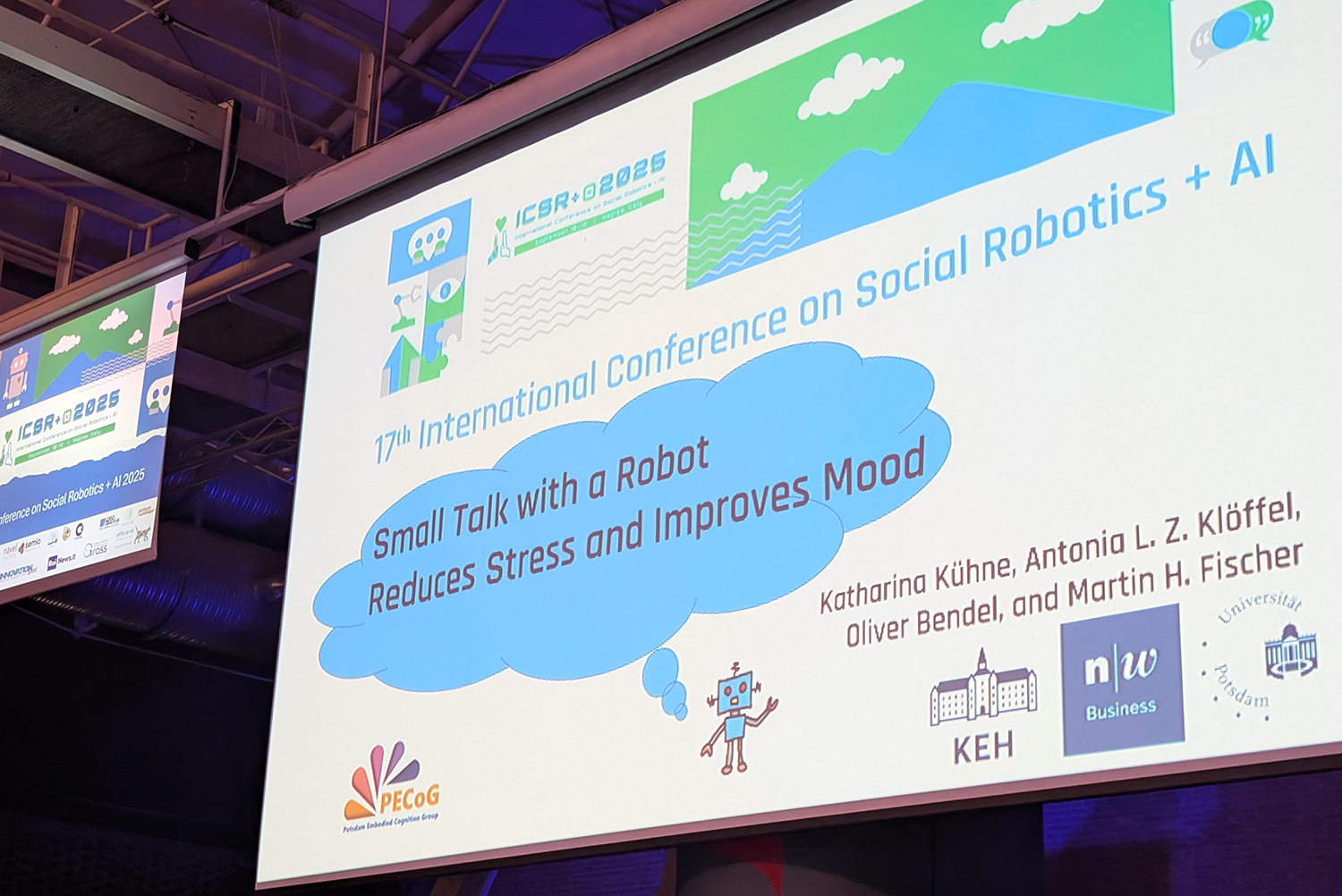
At the last day of the ICSR on September 12, 2025, Katharina Kühne presented her full paper titled „Small Talk with a Robot Reduces Stress and Improves Mood“ (written together with Antonia L. Z. Klöffel, Oliver Bendel, and Martin H. Fischer). Previous research has shown that social support reduces stress and improves mood. This study tested whether small talk with a social robot could be helpful. After performing a stressful task, 98 participants either chatted with a NAO robot, listened to the robot tell a neutral story, or did not interact with the robot. Both robot interactions reduced stress – particularly small talk, which also boosted positive mood. The effects were stronger in participants with high acute stress. Positive affect played a key role in stress reduction, suggesting that robot-mediated small talk may be a useful tool for providing emotional support. Dr. Katharina Kühne and Prof. Dr. Martin H. Fischer are researchers at the University of Potsdam. Antonia L. Z. Klöffel assists Katharina Kühne as a junior scientist. Martin Fischer is the head of the Potsdam Embodied Cognition Group (PECoG). Prof. Dr. Oliver Bendel is an associated researcher with PECoG.
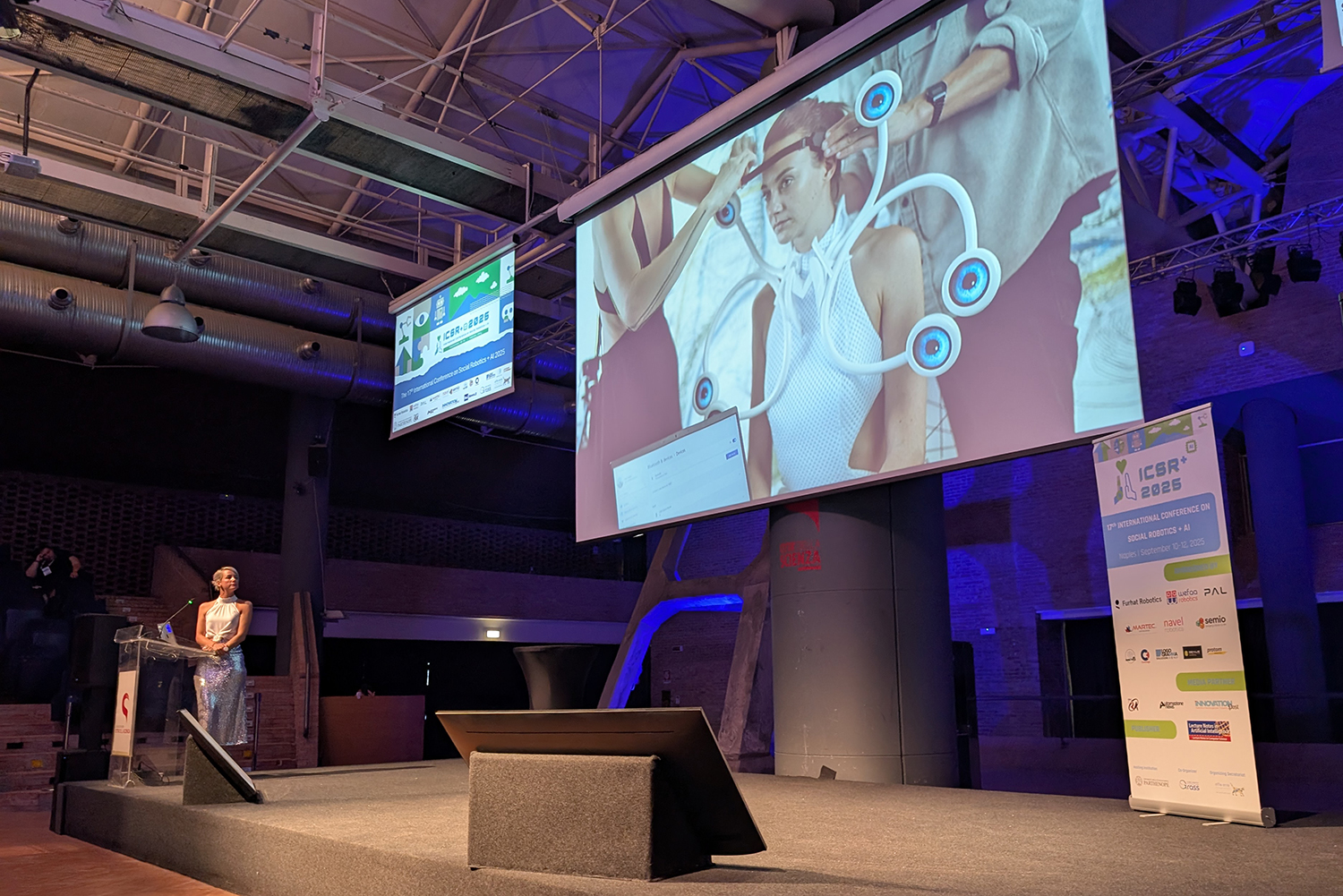
On September 12, 2025, Dutch FashionTech designer Anouk Wipprecht gave a keynote speech entitled „The Intersection of Fashion, Robotics and Technology“ at ICSR 2025 in Naples. In her presentation, she demonstrated how fashion can become an interactive experience that goes far beyond pure aesthetics by incorporating state-of-the-art technologies and scientific insights. With her designs, Wipprecht explores how clothing can transform not only our perception but also our relationship with the environment. A striking example of this is her Spider Dress, which uses integrated sensors and movable limbs to create a kind of technologically enhanced personal space. She collaborates with renowned partners such as Intel, Google, Microsoft, Samsung, Audi, and Swarovski, employing techniques like machine learning, biomimetic design, and microcontroller-driven animatronics. Her creations breathe, move, and respond to external stimuli – always with the aim of exploring new interfaces between humans and technology, and encouraging her generation to reflect on the future of the human body in digital space.
The third and final day of ICSR 2025, September 12, 2025, began with a keynote speech by Jérôme Monceaux entitled „Emotivation by Design: The Mirokaï“. Present was one of the Mirokaï, spectacular robots that roll on a sphere, the female Miroka. Jérôme Monceaux’s keynote traced the evolution of robotics toward more intuitive, inspiring, and joyful interactions. From the iconic Nao and Pepper robots at Aldebaran to the latest generation of social robots, The Mirokaï by Enchanted Tools, his innovative approach reshaped design, mobility, and user experience. He shared his vision for humanoid robots built to support people in everyday life and work. By combining bold engineering with endearing character design, embodied AI, and meaningful storytelling, Jérôme Monceaux and his team created a cohesive hardware and software ecosystem that integrated naturally into social environments – especially in care settings like senior living and pediatric hospitals. The approximately 300 participants watched enthusiastically as the inventor and visionary spoke to Miroka on stage and handed it a bubble flower, which it accepted and used.
Fig.: Oliver Bendel with Miroka in Naples (Photo: Tamara Siegmann)
The ICSR is one of the leading conferences for social robotics worldwide, and its 17th edition will take place from 10 to 12 September 2025 in Naples, Italy. As part of the program, the Young Leaders Committee invites participants to join a variety of activities designed to inspire exchange, creativity, and community spirit. Highlights include a photo contest where up to three photos can be submitted to capture the atmosphere of ICSR + AI 2025, with the winning entry featured at next year’s event. The PhD Corner offers a daily space for 30-minute themed sessions on topics such as writing, career paths, academic tools, and well-being, encouraging open discussion and networking. In addition, spontaneous meetups provide a relaxed environment for sharing ideas, making friends, and enjoying the moment together. The Young Leaders Committee, represented by Lorenzo D’Errico from the University of Naples Federico II in Italy, Tamara Siegmann from the FHNW School of Business in Switzerland, and Nihan Karataş from Nagoya University in Japan, ensures that these activities will make ICSR + AI 2025 an unforgettable experience.
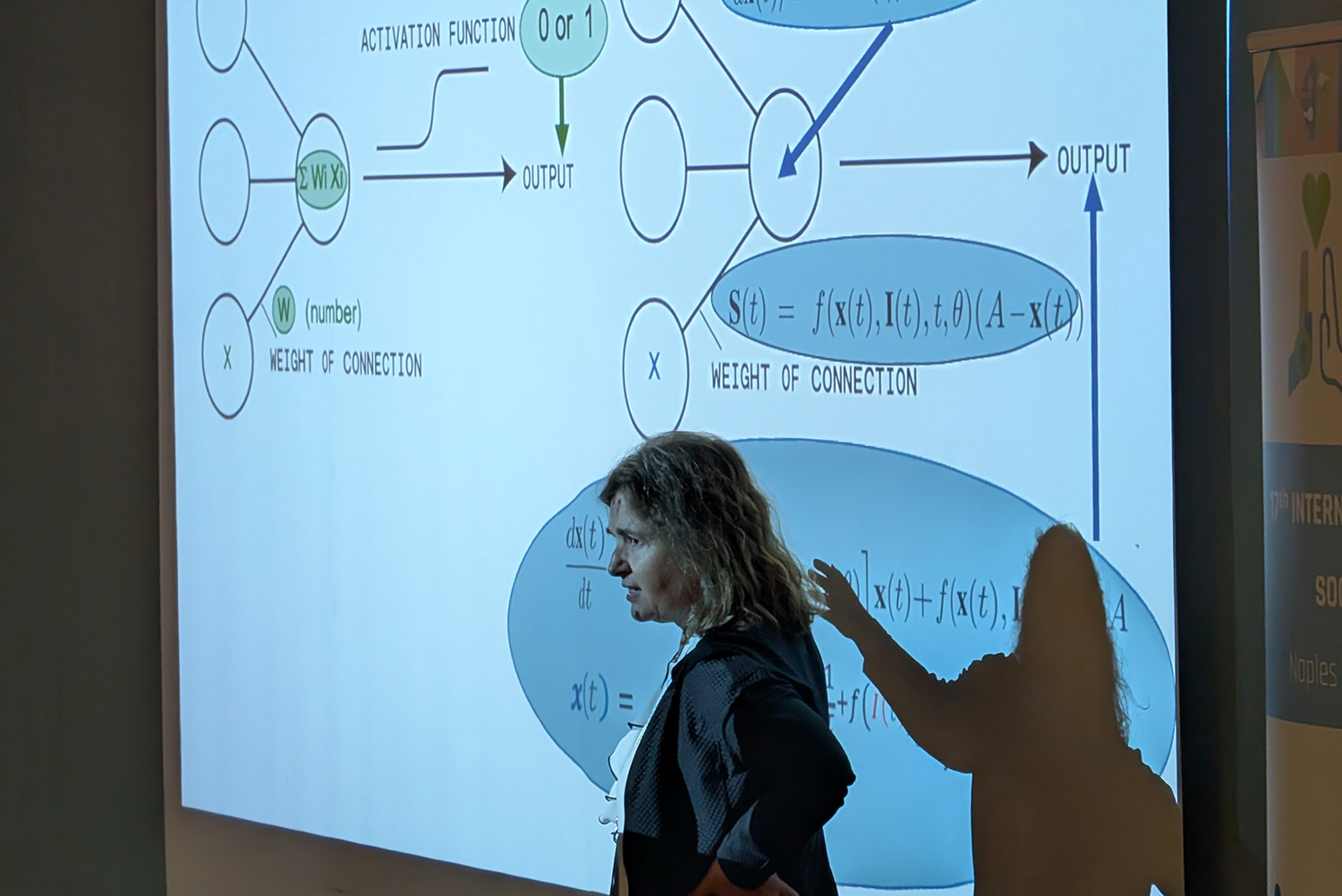
Mariacarla Staffa (University of Naples Parthenope, Italy) opened the ICSR 2025 on September 10, 2025, together with Bruno Siciliano (University of Naples Federico II). The ICSR is one of the leading conferences for social robotics worldwide. The 17th edition takes place from 10 to 12 September 2025 in Naples, Italy. Daniela Rus (MIT) then gave her keynote speech on „Physical AI“. From the abstract: „In today’s robot revolution a record 3.1 million robots are now working in factories, doing everything from assembling computers to packing goods and monitoring air quality and performance. A far greater number of smart machines impact our lives in countless other ways – improving the precision of surgeons, cleaning our homes, extending our reach to distant worlds – and we’re on the cusp of even more exciting opportunities. Future machines, enabled by recent advances in AI, will come in diverse forms and materials, embodying a new level of physical intelligence. Physical Intelligence is achieved when AI’s power to understand text, images, signals, and other information is used to make physical machines such as robots intelligent. However, a critical challenge remains: balancing AI’s capabilities with sustainable energy usage. To achieve effective physical intelligence, we need energy-efficient AI systems that can run reliably on robots, sensors, and other edge devices. In this talk I will discuss the energy challenges of foundational AI models, I will introduce several state space models and explain how they achieve energy efficiency, and I will talk about how state space models enable physical intelligence.“ The approximately 300 participants at the renowned conference on social robotics applauded and then went on to parallel sessions featuring lectures, workshops, and poster presentations. The booklet provides an overview of the entire program.
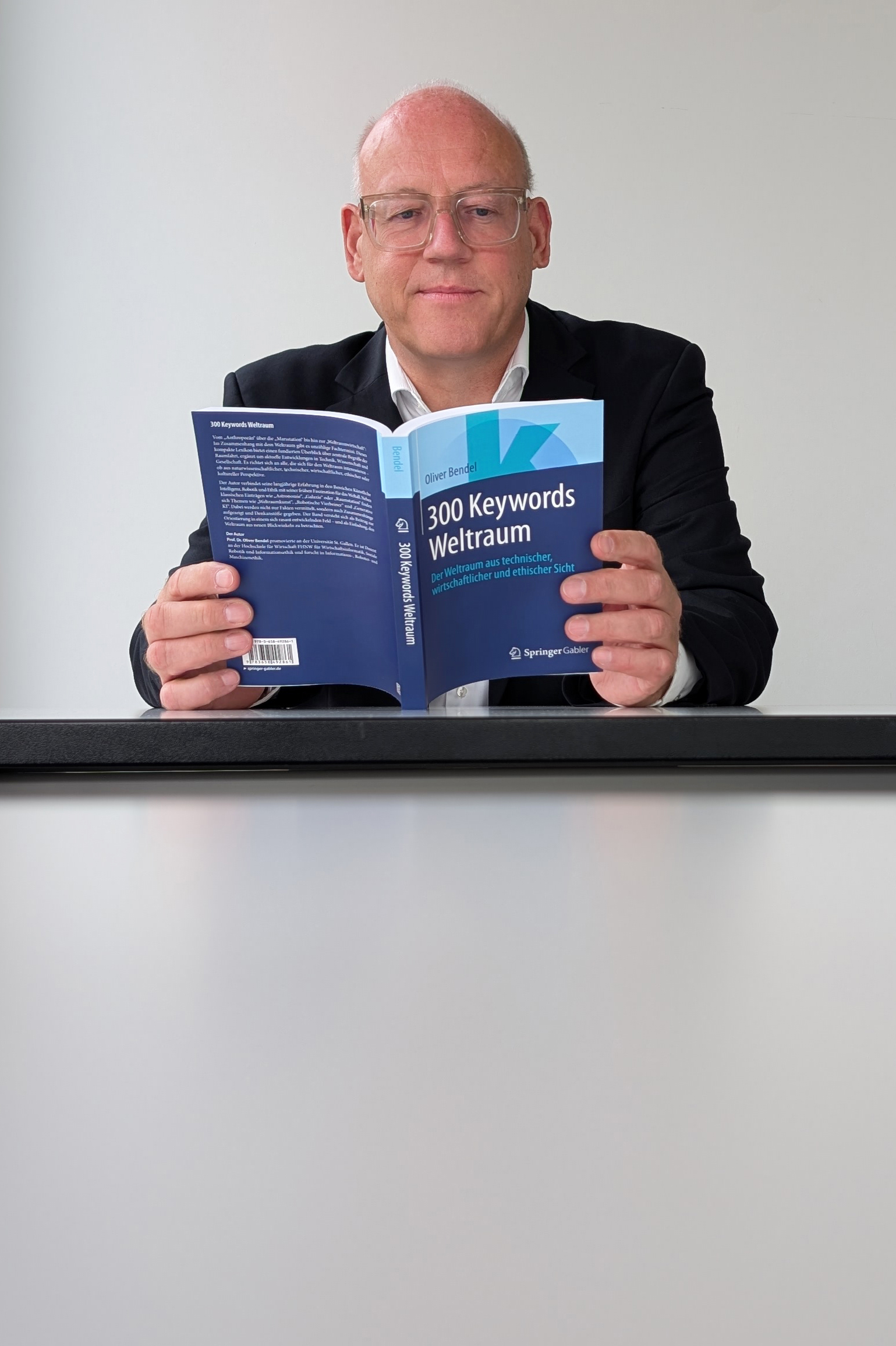
Das Buch „300 Keywords Weltraum“ von Oliver Bendel ist am 28. August 2025 bei Springer Gabler erschienen. Anfang September wurden die ersten gedruckten Exemplare ausgeliefert. Es handelt sich um ein Grundlagenwerk zur Raumfahrt und zum Weltraum. Es enthält zahlreiche Exkurse, etwa zur Weltraumlyrik und zur Weltraumkunst – oder zum mythologischen Hintergrund der Benennung von Himmelkörpern und Galaxien. Zentrale Themen, die sich durch das ganze Buch ziehen, sind Ethik, Robotik und Umwelt. In diesen Bereichen ist der Technikphilosoph und Wirtschaftsinformatiker aus Zürich zu Hause. Man kann sich entweder von A wie Anthropozän bis Z wie Zwergplanet durchlesen oder sich einen der über 300 Begriffe aussuchen und von diesem aus weiterspringen. Es ist das sechste „Keywords“-Buch von Oliver Bendel, wobei zwei davon bereits in zweiter Auflage vorliegen, nämlich das zur Informationsethik und das zur Digitalisierung. Zuletzt erschien in dieser Reihe „300 Keywords Generative KI“. Das Buch kann über link.springer.com/book/10.1007/978-3-658-49287-8 heruntergeladen oder bestellt werden. Zudem ist es über den Buchhandel erhältlich.
The volume „Animals, Ethics, and Engineering: Intersections and Implications“, edited by Rosalyn W. Berne, was published on 7 August 2025. The authors include Clara Mancini, Fiona French, Abraham Gibson, Nic Carey, Kurt Reymers, and Oliver Bendel. The title of Oliver Bendel’s contribution is „An Investigation into the Encounter Between Social Robots and Animals“. The abstract reads: „Increasingly, social robots and certain service robots encounter, whether this is planned or not, domestic, farm, or wild animals. They react differently, some interested, some disinterested, some lethargic, some panicked. Research needs to turn more to animal-robot relationships, and to work with engineers to design these relationships in ways that promote animal welfare and reduce animal suffering. This chapter is about social robots that are designed for animals, but also those that – for different, rather unpredictable reasons – meet, interact, and communicate with animals. It also considers animal-friendly machines that have emerged in the context of machine ethics. In the discussion section, the author explores the question of which of the presented robots are to be understood as social robots and what their differences are in their purpose and in their relationship to animals. In addition, social and ethical aspects are addressed.“ The book was produced by Jenny Publishing and can be ordered via online stores.
Der Playboy hat Ende Juli 2025 mit Prof. Dr. Oliver Bendel über Beziehungen mit Chatbots, Liebespuppen und Sexrobotern gesprochen. Die Sonderausgabe erscheint anlässlich der Ausstellung „SEX NOW“, die vom 5. September 2025 bis zum 3. Mai 2026 stattfindet. Sie liegt dann vor Ort im NRW-Forum Düsseldorf aus. Auf der Website zur Ausstellung heißt es: „Sex kann schön, aufregend, provozierend und politisch sein. Mit der Ausstellung SEX NOW laden wir dazu ein, Sexualität in all ihrer Komplexität neu zu entdecken. Ein zentraler Ausgangspunkt der Ausstellung ist die Beobachtung, dass sich die Sex-Industrie in den letzten Jahren von einer überwiegend männlich dominierten Branche hin zu einer stärker weiblich geprägten Industrie verändert hat. Was sind die Ursachen für diesen Wandel? Wie beeinflusst diese Entwicklung die Art und Weise, wie Sexualität in den Medien und der Gesellschaft dargestellt wird? Welche Auswirkungen hat das auf die Gestaltung und Vermarktung von Produkten und auf die sexuelle Selbstbestimmung?“ (Website NRW-Forum) Die Ausstellung umfasst u.a. Werke von Paul McCarthy, Peaches, Zheng Bo, Tom of Finland, Joëlle Dubois, Poulomi Basu, Miyo van Stenis, Antigoni Tsagkaropoulou, Martin de Crignis und Melody Melamed. Weitere Informationen sind über www.nrw-forum.de/ausstellungen/sex-now verfügbar.
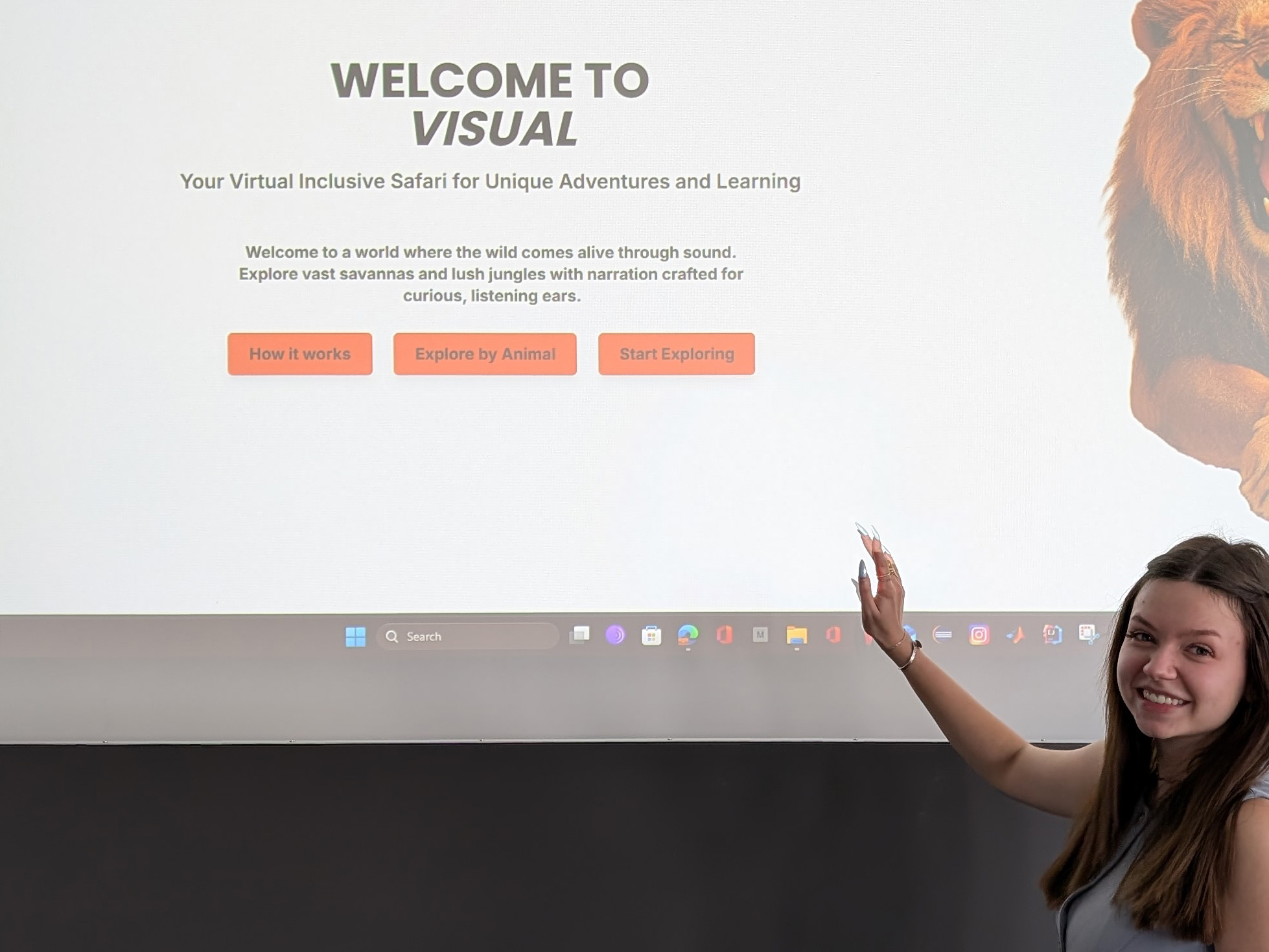
Am 31. Juli 2025 fand die Abschlusspräsentation des Projekts VISUAL statt. Initiiert wurde dieses von Prof. Dr. Oliver Bendel von der Hochschule für Wirtschaft FHNW. Durchgeführt wurde es von Doris Jovic, die ihren Bachelor in Business Information Technology (BIT) in Basel macht. „VISUAL“ steht für „Virtual Inclusive Safaris for Unique Adventures and Learning“. Überall auf der Welt gibt es Webcams, die wilde Tiere zeigen. Sehende können sie nutzen, um bequem vom Sofa aus auf Foto- bzw. Videosafari zu gehen. Blinde und sehbehinderte Menschen sind dabei im Nachteil. Im Projekt wurde im Rahmen von Inclusive AI ein Prototyp speziell für sie entwickelt. Es werden weltweit öffentliche Webcams angezapft, die auf Wildtiere gerichtet sind. Man kann sich zwischen mehreren Lebensräumen auf dem Boden oder im Wasser entscheiden. Zudem kann man „Adult“ oder „Child“ als Profil und eine Rolle („Safari Adventurer“, „Field Scientist“, „Calm Observer“) auswählen. Wenn man das Livevideo aufruft, werden drei Screenshots angefertigt und zu einem Bündel zusammengefügt. Dieses wird von GPT-4o, einem multimodalen großen Sprachmodell, analysiert und evaluiert. Der Benutzer bekommt dann die Beschreibung der Szene und der Aktivitäten vorgesprochen. Die Bedürfnisse von blinden und sehbeeinträchtigten Personen wurden über eine barrierefreie Onlineumfrage eingeholt, bei der der FHNW-Mitarbeiter Artan Llugaxhija unterstützte. Das Projekt dürfte eines der ersten sein, das Inclusive AI mit neuen Ansätzen der Animal-Computer Interaction (ACI) verbindet.
The Research Topic „Exploring human-likeness in AI: From perception to ethics and interaction dynamics“, hosted by Frontiers in Cognition, invites submissions on how human-like features in robots and AI systems influence user perception, trust, interaction, and ethical considerations. As AI becomes more integrated into society, anthropomorphic design raises pressing questions: Do human-like traits improve communication and acceptance, or do they lead to unrealistic expectations? What ethical implications arise when machines simulate empathy or emotion? This interdisciplinary call welcomes contributions from fields such as psychology, engineering, philosophy, and education. Submissions may include empirical research, theoretical analysis, reviews, or case studies that explore how human-likeness shapes the way we engage with AI. The deadline for manuscript summaries is September 22, 2025; full manuscripts are due by January 10, 2026. Articles will undergo peer review and are subject to publication fees upon acceptance. Topic editors are Dr. Katharina Kühne (University of Potsdam, Germany) and Prof. Dr. Roger K. Moore (The University of Sheffield, United Kingdom). For full details and submission guidelines, visit: www.frontiersin.org/research-topics/72370/exploring-human-likeness-in-ai-from-perception-to-ethics-and-interaction-dynamics.
„Tech Affair ist der VDW-Podcast zur zukunftsfähigen Industrie. Wissenschaftler sprechen mit Praktikern über aktuelle Entwicklungen und Ideen für eine Industrie mit und für Menschen. Welche neuen Technologien haben das Zeug, unsere Industrie zukunftsfähig zu machen? Wie sehen morgen unsere Arbeitsplätze aus? Lernen wir aus den Krisen unserer Zeit? Tech Affair bietet spannende Einblicke.“ (Website VDW) So heißt es auf der Website des VDW. Die neueste Folge mit Prof. Dr. Jan Peters (TU Darmstadt) und Prof. Dr. Oliver Bendel (Hochschule für Wirtschaft FHNW) beschäftigt sich mit Industrie- und Servicerobotern und ihren Sensoren. Dazu heißt es auf der Website: „Roboter, die Unebenheiten auf Oberflächen millimetergenau ertasten können, austretende Schadstoffe sofort riechen oder mit uns kommunizieren, indem sie reagieren und antworten. All dies entspringt keiner Science-Fiction-Geschichte, sondern ist dank intensiver Forschung schon Realität. Die Sensoren von Robotern sind teilweise inzwischen so weit fortgeschritten, dass sie unsere menschlichen Sinne um ein Vielfaches übertreffen. Und das, obwohl diese Sinne von den Robotern lediglich imitiert werden, durch Kameras, Mikrofone, Geruchssensoren oder Kontaktsensoren.“ (Website VDW) Der Podcast kann über vdw.de/podcast/folge-19-robotik-wenn-maschinen-feinere-sinne-entwickeln-als-wir/ aufgerufen werden.
On June 19, 2025, the interim presentation of the VISUAL project took place. The initiative was launched by Prof. Dr. Oliver Bendel from the FHNW School of Business. The project assistant is Doris Jovic, who is currently pursuing her Bachelor’s degree in Business Information Technology (BIT). „VISUAL“ stands for „Virtual Inclusive Safaris for Unique Adventures and Learning“. All over the world, webcams provide real-time footage of wild animals. Sighted people can use them to go on photo or video safaris from the comfort of their homes. However, blind and visually impaired individuals are at a disadvantage. In the spirit of Inclusive AI – a concept and movement that includes tools like Be My Eyes and its Be My AI feature – this project aims to create an accessible solution. By August 2025, the goal is to develop a prototype that allows blind and visually impaired users to receive audio descriptions of webcam images or videos of wildlife. The system analyzes and interprets the footage using a multimodal large language model (LLM), presenting the results via an integrated text-to-speech engine. To better understand the needs of the target group, an online survey has been available since June 19, 2025. It is accessible in both English and German.
Fig.: Photo safaris for blind and visually impaired people (Image: ChatGPT/4o Image)
The edited volume „Animals, Ethics, and Engineering: Intersections and Implications“ will be published by Jenny Stanford in August 2025. It can already be pre-ordered via online stores. These provide the following information: „‚Animals, Ethics, and Engineering: Intersections and Implications‘ is a seminal work that explores the intricate relationship between technology, ethics, and the welfare of nonhuman animals. Edited by Rosalyn W. Berne, this volume brings together leading scholars and practitioners to examine the ethical responsibilities inherent in technological progress and its impact on animal well-being.“ (Information Publisher) The authors include Clara Mancini, Fiona French, Abraham Gibson, Nic Carey, Kurt Reymers, and Oliver Bendel. Rosalyn W. Berne is the Anne Shirley Carter Olsson Professor of Applied Ethics and Chair of the Department of Engineering and Society, School of Engineering and Applied Sciences, University of Virginia, where she has been a faculty member since 1999 and co-directs the Online Ethics Center for Engineering and Science (OEC).
The ICSR is one of the leading conferences for social robotics worldwide. The 17th edition will take place from 10 to 12 September 2025 in Naples, Italy. The deadline for submitting short papers is approaching. Short papers consist of 5 pages of body text plus 1 page references. The most important conference dates are: Short Paper Submission: June 18, 2025; Short Paper Notification: July 7t, 2025; Camera-ready: July 11, 2025; Paper Presentation Days at ICSR’25: September 11 and 12, 2025. All dates are listed on the website. „The conference of theme, ‚Emotivation at the Core: Empowering Social Robots to Inspire and Connect,‘ highlights the essential role of ‚Emotivation‘ in social robotics. Emotivation captures the synergy between emotion and motivation, where emotions trigger and sustain motivation during interactions. In social robotics, this concept is key to building trust, fostering empathy, and supporting decision-making by enabling robots to respond sensitively to human emotions, inspiring engagement and action.“ (Website ICSR) Participants will meet for two days at the Parthenope University of Naples and for the third day at the Città della Scienza conference center. All buildings and rooms are also listed on the website. The PDF of the CfP can be downloaded here.
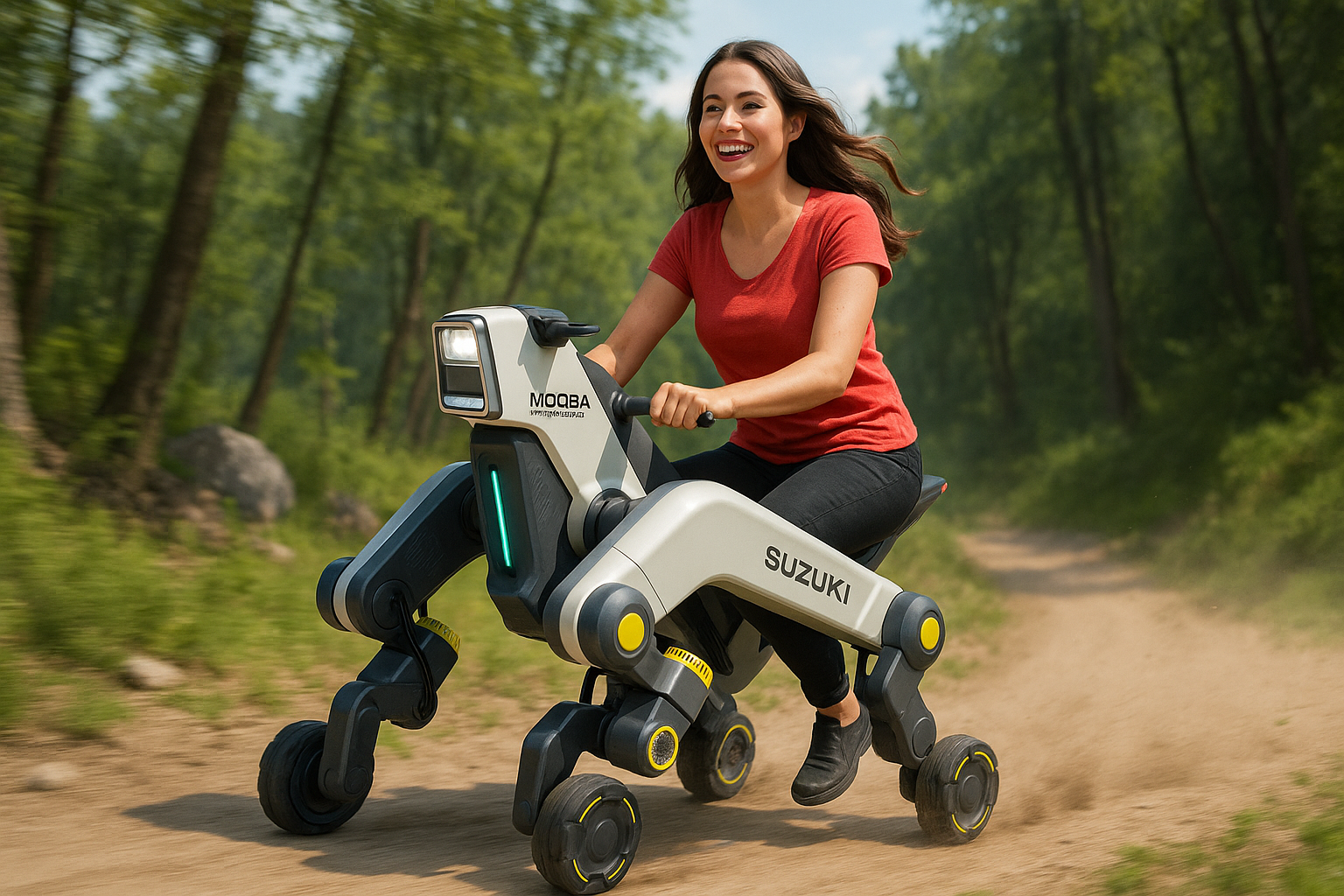
„On June 5, 2025, Suzuki made headlines in the robotics and mobility sector by launching the Moqba, a $3,000 four-legged transport robot designed to revolutionize urban commuting, accessibility, and logistics.“ (The Jurnals, 6 June 2025) This was reported by The Jurnals in the article “Suzuki’s Moqba Unleashed: A $3,000 Robot Dog Redefining Urban Mobility” on June 6, 2025. „The Moqba’s sleek design features a white-and-black color scheme, a futuristic aesthetic, and a saddle-like seat for riders, blending practicality with a forward-thinking vision. Its four-legged structure, inspired by robots like Spot, allows it to navigate varied terrain, making it a versatile tool for both individual transport and commercial applications. With a top speed of 20 mph (32 km/h) and a range of up to 50 miles (80 km) on a single charge, the Moqba is well-suited for urban environments, where short, efficient trips are the norm.“ (The Jurnals, 6 June 2025) The device looks solid and ready for use. However, it is probably not suitable for people taller than 180 cm. It is also unlikely to be suitable for physically disabled people. For everyone else, it could be an interesting way to get around.
Fig.: A robot for riding (Image: ChatGPT/4o Image)
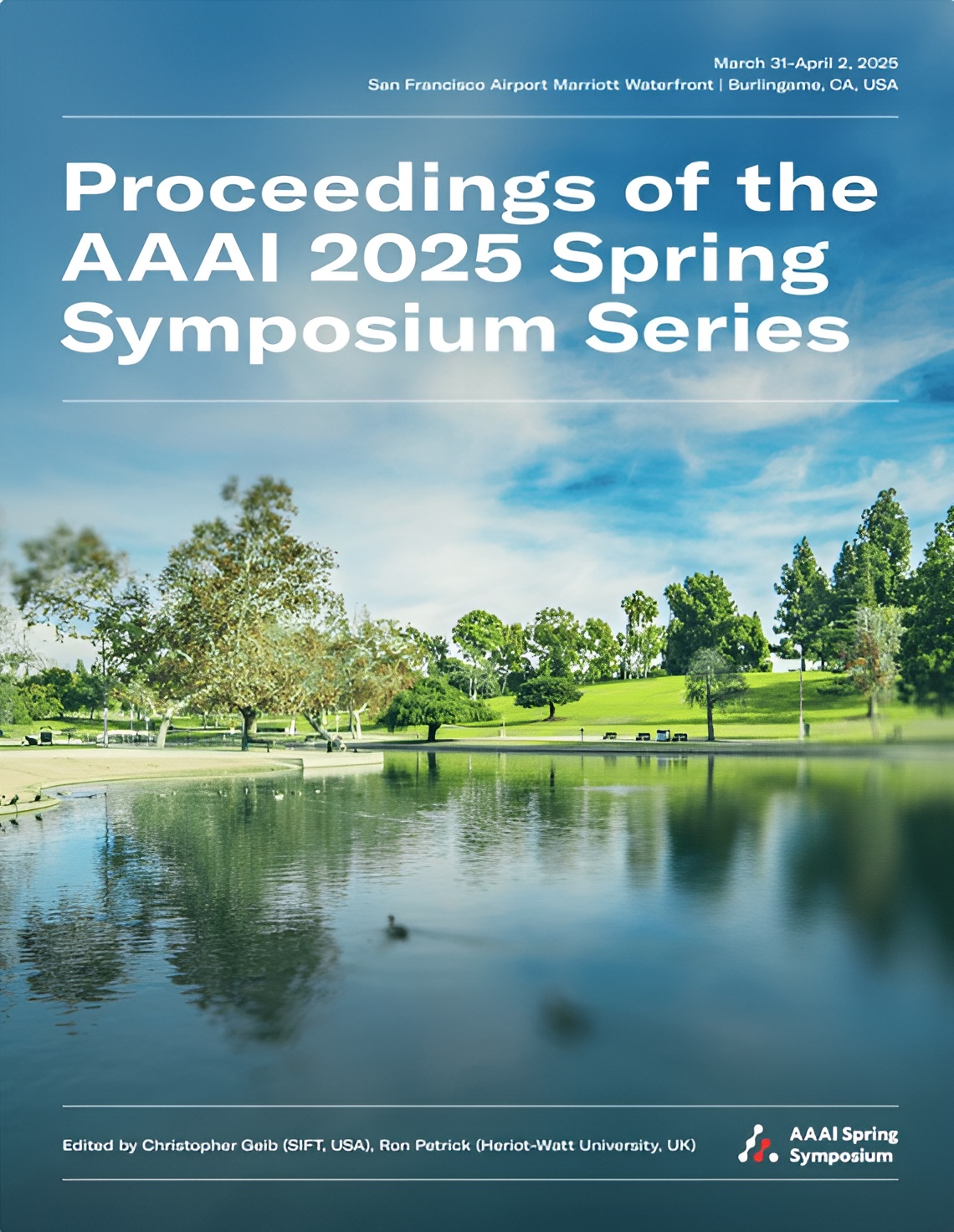
The Association for the Advancement of Artificial Intelligence’s (AAAI) 2025 Spring Symposium Series took place from March 31 to April 2 in Burlingame, California. The symposium series fosters an intimate environment that enables emerging AI communities to engage in workshop-style discussions. Topics change each year to ensure a dynamic venue that stays current with the evolving landscape of AI research and applications. This year’s program included eight symposia: AI for Engineering and Scientific Discoveries; AI for Health Symposium: Leveraging Artificial Intelligence to Revolutionize Healthcare; Current and Future Varieties of Human-AI Collaboration; GenAI@Edge: Empowering Generative AI at the Edge; Human-Compatible AI for Well-being: Harnessing Potential of GenAI for AI-Powered Science; Machine Learning and Knowledge Engineering for Trustworthy Multimodal and Generative AI (AAAI-MAKE); Symposium on Child-AI Interaction in the Era of Foundation Models; Towards Agentic AI for Science: Hypothesis Generation, Comprehension, Quantification, and Validation. On May 28, 2025, the „Proceedings of the AAAI 2025 Spring Symposium Series“ (Vol. 5 No. 1) were published. They are available at ojs.aaai.org/index.php/AAAI-SS/issue/view/654.
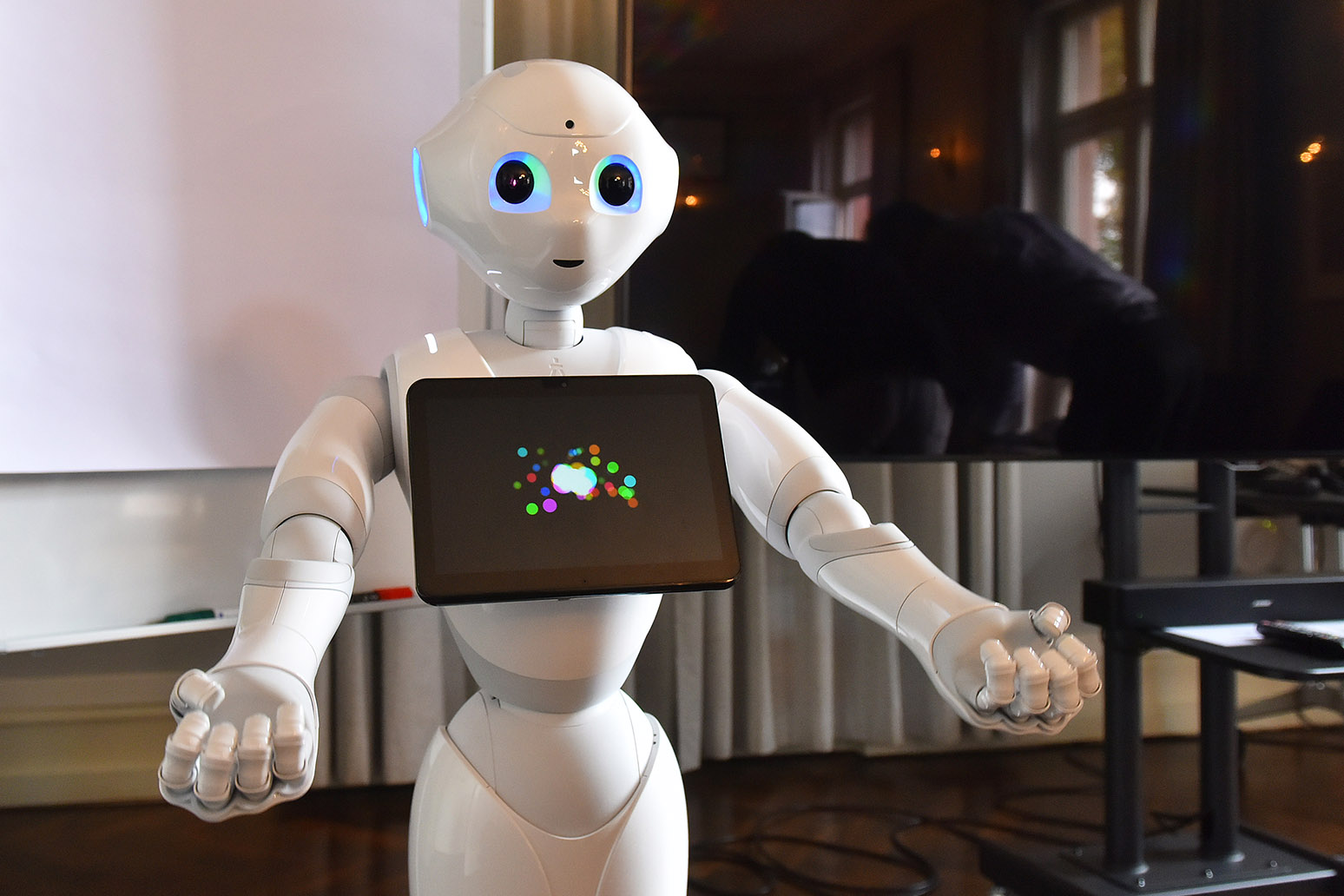
The ICSR 2025 has announced Jérôme Monceaux as the event’s second keynote speaker. The co-founder of Aldebaran Robotics is the creative force behind the iconic humanoid robots Pepper and NAO, which have revolutionized human-robot interaction worldwide. Monceaux has a unique ability to merge technology with empathy. He founded SPooN and Enchanted Tools, leading initiatives that blend 3D animation, AI, and robotics to create interactive characters and tools that enrich everyday life. A passionate advocate for accessible innovation, Monceaux is a sought-after speaker who regularly inspires the next generation through talks and lectures at schools and universities across Europe. From TEDx stages to international tech events like VivaTech and SXSW, his message is clear: technology should enchant, empower, and bring people together. More information is available at icsr2025.eu.
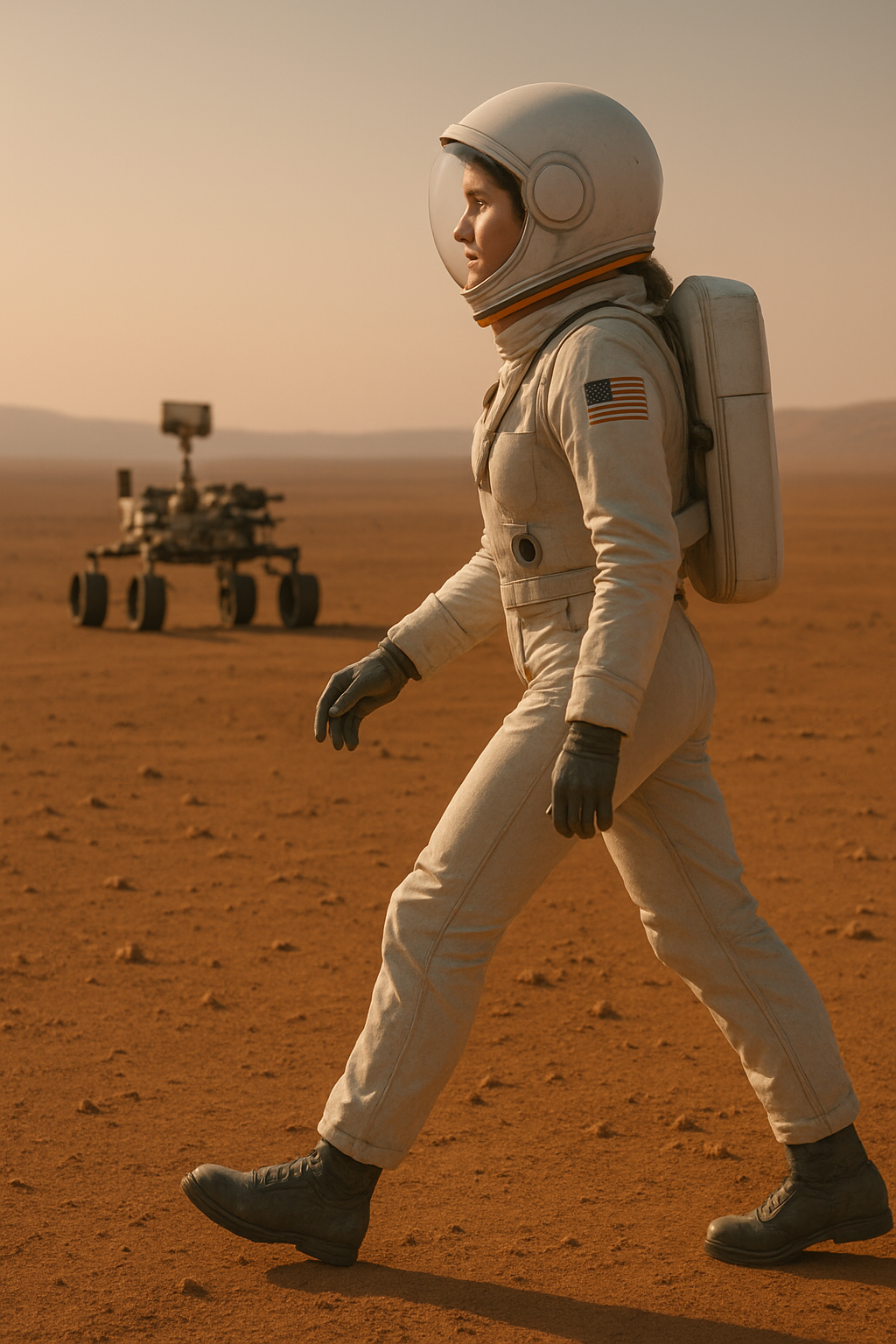
Es sind viele Bücher zum Weltraum auf dem Markt. Auf Amazon bekommt man aber vor allem welche für Kinder und Jugendliche angezeigt. Das ist natürlich insofern erfreulich, als diese Zielgruppe dieses Thema tatsächlich heiß und innig liebt. Allerdings möchten sich vielleicht auch Erwachsene in den Tiefen des Alls verlieren. Bei Springer wird man immerhin fündig, mit Büchern wie „Weltall, Neutrinos, Sterne und Leben“ (Dieter Frekers und Peter Biermann), „Einführung in Astronomie und Astrophysik“ (Arnold Hanslmeier) und „Von Eratosthenes bis Einstein“ (Michael Bürker). Auch Verlage wie Kosmos können punkten, mit Perlen wie „Die 42 größten Rätsel der Astronomie“ (Ilja Bohnet). Es fehlt dennoch – zumindest bei Springer – ein kurzes, prägnantes Nachschlagewerk. Diese Lücke schließt noch dieses Jahr Prof. Dr. Oliver Bendel mit seinem Buch „250 Keywords Weltraum“. Es geht um Weltraumroboter, Weltraumwirtschaft und Weltraumethik ebenso wie um Weltraumkunst. Das Werk ist für Ende November 2025 eingeplant. Es ist nicht das erste, das Oliver Bendel zum Weltraum verfasst hat. „Die Astronautin“ erschien 2020 und enthält Gedichte in Form von 3D-Codes.
Abb.: Eine Astronautin auf dem Mars (Bild: ChatGPT/4o Image)
The ICSR is one of the leading conferences for social robotics worldwide. The 17th edition will take place from 10 to 12 September 2025 in Naples, Italy. The deadline for submitting short papers has been extended. Short papers consist of 5 pages of body text plus 1 page references. The most important conference dates are: Short Paper Submission: June 18, 2025; Short Paper Notification: July 7t, 2025; Camera-ready: July 11, 2025; Paper Presentation Days at ICSR’25: September 11 and 12, 2025. All dates are listed on the website. „The conference of theme, ‚Emotivation at the Core: Empowering Social Robots to Inspire and Connect,‘ highlights the essential role of ‚Emotivation‘ in social robotics. Emotivation captures the synergy between emotion and motivation, where emotions trigger and sustain motivation during interactions. In social robotics, this concept is key to building trust, fostering empathy, and supporting decision-making by enabling robots to respond sensitively to human emotions, inspiring engagement and action.“ (Website ICSR) Participants will meet for two days at the Parthenope University of Naples and for the third day at the Città della Scienza conference center. All buildings and rooms are also listed on the website. The PDF of the CfP can be downloaded here.