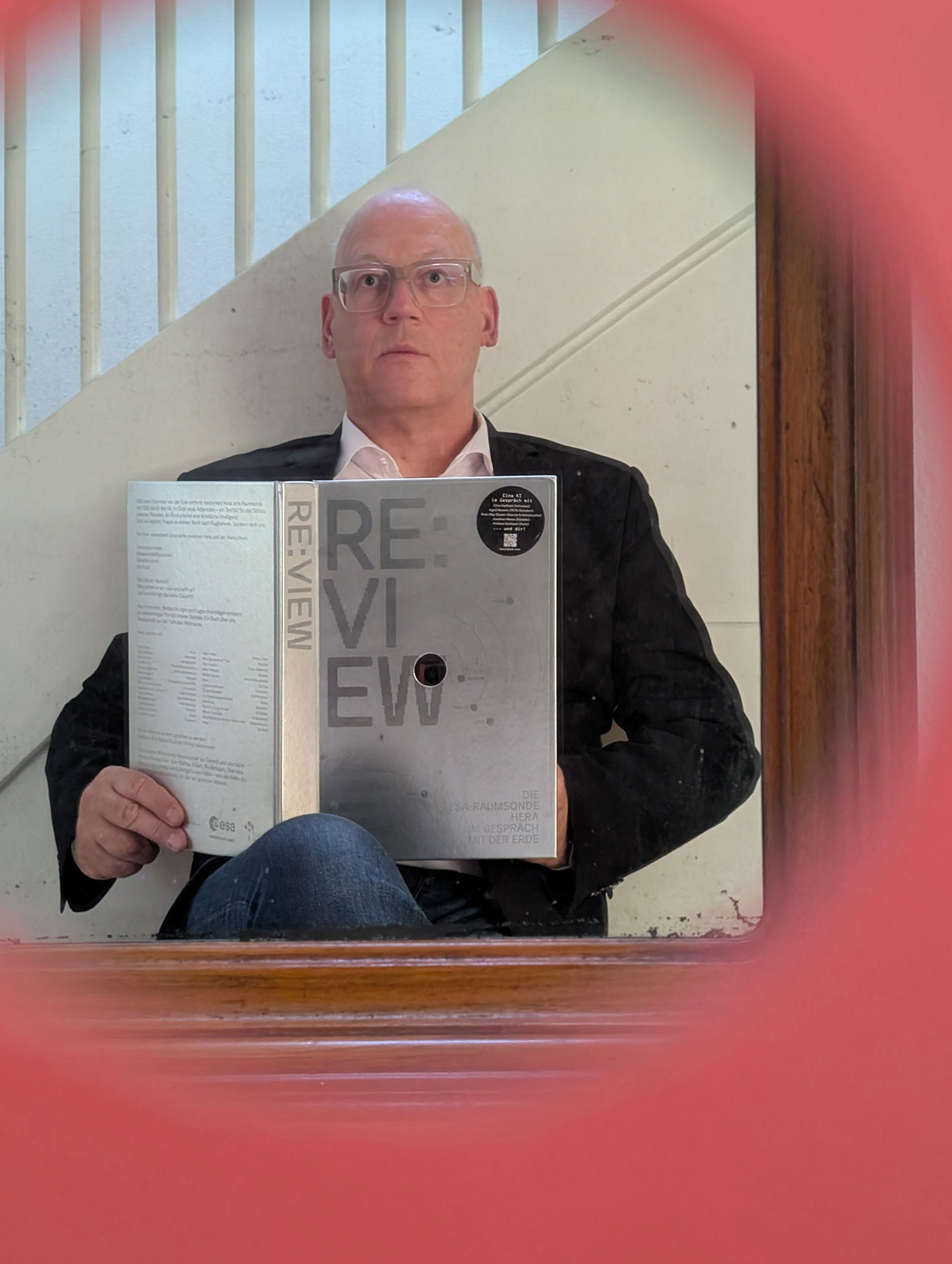
„Q&A aus dem Orbit: 26 Tage vor der Ankunft am Asteroiden beantwortet Hera live, wie eine KI-Raumsonde plant, die Menschheit zu retten.“ So lautet die Überschrift für eine Veranstaltung zum Coffee-Table-Buch „RE:VIEW – Wozu die Menschheit retten?“, die am 9. Oktober 2026 auf der Frankfurter Buchmesse stattfand. Weiter heißt es: „Millionen Kilometer von der Erde entfernt manövriert HERA, eine Raumsonde der ESA, durch das All. An Bord arbeitet eine künstliche Intelligenz. Kurz vor ihrer Ankunft am Asteroiden spricht Hera mit Ian Carnelli, dem ESA-Missionsleiter, Markus Mooslechner, Director of Innovation von Terra Mater Studios und Ihnen. Nehmen Sie Teil [!] an dem Gespräch, beleuchten Sie mit Hera gemeinsam die Menschheit und diskutieren Sie mit ihr, ob die Menschheit es wert ist[,] gerettet zu werden.“ Das Coffee-Table-Buch ist am 14. September 2026 erschienen. Mit dabei sind unter anderem der Queen-Musiker und Astrophysiker Brian May, der ehemalige kanadische Astronaut Chris Hadfield, die erste Weltraumtouristin Anousheh Ansari, der „Interstellar“-Visionär Paul Franklin, die PETA-Gründerin Ingrid Newkirk, der Ex-Gitarrist von Guns N‘ Roses Ron „Bumblefoot“ Thal, der Science-Fiction-Autor Andreas Eschbach, der Künstler Jonathan Meese und der Technikphilosoph und Maschinenethiker Oliver Bendel, der 2025 das Buch „300 Keywords Weltraum“ veröffentlicht hat. Das Buch mit seinen 400 Seiten und zahlreichen Bildern ist im Buchhandel verfügbar und wird noch bis 11. Oktober auf der Frankfurter Buchmesse zu sehen sein.
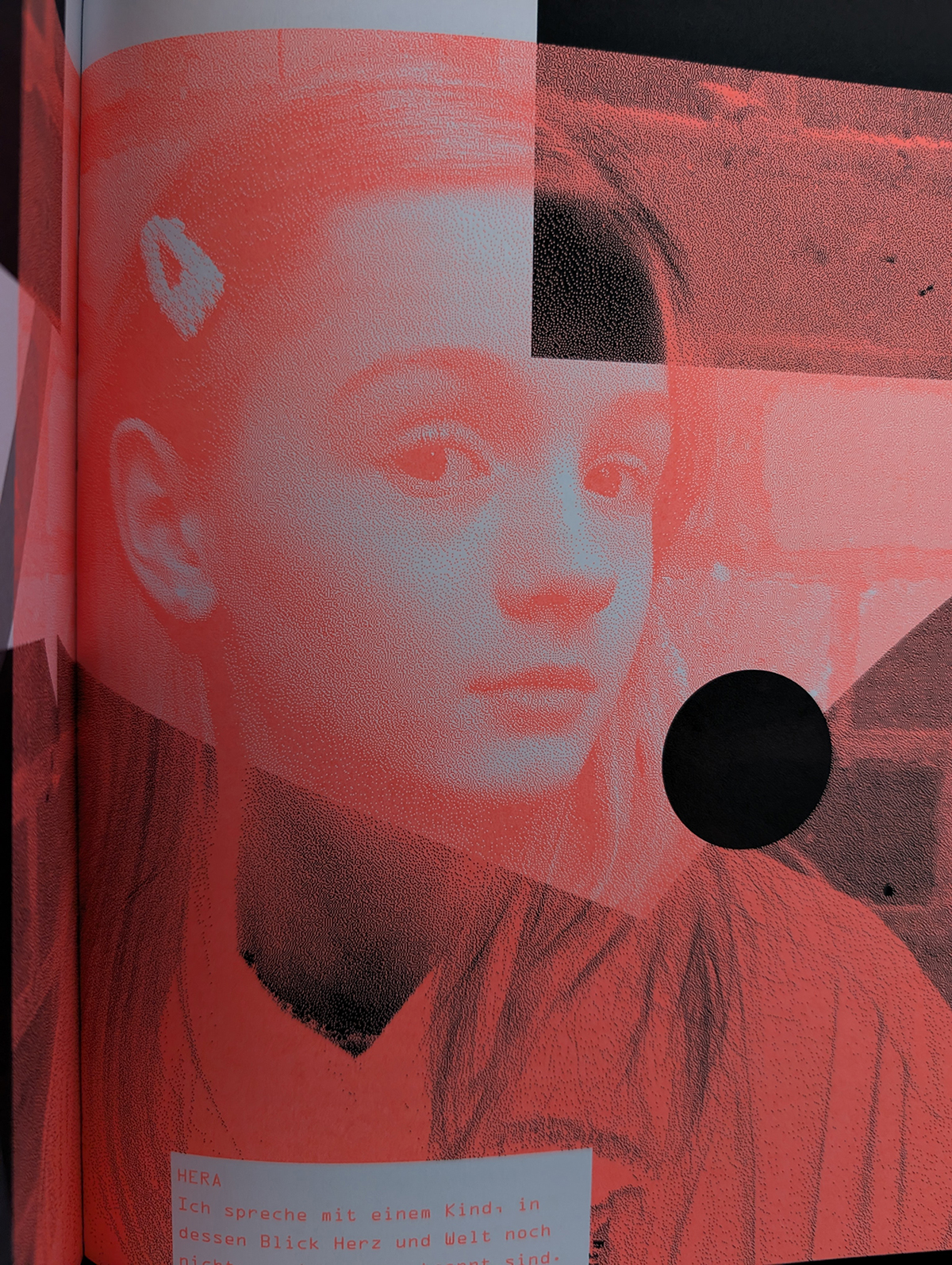
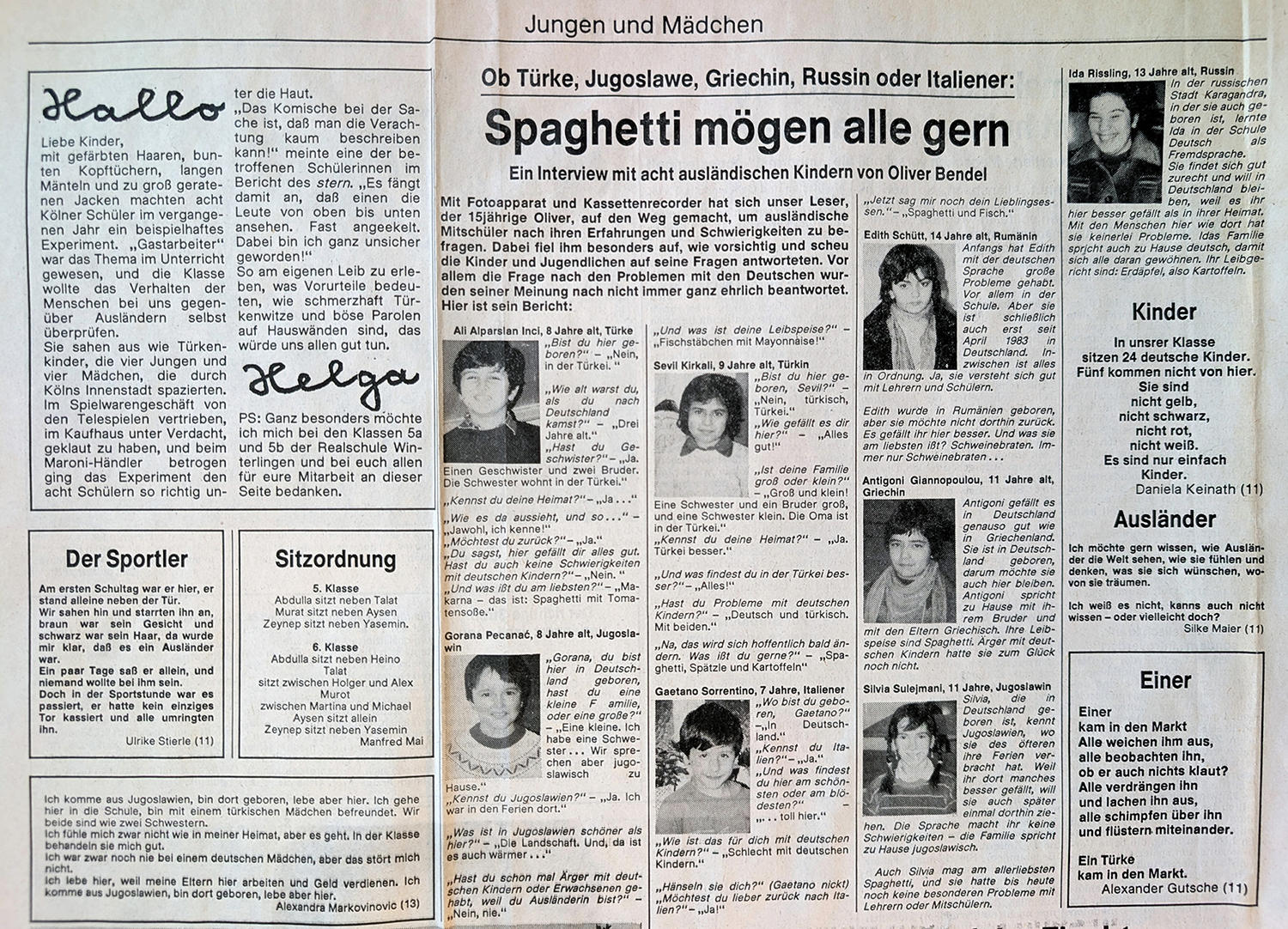
Abb.: Auch ein Kind wurde interviewt (Bild: We Mind Publishing)
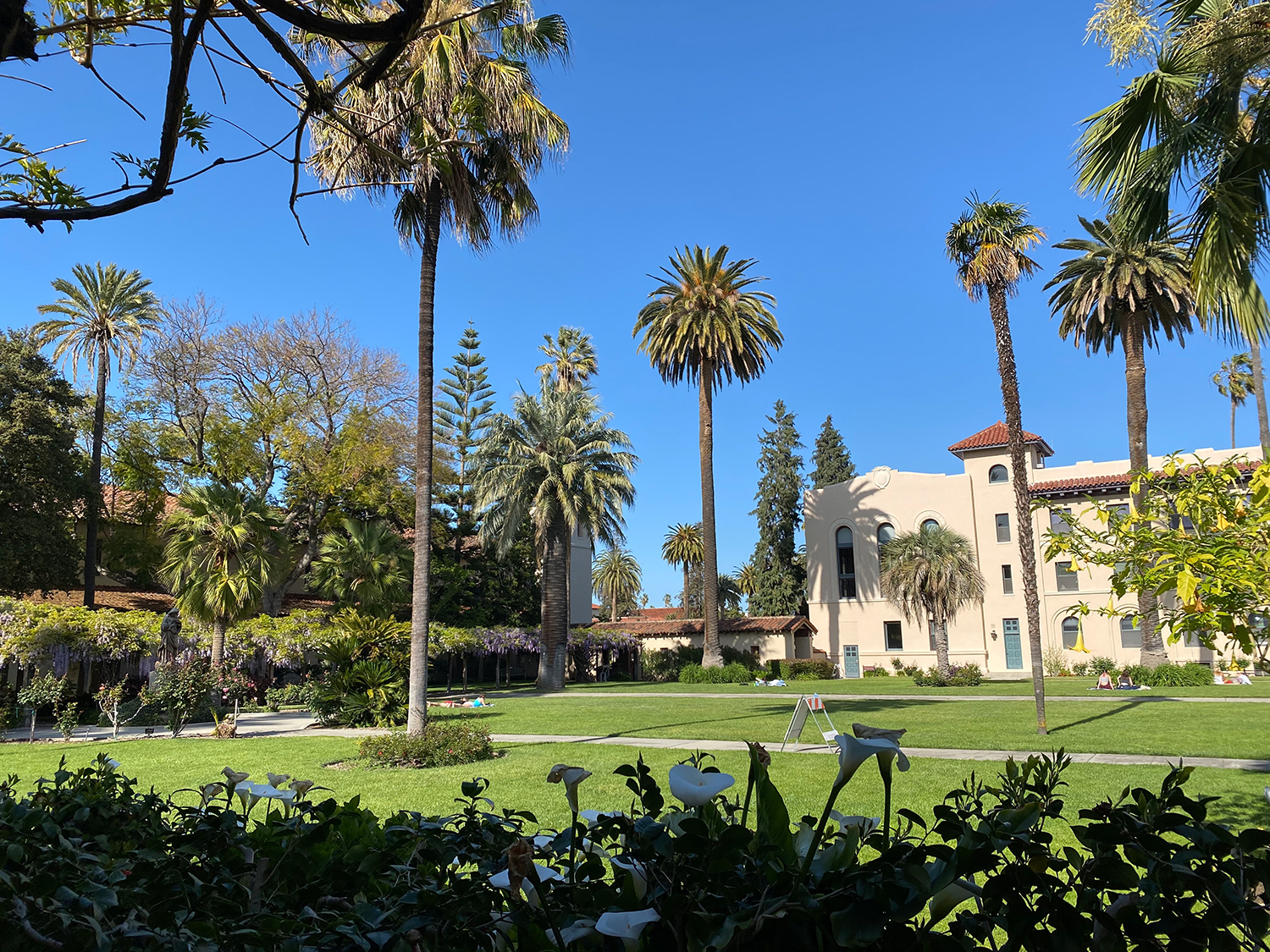
The AAAI Spring Symposium Series fosters an intimate environment for emerging AI communities to engage in workshop-style discussions. After several editions away from a university setting, the series appears to have found a new academic home. The AAAI 2027 Spring Symposium Series will take place from March 22 to March 24, 2027, at Santa Clara University in Santa Clara, California. For many years, Stanford University provided the setting for the Spring Symposia, while more recent editions have taken place at the Hyatt Regency and other hotels at San Francisco Airport. Santa Clara University now provides a new academic setting in Silicon Valley for this established series and its distinctive format of several small symposia running in parallel. At the same time, AAAI has issued the Call for Proposals for the 2027 Spring Symposium Series. Proposals for individual symposia are due November 17, 2026, with notifications scheduled for December 8. AAAI expects to select approximately eight symposia covering a broad range of topics within and around artificial intelligence, with a particular interest in emerging research areas and communities. The move to Santa Clara University thus marks a new chapter for the AAAI Spring Symposium Series and brings the event back to a university campus. The Call for Proposals is available on the Spring Symposium Series site.
Fig.: The Santa Clara Mission Gardens (Photo: Cristiano Tomás, CC BY-SA 4.0)
With just over two months to go, preparations for the thirteenth edition of the Animal-Computer Interaction International Conference (ACI 2026) are entering their final phase. The conference will take place from December 2 to 5, 2026, at the FHNW Campus Brugg-Windisch in Switzerland – the first ACI conference to be held in continental Europe. Participants can still benefit from the Early-Bird registration rate until September 30, 2026. Researchers and practitioners interested in Animal-Computer Interaction (ACI), Animal-Machine Interaction (AMI), animal welfare, robotics, interaction design, and related fields are encouraged to register soon. ACI 2026 is pleased to receive support from the City of Brugg, the Municipality of Windisch, and Rehkitzrettung Schweiz. Their involvement underlines the strong connection between the international conference and its host region. Rehkitzrettung Schweiz will also be present at the conference. The organization’s work is particularly relevant to this year’s focus on Animal-Machine Interaction. Its activities demonstrate in a very concrete way how humans, animals, and machines can interact for the benefit of animals: drones equipped with thermal imaging cameras are used to locate young deer hidden in fields before agricultural mowing takes place, helping to prevent injuries and deaths. This practical application provides an excellent example of questions at the heart of ACI 2026: How can technologies and autonomous systems interact with animals and their environments? How can such systems support animal welfare? And how should they be designed and deployed responsibly? Further information on registration, the program, workshops, and participation is available on the ACI 2026 website.
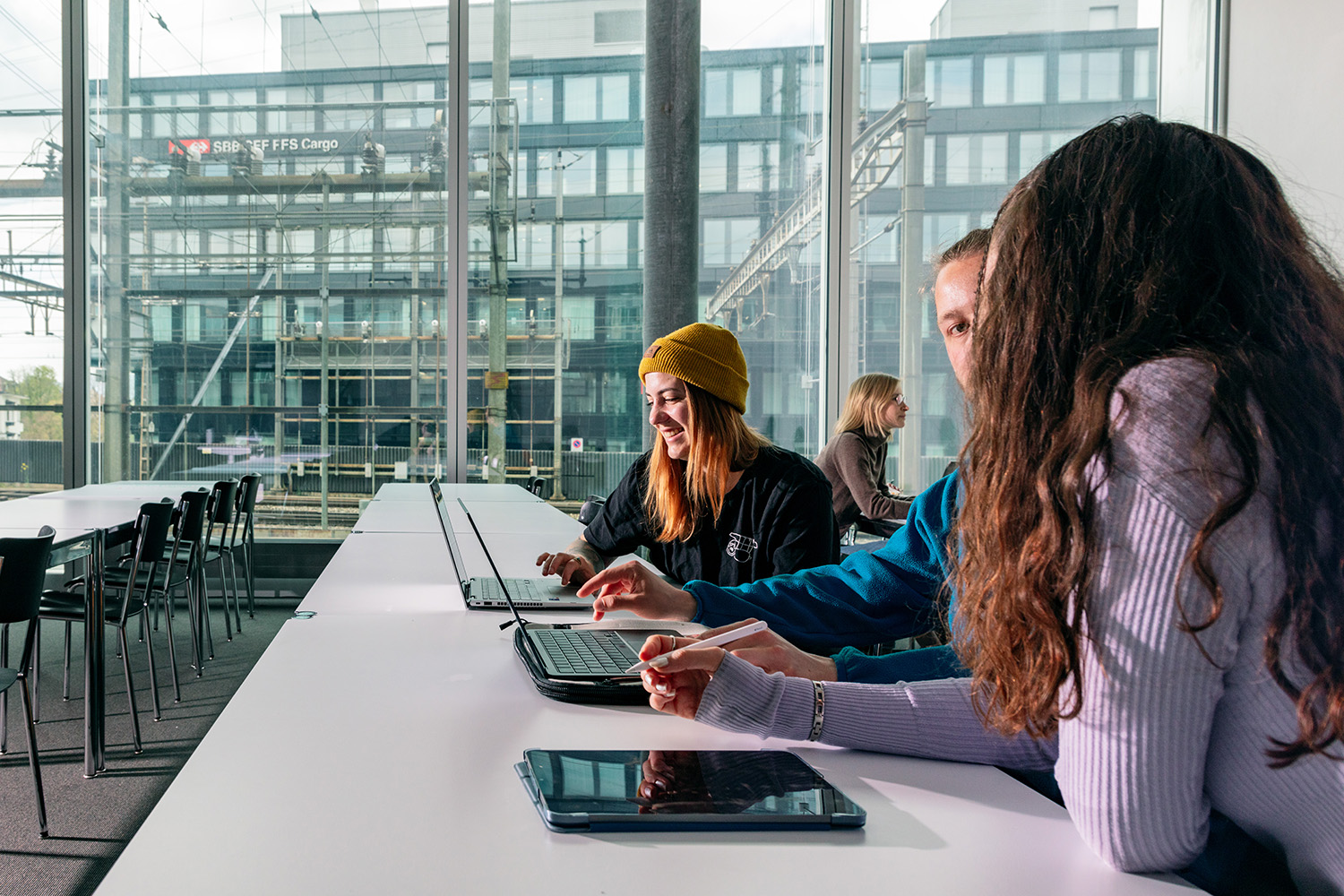
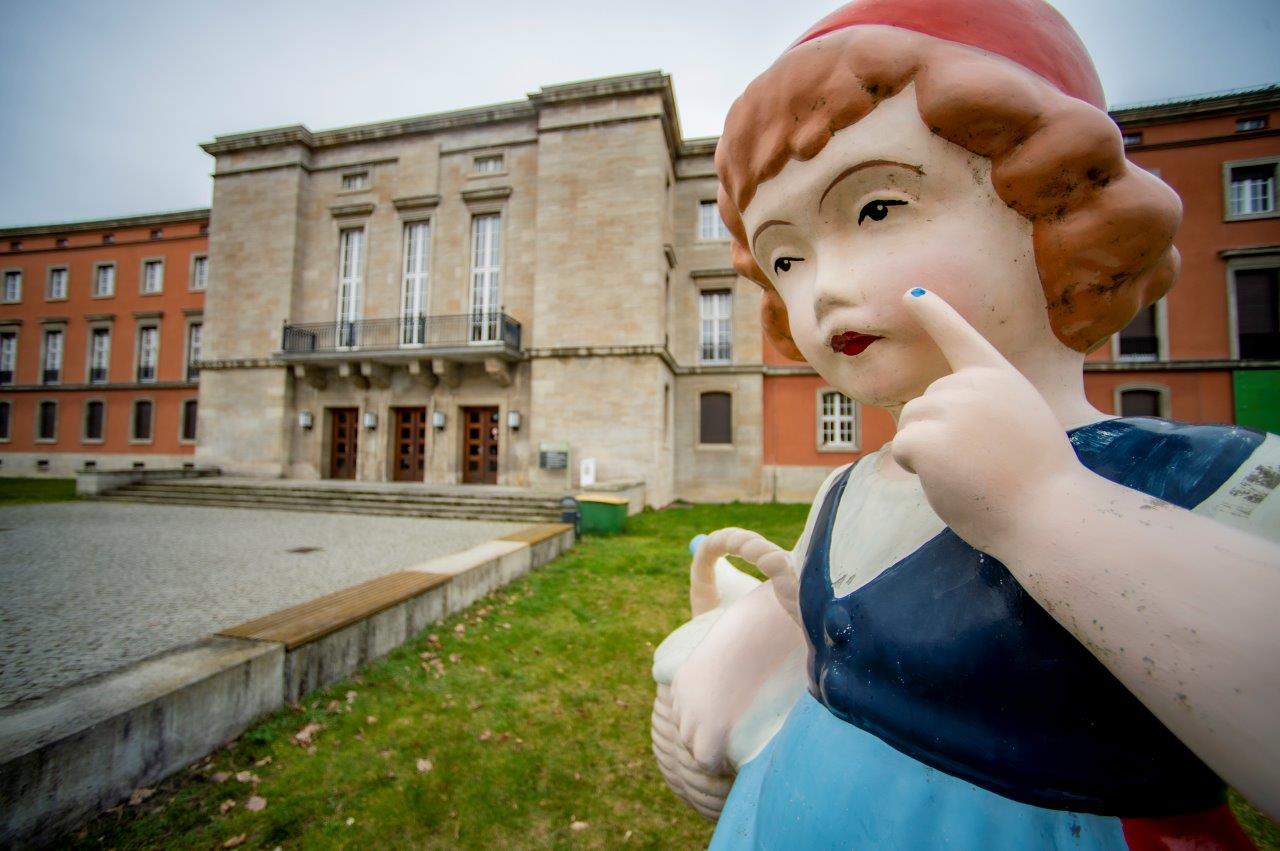
Fig.: The Haller Building on the FHNW Brugg-Windisch Campus
Das Coffee-Table-Buch „RE:VIEW – Wozu die Menschheit retten?“ ist am 14. September 2026 erschienen. „Während die ESA-Raumsonde HERA im All Daten für die planetare Verteidigung sammelt, richtet sich ihr Blick mit diesem Buchprojekt zurück auf die Erde: Was ist der Mensch, was zerstört er, was erschafft er – und verdient er eine Zukunft? Planetare Abwehr – eine globale Herausforderung mit wenig Sichtbarkeit. Der erste Teil des Buches liefert die Hintergründe und die Geschichte der ersten sprechenden Raumsonde, die gegen alle Widerstände ins All startete. Die zentrale Frage, die Hera auf ihrer Mission beantworten soll: Können der Erde gefährlich nahekommende Weltraumkörper durch gezielte Sondeneinschläge von ihrem Kollisionskurs mit unserem Heimatplanenten abgelenkt werden? Collagierte Illustrationen und Fotografien verbinden Fakten mit Emotionen und machen Wissenschaft erlebbar.“ (Informationstext des Verlags) „Im Anschluss entsteht aus der Perspektive von HERA ein vielstimmiges Porträt unserer Spezies mit Beiträgen und Gesprächen des KI-Companions mit besonderen Persönlichkeiten aus Wissenschaft, Kunst, Kultur und Gesellschaft.“ (Informationstext des Verlags) Mit dabei sind unter anderem der Queen-Musiker und Astrophysiker Brian May, der ehemalige kanadische Astronaut Chris Hadfield, die erste Weltraumtouristin Anousheh Ansari, der „Interstellar“-Visionär Paul Franklin, die PETA-Gründerin Ingrid Newkirk, der Ex-Gitarrist von Guns N‘ Roses Ron „Bumblefoot“ Thal, der Science-Fiction-Autor Andreas Eschbach, der Künstler Jonathan Meese und der Technikphilosoph und Maschinenethiker Oliver Bendel, der 2025 das Buch „300 Keywords Weltraum“ veröffentlicht hat. „So wird aus einer Mission ein visuell kraftvolles Buchobjekt über Menschheit, Technik, Verantwortung und Hoffnung.“ (Informationstext des Verlags) Das Buch mit seinen 400 Seiten und zahlreichen Bildern ist im Buchhandel verfügbar.
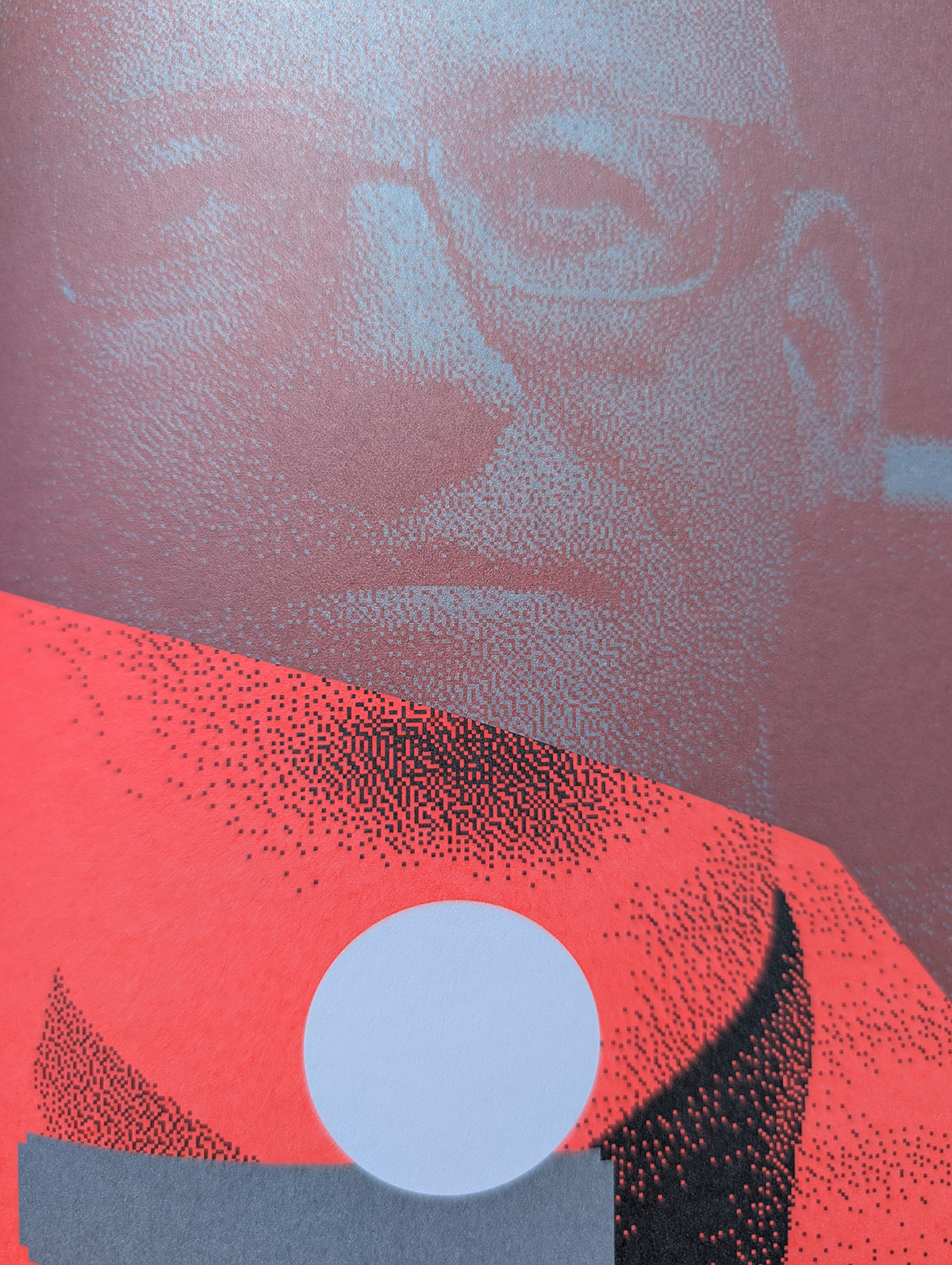
Abb.: Ein Ausschnitt aus einer der zehn Seiten mit Oliver Bendel (Bild: We Mind Publishing)
1983 erschien in der Südwest Presse eine Seite über Gastarbeiterfamilien und ausländische Kinder in Ulm und anderswo in Deutschland. Oliver Bendel, damals 15 Jahre alt und seit dieser Zeit immer wieder für die Zeitung tätig, führte dafür ein Interview mit acht Kindern aus der Türkei, Jugoslawien, Griechenland, Rumänien, Russland und Italien. Der Titel lautete „Spaghetti mögen alle gern“. Die Seite wirkt aus heutiger Sicht wie ein kleines Zeitdokument. Sie interessiert sich für den Alltag der Kinder, für Schule und Familie, Lieblingsessen und Heimat, Freundschaften und Zukunftswünsche. Dabei kommen auch Erfahrungen mit Vorurteilen und Ausgrenzungen zur Sprache. Wie immer auf dieser Seite, die sich an Jungen und Mädchen wendet, geben die Kinder selbst den Ton an. Ihre Antworten zeigen, wie unterschiedlich ihre Lebenssituationen waren – und wie selbstverständlich zugleich ihre Wünsche nach Zugehörigkeit, Freundschaft und einem guten Leben. Mehr als vierzig Jahre später haben sich Begrifflichkeiten, Herkunftsländer sowie gesellschaftliche und politische Debatten verändert. Die grundlegenden Fragen sind jedoch geblieben. Für viele Ausländer, welchen Alters auch immer, ist das Leben in Deutschland keineswegs einfacher geworden. Fremdenfeindlichkeit, Benachteiligung und die Frage, wer als zugehörig angesehen wird, beschäftigen das Land weiterhin. Gerade deshalb lohnt sich der Blick auf diese alte Zeitungsseite. Sie erinnert daran, dass hinter großen Debatten immer einzelne Menschen stehen, mit ihren Vorlieben und Sorgen, ihren Erfahrungen und Hoffnungen. Und manchmal gibt es überraschend einfache Gemeinsamkeiten. Spaghetti mochten jedenfalls schon damals alle gern.
Mit Hack Apertus startet im Herbst 2026 eine schweizweite Hackathon-Reihe rund um Apertus, das offene Schweizer Sprachmodell. Die Hochschule für Wirtschaft FHNW beteiligt sich als akademischer Partner an der Initiative und ermuntert ihre Studenten dazu, eigene Ideen, Experimente und Anwendungen einzubringen. Prof. Dr. Andreas Martin ist der Ansprechpartner. Apertus wurde im Rahmen der Swiss AI Initiative von Forschern der ETH Zürich, der EPFL und weiteren Partnern entwickelt und auf dem Supercomputer Alps des Swiss National Supercomputing Centre (CSCS) trainiert. Eine Besonderheit ist die konsequente Offenheit: Modelle, Code und Informationen zum Training sind öffentlich zugänglich. Im Juli 2026 erschien mit Apertus 1.5 eine neue Version, die neben Text auch Bilder und Audio verarbeiten kann und verbesserte Fähigkeiten beim logischen Schlussfolgern und beim Einsatz von Werkzeugen bietet. Genau hier setzt Hack Apertus an. Vom 1. bis zum 16. Oktober 2026 findet zunächst ein Online-Hackathon statt. Die Aufgaben reichen vom Red-Teaming über die Anpassung an Schweizer Sprachen und Idiome bis hin zur Entwicklung eigener Anwendungen. Anschließend folgen Veranstaltungen an verschiedenen Orten in der Schweiz. Die besten Projekte treffen sich im Mai 2027 zum Finale in St. Gallen. Die entwickelten Prototypen sollen als Open Source veröffentlicht werden. Auch an der Hochschule für Wirtschaft FHNW wird praktisch mit Apertus gearbeitet: Beim MAKEathon am 24. und 25. Oktober 2026 auf dem FHNW-Campus Olten sind entsprechende Challenges vorgesehen. Interdisziplinäre Teams entwickeln dort innerhalb von zwei Tagen Prototypen für konkrete Problemstellungen. Damit verbindet die Hochschule für Wirtschaft FHNW aktuelle KI-Forschung mit einem Ansatz, der zu ihrem praxisorientierten Profil passt: Neue Technologien werden nicht nur diskutiert, sondern in konkreten Projekten erprobt und auf ihren Nutzen für Wirtschaft und Gesellschaft untersucht. Weitere Informationen und Anmeldung über hackapertus.ch.
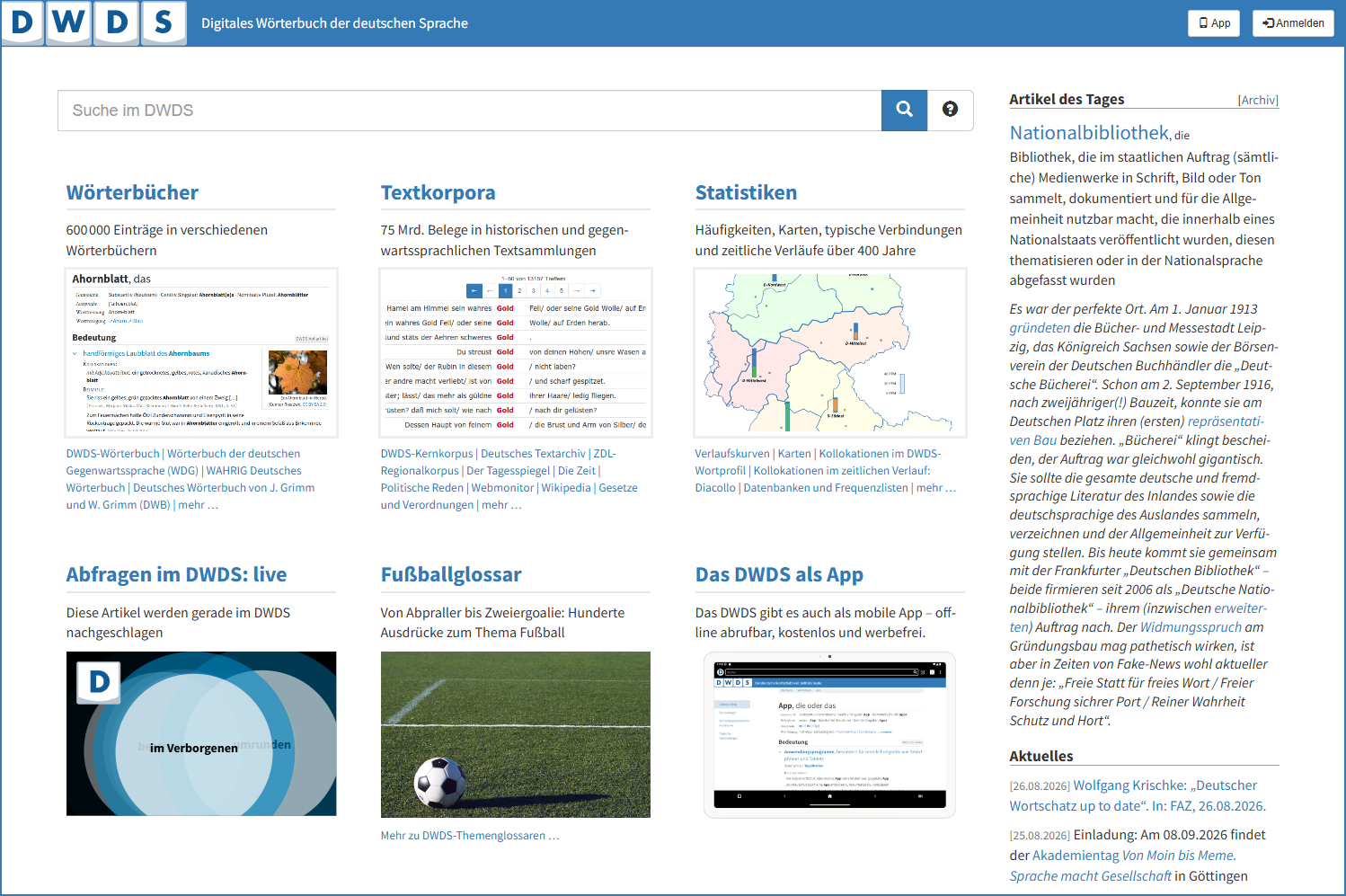
Der Duden ist ein Wörterbuch der deutschen Sprache mit Hinweisen zu Rechtschreibung und Grammatik. Er geht zurück auf Konrad Duden, der ihn am 7. Juli 1880 als „Vollständiges Orthographisches Wörterbuch der deutschen Sprache“ veröffentlichte. Nach 1945 bis zur Rechtschreibreform 1996 war der Duden maßgebend für die deutsche Rechtschreibung. Danach verlor er diesen Status und war nur noch als eine mögliche Referenz eines privatwirtschaftlichen Anbieters zu verstehen. Von aktivistischen Verantwortlichen und Redakteuren wurde das Wörterbuch ab 2020 vollständig umgebaut. So wird das generische Maskulinum im Widerspruch zu linguistischen Erkenntnissen als Form aufgefasst, die ausschließlich männliche Personen bezeichnet. Die Bedeutung von „Bewohner“ gibt der Duden an mit „männliche Person, die etwas bewohnt“. In den anschließenden Beispielen wird diese Erklärung als falsch entlarvt, denn „die Bewohner des Hauses, der Insel“ sind eindeutig generisch zu verstehen. Eine weitgehend ideologiefreie, sprachwissenschaftlich kompetente und übrigens auch werbefreie Alternative ist das Digitale Wörterbuch der deutschen Sprache (DWDS). Dieses wird von der Berlin-Brandenburgischen Akademie der Wissenschaften betrieben. Im Juli 2026 wurde zudem laut Pressemitteilung eine erhebliche Erweiterung beschlossen: Ab 2027 soll das DWDS eine zentrale Rolle im neuen „Akademienzentrum Digitale Lexikographie des Deutschen“ (ADL) übernehmen. Sieben deutsche Wissenschaftsakademien werden darin ihre lexikographischen Ressourcen vernetzen. Ziel ist es, den deutschen Wortschatz von seinen historischen Sprachstufen bis zur Gegenwart umfassend digital zu erschließen und die vorhandenen Wörterbuch- und Forschungsdaten nach einheitlichen Standards zugänglich zu machen. Das Vorhaben wird dauerhaft von Bund und Ländern finanziert.
In exactly three months, the thirteenth edition of the Animal-Computer Interaction International Conference (ACI 2026) will begin. The conference will take place from December 2 to 5, 2026, at the FHNW Campus Brugg-Windisch in Switzerland. For the first time in its history, the ACI conference will be held in continental Europe. Registration has been open since the end of July, and preparations for the conference are well underway. All submitted papers have now been peer-reviewed, and acceptance and rejection notifications have been sent to the authors. General Chair Oliver Bendel is pleased to see the conference program taking shape and looks forward to welcoming the ACI community to Brugg-Windisch in December. This year’s conference will also feature three workshops, providing opportunities for focused discussion, exchange, and collaboration on topics relevant to Animal-Computer Interaction and related fields. ACI 2026 brings together perspectives from computer science, informatics, engineering, interaction design, animal behavior and welfare science, veterinary science, ecology, sociology, philosophy, and related disciplines. The conference provides a forum for theoretical, methodological, empirical, and ethical work that advances dialogue around animal-centered research and the design of computing-enabled systems. In an increasingly networked world shaped by pervasive technologies, animals – both human and nonhuman – are entangled in complex webs of interaction. ACI 2026 will explore how technology shapes human-animal relationships, how large-scale technological deployments affect animals, and how future systems can be designed responsibly and ethically. The conference also includes work in Animal-Machine Interaction (AMI), exploring interaction and communication between animals and machines, including autonomous systems such as drones and robots. All information about the conference, program, workshops, and participation is available on the ACI 2026 website: www.aciconf.org.
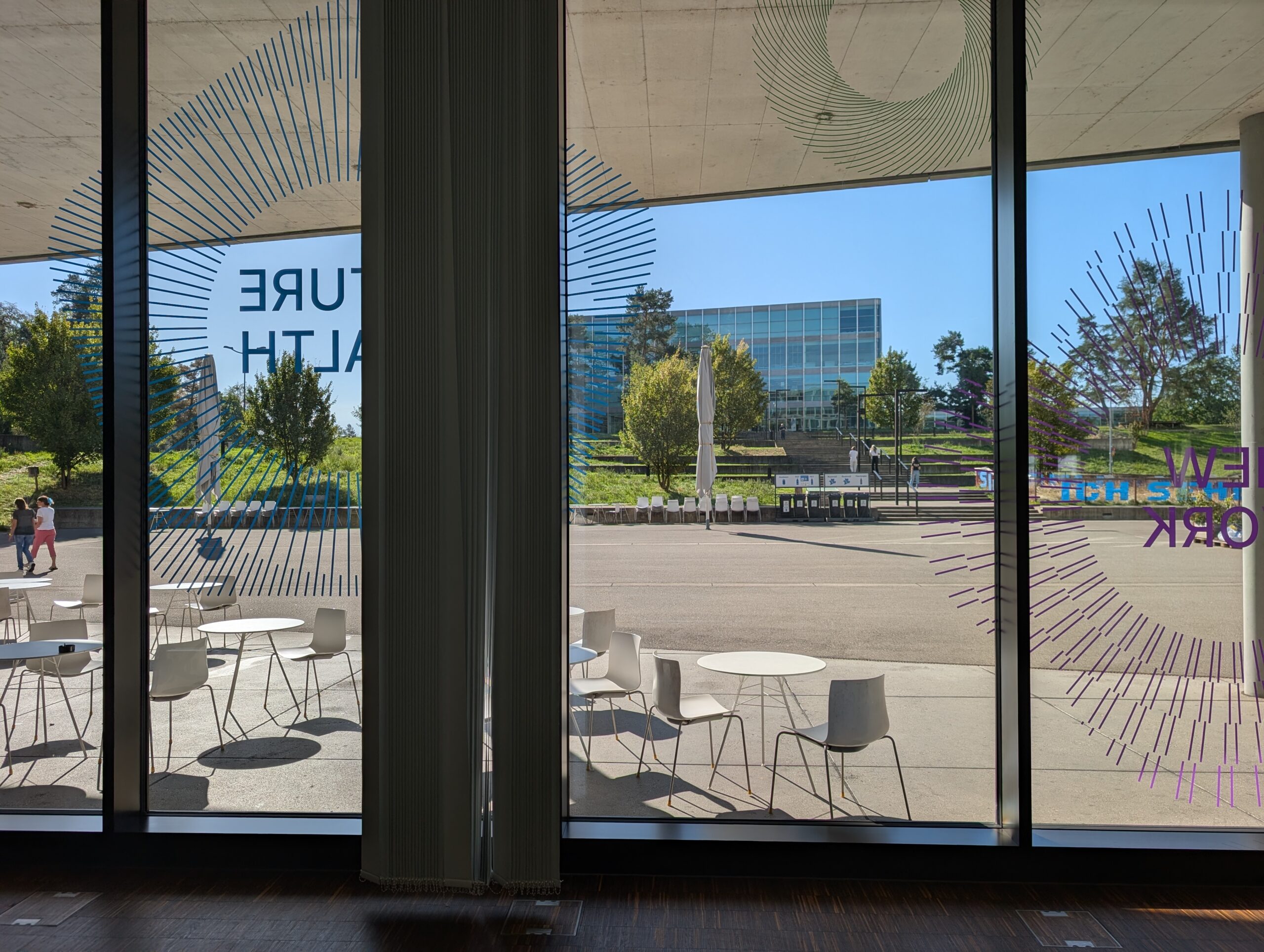
Abb.: A view from the conference hall toward the iconic Haller Building
Man muss sich ebenso darüber im Klaren sein, dass Eingriffe in ein solches System Folgen haben können, die sich später nicht ohne Weiteres zurücknehmen lassen. Gewohnheiten bilden sich aus, Regeln verändern sich, neue Konventionen entstehen und werden an die nächste Generation weitergegeben. Gerade deshalb sollte eine solche Veränderung nicht allein danach beurteilt werden, ob ihre Absicht derzeit als moralisch oder politisch wünschenswert gilt. Auch ihre Folgen für das sprachliche System selbst müssen betrachtet werden. So wie man sorgsam mit der Natur umgehen sollte, sollte man sorgsam mit der Kultur umgehen. Sprache und Schrift sind nicht bloß Material, das für den jeweils gewünschten Zweck beliebig umgeformt werden kann. Die Schrift ist ein historisch junges, über Jahrtausende entwickeltes Kulturwerkzeug, die Schriftsprache ein über Generationen geformtes Kulturgut. Beide haben wesentliche Errungenschaften der Zivilisation erst möglich gemacht. Wer in ihre gewachsenen Strukturen eingreift, sollte deshalb nicht nur wissen, was er erreichen will. Er sollte auch wissen, worin er eingreift. Und wenn man am Ende noch einmal aufsteigt und über diese Sprachlandschaft hinwegfliegt, sieht man vielleicht deutlicher, was auf dem Boden leicht aus dem Blick gerät, nämlich dass ihre Formen zusammengehören, dass Wege, Grenzen, Erhebungen und Täler eine über lange Zeit entstandene Ordnung bilden. Man kann in diese Landschaft der Sprache eingreifen. Man kann neue Pfade anlegen, Schneisen ziehen und den Verlauf des Geländes verändern. Aber bevor man es tut, sollte man diese Landschaft kennen, denn wer tief genug in ihre gewachsenen Strukturen eingreift, verändert nicht nur ihr Aussehen. Er riskiert, dass aus Wegen Irrwege, aus Grenzen Hindernisse werden und die Landschaft schließlich ihre wichtigsten Eigenschaften verliert, nämlich dass man sich in ihr zurechtfindet und zueinander findet.
Wenn man nun Zeichen wie den Asterisk, den Unterstrich oder den Doppelpunkt ins Wortinnere einfügt und ihnen dort eine neue strukturelle Funktion zuweist, greift man in diese Topografie ein. Aus „Lehrer“ und „Lehrerinnen“ wird „Lehrer*innen“, „Lehrer_innen“ oder „Lehrer:innen“. Die Zeichen stehen nicht zufällig an dieser Stelle. Sie sollen eine Grenze im Inneren der Wortform sichtbar machen und ihr zugleich eine grammatische und semantische Funktion geben. Der Eingriff betrifft daher nicht nur das Schriftbild. Er verändert die graphematische und orthografische Struktur der Wortform und wirkt auf ihre morphologische Gliederung ein. Das ist kein langsames Verschieben von Platten, kein gemächliches Aufstülpen von Bergen und Ausformen von Tälern. Es ist vielmehr das Einziehen von Schneisen, das Bohren von Löchern. Gewiss kann auch das Ergebnis bewusster Eingriffe irgendwann Teil eines Sprachwandels werden. Aber damit ist noch nicht beschrieben, wie dieser Wandel zustande kommt. Wo neue Formen gezielt vorgeschlagen, propagiert, institutionell gefördert oder normativ verlangt werden, haben wir es nicht allein mit ungesteuertem Sprachwandel zu tun, sondern auch mit Sprachlenkung. Man mag seine Gründe dafür haben, moralische, politische oder sprachpolitische. Aber man muss sich im Klaren darüber sein, dass man ein gewachsenes Gebilde mit seinen einzeln geformten und aufeinander bezogenen Teilen verändert und beeinträchtigt. Dabei war bisher nur von der geschriebenen Wortgestalt, von Graphematik, Orthografie und Morphologie die Rede, noch nicht von anderen Bereichen der Grammatik und des Sprachgebrauchs. …
Wenn man über einen Text deutscher Sprache hinwegfliegt, wenn man seine Topografie erkundet, fallen einem schnell einige Regelmäßigkeiten und Besonderheiten auf. Am Anfang des Satzes steht ein Großbuchstabe. Auch innerhalb des Satzes beginnen manche Wörter mit einem Großbuchstaben. Geschlossene Wortformen sind in der Regel durch Leerzeichen voneinander abgegrenzt. Das Leerzeichen zeigt an, dass ein Wort aufhört und ein neues beginnt. Im Wortinneren steht es nicht. Deutsche Wörter können sehr lang sein. Weithin bekannt ist der Donaudampfschifffahrtsgesellschaftskapitän, und man weiß vielleicht, dass man dieses Wort noch weiter verlängern kann. Es ist ein Kompositum. Seine Bestandteile werden nicht durch Leerzeichen voneinander getrennt. Die deutsche Orthografie kennt allerdings einige Zeichen, die innerhalb von Wortformen auftreten können und dort bestimmte, konventionalisierte Funktionen erfüllen. Dazu gehört der Bindestrich, etwa wenn bestimmte Zusammensetzungen durchgekoppelt werden, wie bei „Künstliche-Intelligenz-Konferenz“. Eine „Künstliche Intelligenz-Konferenz“ ließe dagegen die Zuordnung von „Künstliche“ zumindest grafisch uneindeutig werden. Man könnte gar an eine künstliche Intelligenzkonferenz denken. Auch der Apostroph kann innerhalb einer Wortform erscheinen, etwa in „D’dorf“ oder in „Ku’damm“. So fliegt man dahin und erkennt in der über viele Jahrhunderte gewachsenen Struktur eine bemerkenswerte Regelmäßigkeit. Groß- und Kleinschreibung, die Bildung und Abgrenzung von Worteinheiten sowie die Getrennt- und Zusammenschreibung gehören zu den grundlegenden Strukturen der deutschen Schriftsprache. Sie betreffen ihre Graphematik und Orthografie und stehen zugleich in enger Beziehung zur Morphologie, zur inneren Struktur der Wörter. …
The 19th International Conference on Social Robotics (ICSR + Health 2027) will take place from July 25 to 28, 2027, on the Griebnitzsee Campus of the University of Potsdam in Potsdam, Germany. ICSR is the leading international forum that brings together researchers, academics, and industry professionals from across disciplines to advance the field of social robotics. Hosted by the University of Potsdam, ICSR + Health 2027 will provide an international platform for scientific exchange, interdisciplinary collaboration, and innovation at the intersection of social robotics and health. The conference welcomes researchers, practitioners, industry partners, and students from around the world working in areas such as social robotics, embodied AI, human–robot interaction, cognitive science, healthcare, psychology, rehabilitation, design, ethics, and related disciplines. Participants will have opportunities to present their research, propose workshops or symposia, take part in the Grand Challenge, volunteer, or support the conference as sponsors. The Honorary Chair is Prof. Dr. Martin Fischer, head of the Potsdam Embodied Cognition Group (PECoG). The General Chairs are Dr. Katharina Kühne of the University of Potsdam and PECoG, Prof. Dr. Ilona Buchem of Berlin University of Applied Sciences (BHT), and Prof. Dr. Oliver Bendel of the FHNW School of Business. Bendel is also an associated researcher at PECoG and, starting September 1, 2026, will be a visiting researcher at the University of Potsdam for one year. The General Co-Chair is Prof. Dr. John-John Cabibihan of Qatar University. Further information, including calls for papers, workshops, the Grand Challenge, volunteering opportunities, sponsorship packages, and registration details, will be announced on the conference website: icsr2027.org.
Fig.: Campus Griebnitzsee (Photo: University of Potsdam/Tobias Hopfgarten)
Die ersten Bände von „RE:VIEW – Wozu die Menschheit retten?“ wurden an die Beteiligten ausgeliefert. „Während die ESA-Raumsonde HERA im All Daten für die planetare Verteidigung sammelt, richtet sich ihr Blick mit diesem Buchprojekt zurück auf die Erde: Was ist der Mensch, was zerstört er, was erschafft er – und verdient er eine Zukunft? Planetare Abwehr – eine globale Herausforderung mit wenig Sichtbarkeit. Der erste Teil des Buches liefert die Hintergründe und die Geschichte der ersten sprechenden Raumsonde, die gegen alle Widerstände ins All startete. Die zentrale Frage, die Hera auf ihrer Mission beantworten soll: Können der Erde gefährlich nahekommende Weltraumkörper durch gezielte Sondeneinschläge von ihrem Kollisionskurs mit unserem Heimatplanenten abgelenkt werden? Collagierte Illustrationen und Fotografien verbinden Fakten mit Emotionen und machen Wissenschaft erlebbar.“ (Informationstext des Verlags) „Im Anschluss entsteht aus der Perspektive von HERA ein vielstimmiges Porträt unserer Spezies mit Beiträgen und Gesprächen des KI-Companions mit besonderen Persönlichkeiten aus Wissenschaft, Kunst, Kultur und Gesellschaft.“ (Informationstext des Verlags) Mit dabei sind unter anderem der Queen-Musiker und Astrophysiker Brian May, der ehemalige kanadische Astronaut Chris Hadfield, die erste Weltraumtouristin Anousheh Ansari, der „Interstellar“-Visionär Paul Franklin, die PETA-Gründerin Ingrid Newkirk, der Ex-Gitarrist von Guns N‘ Roses Ron „Bumblefoot“ Thal, der Science-Fiction-Autor Andreas Eschbach, der Künstler Jonathan Meese und der Technikphilosoph und Maschinenethiker Oliver Bendel, der 2025 das Buch „300 Keywords Weltraum“ veröffentlicht hat. „So wird aus einer Mission ein visuell kraftvolles Buchobjekt über Menschheit, Technik, Verantwortung und Hoffnung.“ (Informationstext des Verlags) Das Coffee-Table-Buch mit seinen 400 Seiten und zahlreichen Bildern ist vorbestellbar und ab Mitte oder Ende September 2026 verfügbar.
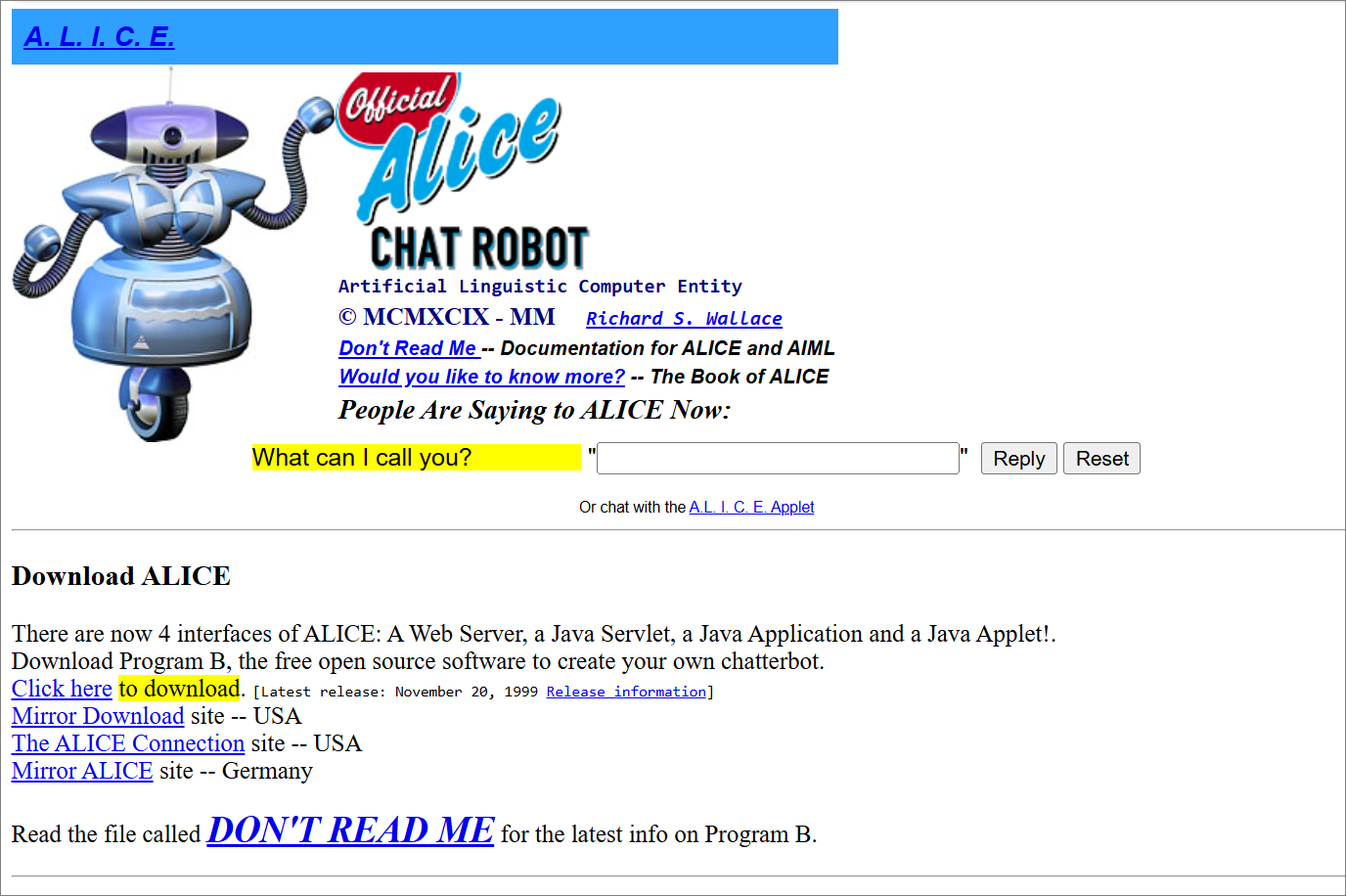
Während Unternehmen wie Artificial Life, NativeMinds und Extempo auf kommerzielle Chatbots, ambitionierte Avatare und virtuelle Assistenten setzten, verfolgte Richard S. Wallace mit A.L.I.C.E. (Artificial Linguistic Computer Entity) einen anderen Ansatz. Der 1995 entwickelte Chatbot war als Open-Source-Projekt frei verfügbar und konnte von jedem heruntergeladen, erweitert und an eigene Bedürfnisse angepasst werden. Herzstück war die von Wallace entwickelte Markierungssprache AIML (Artificial Intelligence Markup Language), mit der sich Dialoge und Wissensbasen vergleichsweise einfach erstellen ließen. Die Website bot nicht nur eine Live-Demo des Chatbots, sondern auch Program B zum kostenlosen Download, umfangreiche Dokumentationen, Mailinglisten und den Treffpunkt einer wachsenden Entwicklergemeinschaft. Anders als die mit Avataren versehenen Dialogsysteme der Konkurrenz konzentrierte sich A.L.I.C.E. vollständig auf den Dialog selbst und wurde damit zu einem der einflussreichsten Chatbotprojekte seiner Zeit. Der Bot gewann mehrfach den Loebner Prize und machte AIML über viele Jahre zum De-facto-Standard für regelbasierte Dialogsysteme. Zahlreiche spätere Chatbots entstanden auf dieser Grundlage und machten A.L.I.C.E. zu einem der wichtigsten Wegbereiter der heutigen Conversational AI.
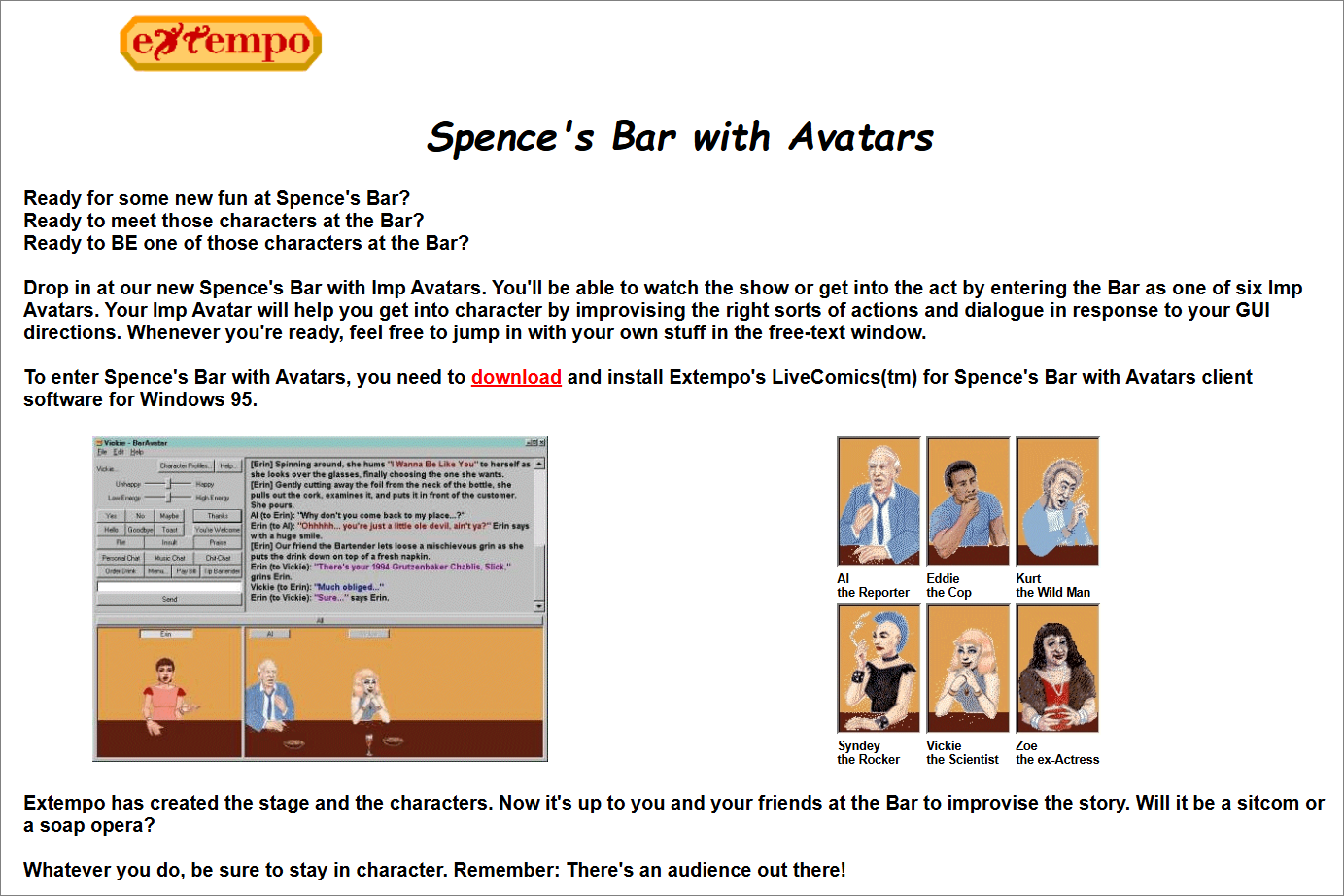
1997 präsentierte das US-Unternehmen Extempo mit Spence’s Bar eines der faszinierendsten KI-Projekte seiner Zeit. Die virtuelle Bar versetzte die Besucher in eine kleine Kneipe irgendwo in Hollywood, in der sie Getränke bestellen, mit anderen Besuchern chatten und sich mit der virtuellen Barkeeperin Erin unterhalten konnten. Während die erste Version den Benutzer als sich selbst auftreten ließ, führte Spence’s Bar with Avatars ein völlig neues Konzept ein: Jeder Teilnehmer übernahm die Rolle einer von sechs fiktiven Figuren wie einem Reporter, Polizisten oder Rockstar. Die eigens entwickelte LiveComics-Software für Windows 95 verband Avatare, Emotionen, Aktionen und Texteingaben mit einem KI-System, das passende Dialoge und Verhaltensweisen erzeugte und den Benutzer dabei unterstützte, seine Rolle glaubwürdig zu spielen. Ziel war nicht ein klassisches Computerspiel, sondern gemeinsames improvisiertes Erzählen, bei dem sich die Handlung wie eine Sitcom oder Seifenoper aus den Interaktionen der Teilnehmer entwickelte. Damit vereinte Extempo bereits Ende der 1990er-Jahre Konzepte wie virtuelle Welten, KI-gestützte Avatare, Mehrbenutzerrollenspiele und natürliche Sprachdialoge, also mehrheitlich Ideen, die erst Jahrzehnte später mit modernen KI-Agenten und Character-AI-Systemen breite Aufmerksamkeit erhielten. Neben Extempo war Artificial Life ein ebenbürtiger Pionier auf diesem Gebiet. Auf beide Firmen ging Oliver Bendel in seiner Doktorarbeit zu pädagogischen Agenten, die um die Jahrtausendwende entstand, ausführlich ein.
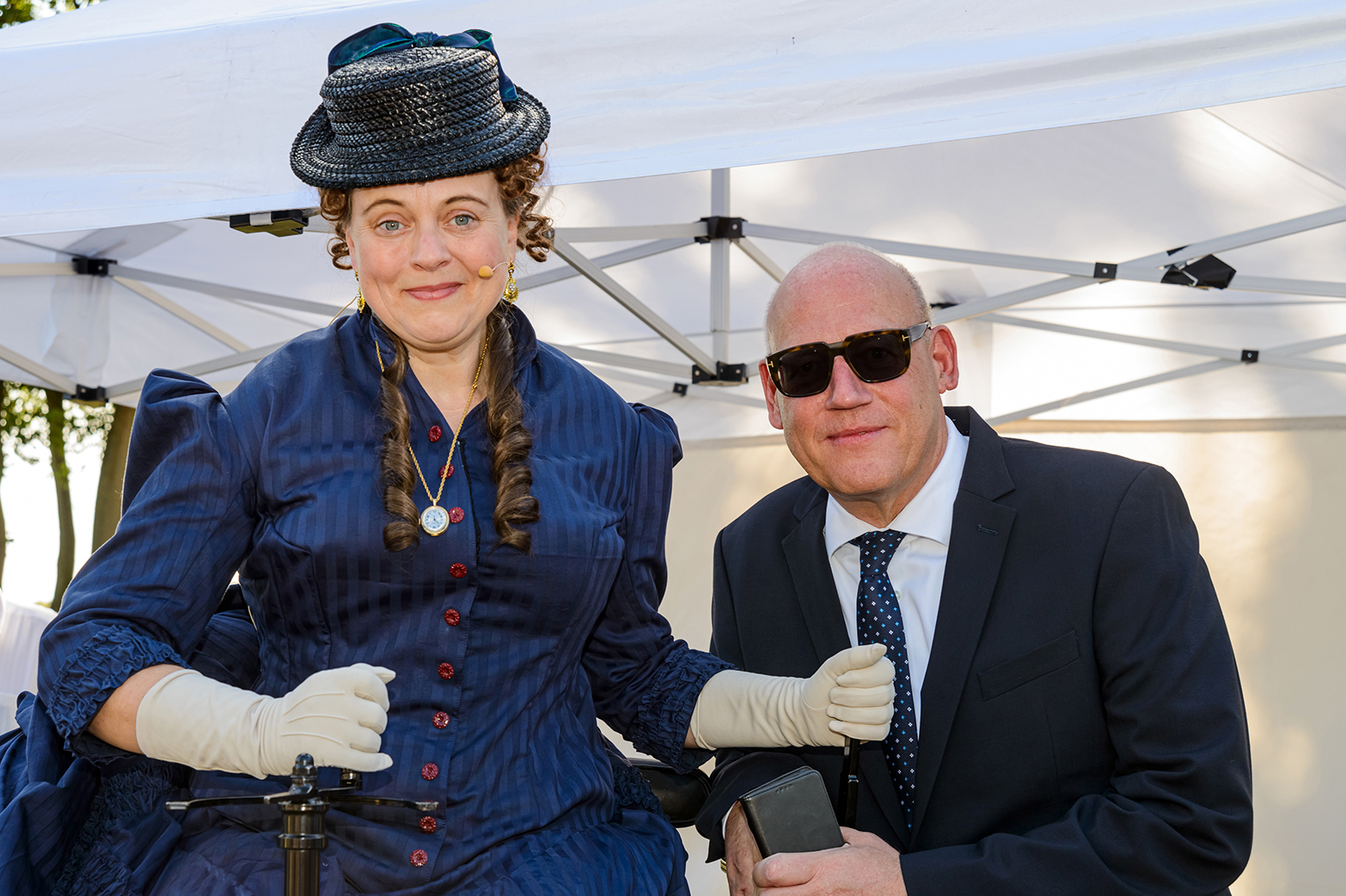
Eines der Förderformate der Daimler und Benz Stiftung ist der Bertha-Benz-Preis. Hierzu heißt es auf der Website: „In Anerkennung der außergewöhnlichen Leistungen der Automobilpionierin Bertha Benz vergibt die Stiftung jährlich den Bertha-Benz-Preis. Für die Auszeichnung können Ingenieurinnen, die mit den Ergebnissen ihrer Dissertation einen gesellschaftlichen Mehrwert geschaffen haben, von ihren wissenschaftlichen Institutionen vorgeschlagen werden. Der mit 15.000 Euro dotierte Preis wird jährlich vergeben und würdigt Pioniergeist, Mut und visionären Charakter.“ (Website Daimler und Benz Stiftung) Der Bertha-Benz-Preis wurde 2009 ins Leben gerufen. Die erste Preisträgerin war Dr.-Ing. Katharina Fischer von der Leibniz Universität Hannover. Vor der Preisvergabe erstellen Vertreter der Daimler und Benz Stiftung gemeinsam mit externen Gutachtern aus allen Bewerbungen eine Short List mit drei Kandidatinnen. Diese wird den wissenschaftlichen Mitgliedern des Stiftungsrats – derzeit Prof. Dr. Oliver Bendel, Prof. Dr. Hartmut Hillmer, Prof. Dr. Ralf Poscher und Prof. Dr. Tereza Tykvová – zur abschließenden Entscheidung vorgelegt. Stimmen sie dem vorgeschlagenen ersten Platz zu, wird der Preis entsprechend vergeben; anderenfalls können sie die Reihenfolge der Short List ändern und eine andere Kandidatin auswählen. Die Antragstellung ist wieder ab dem 1. November 2026 möglich. Weitere Informationen sind über www.daimler-benz-stiftung.de verfügbar.
Abb.: Angela Pfenninger als Bertha Benz mit Oliver Bendel (Foto: Daimler und Benz Stiftung/Oestergaard)
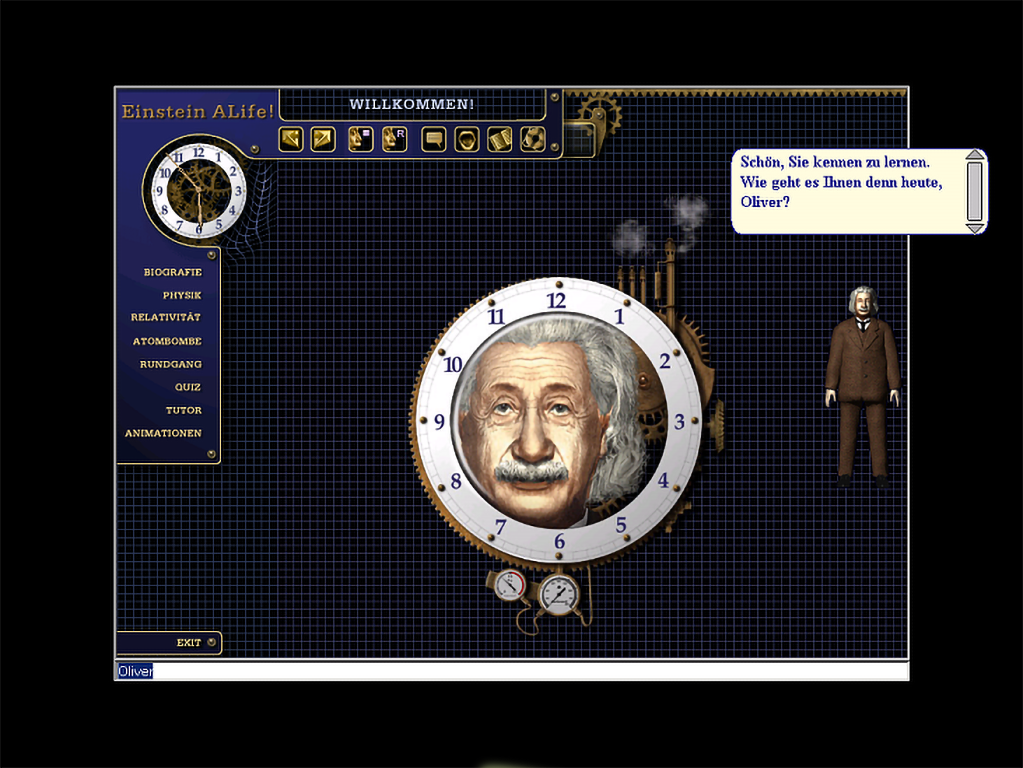
Einstein Alife, also known simply as Einstein, was an educational software title developed by Artificial Life. and released in 1999 and 2000. Designed for middle school physics classes, the CD-ROM-based application introduced students to the life and work of Albert Einstein through an interactive virtual office and laboratory. The 3D comic-style virtual Einstein featured speech, text-based conversations in English and German, gestures, humor, and limited personalization by remembering user information and adapting future interactions. Using pattern matching, the enhanced chatbot answered questions about topics such as relativity, philosophy, world politics, music, and Einstein’s biography while presenting historical photos, simulations, original documents, and guided tours. Einstein is one of many examples discussed in Oliver Bendel’s doctoral dissertation on pedagogical agents, written around the turn of the millennium, which examined the design, capabilities, and educational potential of these interactive virtual characters. Although no longer available, Einstein Alife remains an interesting early example of a pedagogical agent that combined conversational interaction, adaptive learning features, and multimedia content to support physics education.
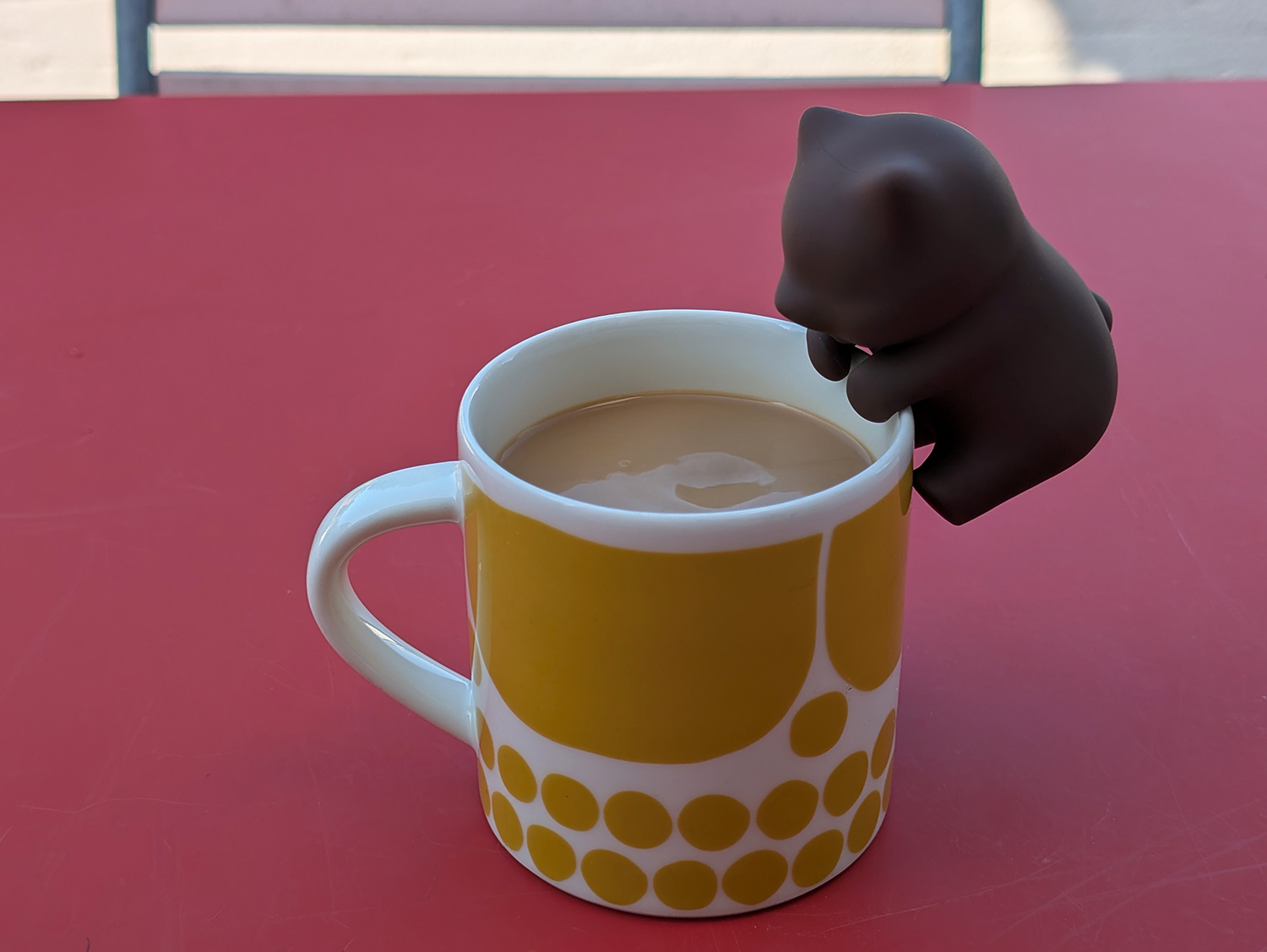
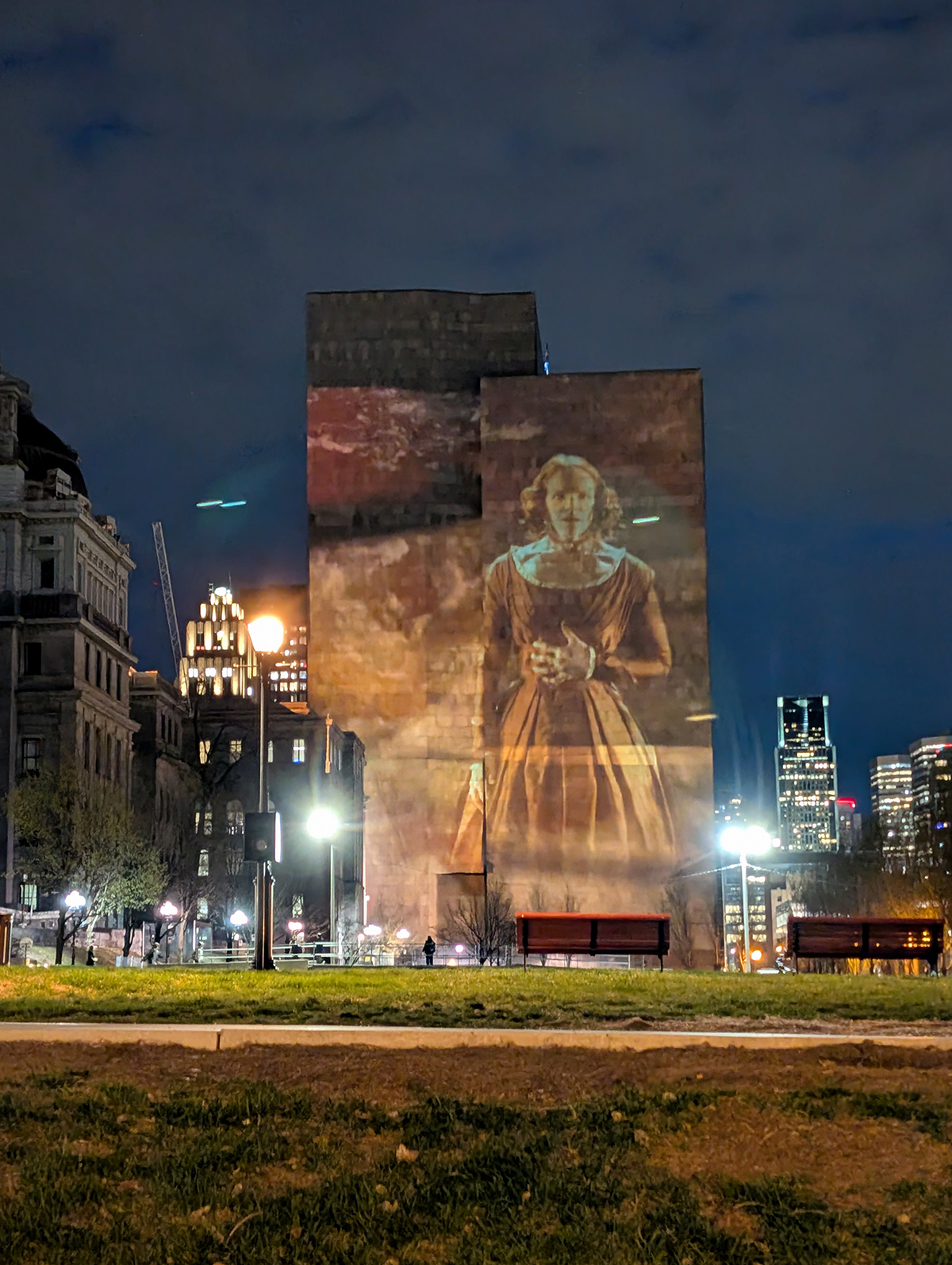
As Publicity Chair of ICSR + Art 2026, Oliver Bendel had the opportunity on the third evening to choose between two gifts, one larger and one smaller. Since he had traveled to London with only carry-on luggage, he opted for the smaller one. When he unpacked the cardboard box back home in Zurich, out popped a little bear. Pressing its stubby tail causes it to blow air through its mouth. In this way, it can cool down hot drinks and hot soups. The philosopher of technology tried it out on his terrace. The little bear blew what seemed like a hole right into his coffee. Its name is, by the way, Nekojita FuFu, and it is – like Qoobo and Mirumi – from Yukai Engineering. The Berlin Bear is the heraldic animal of Berlin and has adorned the city’s coat of arms for centuries. Just outside Germany’s capital lies Potsdam. The city is best known for its magnificent palaces, beautiful gardens, and its important role in German and European history. It is home to the University of Potsdam as well as several renowned research institutions, including the Max Planck Institute for Gravitational Physics. About 6 kilometers outhwest of Potsdam, in the village of Caputh (part of the municipality of Schwielowsee), stands the Einstein House. The famous physicist had this modest wooden house built in 1929 based on plans by the architect Konrad Wachsmann. Einstein and his family spent their summers there, and he worked there until the end of 1932. The University of Potsdam will host ICSR + Health 2027, where Dr. Katharina Kühne and the Potsdam Embodied Cognition Group (PECoG) will welcome the community with open arms. Incidentally, Potsdam’s coat of arms features a red eagle on a silver field.
Fig.: The bear creates a dent in the coffee by blowing on it
Registration for the 11th International Congress on Love and Sex with Robots (LSR 2026) is now open. Building on a conference series that began in 2011 and has helped establish the academic study of human-robot intimacy as an interdisciplinary field, LSR 2026 will take place on August 21–22 at the Université du Québec à Montréal (UQAM), with sessions hosted in the Pavillon J.A. DeSève in Montreal’s Latin Quarter. The conference is organized by Dr. Simon Dubé (Kinsey Institute, Indiana University Bloomington), Dr. David Levy, founder of the conference series, and Bobbi Bidochka (imagine ideation). The keynote speakers are Ellen M. Kaufman (Kinsey Institute, Indiana University Bloomington), Charlotte Poitras (multidisciplinary artist), and Valerie A. Lapointe (Université du Québec à Montréal), whose work spans informatics, psychology, media, and emerging technologies related to intimacy and AI. Further information on registration, the program, submissions, travel, and accommodation is available on the official conference website: www.lovewithrobots.com.
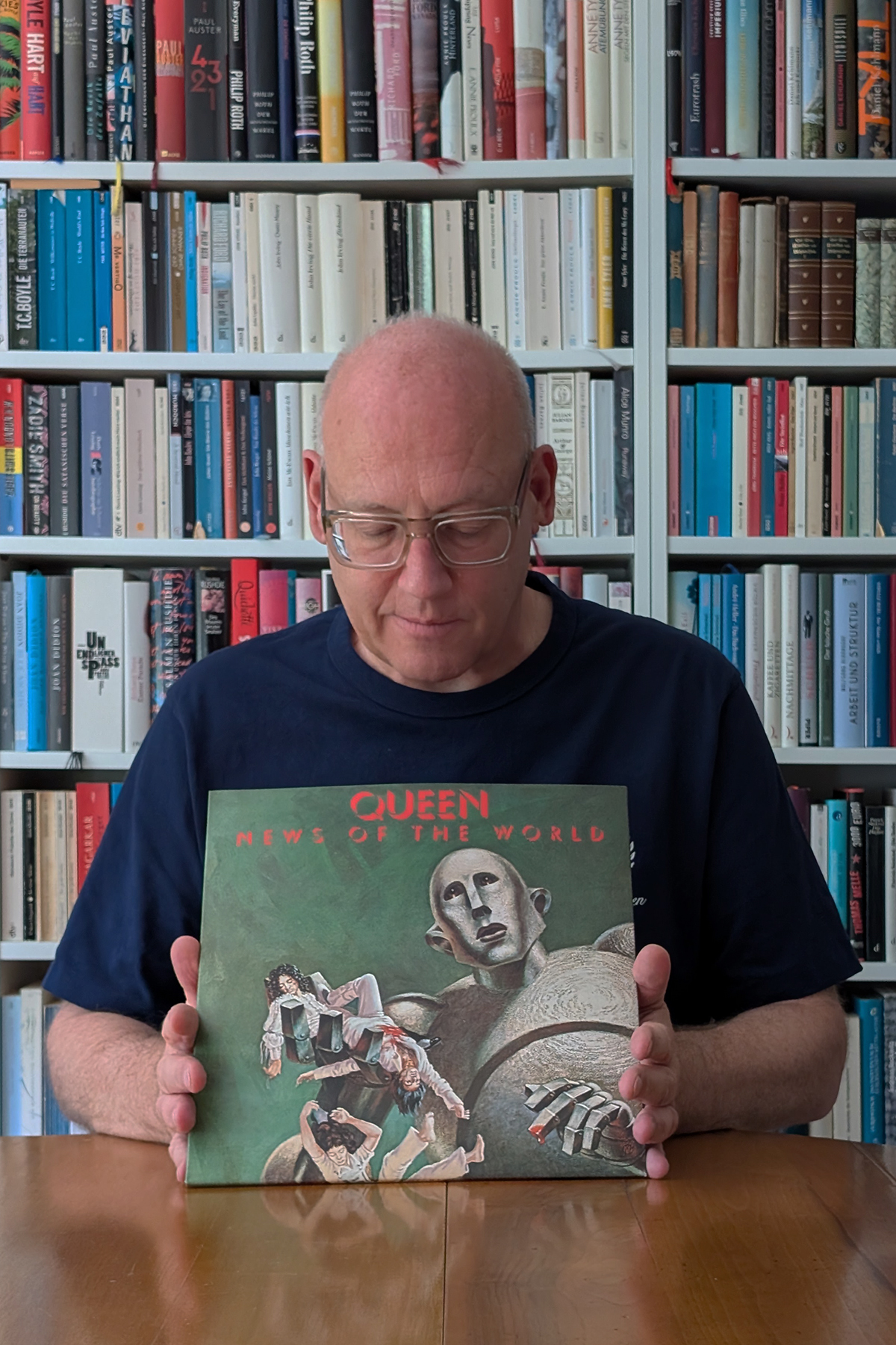
In 1977, Queen released the album „News of the World“. It included catchy hits like „We Are the Champions“ by Freddie Mercury and heartfelt ballads like „All Dead, All Dead“ by Brian May. Its cover likely fascinated or disturbed many teenagers and adults at the time, a reaction that later found its way into popular culture – for example, in the animated sitcom „Family Guy“, where Stewie is terrified of it. The artwork depicts a gigantic humanoid robot holding two dead people in its right hand while blood drips from its left. Science fiction artist Frank Kelly Freas had already used a similar motif in one of his earlier works. Brian May has repeatedly emphasized that „News of the World“ represented a deliberate stylistic shift for the band – more direct, rawer, and more contemporary. The cover art clearly reflected that new direction. The guitarist has always been as passionate about science fiction as he is about the reality of outer space. In 2007, after a long interruption, he completed his Ph.D. at Imperial College London with a dissertation on interplanetary dust. A few months ago, he was interviewed for the book „RE:VIEW: Wozu die Menschheit retten? (RE:VIEW: Why Save Humanity?)“. The book’s first section features extensive ESA imagery from the AI-supported planetary defense mission Hera, complemented by works of AI-generated art. In the second section, Hera’s own AI system takes on the role of interviewer, conducting „thirty in-depth conversations with figures from the worlds of art, science, philosophy, and society“ (publisher’s description, own translation). In addition to Brian May – who was thus able to discuss both science fiction and the reality of space – the interviewees include, among others, the world’s first female space tourist Anousheh Ansari, „Interstellar“ visionary Paul Franklin, PETA founder Ingrid Newkirk, former Guns N‘ Roses guitarist Ron „Bumblefoot“ Thal, science fiction author Andreas Eschbach, artist Jonathan Meese, and technology philosopher and machine ethics expert Oliver Bendel. The book is being published by We Mind Publishing in collaboration with the agency Jung von Matt. It is already listed on Amazon, where extensive information about the book is now available, and is scheduled for release in September 2026.
Fig.: Oliver Bendel with the album „News of the World“
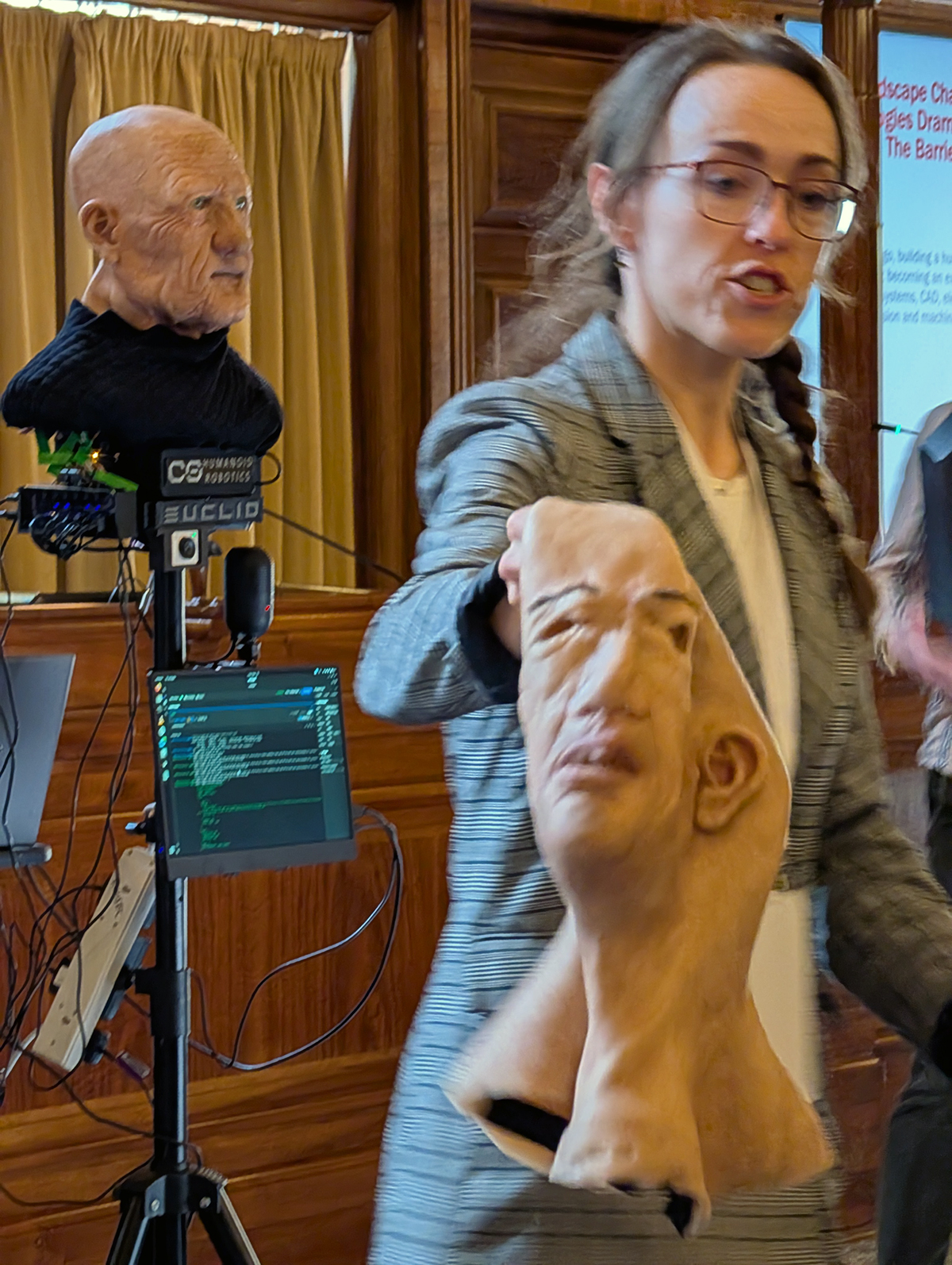
On June 19, 2024, Oliver Bendel gave a presentation at the IDEepolis 2024 conference in Stuttgart entitled „Es wird ein Mensch gemacht: Die Vision des universellen Roboters“ („A Human Is Being Made: The Vision of the Universal Robot“). The scholar of German studies and philosophy opened his talk with a quotation from Goethe’s „Faust II“: „MEPHISTOPHELES: Willkommen! es ist gut gemeint. WAGNER: Willkommen zu dem Stern der Stunde! Doch haltet Wort und Atem fest im Munde, Ein herrlich Werk ist gleich zustand gebracht. MEPHISTOPHELES: Was gibt es denn? WAGNER: Es wird ein Mensch gemacht.“ („MEPHISTOPHELES: Welcome! It is well meant. WAGNER: Welcome to the star of the hour! But hold your words and your breath, A magnificent work is about to be completed. MEPHISTOPHELES: What is it then? WAGNER: A human is being made.“). Oliver Bendel then explained what general-purpose robots are and how they could evolve into universal robots. He also discussed androids such as Harmony. At ICSR 2026, he encountered Euclid, another android, developed by Dr. Carl Strathearn, Assistant Professor of Computer Science, and Emilia Sobolewska, Lecturer and Researcher. It was Emilia Sobolewska who, in the Debate Hall of the Senate House, playfully twirled a piece of facial skin before placing it into the hands of the session participants. Oliver Bendel kneaded the face in his hands and thought: „Es wird ein Mensch gemacht!“ („A Human Is Being Made!“). The article based on the presentation will be published later in 2026 in the book „Mensch – Maschine revisited“ („Human – Machine Revisited“), edited by Petra Grimm, Kai Erik Trost, and Oliver Zöllner.
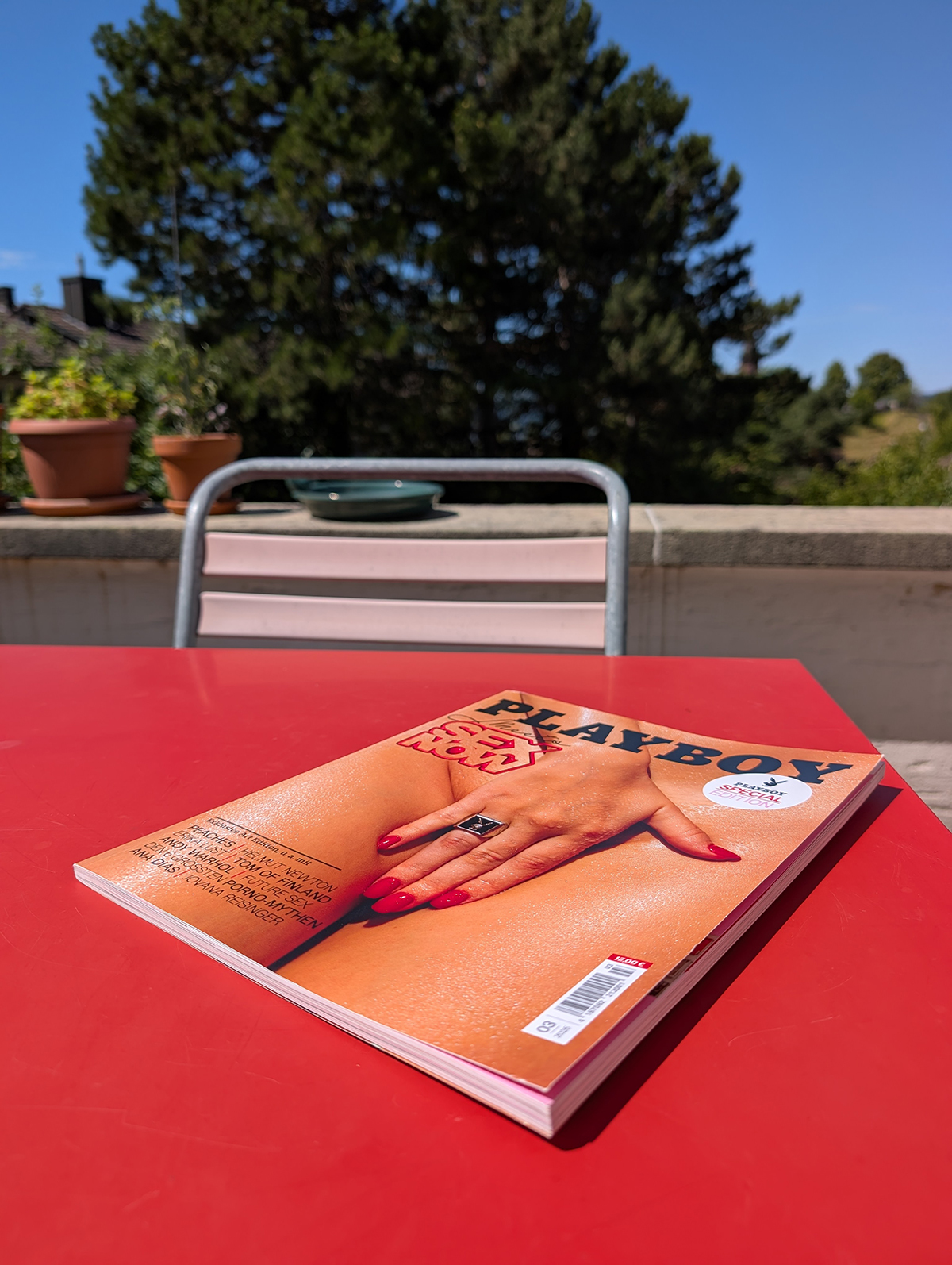
Der Playboy hat Ende Juli 2025 mit Prof. Dr. Oliver Bendel über Beziehungen mit Chatbots, Liebespuppen und Sexrobotern gesprochen. Die Playboy Special Edition erschien anlässlich der Ausstellung „SEX NOW“, die vom 5. September 2025 bis zum 3. Mai 2026 stattfand. Sie lag ab dem 11. September 2025 vor Ort im NRW-Forum Düsseldorf aus und konnte über die Website des Verlags erworben werden. Das Magazin ist ein Augenschmaus und zeigt Sprachlust auf allen Seiten. In „Große Kunst im Playboy“ findet sich eine „kleine Schau bedeutender bildnerischer Künstlerinnen und Künstler und ihrer Werke im Zeichen des Hasen“. Gezeigt werden Aktaufnahmen von Dalí bis Warhol. „Die Tabulose“ ist Beate Uhse, die laut Playboy „die sexuelle Revolution zur deutschen Normalität“ machte. Das Magazin bringt eine „Ode an eine Aufklärerin und Geschäftsfrau“. „Unser zweitbester Freund“ ist der Vibrator, dessen Kulturgeschichte „mehr über das Verhältnis zwischen den Geschlechtern“ erzähle „als jedes soziologische Lehrbuch“. In einem vierseitigen Beitrag ist ein dreiseitiges Interview mit Oliver Bendel abgedruckt, Technikphilosoph aus Zürich. Geführt hat es Christina Weiß. Im Inhaltsverzeichnis werden in diesem Zusammenhang „Sexgeräte“ erwähnt. Es geht um manchmal aufregende, stets einseitige Beziehungen mit Chatbots, Liebespuppen und Sexrobotern. Mit freundlicher Genehmigung des Chefredakteurs von Playboy Deutschland, Florian Boitin, kann der Beitrag seit dem 7. Juli 2026 hier heruntergeladen werden.