The AAAI Spring Symposium Series fosters an intimate environment for emerging AI communities to engage in workshop-style discussions. After several editions away from a university setting, the series appears to have found a new academic home. The AAAI 2027 Spring Symposium Series will take place from March 22 to March 24, 2027, at Santa Clara University in Santa Clara, California. For many years, Stanford University provided the setting for the Spring Symposia, while more recent editions have taken place at the Hyatt Regency and other hotels at San Francisco Airport. Santa Clara University now provides a new academic setting in Silicon Valley for this established series and its distinctive format of several small symposia running in parallel. At the same time, AAAI has issued the Call for Proposals for the 2027 Spring Symposium Series. Proposals for individual symposia are due November 17, 2026, with notifications scheduled for December 8. AAAI expects to select approximately eight symposia covering a broad range of topics within and around artificial intelligence, with a particular interest in emerging research areas and communities. The move to Santa Clara University thus marks a new chapter for the AAAI Spring Symposium Series and brings the event back to a university campus. The Call for Proposals is available on the Spring Symposium Series site.
Fig.: The Santa Clara Mission Gardens (Photo: Cristiano Tomás, CC BY-SA 4.0)
In exactly three months, the thirteenth edition of the Animal-Computer Interaction International Conference (ACI 2026) will begin. The conference will take place from December 2 to 5, 2026, at the FHNW Campus Brugg-Windisch in Switzerland. For the first time in its history, the ACI conference will be held in continental Europe. Registration has been open since the end of July, and preparations for the conference are well underway. All submitted papers have now been peer-reviewed, and acceptance and rejection notifications have been sent to the authors. General Chair Oliver Bendel is pleased to see the conference program taking shape and looks forward to welcoming the ACI community to Brugg-Windisch in December. This year’s conference will also feature three workshops, providing opportunities for focused discussion, exchange, and collaboration on topics relevant to Animal-Computer Interaction and related fields. ACI 2026 brings together perspectives from computer science, informatics, engineering, interaction design, animal behavior and welfare science, veterinary science, ecology, sociology, philosophy, and related disciplines. The conference provides a forum for theoretical, methodological, empirical, and ethical work that advances dialogue around animal-centered research and the design of computing-enabled systems. In an increasingly networked world shaped by pervasive technologies, animals – both human and nonhuman – are entangled in complex webs of interaction. ACI 2026 will explore how technology shapes human-animal relationships, how large-scale technological deployments affect animals, and how future systems can be designed responsibly and ethically. The conference also includes work in Animal-Machine Interaction (AMI), exploring interaction and communication between animals and machines, including autonomous systems such as drones and robots. All information about the conference, program, workshops, and participation is available on the ACI 2026 website: www.aciconf.org.
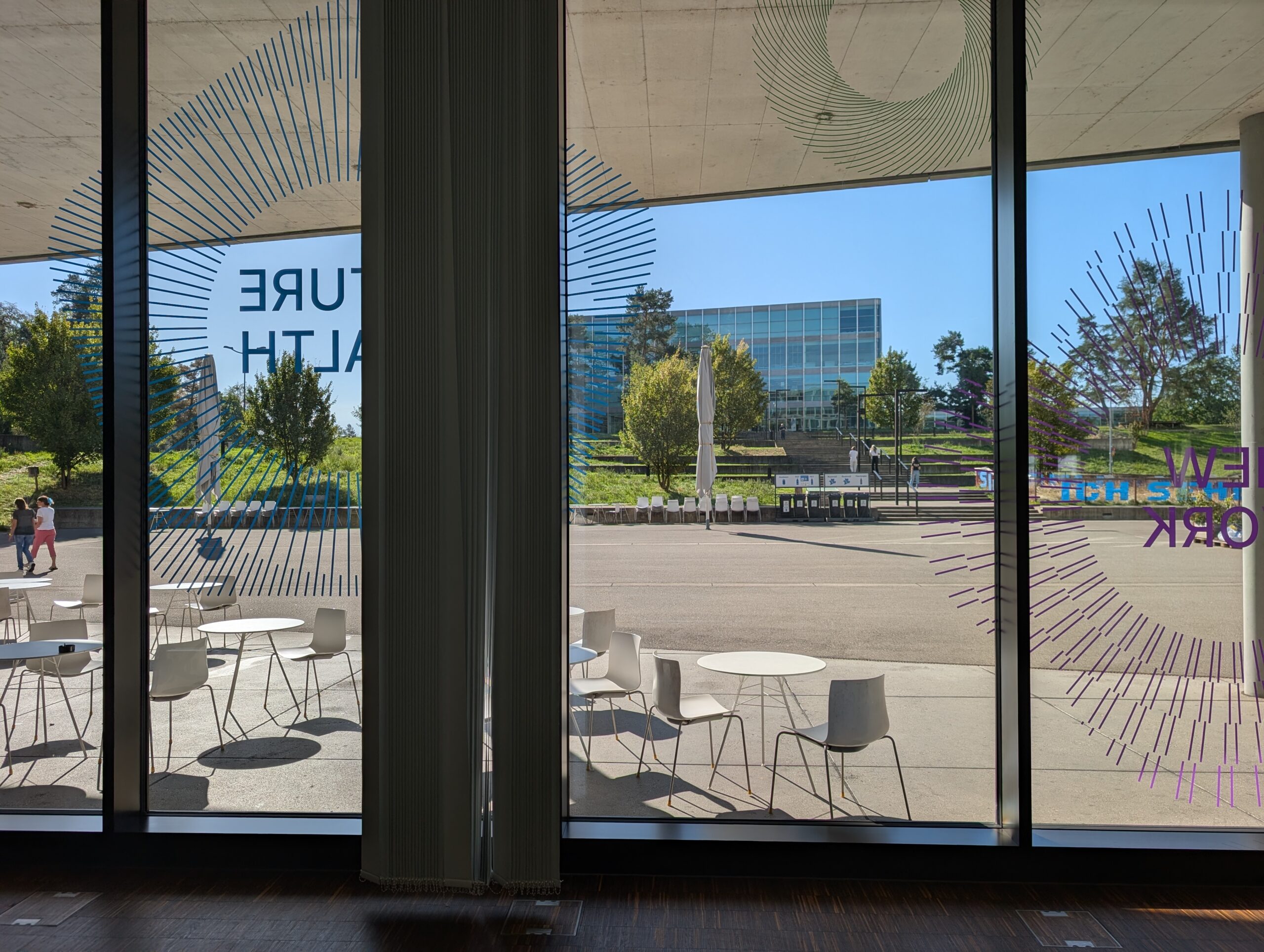
Abb.: A view from the conference hall toward the iconic Haller Building
The 19th International Conference on Social Robotics (ICSR + Health 2027) will take place from July 25 to 28, 2027, on the Griebnitzsee Campus of the University of Potsdam in Potsdam, Germany. ICSR is the leading international forum that brings together researchers, academics, and industry professionals from across disciplines to advance the field of social robotics. Hosted by the University of Potsdam, ICSR + Health 2027 will provide an international platform for scientific exchange, interdisciplinary collaboration, and innovation at the intersection of social robotics and health. The conference welcomes researchers, practitioners, industry partners, and students from around the world working in areas such as social robotics, embodied AI, human–robot interaction, cognitive science, healthcare, psychology, rehabilitation, design, ethics, and related disciplines. Participants will have opportunities to present their research, propose workshops or symposia, take part in the Grand Challenge, volunteer, or support the conference as sponsors. The Honorary Chair is Prof. Dr. Martin Fischer, head of the Potsdam Embodied Cognition Group (PECoG). The General Chairs are Dr. Katharina Kühne of the University of Potsdam and PECoG, Prof. Dr. Ilona Buchem of Berlin University of Applied Sciences (BHT), and Prof. Dr. Oliver Bendel of the FHNW School of Business. Bendel is also an associated researcher at PECoG and, starting September 1, 2026, will be a visiting researcher at the University of Potsdam for one year. The General Co-Chair is Prof. Dr. John-John Cabibihan of Qatar University. Further information, including calls for papers, workshops, the Grand Challenge, volunteering opportunities, sponsorship packages, and registration details, will be announced on the conference website: icsr2027.org.
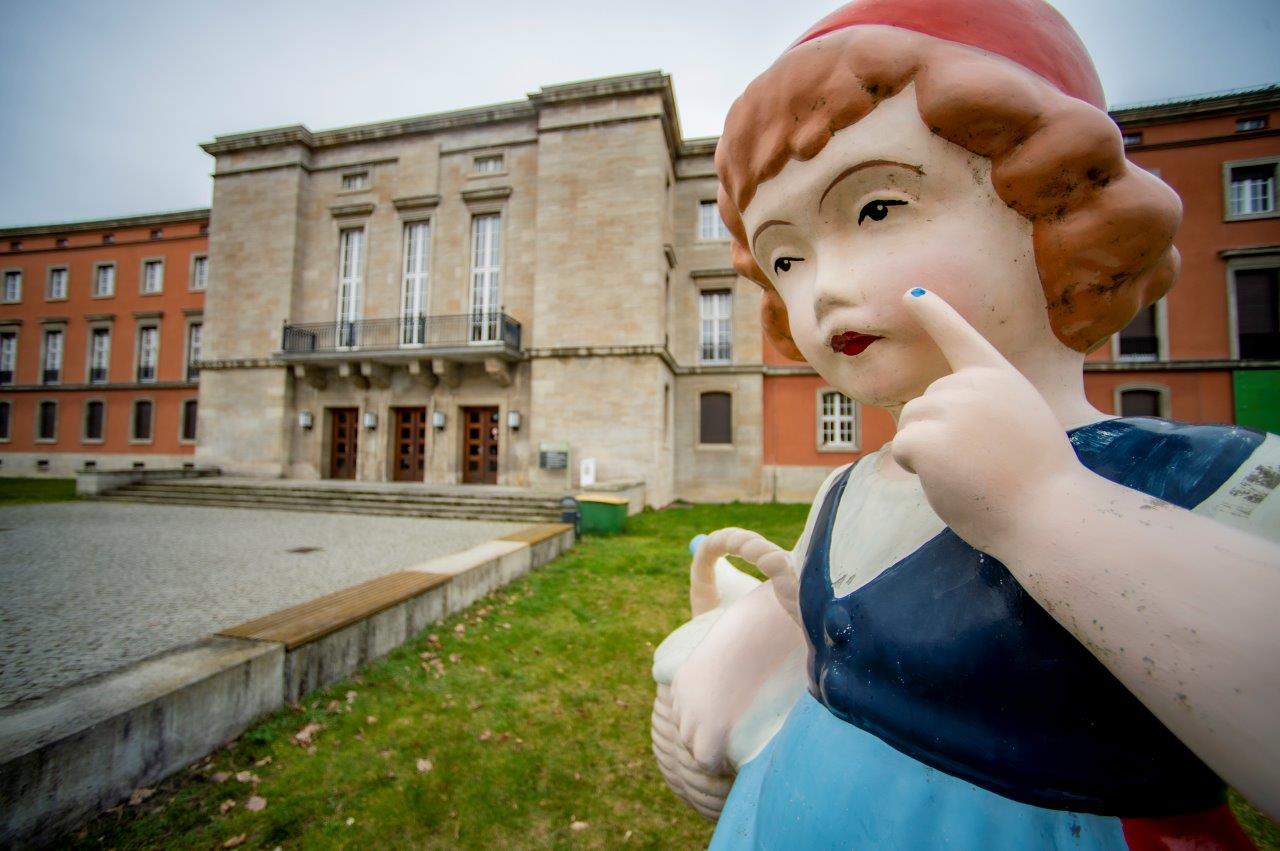
Fig.: Campus Griebnitzsee (Photo: University of Potsdam/Tobias Hopfgarten)
The Robophilosophy 2026 conference took place from August 11–14, 2026, at University College Dublin (UCD) in Dublin, Ireland. Held under the theme „Connected Futures – Nature, Robots, and Society“, the seventh installment of the international conference series brought together researchers from a wide range of disciplines to explore how robotics and artificial intelligence are transforming human societies and the natural world. On the first day of the conference, Katharina Kühne presented the paper „No Red Romance for Robots? Investigating the Red Attraction Effect in Humanlike Robots“, authored by Emma Luisa M. Waller, Diana P. Ebenburger, Oliver Bendel, Martin Fischer, and herself. The study investigates whether the red-attraction effect known from research on human perception also occurs when people evaluate humanlike robots. From the abstract: „The color red has been shown to positively influence ratings of attractiveness and willingness to spend money (e.g., on a date), while having no effect on other perceptions, such as likeability. In an online study, we aimed to conceptually replicate the red-attraction effect using humanoid robots as stimuli. Forty-four heterosexual female participants evaluated 16 images of medium and highly humanlike robots on attractiveness, likeability, trustworthiness, and willingness to spend money to rent the robot. We found no evidence of a red-attraction effect. Female-looking robots received higher ratings overall. These findings have implications for robot design and suggest that basic cues, such as color, may not operate in the same way for robots. Instead, humanoid robots may constitute a distinct category but still be perceived as social agents.“ The proceedings, containing all conference papers, are expected to become available in late 2026.
Other robot conferences have robot or drone shows – at Robophilosophy 2026 in Dublin, you could admire a solar eclipse. This year’s Organizing Committee consists of Prof. Naonori Kodate, Dr. Vivek Nallur, and Dr. Sun Park of University College Dublin. The Series Organizer is Prof. Johanna Seibt of Aarhus University. Together, they have succeeded in putting together a philosophically ambitious program. In antiquity, Thales of Miletus (c. 624–546 BCE) was one of the thinkers who took a particular interest in solar eclipses. To the general public, the philosopher is perhaps best known as a mathematician. He is credited with predicting a solar eclipse, probably the eclipse of May 28, 585 BCE. Other ancient thinkers and astronomers, such as Anaxagoras, also studied solar eclipses and sought to explain them in natural rather than mythological terms. Robophilosophy 2026 opened on August 11 at University College Dublin (UCD) in Dublin, Ireland. Running through August 14 under the theme „Connected Futures – Nature, Robots, and Society“, the conference brings together researchers from across disciplines to explore how robotics and artificial intelligence are reshaping society and our relationship with the natural world.
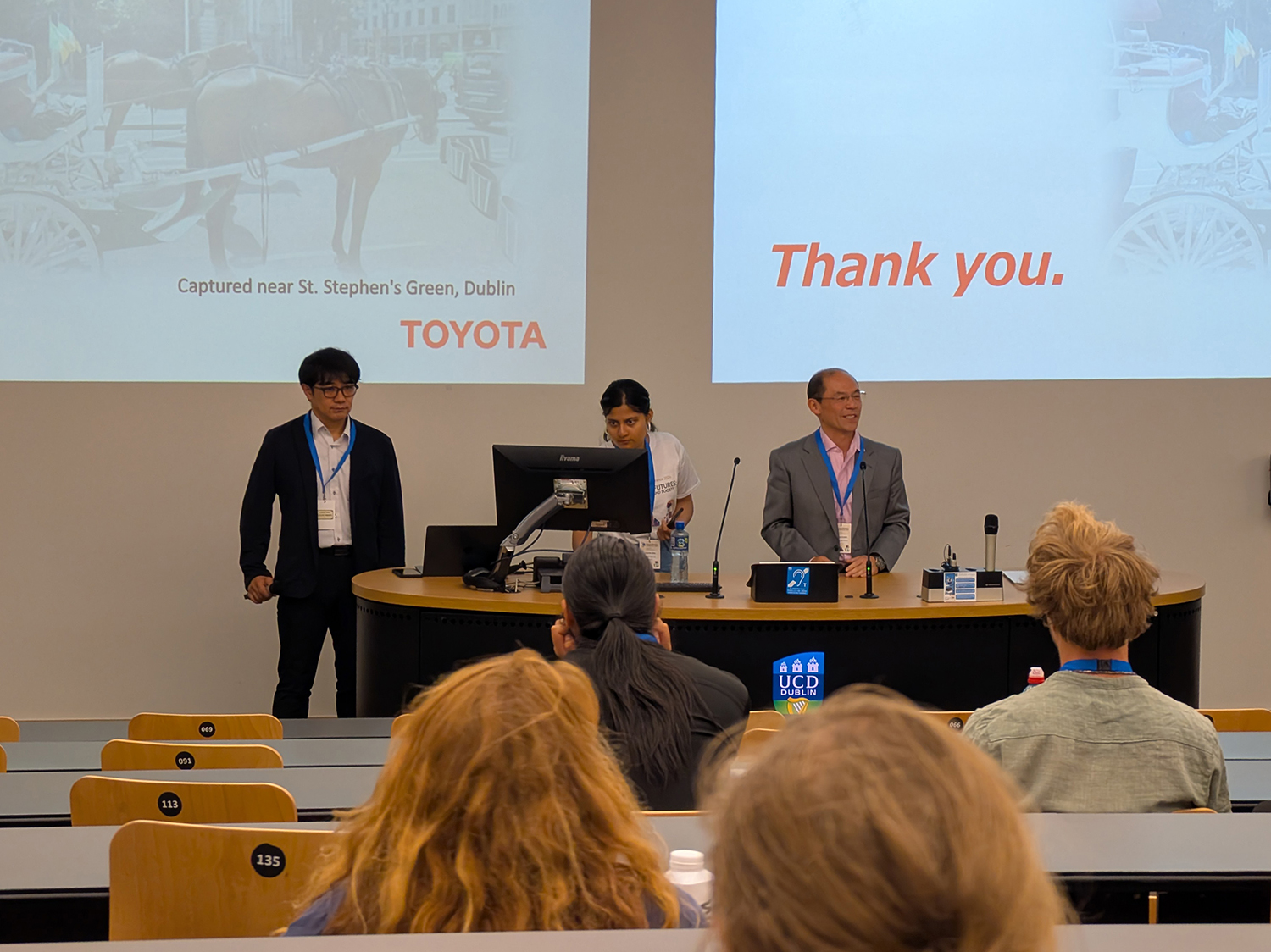
Robophilosophy 2026 opened on August 11 at University College Dublin (UCD) in Dublin, Ireland. Running through August 14 under the theme „Connected Futures – Nature, Robots, and Society“, the conference brings together researchers from across disciplines to explore how robotics and artificial intelligence are reshaping society and our relationship with the natural world. A highlight of the second day was the keynote by Dr. Hideki Kajima of Toyota Motor Europe, introduced with an opening address by H.E. Ambassador Manabu Miyagawa, Ambassador of Japan to Ireland and former Ambassador of Japan to Denmark. Dr. Kajima presented practical examples of robotics and AI research at Toyota, including applications in healthcare, construction, and manufacturing, as well as the use of advanced simulation technologies. At the heart of these efforts is a human-centered approach that goes beyond efficiency, focusing on worker safety, reducing physical and cognitive burdens, and ensuring long-term operational sustainability. His keynote emphasized that robots and AI should not simply be understood as tools, but as integral parts of broader social systems. Against the backdrop of rapidly advancing AI, Dr. Kajima also addressed the responsibilities and opportunities facing industry and the importance of aligning technological innovation with human values and societal well-being. With a background in robot motion control and extensive experience developing Toyota’s Human Support Robot and other robotic systems, Dr. Kajima now leads the planning and promotion of advanced research strategies at Toyota Motor Europe. His keynote was supported by the UCD College of Social Sciences and Law, the UCD Geary Institute for Public Policy, the UCD Centre for Japanese Studies, the Embassy of Japan to Ireland, and the UCD School of Computer Science.
Fig.: Dr. Hideki Kajima after his talk (on the left)
The Robophilosophy Conference 2026 (RP2026) opened on August 11, 2026, at University College Dublin (UCD) in Dublin, Ireland. Held under the theme „Connected Futures – Nature, Robots, and Society“, the conference runs from August 11–14 and brings together researchers from a wide range of disciplines to explore how robotics and artificial intelligence are transforming human societies and the natural world. RP2026 is the seventh installment in the international Robophilosophy conference series. University College Dublin (UCD) is Ireland’s largest university and one of the country’s leading research institutions. Located in Dublin, the capital of Ireland, UCD is home to more than 34,000 students and has a strong international profile. As robotic systems become increasingly embedded in everyday life, RP2026 seeks to foster dialogue across fields including social robotics, computer science, human-robot interaction, the humanities, social sciences, law, economics, and environmental research. Key questions include how robotic technologies can uphold human dignity, autonomy, and social justice; how legal systems need to adapt to autonomous decision-making; and whether robots can contribute to sustainability rather than accelerate ecological decline. The conference also addresses the impact of automation on labor markets and economic inequality, the changing meaning of work and human care, and the responsibilities humans may have toward the artificial agents they create. The first day of the conference featured keynote presentations by Lynne Baillie and Arno Klein. The program also included two sessions: „Environmental Robotics and Society“ (chaired by Oliver Bendel) and „Responsible Technology Development“ (chaired by Sun Park). Several workshops complemented the program, offering additional perspectives on the social, ethical, and environmental dimensions of robotics and artificial intelligence. The Robophilosophy Conference 2026 provides a space for dialogue between technological, philosophical, social-scientific, and environmental perspectives. At its core is the question of how technological innovation can be shaped not only to create new possibilities, but also to contribute to a humane, just, and sustainable future. Further details are available at www.ucd.ie/robophilosophy2026/.
Die Robophilosophy ist neben der ICSR die vielleicht wichtigste Konferenz, wenn es um philosophische und soziale Aspekte in der Sozialen Robotik geht. Der Begriff der Roboterphilosophie wird unterschiedlich verstanden. Während die Organisatoren ihn auf die Soziale Robotik beziehen, hat ihn Oliver Bendel – Technikphilosoph und Betreiber der Plattform robophilosophy.com – gegenüber der Robotik insgesamt geöffnet, bezieht also z.B. auch ontologische, ästhetische und ethische Aspekte der Industrierobotik und der Servicerobotik mit ein. Die Robophilosophy ist eine Biennale, die zuletzt in Aarhus und Helsinki stattfand. Dieses Mal trifft man sich vom 11. bis 14. August 2026 in Dublin. Am Nachmittag des ersten Tags wird Session 2 zu „Environmental Robotics and Society“ durchgeführt, mit Oliver Bendel als Chair. Janko Munjić referiert zum Thema „Posthuman Victims in the Anthropocene: Environmental Social Robots, Layered Harm, and the Edges of Criminal Law“. Oliver Bendel selbst hält den Vortrag „Towards a Discipline of Animal-Machine Interaction: Ethical and Design Challenges of Machines in Animal Habitats“. Es folgen Catherine F. Botha mit „Ecobots and Ecological Capabilities: Ethical Reflections on Robots as Functional Ecological Agents“ und Ghulam E. Mustafa Abro and Johanna Seibt mit „Aerial Robotics in Society: Energy, Ethics, and Accountability for Sustainable Monitoring“. Parallel findet Session 1 zu „Responsible Technology Development“ statt, mit Sun Park als Chair. Zu den Vortragenden gehört Katharina Kühne, die das Paper „No Red Romance for Robots? Investigating the Red Attraction Effect in Humanlike Robots“ von E. L. M. Waller, Diana P. Edenburger, Oliver Bendel, Martin H. Fischer und Katharina Kühne vorstellt.
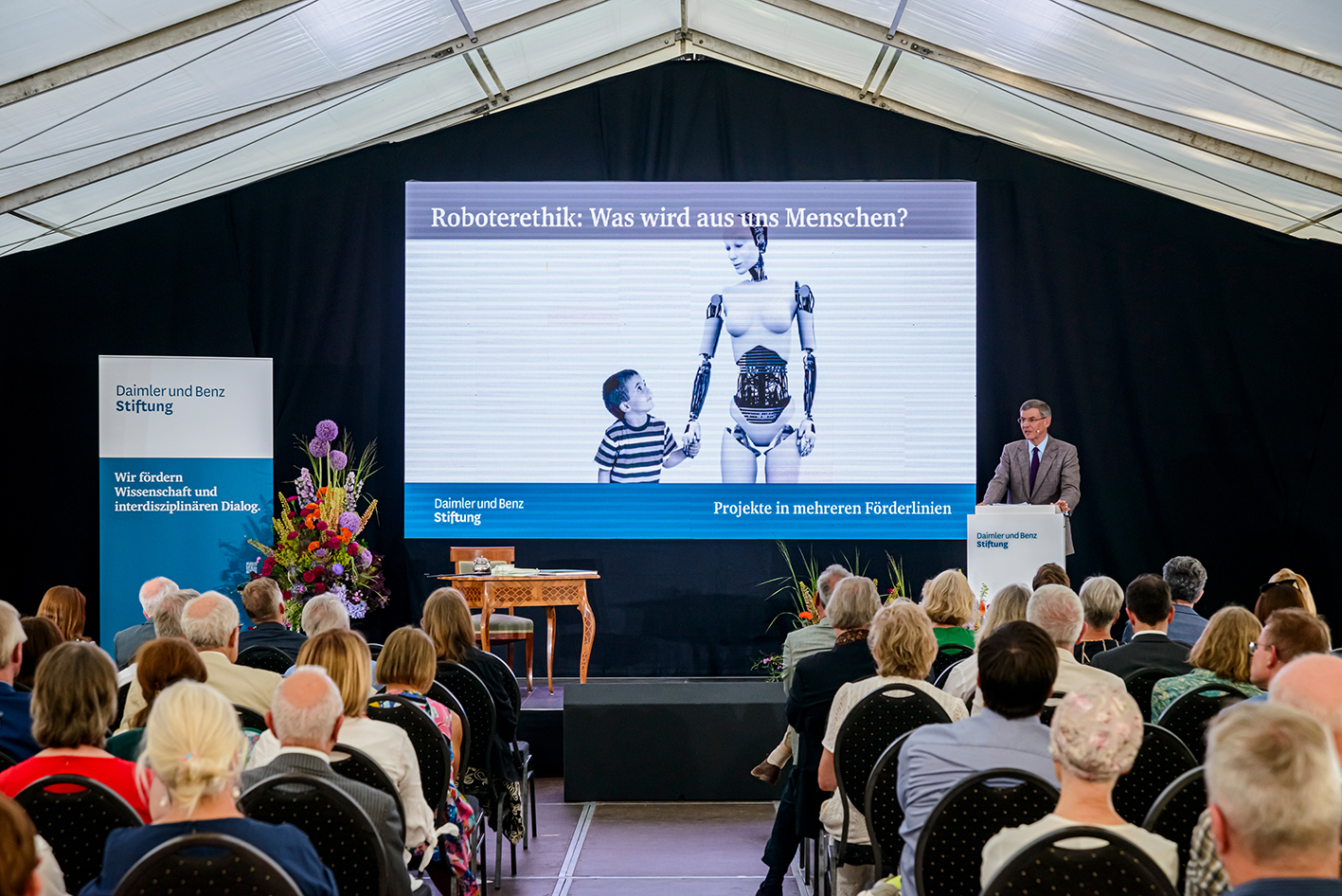
Die Daimler und Benz Stiftung feierte am 24. Juli 2026 das Jubiläum ihres 40-jährigen Bestehens. Die Gäste strömten auf das Areal beim Carl-Benz-Haus in Ladenburg. Die Darstellerin Angela Pfenninger stieg als Bertha Benz in den Benz Patent-Motorwagen Nummer 3. Der Fotograf Jessen Oestergaard drückte ständig auf den Auslöser. Vorstand Prof. Dr. Lutz Gade ging in seinem Vortrag auf die Geschichte der Stiftung ein. Dabei hob er eine Tagung zur Roboterethik (und zur Maschinenethik) hervor, die am 24. November 2015 in Berlin stattgefunden hatte. Eingeladen hatten Cologne Center for Ethics, Rights, Economics and Social Sciences of Health (ceres) und Daimler und Benz Stiftung. Vor dem eigentlichen Programm mit Beginn um 10 Uhr wurde eine Pressekonferenz mit Prof. Dr. Eckard Minx, Prof. Dr. Christiane Woopen, Prof. Dr. Alin Albu-Schäffer und Prof. Dr. Oliver Bendel abgehalten. Im Karl-Storz-Besucher- und Schulungszentrum begann dann der wissenschaftliche Marathon. Minx begrüßte und eröffnete, Woopen führte ein, nicht in ihrer damaligen Funktion als Vorsitzende des Ethikrats, sondern als Leiterin von ceres. Die Grundlagen autonomer Systeme erklärte Albu-Schäffer in seinem Vortrag „Autonomie und Kognition für menschzentrierte Robotik“. Mit „Autonome Systeme und die Selbstbestimmung des Menschen“ war der nächste Komplex betitelt. „Roboterlernen ohne Grenzen?“ von Prof. Dr. Jochen Steil schuf weitere Grundlagen. Dann ging es tief in die Maschinenethik hinein. Bendel referierte über „Die Moral in der Maschine“, wobei er die Designstudien CLEANINGFISH und LADYBIRD und den Prototyp GOODBOT vorstellte, Prof. Dr. Catrin Misselhorn über „Maschinen mit Moral? Theoretische Grundlagen und eine Roadmap für autonome Assistenzsysteme in der Pflege“. Nach der Mittagspause waren Prof. Dr. Hartmut Hirsch-Kreinsen und Prof. Dr. Johannes Weyer an der Reihe. Prof. Dr. Norbert Lammert, damaliger Bundestagspräsident, sprach zur Rolle der Politik, wetterte gegen die Verwendung des Begriffs der Autonomie in den Technikwissenschaften und missverstand damit deren Autonomie bei der Begriffsbildung. Christiane Woopen rundete mit ihrem Schlusswort die Veranstaltung ab. Der Fotograf Matti Hillig war pausenlos umhergeeilt, um die schönsten Bilder einzufangen. All dies hatten diejenigen in Ladenburg wieder vor dem geistigen Auge, die vor elf Jahren in Berlin dabei gewesen waren und nun nach dem Vortrag von Gade begeistert applaudierten.
Abb.: Prof. Dr. Lutz Gade bei seinem Vortrag (Foto: Daimler und Benz Stiftung/Oestergaard)
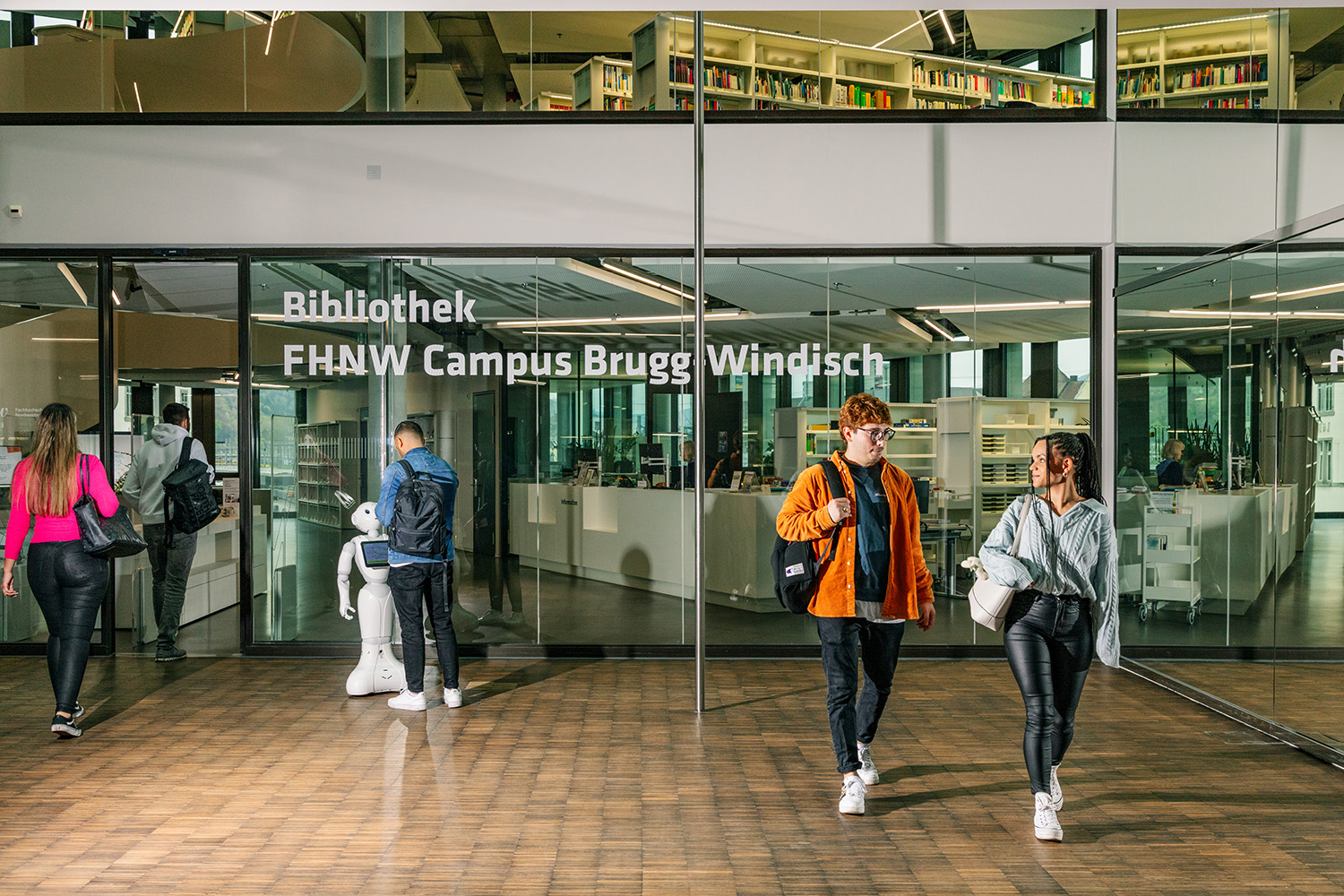
The ACI 2026 International Conference will take place from December 2–5, 2026, on the FHNW campus in Brugg-Windisch, Switzerland, marking the first time the event is held in continental Europe. Registration is now open, with Early Bird rates available until September 30, 2026. The conference continues a tradition that has brought the Animal-Computer Interaction community to Glasgow, North Carolina, Newcastle, Bloomington, Milton Keynes, Haifa, and Atlanta, reinforcing its position as a leading venue for research at the intersection of animals and technology. As the field continues to grow, researchers and practitioners explore how technology shapes animals’ lives, welfare, cognition, and social dynamics while developing animal-centered systems and methods that embrace multispecies perspectives. The conference maintains its commitment to interdisciplinary collaboration across biology, technology, and cultural studies, supporting work that seeks to design ethically grounded, welfare-enhancing, and inclusive technological futures for all animals, humans included. ACI 2026 also features a Special Issue on Animal-Machine Interaction. The proceedings will be published in the ACM library. The conference will be hosted by Prof. Dr. Oliver Bendel, FHNW School of Business.
Fig.: At Campus Brugg-Windisch (Photo: Pati Grabowicz)
The University of Potsdam (PECoG) reports on Dr. Katharina Kühne’s presentations at ICSR + Art 2026 in London: „At the International Conference on Social Robotics (ICSR) in London, Dr. Katharina Kühne presented research on the perception of AI-generated art. The study was conducted in collaboration with Prof. Dominic Thompson (University of Nottingham) and Prof. Christoph Scheepers (University of Glasgow), sparking engaging discussions about creativity, perception, and the role of generative AI in society.“ (PECoG News) And further: „PECoG was also represented by Prof. Dr. Oliver Bendel (FHNW School of Business, Windisch, Switzerland), his brilliant student Sahan Hatemo, and Dr. Katharina Kühne, who presented their research on the recognition of authentic laughter by large language models (LLMs). The project explores the capabilities and limitations of LLMs in recognizing subtle social and emotional cues, contributing to our understanding of AI’s potential for social cognition.“ (PECoG News) Sahan Hatemo is the first author of the paper titled „Reading between the Laughs: A Human-Referenced Audio Evaluation of MLLMs for Social Robotics“. Oliver Bendel had served as the co-supervisor for Katharina Kühne’s doctoral dissertation and has been an associate researcher at PECoG since 2022. The article was published in July 2027 and can be accessed at www.uni-potsdam.de/en/pecog/news.
The 19th International Conference on Social Robotics (ICSR + Health 2027) will take place in July 2027 in Potsdam, Germany. ICSR is the leading international forum that brings together researchers, academics, and industry professionals from across disciplines to advance the field of social robotics. Hosted by the University of Potsdam, ICSR + Health 2027 will provide an international platform for scientific exchange, interdisciplinary collaboration, and innovation at the intersection of social robotics and health. The conference welcomes researchers, practitioners, industry partners, and students from around the world working in areas such as social robotics, embodied AI, human–robot interaction, cognitive science, healthcare, psychology, rehabilitation, design, ethics, and related disciplines. Participants will have opportunities to present their research, propose workshops or symposia, take part in the Grand Challenge, volunteer, or support the conference as sponsors. The General Chairs are Katharina Kühne of the University of Potsdam and the Potsdam Embodied Cognition Group (PECoG), Ilona Buchem of Berlin University of Applied Sciences (BHT), and Oliver Bendel of the FHNW School of Business (also associated researcher at the PECoG). The General Co-Chair is John-John Cabibihan of Qatar University. Further information, including calls for papers, workshops, the Grand Challenge, volunteering opportunities, sponsorship packages, registration details, and the exact conference dates, will be announced on the conference website: icsr2027.org.
Fig.: At the Neues Palais in Potsdam (Photo: Karla Fritze)
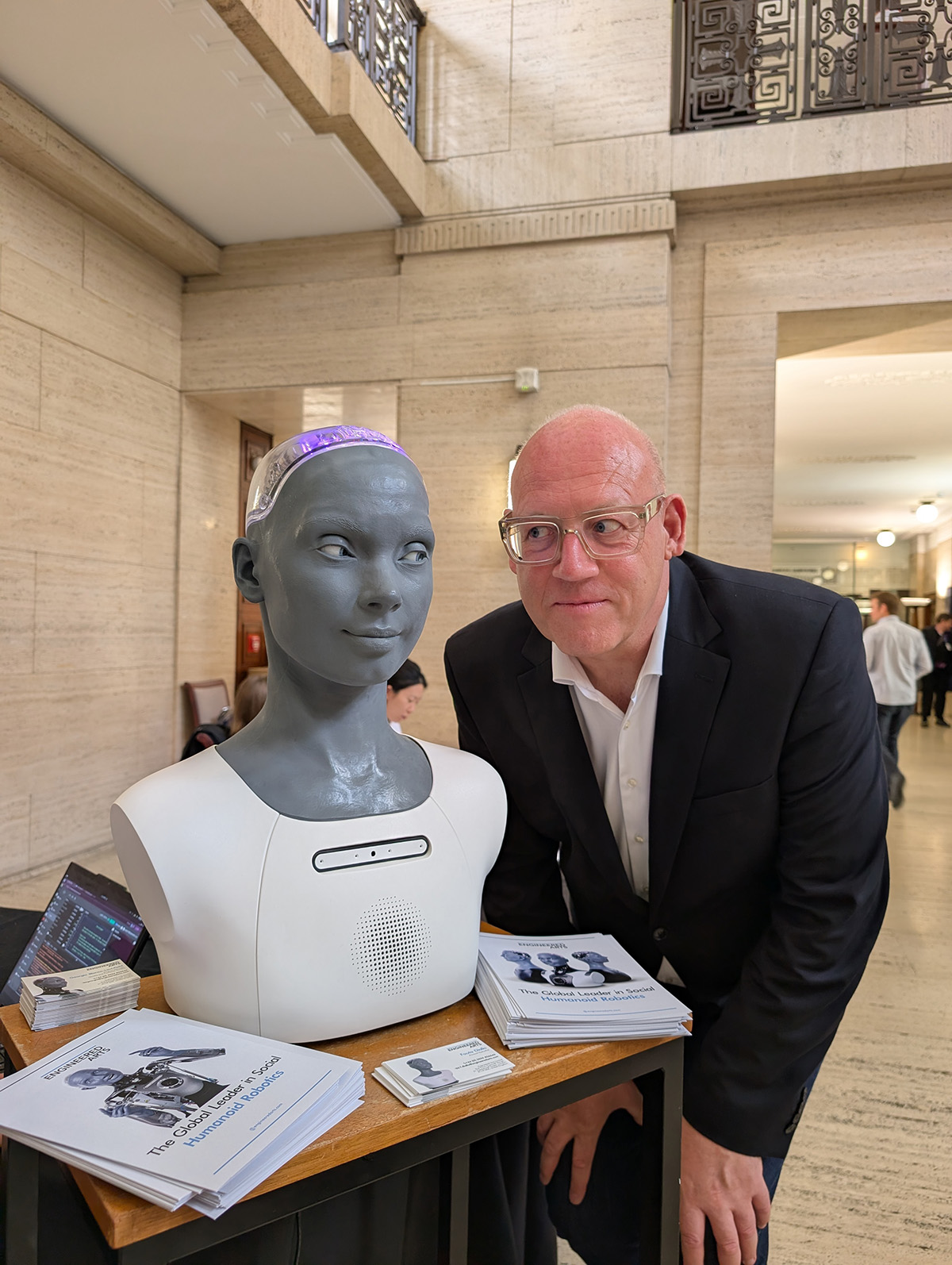
Die General Chairs der ICSR + Art 2026 vom 1. bis 4. Juli in London waren Hooman Samani und Saina Akhond, beide von der University of the Arts London, mit John-John Cabibihan, Qatar University, als General Co-Chair. Oliver Bendel hatte unterschiedliche Funktionen inne. In der einjährigen Zeit der Vorbereitung fungierte er als Publicity Chair. Er verfasste Basistexte zu wichtigen Ereignissen, die dann als Posts in seinen Blogs verwendet und vom Social Media Chair, Nihan Karataş, zu geeigneten Texten für die sozialen Medien transformiert wurden. Bei der Session 18 mit dem Titel „Identity, Narratives & Power“ am dritten Tag war er Chair zusammen mit Neziha Akalin. Bei der Design Grand Challenge und der Art Grand Challenge war er Mitglied der Jury, zusammen mit Pramidan Caleb-Solly, Alessandra Sorrentino, Sarah Shelby und Heather Knight. Als Wissenschaftler stellte er sein Paper „Kiss Me More: Artificial Lips for Intimate Encounters“ vor und war Drittautor des Papers „Reading Between the Laughs: A Human-Referenced Audio Evaluation of MLLMs for Social Robotics“ seines Data-Science-Studenten Sahan Hatemo und seiner ehemaligen Doktorandin Katharina Kühne. Ein Booklet der führenden Konferenz zur Sozialen Robotik verzeichnet alle Engagements, Events und Talks. Bei der ICSR + Art 2027 in Potsdam ist Oliver Bendel General Chair neben Katharina Kühne und Ilona Buchem.
Abb.: Oliver Bendel bei der ICSR + Art 2026 mit Ameca
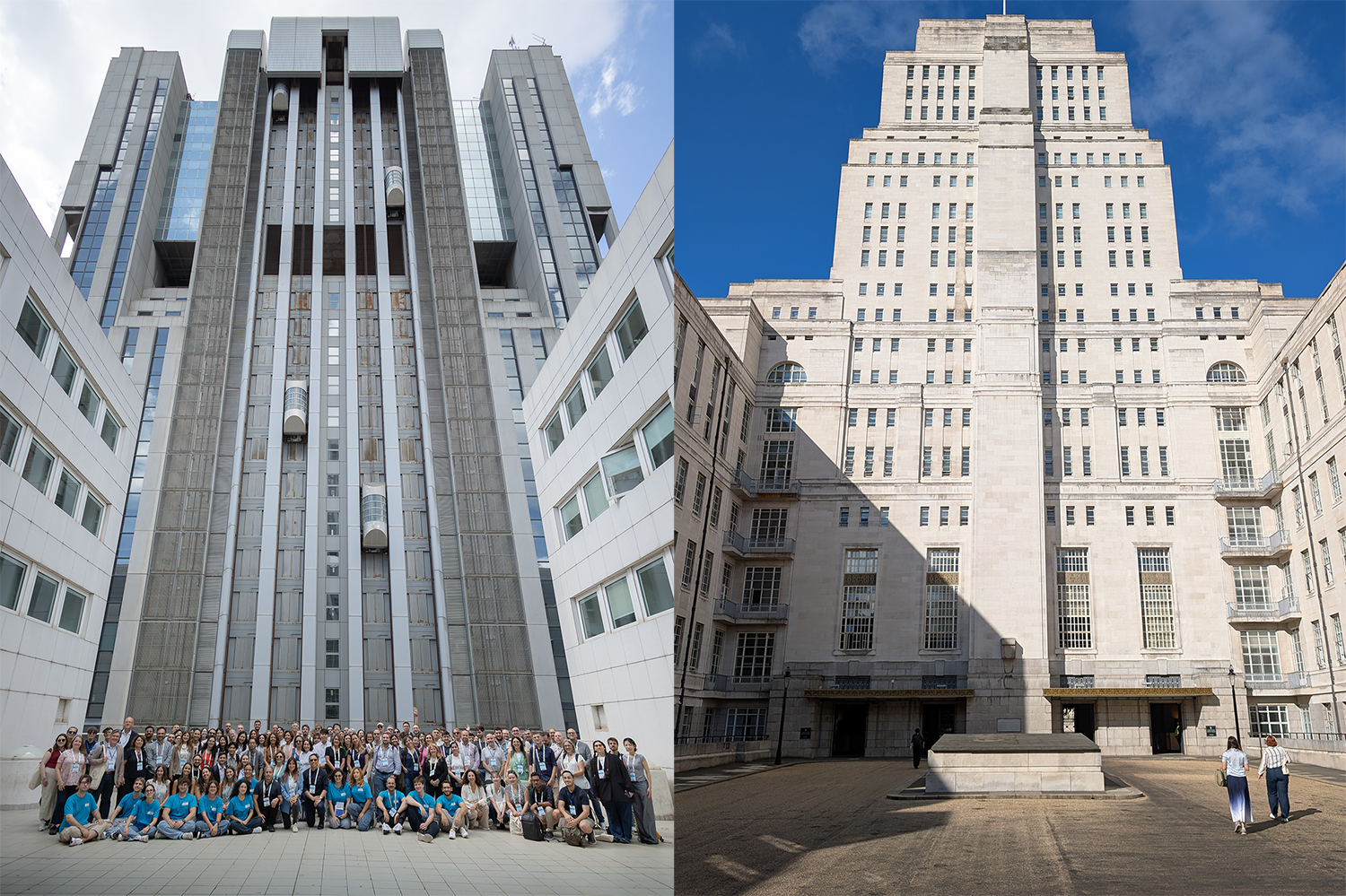
Hosting ICSR + AI 2025 at the University of Naples Parthenope’s campus in the Centro Direzionale and ICSR + Art 2026 at London’s Senate House offers an intriguing architectural juxtaposition. The Parthenope building reflects the late twentieth century’s fascination with technology, functionality, and verticality. Its exposed structural elements, metallic cladding, and dramatic symmetry embody the modernist vision of Naples‘ business district, creating an atmosphere that is distinctly contemporary and forward-looking. In contrast, Senate House, completed in 1937, is one of London’s finest examples of Art Deco monumentalism. Designed by Charles Holden, its clean limestone façades, carefully proportioned massing, and restrained ornament express dignity, permanence, and institutional authority. While both buildings share a striking vertical emphasis and a commanding presence within their respective urban settings, they represent different architectural ideals. The Parthenope campus celebrates innovation and technological expression, whereas Senate House conveys intellectual tradition through timeless geometric order and classical monumentality interpreted in a modern idiom. Although the conference venues were, of course, chosen because they are university buildings rather than for their architectural symbolism, it is nevertheless an appealing coincidence that the futuristic setting of ICSR + AI 2025 is followed by the artistic and historic character of Senate House for ICSR + Art 2026. Together, the two venues provide memorable settings for consecutive ICSR conferences, illustrating how academic exchange can unfold in environments that reflect very different architectural visions.
Beim University:Future Festival 2026 hat Stefanie Hauske, Head of Digital Skills Academy an der ZHAW Zürcher Hochschule für Angewandte Wissenschaften, den Vortrag „Digital Skills Academy: Digitale Kompetenzen für den Hochschulalltag“ gehalten. Laut der Referentin verändert digitale Transformation die Arbeit an Hochschulen grundlegend, insbesondere für Mitarbeiter in der Verwaltung. Der Bedarf an Qualifizierung und Orientierung im digitalen Arbeitsalltag sei hoch, die Nachfrage nach Lernangeboten entsprechend groß. Gleichzeitig sei digitale Kompetenzentwicklung für Mitarbeiter häufig kein fest verankerter Bestandteil der Personalentwicklung: Angebote fokussierten auf Lehre, Forschung oder Führung. Der Input ging der Frage nach, wie digitale Kompetenzentwicklung unter diesen Bedingungen dennoch gelingen kann. Am Beispiel der Digital Skills Academy der ZHAW wurde gezeigt, wie Lernangebote für Hochschulmitarbeiter aufgebaut werden können und welche typischen Herausforderungen dabei sichtbar werden. Im Fokus standen übertragbare Gestaltungsprinzipien für lernförderliche und skalierbare Formate sowie die Frage, wie Legitimität, Sichtbarkeit und Dringlichkeit auch ohne formalen Top-down-Auftrag entstehen können. Die sechste Ausgabe des University:Future Festivals fand vom 22. bis zum 24. Juni 2026 unter dem Motto „Under Pressure“ statt. Man traf sich online – Stefanie Hauske war von Zürich aus zugeschaltet – sowie vor Ort in Berlin, Braunschweig, Essen, Graz, Hamburg und Nürnberg. Das University:Future Festival (U:FF) ist nach eigenen Angaben die größte Veranstaltung zur (digitalen) Zukunft der akademischen Bildung. Themen sind unter anderem KI, Future Skills, Didaktik und Strategieprozesse. Den Teilnehmern wurde ein Programm mit etwa 280 Beiträgen von rund 550 Speakern geboten. Das University:Future Festival ist eine Kooperation zwischen Hochschulforum Digitalisierung, Stiftung Innovation in der Hochschullehre und Stifterverband. Das Video kann seit Juli 2026 über www.youtube.com/watch?v=uJ6Tfzg9nIA aufgerufen werden.
„Nachrückende Generationen“ von Oliver Bendel wurde 2006 geschrieben und 2007 im Leipziger Literaturverlag (Edition ERATA) veröffentlicht. Es ist sozusagen ein Roman über die Generation Y, fast schon die Generation Z. Es tauchen darin mehr oder weniger moderne Phänomene auf, die auch in der Informationsethik behandelt werden, etwa Cyber- und Telefonsex. Der Roman wird dabei an keiner Stelle moralisch, so wie auch die Ethik nicht moralisch werden sollte, außer wenn man aus ihr heraus zur Diskussion anregen und deshalb Position beziehen will. Aus dem Klappentext: „Nelli ist 14. Sie und ihre Freundin Sara gehen ins Café, ins Kino, klauen in einer Boutique. Sie haben Cyber- und Telefonsex, langweilen sich auf Partys und begehen beinahe einen Raubüberfall auf offener Straße. Als Nelli den gleichaltrigen Robert kennenlernt, spürt sie so etwas wie Glück – aber zur gleichen Zeit entgleitet ihr das Leben. Sie und Sara verabreden sich im Chat mit einem Mann, der sie zu Hause fast vergewaltigt. Als Nelli schließlich Robert Gewalt antut, scheint dies für beide das Ende zu sein. Und doch geht es irgendwie weiter, ganz anders, als man vermutet.“ Das Buch ist als Printausgabe vergriffen, kann aber als E-Book über die üblichen Kanäle bezogen werden. Als Hörbuch wurde es von einem Tatort-Schauspieler eingesprochen – dieses Format dürfte allerdings vergriffen sein. 2008 folgte im gleichen Verlag „Künstliche Kreaturen“, 2009 „Verlorene Schwestern“.
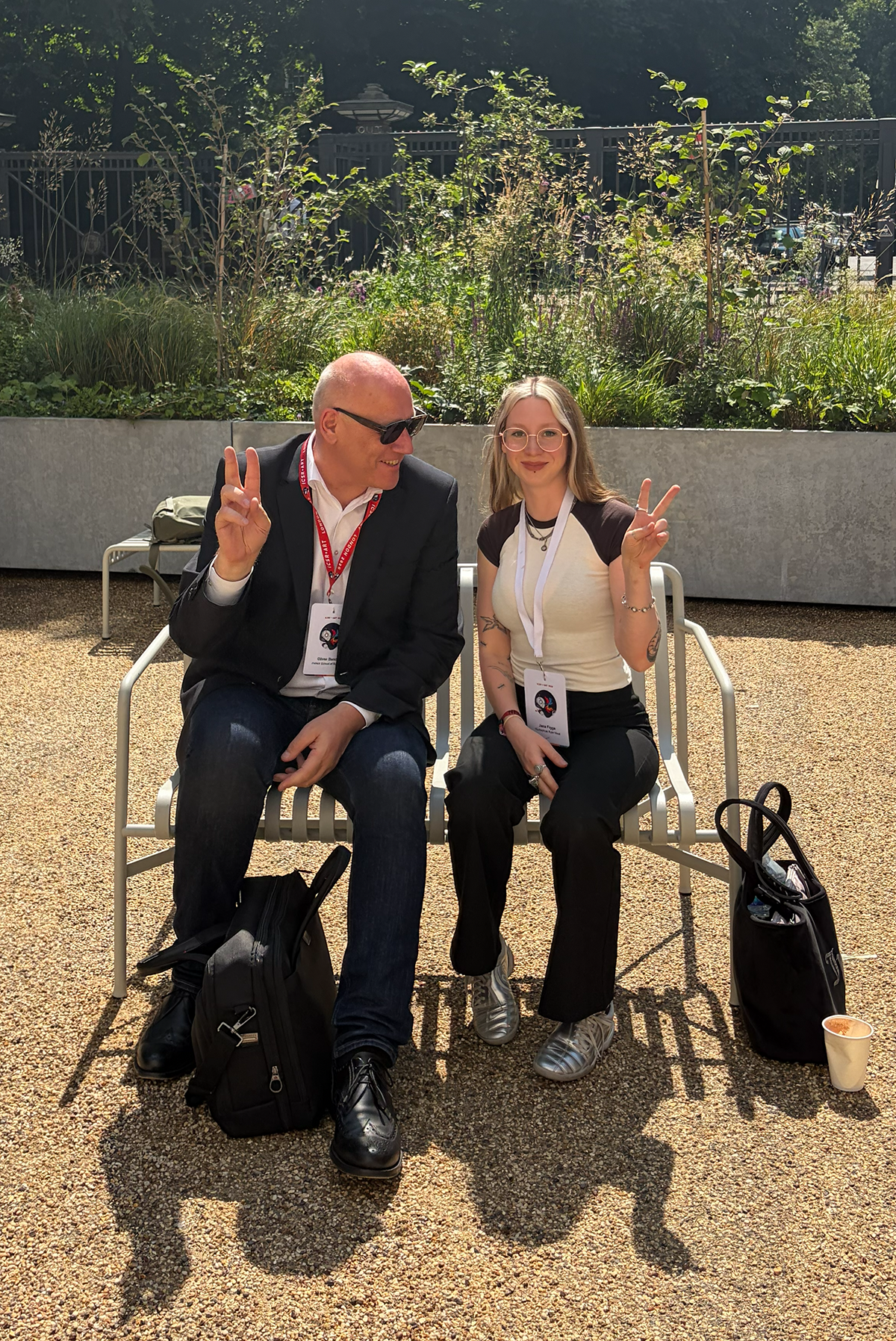
The Victory sign (V sign) first gained worldwide recognition during World War II as a symbol of victory before becoming the iconic gesture of the hippie movement, representing peace. Since then, it has become part of popular culture, appeared in business settings, and today remains a favorite pose among many people in Generation Z. One detail matters, especially in the UK: with the palm facing outward, the gesture means victory or peace. With the back of the hand facing outward, however, it is considered an offensive gesture. At ICSR + Art 2026 in London, Oliver Bendel (Generation X, FHNW School of Business) and Jana Figge (Generation Z, Hochschule Ruhr West) celebrated their presentations on social robots with the same gesture. Across generations, the Victory sign expressed shared success, relief, and the pleasure of seeing their work received with genuine interest by the research community. Do humanoid robots use the Victory sign as well? They certainly can perform expressive hand gestures, but a widely documented example of a robot intentionally using the V sign as a social gesture is surprisingly hard to find. Perhaps that is a small challenge for the next generation of social robots.
Fig.: Oliver Bendel and Jana Figge at ICSR + Art 2026 (Photo: Hooman Samani)
After four inspiring days, the 18th International Conference on Social Robotics (ICSR + Art 2026) came to a close in London. Hosted at Senate House, part of the University of London in the heart of the city, the conference found a venue that proved to be far more than just a location. In retrospect, the building itself became one of the defining features of the event – its brain, its heart, and its stomach from beginning to end. Each morning, the distinctive silhouette of Senate House served as the landmark, guiding participants as they arrived. Throughout the day, the benches in the square outside became a place to relax between sessions, continue conversations, or simply enjoy a quiet moment in the middle of a busy conference schedule. Inside, every hall contributed its own unique atmosphere. The magnificent Crush Hall, with its grand staircase flanked by the ICSR banners, welcomed attendees and provided the setting for the artistic performances. The spacious Beveridge Hall hosted the main tracks, while the Chancellor’s Hall was home to the special sessions. The McMillan Hall became the social hub during coffee breaks and meals, where scientific discussions blended naturally with informal conversations. Finally, there was the Debate Hall, also known as the Senate Room, whose walls seemed to echo the spirit of past debates, disagreements, and reconciliations. This time, it witnessed encounters not only between people, but also between people and robots. For many visitors, the building was also familiar from popular culture. Senate House has appeared in several major productions, including „Batman Begins“, „The Dark Knight Rises“, „Fast & Furious 6“, „No Time to Die“, and „The Crown“, and is said to have inspired George Orwell’s depiction of the Ministry of Truth in „Nineteen Eighty-Four“. During ICSR + Art 2026, however, it became something different: a living space for science, art, and human interaction – and an unforgettable part of the conference itself.
Fig.: Jana Figge and Oliver Bendel in front of Senate House (Photo: Hooman Samani)
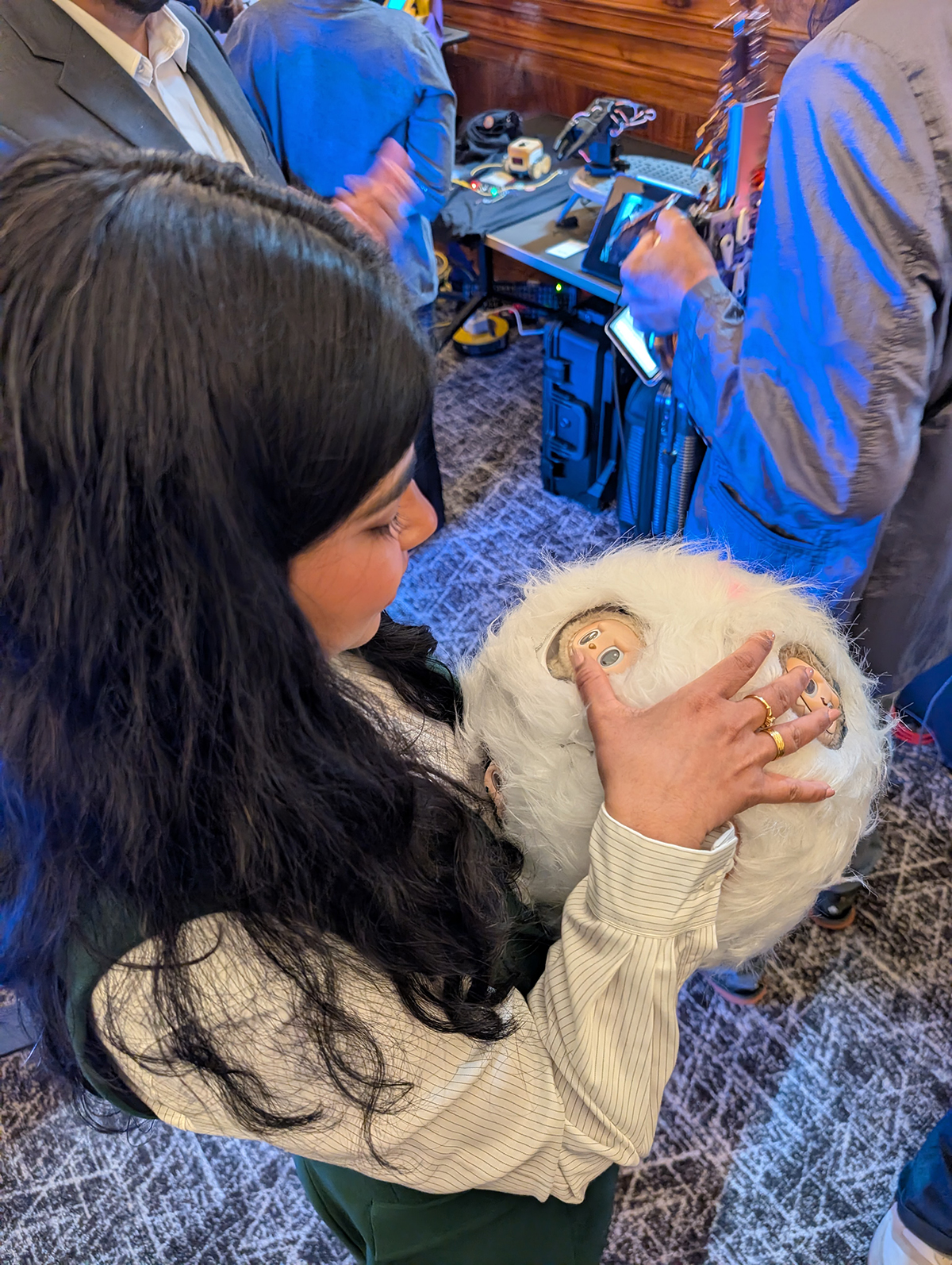
The 18th International Conference on Social Robotics (ICSR + Art 2026) took place from July 1–4, 2026, bringing together researchers, academics, and industry professionals from around the world to discuss the latest advances in social robotics. On the opening day, the ICSR Grand Challenge presentations, including optional demonstrations, took place in the Debate Hall. One of the standout projects was Labububot, presented by Miranda Li and developed by Miranda Li, Jake Read, Dimitar Dimitrov, and Cynthia Breazeal at the Massachusetts Institute of Technology. According to the MIT Media Lab, „This is Labububot — one of the rarest monsters on Earth. Twelve Labubu heads are reconstituted into a single spherical form: a Frankenstein’s Monster of pop culture iconography. Labububot is a playful critique of social robots, and a question made physical – what do the monsters we make reveal about the monsters we are?“ … Instead of following the familiar approach of designing social robots to be cute, friendly, and emotionally unambiguous, Labububot deliberately embraces monster theory and explores the productive potential of the uncanny. From the perspective of Oliver Bendel’s robot classification, Labububot can be regarded as a mythomorphic robot. It consists of twelve monster figures and also belongs to the category of soft robots, although it incorporates rigid structural elements. By combining unconventional design with references to popular culture and fashion, Labububot became one of the most memorable projects presented during the Grand Challenge. Rumor has it that the idea for the spherical monster emerged after its creators had enjoyed a few drinks too many, although this anecdote is best taken as part of the project’s growing mythology rather than established fact.
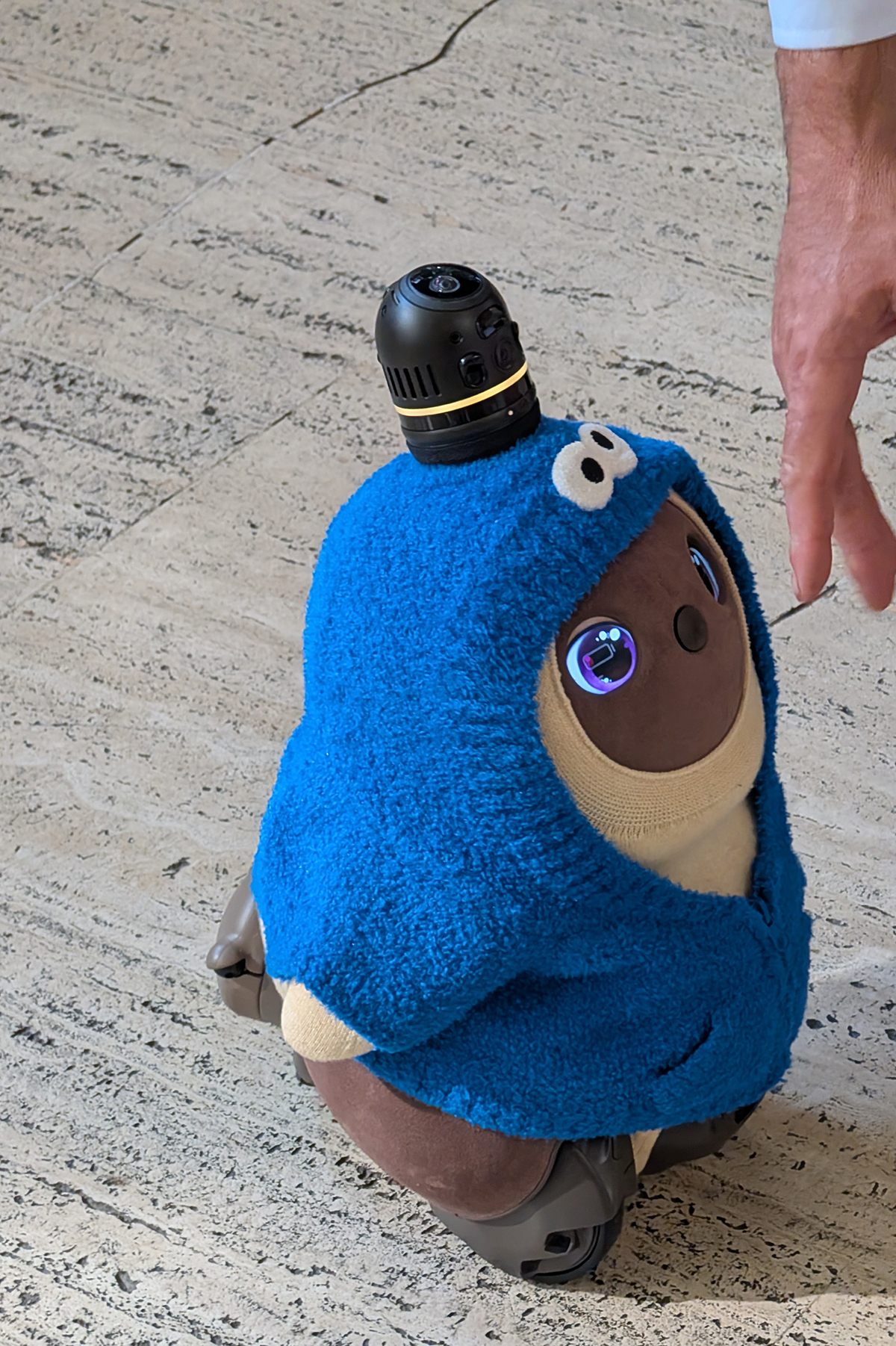
The 18th International Conference on Social Robotics (ICSR + Art 2026) took place in London from July 1–4, bringing together researchers, academics, and industry professionals from around the world to explore the latest advances in social robotics. As in previous years, the conference featured an extensive and impressive exhibition showcasing a wide range of social robots and related technologies. Among the highlights was LOVOT, the companion robot developed by GROOVE X, which exemplifies the concept of Emotional Robotics by focusing not on productivity but on strengthening the human capacity for affection and attachment. Equipped with more than 50 sensors, multiple processors, deep learning capabilities, cameras, microphones, touch sensors, and autonomous navigation, LOVOT continuously perceives its environment and adapts its behavior in real time rather than following fixed scripts. Its expressive eyes, lifelike vocalizations, and highly responsive movements create the impression of interacting with a living creature. Particularly striking are its exceptionally soft body and its warm surface, maintained at a temperature similar to that of a human, making holding and hugging the robot feel surprisingly natural. Another remarkable aspect is Robot Enhancement through clothing and accessories. LOVOT can be dressed in a wide variety of outfits, allowing owners to personalize its appearance and reinforce their emotional bond with the robot. This combination of advanced artificial intelligence, sophisticated sensing, physical softness, warmth, and customization makes LOVOT one of the most distinctive examples of contemporary social robotics.
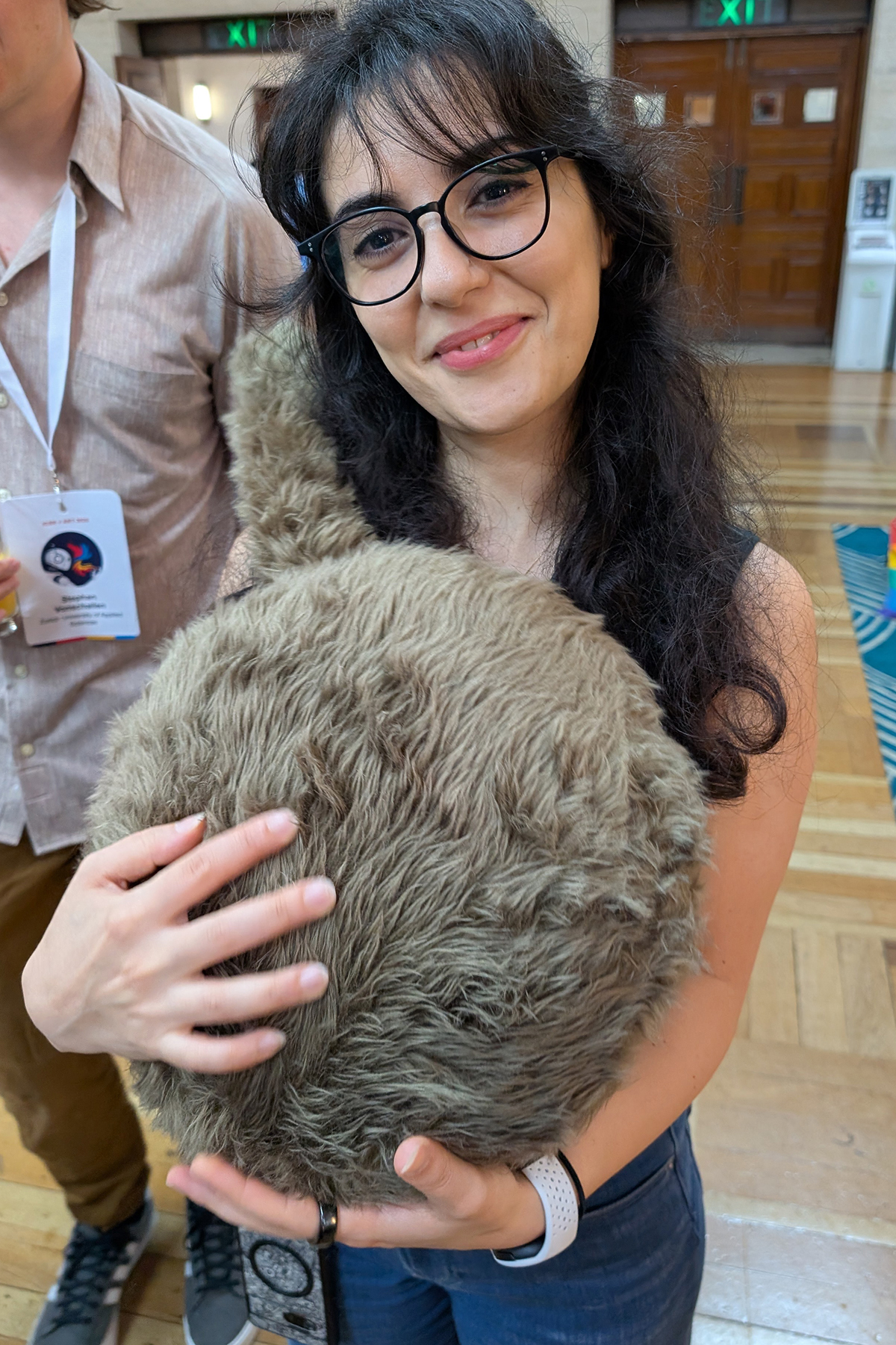
The 18th International Conference on Social Robotics (ICSR + Art 2026) took place in London from July 1–4, bringing together researchers, academics, and industry professionals from around the world to explore the latest advances in social robotics. As in previous years, the conference featured an extensive and impressive exhibition showcasing a wide range of social robots and related technologies. In addition to the official exhibits, some attendees and guests brought their own robots to demonstrate and discuss with other participants. Among the robots on display were Furhat, Euclid, Ameca, LOVOT, Qoobo, and Mirumi, illustrating the remarkable diversity of current approaches to social robotics. One of the most distinctive robots at the exhibition was Qoobo, a therapeutic robot by Yukai Engineering designed as a soft cushion with a lifelike tail. Instead of using facial expressions, speech, or a display, Qoobo communicates entirely through subtle tail movements. When gently stroked, the tail waves softly; when rubbed, it swings playfully, and from time to time it wags spontaneously as if greeting its owner. With its soft fur, comfortable size, and realistic movements inspired by animal behavior, Qoobo is designed to provide a calming and emotionally comforting experience. Studies presented by its developers have shown that interacting with Qoobo can help reduce stress and encourage communication, particularly in elderly care settings, making it an innovative example of how simple, non-verbal interaction can foster emotional well-being. With Mirumi, Yukai Engineering is expanding its classic lineup with another robot that is sure to win over women in particular.
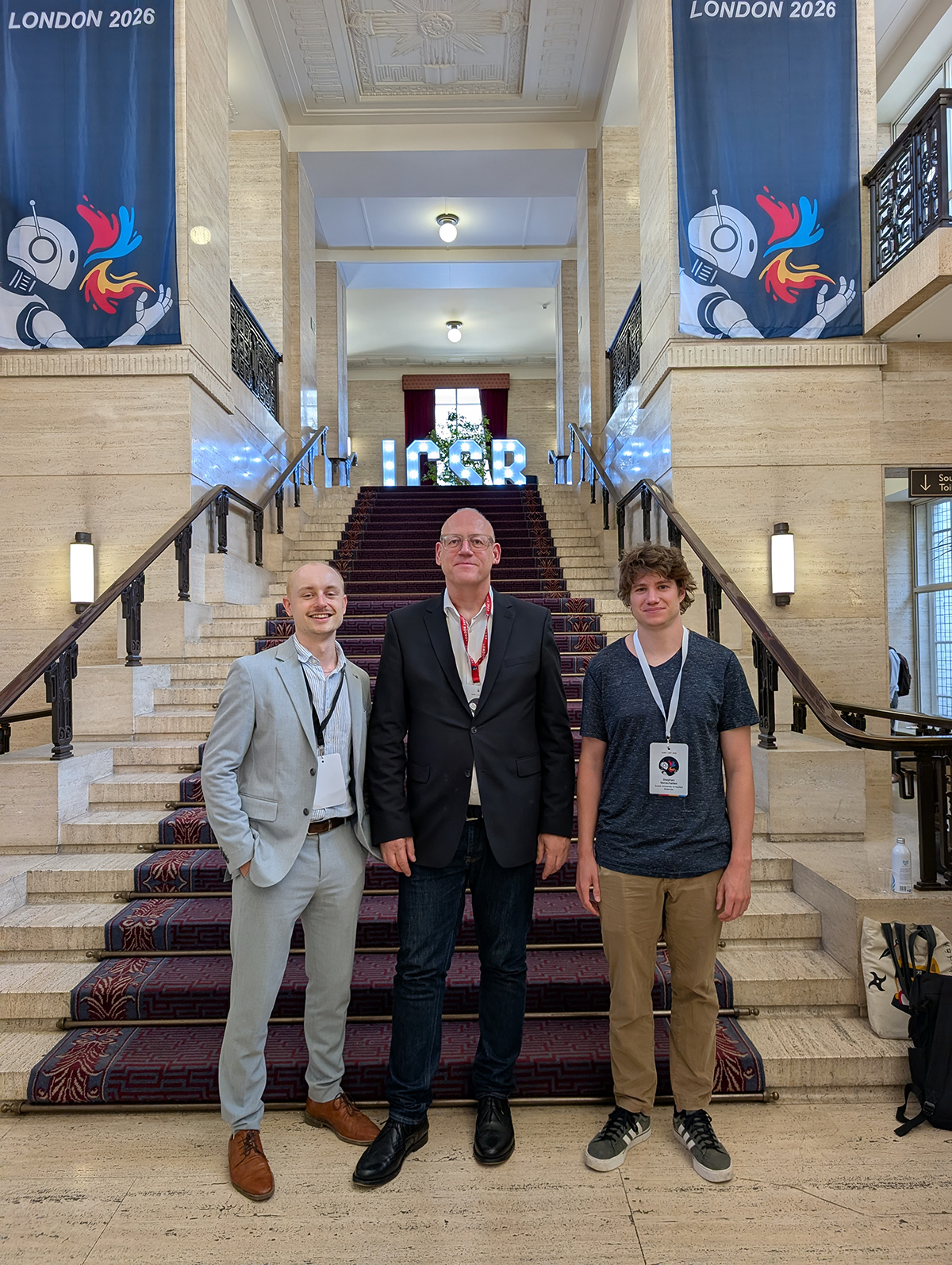
In his paper „Love Dolls and Sex Robots in Unproven and Unexplored Fields of Application“, published in Paladyn, Journal of Behavioral Robotics, Oliver Bendel of the FHNW School of Business discussed prisons as one of several potential application areas for such products. In 2024, his student Tamara Siegmann proposed exploring the use of collaborative and social robots in correctional facilities, focusing on whether they could and should be deployed in such environments. Together with Oliver Bendel, she wrote the paper „Social and Collaborative Robots in Prison“ for the International Conference on Social Robotics (ICSR) in Odense, which was published in the 2025 Springer ICSR proceedings. This work subsequently inspired Jean Paul Smit of Delft University of Technology and his co-authors to write the paper „Social Robot Supporting Visitor Mood and Staff Situation Awareness in a Security Waiting Room“, which he presented at ICSR + Art 2026 in London. The paper describes the development and evaluation of a social robot designed to improve visitors‘ emotional well-being in security waiting rooms while supporting staff through enhanced situation awareness. In 2025, Tamara Siegmann submitted a proposal to a Swiss funding organization based on the prison robotics research. As part of the initiative, inmates at a Swiss correctional facility will receive access to an offline chatbot serving as a companion. The chatbot was developed by Stephan Vonschallen with feedback from Tamara Siegmann and Oliver Bendel, and the project has now entered its main implementation phase. At ICSR + Art 2026, several researchers expressed strong interest in the prison-related projects, suggesting that this promising area of research is likely to receive growing attention in the years ahead.
Fig.: Jean Paul Smit, Stephan Vonschallen, and Oliver Bendel at ICSR 2026