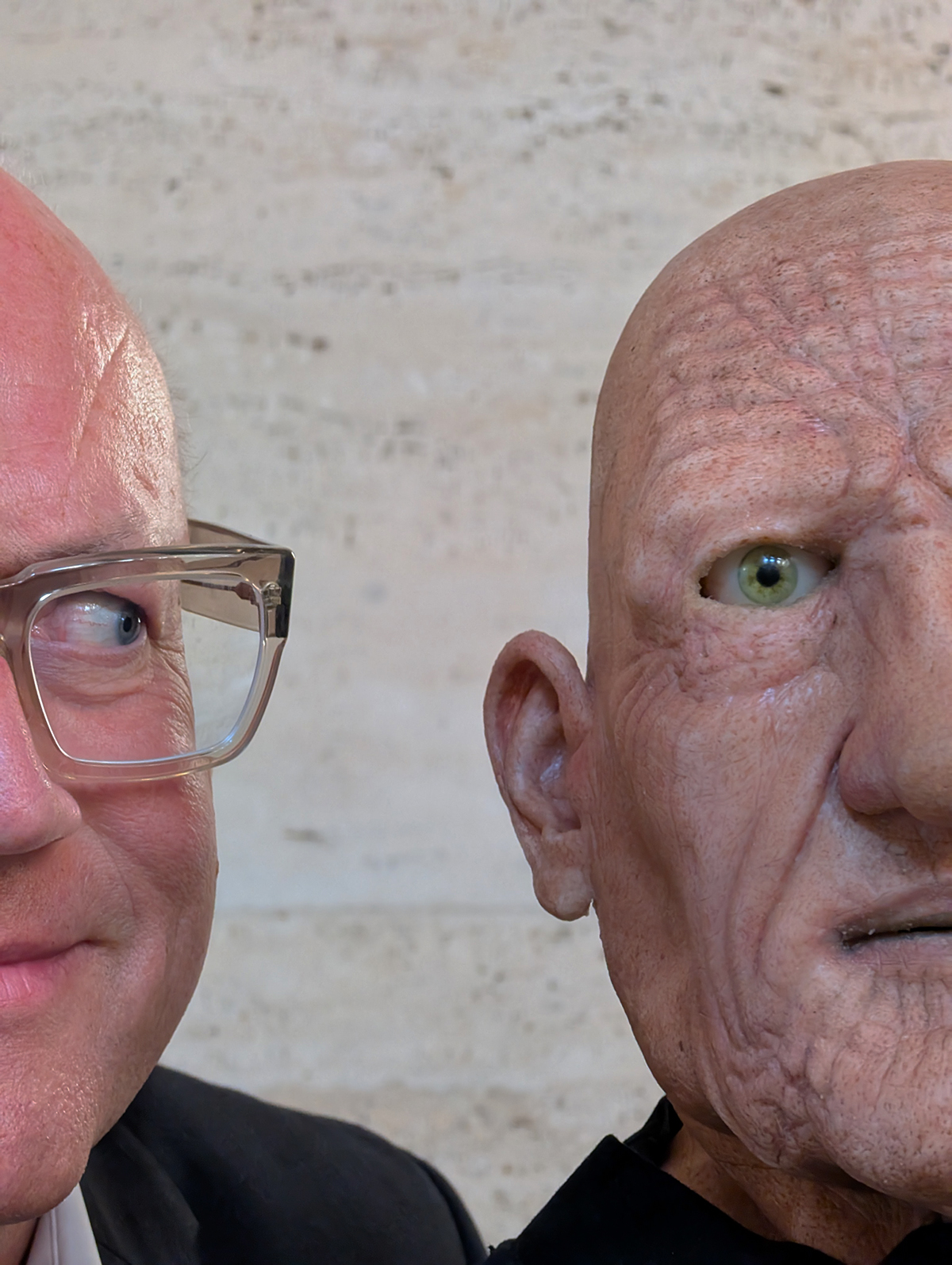
The 18th International Conference on Social Robotics (ICSR + Art 2026) is currently taking place in London from July 1–4, bringing together researchers, academics, and industry professionals from around the world to explore the latest developments in social robotics. Among the highlights of the second conference day was a live demonstration of Euclid, an advanced humanoid robot developed by Dr. Carl Strathearn, Assistant Professor of Computer Science, and Emilia Sobolewska. Strathearn’s work focuses on developing autonomous humanoid robots powered by artificial intelligence that look, behave, and interact in ways that closely resemble humans. Creating lifelike humanoid robots is particularly valuable because the human face remains the most natural interface for communication, emotional expression, and learning. By replicating these familiar conditions, researchers can make AI technologies more intuitive and accessible for people from a wide range of backgrounds, ages, and abilities. Euclid embodies this vision as a fully autonomous social robot equipped with automatic speech recognition, computer vision, generative AI, skin sensors, and a unique robotic mouth that uses machine learning to generate realistic visemes for speech. The robot has been specifically designed for social and assistive interactions with older adults, where natural communication and trust are essential. What makes Euclid especially remarkable, however, is its appearance. While many well-known female humanoid robots, such as Sophia, Erika, and Harmony, feature smooth, almost flawless faces that reflect conventional beauty stereotypes, Euclid deliberately takes a different approach. The robot realistically portrays the deeply lined facial features and weathered skin of an older man. This design choice is both technically demanding and artistically sophisticated, demonstrating that age, character, and authenticity can be just as aesthetically compelling as youthful perfection. In doing so, Euclid challenges established conventions in humanoid robot design while presenting a more diverse and human-centered vision of social robotics. At the ICSR, scientists had the opportunity to talk with Euclid and ask him about his identity and charisma. Further information is available at icsr2026.uk.
Fig.: Oliver Bendel in conversation with Euclid (Photo: Nihan Karataş)
According to an article by Golem from April 19, 2026, humanoid robots beat human runners for the first time in a half marathon in Beijing, where a remotely controlled robot named Lightning (Blitz) from Honor initially finished first despite a fall but received a time penalty, resulting in an adjusted time of about 57 minutes, while the actual win went to an autonomous version of Lightning that completed the race in 50 minutes and 26 seconds, significantly improving on previous robot records and approaching the human world record. The event, which saw a sharp increase in participating teams and several robots struggling or crashing, reflects China’s strong investment in robotics and embodied AI, and experts note that such competitions primarily serve as rigorous tests to advance endurance, energy efficiency, and system reliability in robotics, with potential future applications in service, elderly care, and dangerous environments rather than long-distance running itself.
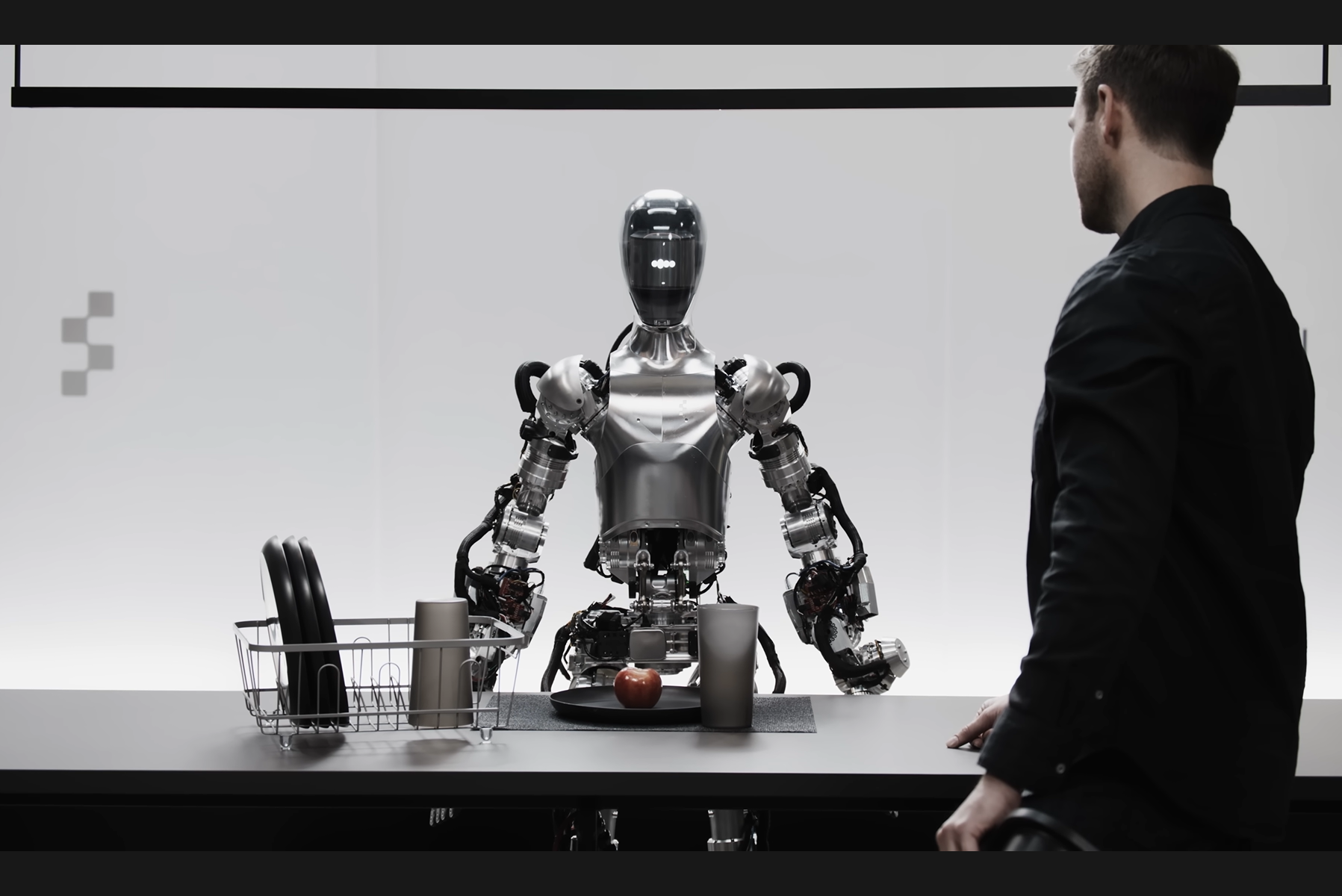
Two weeks ago, Figure entered into a partnership with OpenAI. In an email dated March 13, 2024, the company announced its first update in this context. As you can imagine, the Figure 01 humanoid robot can now have full conversations with humans via end-to-end neural networks. By connecting to a large, pre-trained multimodal model, additional capabilities are made possible. According to the company, the AI-enhanced robot is able to describe its visual experiences, plan future actions, use common sense, reflect on its memory, and verbally explain its reasoning. These and other skills are impressively demonstrated in a video. The design of the robot’s body and head is convincing, although the face should be less mask-like. Overall, it seems less repulsive than comparable humanoid robots marketed as universal or all-purpose robots. It’s probably a good idea to let it work in closed and semi-open worlds, such as the BMW plant in Spartanburg, before it enters open worlds. That way, the workers can get used to it, and so can the public, which will be informed about its appearance and behavior through the media.
Fig.: Figure 01 (Image: Figure/Screenshot from the video)
Ab Februar 2024 ist der Zweibeiner H1 von Unitree Robotics bei Generations Robots verfügbar. Er ist „der leistungsstärkste und kostengünstigste humanoide Roboter auf dem Markt, der 1,80 Meter misst, 47 Kilogramm wiegt und mit einer Geschwindigkeit von 5,5 km/h gehen kann“ (Website Generation Robots). Bisher war das chinesische Unternehmen vor allem durch seine Vierbeiner aufgefallen, die mit den Produkten von Boston Dynamics konkurrieren können. Einsteigermodelle wie Go2 sind unschlagbar günstig, wobei sich zeigen wird, ob die Preise nach dem ersten Ansturm angehoben werden. Von Unitree selbst wird der H1 als „First General-purpose Humanoid Robot“ vermarktet. Der Preis soll unter 90.000 Dollar liegen. Ein Video zeigt, wie sich der Roboter sicher auf zwei Beinen fortbewegt und auch bei Attacken nicht strauchelt und stürzt.
„Boston Dynamics just released the latest demo of its humanoid robot, Atlas. The robot could already run and jump over complex terrain thanks to its feet. Now, the robot has hands, per se. These rudimentary grippers give the robot new life. Suddenly, instead of being an agile pack mule, the Atlas becomes something closer to a human, with the ability to pick up and drop off anything it can grab independently.“ (TechCrunch, January 18, 2023) This was reported by TechCrunch on January 18, 2023. Hands are actually very important for Atlas. The humanoid robot could now pick up or move heavy objects on a construction site. But it could also take care of trapped or injured animals in a nature park, freeing them or providing them with food and water. Such visions have been described by robot ethicist and machine ethicist Oliver Bendel for some time. A video released on January 18, 2023 shows the grippers picking up construction lumber and a nylon tool bag. „Next, the Atlas picks up a 2×8 and places it between two boxes to form a bridge. The Atlas then picks up a bag of tools and dashes over the bridge and through construction scaffolding. But the tool bag needs to go to the second level of the structure – something Atlas apparently realized and quickly throws the bag a considerable distance.“ (TechCrunch, January 18, 2023) At the end of the video, Atlas does a somersault and then extends its hand – its brand new hand – triumphantly.
Fig.: Atlas from Greek mythology at Frankfurt main station