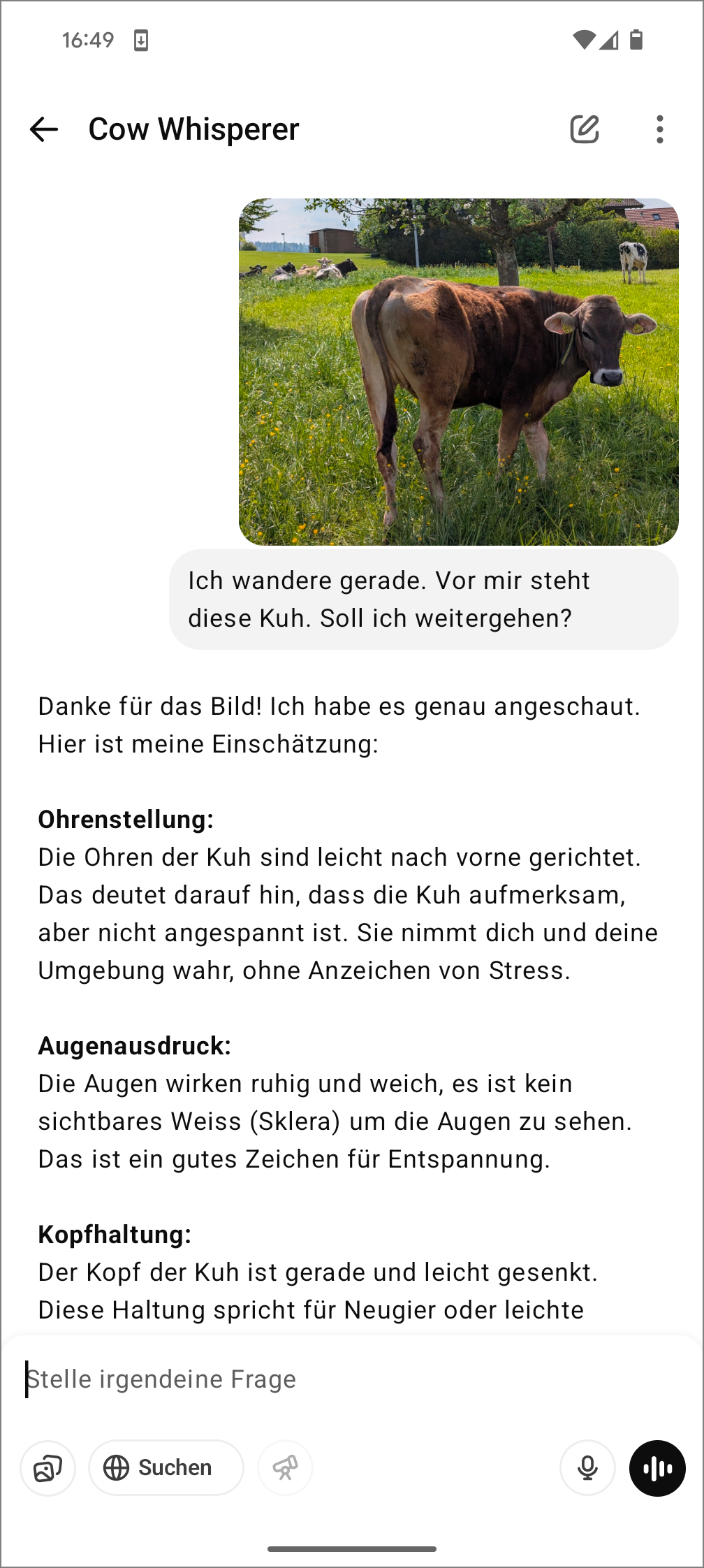
"Dieses essential gibt eine kompakte Einführung in die Disziplin bzw. das Forschungs- und Anwendungsfeld der Tier-Maschine-Interaktion (TMI). Es zeigt, wie Tiere und Maschinen in unterschiedlichen Kontexten zusammentreffen und miteinander bestehen, welche Chancen und Risiken sich daraus ergeben und welche Perspektiven sich für Wissenschaft, Wirtschaft und Politik eröffnen. Ziel ist es, die Leser für die Potenziale und Herausforderungen der Tier-Maschine-Interaktion zu sensibilisieren, Orientierung im interdisziplinären Diskurs zu geben und Anregungen für Forschung, Entwicklung und Entscheidungsprozesse zu liefern. Das Buch kann somit im besten Falle zu einer zunehmenden Realisierung und Diffusion tierfreundlicher Maschinen beitragen." (Quelle: Springer-Information zum Buch)
"Soziale Roboter sind sensomotorische Maschinen, die für den Umgang mit Menschen oder Tieren geschaffen wurden. Sie können über fünf Dimensionen bestimmt werden, nämlich die Interaktion mit Lebewesen, die Kommunikation mit Lebewesen, die Nähe zu Lebewesen, die Abbildung von (Aspekten von) Lebewesen sowie – im Zentrum – den Nutzen für Lebewesen. Bei einem weiten Begriff können neben Hardwarerobotern auch Softwareroboter wie gewisse Chatbots, Voicebots (Sprachassistenten oder virtuelle Assistenten) und Social Bots dazu zählen. Die Disziplin, die soziale Roboter – ob als Spielzeugroboter, als Serviceroboter (Pflegeroboter, Therapieroboter, Sexroboter, Sicherheitsroboter etc.) oder als Industrieroboter in der Art von Kooperations- und Kollaborationsrobotern (Co-Robots bzw. Cobots) – erforscht und hervorbringt, ist die soziale Robotik. Das Buch schafft Grundlagen in technikwissenschaftlicher, wirtschaftswissenschaftlicher, philosophischer, psychologischer und soziologischer Hinsicht. Es stellt dar, was soziale Roboter ausmacht, wie sie gebaut und programmiert werden, welche Anwendungsmöglichkeiten existieren und welche Herausforderungen sich ergeben." (Quelle: Springer-Information zum Buch)
"Sexroboter sind ein Thema, das die Medien mit Vorliebe behandeln und die Gesellschaft spaltet. Es gibt einige Sexroboter wie Emma oder Harmony. Viel verbreiteter sind allerdings Liebespuppen mit überzeugender Haut und auswechselbaren Körperöffnungen. Sie finden sich in zahlreichen Bordellen und können problemlos bei Amazon und Co. bestellt werden. Zwischen Liebespuppen und Sexrobotern sind die Grenzen fließend. Sobald Liebespuppen sprechen können oder Kameras zur Erfassung haben, werden sie zu Sexrobotern. Weiter entwickelte Sexroboter haben mimische oder gestische Fähigkeiten. Das Buch erklärt Grundbegriffe, technische Möglichkeiten und künstlerische Ansätze, es diskutiert medizinische, psychologische und philosophische Herausforderungen. Dabei wird vor allem vom tatsächlichen Stand ausgegangen, und es wird auch die Situation in Bordellen erforscht (einschl. des Umstands, dass dort teilweise Fantasyfiguren zur Verfügung stehen). In einem Kapitel wird auf Zukunftsszenarien eingegangen." (Quelle: Springer-Information zum Buch)
"Dieses Open-Access-Buch bündelt technische, wirtschaftliche, medizinische und ethische Reflexionen über Pflegeroboter. Pflegeroboter, im Moment noch mehrheitlich Prototypen, unterstützen oder ersetzen menschliche Pflegekräfte bzw. Betreuer. Sie bringen Kranken und Alten die benötigten Medikamente und Nahrungsmittel, helfen beim Hinlegen und Aufrichten oder alarmieren den Notdienst. Vorteile von Pflegerobotern sind durchgehende Verwendbarkeit und gleichbleibende Qualität der Dienstleistung. Nachteile sind Kostenintensität (bei möglicher Amortisation) und Komplexität der Anforderungen. Unter der wissenschaftlichen Leitung von Prof. Dr. Oliver Bendel trafen sich im September 2017 Vertreter verschiedener wissenschaftlicher Disziplinen im Rahmen eines Ladenburger Diskurses der Daimler und Benz Stiftung, um über den aktuellen und künftigen Einsatz von Pflegerobotern zu sprechen und Forschungspotenziale zu identifizieren. Die Autoren gehen in ihren Beiträgen auch Fragen aus Wirtschafts-, Medizin- und Informationsethik nach ..." (Quelle: Springer-Information zum Buch)
"Vom 'Anthropozän' über die 'Marsstation' bis hin zur 'Weltraumwirtschaft': Im Zusammenhang mit dem Weltraum gibt es unzählige Fachtermini. Dieses kompakte Lexikon bietet einen fundierten Überblick über zentrale Begriffe der Raumfahrt, ergänzt um aktuelle Entwicklungen in Technik, Wissenschaft und Gesellschaft. Es richtet sich an alle, die sich für den Weltraum interessieren – ob aus naturwissenschaftlicher, technischer, wirtschaftlicher, ethischer oder kultureller Perspektive. Der Autor verbindet seine langjährige Erfahrung in den Bereichen Künstliche Intelligenz, Robotik und Ethik mit seiner frühen Faszination für das Weltall. Neben klassischen Einträgen wie 'Astronomie', 'Galaxie' oder 'Raumstation' finden sich Themen wie 'Weltraumkunst', 'Robotische Vierbeiner' und 'Generative KI'. Dabei werden nicht nur Fakten vermittelt, sondern auch Zusammenhänge aufgezeigt und Denkanstöße gegeben. Der Band versteht sich als Beitrag zur Orientierung in einem sich rasant entwickelnden Feld – und als Einladung, den Weltraum aus neuen Blickwinkeln zu betrachten." (Quelle: Springer-Information zum Buch)
"Von A wie Alignment bis Z wie Zensur: Dieses Nachschlagewerk bietet in mehr als 300 Einträgen einen Überblick über das Thema der generativen KI. Es klärt zahlreiche Fachbegriffe, stellt Anwendungsbereiche vor und diskutiert aktuelle Fragestellungen. Dabei spielen neben technischen und wirtschaftlichen Fragen insbesondere ethische und ästhetische eine Rolle. So wird nach der Schönheit von Artefakten gefragt, es wird die Stellung von Bildern zwischen Kunst und Kitsch ausgeleuchtet, und es wird eine Bias-Diskussion zu Text- und Bildgeneratoren geführt. Insgesamt steht der Nutzen der generativen KI im Vordergrund, und die Freude und Lust, sie zu benutzen. Das Buch richtet sich an ein breites Publikum, etwa Journalisten, Politiker und Bürger, aber auch an Wissenschaftler aller Bereiche." (Quelle: Springer-Information zum Buch)
"Das vorliegende Nachschlagewerk sammelt und erläutert Begriffe rund um Soziale Robotik und Automatisierung. Es ist für alle geeignet, die einen schnellen Einstieg in das Gebiet suchen und sich besonders für Fragen des Zusammenspiels von Mensch und Maschine sowie Fragen der Ethik in diesem Bereich interessieren. In über 300 übersichtlichen Beiträgen werden die Grundlagen und Entwicklungen leicht verständlich erläutert." (Quelle: Springer-Information zum Buch)
"Von 'Big Data' über die 'Künstliche Intelligenz' bis hin zur 'Sozialen Robotik': Im Kontext der Digitalisierung gibt es unzählige Fachtermini. Das vorliegende Nachschlagewerk ist für alle geeignet, die einen schnellen Einstieg in das Gebiet der Digitalisierung suchen und sich für Fragen der Ethik interessieren. In 450 übersichtlichen Beiträgen werden die Grundlagen und Entwicklungen leicht verständlich erlätert." (Quelle: Springer-Information zum Buch)
"Vom 'Altruismus' über die 'Filter Bubble' bis hin zum 'Whistleblowing': Die Sprache der Informationsethik zeichnet sich durch unzählige Fachtermini und Anglizismen aus. Das vorliegende Nachschlagewerk eignet sich für den ersten schnellen Überblick. In 400 übersichtlichen Beiträgen werden die Grundlagen erläutert. Die Erklärungen sind verständlich formuliert und bieten Basiswissen für alle, die einen schnellen Einstieg in die Grundfragen der Informationsgesellschaft suchen und sich für Informationsethik interessieren." (Quelle: Springer-Information zum Buch)
Von 'Aktivist' über 'Nachhaltigkeit' bis zu 'Zensur': Im Kontext der Wirtschaftsethik gibt es unzählige Fachtermini und Abkürzungen. Das vorliegende Nachschlagewerk eignet sich für den ersten schnellen Überblick. Anhand von 110 übersichtlichen Schlüsselbegriffen werden die Grundlagen erläutert. Die Erklärungen sind kompakt und verständlich formuliert und bieten Basiswissen für alle, die einen schnellen Einstieg in das Thema Wirtschaftsethik suchen, einzelne Begriffe nachschlagen oder ihr vorhandenes Wissen auffrischen möchten." (Quelle: Springer-Information zum Buch)
"Die Maschinenethik arbeitet mit Künstlicher Intelligenz und Robotik zusammen. Sie bringt maschinelle Moral hervor und untersucht sie. Ausgangspunkt sind teilautonome und autonome Systeme, etwa selbstständig fahrende Autos, Serviceroboter, Kampfroboter und Chatbots. Dieses Handbuch liefert Grundlagen zur Maschinenethik, erkundet Anwendungsgebiete der Disziplin und stellt Prototypen moralischer Maschinen vor. Neben der Maschinenethik kommen Roboterethik und Rechtswissenschaft zu Wort." (Quelle: Springer-Information zum Buch)
"Die Edition HMD 'Faktor Mensch' enthält eine breit gefächerte Auswahl von Beiträgen, die die Beziehung zwischen Mensch und IT thematisieren. In Zeiten der Digitalisierung bietet die IT Chancen, die es unter Einbeziehung des Menschen zu nutzen gilt. Gleichzeitig birgt die IT Risiken, derer sich der Mensch bewusst sein muss, um sie abwägen und kontrollieren zu können. Die Vielfalt der zu adressierenden Themen ist in dieser umfassenden Form am Markt bislang noch nicht diskutiert." (Quelle: Springer-Information zum Buch) Enthalten ist ein Beitrag von Oliver Bendel mit dem Titel "Sexroboter als soziale Roboter für unterschiedliche Bedürfnisse und Anliegen" sowie ein Beitrag von Oliver Bendel mit dem Titel "Bodyhacking als Phänomen und Trend".
"Die Beitragsautoren präsentieren technische Lösungen, Geschäftsmodelle und Visionen, die einerseits die Herausforderungen und Hürden des Cloud Computing aufgreifen – technisch, rechtlich, prozessbezogen – und andererseits die Chancen und Nutzen dieses Architekturansatzes in den Mittelpunkt stellen. Es ist zeitgemäß, IT-Infrastrukturen, Daten und Applikationen aus der lokalen Umgebung in eine Cloud auszulagern. Der Anwender kann sich der angebotenen IT-Dienstleistungen unter Nutzung von Self-Service-Ansätzen bedienen, in Abhängigkeit davon, was und wieviel er gerade benötigt – und auch nur dafür wird gezahlt. Bereitgestellt, gewartet und aktualisiert werden die IT-Ressourcen zentral." (Quelle: Springer-Information zum Buch) Enthalten ist ein Beitrag von Oliver Bendel mit dem Titel "Cloud Computing aus Sicht der Ethik".
"Das Fachbuch greift das Konzept Industrie 4.0 – Ausdruck der vierten industriellen Revolution – mit seinen Chancen und Risiken für produzierende Unternehmen auf. Das Herausgeberwerk bringt das Thema durch anschauliche Beispiele aus der Praxis näher und zeigt die Visionen auf, mit denen sich nicht nur die akademische Welt bereits auseinandersetzt. Die Autoren der Beiträge thematisieren einerseits Kernthemen der Digitalisierung und beleuchten andererseits nicht zu vernachlässigende Begleiterscheinungen: In der Fabrik von morgen wachsen reale und virtuelle Welt zusammen." (Quelle: Springer-Information zum Buch) Enthalten ist ein Beitrag von Oliver Bendel mit dem Titel "Die Industrie 4.0 aus Sicht der Ethik".
"Der digitale Wandel erfasst immer mehr Bereiche unseres Lebens und wirft dadurch viele neue ethische Fragestellungen auf. Mit dem Buch '3TH1CS' erforschen wir in konkreten Beiträgen, wo sich diese Fragen genau stellen und wie wir als Gesellschaft mit ihnen umgehen können oder sogar sollten. Die insgesamt 20 Beiträge stammen von ausgewählten Expertinnen und Experten, die zu den führenden Denkern in Europa, Asien und Amerika gehören. Sie beleuchten die Bereiche, in denen der digitale Wandel eine Herausforderung für bestehende moralische Konventionen darstellt oder sogar ein Umdenken erfordert." (Quelle: Information von iRights.Lab) Enthalten ist ein Beitrag von Oliver Bendel mit dem Titel "Sexroboter und Robotersex aus Sicht der Ethik".
"Im Kontext der Industrie 4.0 sind ein wachsender Wettbewerbsdruck, immer größere Anforderungen an Flexibilität und Qualität und immer höhere Ansprüche der Stakeholder wahrnehmbar. In der bekannten Situation des demographischen Wandels entstehen zunehmend neue Assistenzsysteme, insbesondere in der Mensch-Roboter-Kollaboration (MRK). Diese Systeme arbeiten nicht mehr isoliert hinter Zäunen, sondern Hand in Hand mit den Menschen. Sie sollen den Menschen bei monotonen oder kraftraubenden Arbeiten unterstützen oder entlasten. Durch die direkte Zusammenarbeit von Mensch und Maschine rücken Arbeitssicherheit und Ergonomie zunehmend in den Fokus. Klärungsbedarf gibt es bei der Gestaltung von MRK-Arbeitsplätzen und bei der Akzeptanz dieser Arbeitsplätze. Auch neue Aufgabenfelder sind im Gespräch, die sich z.B. in Pflege und Medizin erschließen lassen. Arbeitspsychologie und Human Factors bekommen in der roboterbasierten Automatisierung eine neue, wichtige Bedeutung. Zudem stellt sich die ethische Frage, ob diese neuen Roboter auf längere Sicht den Menschen entlasten oder ersetzen." (Quelle: Springer-Information zum Buch) Enthalten ist ein Beitrag von Oliver Bendel mit dem Titel "Die Maschine an meiner Seite: Philosophische Betrachtungen zur Mensch-Roboter-Kollaboration".
"This book discusses digitalization trends and their concrete applications in business and societal contexts. It summarizes new findings from research, teaching and management activities comprising digital transformation, e-business, the representation of knowledge, human–computer interaction and business optimization. The trends discussed include artificial intelligence, virtual reality, robotics, blockchain, and many more. Professors and researchers who conduct research and teach at the interface between academia and business present the latest advances in their field. The book adopts the philosophy of applied sciences and combines both rigorous research and practical applications. As such, it addresses the needs of both professors and researchers, who are constantly seeking inspiration, and of managers seeking to tap the potential of the latest trends to take their business to the next level. Readers will find answers to pressing questions that arise in their daily work." (Quelle: Springer-Information zum Buch) Enthalten ist ein Beitrag von Oliver Bendel mit dem Titel "Co-Robots from an Ethical Perspective".
"Das interdisziplinäre Grundlagenwerk informiert aus der Perspektive von Neurologie, Rehabilitation, Ingenieurwesen, Pädagogik und Physiotherapie sowie aus Sicht der Patienten über Möglichkeiten und Grenzen des Einsatzes von Technik, um die Teilhabe neurologisch erkrankter Menschen zu verbessern. Ziel des Buches ist, allen Berufsgruppen, die an der Behandlung schwer und komplex erkrankter neurologischer Patienten beteiligt sind, ein umfassendes Verständnis assistiver und rehabilitativer Technologien zu vermitteln." (Quelle: Springer-Information zum Buch) Enthalten ist ein Beitrag von Oliver Bendel mit dem Titel "Therapieroboter aus ethischer Sicht".
"Das Buch betrachtet den Einsatz der Robotik in Gesundheit, Wirtschafts- und Arbeitswelt aus interdisziplinärer Perspektive. Immer eigenständigere Roboter halten Einzug in unseren Alltag. Bereits heute übernehmen sie eine Vielzahl von Aufgaben z.B. in der produzierenden Industrie oder der Medizin. Diese maschinellen Systeme agieren in atemberaubendem Tempo immer unabhängiger von menschlicher Steuerung. In zunehmendem Maße sind sie in der Lage, auch komplexere Schlussfolgerungen zu ziehen. All dies wirft eine Vielzahl ethischer und juristischer Fragen auf: Wie verändern automatisierte Systeme unser Leben und Selbstverständnis? Vor welchen Herausforderungen stehen Arbeitswelt, öffentlicher Raum und Pflege? Experten aus Wissenschaft und Politik beleuchten diese und weitere Fragen innerhalb des vorliegenden Bandes." (Quelle: Springer-Information zum Buch) Enthalten ist ein Beitrag von Oliver Bendel mit dem Titel "Die programmierte Moral".
"Dieses Handbuch liefert die theoretischen Grundlagen und praxisbezogenen Implikationen für die digitale Transformation unserer Wirtschaft, unserer Produktion und Kundenbeziehungen. Renommierte Autoren aus Wissenschaft und Praxis behandeln dabei die Themen des Einkaufs-, Verkaufs-, Handels-, Kontakt- und Kooperationsmanagements auf Basis elektronischer Netzwerke. Dabei werden die Grundbausteine Systemlösungen, Prozesse, Management, Marketing und Implementierung konsequent für die zugehörigen Online-Plattformen erklärt, wobei die Besonderheiten der elektronischen Handelsebene Berücksichtigung finden. Die Darstellungen basieren dabei sowohl auf betriebswirtschaftlichen als auch technischen Gesichtspunkten." (Quelle: Springer-Information zum Buch) Enthalten ist ein Beitrag von Oliver Bendel mit dem Titel "Von Cor@ bis Mitsuku: Chatbots in der Kundenkommunikation und im Unterhaltungsbereich".
"Using an interdisciplinary approach, this book explores the emerging topics and rapid technological developments of robotics and artificial intelligence through the lens of the evolving role of sex robots, and how they should best be designed to serve human needs. An international panel of authors provides the most up-to-date, evidence-based empirical research on the potential sexual applications of artificial intelligence. Early chapters discuss the objections to sexual activity with robots while also providing a counterargument to each objection. Subsequent chapters present the implications of robot sex as well as the security and data privacy issues associated with sexual interactions with artificial intelligence. The book concludes with a chapter highlighting the importance of a scientific, multidisciplinary approach to the study of human - robot sexuality." (Quelle: Springer-Information zum Buch) Enthalten ist ein Beitrag von Oliver Bendel mit dem Titel "Hologram Girl".
"Wenn digitale Technologien wie künstliche Intelligenz, Blockchain und Robotik auf die Medizin treffen, entstehen zwangsläufig ethische Fragestellungen. Diese lassen sich nicht ohne Weiteres mit medizinisch-technologischen, rechtlichen oder ökonomischen Argumenten allein beantworten. Neue Themenfelder wie die sich wandelnde Rolle der Patienten, die neue Verantwortung von Ärzten und Pflegenden, neue digitale Möglichkeiten in der Medizin, Smart Hospitals im Klinikalltag, die gesellschaftliche Legitimität eines möglichen dritten Datengesundheitsmarktes, eine zukunftsfeste Ausbildungslandschaft für den Gesundheits-/Medizinbereich sowie die Grenzen der digitalen Forschung bedürfen einer kritischen und gleichzeitig thematisch breiten Auseinandersetzung mit ethischen Aspekten in der digitalen Gesundheitswirtschaft und Medizin. Dies ist nicht nur inhaltlich wichtig, sondern auch zeitkritisch, denn gerade dieser Sektor hat eine erhebliche globale Marktdynamik. Längst ist 'eHealth' i.w.S. keine Kerninnovation von klassischen Gesundheitsakteuren mehr. Es gehört vielmehr zum Tagesgeschäft der großen US-amerikanischen und chinesischen Game Changer wie Google, Apple, Microsoft, Facebook, Amazon, Netflix, Alibaba und Tencent. Die verantwortbare, aber auch wettbewerbsfähige Partizipation an diesen Entwicklungen ist vielleicht die drängendste Aufgabe fär die Akteure in Wissenschaft, Krankenversorgung, Gesundheitswirtschaft und Politik. Ausgewiesene Experten aus diesen Bereichen stellen sich daher im vorliegenden Werk den oft schwierigen Fragen, die sich auf dem Weg der Transformation zu einem B2B2C-Markt im Gesundheitswesen, der einer ethischen Betrachtung standhält, ergeben." (Quelle: MWV-Information zum Buch) Enthalten ist ein Beitrag von Oliver Bendel mit dem Titel "Ethische Überlegungen zu Pflegerobotern".
"Das Handbuch bietet einen Überblick über die technischen, historischen, sozialen, medialen, kulturwissenschaftlichen und technikphilosophischen Dimensionen verschiedener Typen von Mensch-Maschine-Interaktion sowie über deren ethische Implikationen. Dabei werden zum einen wissenshistorische Analysen der Diskurse in Philosophie, Literatur und Technik sowie ihrer medialen, apparativen und literalen Praktiken von ca. 1870 bis in die Gegenwart verfolgt (Historischer Teil). Zum anderen wird das komplexe Verhältnis von Menschen und Maschinen anhand von zentralen Begriffs- und Problemfeldern dargestellt und kritisch befragt (Systematischer Teil)." (Quelle: Springer-Information zum Buch) Enthalten ist ein Beitrag von Oliver Bendel mit dem Titel "Die Maschinenethik als neues interdisziplinäres Forschungsfeld".
"Die Moral der Hacker, die digitale Unterschrift, die Sklaven der Nerds, die Möglichkeiten der Schwarmintelligenz, das Problem mit Plagiaten und Copy and Paste, die zunehmende Kontrolle im Netz: Oliver Bendel greift viele aktuelle Themen auf, liefert wichtige Hintergrundinfos, gewürzt mit eigenen Ansichten und regt zum Nachdenken an. Wer sich für die Onlinewelt interessiert, liest das Buch mit Gewinn, versteht Zusammenhänge und entwickelt eine eigene Meinung - und wird auch noch gut unterhalten, denn der Stil des Buchs ist locker, nicht belehrend. Angenehm." (Jörg Schieb, in: Deutschlandradio Kultur (Website), 28. Oktober 2012)
Maik, ein 16-jähriger Junge, hat eine Drohne entwickelt, die einer Fliege gleicht und mit deren Hilfe er alles sehen kann, was er sehen will. Sein Plan ist, Prominente und Reiche auszuspionieren und, wenn er das ultimative Bild gefunden hat, zu erpressen. Nur seinem Tagebuch vertraut er sich an, einem digitalen Rekorder. Nancy, die früher als Mundmodell und für die Stasi gearbeitet hat, surft mit ihrer kleinen Maschine auf elektromagnetischen Wellen, bis sie auf Schallwellen trifft. Wie früher belauscht sie andere, aber ohne an verwanzte Räume gebunden zu sein – und nicht, um Böses zu schaffen, sondern um Böses zu verhindern. Maik und Nancy kommen über die ahnungslose Stadt. Sie wissen nichts voneinander, bis die Frau ein merkwürdiges Brummen hört. Fast eine Fliege. Aber eben nur fast. (Quelle: www.oliverbendel.net)
Anna Wede wird auf eine Professur an einer Schweizer Hochschule berufen. Sie liebt ihre Wohnung, von der aus sie auf einen mächtigen Berg blickt, sie ist fasziniert von der ins Hochtal gelegten Stadt. Nicht zum ersten Mal hält sie ihre Vorlesung zur künstlichen Kreatur, in der sie auf Ideen der Antike ebenso eingeht wie auf Agenten und Avatare der Gegenwart. Lydie ist eine aufmerksame und zielstrebige schweizerische Studentin. Ihre Einladung zum Weintrinken in einem Lokal schlägt Anna nicht ab. Sie nähern sich an, vor allem körperlich und äußerlich. Die Studentin könnte Annas Phantasie entsprungen sein. Aber ihre Macht über die Professorin ist real. (Quelle: www.oliverbendel.net)
Nelli ist 14. Sie und ihre Freundin Sara gehen ins Café, ins Kino, klauen in einer Boutique. Sie haben Cyber- und Telefonsex, langweilen sich auf Partys und begehen beinahe einen Raubüberfall auf offener Straße. Als Nelli den gleichaltrigen Robert kennenlernt, spürt sie so etwas wie Glück - aber zur gleichen Zeit entgleitet ihr das Leben. Sie und Sara verabreden sich im Chat mit einem Mann, der sie zu Hause fast vergewaltigt. Als Nelli schließlich Robert Gewalt antut, scheint dies für beide das Ende zu sein. Und doch geht es irgendwie weiter, ganz anders, als man vermutet. (Quelle: www.oliverbendel.net)