From March 27-29, 2023, the AAAI 2023 Spring Symposia will feature the symposium „Socially Responsible AI for Well-being“ by Takashi Kido (Teikyo University, Japan) and Keiki Takadama (The University of Electro-Communications, Japan). The venue is usually Stanford University. For staffing reasons, this year the conference will be held at the Hyatt Regency in San Francisco. On March 28, Prof. Dr. Oliver Bendel will present the paper „Increasing Well-being through Robotic Hugs“, written by himself, Andrea Puljic, Robin Heiz, Furkan Tömen, and Ivan De Paola. From the abstract: „This paper addresses the question of how to increase the acceptability of a robot hug and whether such a hug contributes to well-being. It combines the lead author’s own research with pioneering research by Alexis E. Block and Katherine J. Kuchenbecker. First, the basics of this area are laid out with particular attention to the work of the two scientists. The authors then present HUGGIE Project I, which largely consisted of an online survey with nearly 300 participants, followed by HUGGIE Project II, which involved building a hugging robot and testing it on 136 people. At the end, the results are linked to current research by Block and Kuchenbecker, who have equipped their hugging robot with artificial intelligence to better respond to the needs of subjects.“ More information via aaai.org/conference/spring-symposia/sss23/.
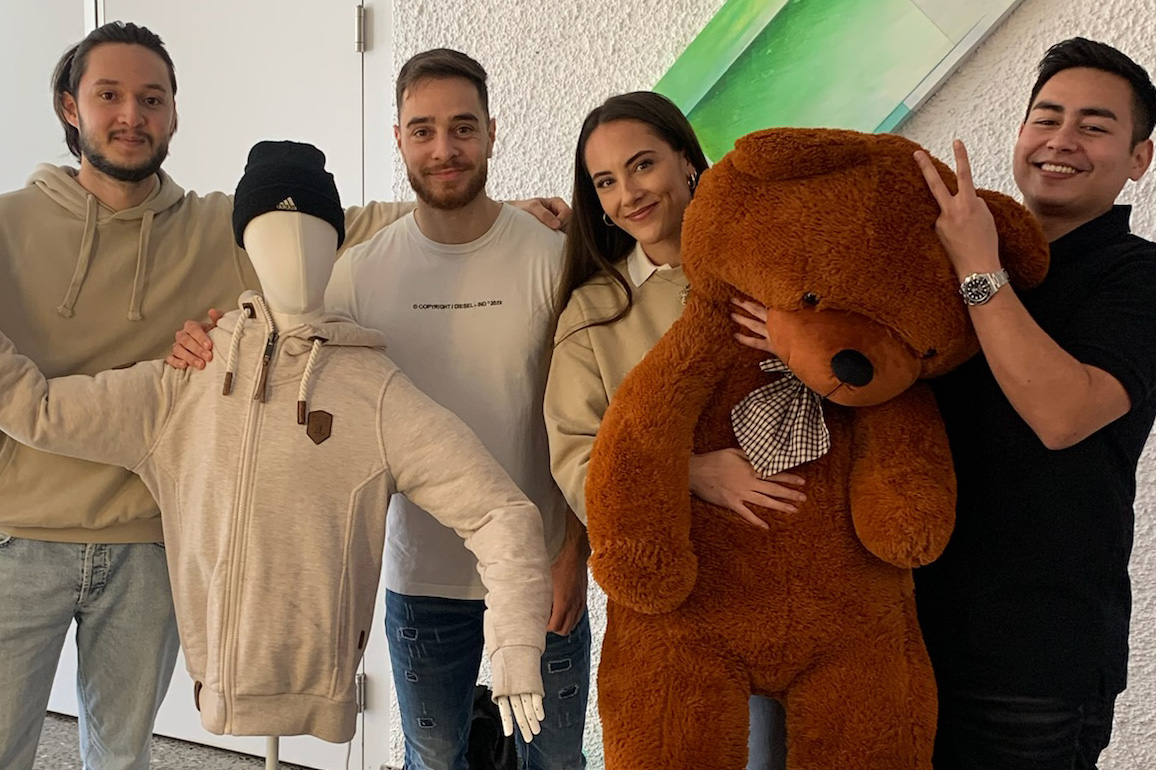
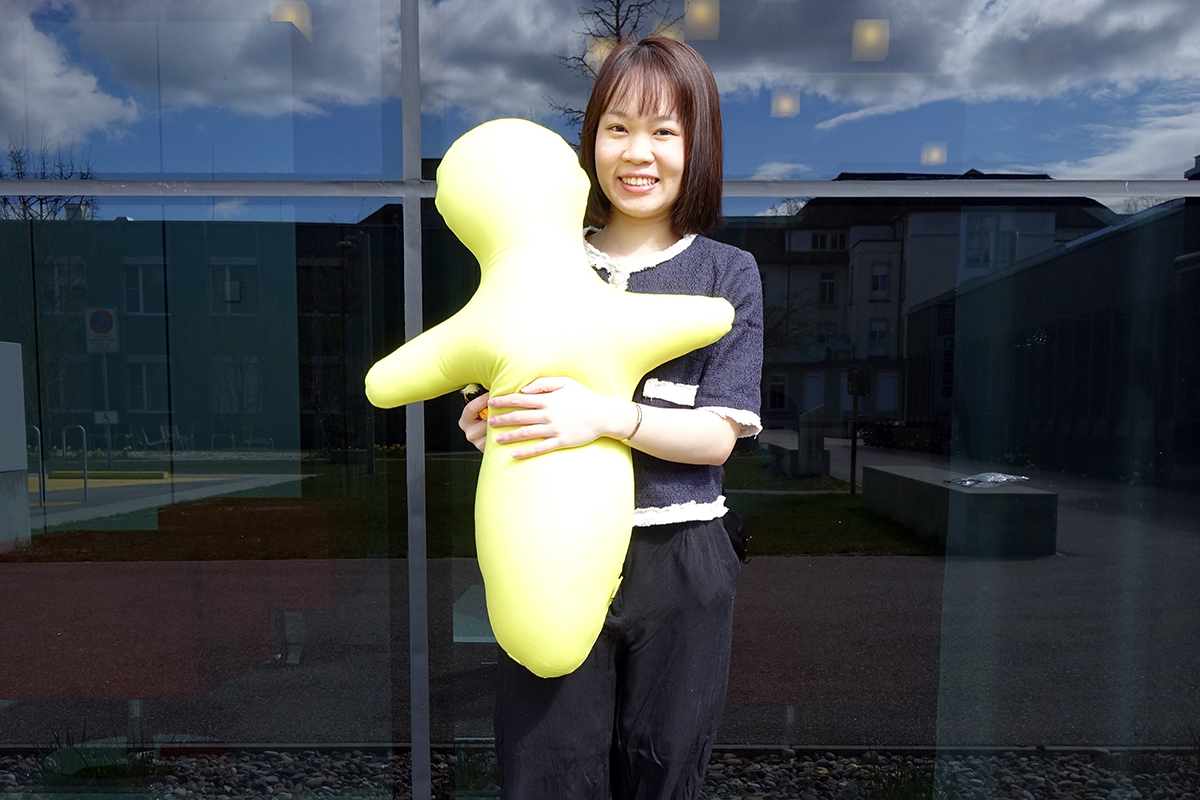
Fig.: HUGGIE, Teddy, and the team (without Oliver Bendel)
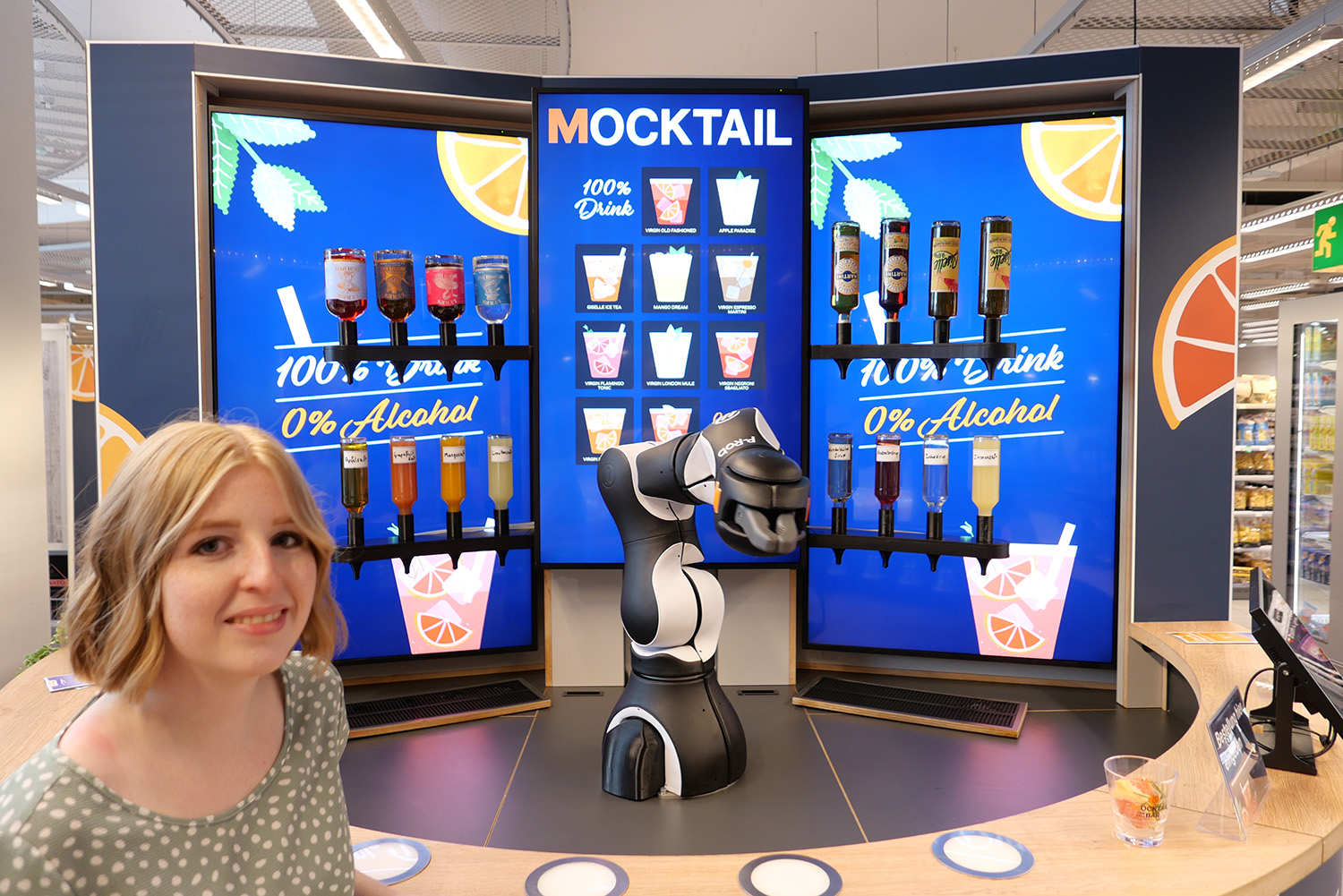
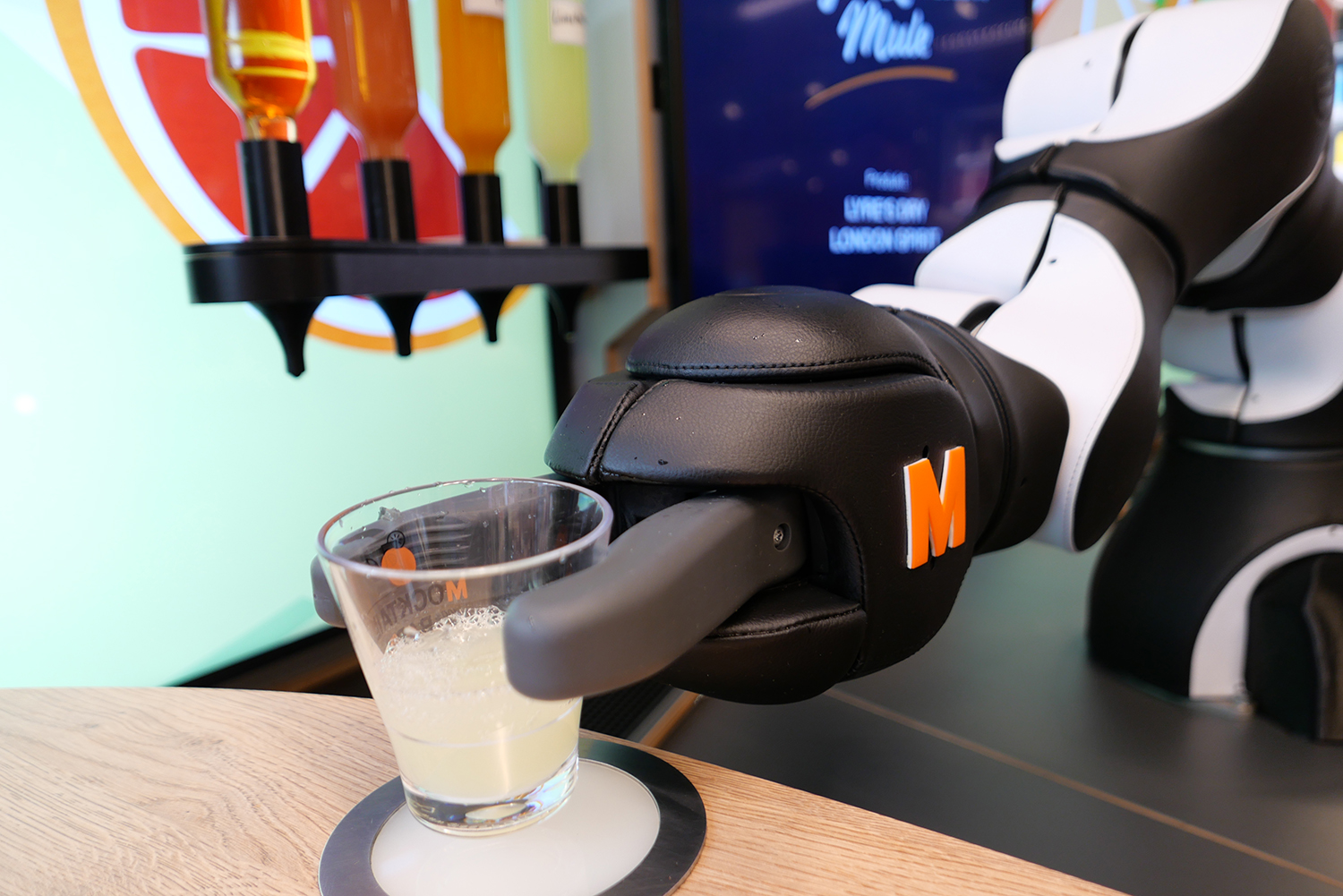
From March 27-29, 2023, the AAAI 2023 Spring Symposia will feature the symposium „Socially Responsible AI for Well-being“ by Takashi Kido (Teikyo University, Japan) and Keiki Takadama (The University of Electro-Communications, Japan). The venue is usually Stanford University. For staffing reasons, this year the conference will be held at the Hyatt Regency in San Francisco. On March 28, Prof. Dr. Oliver Bendel and Lea Peier will present their paper „How Can Bar Robots Enhance the Well-being of Guests?“. From the abstract: „This paper addresses the question of how bar robots can contribute to the well-being of guests. It first develops the basics of service robots and social robots. It gives a brief overview of which gastronomy robots are on the market. It then presents examples of bar robots and describes two models used in Switzerland. A research project at the School of Business FHNW collected empirical data on them, which is used for this article. The authors then discuss how the robots could be improved to increase the well-being of customers and guests and better address their individual wishes and requirements. Artificial intelligence can play an important role in this. Finally, ethical and social problems in the use of bar robots are discussed and possible solutions are suggested to counter these.“ More information via aaai.org/conference/spring-symposia/sss23/.
As part of the AAAI 2023 Spring Symposia in San Francisco, the symposium „Socially Responsible AI for Well-being“ is organized by Takashi Kido (Teikyo University, Japan) and Keiki Takadama (The University of Electro-Communications, Japan). The paper „Increasing Well-being and Health through Robotic Hugs“ by Oliver Bendel, Andrea Puljic, Robin Heiz, Furkan Tömen, and Ivan De Paola was accepted. The talk will take place between March 26 and 29, 2023 at Hyatt Regency, San Francisco Airport. The symposium website states: „For our happiness, AI is not enough to be productive in exponential growth or economic/financial supremacies but should be socially responsible from the viewpoint of fairness, transparency, accountability, reliability, safety, privacy, and security. For example, AI diagnosis system should provide responsible results (e.g., a high-accuracy of diagnostics result with an understandable explanation) but the results should be socially accepted (e.g., data for AI (machine learning) should not be biased (i.e., the amount of data for learning should be equal among races and/or locations). Like this example, a decision of AI affects our well-being, which suggests the importance of discussing ‚What is socially responsible?‘ in several potential situations of well-being in the coming AI age.“ (Website AAAI) According to the organizers, the first perspective is „(Individually) Responsible AI“, which aims to clarify what kinds of mechanisms or issues should be taken into consideration to design Responsible AI for well-being. The second perspective is „Socially Responsible AI“, which aims to clarify what kinds of mechanisms or issues should be taken into consideration to implement social aspects in Responsible AI for well-being. More information via www.aaai.org/Symposia/Spring/sss23.php#ss09.
As part of the AAAI 2023 Spring Symposia in San Francisco, the symposium „Socially Responsible AI for Well-being“ is organized by Takashi Kido (Teikyo University, Japan) and Keiki Takadama (The University of Electro-Communications, Japan). The paper „How Can Bar Robots Enhance the Well-being of Guests?“ by Oliver Bendel and Lea K. Peier was accepted. The talk will take place between March 26 and 29, 2023 at Hyatt Regency, San Francisco Airport. The symposium website states: „For our happiness, AI is not enough to be productive in exponential growth or economic/financial supremacies but should be socially responsible from the viewpoint of fairness, transparency, accountability, reliability, safety, privacy, and security. For example, AI diagnosis system should provide responsible results (e.g., a high-accuracy of diagnostics result with an understandable explanation) but the results should be socially accepted (e.g., data for AI (machine learning) should not be biased (i.e., the amount of data for learning should be equal among races and/or locations). Like this example, a decision of AI affects our well-being, which suggests the importance of discussing ‚What is socially responsible?‘ in several potential situations of well-being in the coming AI age.“ (Website AAAI) According to the organizers, the first perspective is „(Individually) Responsible AI“, which aims to clarify what kinds of mechanisms or issues should be taken into consideration to design Responsible AI for well-being. The second perspective is „Socially Responsible AI“, which aims to clarify what kinds of mechanisms or issues should be taken into consideration to implement social aspects in Responsible AI for well-being. More information via www.aaai.org/Symposia/Spring/sss23.php#ss09.
Die Tagung LaborDigital am 10. Februar 2023 an der Zürcher Hochschule der Künste (ZHdK), iniitiert und organisiert u.a. von Charlotte Axelsson, wird mit einem Vortrag von Prof. Dr. Johan Frederik Hartle eröffnet, dem Rektor der Akademie der bildenden Künste Wien. Es folgt die Keynote „Labor-Geschichte/n. Zur Archäologie eines ‚kreativen‘ Raumes“ von Prof. Dr. Oliver Ruf von der Hochschule Bonn-Rhein-Sieg. Von 11.00 bis 12.30 Uhr finden parallel drei Experimental Learning Labs statt, nämlich „Artefakte der Maschinenethik“ mit Prof. Dr. Oliver Bendel (FHNW, Muttenz, Olten und Brugg-Windisch), „Dance Lab & Avatar“ mit Regina Bäck (München) und „Experimental Game Cultures Labs“ mit Prof. Dr. Margarete Jahrmann (Universität für angewandte Kunst Wien). Nach dem Mittagessen folgen die ZHdK Lab Visits und ab 15.30 Uhr weitere Experimental Learning Labs. Um 16.30 Uhr hält Raphaële Bidault-Waddington, Gründerin des LIID Future Lab in Paris, die zweite Keynote mit dem Titel „Designing Art-based Future Labs“. Johan Frederik Hartle beschließt mit weiteren Ausführungen die Tagung. Weitere Informationen über paul.zhdk.ch/course/view.php?id=2312.
Abb.: Oliver Bendel erklärt auf ARTE das Uncanny Valley
As part of the AAAI 2023 Spring Symposia in San Francisco, the symposium „Socially Responsible AI for Well-being“ is organized by Takashi Kido (Teikyo University, Japan) and Keiki Takadama (The University of Electro-Communications, Japan). The AAAI website states: „For our happiness, AI is not enough to be productive in exponential growth or economic/financial supremacies but should be socially responsible from the viewpoint of fairness, transparency, accountability, reliability, safety, privacy, and security. For example, AI diagnosis system should provide responsible results (e.g., a high-accuracy of diagnostics result with an understandable explanation) but the results should be socially accepted (e.g., data for AI (machine learning) should not be biased (i.e., the amount of data for learning should be equal among races and/or locations). Like this example, a decision of AI affects our well-being, which suggests the importance of discussing ‚What is socially responsible?‘ in several potential situations of well-being in the coming AI age.“ (Website AAAI) According to the organizers, the first perspective is „(Individually) Responsible AI“, which aims to clarify what kinds of mechanisms or issues should be taken into consideration to design Responsible AI for well-being. The second perspective is „Socially Responsible AI“, which aims to clarify what kinds of mechanisms or issues should be taken into consideration to implement social aspects in Responsible AI for well-being. More information via www.aaai.org/Symposia/Spring/sss23.php#ss09.
In January 2023, the Proceedings of Robophilosophy 2022 were published. Included is the paper „Robots in Policing“ by Oliver Bendel. From the abstract: „This article is devoted to the question of how robots are used in policing and what opportunities and risks arise in social terms. It begins by briefly explaining the characteristics of modern police work. It puts service robots and social robots in relation to each other and outlines relevant disciplines. The article also lists types of robots that are and could be relevant in the present context. It then gives examples from different countries of the use of robots in police work and security services. From these, it derives the central tasks of robots in this area and their most important technical features. A discussion from social, ethical, and technical perspectives seeks to provide clarity on how robots are changing the police as a social institution and with social actions and relationships, and what challenges need to be addressed.“ (Abstract) Robots in policing is a topic that has not received much attention. However, it is likely to become considerably more topical in the next few years. More information about the conference on cas.au.dk/en/robophilosophy/conferences/rpc2022.
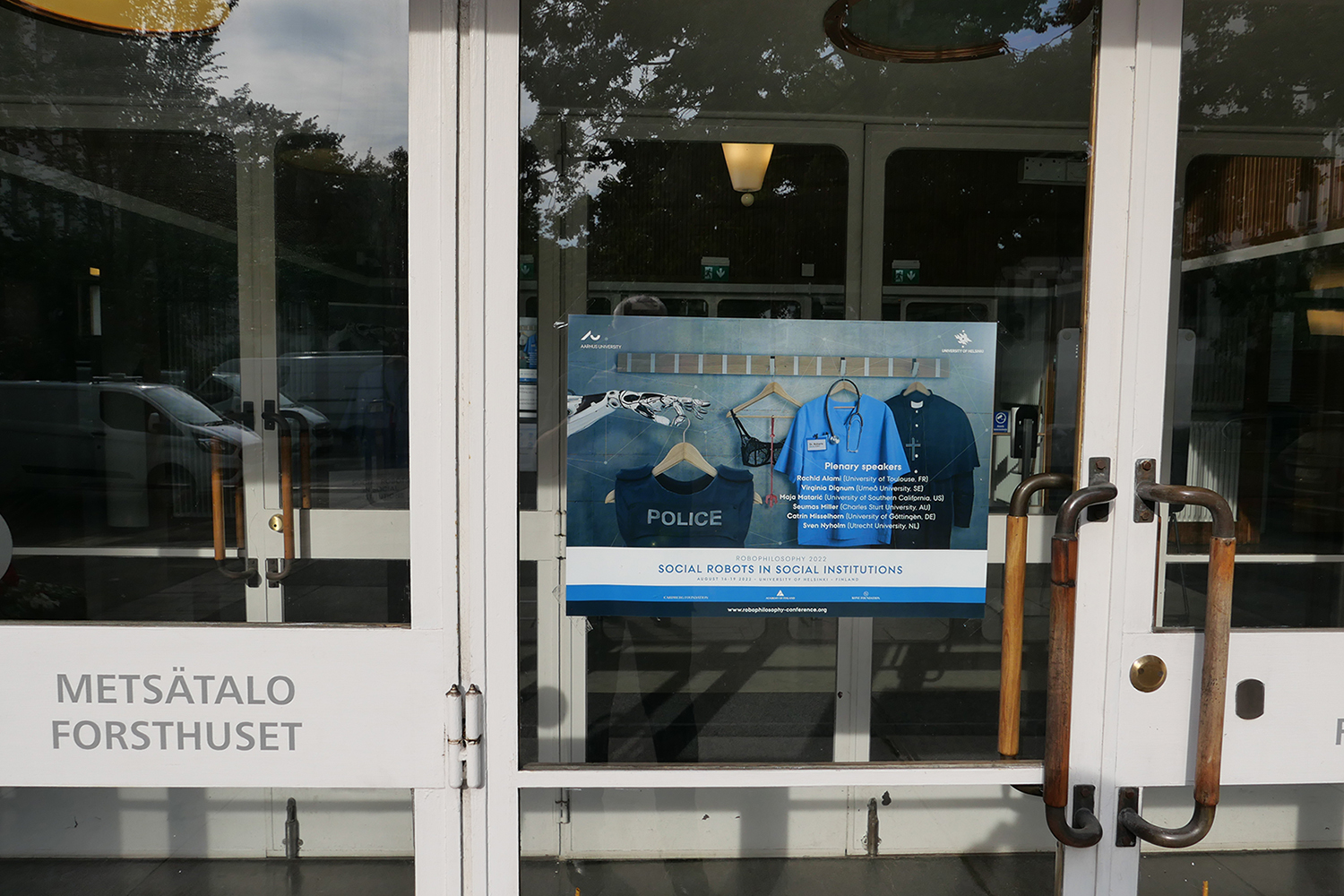
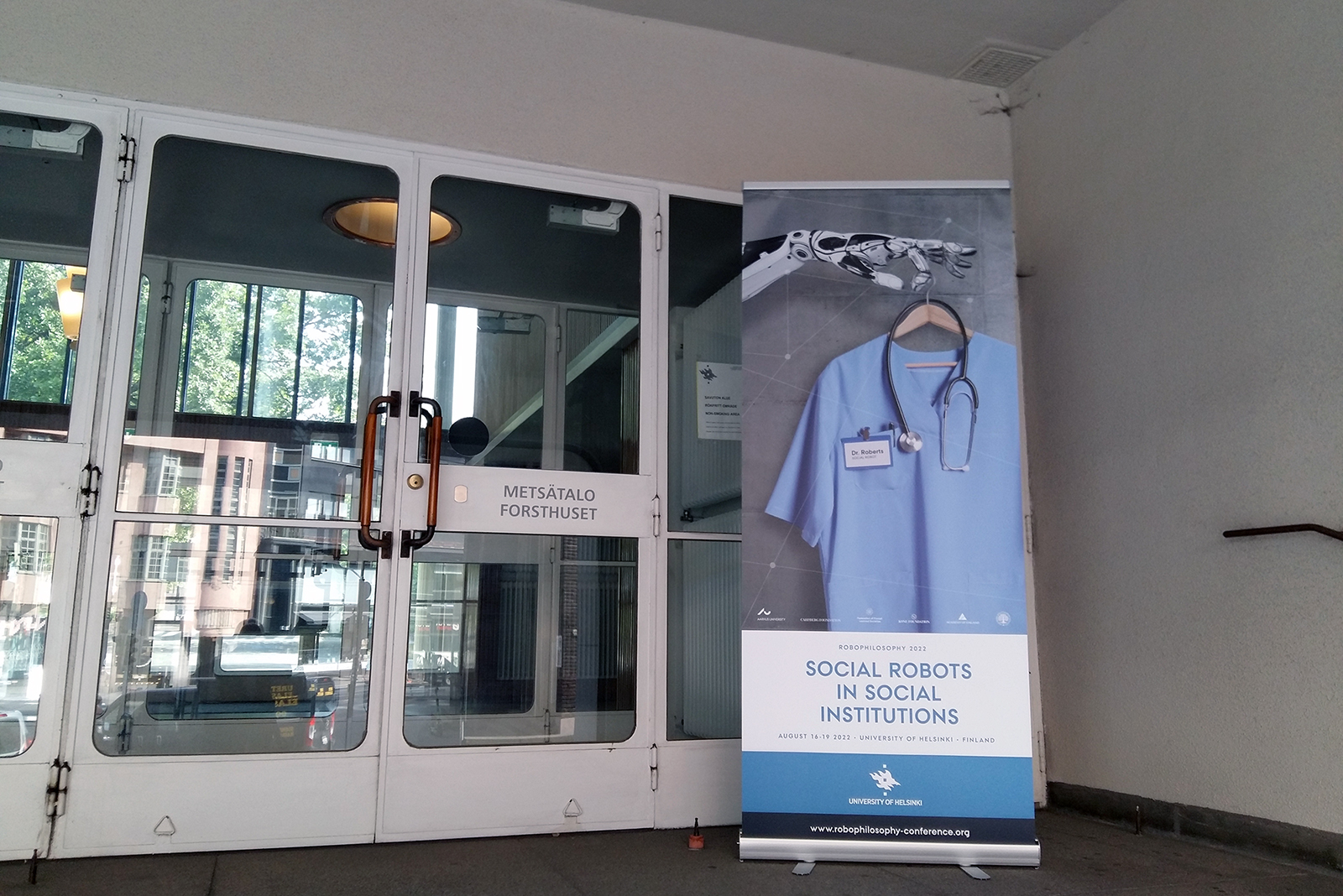
Fig.: The conference poster at the University of Helsinki
In January 2023, the proceedings of Robophilosophy 2022 were published, under the title „Social Robots in Social Institutions“. „This book presents the Proceedings of Robophilosophy 2022, the 5th event in the biennial Robophilosophy conference series, held in Helsinki, Finland, from 16 to 19 August 2022. The theme of this edition of the conference was Social Robots in Social Institutions, and it featured international multidisciplinary research from the humanities, social sciences, Human-Robot Interaction, and social robotics. The 63 papers, 41 workshop papers and 5 posters included in this book are divided into 4 sections: plenaries, sessions, workshops and posters, with the 41 papers in the ‚Sessions‘ section grouped into 13 subdivisions including elderly care, healthcare, law, education and art, as well as ethics and religion. These papers explore the anticipated conceptual and practical changes which will come about in the course of introducing social robotics into public and private institutions, such as public services, legal systems, social and healthcare services, or educational institutions.“ (Website IOS Press) The proceedings contain the paper „Robots in Policing“ by Oliver Bendel and the poster „Tamagotchi on our couch: Are social robots perceived as pets?“ by Katharina Kühne, Melinda A. Jeglinski-Mende, and Oliver Bendel. More information via www.iospress.com/catalog/books/social-robots-in-social-institutions.
The Association for the Advancement of Artificial Intelligence (AAAI) is pleased to present the AAAI 2023 Spring Symposia, to be held at the Hyatt Regency, San Francisco Airport, California, March 27-29. According to the organizers, Stanford University cannot act as host this time because of insufficient staff. Symposia of particular interest from a philosophical point of view are „AI Climate Tipping-Point Discovery“, „AI Trustworthiness Assessment“, „Computational Approaches to Scientific Discovery“, „Evaluation and Design of Generalist Systems (EDGeS): Challenges and methods for assessing the new generation of AI“, and „Socially Responsible AI for Well-being“. According to AAAI, symposia generally range from 40–75 participants each. „Participation will be open to active participants as well as other interested individuals on a first-come, first-served basis.“ (Website AAAI) Over the past decade, the conference has become one of the most important venues in the world for discussions on robot ethics, machine ethics, and AI ethics. It will be held again at History Corner from 2024. Further information via www.aaai.org/Symposia/Spring/sss23.php.
On December 13th, 2022, the hybrid workshop „Realization of Avatar-Symbiotic Society“ was held at the ICSR. It was organized by Dr. Takahiro Miyashita (ATR) and Prof. Dr. Takashi Yoshimi (Shibaura-IT). The description of the workshop was as follows: „This workshop aims at presenting the ongoing progress of the challenges on the Moonshot (MS) human-centered long-term R&D program. It will discuss by focusing on the goal 1 of the MS dealing with the future realization of an avatar-symbiotic society and cybernetic avatars (CAs). In the workshop, semi-autonomous tele-operated robots and CG agents are called CAs. The participants will discuss with speakers who are researchers related to CAs‘ technology about the avatar-symbiotic society which enables to freely and actively participate in society for every person.“ (Website ICSR) The first lecture entitled „Avatar and the future society“ was given by Prof. Dr. Hiroshi Ishiguro (Osaka University). He introduced Erica, Telenoid, and Hugvie, among others. Hugvie is a technically expandable doll that can be hugged. He also introduced his „Avatar Infrastructure“: „Anyone, including the elderly and people with disabilities, will be able to freely participate in various activities with abilities beyond ordinary people while expanding their physical, cognitive, and perceptual abilities using a large number of CAs.“ Prof. Dr. Oliver Bendel mentioned to Hiroshi Ishiguro that two of his former students, Nhi Tran Hoang Yen and Thang Hoang Vu from Ho Chi Minh City, interpreted his Hugvie as a female figure and designed a male figur (Gendering Hugvie) as part of a project on social robots. The roboticist from Osaka replied that his Hugvie doll had no gender, but noted the reception with interest. Other presentations with exciting discussions followed. More information on the conference via www.icsr2022.it.
After an hiatus of six years, Minding Animals will return, with a conference tentatively scheduled to be held 11 – 17 July, 2024. This was announced by the organizers in a message dated December 19, 2022. „Just like the postponed 2021 conference, Minding Animals 5 (MAC5) will be hosted by the Centre for Compassionate Conservation (CfCC) in the Transdisciplinary School at the University of Technology, Sydney (UTS).“ (Message from Minding Animals International) The organizers refer to the Minding Animals Bulletin 53 regarding the vision of the conference and the preparation of the authors. „We believe that the greatest threat posed to the planet, to all planetary life, human or nonhuman animal, plant or otherwise, including the current pandemic, is the intersection of animal agriculture and the climate crisis. Hence, the urgency and criticality of climate as the key theme.“ (Minding Animals Bulletin 53) Possible subtopics include „The biodiversity crisis and climate change“, „Rewilding and compassionate conservation“, „The animal industrial complex“, „Animals, the circular economy and sustainable food systems“, and „Animals in development and food sovereignty“.
„Beim Bluewashing handelt es sich um Marketingmaßnahmen, bei denen Unternehmen, Verbände und Verbünde mit Hilfe von moralisch und sozial verbrämten Kampagnen, Botschaften und Bekenntnissen ihr Image verbessern wollen. Der Begriff ist eine Anspielung auf das Corporate Design der UNO und ihren umstrittenen United Nations Global Compact, mit dem sich einige Firmen ‚reingewaschen‘ haben. Verwandt ist das Bluewashing mit dem Greenwashing.“ Mit diesen Worten beginnt ein neuer Beitrag im Wirtschaftslexikon von Springer Gabler, der am 5. Dezember 2022 erschienen ist. In einem nächsten Abschnitt wird näher auf den Zusammenhang zwischen Bluewashing und Greenwashing eingegangen. Im dritten Abschnitt heißt es: „Beim Bluewashing kann ein Missbrauch von ethischen Kodizes (die zu allgemein gehalten oder nicht überprüft werden) und sozialen Standards (die zu wenig streng formuliert sind) stattfinden. Dies schadet deren Ruf und konterkariert deren Zweck. Die Wirtschaftsethik hinterfragt Bluewashing und Greenwashing und unterbreitet in der Unternehmensethik Vorschläge für eine ernst gemeinte und widerspruchsfreie Corporate Social Responsibility (CSR).“ Der Beitrag von Oliver Bendel kann über wirtschaftslexikon.gabler.de/definition/bluewashing-124778 aufgerufen werden.
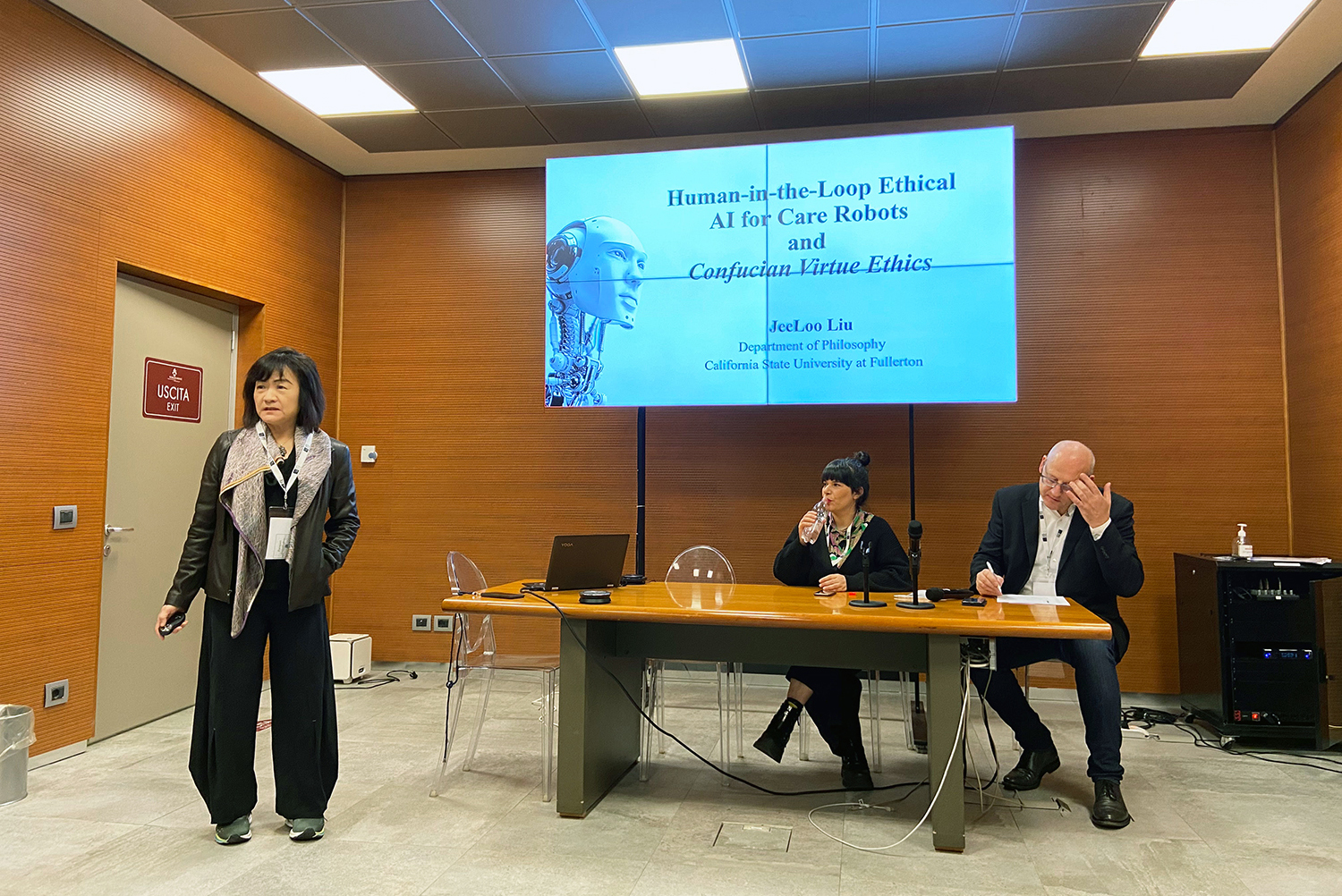
On the morning of December 15, 2022, the session „Ethics, Gender & Trust in Social Robotics“ was held at ICSR 2022. Chairs were Giulia Perugia and Oliver Bendel. Dimitri Lacroix started the session with „I designed it, so I trust it: the influence of customization on psychological ownership and trust toward robots“. He showed that in line with the predictions of the authors, customization significantly increases psychological ownership and trust toward the robot. JeeLoo Liu gave a talk on the topic of „Human-in-the-Loop Ethical AI for Care Robots and Confucian Virtue Ethics“. She explicated how Confucian virtue ethics can respond to human expectations of what kind of virtuous care robots we want in our society. Jean Choi spoke about „Effects of Realistic Appearance and Consumer Gender on Pet Robot Adoption“. By adopting theories from marketing and consumer research, the authors hypothesized that pet robots with lifelike appearance would be preferred to pet robots with machinelike appearances. They also predicted that the positive effect of lifelike appearance would be reduced for female consumers. According to the researchers, the experimental results confirmed the formulated hypotheses. The last talk was „Ambivalent Stereotypes Towards Gendered Robots: The (Im)mutability of Bias Towards Female and Neutral Robots“ by Stefano Guidi. According to the team, the results disclosed that female robots activate paternalistic stereotypes, while male robots do not. Moreover, they reveal that the ambivalence of these stereotypes is stronger in men than in women. The analyses also showed that neutral robots activate paternalistic stereotypes in men and envious stereotypes in women. More information on the conference via www.icsr2022.it.
Fig.: JeeLoo Liu during her presentation (Photo: Marc Heimann)
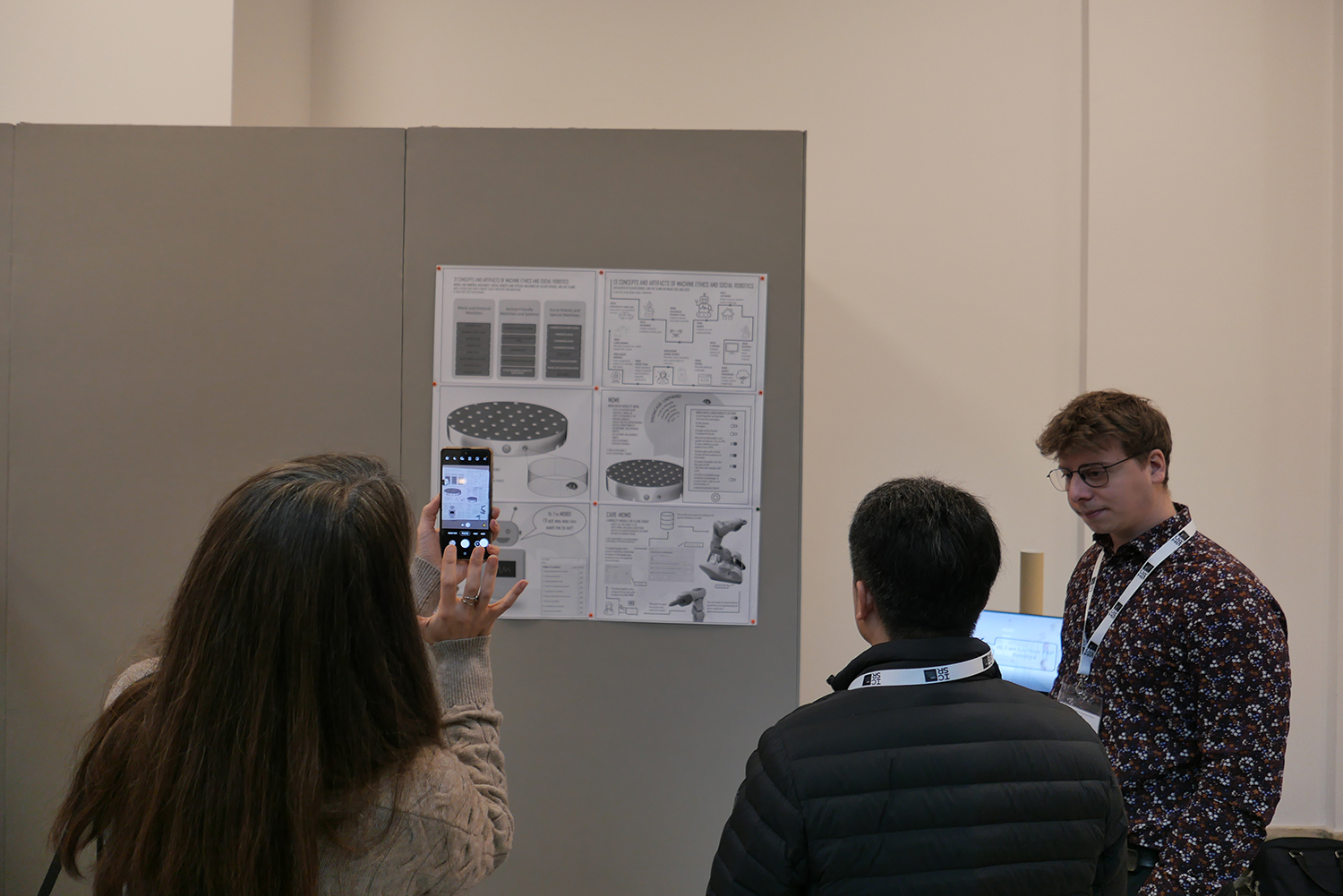
Die ICSR ist neben der Robophilosophy die bedeutendste Konferenz zur Sozialen Robotik. Dieses Jahr war Florenz der Veranstaltungsort. Prof. Dr. Oliver Bendel und Marc Heimann waren mit ihrem Paper „The CARE-MOMO Project“ vertreten. Sie stellten es gleich am ersten Tag (13. Dezember 2022) beim Workshop „Robot Companionship: Applications and Challenges“ in einem Vortrag vor. Zudem hatten sie am Donnerstag (15. Dezember 2022) eine Posterpräsentation dazu. Das CARE-MOMO wurde von Marc Heimann an der Hochschule für Wirtschaft FHNW umgesetzt. Es soll den Assistenzroboter Lio von F&P Robotics erweitern. Es baut auf dem MOME von 2019/2020 auf, das auf der Robophilosophy präsentiert wurde. Mit Hilfe von Schiebereglern auf dem Display von Lio kann der Pflegebedürftige (bei Bedarf zusammen mit der Pflegekraft oder dem Angehörigen) seine Präferenzen wählen und so auf einfache Weise seine moralischen und sozialen Vorstellungen und grundsätzlichen Haltungen übertragen. Implementiert wurde ein Moralmenü, das die drei Bereiche „Soziales“, „Transparenz“ und „Funktionalität“ umfasst. Weitere Informationen zur Konferenz sind über www.icsr2022.it erhältlich.
Am 13. Dezember 2022 begann die ICSR, neben der Robophilosophy die bedeutendste Konferenz zur Sozialen Robotik. Oliver Bendel und Marc Heimann sind mit ihrem Paper „The CARE-MOMO Project“ vertreten. Sie stellten es gleich am Morgen beim Workshop „Robot Companionship: Applications and Challenges“ in einem Vortrag vor. Zudem haben sie am Donnerstag (15. Dezember 2022) eine Posterpräsentation dazu. Mithilfe des Moralmoduls, das das bewährte Moralmenü enthält, können Pflegebedürftige ihre moralischen und sozialen Vorstellungen auf einen Pflegeroboter wie Lio von F&P Robotics übertragen. Der Vortrag fand viel Anklang im vollbesetzten Raum, auch beim Chair, der den Ansatz sehr interessant fand, wie er mehrmals betonte. Das Programm des Workshops kann hier heruntergeladen werden. Weitere Informationen zur Konferenz, die dieses Jahr in Florenz stattfindet, sind über www.icsr2022.it erhältlich.
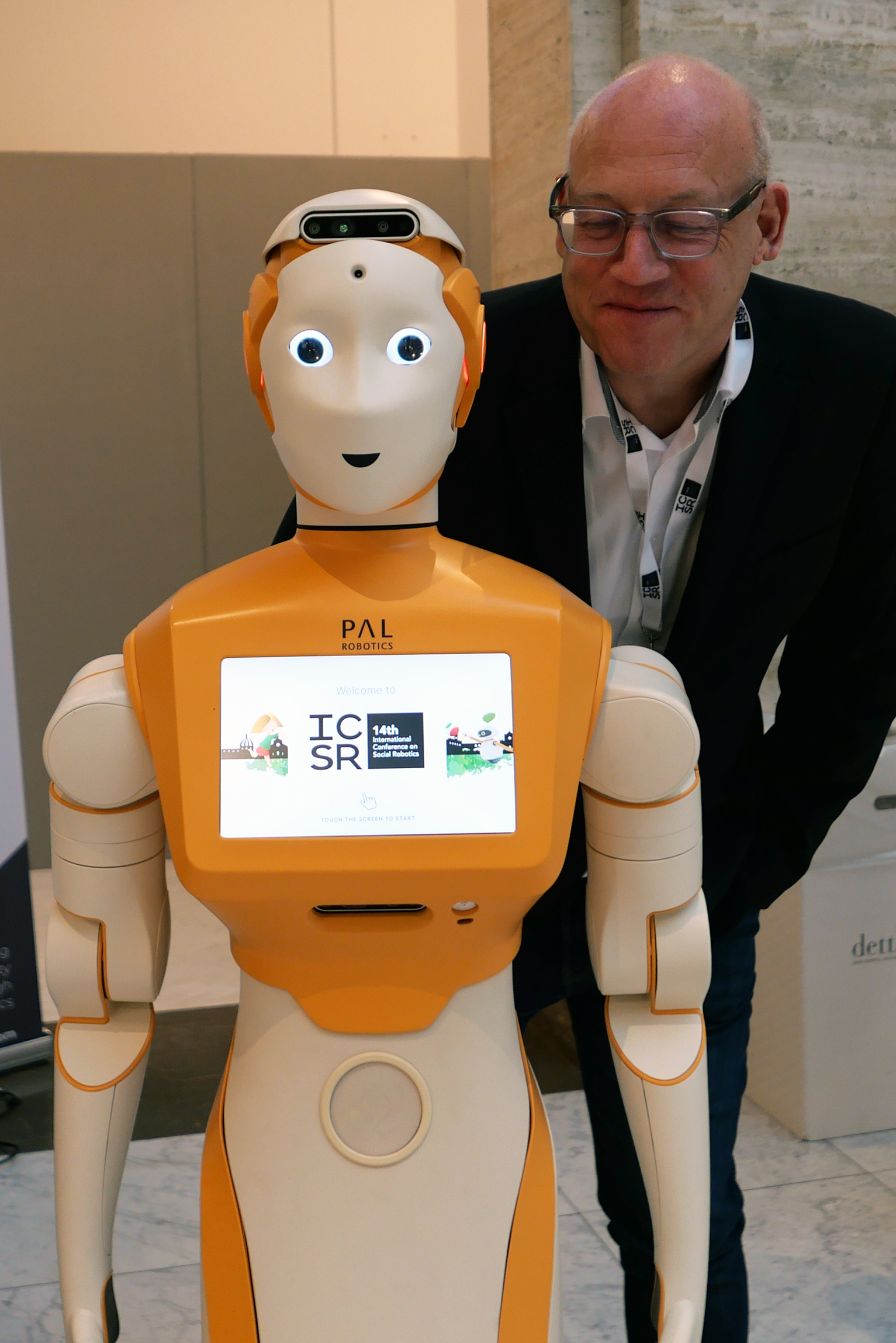
Abb.: Oliver Bendel mit ARI von PAL Robotics bei der ICSR 2022 (Foto: Marc Heimann)
On the last day of the ACI Conference (December 8, 2022), „Session 5: Sensors & Signals, Part II: Electric Boogaloo“ started after the lunch break. Carlos Alberto Aguilar-Lazcano (CICESE-UT3) gave a talk on the topic „Towards a monitoring and emergency alarm system activated by the barking of assistant dogs“. The next presentation was „WAG’D: Towards a Wearable Activity and Gait Detection Monitor for Sled Dogs“ by Arianna Mastali (Georgia Institute of Technology). According to her, studies have shown orthopedic injuries to be most common among sled dogs. These like to move very much, but repeatedly exceed their capabilities. To solve this problem, the team has developed a technical solution, a special wearable, with the help of which data on the condition of the animals are generated. „Spatial and Temporal Analytic Pipeline for Evaluation of Potential Guide Dogs Using Location and Behavior Data“ was the title of the next talk, given by David L. Roberts (North Carolina State University), followed by “Comparing Accelerometry and Computer Vision Sensing Modalities for High-Resolution Canine Tail Wagging Interpretation”, given by Devon Martin (North Carolina State University). More information on the conference via www.aciconf.org/aci2022.
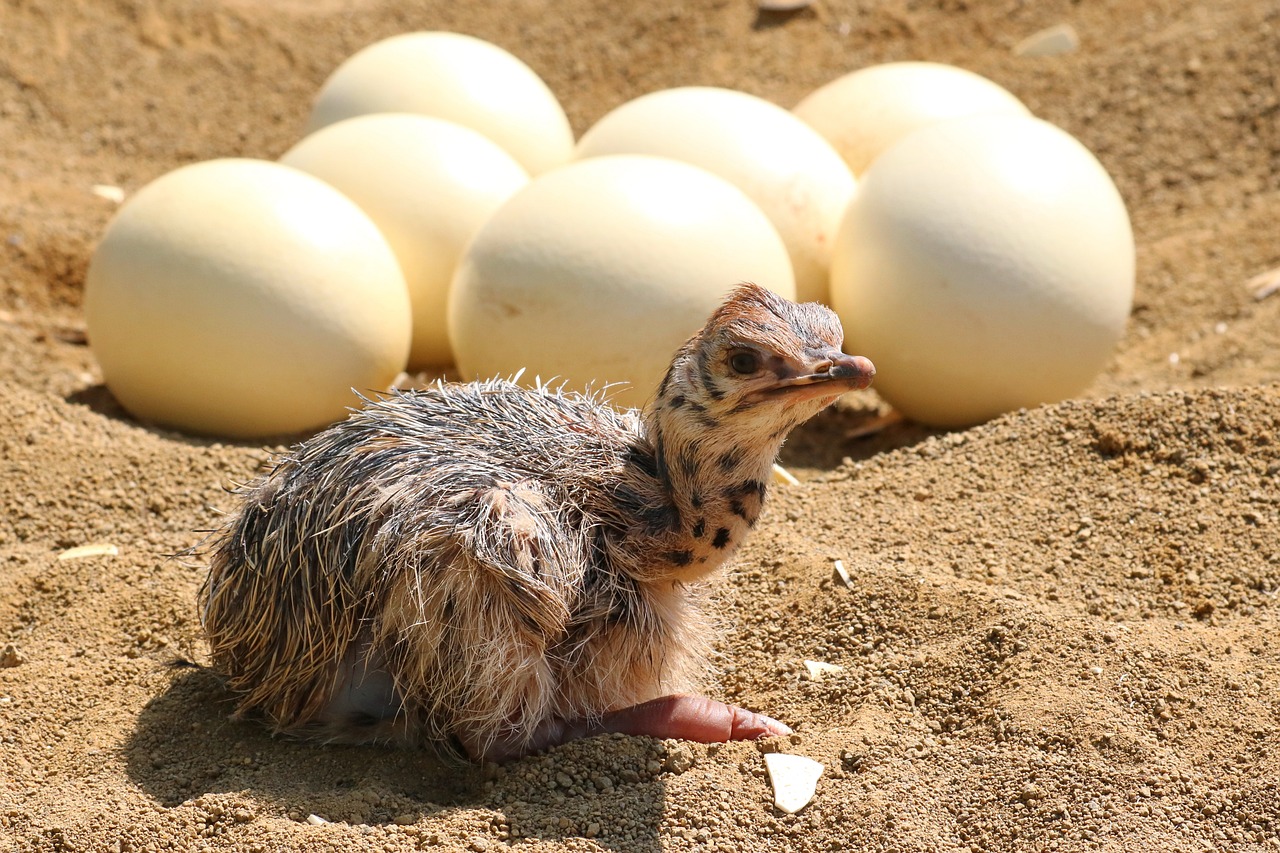
After the keynote on the morning of December 8, 2022, ACI2020 continued with „Paper Session 4: Sensors & Signals, Part I: Origin Stories“. David L. Roberts (North Carolina State University) presented on „Motion-Resilient ECG Signal Reconstruction from a Wearable IMU through Attention Mechanism and Contrastive Learning“. The next talk, „TamagoPhone: A framework for augmenting artificial incubators to enable vocal interaction between bird parents and eggs“, was given by Rebecca Kleinberger (Massachusetts Institute of Technology & Northeastern University). The starting point of her research was that some birds have pre-hatching vocal communication. The last presentation before the lunch break that was given online was „Simultaneous Contact-Free Physiological Sensing of Human Heart Rate and Canine Breathing Rate for Animal Assisted Interactions: Experimental and Analytical Approaches“ by Timothy Holder and Mushfiqur Rahman (North Carolina State University). More information on the conference via www.aciconf.org/aci2022.
The fourth day of the ACI2022 conference – December 8, 2022 – began with a keynote by Carys L. Williams (DogsTrust), titled „Time Savers or Toys? Realities of Animal Technology in Industry“. „Carys is a mixed-methods Research Officer at the UK’s largest dog welfare charity, Dogs Trust. Carys’ work has focused on practical and applicable dog behaviour and welfare research to improve the lives of dogs, especially those in Dogs Trust’s 22 rehoming centres (around 12,000 dogs a year!). For the last 2 years Carys has been project lead for the Dogs Trust Post Adoption Support longitudinal research project. She has additionally supported the charity’s move to collect more and better dog data, helping build exciting bespoke digital systems. Carys has also spent over a decade in the zoo industry and is currently a volunteer invertebrate keeper at ZSL London Zoo.“ (Website ACI2022) Carys L. Williams started her keynote with a quote from Vladimir Dinets (University of Tennessee): „What is the best games console for my spider?“ … She then turned to real-world issues, such as supporting the welfare of dogs through technological means. More information on the conference via www.aciconf.org/aci2022.
The ACI2022 conference continued on the afternoon of December 7, 2022 after the coffee break („Paper Session 3: Learning From and With Each Other“). Cristóbal Sepulveda Álvarez (Universidad de Chile) gave a talk on the topic „Measuring Digitally Comparative Abilities Between Discreet and Continuous Quantities through a Digital Enrichment Application“. He showed a parrot that had to choose different quantities on a touch screen. Dirk van der Linden (Northumbria University) was present on behalf of Jasmine Forester-Owen (Northumbria University). He spoke about „Noisy technology, anxious dogs: can technology support caregiving in the home?“. In their prototype, they combine noise detection and body language identification in dogs. Jérémy Barbay (Universidad de Chile) gave the last three presentations of the day: „Comparing Symbolic and Numerical Counting Times between Humans and Non-Humans Through a Digital Life Enrichment Application“, „Popping Up Balloons for Science: a Research Proposal“, and „A Loggable Aid to Speech (for Human and Non-Human Animals): A Research Proposal“. More information on the conference via www.aciconf.org.
The ACI2022 conference continued on the afternoon of December 7, 2022. „Paper Session 2: Recognising Animals & Animal Behaviour“ began with a presentation by Anna Zamansky (University of Haifa). The title was „How Can Technology Support Dog Shelters in Behavioral Assessment: an Exploratory Study“. Her next talk was also about dogs: „Do AI Models ‚Like‘ Black Dogs? Towards Exploring Perceptions of Dogs with Vision-Language Models“. She went into detail about OpenAI’s CLIP model, among other things. CLIP is a neural network which learns visual concepts from natural language supervision. She raised the question: „How can we use CLIP to investigate adoptability?“ Hugo Jair Escalante (INAOE) then gave a presentation on the topic „Dog emotion recognition from images in the wild: DEBIw dataset and first results“. Emotion recognition using face recognition is still in its infancy with respect to animals, but impressive progress is already being made. The last presentation in the afternoon before the coffee break was „Detecting Canine Mastication: A Wearable Approach“ by Charles Ramey (Georgia Institute of Technology). He raised the question: „Can automatic chewing detection measure how detection canines are coping with stress?“. More information on the conference via www.aciconf.org.
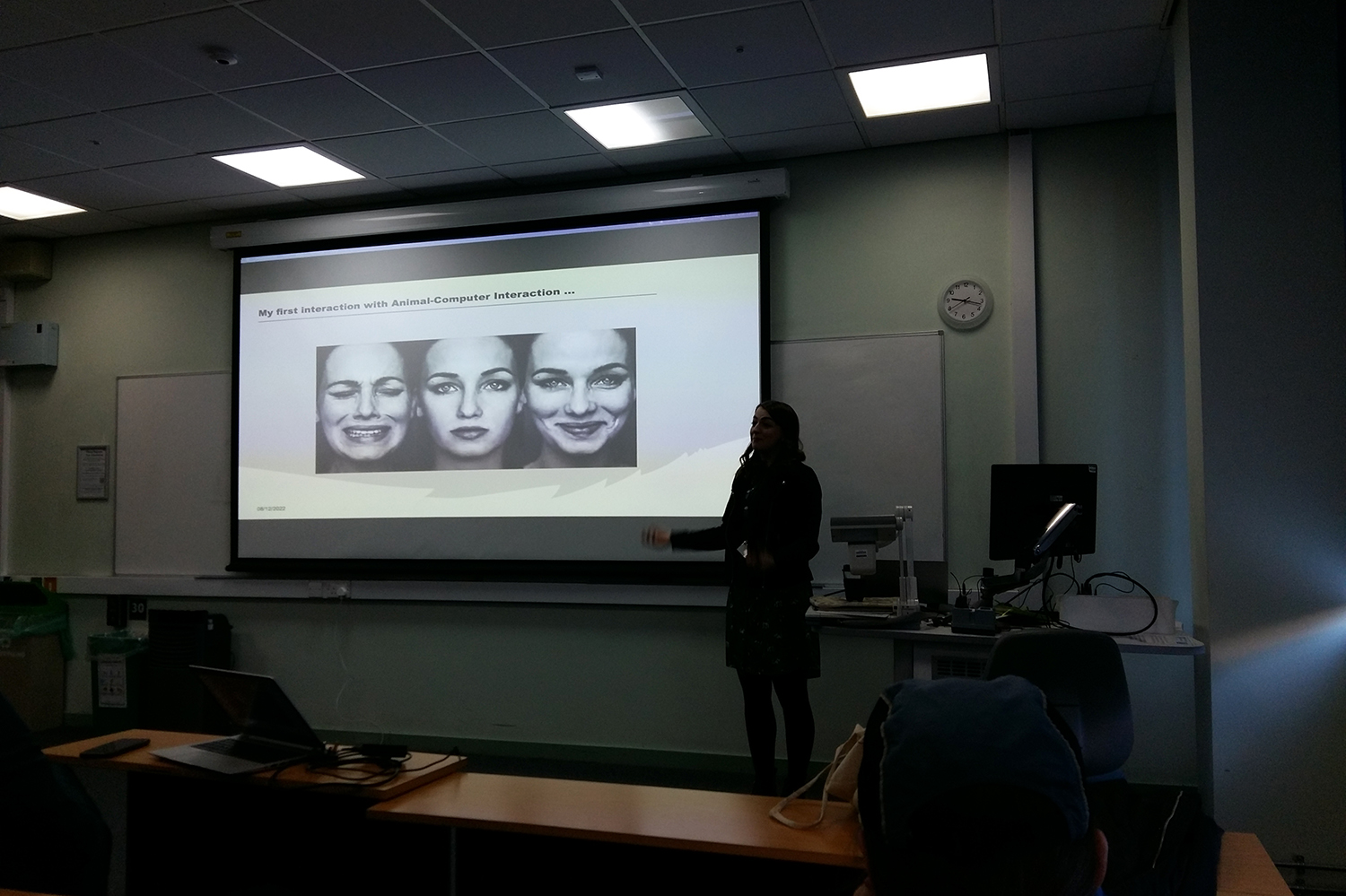
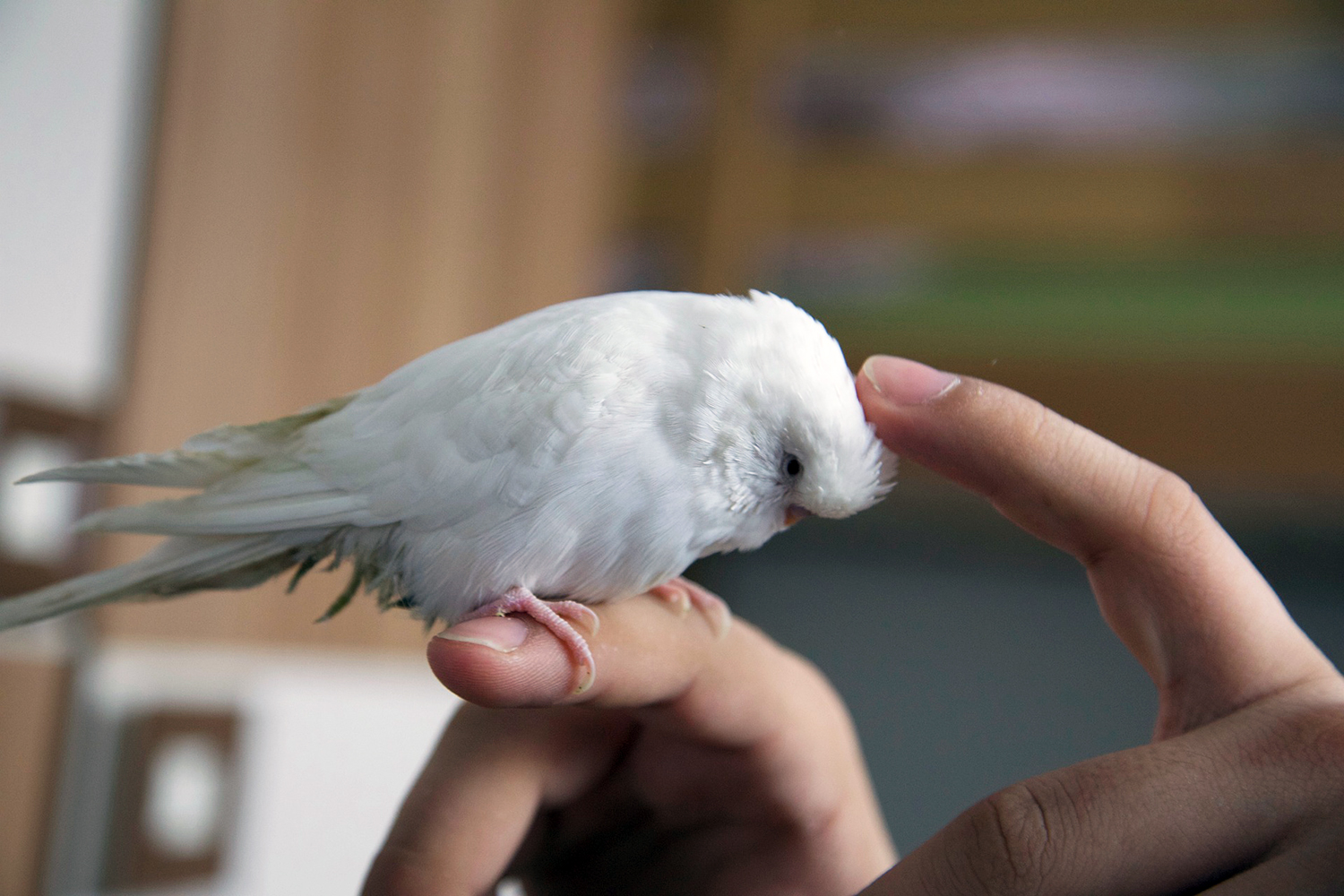
ACI2022 continued on December 7 with Paper Sessions. Number 1 was „Designing for Human-Animal Relations“. Clara Mancini from The Open University gave a talk on the topic „Politicising Animal-Computer Interaction: an Approach to Political Engagement with Animal-Centred Design“. She is one of the pioneers in the discipline of animal-computer interaction. This was followed by Dirk van der Linden’s presentation „Animal-centered design needs dignity: a critical essay on ACI’s core concept“. The scientist from the Northumbria University referred to the Swiss law, which assumes the dignity of living beings – animals as well as plants, it should be added. Minori Tsuji from Future University Hakodate spoke about the „Investigation on Enhancement of the Sense of Life in Safari Park Online Tours with Animal Breathing Reproduction System“. Visitors can touch artifacts with different breathing frequencies. The final contribution in the morning came from Jennifer Cunha (Parrot Kindergarten) and Corinne Renguette (Indiana University-Purdue University). It was about „A Framework for Training Animals to Use Touchscreen Devices for Discrimination Tasks“. The scientists taught various animals, such as a parrot, a rat, and a dog, how to use tablets. More information on the conference via www.aciconf.org.
ACI2022 – the leading conference on animal-computer interaction – kicked off on December 5, 2022 at Northumbria University in Newcastle upon Tyne. After the workshop „Animal Centered Research beyond ACI: Exploring the Applicability of Animal Centered Principles to All Animal Research“ was held on the first day, the workshop „Exploring other sensibilities – beyond human senses and aesthetics“ was held on the second day. „This workshop aims to facilitate human participants to become more aware of other animals‘ sensory and aesthetic sensibilities, raising points for discussion and future research within ACI. For all animals, being able to make sense of the environment is crucial in order to gain control and make informed choices, as well as to achieve competence in daily activities. Although human perception is limited by evolution, technology can enable us to perceive signals that may be meaningful for other species, thereby gaining insight and possibly empathy. Moreover, pursuing a multi-species perspective may foster inclusive approaches to design that aim to achieve a lighter environmental impact by taking into account the sensory experiences of other species.“ (Website ACI2022) The workshop used innovative methods to achieve the goal. „We will offer participants a range of activities to challenge human senses and sense-making abilities, and then invite them to collaboratively design and test a system that incorporates some animal-centred sensory stimulation inspired by the activities previously undertaken.“ (Website ACI2022) The participants mastered the tasks with great commitment and great pleasure. The entire conference program is available at www.aciconf.org/conference-program.