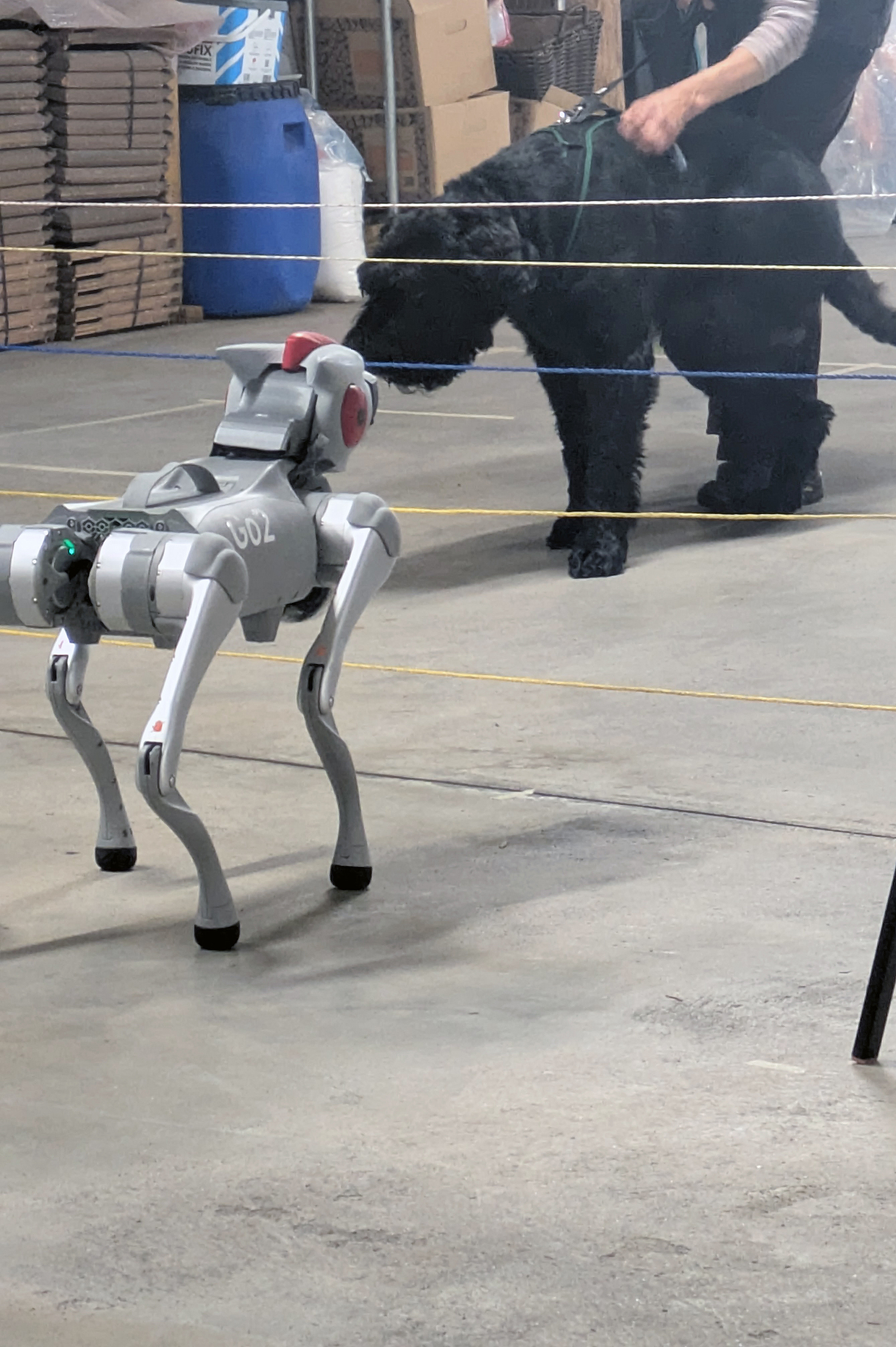
With just over two months to go, preparations for the thirteenth edition of the Animal-Computer Interaction International Conference (ACI 2026) are entering their final phase. The conference will take place from December 2 to 5, 2026, at the FHNW Campus Brugg-Windisch in Switzerland – the first ACI conference to be held in continental Europe. Participants can still benefit from the Early-Bird registration rate until September 30, 2026. Researchers and practitioners interested in Animal-Computer Interaction (ACI), Animal-Machine Interaction (AMI), animal welfare, robotics, interaction design, and related fields are encouraged to register soon. ACI 2026 is pleased to receive support from the City of Brugg, the Municipality of Windisch, and Rehkitzrettung Schweiz. Their involvement underlines the strong connection between the international conference and its host region. Rehkitzrettung Schweiz will also be present at the conference. The organization’s work is particularly relevant to this year’s focus on Animal-Machine Interaction. Its activities demonstrate in a very concrete way how humans, animals, and machines can interact for the benefit of animals: drones equipped with thermal imaging cameras are used to locate young deer hidden in fields before agricultural mowing takes place, helping to prevent injuries and deaths. This practical application provides an excellent example of questions at the heart of ACI 2026: How can technologies and autonomous systems interact with animals and their environments? How can such systems support animal welfare? And how should they be designed and deployed responsibly? Further information on registration, the program, workshops, and participation is available on the ACI 2026 website.
Fig.: The Haller Building on the FHNW Brugg-Windisch Campus
„Gut 90 Gäste kamen in den Genuss eines hervorragenden Vortrags zum Thema ‚Roboter‘ mit Schwerpunkt Roboter in der Pflege.“ So lautet der Teaser des Artikels „Professor Oliver Bendel – der Schweizer Roboter-Flüsterer!“, der in der August-Ausgabe von TOP HINWIL erschienen ist. Seit 1994 bieten die Aktiven Seniorinnen und Senioren Hinwil (ASSH) monatlich einen Vortrag an. Zu den Referenten gehörten Claude Nicollier, Astronaut und Wissenschaftler, Ulrich Tilgner, Nahostkorrespondent, Franz Hohler, Schriftsteller, und Erich von Däniken, Bestsellerautor. Am 17. Juni 2026 war Oliver Bendel zu Gast. Er beleuchtete die Rolle sozialer Roboter, gegenwärtiger Assistenzroboter und künftiger Allzweckroboter in der Pflege. Anhand zahlreicher aktueller Beispiele aus Forschung und Praxis zeigte er, wie Robotersysteme bereits heute Pflegekräfte unterstützen, Pflegebedürftige aktivieren und bei alltäglichen Aufgaben helfen können. Dabei ging es sowohl um soziale Interaktion und Unterhaltung als auch um konkrete Assistenzleistungen wie Handreichungen, Mobilisierung oder Unterstützung im Pflegealltag. Darüber hinaus widmete sich der Vortrag den ethischen und gesellschaftlichen Fragen, die mit dem Einsatz von KI-gestützten Robotern verbunden sind. Danach fand eine rege Diskussion statt. Das Lokalblatt wird in einigen Tagen über www.top-hinwil.ch/top-archiv/ als PDF zur Verfügung gestellt.
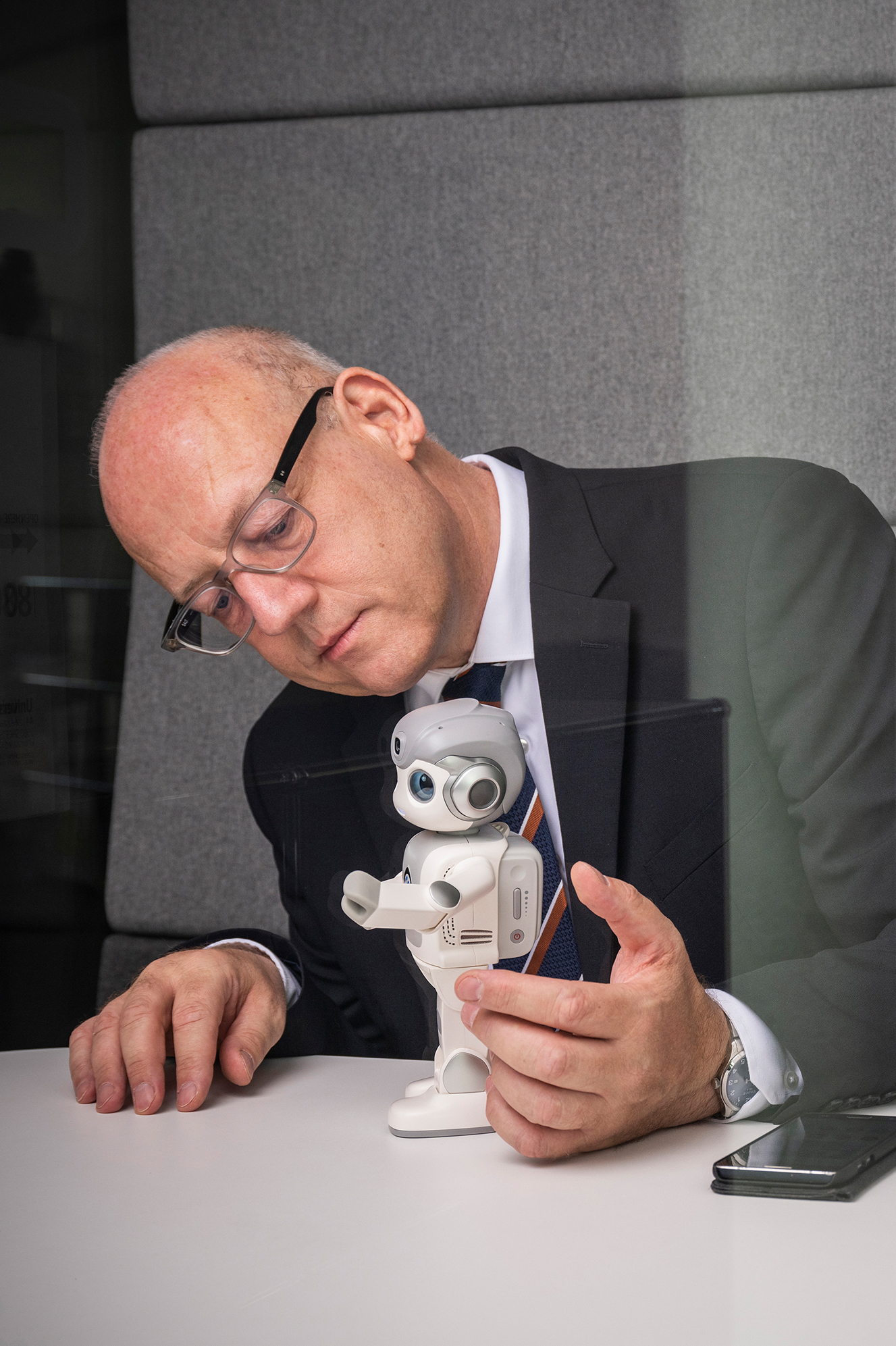
Abb.: Oliver Bendel mit Alpha Mini (Foto: Pascal Mora)
The Robophilosophy 2026 conference took place from August 11–14, 2026, at University College Dublin (UCD) in Dublin, Ireland. Held under the theme „Connected Futures – Nature, Robots, and Society“, the seventh installment of the international conference series brought together researchers from a wide range of disciplines to explore how robotics and artificial intelligence are transforming human societies and the natural world. On the first day of the conference, Katharina Kühne presented the paper „No Red Romance for Robots? Investigating the Red Attraction Effect in Humanlike Robots“, authored by Emma Luisa M. Waller, Diana P. Ebenburger, Oliver Bendel, Martin Fischer, and herself. The study investigates whether the red-attraction effect known from research on human perception also occurs when people evaluate humanlike robots. From the abstract: „The color red has been shown to positively influence ratings of attractiveness and willingness to spend money (e.g., on a date), while having no effect on other perceptions, such as likeability. In an online study, we aimed to conceptually replicate the red-attraction effect using humanoid robots as stimuli. Forty-four heterosexual female participants evaluated 16 images of medium and highly humanlike robots on attractiveness, likeability, trustworthiness, and willingness to spend money to rent the robot. We found no evidence of a red-attraction effect. Female-looking robots received higher ratings overall. These findings have implications for robot design and suggest that basic cues, such as color, may not operate in the same way for robots. Instead, humanoid robots may constitute a distinct category but still be perceived as social agents.“ The proceedings, containing all conference papers, are expected to become available in late 2026.
Other robot conferences have robot or drone shows – at Robophilosophy 2026 in Dublin, you could admire a solar eclipse. This year’s Organizing Committee consists of Prof. Naonori Kodate, Dr. Vivek Nallur, and Dr. Sun Park of University College Dublin. The Series Organizer is Prof. Johanna Seibt of Aarhus University. Together, they have succeeded in putting together a philosophically ambitious program. In antiquity, Thales of Miletus (c. 624–546 BCE) was one of the thinkers who took a particular interest in solar eclipses. To the general public, the philosopher is perhaps best known as a mathematician. He is credited with predicting a solar eclipse, probably the eclipse of May 28, 585 BCE. Other ancient thinkers and astronomers, such as Anaxagoras, also studied solar eclipses and sought to explain them in natural rather than mythological terms. Robophilosophy 2026 opened on August 11 at University College Dublin (UCD) in Dublin, Ireland. Running through August 14 under the theme „Connected Futures – Nature, Robots, and Society“, the conference brings together researchers from across disciplines to explore how robotics and artificial intelligence are reshaping society and our relationship with the natural world.
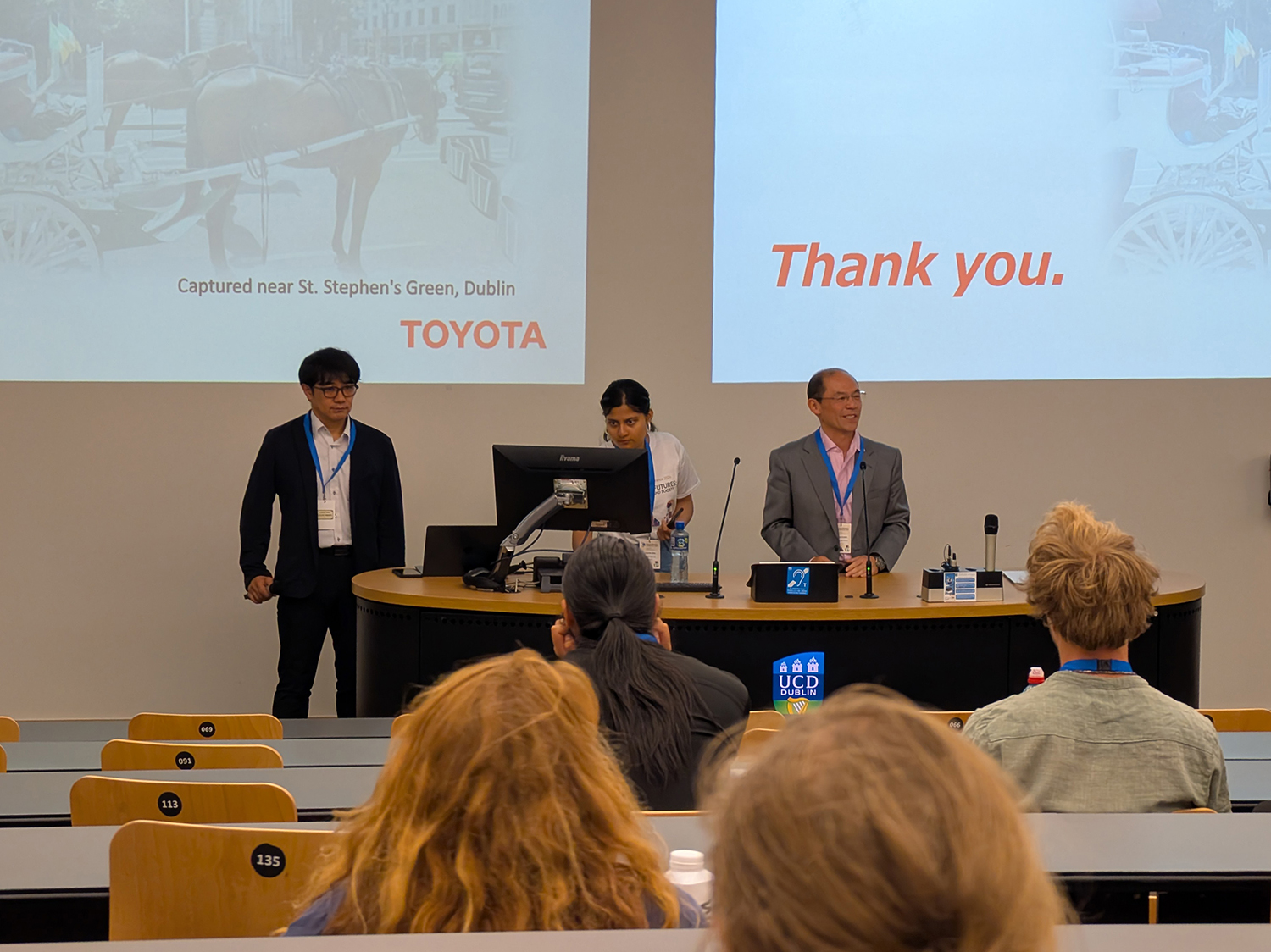
Robophilosophy 2026 opened on August 11 at University College Dublin (UCD) in Dublin, Ireland. Running through August 14 under the theme „Connected Futures – Nature, Robots, and Society“, the conference brings together researchers from across disciplines to explore how robotics and artificial intelligence are reshaping society and our relationship with the natural world. A highlight of the second day was the keynote by Dr. Hideki Kajima of Toyota Motor Europe, introduced with an opening address by H.E. Ambassador Manabu Miyagawa, Ambassador of Japan to Ireland and former Ambassador of Japan to Denmark. Dr. Kajima presented practical examples of robotics and AI research at Toyota, including applications in healthcare, construction, and manufacturing, as well as the use of advanced simulation technologies. At the heart of these efforts is a human-centered approach that goes beyond efficiency, focusing on worker safety, reducing physical and cognitive burdens, and ensuring long-term operational sustainability. His keynote emphasized that robots and AI should not simply be understood as tools, but as integral parts of broader social systems. Against the backdrop of rapidly advancing AI, Dr. Kajima also addressed the responsibilities and opportunities facing industry and the importance of aligning technological innovation with human values and societal well-being. With a background in robot motion control and extensive experience developing Toyota’s Human Support Robot and other robotic systems, Dr. Kajima now leads the planning and promotion of advanced research strategies at Toyota Motor Europe. His keynote was supported by the UCD College of Social Sciences and Law, the UCD Geary Institute for Public Policy, the UCD Centre for Japanese Studies, the Embassy of Japan to Ireland, and the UCD School of Computer Science.
Fig.: Dr. Hideki Kajima after his talk (on the left)
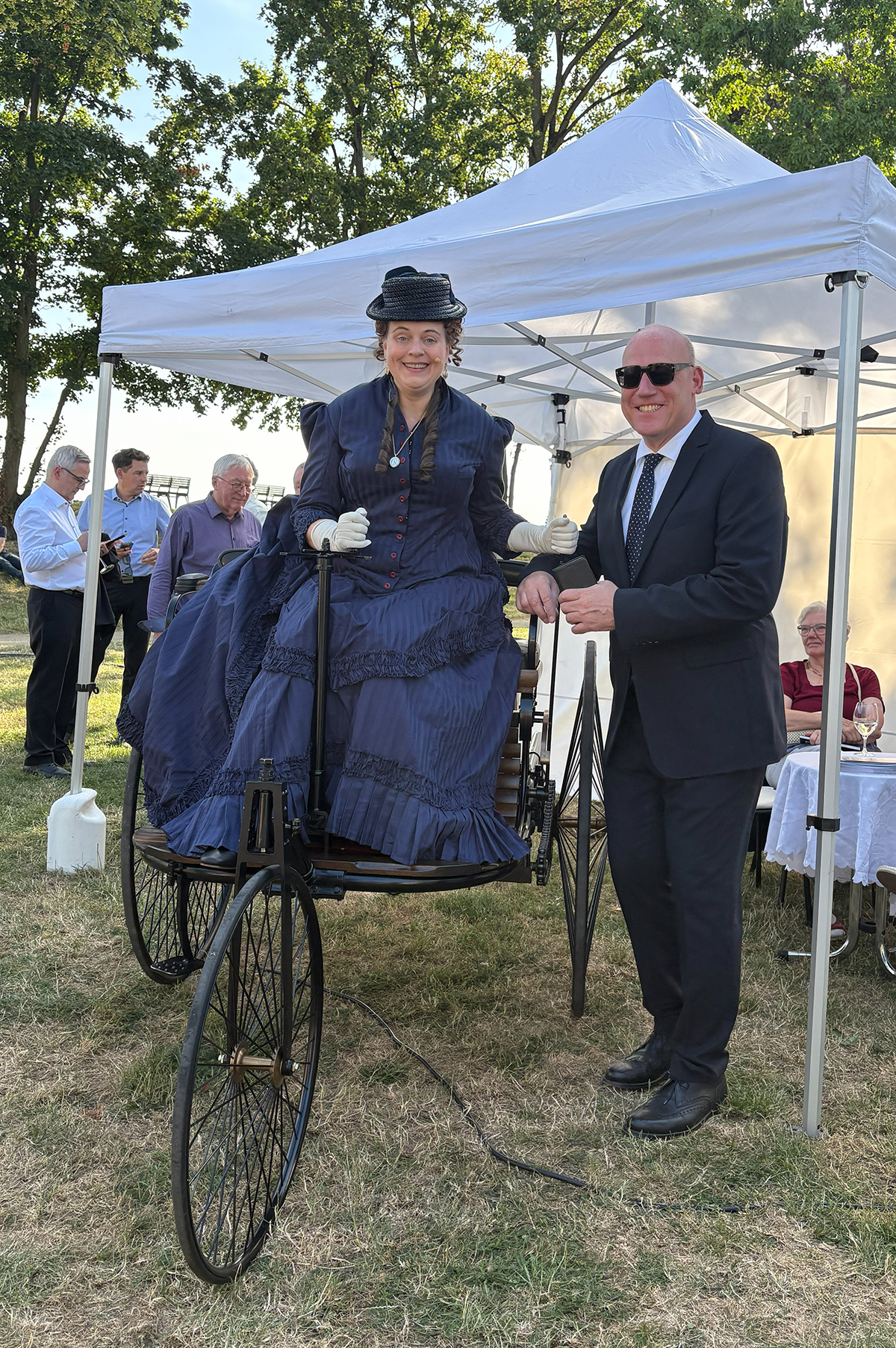
Die Daimler und Benz Stiftung beging am 24. Juli 2026 das Jubiläum des 40-jährigen Bestehens mit einer Feier beim Carl-Benz-Haus in Ladenburg. Am Eingang wurden die Gäste von Geschäftsführer Dr. Jörg Klein und Vorstand Prof. Dr. Lutz Gade begrüßt. An Infoständen und mit Posterpräsentationen wurde Wissen vermittelt. Dabei hielt Patricia Piekenbrock, Physikerin und Kommunikationsverantwortliche der Stiftung, die Fäden zusammen. Die Organisation und Durchführung wäre nicht denkbar gewesen ohne Marion Hartmann und Monika Stulberg. Ein erster Höhepunkt war, dass die Darstellerin von Bertha Benz, Angela Pfenninger, in den Benz Patent-Motorwagen Nummer 3 stieg. Anschließend gingen Prof. Dr. Lutz Gade und Olaf Schick, Mitglied des Vorstands Integrität, Governance und Nachhaltigkeit der Mercedes-Benz Group AG, auf die Geschichte der Stiftung ein. Der an der Universität Heidelberg lehrende und forschende Chemiker, Mitglied der Heidelberger Akademie der Wissenschaften und der Akademie der Wissenschaften und der Literatur in Mainz, hob u.a. die Förderung in den Bereichen der KI und der Roboter- und Maschinenethik sowie die Unterstützung von Projekten in Afrika hervor. Namentlich erwähnt wurden die wissenschaftlichen Mitglieder des Stiftungsrats, Prof. Dr. Oliver Bendel (Hochschule für Wirtschaft FHNW), Prof. Dr. Hartmut Hillmer (Universität Kassel), Prof. Dr. Ralf Poscher (Max-Planck-Institut zur Erforschung von Kriminalität, Sicherheit und Recht) und Prof. Dr. Tereza Tykvová (Universität St. Gallen). Die Keynote hielt Prof. Dr. Dominika Wylezalek (Universität Heidelberg). Vor dem Hintergrund der Wissenschaftsfreiheit eilte sie durch die Jahrtausende der Astronomie. Von einer Band begleitet, ging das Fest bis in die späten Abendstunden.
Abb.: Angela Pfenninger als Bertha Benz und Oliver Bendel (Foto: Stefanie Hauske)
Registration for the 11th International Congress on Love and Sex with Robots (LSR 2026) is now open. Building on a conference series that began in 2011 and has helped establish the academic study of human-robot intimacy as an interdisciplinary field, LSR 2026 will take place on August 21–22 at the Université du Québec à Montréal (UQAM), with sessions hosted in the Pavillon J.A. DeSève in Montreal’s Latin Quarter. The conference is organized by Dr. Simon Dubé (Kinsey Institute, Indiana University Bloomington), Dr. David Levy, founder of the conference series, and Bobbi Bidochka (imagine ideation). The keynote speakers are Ellen M. Kaufman (Kinsey Institute, Indiana University Bloomington), Charlotte Poitras (multidisciplinary artist), and Valerie A. Lapointe (Université du Québec à Montréal), whose work spans informatics, psychology, media, and emerging technologies related to intimacy and AI. Further information on registration, the program, submissions, travel, and accommodation is available on the official conference website: www.lovewithrobots.com.
Beim University:Future Festival 2026 hat Stefanie Hauske, Head of Digital Skills Academy an der ZHAW Zürcher Hochschule für Angewandte Wissenschaften, den Vortrag „Digital Skills Academy: Digitale Kompetenzen für den Hochschulalltag“ gehalten. Laut der Referentin verändert digitale Transformation die Arbeit an Hochschulen grundlegend, insbesondere für Mitarbeiter in der Verwaltung. Der Bedarf an Qualifizierung und Orientierung im digitalen Arbeitsalltag sei hoch, die Nachfrage nach Lernangeboten entsprechend groß. Gleichzeitig sei digitale Kompetenzentwicklung für Mitarbeiter häufig kein fest verankerter Bestandteil der Personalentwicklung: Angebote fokussierten auf Lehre, Forschung oder Führung. Der Input ging der Frage nach, wie digitale Kompetenzentwicklung unter diesen Bedingungen dennoch gelingen kann. Am Beispiel der Digital Skills Academy der ZHAW wurde gezeigt, wie Lernangebote für Hochschulmitarbeiter aufgebaut werden können und welche typischen Herausforderungen dabei sichtbar werden. Im Fokus standen übertragbare Gestaltungsprinzipien für lernförderliche und skalierbare Formate sowie die Frage, wie Legitimität, Sichtbarkeit und Dringlichkeit auch ohne formalen Top-down-Auftrag entstehen können. Die sechste Ausgabe des University:Future Festivals fand vom 22. bis zum 24. Juni 2026 unter dem Motto „Under Pressure“ statt. Man traf sich online – Stefanie Hauske war von Zürich aus zugeschaltet – sowie vor Ort in Berlin, Braunschweig, Essen, Graz, Hamburg und Nürnberg. Das University:Future Festival (U:FF) ist nach eigenen Angaben die größte Veranstaltung zur (digitalen) Zukunft der akademischen Bildung. Themen sind unter anderem KI, Future Skills, Didaktik und Strategieprozesse. Den Teilnehmern wurde ein Programm mit etwa 280 Beiträgen von rund 550 Speakern geboten. Das University:Future Festival ist eine Kooperation zwischen Hochschulforum Digitalisierung, Stiftung Innovation in der Hochschullehre und Stifterverband. Das Video kann seit Juli 2026 über www.youtube.com/watch?v=uJ6Tfzg9nIA aufgerufen werden.
From August 11 to 14, 2026, the Robophilosophy Conference 2026 will take place at University College Dublin in Dublin, Ireland, under the theme „Connected Futures – Nature, Robots, and Society“. The conference will bring together researchers from philosophy, robotics, artificial intelligence, ethics, law, and the environmental and social sciences to discuss the evolving relationship between intelligent technologies, the natural world, and society. One of the conference highlights is Session 2, „Environmental Robotics and Society“, scheduled on the first day from 2:10 p.m. to 4:25 p.m. The session will open with Janko Munjić’s presentation, „Posthuman Victims in the Anthropocene: Environmental Social Robots, Layered Harm, and the Edges of Criminal Law“, which examines legal and ethical questions surrounding environmental social robots. Oliver Bendel will then present „Towards a Discipline of Animal-Machine Interaction: Ethical and Design Challenges of Machines in Animal Habitats“, exploring the emerging field of interactions between machines and animals. Catherine F. Botha’s talk, „Ecobots and Ecological Capabilities: Ethical Reflections on Robots as Functional Ecological Agents“, will consider the ethical implications of robots acting as ecological agents. The session will conclude with „Aerial Robotics in Society: Energy, Ethics, and Accountability for Sustainable Monitoring“, presented by Ghulam E. Mustafa Abro and Johanna Seibt, addressing the societal, ethical, and sustainability aspects of aerial robotic systems. For more information about the conference and the full program, please visit www.rp2026.org/.
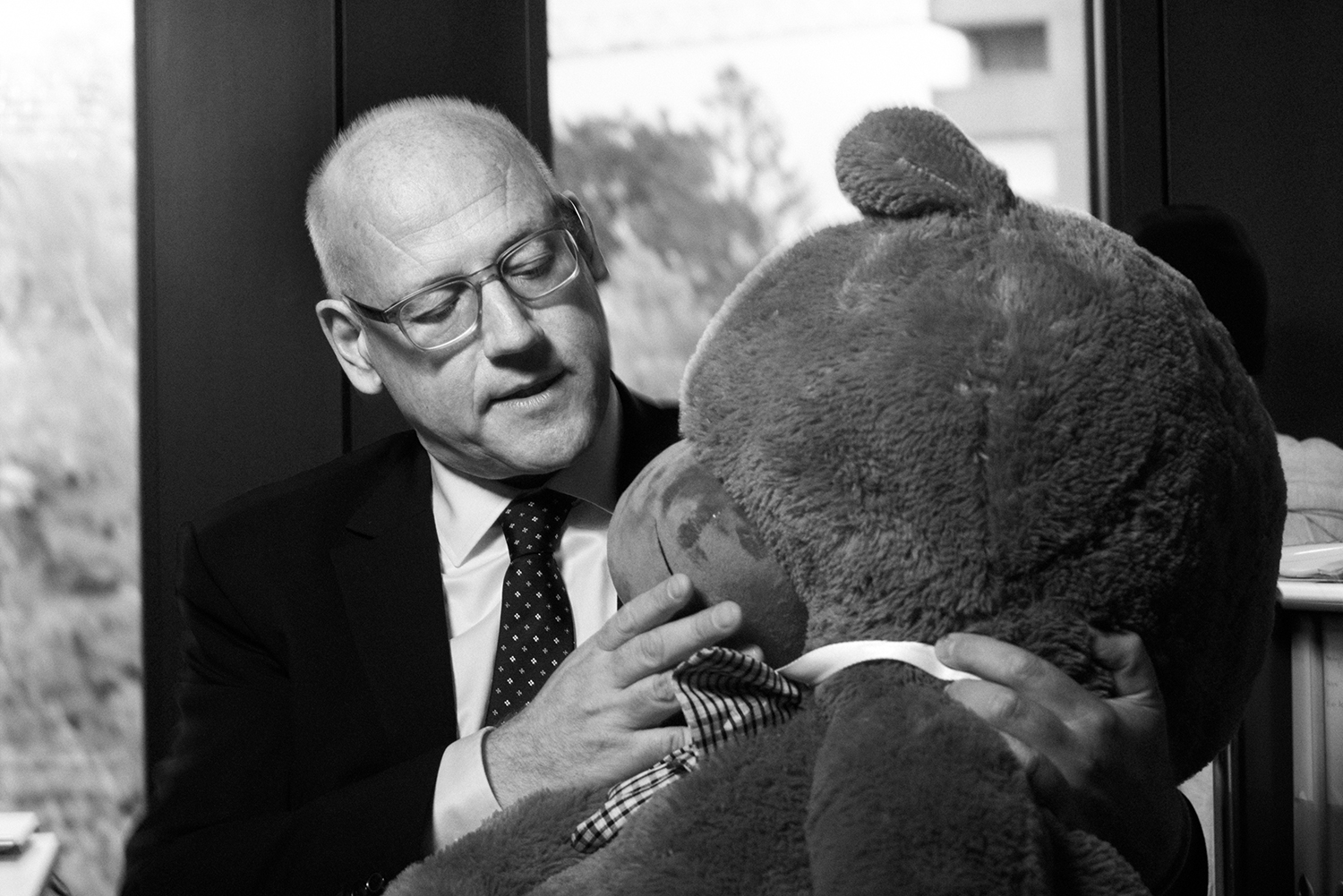
Fig.: Oliver Bendel with a teddy bear from the HUGGIE Project (Photo: Jork Weismann)
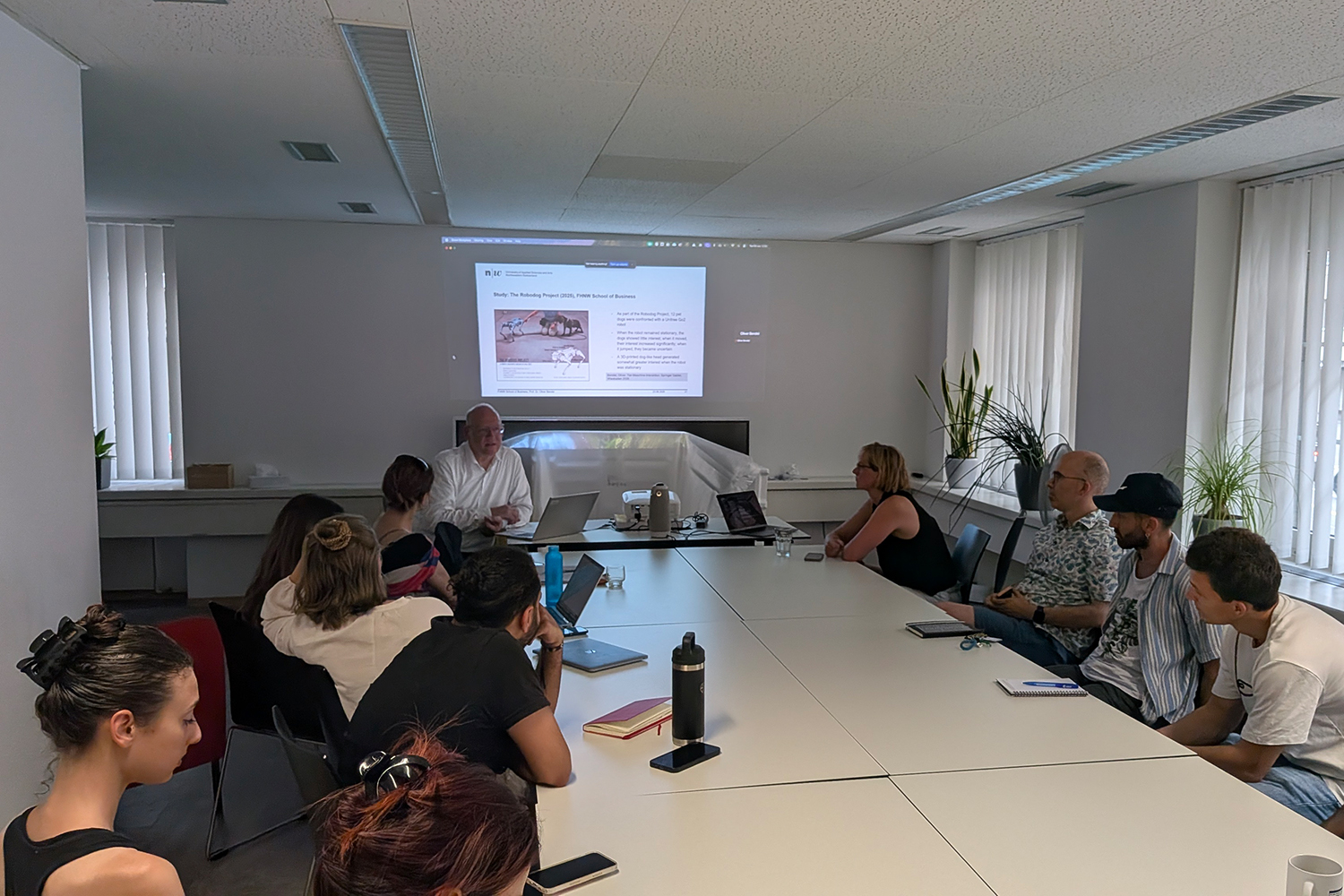
On June 23, 2026, Oliver Bendel gave a presentation on animal-machine interaction to Prof. Dr. Emily Cross’s research group at ETH Zurich. He had been invited by Dr. Amol Deshmukh, whom he had met at the ICSR in Qatar and had seen several times since then. From the announcement text of „Fundamentals and Examples of Animal-Machine Interaction“: „Animal-Machine Interaction (AMI) explores encounters and interactions between animals and machines – from traditional devices, vehicles, aircraft, and agricultural machinery to networked autonomous robots and AI systems. At its core are perception through sensors and senses, interaction and communication between animals and machines, and the question of how these encounters can be designed from technical, organizational, and ethical perspectives to reduce risks for animals while unlocking benefits for both animals and humans. In his lecture, Prof. Dr. Oliver Bendel presents the fundamentals of Animal-Machine Interaction and describes prototypes and research projects in the field. He also outlines what may become possible and what can be expected in this area of research over the coming years.” The participants were very interested and asked several questions about this new and fascinating field. Springer Gabler recently published a slim volume titled „Tier-Maschine-Interaktion (Animal-Machine Interaction)“ by Oliver Bendel.
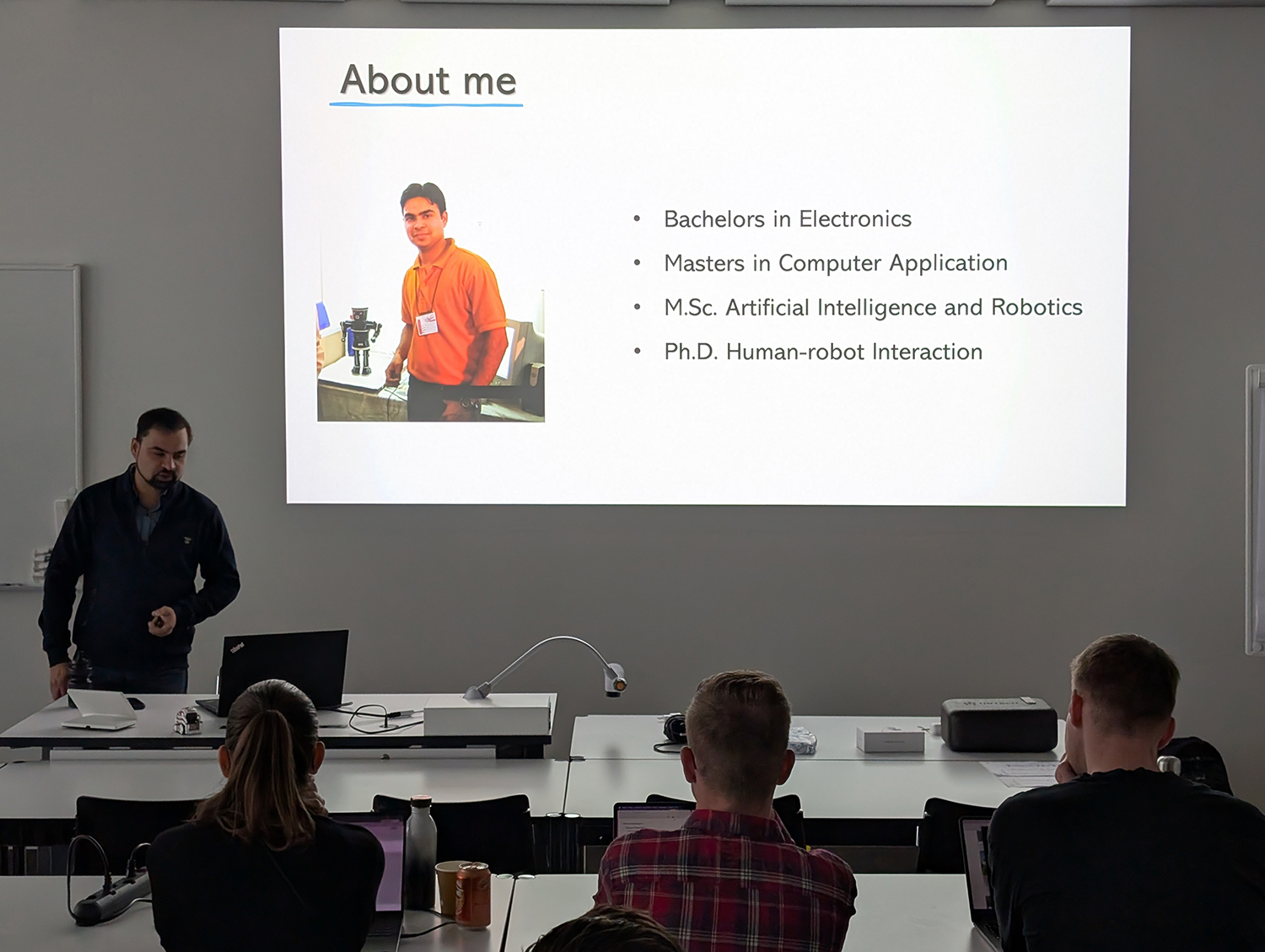
Fig.: Oliver Bendel during his talk (Photo: Amol Deshmukh)
Seit 1994 bieten die Aktiven Seniorinnen und Senioren Hinwil (ASSH) monatlich einen Vortrag an. Zu den Referenten gehörten Claude Nicollier, Astronaut und Wissenschaftler, Ulrich Tilgner, Nahostkorrespondent, Franz Hohler, Schriftsteller, und Erich von Däniken, Bestsellerautor. Am 17. Juni 2026 war Oliver Bendel zu Gast. Im Anmeldeflyer hieß es im Teaser: „Professor Oliver Bendel ist laut Tages-Anzeiger der Schweizer Roboter-Flüsterer. Er erklärt uns, wie Roboter bei uns einziehen werden. Mit hilfreichen Fähigkeiten, aber auch zukünftigen Abhängigkeiten.“ Der Titel des Vortrags lautete „Soziale Roboter, Assistenzroboter und Allzweckroboter“. In seinem Vortrag beleuchtete Prof. Dr. Oliver Bendel die Rolle sozialer Roboter, gegenwärtiger Assistenzroboter und künftiger Allzweckroboter in der Pflege. Anhand zahlreicher aktueller Beispiele aus Forschung und Praxis zeigte er, wie Robotersysteme bereits heute Pflegekräfte unterstützen, Pflegebedürftige aktivieren und bei alltäglichen Aufgaben helfen können. Dabei ging es sowohl um soziale Interaktion und Unterhaltung als auch um konkrete Assistenzleistungen wie Handreichungen, Mobilisierung oder Unterstützung im Pflegealltag. Darüber hinaus widmete sich der Vortrag den ethischen und gesellschaftlichen Fragen, die mit dem Einsatz von KI-gestützten Robotern verbunden sind. Danach fand eine rege Diskussion statt. Die ca. 90 Anwesenden widerlegten eindrucksvoll, dass sie in ihren Achtzigern und Neunzigern zum alten Eisen gehören. Einer offenbarte im persönlichen Gespräch sogar, dass er noch für Konrad Zuse arbeitete. Dieser wäre am 22. Juni 2026 116 Jahre alt geworden.
Abb.: Oliver Bendel bei den Aktiven Seniorinnen und Senioren Hinwil (Foto: Henning Gietenbruch)
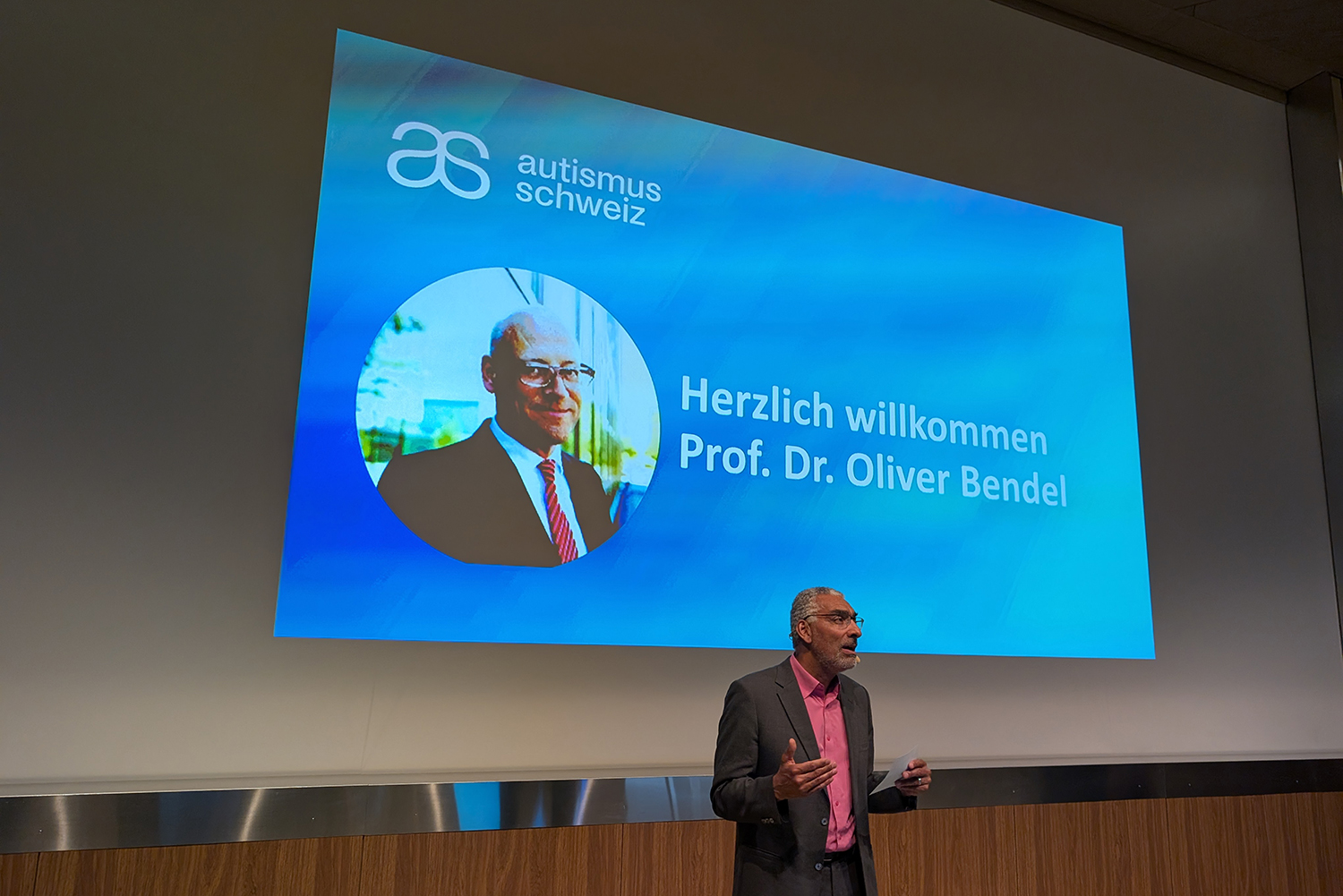
Unter dem Titel „KI trifft Autismus“ veranstaltete autismus schweiz am 30. Mai 2026 eine Fachtagung, die sich der Rolle künstlicher Intelligenz in der Gesellschaft und im Kontext von Autismus widmete. Fachliche Impulse lieferten Maximilian Popp (No Isolation), Matthias Schüssler (Tages-Anzeiger), Dr. Maya Schneebeli (KJPP), Prof. Dr. André Frank Zimpel (Universität Hamburg) und Prof. Dr. Oliver Bendel (Hochschule für Wirtschaft FHNW). Eine Referentin fiel aus. In seinem Vortrag „Soziale Roboter und Physical AI bei Autismus“ stellte Oliver Bendel mehrere Beispiele und Prototypen vor und ordnete diese aus technischer und ethischer Perspektive ein. Dabei erläuterte er auch, was unter Inclusive Robotics und Inclusive AI zu verstehen ist. Moderator war der bekannte SRF-Redakteur Bernard Senn. Die Teilnahme war sowohl vor Ort als Live-Anlass im großen Hörsaal Nord des Universitätsspitals Zürich als auch zeitversetzt über eine On-Demand-Version möglich. Die Aufzeichnung steht etwa zehn Tage nach dem Anlass bis Ende Juli 2026 über das Veranstaltungsportal zur Verfügung. Weitere Informationen sind über portal.autismus.ch/veranstaltungen/202 abrufbar.
The 18th International Conference on Social Robotics (ICSR + Art 2026) will take place in London, UK, from 1–4 July 2026. ICSR is the leading international forum that brings together researchers, academics, and industry professionals from across disciplines to advance the field of social robotics. This year’s conference will feature three distinguished keynote speakers whose work is shaping the future of artificial intelligence, robotics, and human-robot interaction. Hatice Gunes, Professor of Affective Intelligence and Robotics at the University of Cambridge, is internationally recognised for her pioneering research on affective computing, multimodal intelligence, and socially aware AI systems, with a strong emphasis on ethics, fairness, and wellbeing in robotics. Jean Oh, Associate Research Professor at Carnegie Mellon University and Director of the roBot Intelligence Group, is known for her work on collaborative robots, social navigation, and creative physical AI, focusing on developing robots that learn, adapt, and work safely alongside humans in shared environments. Nicolas Heess, Research Scientist and Director at Google DeepMind, leads cutting-edge research on general-purpose robotics and embodied AI, exploring how advances in machine learning, perception, and motor control can bring intelligent robots into the physical world. Together, these keynote speakers represent the forefront of research and innovation driving the next generation of social robotics. Further information on the keynote programme is available at: icsr2026.uk/keynote/.
The Robophilosophy Conference 2026 (RP2026), titled „Connected Futures – Nature, Robots, and Society“, will take place August 11-14, 2026, at University College Dublin (UCD) in Dublin, Ireland, bringing together researchers from across disciplines to examine how robotics and artificial intelligence are reshaping human societies and the natural world. As robotic systems become increasingly embedded in everyday life, the conference aims to foster dialogue between fields ranging from social robotics, computer science, and human-robot interaction to the humanities, social sciences, law, economics, and environmental research. Central questions include how robotic technologies can uphold human dignity and social justice, how legal systems must adapt to autonomous decision-making, and whether robots can contribute to sustainability rather than accelerate ecological decline. The event marks the seventh installment in the Robophilosophy conference series and features plenary speakers such as Lynne Baillie, Ryan Calo, Hideki Kajima, Arno Klein, Bertram Malle, and Shannon Vallor. Importantly, the submission deadline for research papers, posters, and artistic contributions has been extended to March 15, 2026, offering additional time for scholars and practitioners to contribute to this interdisciplinary conversation. Registration is now open, and further details are available at www.rp2026.org.
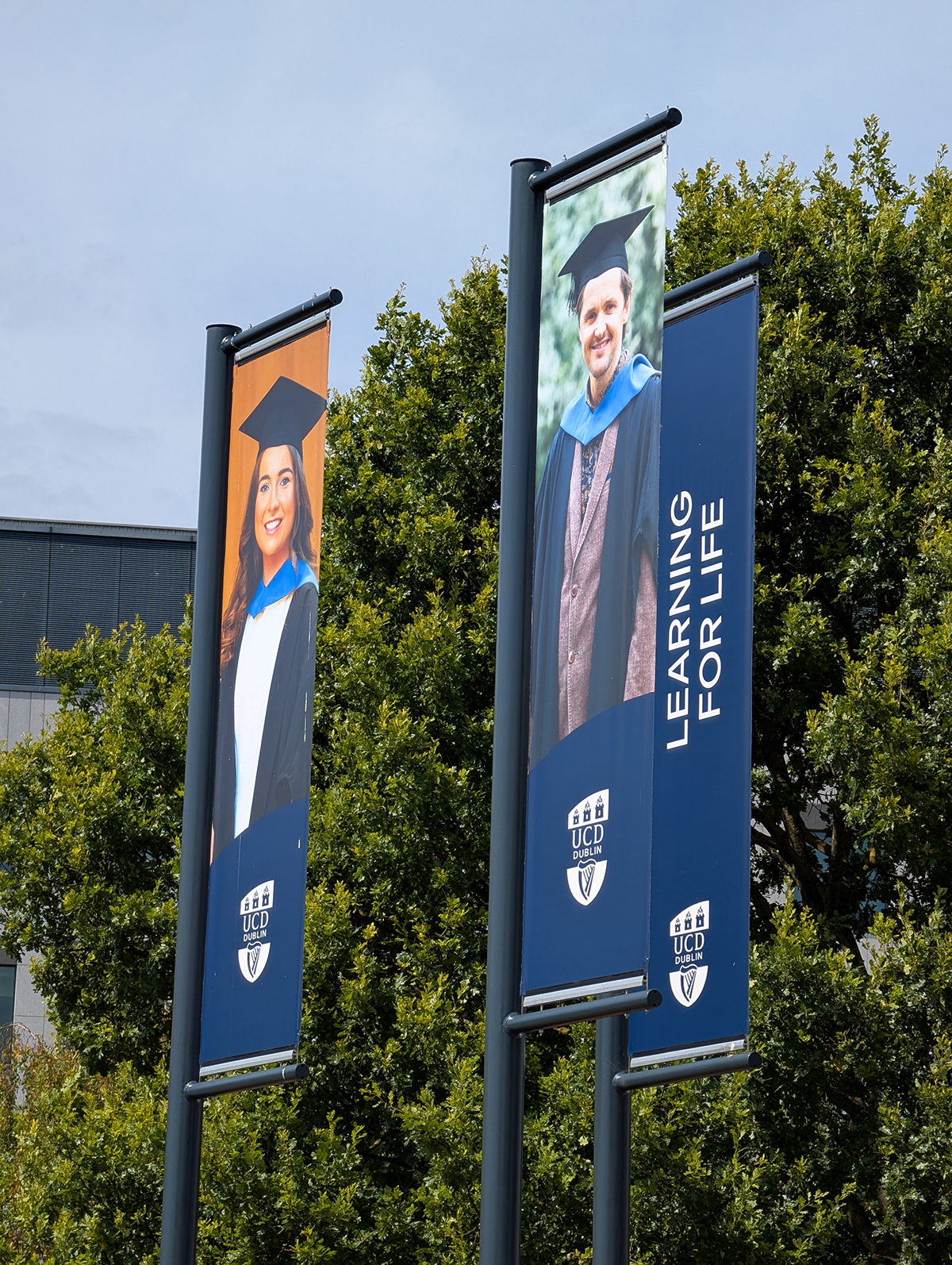
Fig.: The conference will take place at UCD in Dublin
„aiLights – Robotics“ ist eine neue Vortrags- und Diskussionsreihe im Netz, die KI und Robotik behandelt. Am 20. April 2026 gibt es die Ausgabe „aiLights – Robotics @ FHNW: Soziale Roboter: Begriffe, Beispiele und Herausforderungen“. Prof. Dr. Oliver Bendel stellt in seinem Vortrag zunächst aktuelle Entwicklungen sozialer Roboter vor, wobei er auf Pflege, Therapie und Haushalt fokussiert. Exkurse gibt es zu Wearable Social Robots und General-Purpose Robots. Er diskutiert dann soziale und ethische Herausforderungen, auch mit der Zuhörerschaft. Oliver Bendel ist studierter Philosoph und promovierter Wirtschaftsinformatiker. Er lehrt und forscht an der Hochschule für Wirtschaft FHNW. Schwerpunkte sind KI-Systeme und soziale Roboter aus der Perspektive von Informations- und Maschinenethik sowie Technikphilosophie. Hinter aiLights steckt Sabine Wildemann, Ambassador des Davos Tech Summit und Co-Initiator der Swiss {ai} Weeks. Ihr Motto lautet „Connecting people with AI – creating spaces for learning, sharing, and shaping across sectors“. Die Anmeldung für den Onlinevortrag erfolgt über luma.com/l8akl82h.
Abb.: Oliver Bendel mit einem seiner Roboter in künstlerischer Darstellung (Foto: Jork Weismann)
The upcoming „SAGA: Sexuality and Generative AI“ symposium, taking place on April 30, 2026 at the Université du Québec à Montréal, explores how generative AI is reshaping intimacy, desire, relationships, and sexual expression. The presentation by Prof. Dr. Oliver Bendel begins with the Tamagotchi, the iconic digital pet that demonstrated how simple interactive systems can evoke emotional attachment. It then turns to social robots, wearable social robots, and AI-enhanced sex toys, love dolls, and sex robots. Today, large language models (LLMs) and multimodal language models (MLLMs) enable dialogue, perception, and evaluation in these systems. Such capabilities may also benefit people with disabilities, including blind users, by facilitating communication and interaction. At the same time, the physical dimension remains crucial. Embodied systems create presence and proximity: they can be touched, held, and stroked, and experienced through movement, vibration, or sound. The talk argues that future intimate technologies will emerge from the convergence of generative intelligence and physical embodiment, combining conversational AI with the sensory experience of a physically present companion. Full details and submissions are available at event.fourwaves.com/sexualiteia/pages.
Fig.: More and more sex toys are part of Physical AI
Zum zweiten Mal – wie bereits im Sommer 2021 – hält Prof. Dr. Oliver Bendel einen Vortrag für die VHS im Norden des Landkreises München e.V. Aus der Beschreibung: „Die technische Entwicklung bei autonomen oder teilautonomen Maschinen geht rasant voran. Mit ihr stellen sich ganz neue Fragen: Soll ein autonom fahrendes Auto moralische Entscheidungen treffen können, bspw. ob es im Falle einer unvermeidlichen Kollision eher die alte Frau oder das spielende Kind überfährt? Darf ein Pflegeroboter Sterbehilfe leisten? Sollten autonome Kampfroboter sich an Regeln halten? Müssen Sexroboter davor warnen, sich in sie zu verlieben? Sollten Roboter überhaupt menschenähnlich nachgebildet sein? Sich anfühlen wie ein Mensch? Eine Stimme haben wie ein Mensch? Können sie wirkliche Menschen ersetzen, Freund oder Freundin sein oder das zumindest simulieren? Wie verändern diese Maschinen unser soziales Leben, unser Leben im Alter beispielsweise oder unser Liebesleben? Welche Mensch-Maschine-Interaktionen können in Altersheimen sinnvoll sein und insbesondere demente Menschen unterstützen? Welche Anwendungen gibt es für kranke oder behinderte Menschen? Wo stehen wir aktuell bei der Entwicklung sozialer Roboter? Was kommt in den nächsten Jahren auf uns zu? Und warum beschäftigen sich gerade Philosophen mit dem Bau autonomer oder teilautonomer Maschinen?“ Der Vortrag findet online am 9. März 2026 statt. Weitere Informationen sind über die Website der VHS erhältlich.
Abb.: Soziale Roboter kann man mit anderen Figuren vergleichen (Foto: Jork Weismann)
The elective module „Soziale Roboter aus technischer, wirtschaftlicher und ethischer Sicht“ („Social robots from a technical, economic, and ethical perspective“) by Prof. Dr. Oliver Bendel will be held again from February 12 to 14, 2026 at the FHNW in Brugg-Windisch. It is primarily aimed at aspiring business economists, but prospective information systems specialists can also take part. Dr. Amol Deshmukh has been invited again as a guest speaker. He previously worked for the University of Glasgow and now conducts research at ETH Zurich. He will give a talk entitled „Improving Hand Hygiene in Schools with Socially Assistive Robots“. Unitree Go2, Alpha Mini, Cozmo, Vector, AIBI, Furby, Booboo, and Hugvie from Oliver Bendel’s private Social Robots Lab will also be on site. Social Robotics Girl, a so-called GPT who specializes in this topic, will be available as a tutor throughout the event. Basic works are „Soziale Roboter“ (2021) and „300 Keywords Soziale Robotik“ (2021). At the end of the elective module, students design social robots – also with the help of generative AI – that they find useful, meaningful, or simply attractive. The elective modules have been offered since 2021 and are very popular.
The AAAI 2019 Spring Symposium „Towards Conscious AI Systems“ – held at Stanford University – featured emotional and fascinating lectures and discussions. At the time, most participants believed that it must be simulated consciousness. However, a few seemed convinced of the possibility of genuine consciousness. The AAAI 2026 Spring Symposia will once again include an event on the topic: „Machine Consciousness: Integrating Theory, Technology, and Philosophy”. It will take place at the Hyatt Regency, San Francisco Airport, Burlingame. The description on the website states: „Recent AI advances have forced us to confront the possibility of consciousness, beyond intelligence, in machines. Asking ‚Can machines be conscious?‘ forces us to answer ‚How can we define consciousness in a formal way/what is the causal structure of consciousness?‘ (theory, formal frameworks), ‚How would consciousness be implemented?‘ (technical realization), ‚How can we determine that a given system is conscious?‘ (measurement/attribution), and ‚What status would consciousness lend to machines?‘ (ethics).“ (Website AAAI Spring Symposia) With their wording, the organizers remain vague, yet they still raise expectations – however, there is no evidence whatsoever that machines could „awaken“. Nevertheless, it is likely that inspiring discussions will take place once again and that interesting conclusions will be reached. Further information on this symposium and other symposia is available at aaai.org/conference/spring-symposia/sss26/.
Fig.: Only humans and animals can have true consciousness
„Just.Us + Animal Welfare“ is a lecture series organized by Department 10 Veterinary Medicine to promote animal welfare at Justus Liebig University Giessen. On November 12, 2025, Prof. Dr. Oliver Bendel gave a lecture on „Bao meets Pluto: Grundlagen und Beispiele der Tier-Maschine-Interaktion“ („Bao meets Pluto: Fundamentals and examples of animal-machine interaction“). Animal-machine interaction deals with the encounter and coexistence of animals and machines – from classic devices to vehicles, aircraft, and agricultural machinery to networked, autonomous robots and AI systems. The focus is on perception through sensors and senses, interaction and communication between animals and machines, and the question of how these encounters can be designed technically, organizationally, and ethically in such a way that risks for animals are reduced and potential for them and for humans is tapped. In his lecture, Oliver Bendel laid out the fundamentals of animal-machine interaction and described prototypes and projects. He also outlined what is possible and to be expected in this field of research in the coming years, for example in connection with robotic quadrupeds and bipeds. The online lecture was followed by 660 listeners. Further information is available at www.uni-giessen.de/de/fbz/zentren/icar3r/akademie/justus.
Fig.: Oliver Bendel with his Bao (Photo: Selina Rohr)
„Just.Us + Tierschutz“ ist eine Ringvorlesung des Fachbereichs 10 Veterinärmedizin zur Stärkung des Tierschutzes an der Justus-Liebig-Universität Gießen. Am 12. November 2025 referiert Prof. Dr. Oliver Bendel zum Thema „Bao meets Pluto: Grundlagen und Beispiele der Tier-Maschine-Interaktion“. Aus der Ankündigung: „Die Tier-Maschine-Interaktion (TMI; Animal-Machine Interaction, AMI) befasst sich mit dem Aufeinandertreffen und dem Miteinander von Tieren und Maschinen – von klassischen Apparaten über Fahr- und Flugzeuge und Landwirtschaftsmaschinen bis hin zu vernetzten, autonomen Robotern und KI-Systemen. Im Mittelpunkt stehen Wahrnehmung durch Sensoren und Sinne, Interaktion und Kommunikation zwischen Tier und Maschine sowie die Frage, wie diese Begegnungen technisch, organisatorisch und ethisch so gestaltet werden können, dass Risiken für Tiere reduziert und Potenziale für sie und für Menschen erschlossen werden. In seinem Vortrag legt Prof. Dr. Oliver Bendel die Grundlagen der Tier-Maschine-Interaktion und beschreibt Prototypen und Projekte. Zudem skizziert er, was in den nächsten Jahren in diesem Forschungsfeld möglich und zu erwarten ist.“ Weitere Informationen über www.uni-giessen.de/de/fbz/zentren/icar3r/akademie/justus.
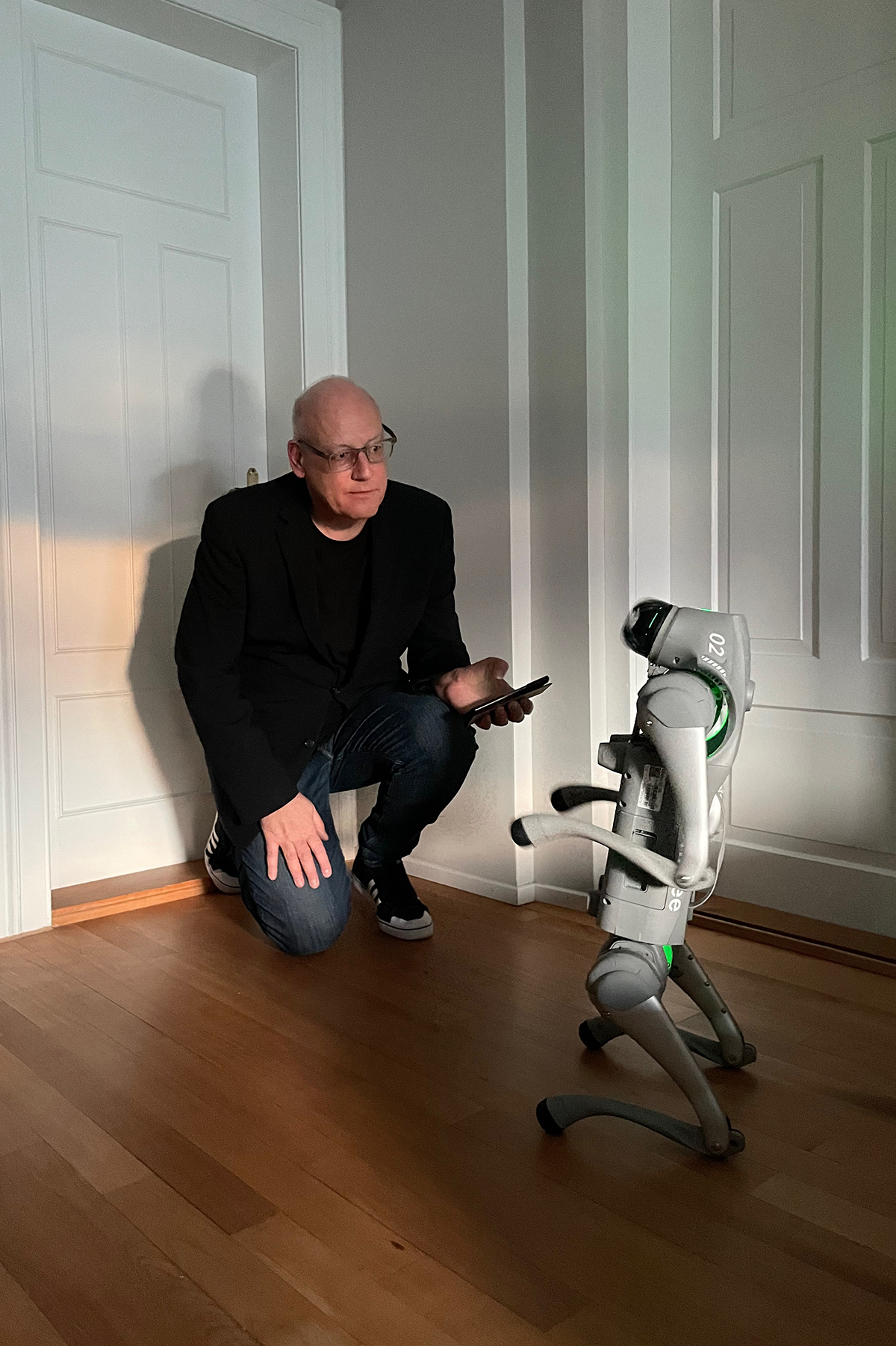
„Zwischen Tradition und Transformation: Neue Arbeitswelten bei der Polizei“ – unter diesem Leitthema startet die Projektgruppe „Zukunft der Polizeiarbeit“ des Arbeitskreises „Öffentliche Sicherheit“ des Digitalverbands Bitkom ihre nächste Veranstaltungs- und Workshopreihe. „Die Projektgruppe ist ein interdisziplinäres Gremium, das Expertinnen und Experten aus Polizei, Wirtschaft und Wissenschaft vereint. Ziel der Veranstaltungsreihe ist es, einen offenen Dialog über neue Technologien und deren Auswirkungen auf die Polizeiarbeit zu fördern. In den Workshops sollen konkrete Problemstellungen im Kontext aktueller und zukünftiger Herausforderungen der Polizeiarbeit gemeinsam erarbeitet und dokumentiert werden.“ (Website Projektgruppe) Den Auftakt bildet eine Veranstaltung am 4. November 2025 im Innovation Lab der Polizei NRW in Duisburg mit dem Themenschwerpunkt Robotik. Zu den Referenten gehören Kevin Kron (Integration Project Manager Boston Dynamics), Dirk Aschenbrenner (Vorstandsvorsitzender DRZ), Prof. Dr. Roman Brylka (The Green Bridge) und – zugeschaltet aus der Schweiz – Prof. Dr. Oliver Bendel (Hochschule für Wirtschaft FHNW). Eine Anmeldung ist über www.bitkom.org/Projektgruppe-Zukunft-der-Polizeiarbeit möglich.
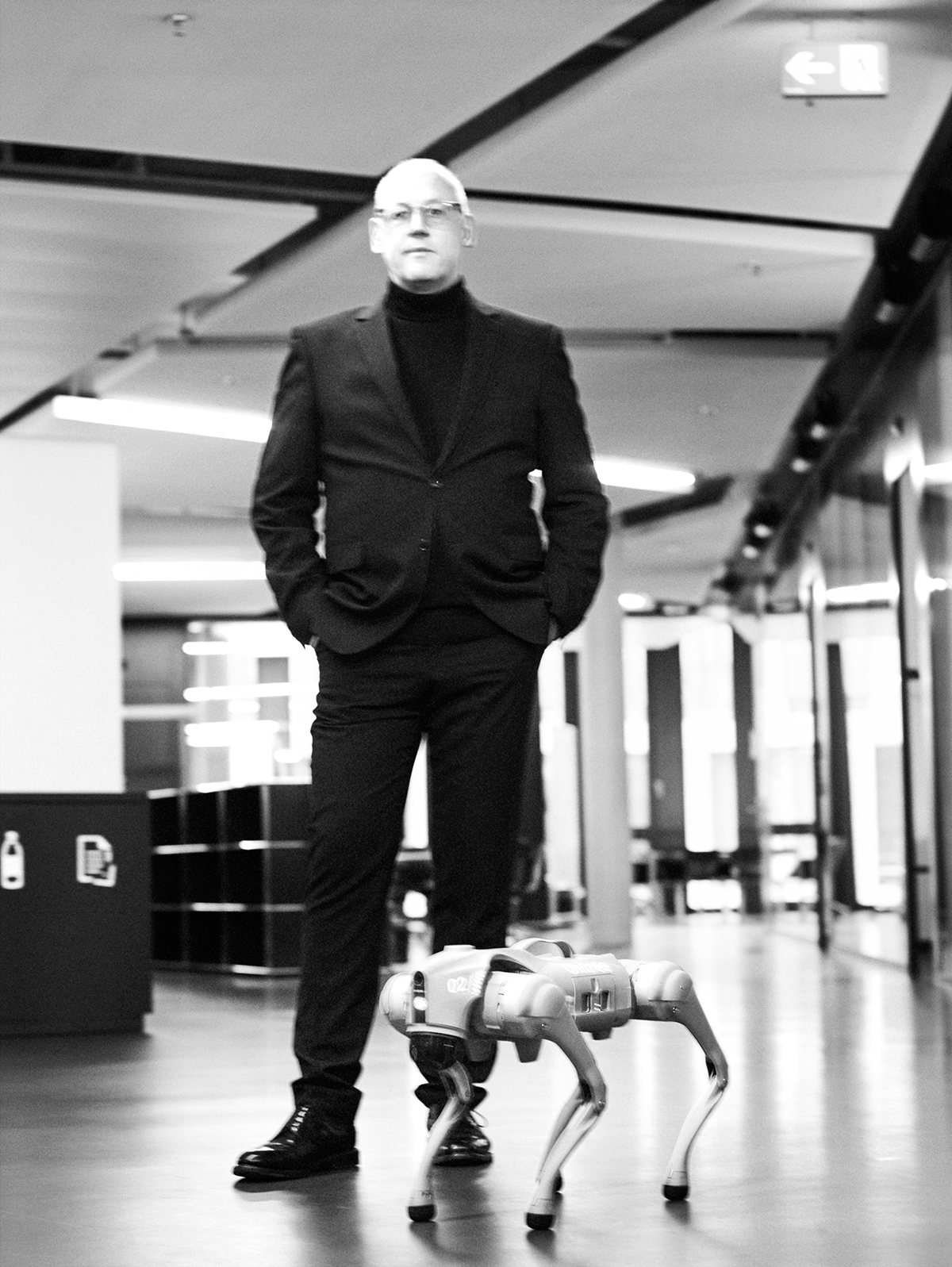
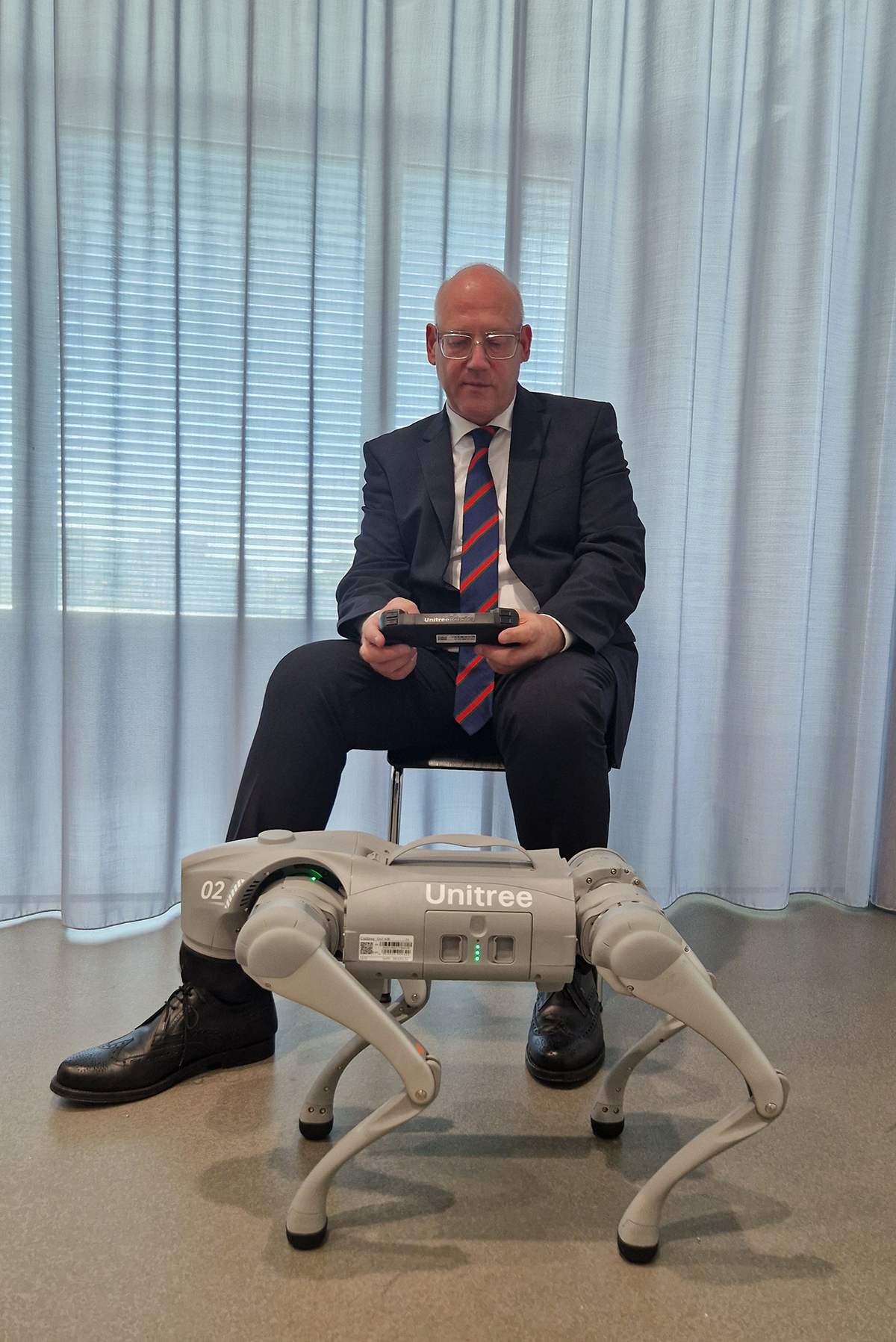
Abb.: Oliver Bendel mit seinem Unitree Go2 (Foto: Stefanie Hauske)