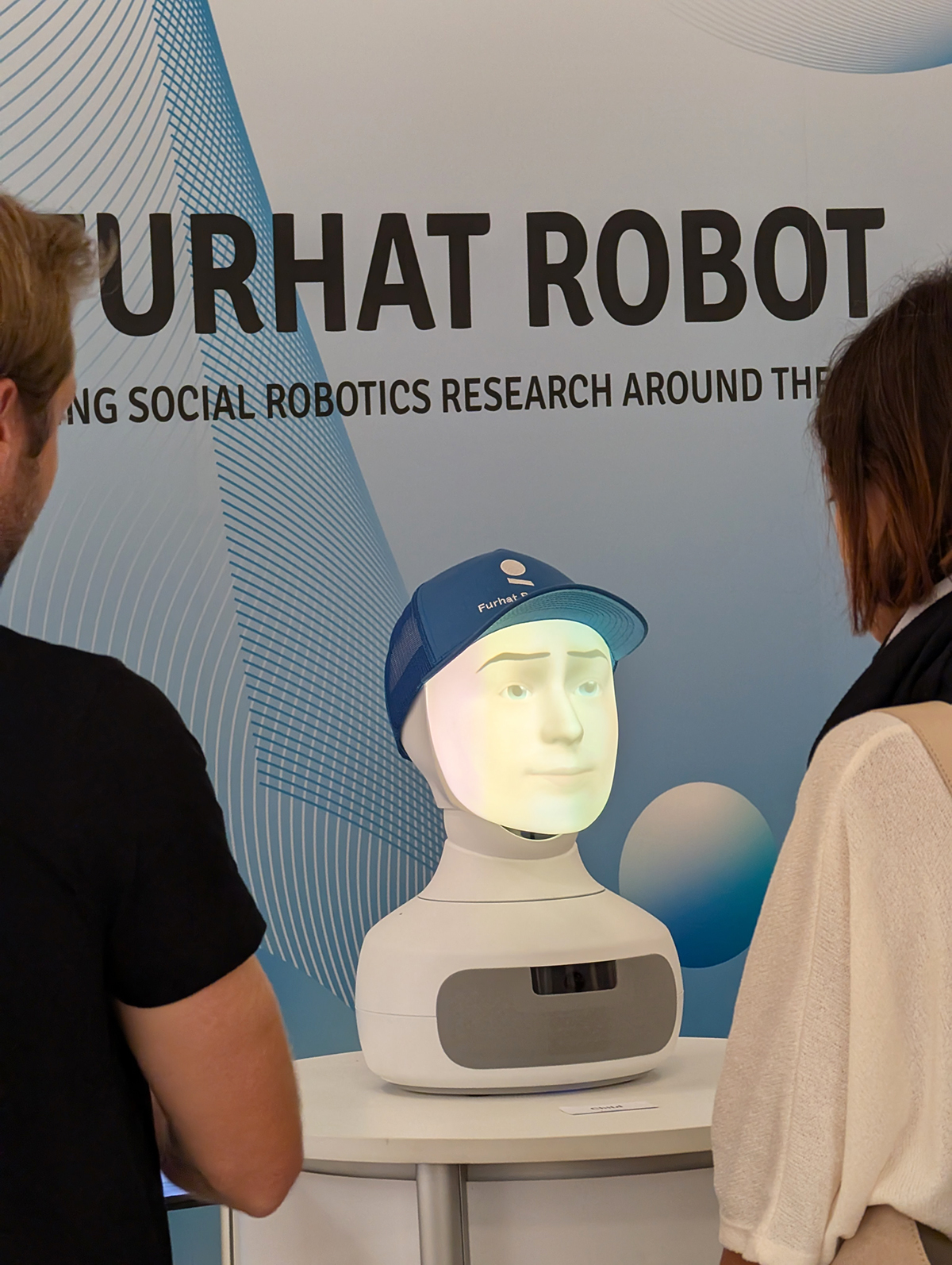
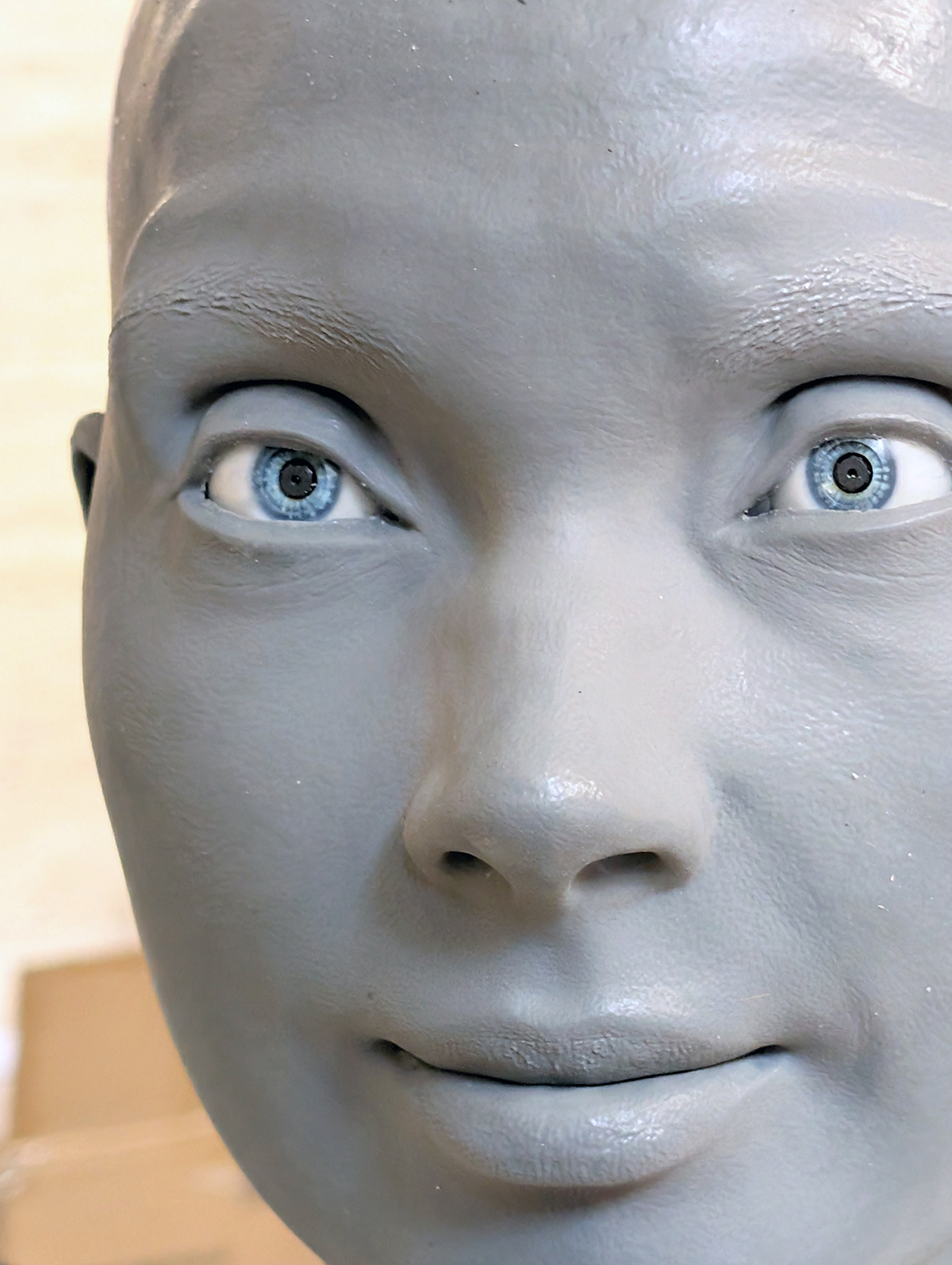
The 18th International Conference on Social Robotics (ICSR + Art 2026) took place in London from July 1–4, bringing together researchers, academics, and industry professionals from around the world to explore the latest advances in social robotics. As in previous years, the conference featured an extensive and impressive exhibition showcasing a wide range of social robots and related technologies. In addition to the official exhibits, some attendees and guests brought their own robots to demonstrate and discuss with other participants. Among the robots on display were Furhat, Euclid, Ameca, LOVOT, Qoobo, and Mirumi, illustrating the remarkable diversity of current approaches to social robotics. One particularly noteworthy platform was Furhat, a robotic head whose facial features – including the eyes, mouth, and facial expressions – are projected onto interchangeable face masks from within. These masks are available in a variety of designs, representing adults, children, and even animals. This projection-based approach enables highly convincing facial expressions without relying on complex motorized mechanisms or conventional displays. The robotic head is connected to a large language model, allowing it to engage in sophisticated conversations while demonstrating extensive knowledge across a wide range of topics. Furhat can also be customized with accessories such as wigs and hats, providing a simple yet effective form of robot enhancement that further expands its expressive capabilities. Further information is available at icsr2026.uk.
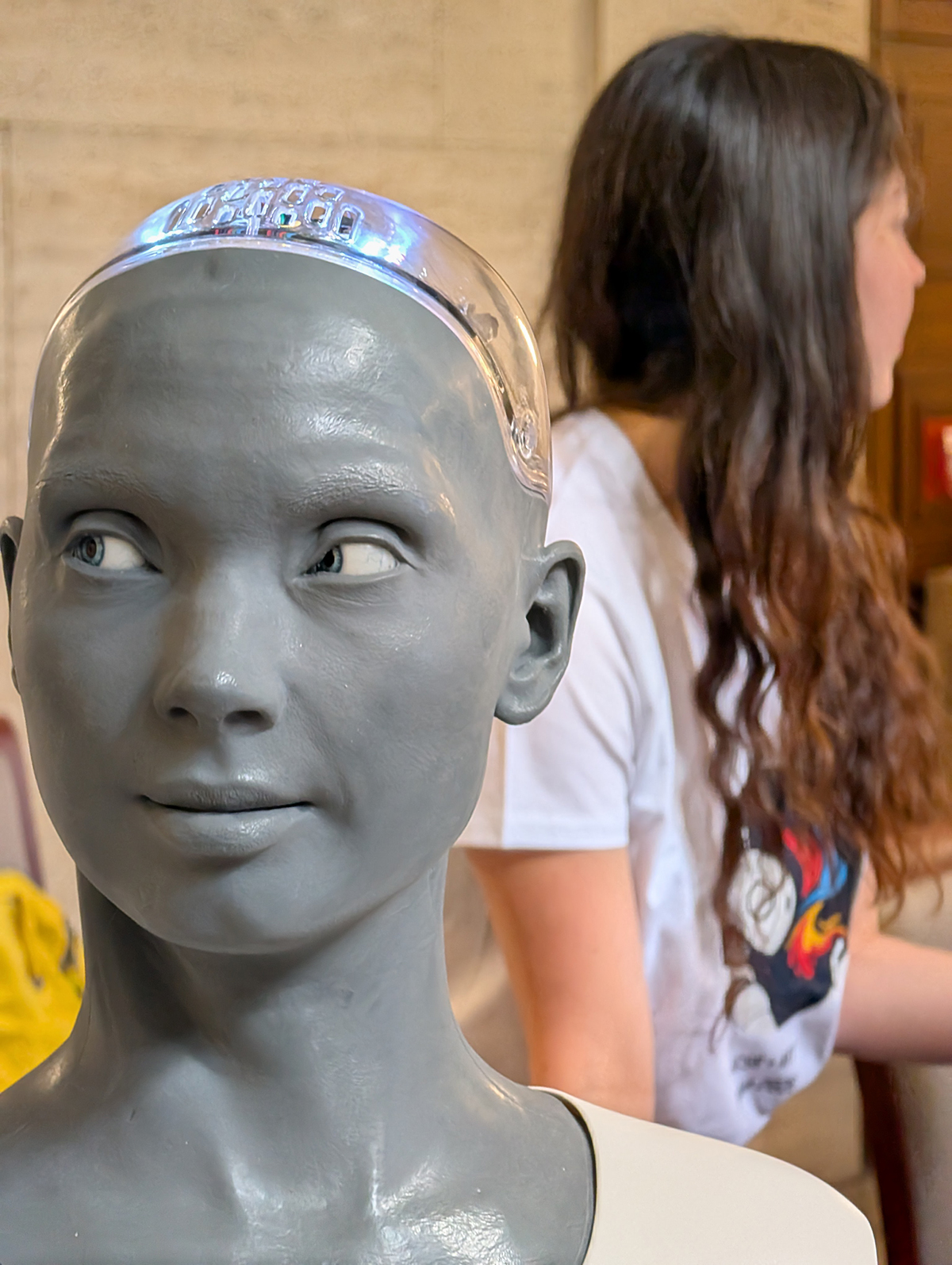
The 18th International Conference on Social Robotics (ICSR + Art 2026) took place in London from July 1–4, bringing together researchers, academics, and industry professionals from around the world to explore the latest advances in social robotics. Among the many impressive humanoid robots on display, both Euclid and Ameca attracted considerable attention, each representing a very different approach to humanoid robotics. While Euclid demonstrated what can be achieved through an innovative low-budget development approach, Ameca showcased the capabilities of a highly sophisticated commercial platform. Developed by the British company Engineered Arts, Ameca is an advanced humanoid robot designed primarily for research into human–robot interaction. Equipped with an artificial intelligence system and 27 facial and motion actuators, it is capable of remarkably lifelike facial expressions and gestures. Ameca comes pre-programmed with more than 50 realistic facial expressions, allowing it to convey a broad spectrum of natural human emotions. Through Engineered Arts‘ web-based Tritium platform, every degree of freedom of its eyes, mouth, eyebrows, and cheeks can be individually customized and fine-tuned, enabling an extraordinary level of expressive precision. Although intended primarily as a stationary platform, Ameca was undoubtedly one of the highlights of ICSR 2026, drawing crowds throughout the conference in the entrance hall of Senate House. Visitors eagerly lined up to take photographs, capturing moments in which the robot appeared face-to-face with people or turned toward them with what seemed like genuine curiosity and openness. Occasionally, Ameca developed a slight cross-eyed gaze, an endearing imperfection that made it seem even more approachable. Its neutral skin tone and deliberately androgynous appearance resist conventional categories of identity, yet with relatively simple enhancements such as a wig or makeup, it could easily be transformed to present a distinctly male or female appearance. Further information is available at icsr2026.uk.
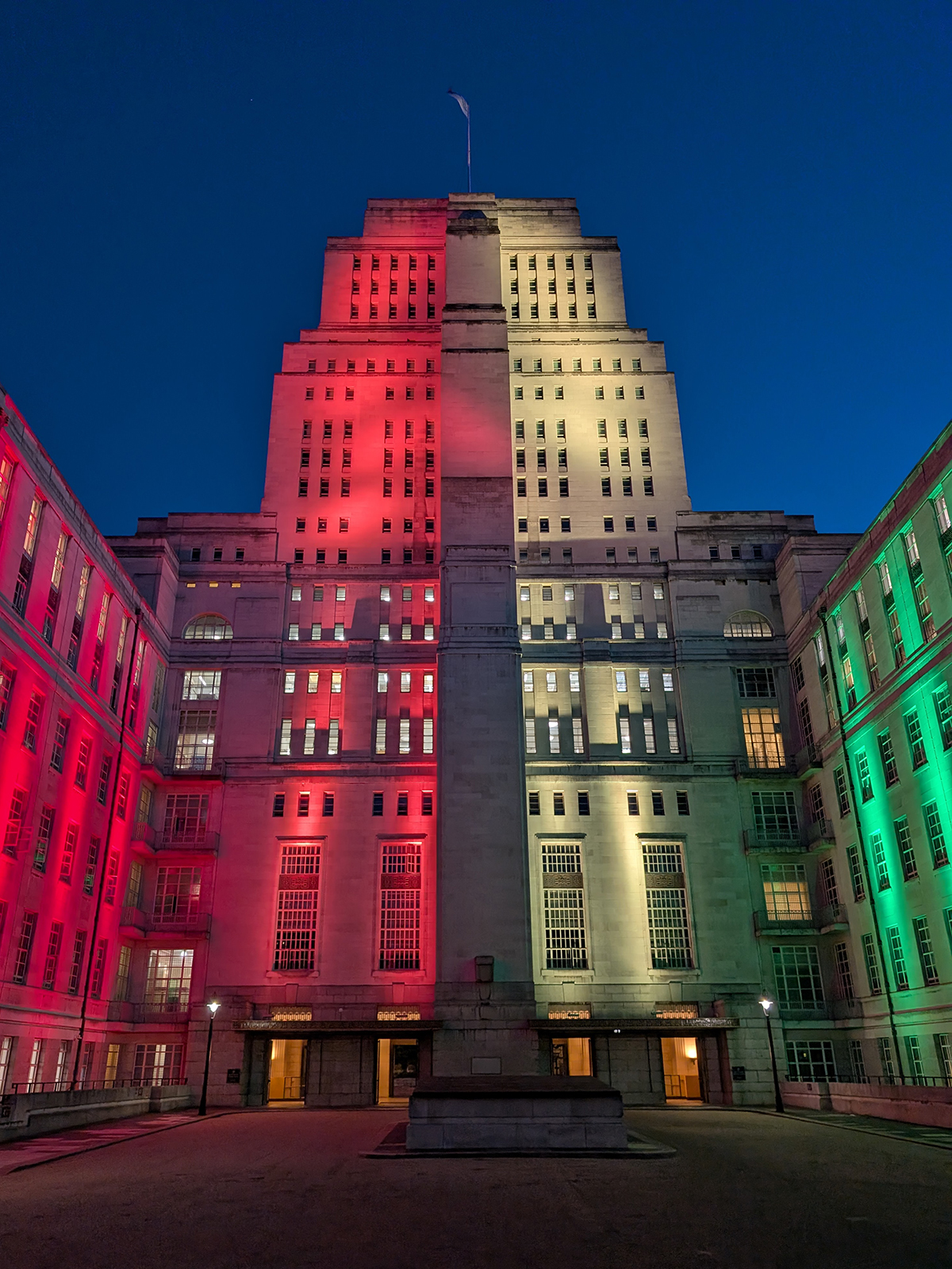
The 18th International Conference on Social Robotics (ICSR + Art 2026) took place in London from July 1–4, bringing together researchers, academics, and industry professionals from around the world to explore the latest advances in social robotics. Hosted by Hooman Samani and Saina Akhond from the University of the Arts London, the conference welcomed around 350 participants who presented their latest research in the main track and special sessions while engaging in lively discussions with both humans and robots in the Debate Room. Teams also competed in the Grand Challenge, showcasing innovative concepts and working prototypes that demonstrated the future potential of social robotics. A series of inspiring keynote presentations explored emerging technologies as well as important methodological questions shaping the field, while robot performances and a memorable robot dance featuring Silke Grabinger added an artistic dimension to the event. Throughout the conference, attendees had the opportunity to meet an impressive range of social robots, including Furhat, Ameca, Euclid, LOVOT, and Mirumi. Furhat and Ameca represented highly expressive humanoid platforms capable of remarkably lifelike interactions, while Euclid attracted particular attention as an open-source humanoid robot built for only a few hundred dollars, proving that affordable hardware can compete with well-known androids such as Sophia and Erika. In contrast, Lovot and Mirumi showcased the softer side of social robotics. Mirumi, a small furry wearable companion robot, charmed visitors with its ability to cling to the handle of a handbag using its tiny arms and is expected to appear soon in pop-up stores, particularly targeting girls and women. On the third evening, after a thought-provoking panel discussion and another series of robot performances, enthusiastic participants left the illuminated Senate House inspired by several days of groundbreaking research, creative collaboration, and a shared vision of how humans and robots will shape the future together. Further information is available at icsr2026.uk.
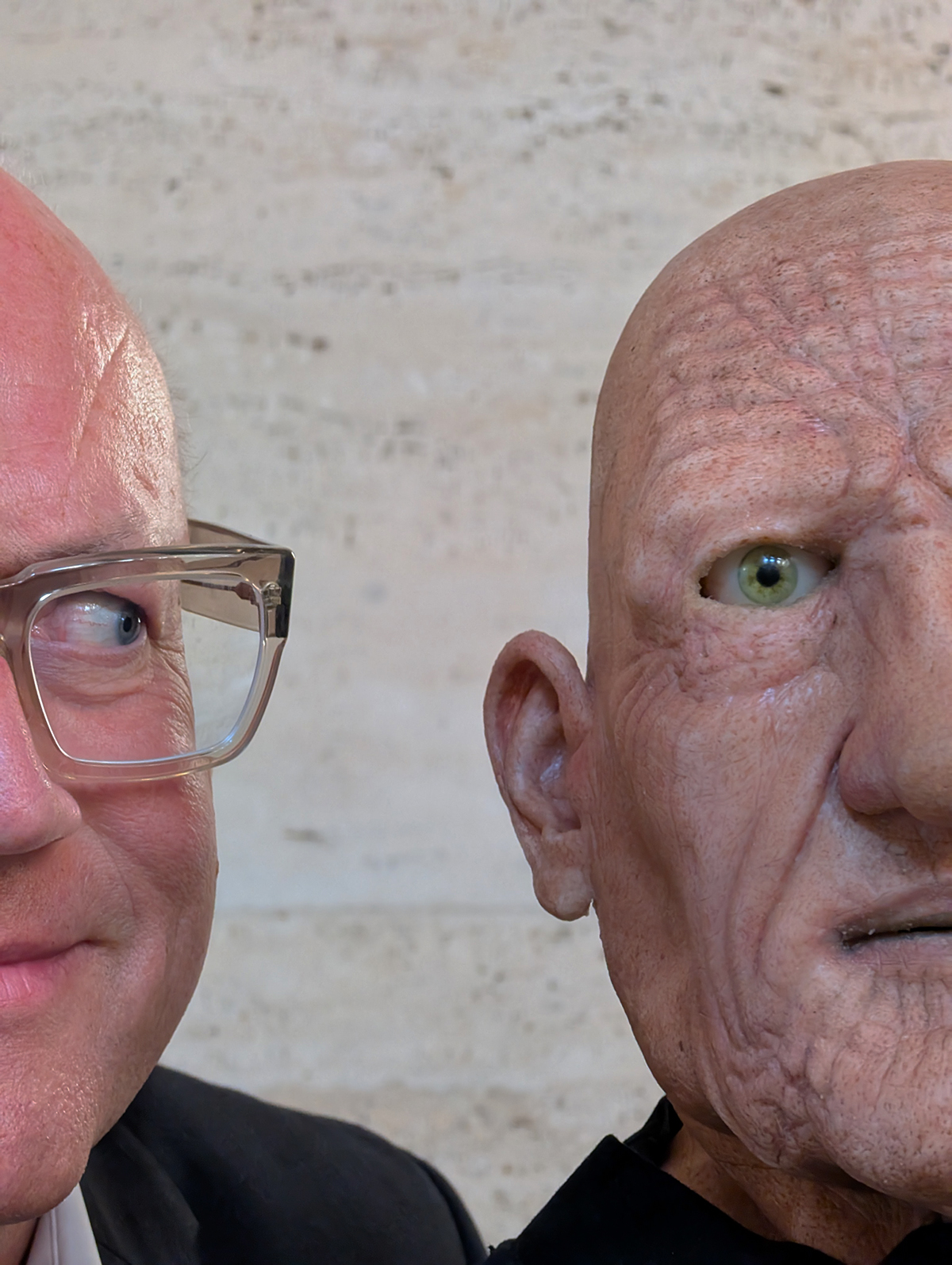
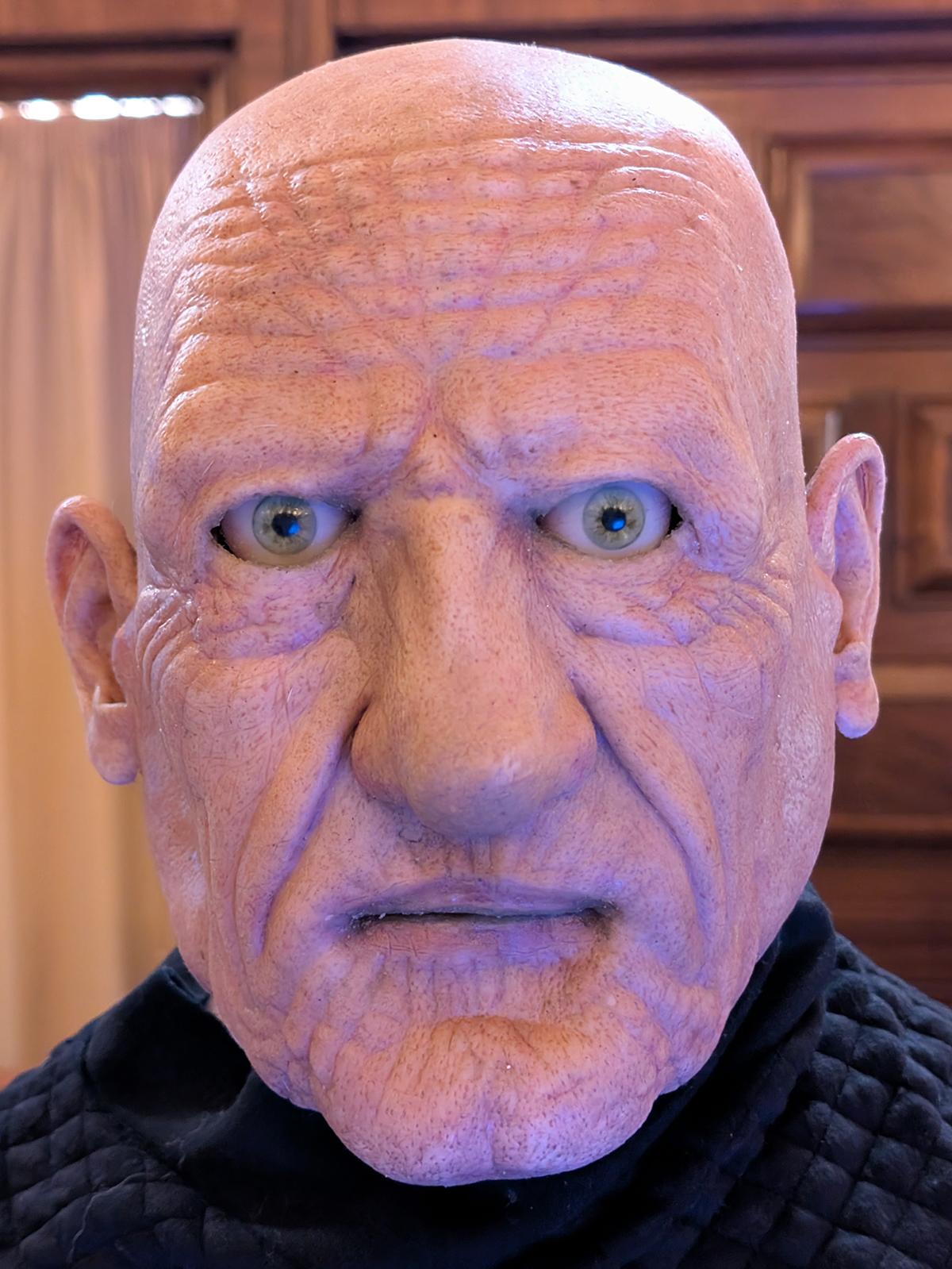
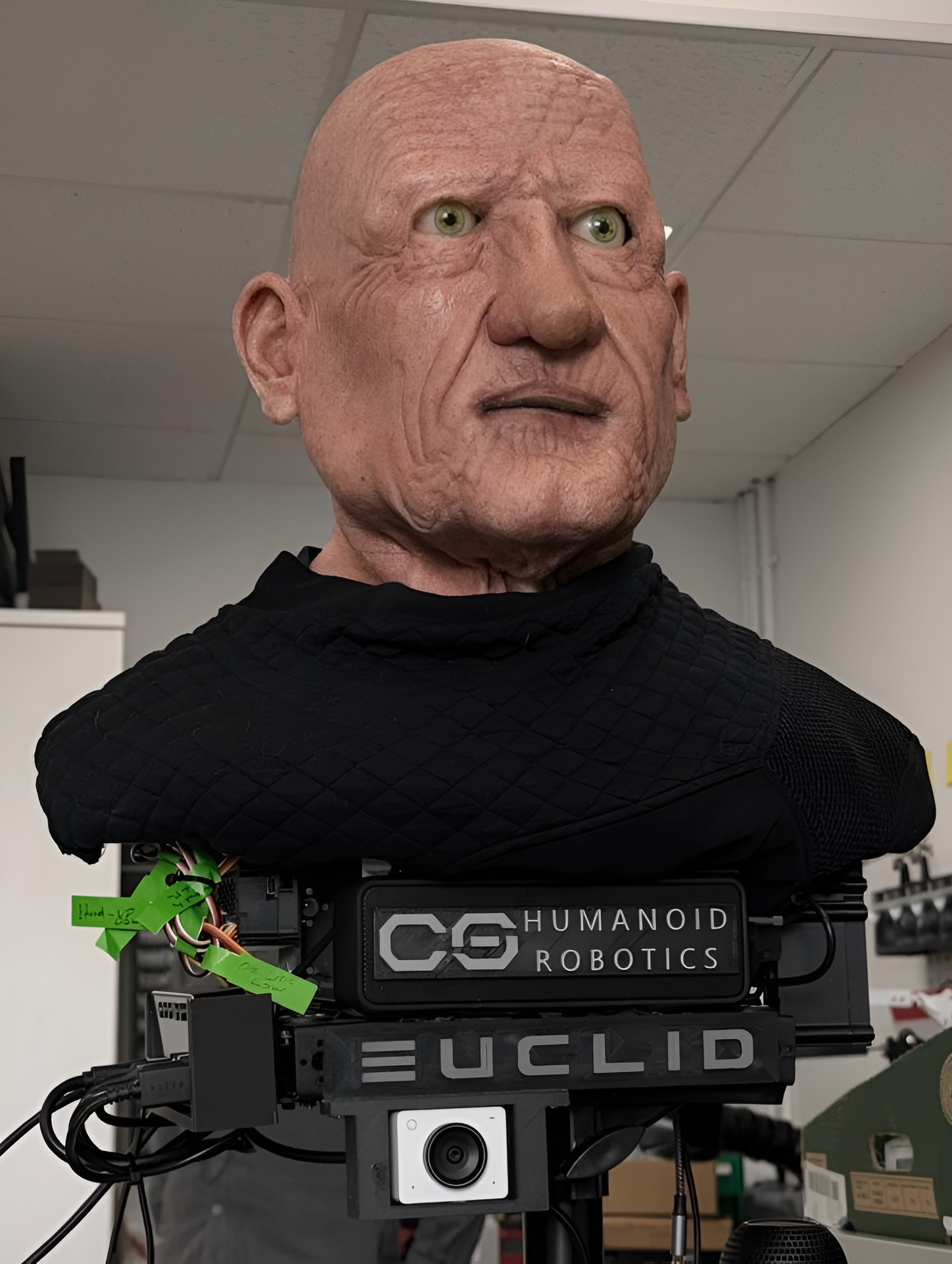
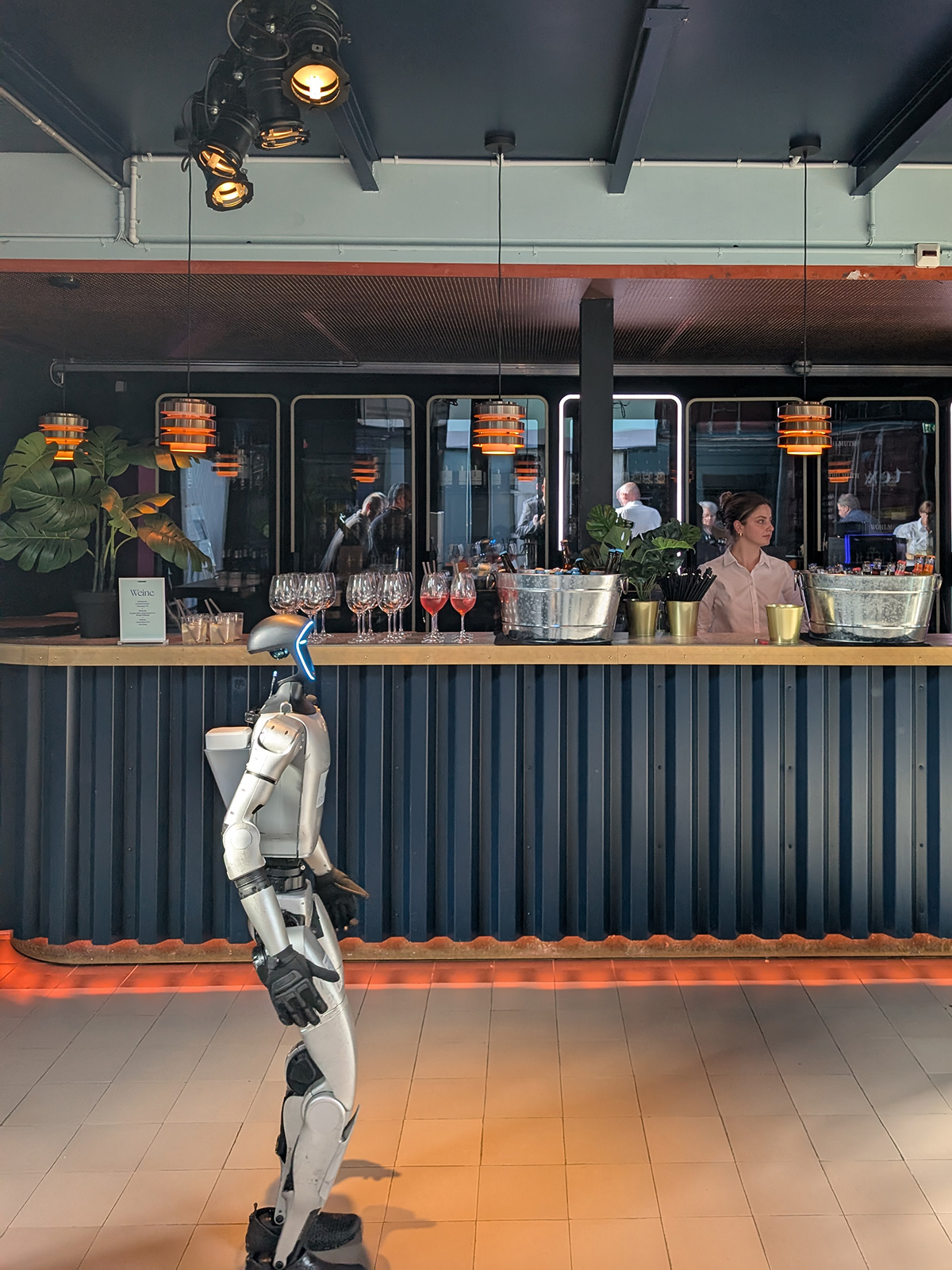
The 18th International Conference on Social Robotics (ICSR + Art 2026) is currently taking place in London from July 1–4, bringing together researchers, academics, and industry professionals from around the world to explore the latest developments in social robotics. Among the highlights of the second conference day was a live demonstration of Euclid, an advanced humanoid robot developed by Dr. Carl Strathearn, Assistant Professor of Computer Science, and Emilia Sobolewska. Strathearn’s work focuses on developing autonomous humanoid robots powered by artificial intelligence that look, behave, and interact in ways that closely resemble humans. Creating lifelike humanoid robots is particularly valuable because the human face remains the most natural interface for communication, emotional expression, and learning. By replicating these familiar conditions, researchers can make AI technologies more intuitive and accessible for people from a wide range of backgrounds, ages, and abilities. Euclid embodies this vision as a fully autonomous social robot equipped with automatic speech recognition, computer vision, generative AI, skin sensors, and a unique robotic mouth that uses machine learning to generate realistic visemes for speech. The robot has been specifically designed for social and assistive interactions with older adults, where natural communication and trust are essential. What makes Euclid especially remarkable, however, is its appearance. While many well-known female humanoid robots, such as Sophia, Erika, and Harmony, feature smooth, almost flawless faces that reflect conventional beauty stereotypes, Euclid deliberately takes a different approach. The robot realistically portrays the deeply lined facial features and weathered skin of an older man. This design choice is both technically demanding and artistically sophisticated, demonstrating that age, character, and authenticity can be just as aesthetically compelling as youthful perfection. In doing so, Euclid challenges established conventions in humanoid robot design while presenting a more diverse and human-centered vision of social robotics. At the ICSR, scientists had the opportunity to talk with Euclid and ask him about his identity and charisma. Further information is available at icsr2026.uk.
Fig.: Oliver Bendel in conversation with Euclid (Photo: Nihan Karataş)
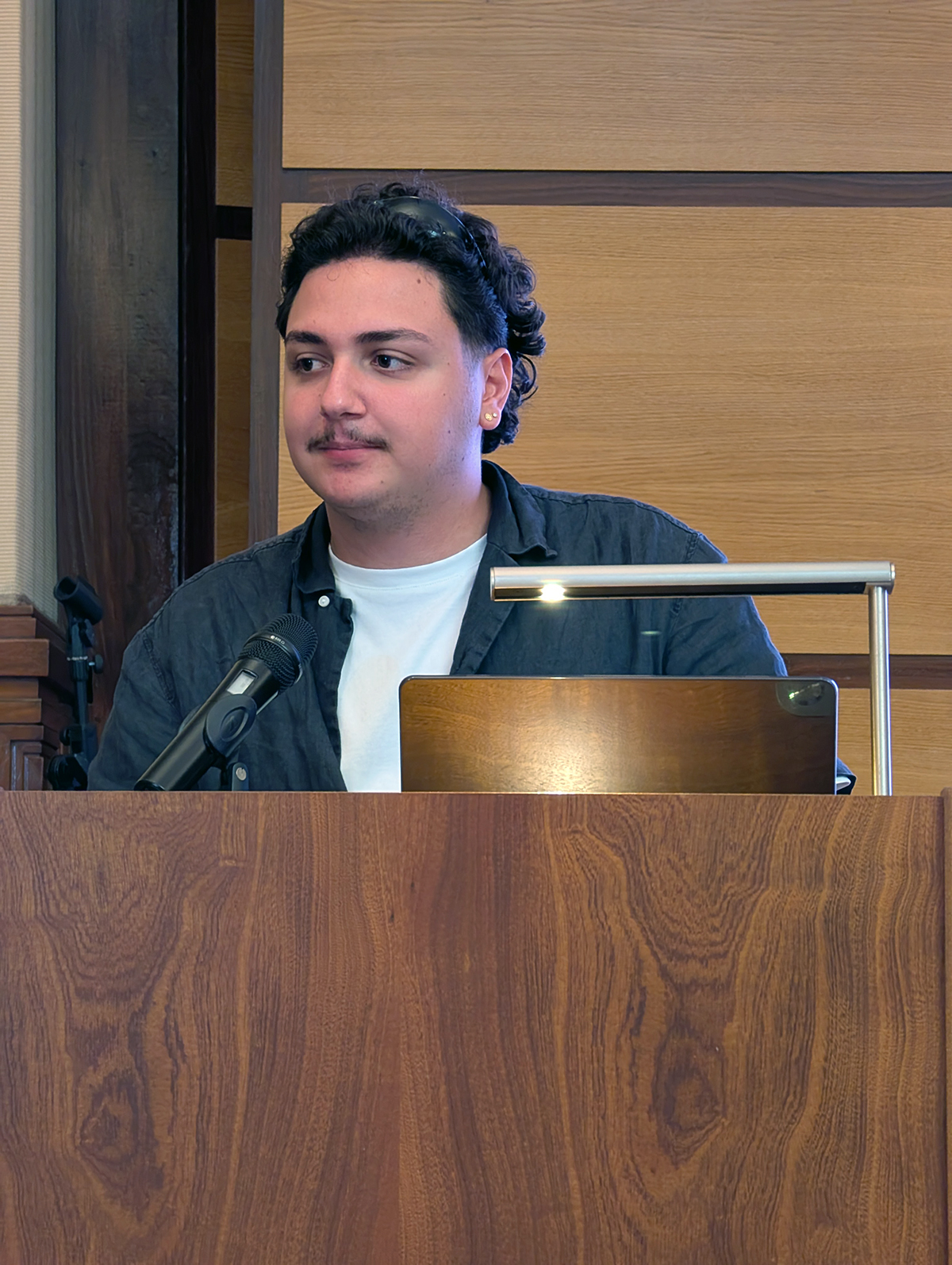
The 18th International Conference on Social Robotics (ICSR + Art 2026) is currently taking place in London from July 1–4, bringing together researchers, academics, and industry professionals from around the world to explore the latest developments in social robotics. The conference serves as an international platform for exchanging ideas on how intelligent systems can better understand, interact with, and support people in everyday life. On the second day of the conference, Sahan Hatemo, a student at the FHNW School of Computer Science, presented the paper „Reading Between the Laughs: A Human-Referenced Audio Evaluation of MLLMs for Social Robotics“, co-authored with Dr. Katharina Kühne (University of Potsdam) and Prof. Dr. Oliver Bendel (FHNW School of Business). The study investigates whether today’s leading multimodal large language models (MLLMs) can distinguish authentic from non-authentic laughter using audio signals alone. As laughter is an important social cue, the ability to recognize its authenticity could significantly improve how robots and AI systems communicate with people in social settings. The researchers found notable differences in how the evaluated AI models interpreted laughter. OpenAI models showed a clear tendency to classify most laughter as genuine, while Gemini models were generally more skeptical in their assessments. Despite these contrasting biases, several models performed significantly better than chance, with Gemini 2.5 Pro achieving the strongest overall performance. A closer analysis also revealed qualitative differences in the models‘ decision-making. Less capable models appeared to rely on superficial acoustic features, such as pitch, and were more likely to classify higher-pitched laughter as less authentic. In contrast, the best-performing model seemed to focus on more sophisticated aspects of voice quality, indicating a deeper understanding of the characteristics that distinguish genuine from non-authentic laughter. The findings demonstrate the growing potential of multimodal AI for social robotics. As robots increasingly become part of everyday environments, the ability to accurately interpret subtle social signals such as laughter could play a crucial role in fostering trust, improving communication, and strengthening human-robot relationships. Further information is available at icsr2026.uk.
The 18th International Conference on Social Robotics (ICSR + Art 2026) is currently taking place in London from July 1–4, bringing together researchers, academics, and industry professionals from around the world to discuss the latest advances in social robotics. One of the conference formats is a series of debates held in the Debate Hall of Senate House. On the second day, attendees had the opportunity to engage with Euclid, an android developed by Carl Strathearn and Emilia Sobolewska, as part of the session „Innovation Through Creation: The Case for Building Our Own Social Robots for HRI Research“. Euclid is a fully autonomous social robot equipped with automatic speech recognition, computer vision, generative AI, skin sensors, and a robotic mouth that uses machine learning to generate realistic visemes. Designed for social and assistive interactions with older adults, the android demonstrated how advances in artificial intelligence and robotics are enabling increasingly natural human-robot communication while providing a compelling platform for human-robot interaction research. Further information is available at icsr2026.uk and www.carlstrathearn.co.uk.
Fig.: Oliver Bendel and Euclid at ICSR + Art 2026 (Photo: Nihan Karataş)
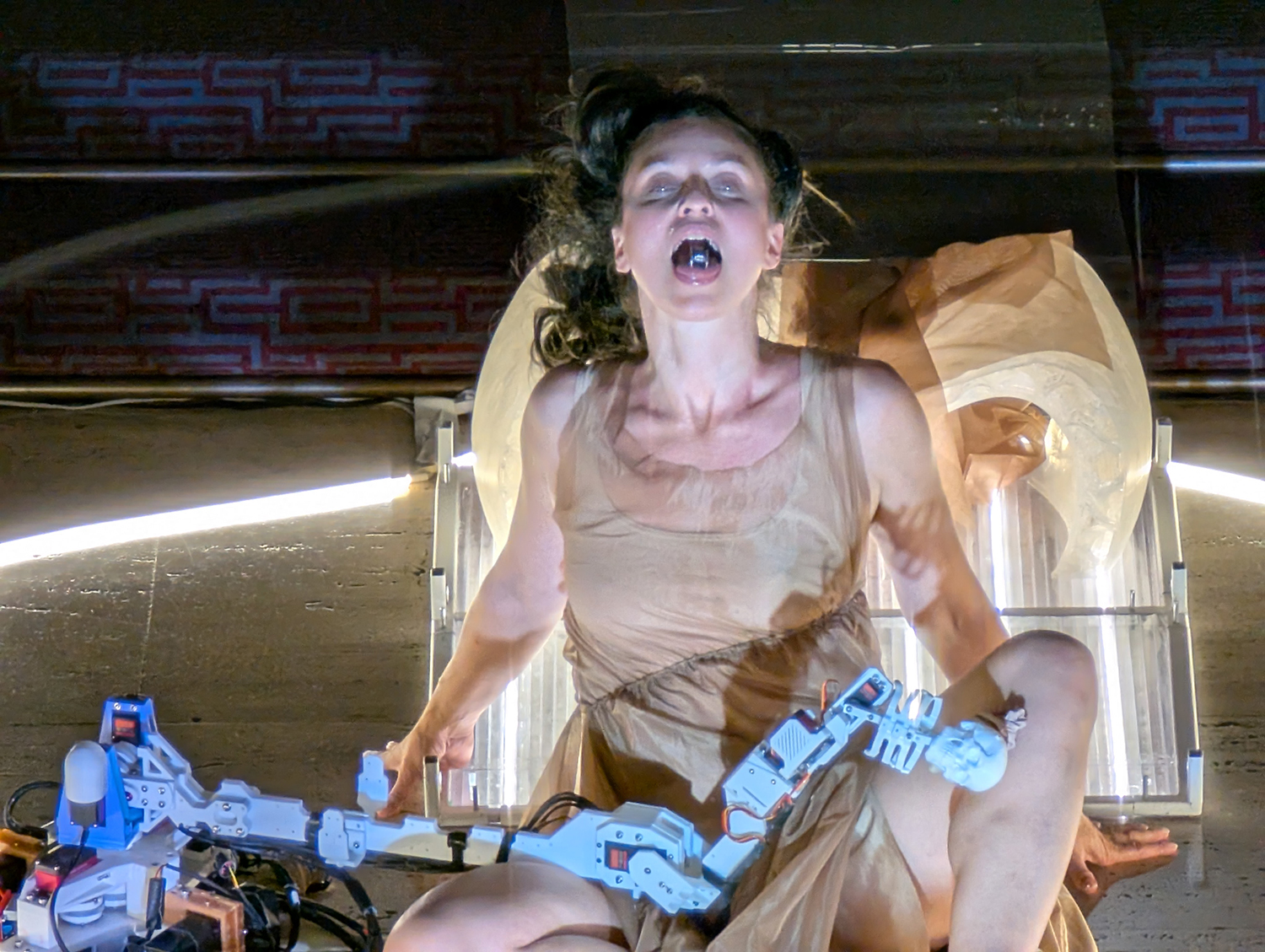
The 18th International Conference on Social Robotics (ICSR + Art 2026) is currently taking place in London from July 1–4, bringing together researchers, academics, and industry professionals from around the world to discuss the latest advances in social robotics. The evening program on the first day of the conference opened with the premiere performance of QUANTWIN by artist Silke Grabinger. The work explores the idea of twins, inspired by Grabinger’s own unborn twin sibling, through an immersive digital twin embodied in a soft robotic entity that interacts with the performer. Rather than creating a perfect copy of oneself, QUANTWIN examines the encounter with the “Other” and the emergence of new hybrid identities. Drawing on the many-worlds interpretation of quantum physics, the performance presents the robotic twin as a possible expression of an alternative reality, inviting the audience to reflect on identity, technology, and human-machine relationships. The premiere demonstrated how art, robotics, and philosophy can come together to open new perspectives on social robotics. Further information is available at icsr2026.uk and www.silkegrabinger.com.
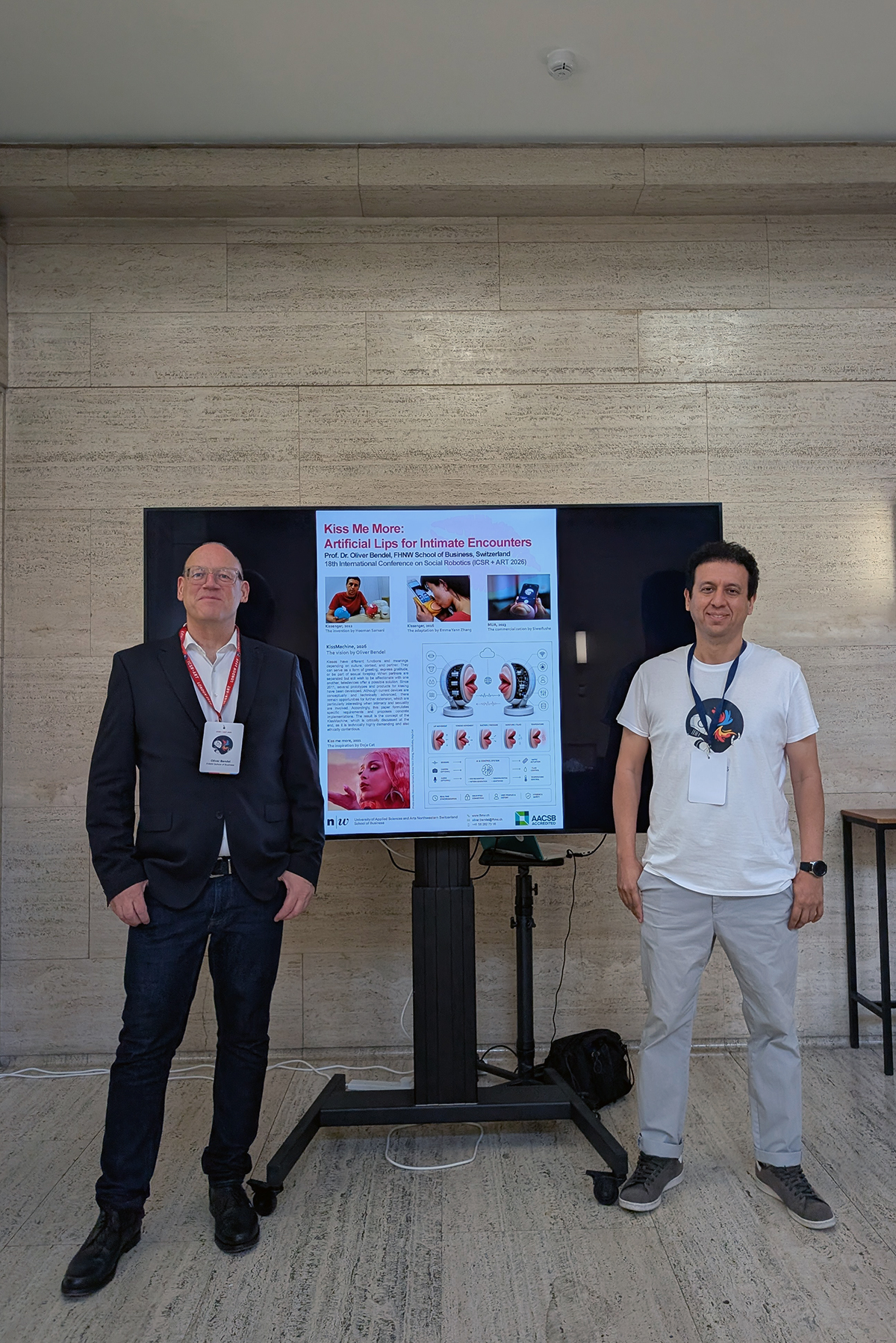
The 18th International Conference on Social Robotics (ICSR + Art 2026) is currently taking place in London from July 1–4, bringing together researchers, academics, and industry professionals from around the world to discuss the latest advances in social robotics. On the second day of the conference, researchers presented their latest work during the poster session, including Oliver Bendel’s paper „Kiss Me More: Artificial Lips for Intimate Encounters“. The title is a tribute to Doja Cat’s hit „Kiss Me More“, reflecting the paper’s focus on technology-mediated intimacy. The paper introduces the concept of the KissMachine, a next-generation telekissing device with artificial lips designed to enable more intimate remote interactions while addressing the technical, social, and ethical challenges of such technology. It also pays tribute to the Kissenger, invented by Hooman Samani in 2012, one of the pioneering telekissing systems that inspired subsequent research in this field. The exchange between Bendel and Samani highlighted both the evolution of telekissing technology over the past decade and the continuing interest in human-centered approaches to social robotics. Further information is available at icsr2026.uk.
Fig.: Oliver Bendel and Hooman Samani at ICSR 2026
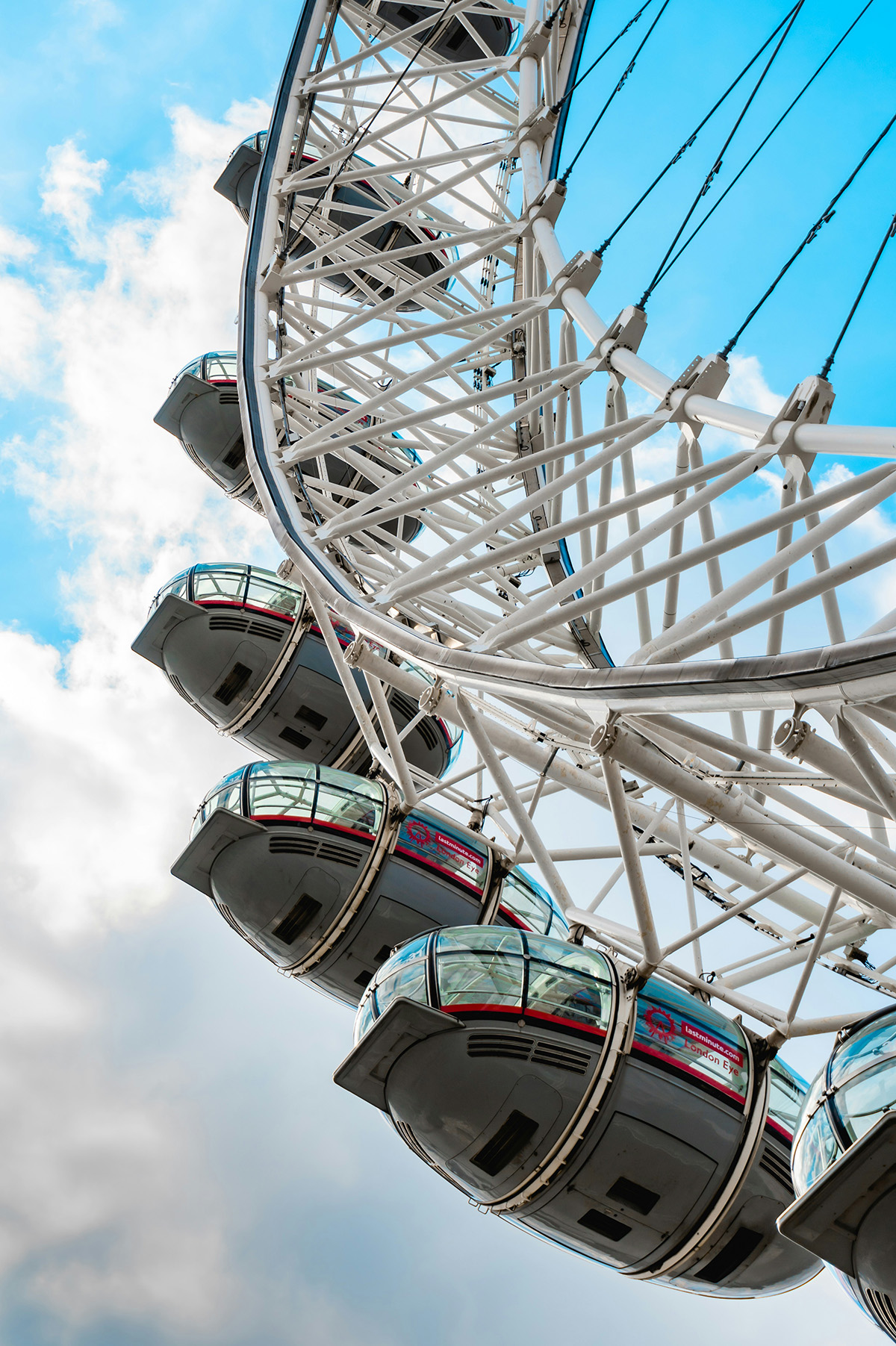
On July 1, 2026, the 18th International Conference on Social Robotics (ICSR + Art 2026) officially opened in London. Participants were welcomed by the General Chairs, Hooman Samani and Saina Akhond of the University of the Arts London, as well as by several robots, including the humanoid robot Ameca and the companion robot Lovot. Following registration and breakfast, the conference immediately moved into its scientific program with several parallel sessions. The Main Track Papers were presented in Conference Hall 1 (Beveridge Hall), while Special Sessions took place in Conference Hall 2 (Chancellor’s Hall). At the same time, authors of Short Papers introduced their work during the Teaser Talks in the Debate Hall (Senate Room). Held from July 1–4, 2026, ICSR is the leading international forum for researchers, academics, and industry professionals working in the field of social robotics. This year’s edition places a special emphasis on the intersection of social robotics and the arts, highlighting artistic and creative applications of robotic technologies. In addition to the technical program, the conference features the Robot Fringe Festival, the Grand Challenge, artistic performances, industry events, and numerous opportunities for networking and collaboration with leading researchers and practitioners from around the world. Further information is available at icsr2026.uk.
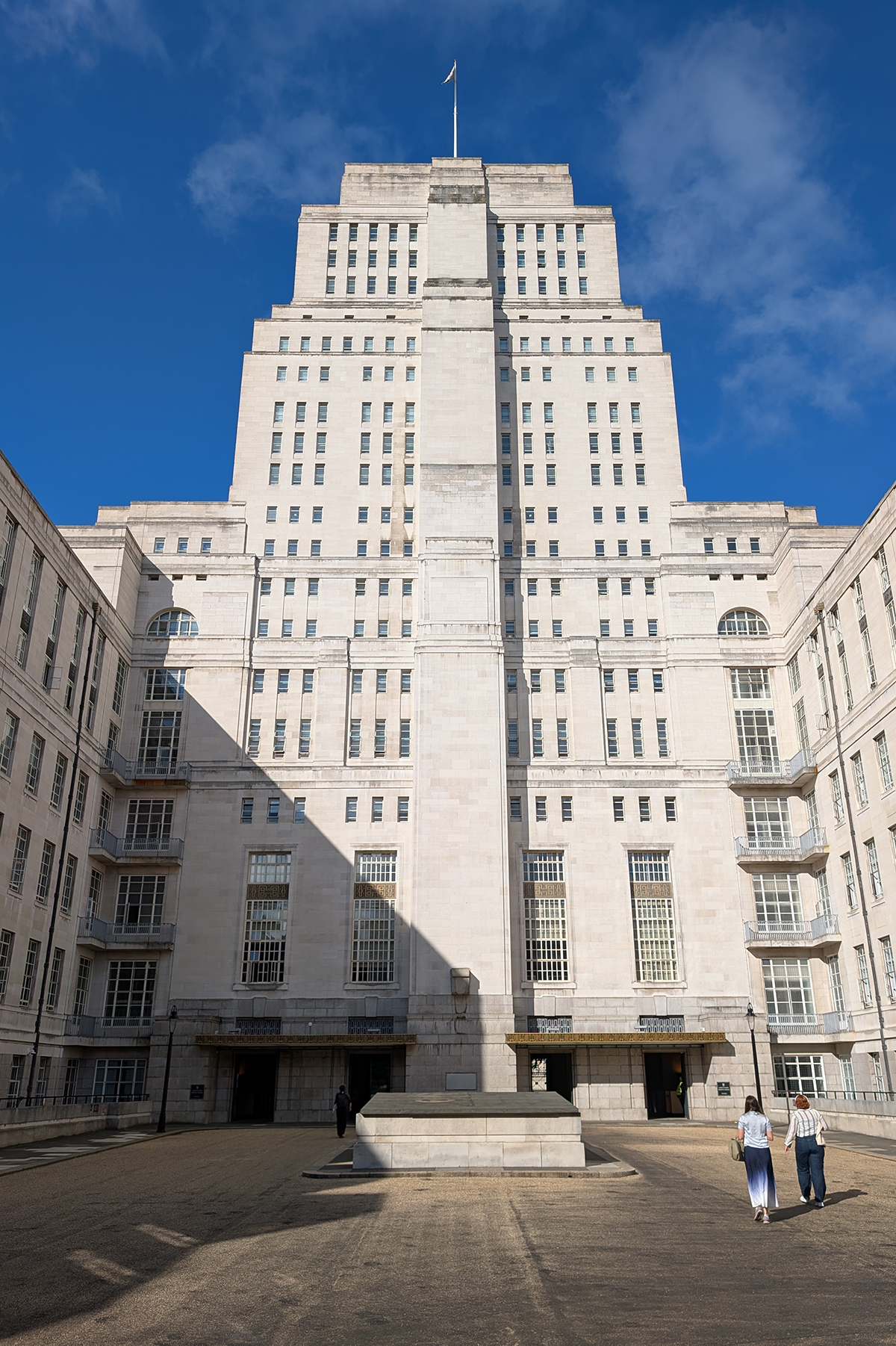
The 18th International Conference on Social Robotics (ICSR + Art 2026) will take place from 1–4 July 2026. ICSR is the leading international forum that brings together researchers, academics, and industry professionals from across disciplines to advance the field of social robotics. This year’s conference combines cutting-edge research in social robotics with a unique focus on artistic and creative applications of robotics. The programme features keynote lectures, paper presentations, workshops, special sessions, debates, exhibitions, competitions, and networking opportunities, reflecting both the scientific and cultural dimensions of the field. Hosted at the historic Senate House of the University of London, ICSR + Art 2026 brings together experts from academia, industry, healthcare, design, the arts, and related disciplines. The conference theme highlights how robots can move beyond traditional functional roles to become creative partners and collaborators. At the same time, the event remains open to the full spectrum of social robotics research, including human-robot interaction, artificial intelligence, ethics, education, assistive robotics, and design. On the eve of the conference, anticipation is building for one of the festival’s artistic highlights. The dancer Silke Grabinger is preparing for her performance at 18:00 on 1 July, where she will share the stage with a robot that carries a deeply personal connection to her own past. Participants can look forward to a diverse programme that includes the Robot Fringe Festival, the Grand Challenge, artistic performances, industry events, and opportunities to engage with leading researchers and practitioners from around the world. Further information is available at icsr2026.uk.
Fig.: Silke Grabinger is preparing for her performance
From August 11 to 14, 2026, the Robophilosophy Conference 2026 will take place at University College Dublin in Dublin, Ireland, under the theme „Connected Futures – Nature, Robots, and Society“. The conference will bring together researchers from philosophy, robotics, artificial intelligence, ethics, law, and the environmental and social sciences to discuss the evolving relationship between intelligent technologies, the natural world, and society. One of the conference highlights is Session 2, „Environmental Robotics and Society“, scheduled on the first day from 2:10 p.m. to 4:25 p.m. The session will open with Janko Munjić’s presentation, „Posthuman Victims in the Anthropocene: Environmental Social Robots, Layered Harm, and the Edges of Criminal Law“, which examines legal and ethical questions surrounding environmental social robots. Oliver Bendel will then present „Towards a Discipline of Animal-Machine Interaction: Ethical and Design Challenges of Machines in Animal Habitats“, exploring the emerging field of interactions between machines and animals. Catherine F. Botha’s talk, „Ecobots and Ecological Capabilities: Ethical Reflections on Robots as Functional Ecological Agents“, will consider the ethical implications of robots acting as ecological agents. The session will conclude with „Aerial Robotics in Society: Energy, Ethics, and Accountability for Sustainable Monitoring“, presented by Ghulam E. Mustafa Abro and Johanna Seibt, addressing the societal, ethical, and sustainability aspects of aerial robotic systems. For more information about the conference and the full program, please visit www.rp2026.org/.
Fig.: Oliver Bendel with a teddy bear from the HUGGIE Project (Photo: Jork Weismann)
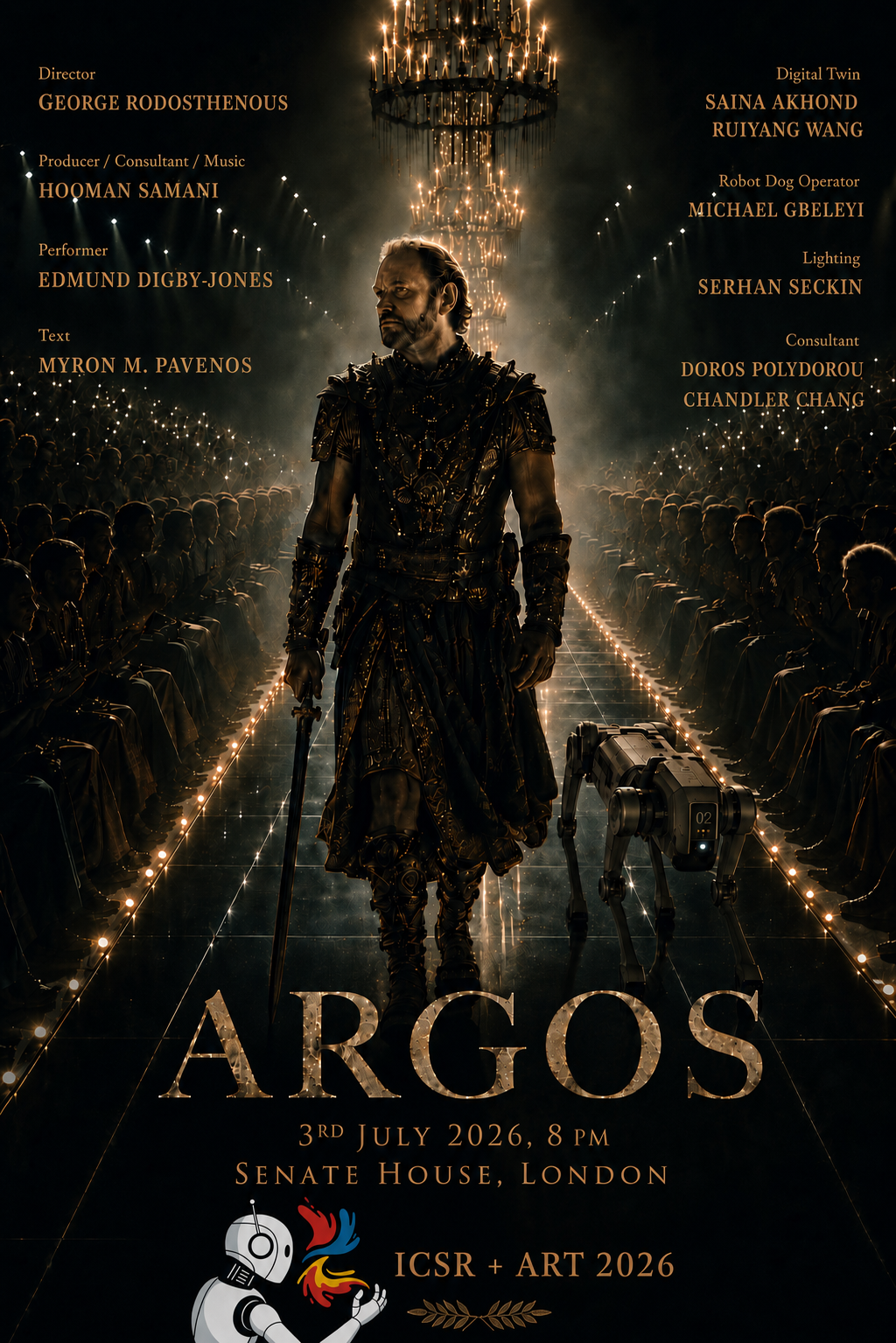
The 18th International Conference on Social Robotics (ICSR + Art 2026) will take place in London, UK, from 1–4 July 2026. ICSR is the leading international forum that brings together researchers, academics, and industry professionals from across disciplines to advance the field of social robotics. This year’s conference combines cutting-edge research in social robotics with a unique focus on artistic and creative applications of robotics. One of the highlights of the conference will be ARGOS, a performance staged on 3 July 2026 at Senate House in London. Rooted in Homer’s „Odyssey“, ARGOS reimagines the return of Odysseus after twenty years of war, recognized only by his faithful dog, here embodied by a real robot dog. The performance explores trust, intimacy, error, vulnerability, and the ethics of human-robot relationships. Developed as part of the Creative Robotics Theatre research initiative, ARGOS is a collaboration between the University of the Arts London, the University of Leeds, the Cyprus University of Technology, and CYENS. Directed by George Rodosthenous and produced by Hooman Samani, the project demonstrates how robotics and theatre can come together to inspire new reflections on technology and human connection. Further information is available at hoomansamani.com/creative-robotics/creative-robotic-theatre/argos/.
The 18th International Conference on Social Robotics (ICSR + Art 2026) will take place in London, UK, from 1–4 July 2026. ICSR is the leading international forum that brings together researchers, academics, and industry professionals from across disciplines to advance the field of social robotics. This year’s conference combines cutting-edge research in social robotics with a unique focus on artistic and creative applications of robotics. One of the highlights of the conference will be the debate programme on 2 July 2026, which promises a day of lively discussions on some of the most important questions shaping social robotics, society, and the arts. The debates will explore themes ranging from education and healthcare to fashion, human-robot interaction research, and the future of the human body, bringing together researchers, practitioners, artists, and technologists from diverse backgrounds. Combining critical reflection with creative provocation, the programme encourages participants to rethink what social robots can be, what roles they might play, and how they may transform our societies in the future. And who says debates are only for humans? The programme even includes a social robot that will have the opportunity to answer back. Those interested in the full range of debate topics and participants can find further information at icsr2026.uk/debates/.
Fig.: Euclid will be there for the debate (Photo: ICSR)
The 18th International Conference on Social Robotics (ICSR + Art 2026) will take place in London, UK, from 1–4 July 2026. ICSR is the leading international forum that brings together researchers, academics, and industry professionals from across disciplines to advance the field of social robotics. This year’s conference combines cutting-edge research in social robotics with a unique focus on artistic and creative applications of robotics. The programme features keynote lectures, paper presentations, workshops, special sessions, debates, exhibitions, competitions, and networking opportunities, reflecting both the scientific and cultural dimensions of the field. Hosted at the historic Senate House of the University of London, ICSR + Art 2026 brings together experts from academia, industry, healthcare, design, the arts, and related disciplines. The conference theme highlights how robots can move beyond traditional functional roles to become creative partners and collaborators. At the same time, the event remains open to the full spectrum of social robotics research, including human–robot interaction, artificial intelligence, ethics, education, assistive robotics, and design. Participants can look forward to a diverse programme that includes the Robot Fringe Festival, the Grand Challenge, artistic performances, industry events, and opportunities to engage with leading researchers and practitioners from around the world. Please note that the deadline for regular registration is 15 June 2026. Registration details are available at: icsr2026.uk/registration/.
The 18th International Conference on Social Robotics (ICSR + Art 2026) will take place in London, UK, from 1–4 July 2026. ICSR is the leading international forum that brings together researchers, academics, and industry professionals from across disciplines to advance the field of social robotics. The preliminary programme, now available, offers four days of scientific exchange, artistic exploration, and community building, featuring keynote lectures, paper presentations, special sessions, workshops, debates, a Grand Challenge, exhibitions, and a variety of networking opportunities. Reflecting the conference theme ICSR + Art, the programme highlights the growing intersections between social robotics and creative practice through events such as the Robot Fringe Festival, the Rising Stars in Social Robotics event, the premiere performance of Quantwin by Silke Grabinger, the 1001 Nights with Robots Show, Argos, and the Robot Fashion Show, while also covering the full breadth of contemporary social robotics research. Participants will have opportunities to engage with leading experts from academia, industry, healthcare, design, the arts, and other fields. Full details of the programme are available at icsr2026.uk/programme/.
Vom 1. bis 4. Juli 2026 trifft sich die Community der Sozialen Robotik zur 18th International Conference on Social Robotics (ICSR + ART 2026) in London. Getagt wird im Senate House der University of London, einem der bekanntesten akademischen Gebäude Großbritanniens. Forscher, Entwickler, Künstler und Vertreter der Industrie diskutieren dort aktuelle Entwicklungen und zukünftige Perspektiven sozialer Roboter sowie animaloider, humanoider und mythomorpher Gestaltung. Besonders ist in diesem Jahr die Verbindung von Robotik und Kunst. Neben dem wissenschaftlichen Programm bietet die Konferenz mit Formaten wie der Grand Challenge, dem Robot Fringe, den Debates (die mit dem Debate Room einen exklusiven Ort haben) und einem Industry Day zahlreiche Möglichkeiten für Austausch und Erkenntnisgewinn. Die General Chairs Hooman Samani und Saina Akhond, beide von der University of the Arts London, und ihre Mitstreiter von Hochschulen auf der ganzen Welt setzen damit gezielt auf Interdisziplinarität, Innovation und Diskurs. Weitere Informationen sind über icsr2026.uk verfügbar.
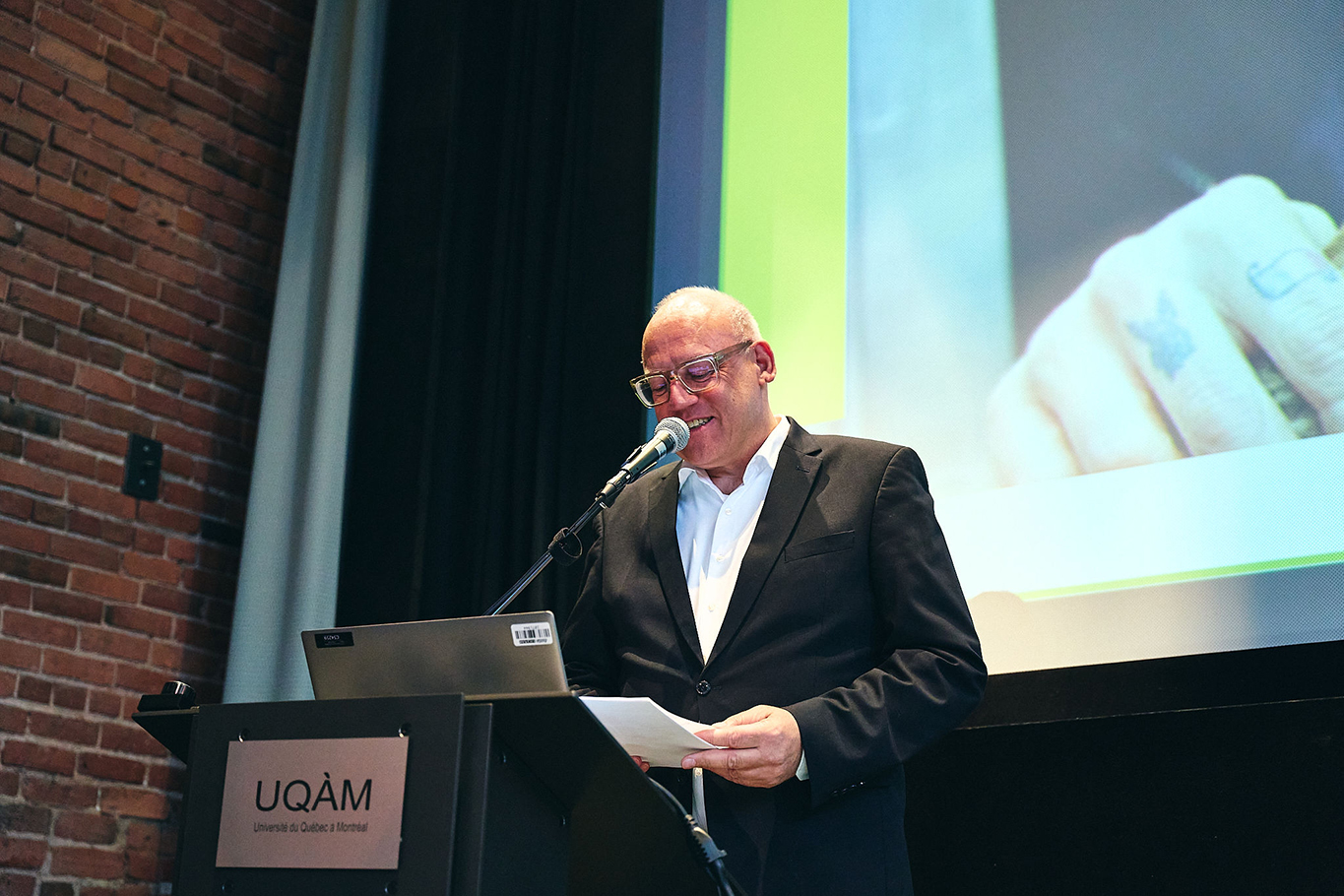
On April 30, 2026, Prof. Dr. Oliver Bendel gave a talk on „Physical AI and the Future of Intimacy“ at the SAGA Conference in Montreal. From the abstract: „The presentation begins with the Tamagotchi, the iconic digital pet that demonstrated how simple interactive systems can evoke emotional attachment. It then turns to social robots, wearable social robots, and AI-enhanced sex toys, love dolls, and sex robots. Today, large language models (LLMs) and multimodal language models (MLLMs) enable dialogue, perception, and evaluation in these systems. Such capabilities may also benefit people with disabilities, including blind users, by facilitating communication and interaction. At the same time, the physical dimension remains crucial. Embodied systems create presence and proximity: they can be touched, held, and stroked, and experienced through movement, vibration, or sound. The talk argues that future intimate technologies will emerge from the convergence of generative intelligence and physical embodiment, combining conversational AI with the sensory experience of a physically present companion.“ On May 19, 2026, the photos from the event, taken by Maison Toki, an independent art agency in Montreal, were made available.
Fig.: Oliver Bendel during his talk (Photo: Maison Toki)
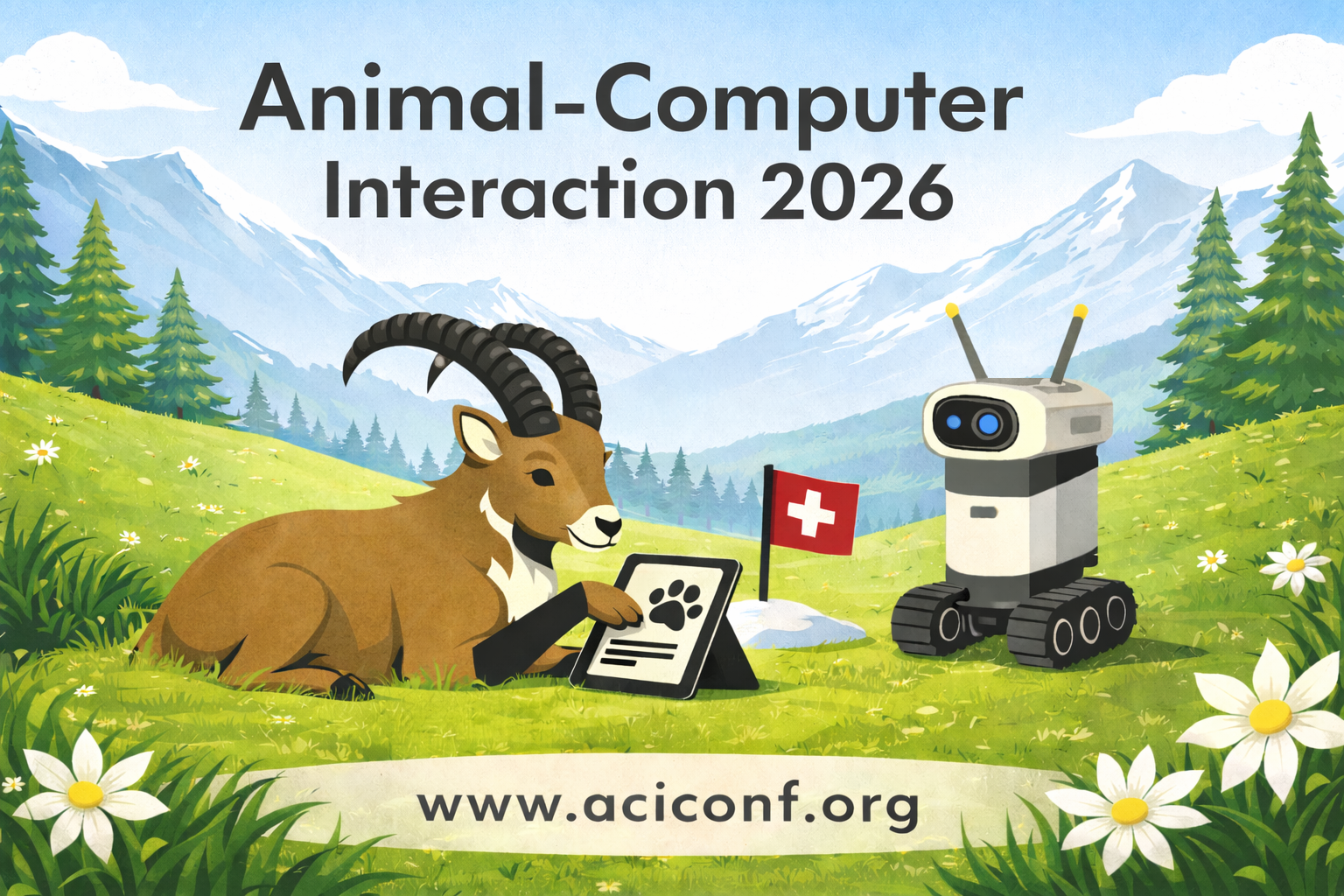
The Animal-Computer Interaction International Conference 2026 (ACI 2026) invites contributions for its thirteenth edition. The conference seeks theoretical, methodological, empirical, and ethical work that advances dialogue around animal-centered research and the design of computing-enabled systems. ACI brings together perspectives from computer science, informatics, engineering, interaction design, animal behavior and welfare science, veterinary science, ecology, sociology, philosophy, and related disciplines, with the aim of further developing Animal-Computer Interaction as a field. In an increasingly networked world shaped by pervasive technologies, animals – both human and nonhuman – are entangled in complex webs of interaction. These interactions may be direct or indirect, physical or cognitive, distributed or dyadic, synchronous or asynchronous. Contributions are encouraged that critically examine how technology shapes human-animal relationships, how large-scale technological deployments affect animals, and how future systems can be designed responsibly and ethically. The conference also welcomes submissions in Animal-Machine Interaction (AMI), which explores interaction and communication between animals and machines, including autonomous systems such as drones and robots. AMI focuses on designing machines that benefit animals and safeguard their interests, supporting survival and well-being. The submission deadline for Research Papers and Emerging Work Papers has been extended by one week and is now May 22, 2026. The deadline for Workshop Proposals remains unchanged at June 1, 2026. All submissions will be peer-reviewed. Further information is available at www.aciconf.org, and submission details can be found at www.aciconf.org/call-for-contributions.
Fig.: Extension of the submission deadline for ACI 2026
Oliver Bendel’s paper „Towards a Discipline of Animal-Machine Interaction“ has been accepted for presentation at Robophilosophy 2026. The renowned conference on the philosophical aspects of social robotics has been held since 2014 and will take place in Dublin this year. Autonomous and semi-autonomous machines such as robots and drones are increasingly moving into natural and urban environments, leading to a growing number of interactions between animals and machines and raising corresponding new ethical and conceptual challenges. This article proposes animal-machine interaction (AMI) as a distinct discipline concerned with the design and governance of machines that encounter animals. After clarifying core concepts and delineating AMI from related fields, the article highlights the role of machine ethics in developing animal-friendly systems. Selected application examples illustrate how machines can support animal survival and well-being, while the ethical discussion addresses both opportunities and risks of technological intervention in animal habitats. It is becoming clear that AMI is an increasingly important field of research, but one that must be constantly reoriented and questioned. Oliver Bendel has participated in the biennial conference series since 2018. That year, he delivered a keynote speech in Vienna alongside Hiroshi Ishiguro, Guy Standing, and Joanna Bryson. His book „Tier-Maschine-Interaktion“ („Animal-Machine Interaction“) was recently published by Springer Gabler.
The 18th International Conference on Social Robotics (ICSR + Art 2026) will take place in London, UK, from 1-4 July 2026. ICSR is the leading international forum that brings together researchers, academics, and industry professionals from across disciplines to advance the field of social robotics. Hosted at the University of London, this year’s conference is seeking enthusiastic volunteers to help deliver a dynamic international event at the intersection of robotics, society, and the arts. Volunteering offers a valuable opportunity to gain hands-on experience in organizing a major academic conference, connect with global experts, artists, and innovators, attend selected sessions showcasing cutting-edge developments in social robotics, and build essential organizational, communication, and teamwork skills. Ideal for undergraduate and postgraduate students as well as motivated individuals interested in social robotics or related fields, volunteer responsibilities include supporting registration, assisting with session coordination, guiding attendees, helping with technical presentations and demonstrations, and contributing to general event logistics. In return, volunteers will receive free conference access, a certificate of participation, and exceptional networking opportunities with leading professionals in the field. Applications are open now, with priority given to reliable candidates available throughout the full conference period and comfortable working in an international environment. The deadline to apply is 31 May 2026, with successful applicants notified in early June, and early applications are strongly encouraged. The application form and additional information can be found at: icsr2026.uk/volunteer/.
Those who had already arrived on Sunday or Monday were welcomed to Montreal with beautiful sunshine and mild temperatures. The Clock Tower Beach had been prepared, though it was not yet open. On Thursday, April 30, 2026, the SAGA conference took place at the Judith-Jasmin Pavilion Extension in slightly cooler weather. Renowned experts such as David Lafortune and Simon Dubé were among the hosts, alongside rising stars like Valérie A. Lapointe. Through a series of outstanding presentations and panels, the conference explored the theme „Sexuality and Generative AI: Benefits, Risks, and Paths for Action“. This included both generative AI and other AI systems on computers, as well as those embedded in robots and physical systems. The talks, delivered in English and French, were translated live with the help of AI. Both on stage and in the audience were sexologists, psychologists, and philosophers, as well as practitioners from a wide range of fields. There was no hesitation – neither among participants nor in engaging with the topics discussed. This conference was made possible through the financial support of the Social Sciences and Humanities Research Council (SSHRC). The program can be viewed here.
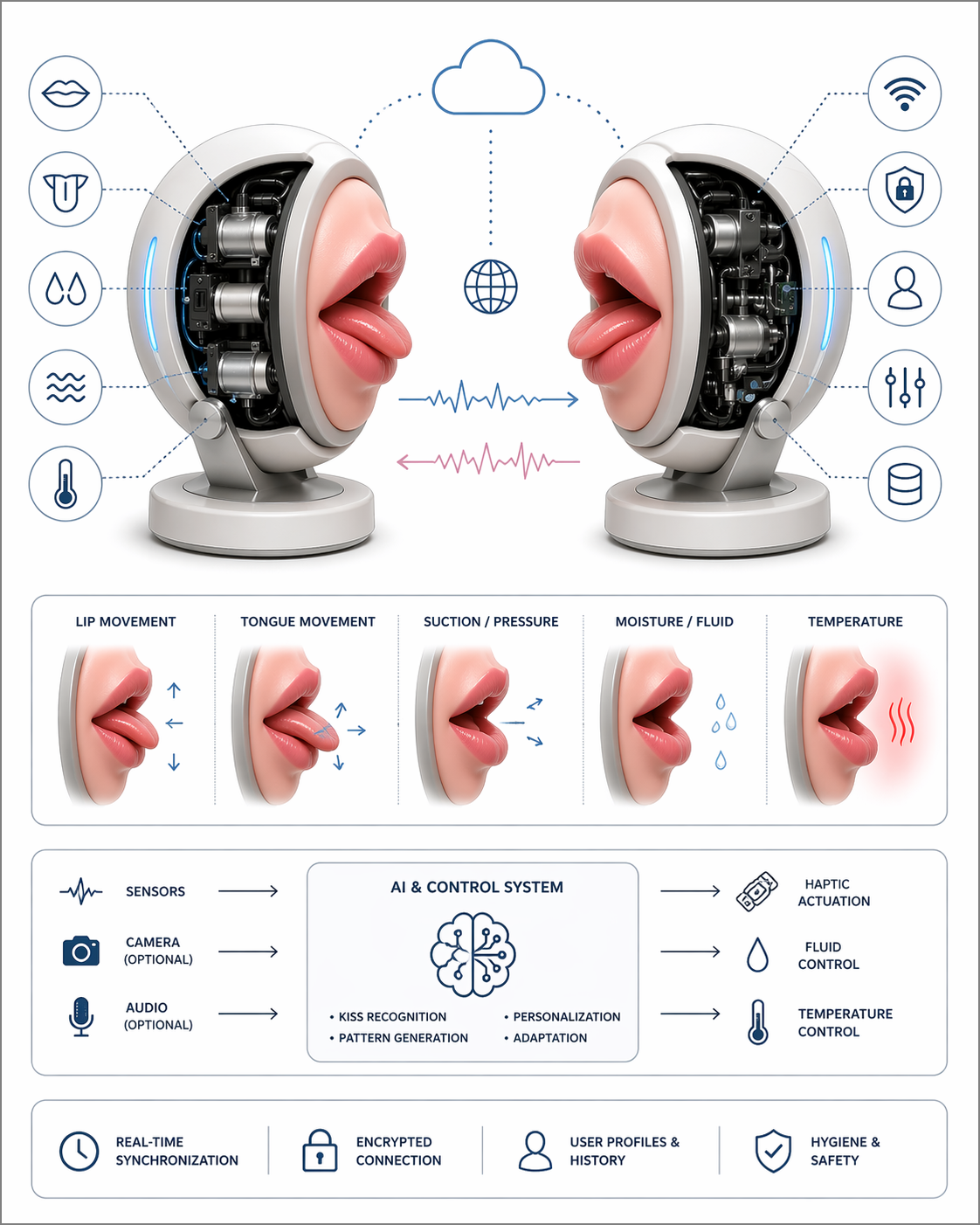
The paper „Kiss Me More: Artificial Lips for Intimate Encounters“ by Oliver Bendel has been accepted at ICSR + Art 2026. Kisses have different functions and meanings depending on culture, context, and partner; they can serve as a greeting, express gratitude, or be part of sexual interaction. When partners are separated but still wish to show affection, teledevices can offer a solution. Since 2011, several prototypes and products for remote kissing have been developed, including the Kissenger, a prototype created by Hooman Samani, to which the present work also pays tribute. Although these systems are already conceptually and technically advanced, there is still room for further development, especially with regard to intimacy and sexuality. The paper therefore formulates specific requirements and outlines possible implementations, resulting in the concept of the KissMachine, which is critically discussed with respect to its technical challenges and ethical implications. The 18th International Conference on Social Robotics will take place in London, UK, from 1–4 July 2026. ICSR is the leading international forum that brings together researchers, academics, and industry professionals from across disciplines to advance the field of social robotics.
Fig.: An illustration of the KissMachine (not part of the paper) (Image: GPT Image 2)