The 18th International Conference on Social Robotics (ICSR + Art 2026) will take place in London, UK, from 1–4 July 2026. ICSR is the leading international forum that brings together researchers, academics, and industry professionals from across disciplines to advance the field of social robotics. The finalists of the ICSR 2026 Grand Challenge have now been announced, showcasing an exciting and diverse range of innovative projects from researchers, artists, and interdisciplinary teams across the globe. This year’s finalists represent institutions from Europe, Asia, North America, and Australia, reflecting the international and creative spirit of the competition. The selected teams will present their work during the first day of the conference on 1 July 2026, with the results and awards to be announced on 3 July 2026. Finalists will also have the optional opportunity to demonstrate their projects during the conference. To support participation in the competition, ICSR offers a special reduced registration rate through the Grand Challenge Competition Finalists Pass, which grants access to the full conference; at least one registration per team is required, and each attendee must hold an individual registration. Further details regarding presentations and demonstrations will be communicated directly to finalists via email. For questions related to the ICSR Grand Challenge, participants may contact Prof. Laura Fiorini at laura.fiorini@unifi.it. A full list of finalists and additional information can be found at: icsr2026.uk/competition-finalists/.
The Animal-Computer Interaction International Conference 2026 (ACI 2026) invites contributions for its thirteenth edition. The conference seeks theoretical, methodological, empirical, and ethical work that advances dialogue around animal-centered research and the design of computing-enabled systems. ACI brings together perspectives from computer science, informatics, engineering, interaction design, animal behavior and welfare science, veterinary science, ecology, sociology, philosophy, and related disciplines, with the aim of further developing Animal-Computer Interaction as a field. In an increasingly networked world shaped by pervasive technologies, animals – both human and nonhuman – are entangled in complex webs of interaction. These interactions may be direct or indirect, physical or cognitive, distributed or dyadic, synchronous or asynchronous. Contributions are encouraged that critically examine how technology shapes human-animal relationships, how large-scale technological deployments affect animals, and how future systems can be designed responsibly and ethically. The conference also welcomes submissions in Animal-Machine Interaction (AMI), which explores interaction and communication between animals and machines, including autonomous systems such as drones and robots. AMI focuses on designing machines that benefit animals and safeguard their interests, supporting survival and well-being. The submission deadline for Research Papers and Emerging Work Papers has been extended by two weeks and is now May 15, 2026. The deadline for Workshop Proposals remains unchanged at June 1, 2026. All submissions will be peer-reviewed. Further information is available at www.aciconf.org, and submission details can be found at www.aciconf.org/call-for-contributions.
The 18th International Conference on Social Robotics (ICSR + Art 2026) will take place in London, UK, from 1–4 July 2026. ICSR is the leading international forum that brings together researchers, academics, and industry professionals from across disciplines to advance the field of social robotics. As part of the conference programme, ICSR Industry Day will offer a dynamic platform connecting research and industry through a panel debate, a UKRI-led workshop, and a pitch session showcasing emerging robotics start-ups. A key highlight will be the panel discussion „There’s No Place Like Home: Exploring the Next Frontier for Social Robots“, taking place on Friday, 3 July from 2.30-4.00 pm. Bringing together leading voices from industry, the session will examine the growing interest in domestic environments as the next major market for social robotics. While companies increasingly envision robots supporting household tasks, personalised assistance, ageing-in-place, and companionship, the home presents unique challenges as a deeply personal and unpredictable setting where trust, privacy, and reliability are essential. Drawing on firsthand experience in deploying consumer robots, the panellists will discuss both the opportunities and the obstacles of integrating robots into everyday domestic life, addressing issues such as surveillance, dependency, social acceptance, and design limitations. The panel will feature Ira Renfrew, Co-Founder and Chief People Product Officer at Familiar Machines & Magic; Shunsuke Aoki, Founder of Yukai Engineering; Craig Allen, former Chief Creative Officer at Embodied (now Moxie Robots); and Samuel Ader, VP Growth & Supply at Cera (Genie Connect). The discussion will be moderated by Elizabeth Jochum. Together, the speakers will explore how thoughtful, human-centred innovation can help social robots earn a meaningful place in people’s homes and daily lives. Further information and registration details for the Industry Day panel are available at: icsr2026.uk/industry-day/.
The 18th International Conference on Social Robotics (ICSR + Art 2026) will take place in London, UK, from 1–4 July 2026. ICSR is the leading international forum that brings together researchers, academics, and industry professionals from across disciplines to advance the field of social robotics. This year’s conference will feature three distinguished keynote speakers whose work is shaping the future of artificial intelligence, robotics, and human-robot interaction. Hatice Gunes, Professor of Affective Intelligence and Robotics at the University of Cambridge, is internationally recognised for her pioneering research on affective computing, multimodal intelligence, and socially aware AI systems, with a strong emphasis on ethics, fairness, and wellbeing in robotics. Jean Oh, Associate Research Professor at Carnegie Mellon University and Director of the roBot Intelligence Group, is known for her work on collaborative robots, social navigation, and creative physical AI, focusing on developing robots that learn, adapt, and work safely alongside humans in shared environments. Nicolas Heess, Research Scientist and Director at Google DeepMind, leads cutting-edge research on general-purpose robotics and embodied AI, exploring how advances in machine learning, perception, and motor control can bring intelligent robots into the physical world. Together, these keynote speakers represent the forefront of research and innovation driving the next generation of social robotics. Further information on the keynote programme is available at: icsr2026.uk/keynote/.
The upcoming „SAGA: Sexuality and Generative AI“ symposium, taking place on April 30, 2026 at the Université du Québec à Montréal, explores how generative AI is reshaping intimacy, desire, relationships, and sexual expression. The first block, titled „Societal Impacts“, brings together a set of talks that examine how emerging technologies are already influencing human connection and cultural norms. Brian Willoughby (Brigham Young University, United States) opens with „Engagement with Romantic AI: Implications for Young Adult Dating and Relationships“, addressing how AI companions may alter expectations and behaviors in modern dating. Arnaud Anciaux (Université Laval, Canada) follows with „Toward a Great Bypass? Property, Consent, and Value Creation in AI-Generated Sexual Content“, focusing on legal and ethical questions around ownership and consent. Émilie Gaudet (Université de Montréal, Canada) contributes “AI-Generated Pornography and Problematic Pornography Use“, exploring the psychological and societal risks associated with synthetic sexual media. Finally, Oliver Bendel (FHNW School of Business, Switzerland) looks ahead in „Physical AI and the Future of Intimacy“, considering how embodied AI systems could transform intimate relationships. The program also features „Panel 1 – Technological Solutions to the Challenges of AI“, with contributions from Sophie Mortimer (UK Revenge Porn Helpline, United Kingdom), Alex Georges (AetherLab, United States), and Madelaine Thomas (Image Angel, United Kingdom), who discuss practical responses to harms such as non-consensual content and digital abuse. Overall, the symposium is structured into four thematic blocks and includes two panels, offering a compact yet wide-ranging exploration of one of the most sensitive and rapidly evolving intersections of technology and human life. The SAGA conference program is now available online and can be downloaded here.
Lake Manly ist ein See, der sich im Pleistozän im Gebiet des heutigen Death Valley in Kalifornien befand. Im März 2026 war er zurückgekehrt, wie bereits in den beiden Jahren zuvor. Im Badwater Basin, wo normalerweise eine Salzschicht den Boden bedeckt, bildete sich ein flacher See. Im Frühjahr 2024 war das Naturschauspiel besonders eindrucksvoll gewesen. Die Besucher spazierten auf den verbleibenden Graten der Salzkruste hinaus, und es sah aus, als würden sie über das Wasser gehen. Die starken Regenfälle ließen in allen drei Jahren nicht nur den See entstehen, sondern auch das Blütenmeer der Wüstenblumen. Normalerweise ist es karg und heiß. Den heißesten Ort der Erde beschrieb schon Karl May in seinem Roman „Im Tal des Todes“. Winnetou und Old Firehand helfen einer deutschen Auswandererfamilie gegen Verbrecher. Tagelang reiten sie durch die unwirtliche, lebensfeindliche Landschaft. Vor 150.000 Jahren erreichte Lake Manly eine Länge von 150 Kilometern und eine Tiefe von 180 Metern. Aber vermutlich konnten ihn nur einige Tiere bewundern. Der frühe Mensch war noch in Afrika.
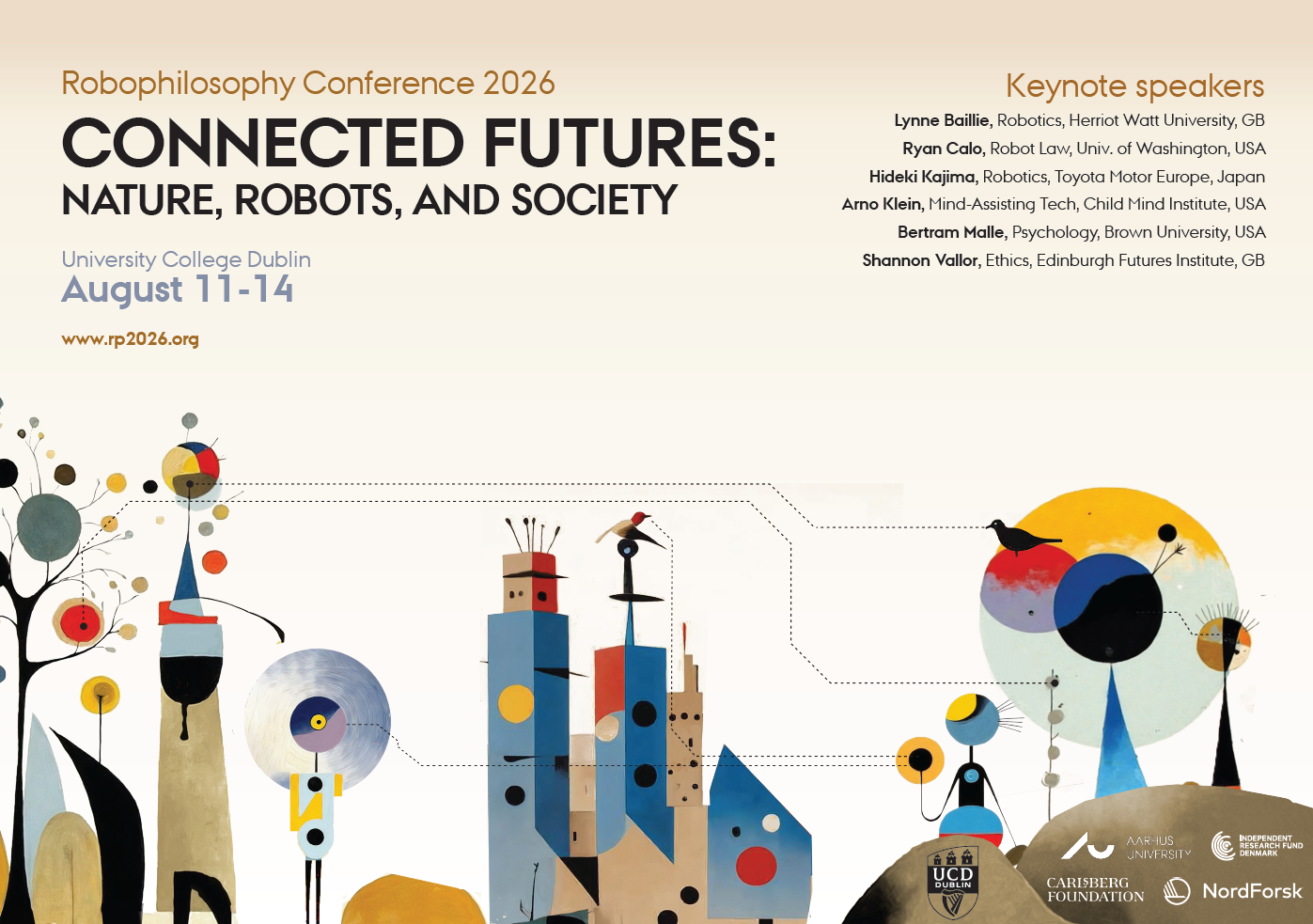
The Robophilosophy Conference 2026 (RP2026), titled „Connected Futures – Nature, Robots, and Society“, will take place August 11-14, 2026, at University College Dublin (UCD) in Dublin, Ireland, bringing together researchers from across disciplines to examine how robotics and artificial intelligence are reshaping human societies and the natural world. As robotic systems become increasingly embedded in everyday life, the conference aims to foster dialogue between fields ranging from social robotics, computer science, and human-robot interaction to the humanities, social sciences, law, economics, and environmental research. Central questions include how robotic technologies can uphold human dignity and social justice, how legal systems must adapt to autonomous decision-making, and whether robots can contribute to sustainability rather than accelerate ecological decline. The event marks the seventh installment in the Robophilosophy conference series and features plenary speakers such as Lynne Baillie, Ryan Calo, Hideki Kajima, Arno Klein, Bertram Malle, and Shannon Vallor. Importantly, the submission deadline for research papers, posters, and artistic contributions has been extended to March 15, 2026, offering additional time for scholars and practitioners to contribute to this interdisciplinary conversation. Registration is now open, and further details are available at www.rp2026.org.
Fig.: The conference will take place at UCD in Dublin
The 18th International Conference on Social Robotics (ICSR + Art 2026) will take place in London, UK, from 1–4 July 2026. ICSR is the leading international forum that brings together researchers, academics, and industry professionals from across disciplines to advance the field of social robotics. For its 18th edition, the conference will present the special theme ICSR + Art, highlighting how robots can move beyond their conventional roles to become tools, partners, and co-creators within artistic and creative practices. At the same time, the conference remains open to the full breadth of social robotics research, including human–robot interaction, medical and assistive robotics, artificial intelligence and machine learning, ethics, design, education, and cultural applications. Accepted papers will be published in Springer’s Lecture Notes in Artificial Intelligence (LNAI) series and indexed in major academic databases. Due to current extenuating circumstances worldwide and following requests from several authors, the submission deadlines have been extended by a few additional days to allow additional time for final submissions. No further extensions of the submission deadlines are planned, and all submissions must follow the updated schedule. All deadlines are based on Anywhere on Earth (AoE) time. Authors who have already submitted a paper may use the extension to update their submission; if any difficulty occurs when modifying the existing entry in the system, the previous submission may be withdrawn and replaced with a new version. Updated dates are available at icsr2026.uk/dates/ and submission instructions can be found at icsr2026.uk/submission/.
Fig.: An inverted image of the Senate House (Photo: stevecadman/CC BY-SA 2.0)
Arianna Ferrari, PhD, and Dr. iur. Dr. h.c. Antoine F. Goetschel will deliver the conference keynote addresses at the Animal-Computer Interaction International Conference 2026 (ACI 2026) at the FHNW Campus Brugg-Windisch, Switzerland. Arianna Ferrari, PhD, is based at the AIT Austrian Institute of Technology, Austria’s largest research and technology organization. She is an ethicist and philosopher of science and technology with extensive experience in technology assessment, the critical evaluation of visions of technological futures (vision assessment), foresight, and human-animal studies. Dr. iur. Dr. h.c. Antoine F. Goetschel is a lawyer and former official animal lawyer for the Canton of Zurich in Switzerland. For more than three decades, he has worked at the intersection of law, ethics, and public policy, representing the interests of animals within legal systems and contributing to the development of animal protection standards at both national and international levels. The ACI International Conference is the leading conference in the field of animal-computer interaction. This year, the conference, hosted by Prof. Dr. Oliver Bendel, will include a dedicated call for contributions on animal-machine interaction. Further information is available at www.aciconf.org.
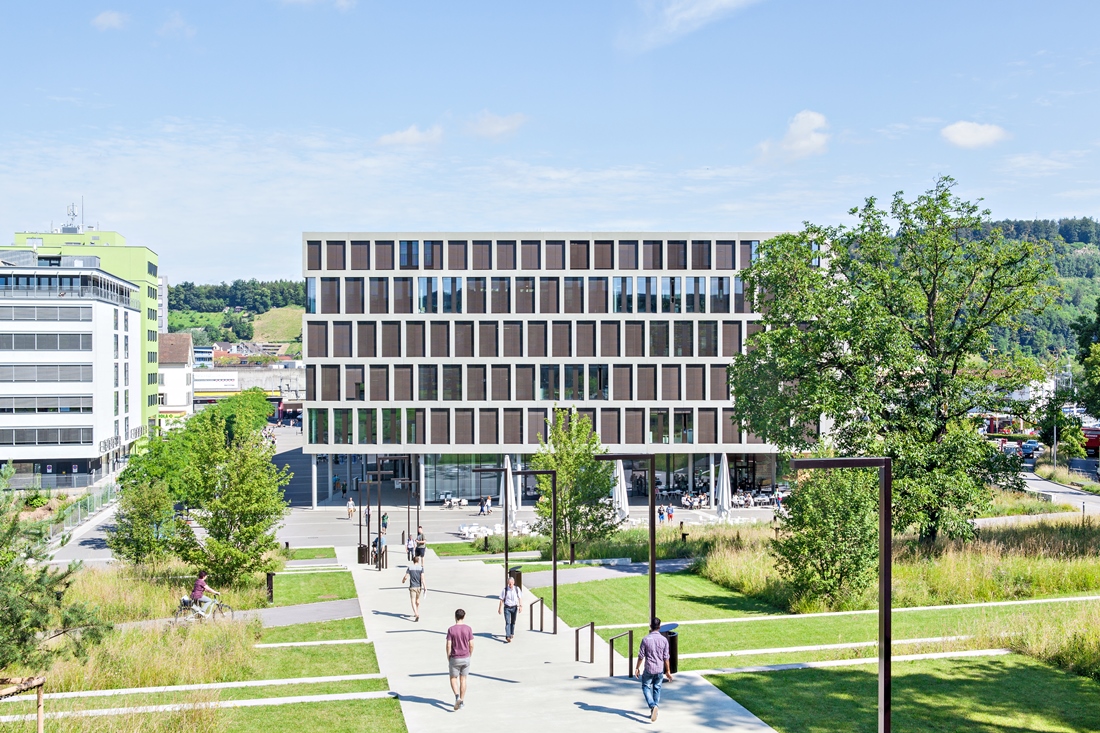
Fig.: The FHNW Campus Brugg-Windisch (Foto: WEISSWERT C. Morin & M. Indermaur)
The Robophilosophy Conference 2026 (RP2026), titled „Connected Futures – Nature, Robots, and Society“, will take place August 11-14, 2026, in Dublin, Ireland, bringing together researchers from across disciplines to examine how robotics and artificial intelligence are reshaping human societies and the natural world. As robotic systems become increasingly embedded in everyday life, the conference aims to foster dialogue between fields ranging from social robotics, computer science, and human-robot interaction to the humanities, social sciences, law, economics, and environmental research. Central questions include how robotic technologies can uphold human dignity and social justice, how legal systems must adapt to autonomous decision-making, and whether robots can contribute to sustainability rather than accelerate ecological decline. The event marks the seventh installment in the Robophilosophy conference series and features plenary speakers such as Lynne Baillie, Ryan Calo, Hideki Kajima, Arno Klein, Bertram Malle, and Shannon Vallor. Importantly, the submission deadline for research papers, posters, and artistic contributions has been extended to March 15, 2026, offering additional time for scholars and practitioners to contribute to this interdisciplinary conversation. Registration will open soon, and further details are available here and at www.rp2026.org.
Fig.: The poster of the conference (Image: Robophilosophy)
The Animal-Computer Interaction International Conference 2026 (ACI 2026) invites contributions for its thirteenth edition. The conference seeks theoretical, methodological, empirical, and ethical work that advances dialogue around animal-centered research and the design of computing-enabled systems. ACI brings together perspectives from computer science, informatics, engineering, interaction design, animal behavior and welfare science, veterinary science, ecology, sociology, philosophy, and related disciplines, with the aim of further developing Animal-Computer Interaction as a field. In an increasingly networked world shaped by pervasive technologies, animals – both human and nonhuman – are entangled in complex webs of interaction. These interactions may be direct or indirect, physical or cognitive, distributed or dyadic, synchronous or asynchronous. Contributions are encouraged that critically examine how technology shapes human-animal relationships, how large-scale technological deployments affect animals, and how future systems can be designed responsibly and ethically. The conference also welcomes submissions in Animal-Machine Interaction (AMI), which explores interaction and communication between animals and machines, including autonomous systems such as drones and robots. AMI focuses on designing machines that benefit animals and safeguard their interests, supporting survival and well-being. Research Papers and Emerging Work Papers are due May 1, 2026, and Workshop Proposals are due June 1, 2026. All submissions will be peer-reviewed. Further information is available at www.aciconf.org, and submission details can be found at www.aciconf.org/call-for-contributions.
The 18th International Conference on Social Robotics (ICSR + Art 2026) will take place in London, UK, from 1-4 July 2026. ICSR is the leading international forum that brings together researchers, academics, and industry professionals from across disciplines to advance the field of social robotics. For its 18th edition, the conference will present the special theme ICSR + Art, highlighting how robots can move beyond their conventional roles to become tools, partners, and co-creators within artistic and creative practices. At the same time, the conference remains open to the full breadth of social robotics research, including human-robot interaction, medical and assistive robotics, artificial intelligence and machine learning, ethics, design, education, and cultural applications. Accepted papers will be published in Springer’s Lecture Notes in Artificial Intelligence (LNAI) series and indexed in major academic databases. The conference programme will encompass regular papers, short papers, special sessions, a design and art competition, debates, the Robot Fringe live performance strand, and an Industry Day dedicated to emerging robotics and technology companies. Regular Papers for the main track must follow the submission guidelines provided on the conference website and be submitted via the Springer Meteor system by 6 March 2026. Contributions to Special Sessions should likewise follow the Regular Paper instructions and be submitted to the respective session. Short Papers must comply with the specific Short Paper guidelines and be submitted accordingly. The ICSR Design / Art Competition, proposals for debates, and submissions for the Robot Fringe live robotic performance programme are due by 15 March 2026. Early-stage robotics and technology companies wishing to showcase their work at the Industry Day may apply until 15 May 2026. Further details, submission instructions, and relevant links are available at icsr2026.uk.
The 18th International Conference on Social Robotics (ICSR + Art 2026) will take place in London, UK, from 1–4 July 2026. ICSR is the leading international forum that brings together researchers, academics, and industry professionals from across disciplines to advance the field of social robotics. As part of the conference program, Robot Fringe 2026 offers a dedicated platform for experimental, daring, and imaginative ideas, presented on a performance stage within the supportive and inclusive environment of ICSR+ART 2026 (icsr2026.uk/robot-fringe/). Drawing inspiration from the Edinburgh Festival Fringe – the world’s largest performing arts festival and the origin of a global tradition of fringe and off-festivals celebrating unconventional and small-scale performances (www.edfringe.com) – Robot Fringe embraces creative risk-taking and non-traditional formats across artistic and technological practices. The variety show will take place on the evening of Thursday 2 July at Senate House in London and runs in conjunction with ICSR+ART 2026. The program is curated and hosted by researcher-comedians Heather Knight and Piotr Mirowski. Further information and submission details are available via the ICSR submission page (icsr2026.uk/submission/) and the Robot Fringe website (www.robotfringe.com).
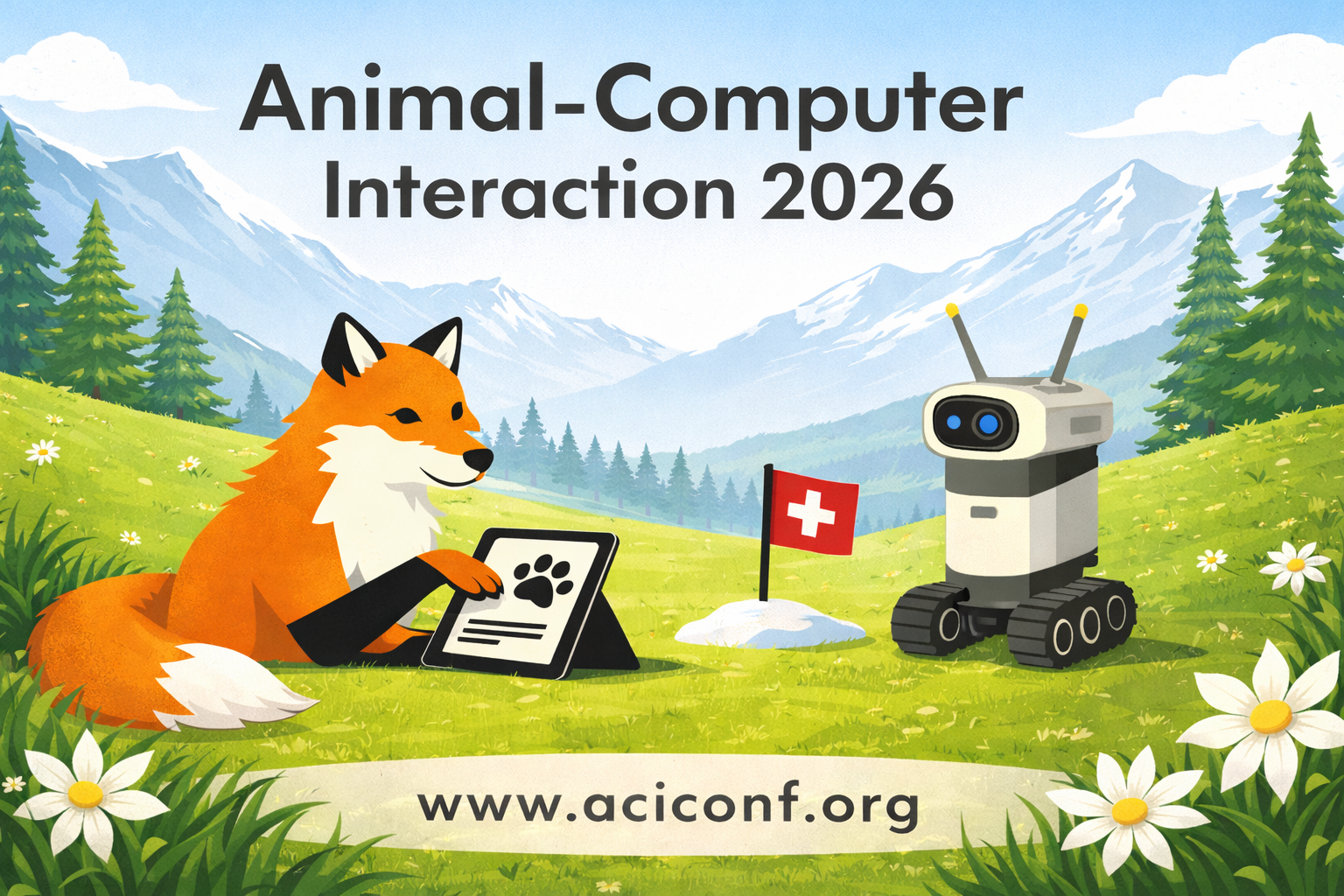
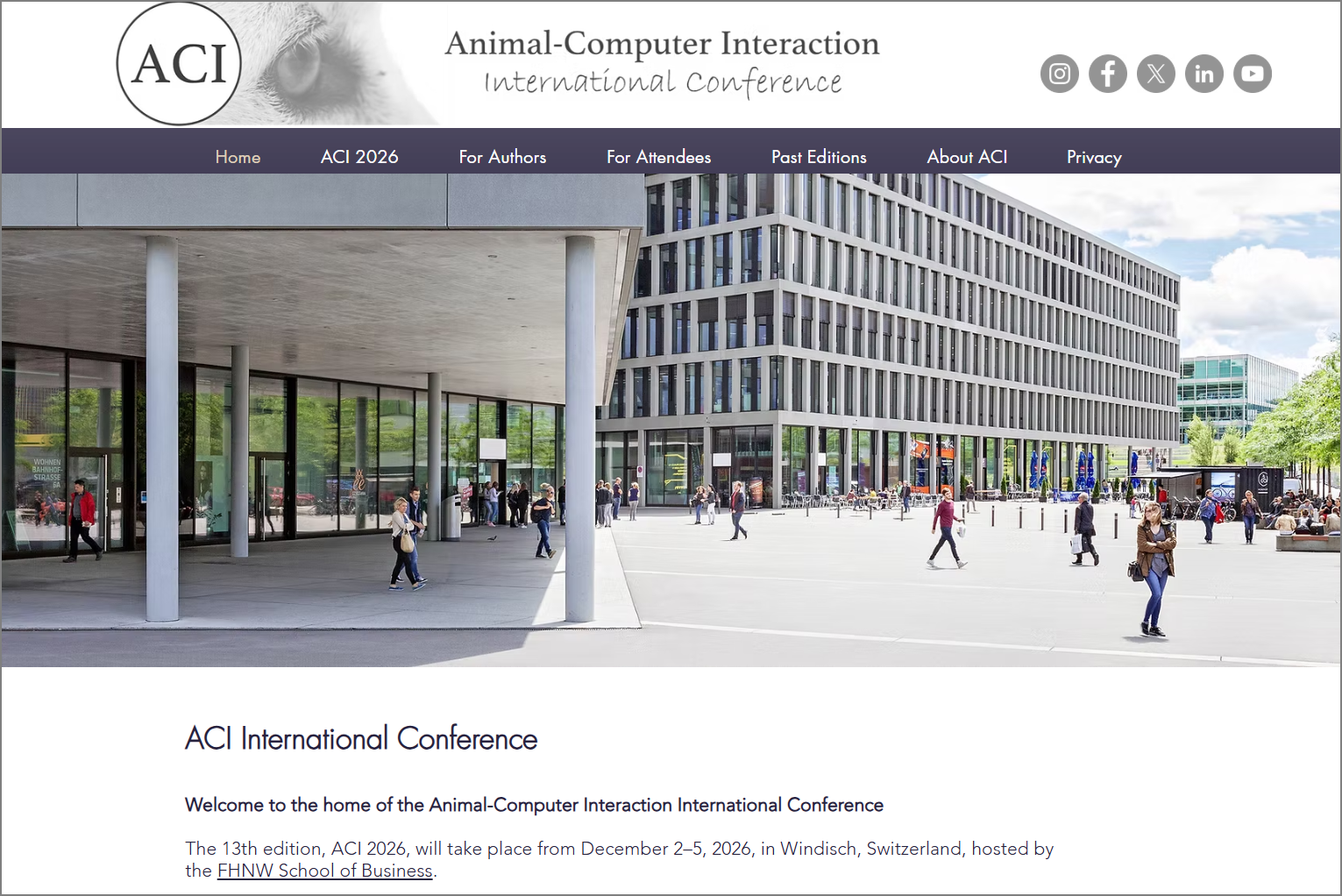
Prof. Dr. Oliver Bendel will host the next ACI Conference, bringing the event to continental Europe for the first time as it convenes on the FHNW campus in Brugg-Windisch, Switzerland, from December 2-5, 2026. The conference website is already online at www.aciconf.org, where the most important information is available; individual deadlines may still change. In the meantime, the website has been updated and expanded. It now includes visual elements that reference both the animal world of Switzerland and the thematic focus of the conference, strengthening its visual identity and contextual framing. Building on a tradition that has taken the community from Glasgow to North Carolina, Newcastle, Bloomington, Milton Keynes, Haifa, and Atlanta, this edition continues the conference’s role as a leading venue for advancing Animal-Computer Interaction. As the field grows, researchers and practitioners explore how technology shapes animals’ lives, welfare, cognition, and social dynamics while developing animal-centered systems and methods that embrace multispecies perspectives. The conference maintains its commitment to interdisciplinary collaboration across biology, technology, and cultural studies, supporting work that seeks to design ethically grounded, welfare-enhancing, and inclusive technological futures for all animals, humans included. ACI 2026 will also feature a Special Issue on Animal-Machine Interaction, a research field shaped in important ways by Oliver Bendel. The conference proceedings will be published in a volume of a renowned organization, ensuring wide visibility and long-term accessibility for the contributions presented.
As partofthe AAAI Spring Symposia, thesymposium „Will AI Light Up Human CreativityorReplaceIt?: Toward Well-Being AI forco-evolving human and machineintelligence“ focuses on howadvances in generative AI, large languagemodels, and multi-agentsystemsaretransforming human creativity and decision-making. Itaddressesthecentralquestionofwhether AI will amplify human potential or increasingly take its place. The symposium advances the idea of Well-Being AI, emphasizing human-AI collaboration and co-evolution rather than AI as an isolated or autonomous system. While highlighting the potential of AI to support creativity, discovery, and personal development, it also examines risks such as overreliance, reduced diversity of thought, and loss of human autonomy. Chaired by Takashi Kido of Teikyo University and Keiki Takadama of The University of Tokyo, the symposium brings together researchers and practitioners from technical, philosophical, and social disciplines to discuss principles and frameworks for AI that augments rather than replaces human creativity. Further information on this symposium and the broader AAAI Spring Symposia organized by the Association for the Advancement of Artificial Intelligence can be found at https://aaai.org/conference/spring-symposia/sss26/ and webpark2506.sakura.ne.jp/aaai/sss26-will-ai-light-up-human-creativity-or-replace-it/.
The AAAI 2026 Spring Symposium Series, sponsored by the Association for the Advancement of Artificial Intelligence, will take place from April 7 to April 9, 2026 at the Hyatt Regency, San Francisco Airport in Burlingame. This annual series offers a distinctive format in which multiple symposia run in parallel at a shared venue, creating an intimate yet vibrant environment for exchange across the AI community. Designed as a two-and-a-half-day gathering, the series gives participants substantially more time for discussion, feedback, and collaboration than typical one-day workshops, making it particularly well suited for fostering emerging research communities. Each symposium typically brings together 40 to 75 participants, with attendance structured to encourage deep engagement by having each participant focus on a single symposium. The 2026 program spans a wide range of timely and forward-looking topics, including advances in AI-enabled tactical autonomy from sensing to execution, AI in business and intelligent transformation, AI and humanitarian assistance and disaster response, challenges around the enshittification of embodied AI and robotics, machine consciousness at the intersection of theory, technology, and philosophy, machine learning and knowledge engineering for knowledge-grounded semantic agents, safety and teamwork in multi-agent systems, and the impact of AI on human creativity and well-being in the context of co-evolving human and machine intelligence. By combining focused symposia with a shared setting, the AAAI Spring Symposium Series continues to serve as a meaningful convening point for researchers and practitioners shaping the future of artificial intelligence. However, the fact that this traditional conference no longer takes place at Stanford University is a shame, as is the fact that entering the US today is a matter of conscience. Further details about the program, participation, and updates can be found at aaai.org/conference/spring-symposia/sss26/.
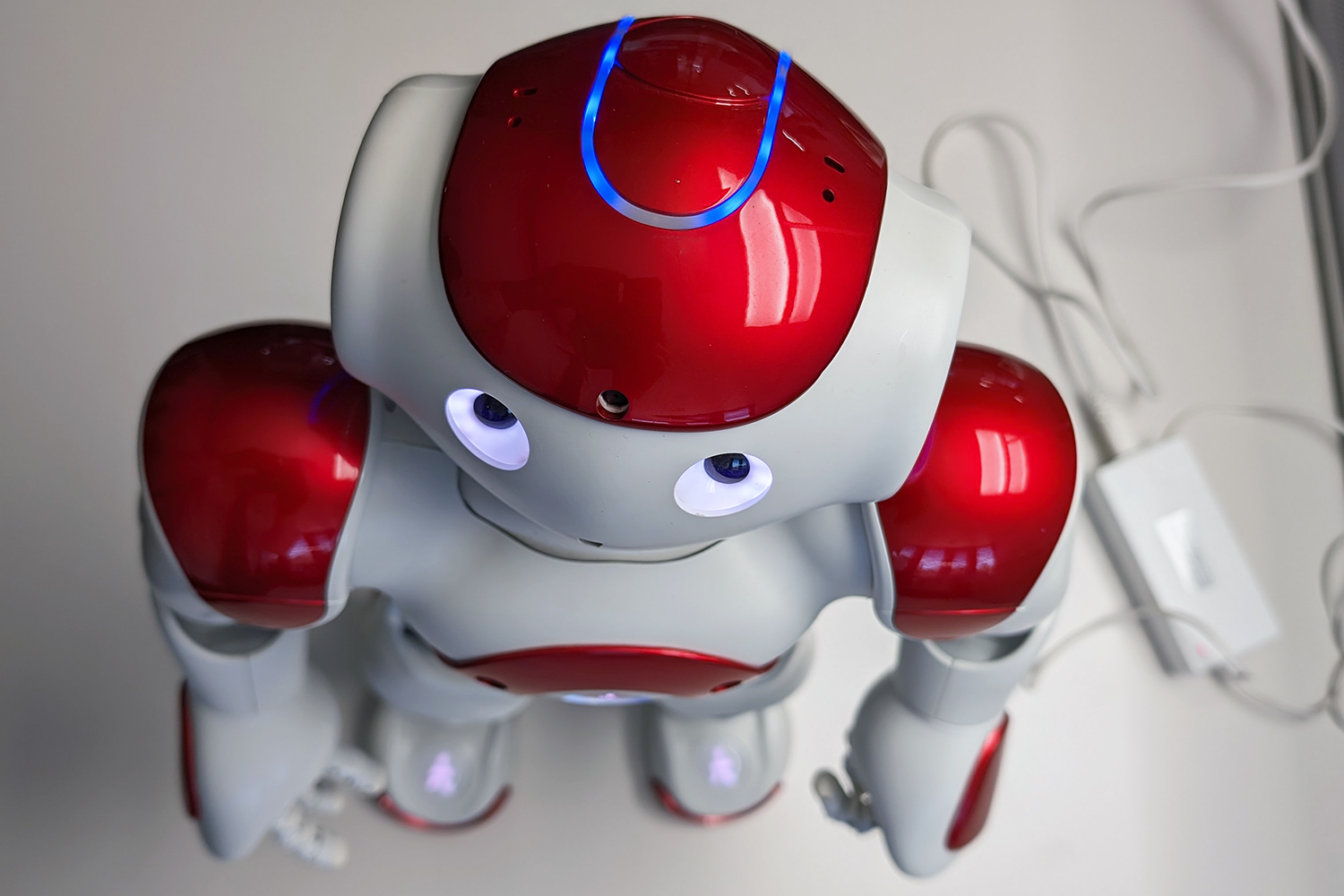
The article „Small Talk with a Robot Reduces Stress and Improves Mood“ by Katharina Kühne, Antonia L. Z. Klöffel, Oliver Bendel, and Martin H. Fischer was published on December 23, 2025. It is part of the volume „Social Robotics + AI: 17th International Conference, ICSR+AI 2025, Naples, Italy, September 10–12, 2025, Proceedings, Part III.“ From the abstract: „Research has demonstrated that social support is crucial in mitigating stress and enhancing mood. Not only do long-term, meaningful relationships contribute to well-being, but everyday social interactions, such as small talk, also offer psychological benefits. As social robots increasingly become more integrated into daily life, they present a potential avenue for stress interventions. In our online study, 98 participants underwent a stress induction using the Stroop task and were then assigned to one of three conditions: engaging in scripted small talk with a simulated NAO robot online, listening to a neutral story told by the same NAO robot, or no intervention (control condition). Results indicate that both interventions effectively reduced stress, with a tendency towards a stronger effect in the Small talk condition. Small talk not only helped maintain positive affect but also reduced negative affect. Notably, the benefits were more pronounced among individuals experiencing higher acute stress following the stress induction, but were less evident in those with chronically elevated stress levels. Furthermore, the effect of the intervention on stress reduction was mediated by changes in positive affect. These findings suggest that small talk with a social robot may serve as a promising tool for stress reduction and affect regulation.“ The first author, a researcher from the University of Potsdam, presented the paper on September 12, 2025, in Naples. It can be downloaded from link.springer.com/chapter/10.1007/978-981-95-2398-6_1.
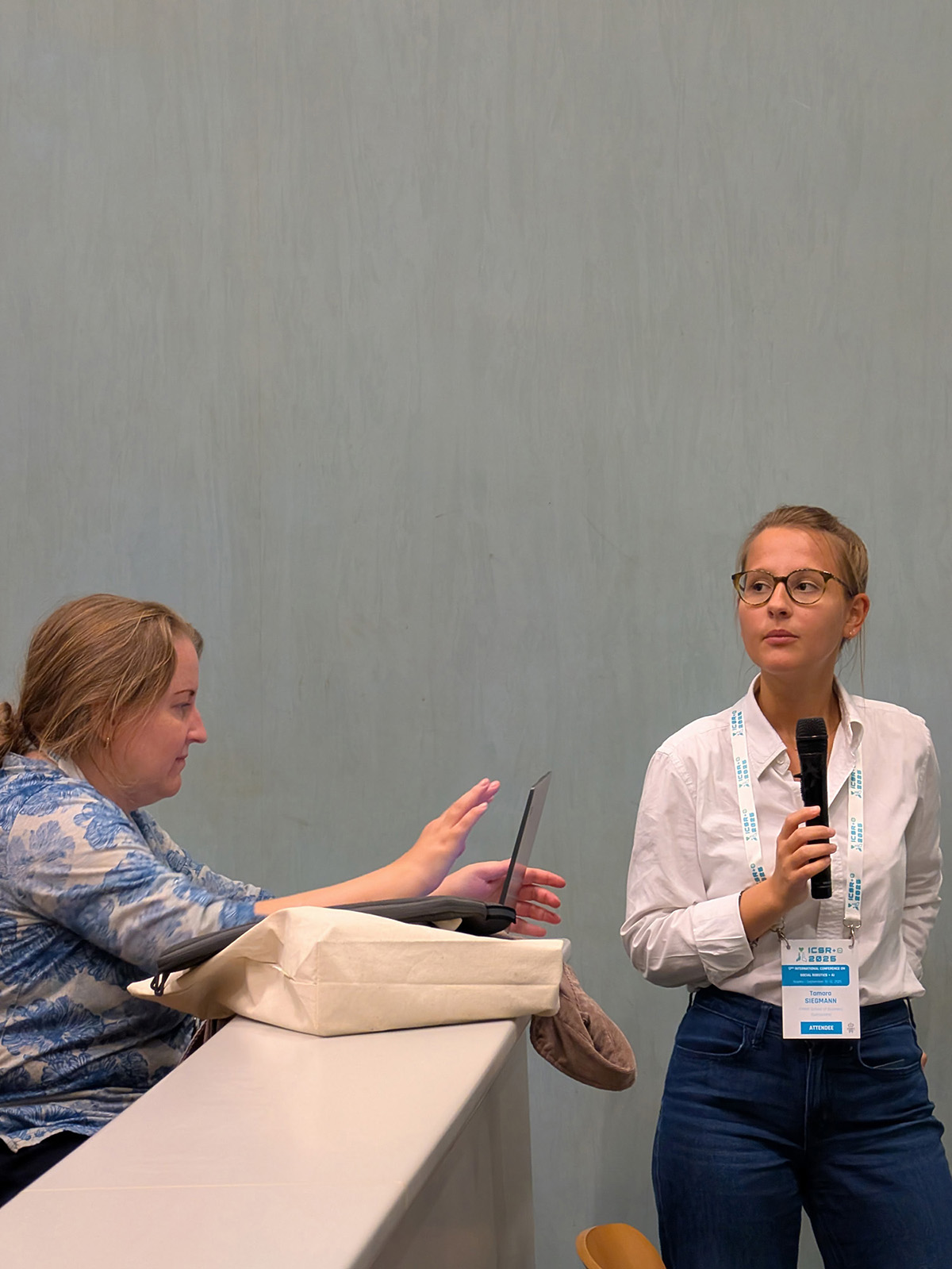
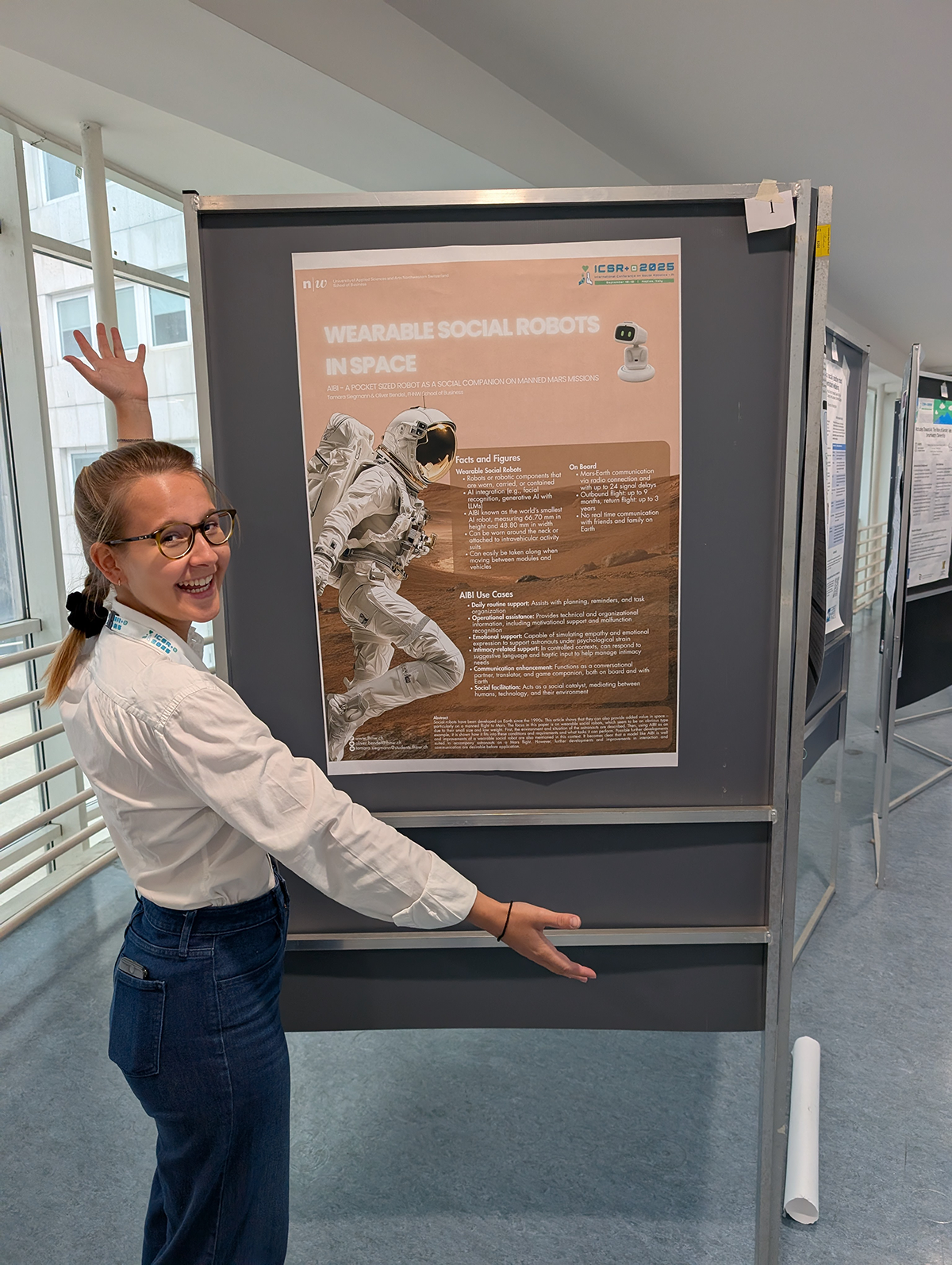
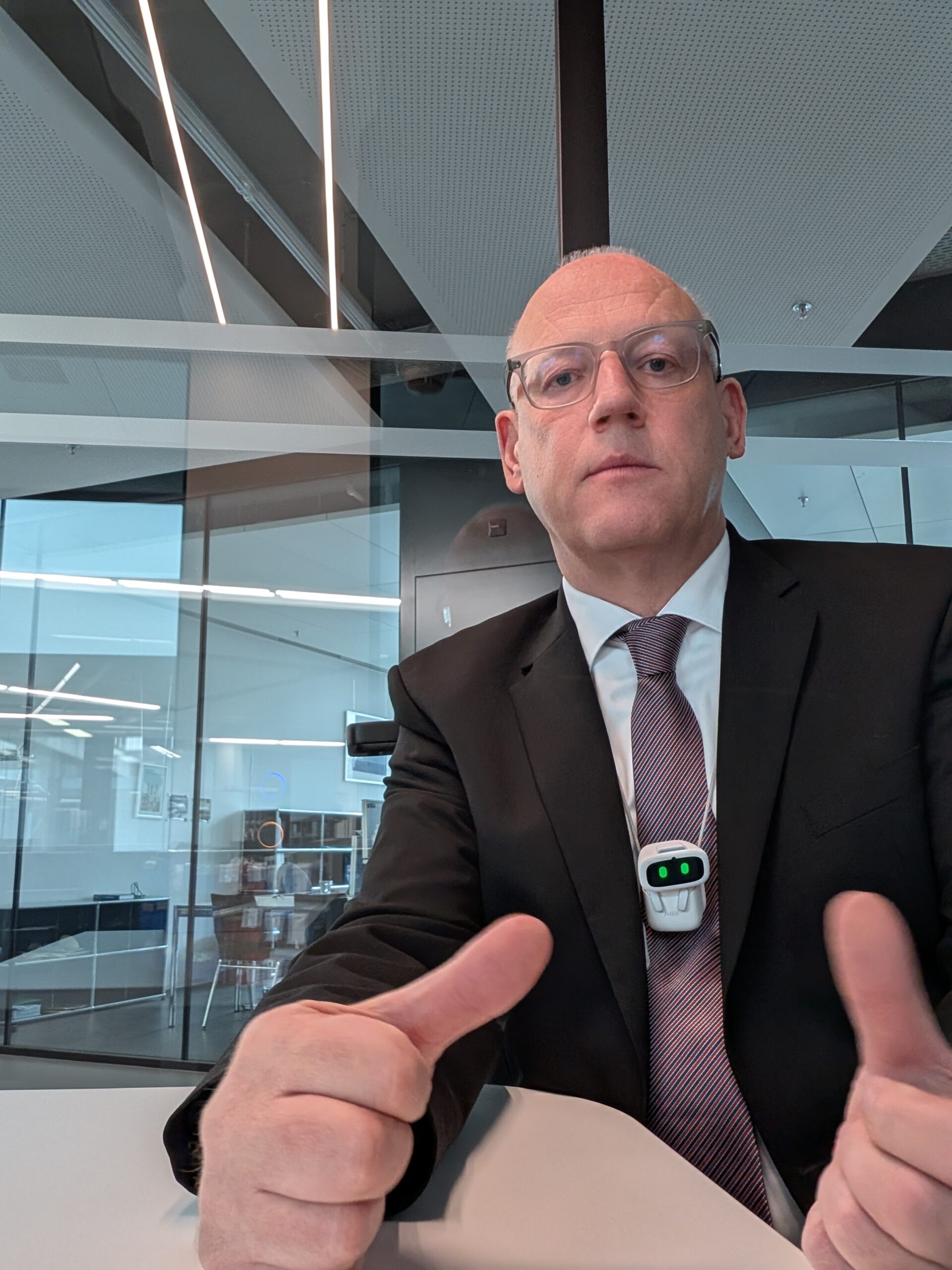
The article „Wearable Social Robots in Space“ by Tamara Siegmann and Oliver Bendel was published on December 23, 2025. It is part of the volume „Social Robotics + AI: 17th International Conference, ICSR+AI 2025, Naples, Italy, September 10–12, 2025, Proceedings, Part I.“ From the abstract: „Social robots have been developed on Earth since the 1990s. This article shows that they can also provide added value in space – particularly on a manned flight to Mars. The focus in this paper is on wearable social robots, which seem to be an obvious type due to their small size and low weight. First, the environment and situation of the astronauts are described. Then, using AIBI as an example, it is shown how it fits into these conditions and requirements and what tasks it can perform. Possible further developments and improvements of a wearable social robot are also mentioned in this context. It becomes clear that a model like AIBI is well suited to accompany astronauts on a Mars flight. However, further developments and improvements in interaction and communication are desirable before application.“ The Swiss student presented the paper together with her professor on September 10, 2025, in Naples. It can be downloaded from link.springer.com/chapter/10.1007/978-981-95-2379-5_33.
The article „Wearable Social Robots for the Disabled and Impaired“ by Oliver Bendel was published on December 23, 2025. It is part of the volume “Social Robotics + AI: 17th International Conference, ICSR+AI 2025, Naples, Italy, September 10–12, 2025, Proceedings, Part III.“ From the abstract: „Wearable social robots can be found on a chain around the neck, on clothing, or in a shirt or jacket pocket. Due to their constant availability and responsiveness, they can support the disabled and impaired in a variety of ways and improve their lives. This article first identifies and summarizes robotic and artificial intelligence functions of wearable social robots. It then derives and categorizes areas of application. Following this, the opportunities and risks, such as those relating to privacy and intimacy, are highlighted. Overall, it emerges that wearable social robots can be useful for this group, for example, by providing care and information anywhere and at any time. However, significant improvements are still needed to overcome existing shortcomings.“ The technology philosopher presented the paper on September 12, 2025, in Naples. It can be downloaded from link.springer.com/chapter/10.1007/978-981-95-2398-6_8.
Prof. Dr. Oliver Bendel will host the next ACI Conference, bringing the event to continental Europe for the first time as it convenes on the FHNW campus in Brugg-Windisch, Switzerland, from December 2–5, 2026. The conference website is already online, and the most important information is available at www.aciconf.org; individual deadlines may still change. Building on a tradition that has taken the community from Glasgow to North Carolina, Newcastle, Bloomington, Milton Keynes, Haifa, and Atlanta, this edition continues the conference’s role as a leading venue for advancing Animal-Computer Interaction. As the field grows, researchers and practitioners explore how technology shapes animals’ lives, welfare, cognition, and social dynamics while developing animal-centered systems and methods that embrace multispecies perspectives. The conference maintains its commitment to interdisciplinary collaboration across biology, technology, and cultural studies, supporting work that seeks to design ethically grounded, welfare-enhancing, and inclusive technological futures for all animals, humans included. ACI 2026 will also feature a Special Issue on Animal-Machine Interaction, a research field shaped in important ways by Oliver Bendel. The proceedings will be published in a volume of a renowned organization.
The paper „The Universal Robot of the 21st Century“ by Oliver Bendel was published in February 2025 in the proceedings volume „Social Robots with AI: Prospects, Risks, and Responsible Methods“ … From the abstract: „Developments in several areas of computer science, robotics, and social robotics make it seem likely that a universal robot will be available in the foreseeable future. Large language models for communication, perception, and control play a central role in this. This article briefly outlines the developments in the various areas and uses them to create the overall image of the universal robot. It then discusses the associated challenges from an ethical and social science perspective. It can be said that the universal robot will bring with it new possibilities and will perhaps be one of the most powerful human tools in physical space. At the same time, numerous problems are foreseeable, individual, social, and ecological.“ The proceedings volume comprises the papers presented at Robophilosophy 2024 in Aarhus. Leading philosophers, computer scientists and roboticists met there in August. Like the ICSR, the conference is one of the world’s leading conferences on social robotics. General-purpose robots, the predecessors of universal robots, have now become widespread, as exemplified by Digit, Apollo, and Figure 03. The author accepted manuscript of this article is therefore being made freely available on this site for non-commercial use only and with no derivatives, in line with the publisher’s self-archiving policy.
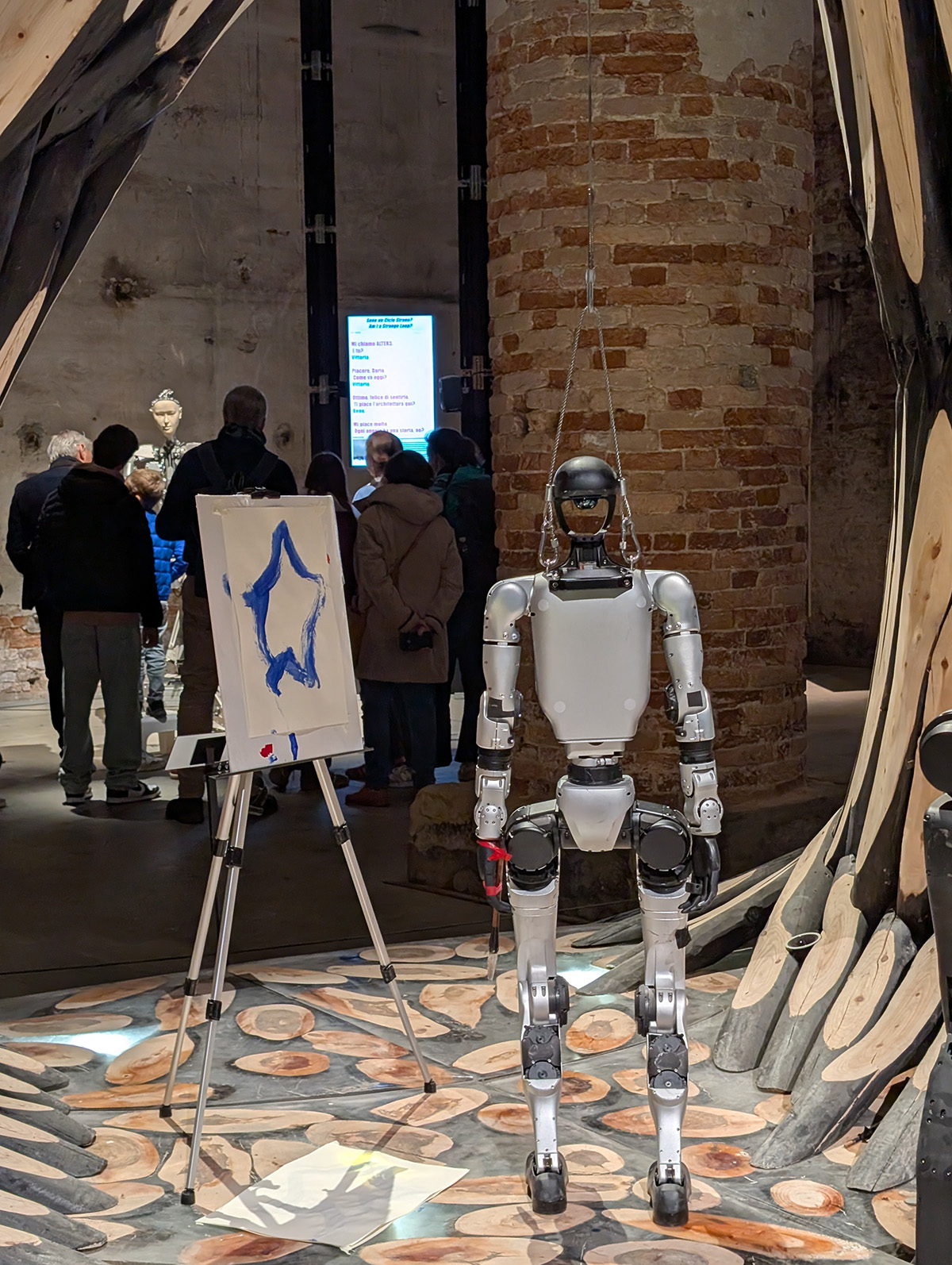
Abb.: Ein malender Roboter bei der Biennale Architettura 2025
In January 2023, the Proceedings of Robophilosophy 2022 were published. Included is the paper „Robots in Policing“ by Oliver Bendel. From the abstract: „This article is devoted to the question of how robots are used in policing and what opportunities and risks arise in social terms. It begins by briefly explaining the characteristics of modern police work. It puts service robots and social robots in relation to each other and outlines relevant disciplines. The article also lists types of robots that are and could be relevant in the present context. It then gives examples from different countries of the use of robots in police work and security services. From these, it derives the central tasks of robots in this area and their most important technical features. A discussion from social, ethical, and technical perspectives seeks to provide clarity on how robots are changing the police as a social institution and with social actions and relationships, and what challenges need to be addressed.“ (Abstract) Robots and AI systems in police work have become a hot topic. The author accepted manuscript of this article is therefore being made freely available on this site for non-commercial use only and with no derivatives, in line with the publisher’s self-archiving policy.