The ICSR 2024 logo and marketing material featured a robot that was gray, red, or blue depending on the context, medium, or background. All participants of the conference, which took place in Denmark, received a Lego set. Those who were crafty enough ended up with the robot in front of them, in its blue or red version. Odense, the location of the conference, is known for its robotics and technology industry. It made sense to hold the event there. Shortly before – from October 21 to 23 – you could visit ROSCon 2024 there. The ROS-Industrial Conference 2024 took place from October 24 to 25 in Odense, at the same time as the ICSR. The ICSR is, along with Robophilosophy, the most important conference on social robotics. In 2024, the general chairs were Oskar Palinko and Leon Bodenhagen, University of Southern Denmark. John-John Cabibihan, Qatar University, was general co-chair. The standing committee was chaired by Shuzhi Sam Ge, National University of Singapore.
Fig.: The robot in front of a painting by Takashi Murakami
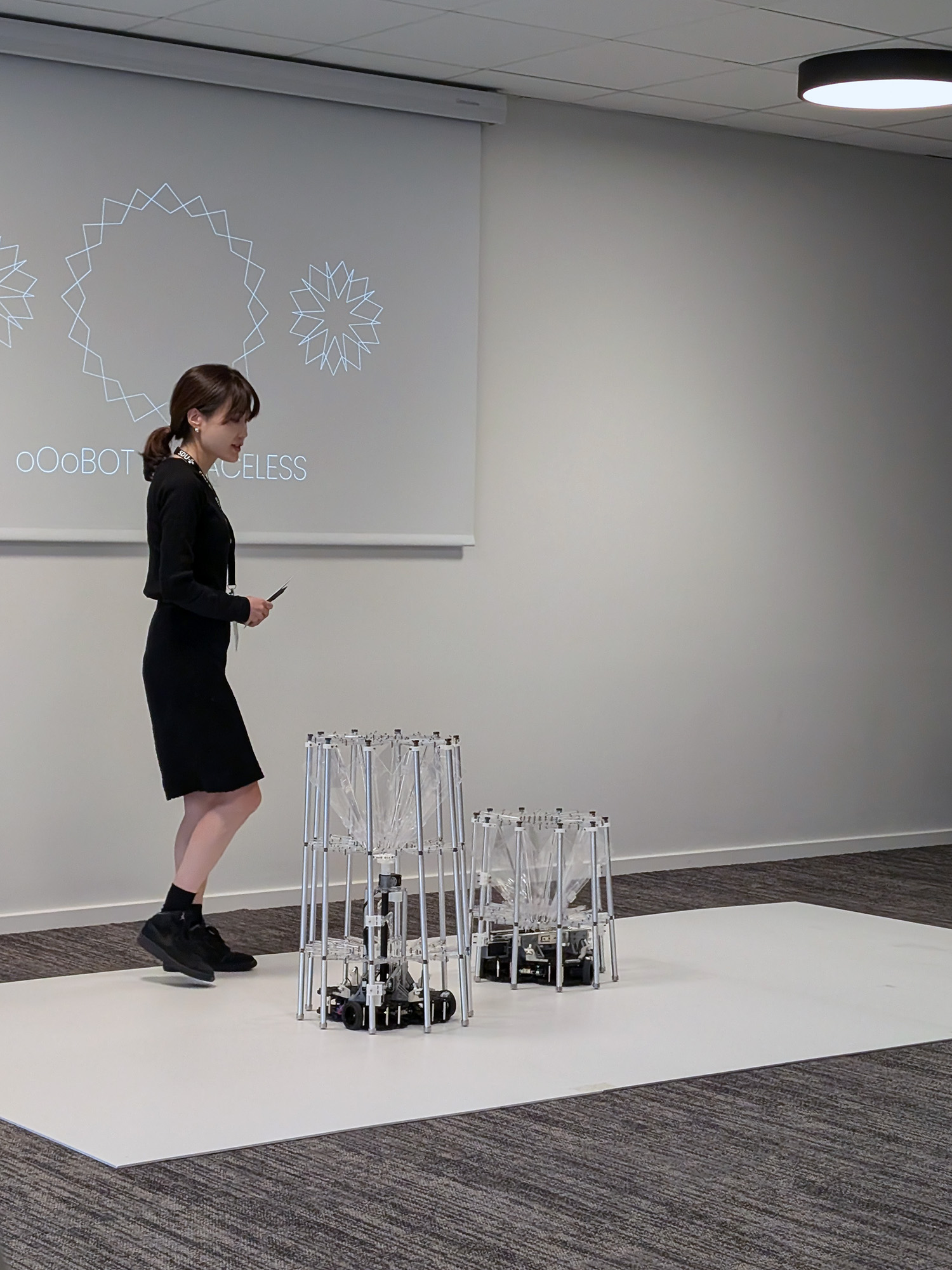
Die ICSR wurde 2024 in Odense wie schon 2023 in Doha und 2022 in Florenz von einer ausgedehnten und sehenswerten Messe begleitet. Vor Ort waren Roboter wie Navel (Navel Robotics), Furhat (Furhat Robotics), HospiBot (SDU Robotics, Universität zu Lübeck, Fachhochschule Kiel und weitere Partner) sowie TIAGo und TIAGo Pro (beide PAL Robotics). Navel ist einem kleinen Jungen nachempfunden. Seine Augen bestehen aus zwei Komponenten, einem Display und einem darüberliegenden Glas, das die Augen auf dem Display plastisch erscheinen lässt. Die Arme sind einfach gestaltet und können nach oben und unten bewegt werden. Dadurch können Freude und Bedauern ausgedrückt und Begrüßungen begleitet werden. Navel wird in Krankenhäusern und Pflegeheimen eingesetzt. Er erhielt 2024 den Digital Health Award (DGP) von Novartis. Die Medien berichten rege über ihn, etwa das ZDF in Terra Xplore – Jasmina Neudecker war 2023 im Gespräch mit dem Gründer der Firma, Claude Toussaint.
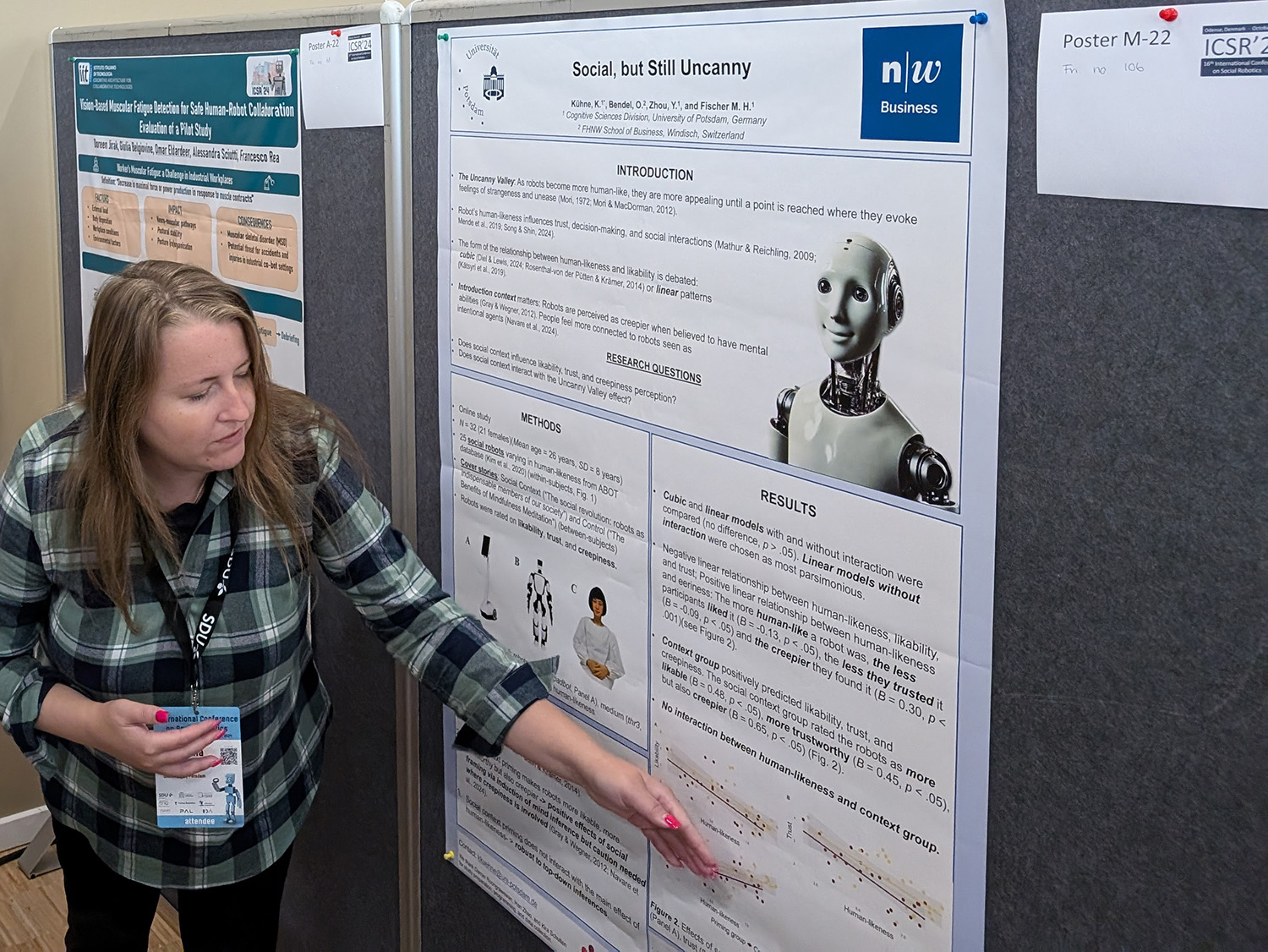
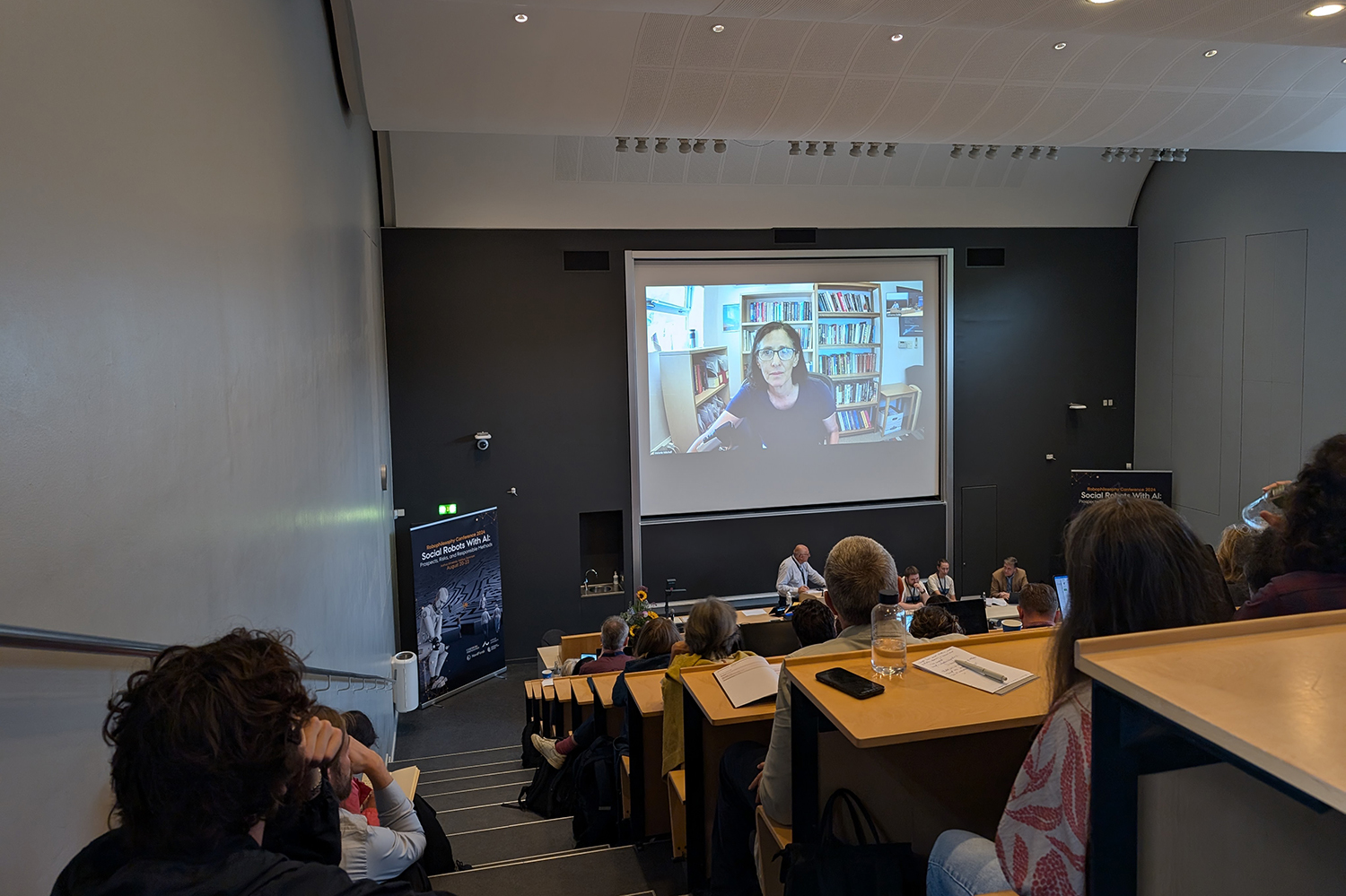
The Uncanny Valley effect is a famous hypothesis. Whether it can be influenced by context is still unclear. In an online experiment, Katharina Kühne and her co-authors Oliver Bendel, Yuefang Zue, and Martin Fischer found a negative linear relationship between a robot’s human likeness and its likeability and trustworthiness, and a positive linear relationship between a robot’s human likeness and its uncaniness. „Social context priming improved overall likability and trust of robots but did not modulate the Uncanny Valley effect.“ (Abstract) Katharina Kühne outlined these conclusions in her presentation „Social, but Still Uncanny“ – the title of the paper – on 25 October 2024 at the International Conference on Social Robotics 2024 in Odense, Denmark. Like Yuefang Zue and Martin Fischer, she is a researcher at the University of Potsdam. Oliver Bendel teaches and researches at the FHNW School of Business. Together with Tamara Siegmann, he presented a second paper at the ICSR.
Friday morning of the ICSR 2024 (23 – 25 October 2024) was filled with an exciting and inspiring program. This included the Special Session Arts. The Robot Design Competition was organized as a parallel session. Fourteen projects of varying maturity were presented. There were three categories: „1. Innovative Idea: The entries, which are innovative but are in the early stages of conceptualization will be considered for this category; 2. Innovative Solution: The entries, which have demonstrated maturity of the proposed solution through prototypes will be considered for this category; 3. Innovative Product: The entries, which have targeted specific applications through a more matured robotics solutions as a potential product will be considered for this category.“ (Website ICSR) The judges included Amit Kumar Pandey (Rovial Space), Kimmo Vänni (Häme University of Applied Sciences HAMK), Mariacarla Staffa (University of Naples Parthenope), and Oliver Bendel (FHNW School of Business). The winner in the Innovative Solution category was „Modular Robotic Furniture“. The researchers presented adaptive furniture that is a side table one moment, a dining table for several people the next, and a container for dirty dishes or worn laundry the next.
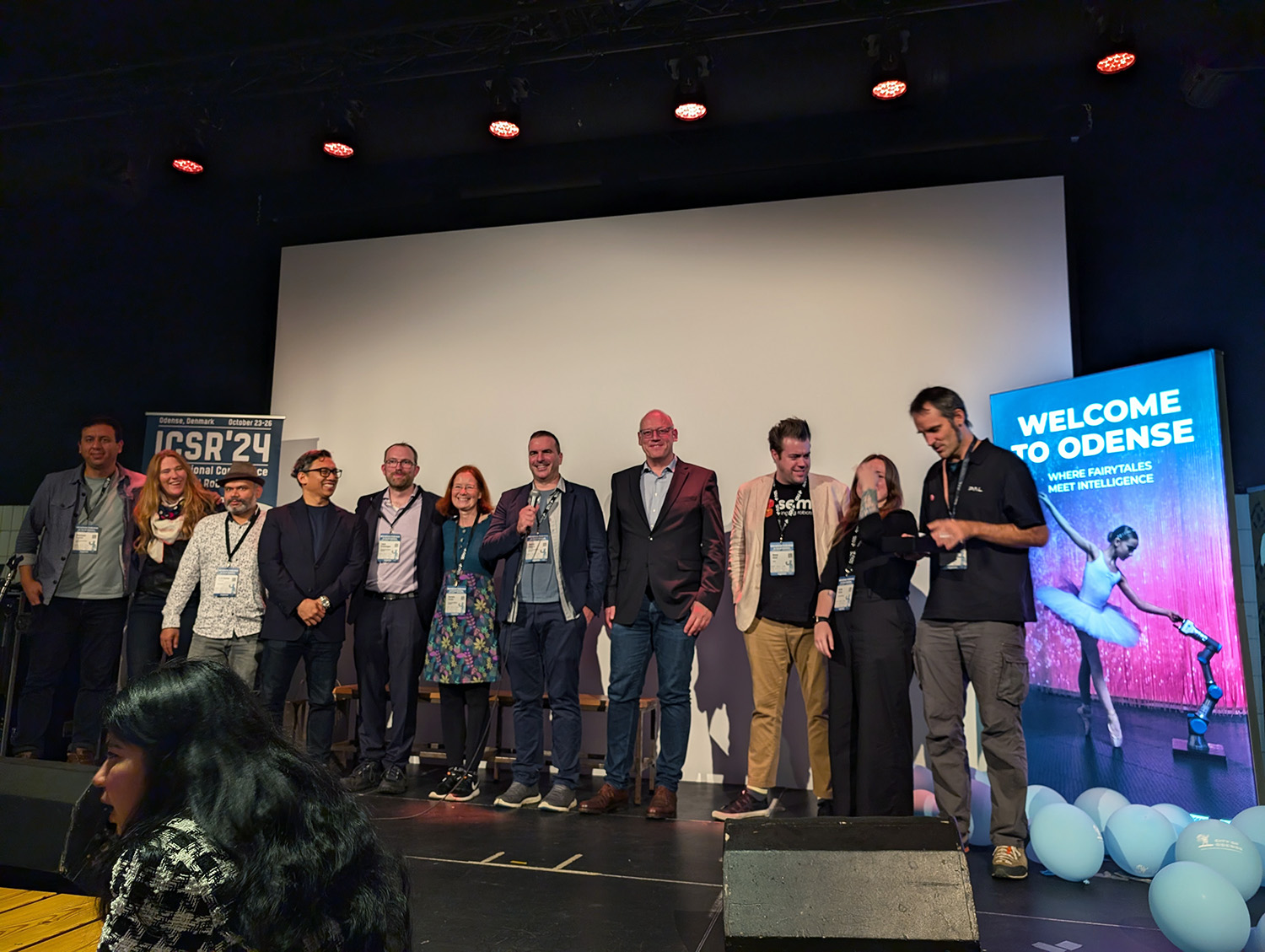
Several honors and award ceremonies took place on the sidelines of the ICSR 2024 gala dinner. Members of the committees were called to the stage of the Anarkist – Beer and Food Lab. In 2024, the general chairs were Oskar Palinko and Leon Bodenhagen, both from the University of Southern Denmark. John-John Cabibihan, Qatar University, was general co-chair. The standing committee was chaired by Shuzhi Sam Ge, National University of Singapore. The program chairs included Kerstin Fischer, University of Southern Denmark, and the special session chairs included Ross Mead, Semio, USA. Competition chair was Amit Kumar Pandey, Rovial Space, France. The publicity chairs included Oliver Bendel, School of Business, University of Applied Sciences and Arts Northwestern Switzerland. The ICSR is, along with Robophilosophy, the most important conference on social robotics.
Fig.: Committee members on the stage (Photo: Tamara Siegmann)
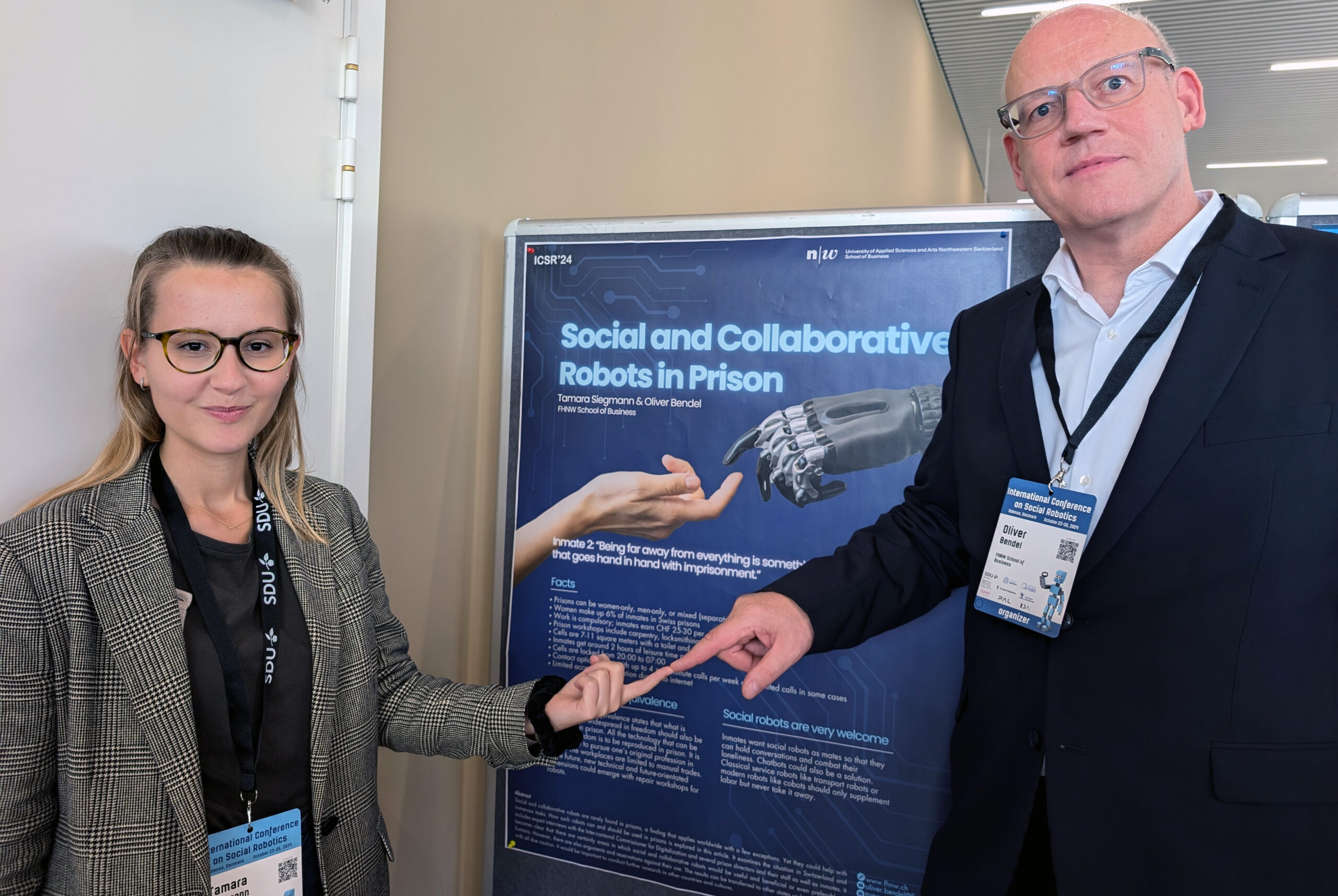
On October 24, 2024, Tamara Siegmann and Prof. Dr. Oliver Bendel (School of Business FHNW) presented their project „Robots in Prison“ at the ICSR in Odense (Denmark). They investigated whether collaborative and social robots can and should be used in prisons. One result was that modern industrial robots such as cobots and classic service robots such as transportation and cleaning robots hardly create any added value. Instead, they take work away from inmates. In contrast, social robots are conceivable and useful. They bring something to imprisonment that is common in freedom. And – an important point for resocialization – they can combat the loneliness of inmates. The International Conference on Social Robotics is the most important conference for social robotics alongside Robophilosophy. The paper „Social and Collaborative Robots in Prison“ will be published in a proceedings volume by Springer at the end of the year.
Fig.: Tamara Siegmann and Oliver Bendel at the ICSR 2024 (Photo: Katharina Kühne)
The paper “The Animal Whisperer Project” by Oliver Bendel and Nick Zbinden will be presented at ACI 2024, which takes place in Glasgow this December. It is a conference that brings together the small community of experts in animal-computer interaction and animal-machine interaction. This includes Oliver Bendel, who has been researching in this field since 2012, with a background in animal ethics from the 1980s and 1990s. He initiated the Animal Whisperer project. The developer was Nick Zbinden, who graduated from the FHNW School of Business. From March 2024, three apps were created on the basis of GPT-4: the Cow Whisperer, the Horse Whisperer, and the Dog Whisperer. They can be used to analyze the body language, behaviour, and environment of cows, horses, and dogs. The aim is to avert danger to humans and animals. For example, a hiker can receive a recommendation on his or her smartphone not to cross a pasture if a mother cow and her calves are present. All he or she has to do is call up the application and take photos of the surroundings. The three apps are available as prototypes since August 2024. With the help of prompt engineering and retrieval-augmented generation (RAG), they have been given extensive knowledge and skills. Above all, self-created and labeled photos were used. In the majority of cases, the apps correctly describe the animals‘ body language and behavior. Their recommendations for human behavior are also adequate.
Abb.: The Cow Whisperer in action (Image: DALL-E 3)
Tamara Siegmann and Prof. Dr. Oliver Bendel carried out the „Robots in Prison“ project in June and July 2024. The student, who is studying business administration at the FHNW School of Business, came up with the idea after taking an elective module on social robots with Oliver Bendel. In his paper „Love Dolls and Sex Robots in Unproven and Unexplored Fields of Application“, the philosopher of technology had already made a connection between robots and prisons, but had not systematically investigated this. They did this together with the help of expert interviews with the intercantonal commissioner for digitalization, several prison directors and employees as well as inmates. The result was the paper „Social and Collaborative Robots in Prison“, which was submitted to the ICSR 2024. The International Conference on Social Robotics is the most important conference for social robotics alongside Robophilosophy. The paper was accepted in September 2024 after a revision of the methods section, which was made more transparent and extensive and linked to a directory on GitHub. This year’s conference will take place in Odense (Denmark) from October 23 to 26. Last year it was held in Doha (Qatar) and the year before last in Florence (Italy).
Bei der KI & Robotics4Retail-Konferenz 2024 in Bonn hält Prof. Dr. Oliver Bendel am 25. September 2024 die Keynote zum Thema „Serviceroboter aus technischer, ökonomischer und ethischer Perspektive“. Aus der Vorankündigung: „Serviceroboter haben sich als Reinigungs-, Transport- und Sicherheitsroboter verbreitet. Als Saug- und Wischroboter sind sie im Haushalt, am Flughafen und auf der Hotelanlage anzutreffen. Als Transportroboter fahren sie in der Fabrik und in Lagerhallen umher, verkehren im Restaurant zwischen Buffet und Küche oder bringen in Städten die Bestellungen zum Kunden. In der Form sozialer Roboter beraten und bedienen sie uns in Shopping Malls oder unterhalten unsere Kinder, während wir einkaufen. Vor der Tür stehen universelle Roboter, menschenähnliche Maschinen, die morgens in Produktion und Logistik helfen, nachmittags den Garten umgraben und abends mit uns Tennis spielen. Verbunden werden sie mit multimodalen Sprachmodellen, die ihre Steuerung und Wahrnehmung ermöglichen bzw. verbessern. Der Vortrag stellt Anwendungsfälle der genannten Art vor, ordnet sie aus technischer, wirtschaftlicher und ethischer Perspektive ein und wirft einen Blick in die Zukunft.“ Weitere Informationen über www.robotics-konferenz.de.
Abb.: Auch bei der IDEepolis – rechts Bendel, links Zöllner – ging es um Serviceroboter (Foto: Aaron Kubach)
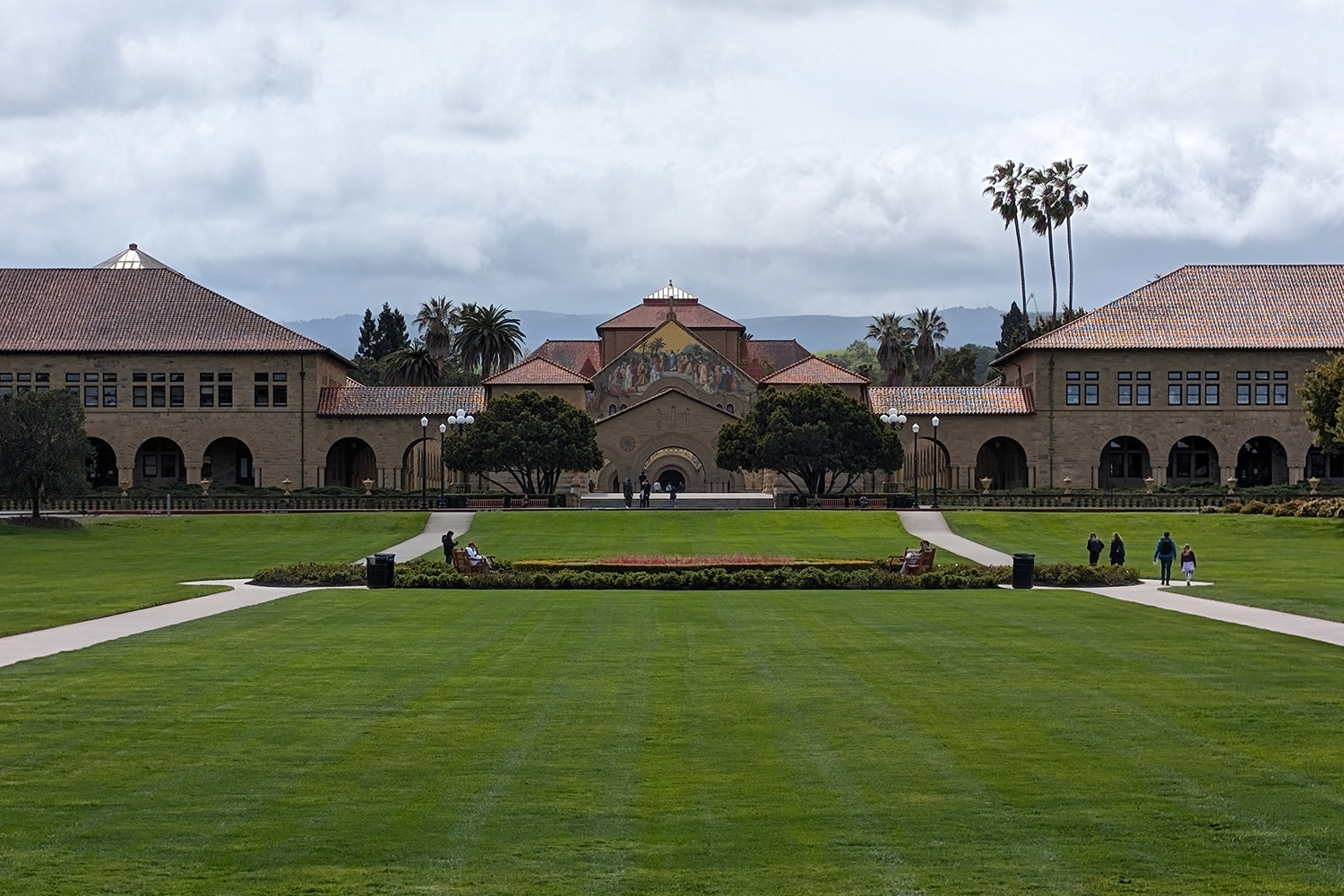
On 27 August 2024, AAAI announced the continuation of the AAAI Spring Symposium Series, to be held March 31 – April 2, 2025, at San Francisco Airport Marriott Waterfront in Burlingame, CA. The Call for Proposals for the Spring Symposium Series is available on the Spring Symposium Series website. According to the organizers, proposals are due October 4, 2024, and early submissions are encouraged. „The Spring Symposium Series is an annual set of meetings run in parallel at a common site. It is designed to bring colleagues together in an intimate forum while at the same time providing a significant gathering point for the AI community.“ (Website AAAI) The traditional conference will therefore not be held at Stanford University in 2025 – as it was in 2023. It returned there in 2024 to the delight of all participants. The Covid-19 pandemic had hit the conference hard before. The AAAI can only be advised to return to Stanford in 2026. Only there will the conference live up to its promise.
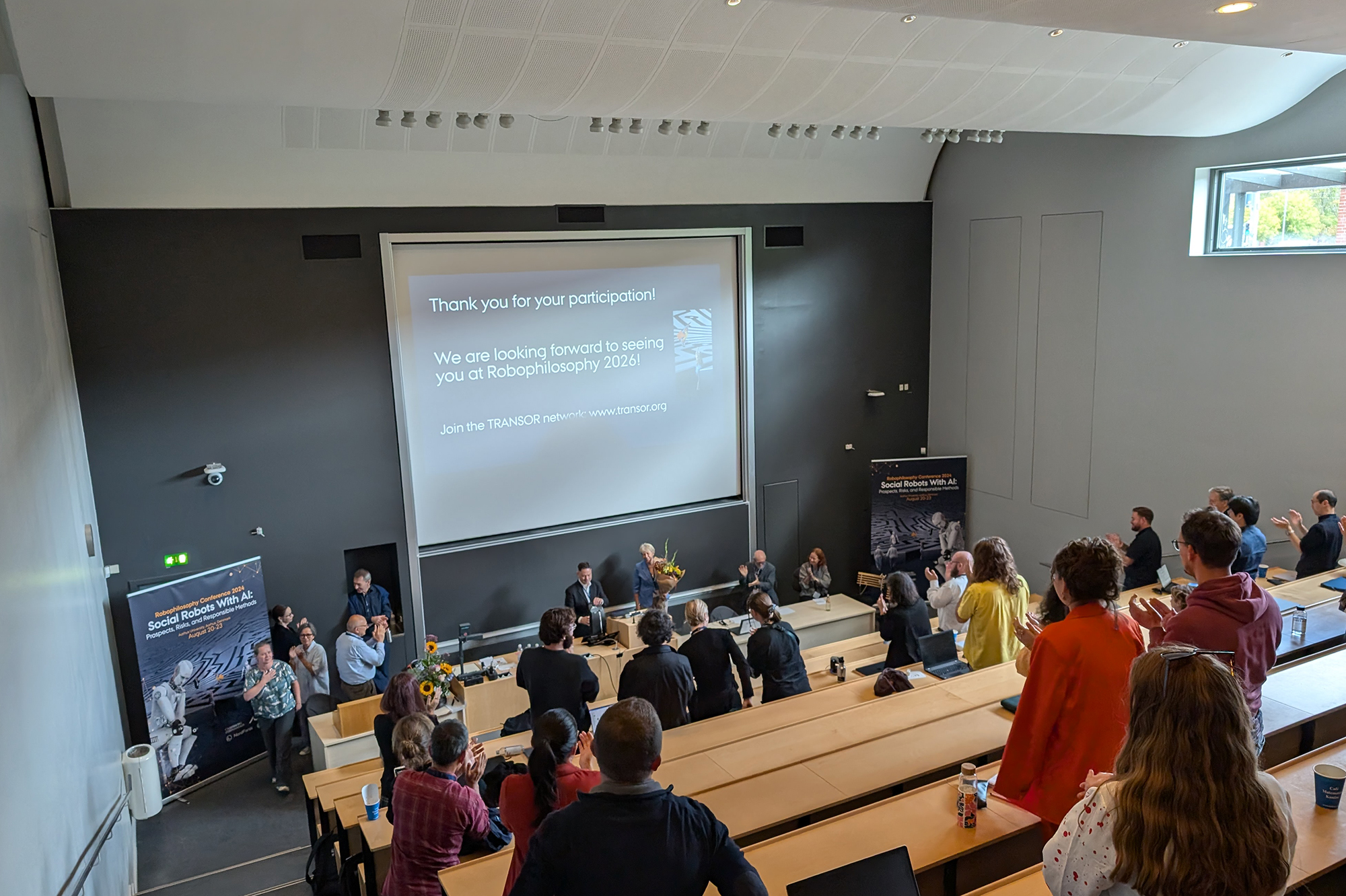
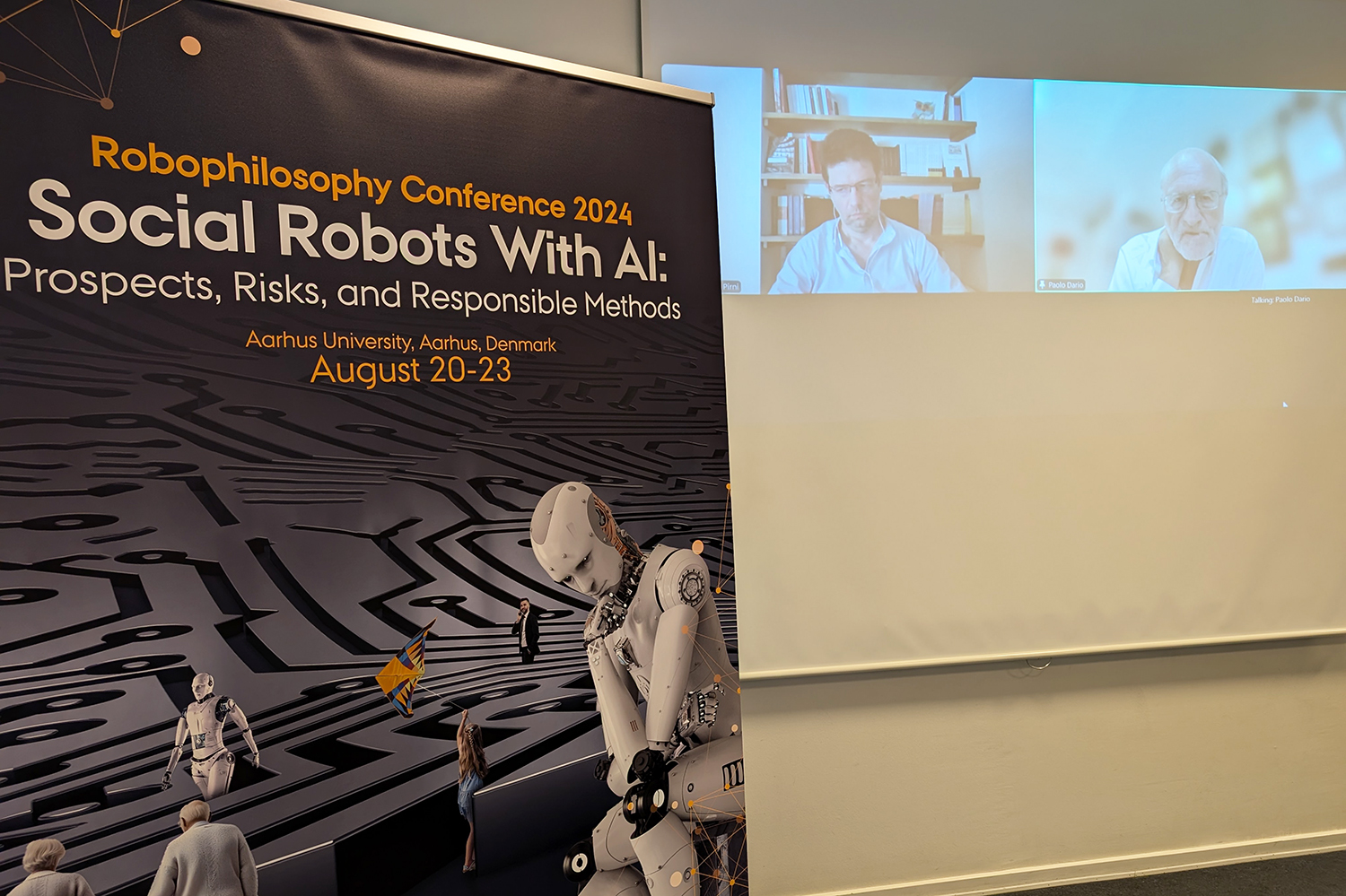
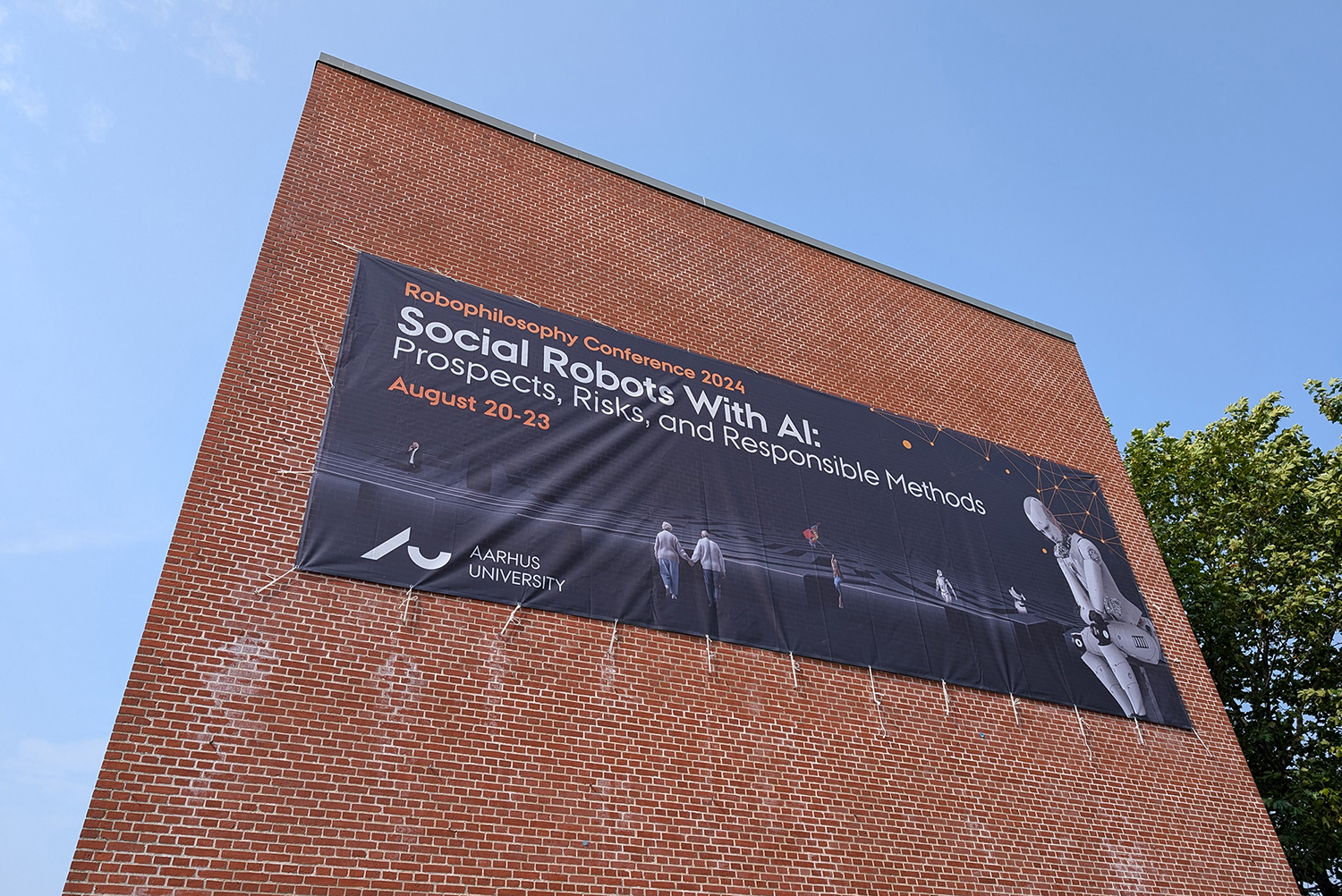
Robophilosophy 2024 took place for three and a half days in Aarhus (Denmark). It is a biennial dedicated to social robotics. Alongside the ICSR, it is the most important conference in this field. The program was again very extensive. Workshops were held and presentations given in four different tracks. There were keynotes and plenary sessions by well-known names, from Wendell Wallach to Hiroshi Ishiguro. After a sunny start, it began to rain, which made it all the easier to concentrate on the scientific exchange. In the end, the sun came out again in time for the closing event. Johanna Seibt, the brains behind Robophilosophy, received a bouquet of flowers and a standing ovation. The experts will meet again in two years‘ time. Where has not yet been decided. A few potential hosts spoke up. Edinburgh would be an option, but so would California.
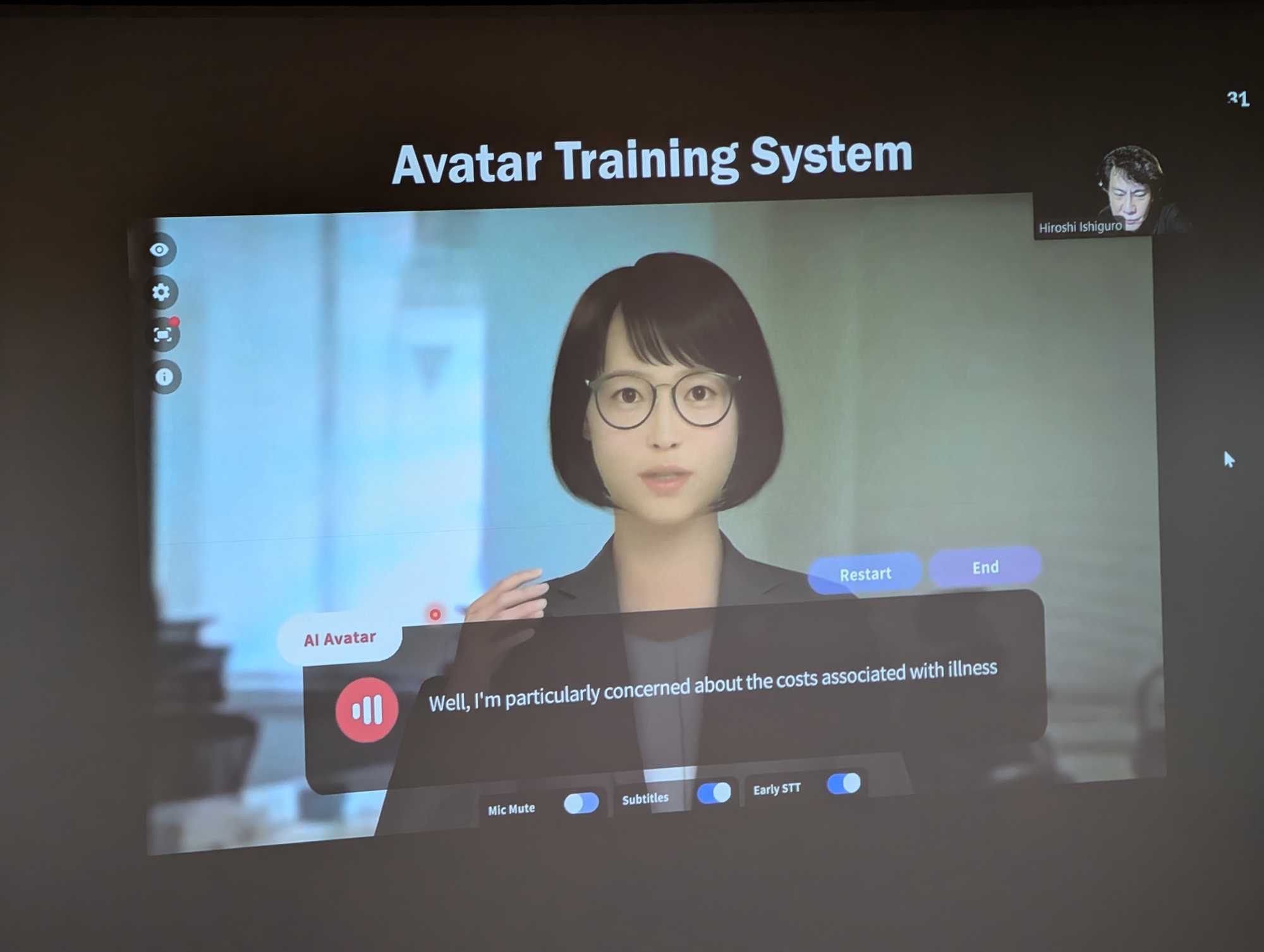
On the fourth day of Robophilosophy 2024, Hiroshi Ishiguro, Professor at the Department of Systems Innovation in the Graduate School of Engineering Science at Osaka University, gave a talk entitled „AI Avatars and the Future Society“. From the abstract: „In this lecture, the presenter will report on the research and development of remotely operated robots and CG agents, also known as avatars. Avatar technology has advanced significantly in recent years, thanks to progress in AI technology. We will discuss the various services that can be deployed using avatars and the kind of society we can realize as a result.“ (Website Robophilosophy 2024) After the lecture, the roboticist was questioned by Raja Chatila, Sorbonne University (France), and Mihaela Constantinescu, Faculty of Philosophy, University of Bucharest (Romania). Hiroshi Ishiguro had been a regular guest at Robophilosophy. In 2018, he appeared on site in Vienna.
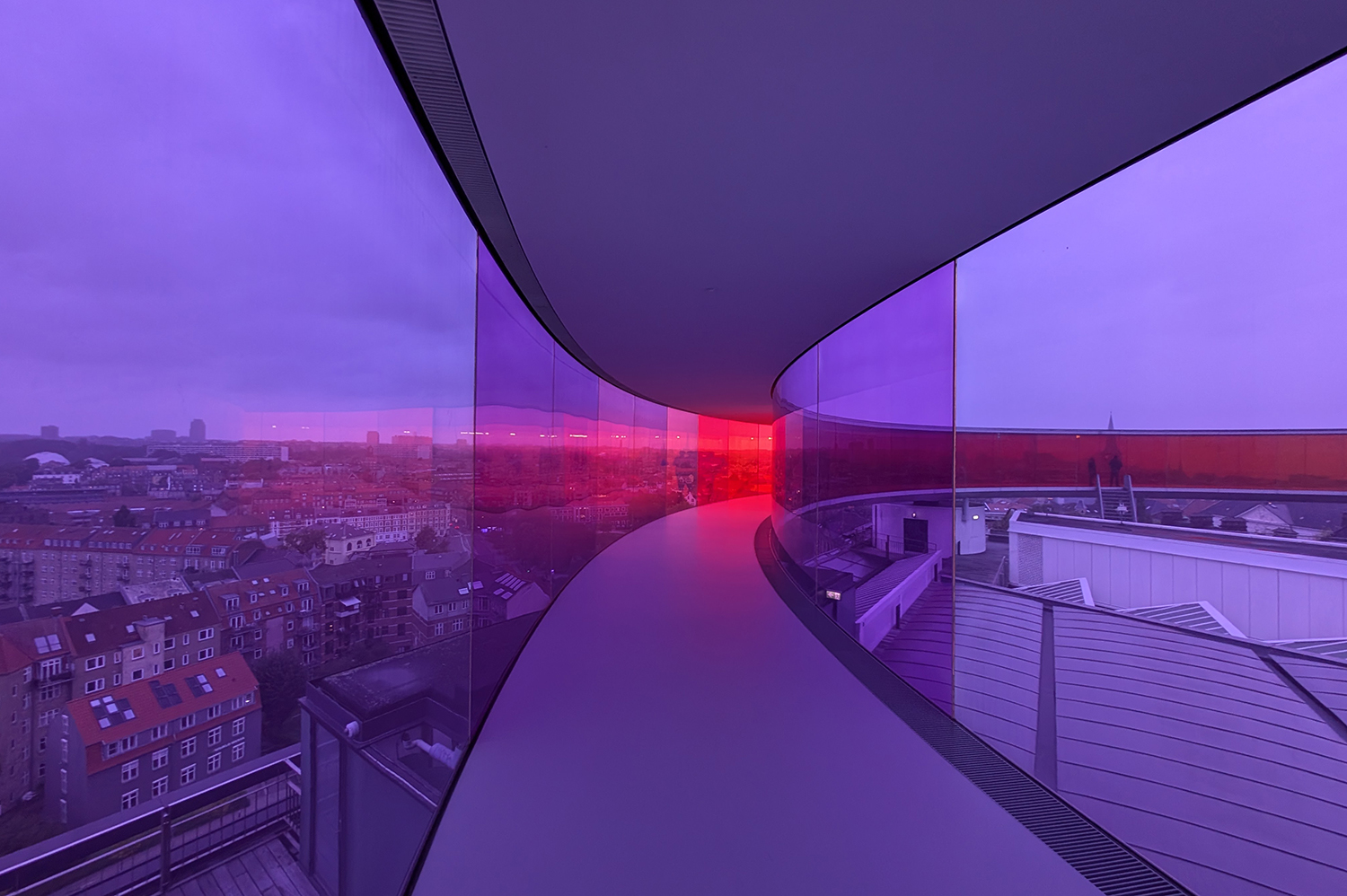
The Robophilosophy community consists of philosophers, psychologists, roboticists, and representatives of other disciplines. It is a tradition for everyone to come together for a social event to get new inspiration and chat about their work and motivation in an informal atmosphere. This time, they attended a robot performance in the theater on the second day. On the third day, the conference dinner was held together in the rooftop restaurant of the AROS Art Museum. One of the highlights was the tour of the ninth floor. The Danish-Icelandic artist Olafur Eliasson has created Your rainbow panorama which was officially opened in May 2011. You can see Aarhus with its church towers, residential buildings, streets, and people through the colorful panes. Afterwards, the tireless went out into the city’s nightlife.
On the third day of Robophilosophy 2024, Melanie Mitchell, Professor at the Santa Fe Institute (USA), gave a keynote speech entitled „AI’s Challenge to Understanding the World“. From the abstract: „I will survey a debate in the artificial intelligence (AI) research community on the extent to which current AI systems can be said to “understand” language and the physical and social situations language encodes. I will describe arguments that have been made for and against such understanding, hypothesize about what humanlike understanding entails, and discuss what methods can be used to fairly evaluate understanding and intelligence in AI systems.“ (Website Robophilosophy 2024) In this keynote – as in previous keynotes and presentations – the restrictions of AI and generative AI were emphasized. In response to a question from an audience member, the potential was also acknowledged.
The Workshop „The Social Significance of Human Effort – What Are the Parameters For Positive Human-Robot Interaction In the Context of Industry 5.0?“ – organized by the renowned Sant’Anna School of Advanced Studies (Pisa, Italy) – took place on the third day of Robophilosophy 2024. Prof. Dr. Oliver Bendel gave the lecture „Metamorphoses in the Factory. From Classic Industrial Robots over Cobots and Classic Service Robots to Universal Robots“. From the abstract: „Robots play an important role in industry. In recent years, there have been interesting innovations in production and logistics. Large classic industrial robots are turning into small cobots. Cobots become service robots. Classic service robots are discovering the factory. Metamorphoses are taking place. This talk hypothesizes that recent developments will have a significant impact on workers and work. In particular, the precursors of universal robots could significantly change the factory of the future, just as they will change society as a whole. After all, with universal robots, the boundaries between industrial and service robots are becoming increasingly blurred.“ (Website Robophilosophy 2024)
Fig.: Oliver Bendel in Denmark (Photo: Stefanie Hauske)
On the third day of Robophilosophy 2024, Katharina Kühne, doctoral student at the University of Potsdam, gave a talk entitled „Robots at Arm’s Length – Unveiling the Dynamics of Interpersonal Distance Preferences in Human-Robot Interactions“. From the abstract: „In social interactions, interpersonal distance influences relationships, provides protection, and regulates arousal. Despite the intuitive nature of adopting specific distances, little is known about comfortable interpersonal distances with social robots. The talk reports on a study where 66 participants saw individuals standing face-to-face with a robot at different distances and pressed a button when seeing a woman or a man. In line with the negativity bias hypothesis, suggesting quicker reaction times to negative stimuli, participants showed a preference for increased distances, resulting in longer reaction times. Human-likeness of robots moderated the link between distance and arousal. The most human-like robot was less liked and evoked higher arousal. These findings potentially have implications for designing social robots and optimizing interactions, particularly in educational or medical contexts.“ (Website Robophilosophy 2024) The researcher’s presentation refers to the paper “Robots at arm’s length: Unveiling the dynamics of interpersonal distance preferences in human-robot interactions” by Katharina Kühne, Laura M. Zimmer, Melina Jeglinski-Mende, Oliver Bendel, Yuefang Zhou, and Martin Fischer. It will be published in autumn or winter 2024.
The third day of Robophilosophy 2024 featured numerous presentations and several workshops. The workshop „The Social Significance of Human Effort – What Are the Parameters For Positive Human-Robot Interaction In the Context of Industry 5.0?“ was organized by the renowned Sant’Anna School of Advanced Studies (Pisa, Italy). The moderators were Professors Alberto Pirni and Paolo Dario as well as Oliver Bendel from the FHNW School of Business. They also presented, as did other participants such as Nicola Vitiello, Leonardo Massantini, Danica Kragic Jensfelt, and Margherita Pugnaletto. From the workshop abstract: „This workshop aims to develop a roadmap for understanding the impact of robotics on human employment within the context of Industry 5.0. The workshop explores key factors in this transition, including the risks and benefits of digital automation, ethical considerations regarding worker skills and well-being, and protective measures for workers and consumers. Focusing on the theme of sociocultural risks: devaluation of human labor, the workshop aims to reflect on traditional notions of work, productivity, and the value of human labor in the era of advancing robotics and automation. It challenges the concept of labor devaluation, assesses its impact on worker recognition and efficiency, and questions meritocratic paradigms. To facilitate interdisciplinary dialogue, the workshop engages philosophers and engineers in addressing ethical dilemmas in technology development. It explores the social significance of human effort and movement when interacting with autonomous robots and occupational exoskeletons. By examining these technologies‘ adaptability and role in human-machine interaction, especially in workplaces, the workshop intends to contribute to discussions on technological advances and their societal implications.“ (Website Robophilosophy 2024)
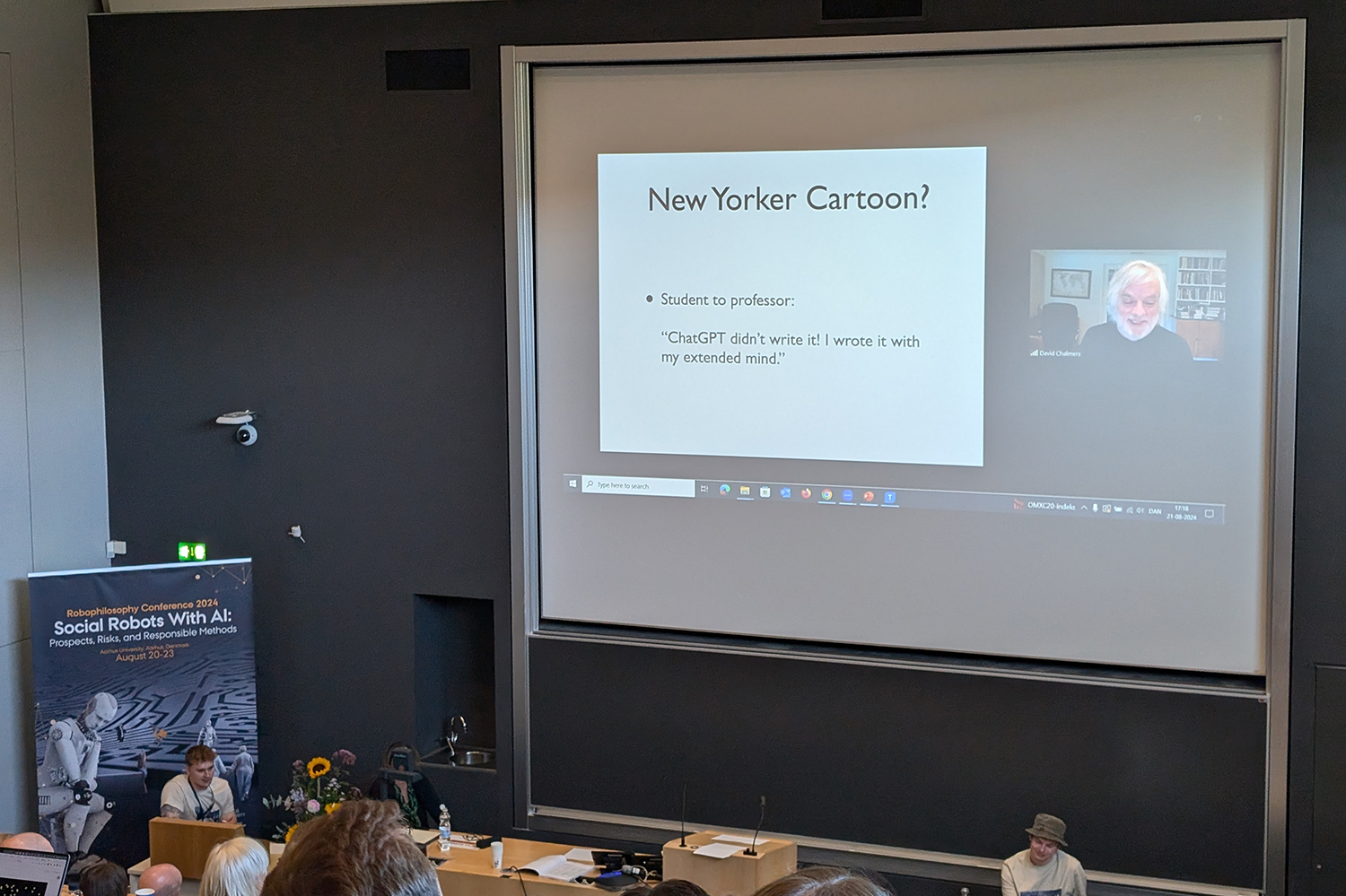
On the second day of Robophilosophy 2024, David Chalmers, an Australian philosopher and cognitive scientist, gave a keynote speech entitled „Does Generative AI Extend the Mind?“. From the website: „Prof. Chalmers is known worldwide, also outside of philosophy, for his contributions to consciousness research in ‚The Character of Consciousness‘ (2010), and in particular for identifying more clearly than anyone the tasks for a philosophical account of consciousness (‚the hard problem‘ of consciousness). Since recent advances in AI bring Chalmers‘ thought experiment of ‚philosophical zombies‘ closer to reality, in his current research he combines philosophy and a longstanding interest in AI for the exploration of the status of virtual reality … and the likelihood of creating artificial systems that fulfil the criteria of consciousness.“ (Website Robophilosophy 2024) A key statement was: „As social AI systems become increasingly agent-like, they will decreasingly extend the mind …“ The final statement was: „The quest for agency and sociality in robotsmay stand in tension with considerations of both efficiency and morality.“ The audience applauded the witty and humorous talk.
On the second day of Robophilosophy 2024, Anthony Elliott, Distinguished Professor of Sociology at the University of South Australia, gave a keynote speech entitled „May AI Be With You: Agency and Automation in the Age of Algorithmic Modernity“. From the abstract: „From industrial robots to ChatGPT, and from driverless cars to military drones: AI is transforming all aspects of our lives, from the changing nature of work, employment and unemployment to the most intimate aspects of personal relationships. In this presentation, Anthony Elliott focuses on the complex systems of AI – spanning intelligent machines, chatbots, advanced robotics, accelerating automation, big data – and their centrality to new forms of social interaction, organizational life and governance. He argues, provocatively, that today modernity has come to mean smartphones, tablets, cloud computing, big data, automated recommendation systems and predictive analytics. This has heralded the arrival of what he terms ‚algorithmic modernity‘, an altogether new ’stage‘ in the ordering techniques of envisioned human mastery. In this automated order of algorithmic modernity, human agency is increasingly outsourced to smart machines. We should understand this phenomenon, Elliott argues, in terms of a containment of both uncertainty and complexity which the digital revolution in social relations poses, but which ultimately denies answers.“ (Website Robophilosophy 2024) In his presentation, the sociologist emphasised the risks of AI rather than the opportunities.
Fig.: Anthony Elliott before his lecture (seated far left; standing David Gunkel and Johanna Seibt)
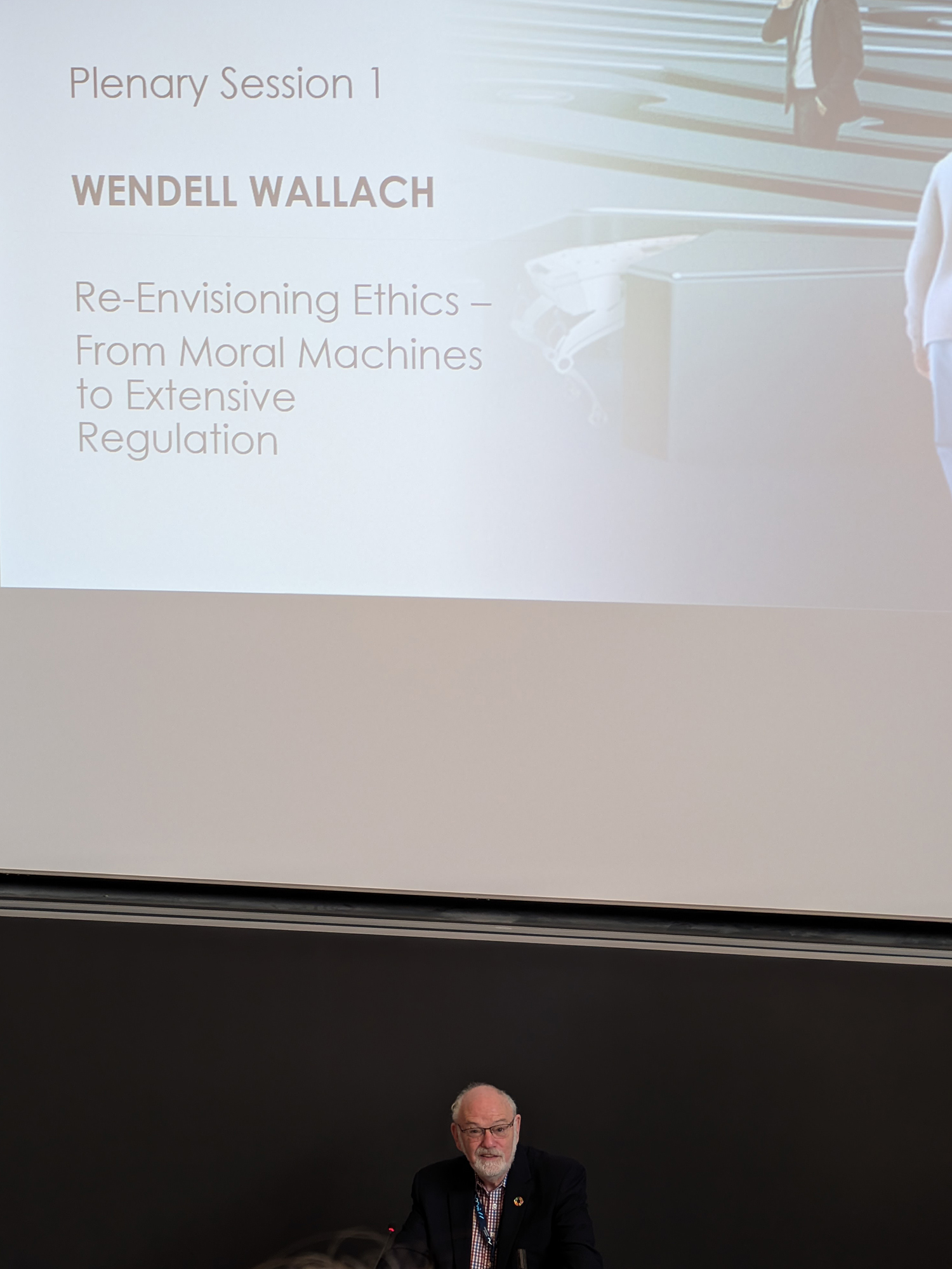
On the first day of Robophilosophy 2024, Wendell Wallach, one of the fathers of machine ethics, gave a keynote speech entitled „Re-envisioning Ethics: From Moral Machine to Extensive Regulation“. From the abstract: „Have we been underestimating the socio-technical challenges posed by ro(bot)s – physical systems and virtual bots? Many of the complexities inherent in managing intelligent systems can not be adequately met by scientific innovation, existing ethical constraints, or weak regulations forged by legislatures under the capture of the AI oligopoly. In spite of naive future projections, the science we have, and are likely to have in the near future, will not produce AI systems capable of making even satisfactory choices in complex situations where uncertainty reigns, multiple values converge, and the information available is inadequate to project meaningful consequences for various courses of action. AI will pose safety and security risks far beyond those being addressed by the pittance of investment presently directed to build trustworthy systems. Scientific humility is needed. Ethics must be reenvisioned and empowered to work through the plethora of socio-technical obstacles and trials ahead. A vast infrastruture to ensure AI safety will be required.“ (Website Robophilosophy 2024) Wendell Wallach went far beyond these hints and gave an overview of the advances and setbacks in machine ethics and AI ethics in recent decades.
On August 20, 2024, Robophilosophy 2024 was opened with words of welcome from Maja Horst, Dean of the Faculty of Arts at Aarhus University, and Johanna Seibt, Professor of the School of Culture and Society at Aarhus University. The website says: „The international research conference RP2024 will discuss the questions that really matter in view of the new technological potential of social robotics. In over 100 research talks, RP2024 will address concrete and deep issues that reach far beyond safety and privacy concerns into the conceptual and normative fabric of our societies and individual self-comprehension.“ (Website Robophilosophy 2024) The first keynote on the first day of the conference was given by Wendell Wallach, one of the world’s best-known machine ethicists. With his book „Moral Machines“ (2009), he laid the foundation for a discipline that has been developing in science fiction and science for years and decades. This was followed in 2011 by „Machine Ethics“ by Michael Anderson and Susan Leigh Anderson. In addition to machine ethics, Robophilosophy is dedicated to robot ethics and other interesting perspectives on social robots.
„Mit dem Programm P-8 ‚Stärkung von Digital Skills in der Lehre‘ werden Projekte der Hochschulen im Bereich der Lehre unterstützt. Der Fokus liegt auf den digitalen Kompetenzen.“ Mit diesen Worten erklärt swissuniversities seine Fördermaßnahmen in diesem Bereich, die im Zeitraum von 2019 bis 2024 durch projektgebundene Beiträge des Bundes in Höhe von 30 Millionen CHF finanziert wurden. Bei der Abschlussveranstaltung in Bern am 2. September 2024 referiert Prof. Dr. Oliver Bendel von der Hochschule für Wirtschaft FHNW zum Thema „Generative KI in der Lehre: Technische Möglichkeiten und ethische Herausforderungen“. Er geht u.a. auf Text- und Bildgeneratoren, auf GPTs – „custom versions of ChatGPT“, wie OpenAI sie nennt – und auf soziale Roboter ein. swissuniversities ist nach eigenen Angaben die gemeinsame Stimme der Schweizer Hochschulen und fördert die Zusammenarbeit und Koordination zwischen den Hochschulen und den verschiedenen Hochschultypen.
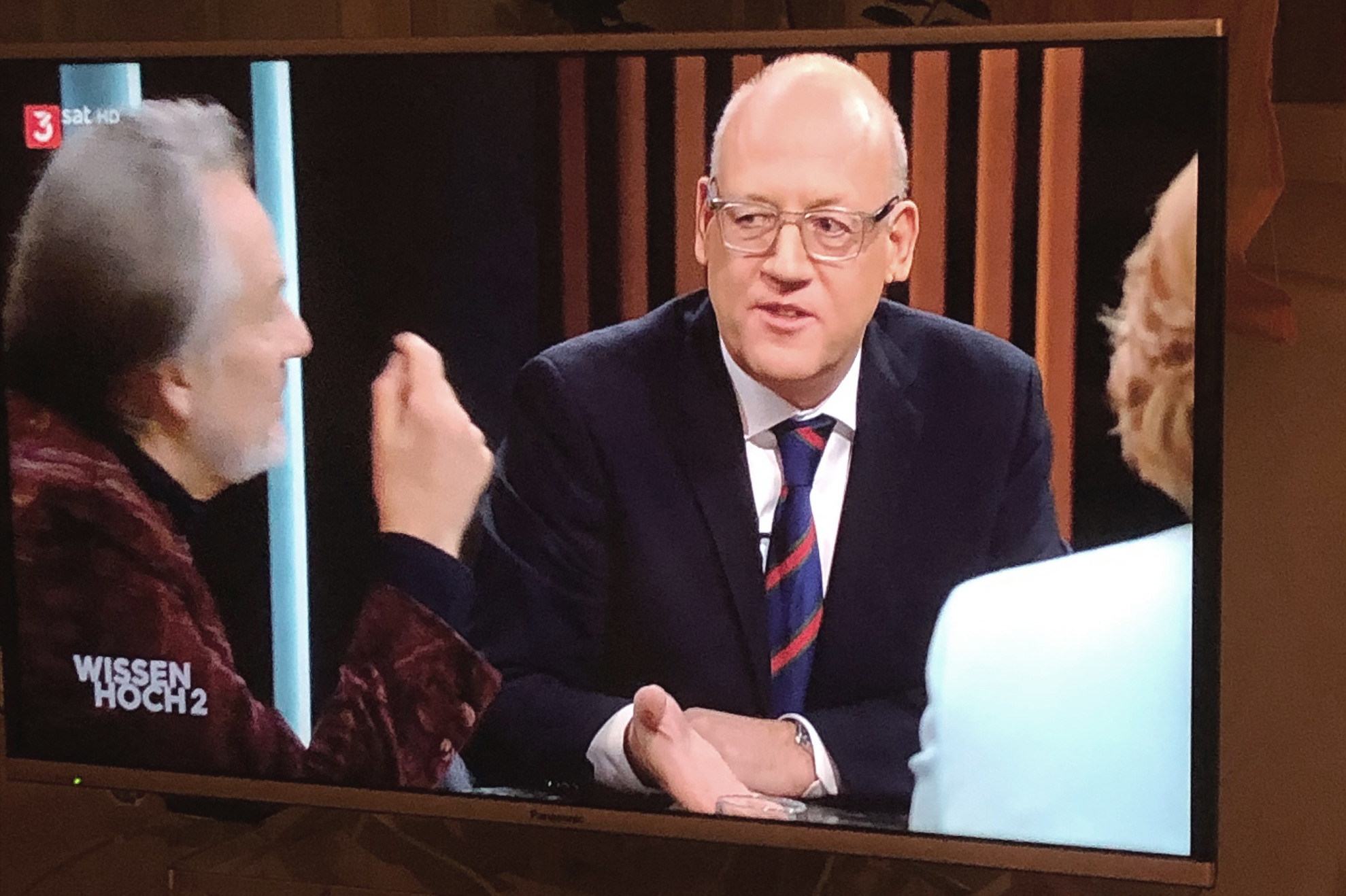
Abb.: Oliver Bendel diskutiert mit Gerd Scobel und Doris Weßels über generative KI