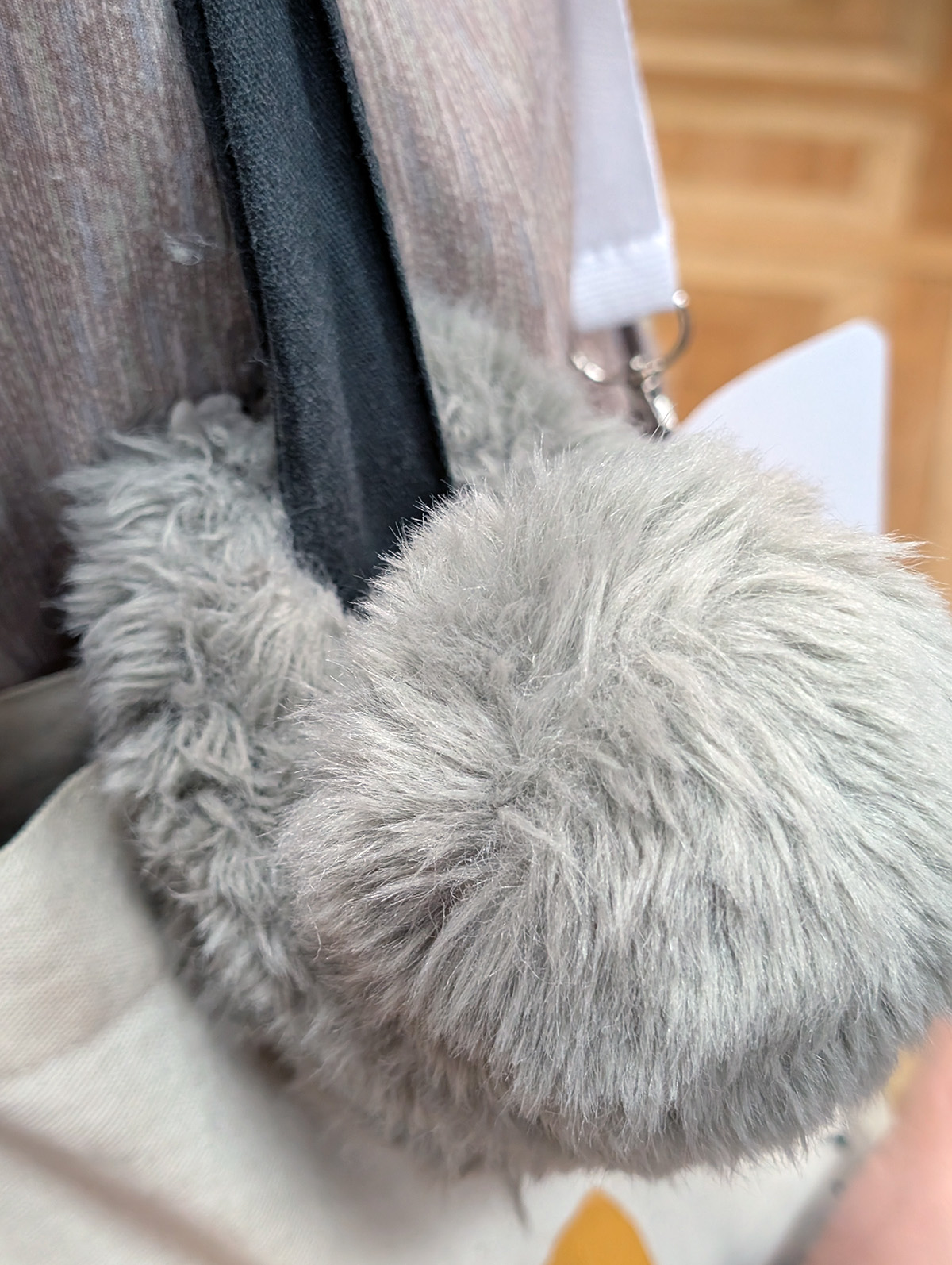
Yukai Engineering is bringing Mirumi, its wearable social robot, to Harrods in London with an exclusive pop-up store running from July 20 through August 16, 2026. The furry robotic bag charm first gained international attention at CES 2025 and later became a Kickstarter success before selling out during its initial launch in Japan. Mirumi can be attached to a bag and responds to sounds, movement, touch, and nearby people by turning its head and displaying expressive, lifelike reactions. Its expressive behaviour creates the impression of carrying a curious little companion wherever you go. Although Harrods has not yet announced specific details about the pop-up, the store is expected to offer visitors the opportunity to experience and purchase Mirumi in person. Exclusive editions have not been confirmed, but Harrods is known for limited-time collaborations and distinctive retail experiences, which could make the pop-up particularly appealing to collectors and technology enthusiasts. Following its successful debut in Japan and appearances at events such as ICSR + Art 2026 in London, Mirumi continues to attract growing international attention. With its expressive behaviour, distinctive design, and collectible appeal, it is already being discussed as a possible next major trend among robotic companions and collectible robots. An article by Oliver Bendel on wearable social robots is available via Wiley Industry News or directly here as a PDF.
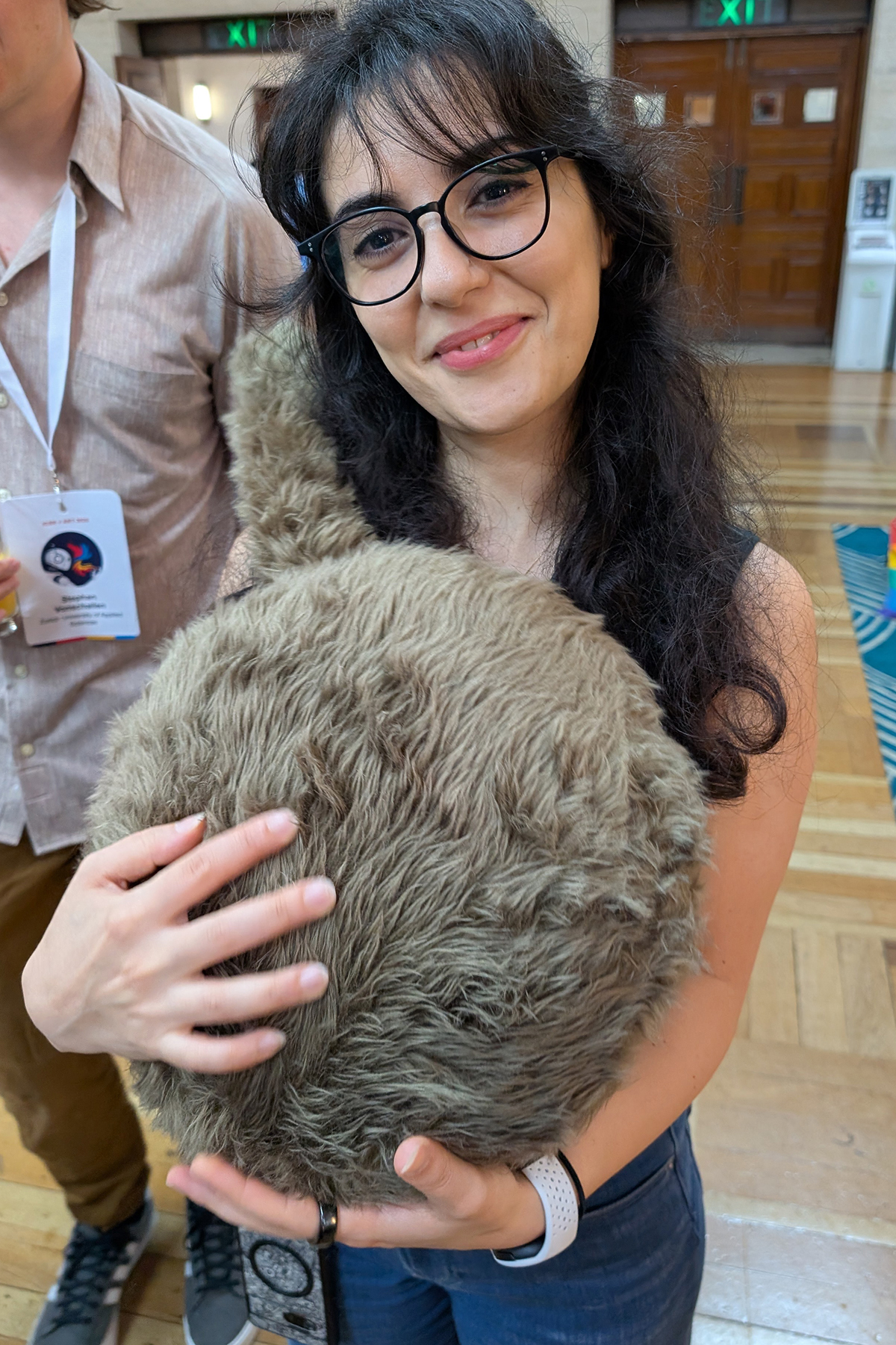
The 18th International Conference on Social Robotics (ICSR + Art 2026) took place in London from July 1–4, bringing together researchers, academics, and industry professionals from around the world to explore the latest advances in social robotics. As in previous years, the conference featured an extensive and impressive exhibition showcasing a wide range of social robots and related technologies. In addition to the official exhibits, some attendees and guests brought their own robots to demonstrate and discuss with other participants. Among the robots on display were Furhat, Euclid, Ameca, LOVOT, Qoobo, and Mirumi, illustrating the remarkable diversity of current approaches to social robotics. One of the most distinctive robots at the exhibition was Qoobo, a therapeutic robot by Yukai Engineering designed as a soft cushion with a lifelike tail. Instead of using facial expressions, speech, or a display, Qoobo communicates entirely through subtle tail movements. When gently stroked, the tail waves softly; when rubbed, it swings playfully, and from time to time it wags spontaneously as if greeting its owner. With its soft fur, comfortable size, and realistic movements inspired by animal behavior, Qoobo is designed to provide a calming and emotionally comforting experience. Studies presented by its developers have shown that interacting with Qoobo can help reduce stress and encourage communication, particularly in elderly care settings, making it an innovative example of how simple, non-verbal interaction can foster emotional well-being. With Mirumi, Yukai Engineering is expanding its classic lineup with another robot that is sure to win over women in particular.
How can you make social robots out of simple, soft shapes and objects, i.e. robots for interacting with people and animals? Under the supervision of Prof. Dr. Oliver Bendel, Vietnamese student Nhi Hoang Yen Tran and her fellow student Thang Vu Hoang investigated this question in the project „Simple, Soft Social Robots“ at the FHNW School of Business. They used Hugvie from Hiroshi Ishiguro Laboratories as the basis for their considerations – these labs are most famous for the Geminoid and for Erica. But hugging robots like Telenoid also come from them. The latest product from this series is Hugvie. A pocket for a smartphone is attached to its head. People who are far away from each other can talk to each other and have the impression of hugging and feeling each other. But what else can be done with Hugvie and similar forms? The two students have come up with eleven suggestions. A video explains five of them. Two of them are variants of Hugvie. With their result, the two students have received the highest performance in the bachelor thesis among all graduates of BSc International Management in 2021.
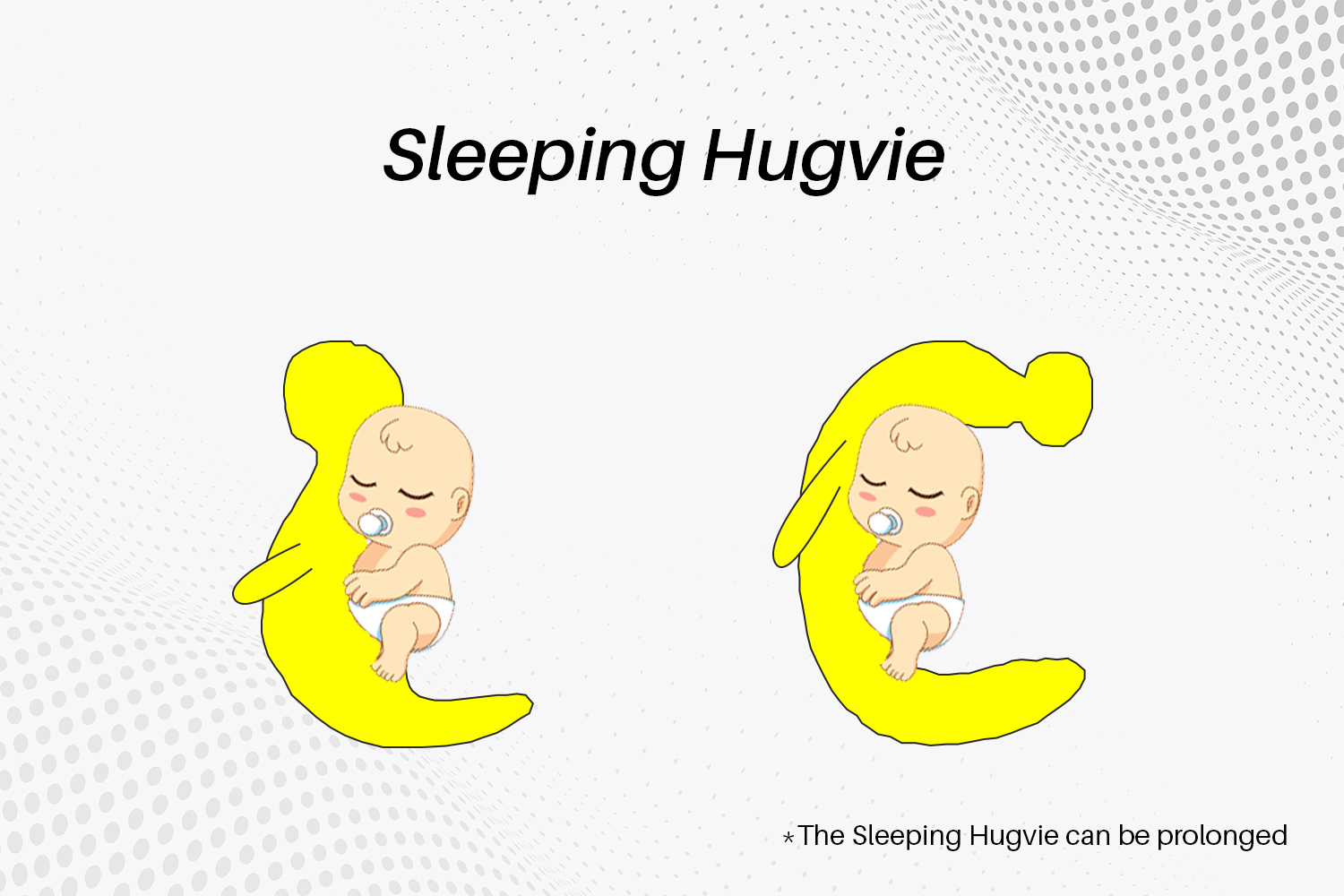
Simple, soft shapes are everywhere. In our home environment you can find pillows, blankets, balls, bottles, clothes, etc. Robots are often expensive and complex. But couldn’t they be thought of in a completely different way? How could social robots emerge from simple, soft shapes? As part of their final thesis at the School of Business FHNW, Nhi Tran Hoang Yen and Thang Hoang Vu from Ho Chi Minh City have answered this question posed by their supervisor Prof. Oliver Bendel. They have submitted eleven proposals for novel robots. All are shown on informationsethik.net. The tenth proposal is Sleeping Hugvie (go here to the previous). The normal Hugvie is used to communicate with distant people, giving the feeling of sensing them. You talk to them and hug the robot. In the process, you apparently feel the other person’s heartbeat via the integrated element. The Sleeping Hugvie has a different function. It is supposed to make it easier for babies to fall asleep. Its shape can be adjusted. The integrated element can also simulate the heartbeat – of the mother, for example. Parents can talk to the child or play soothing music (or white noise) via a speaker. A camera for observing the child is optional. Two books by Oliver Bendel on social robots – „300 Keywords Soziale Robotik“ and „Soziale Roboter“ – will be published in October 2021.
Fig.: Sleeping Hugvie (image: Trần Hoàng Yến Nhi & Hoàng Vũ Thắng, Thành phố Hồ Chí Minh, Việt Nam)
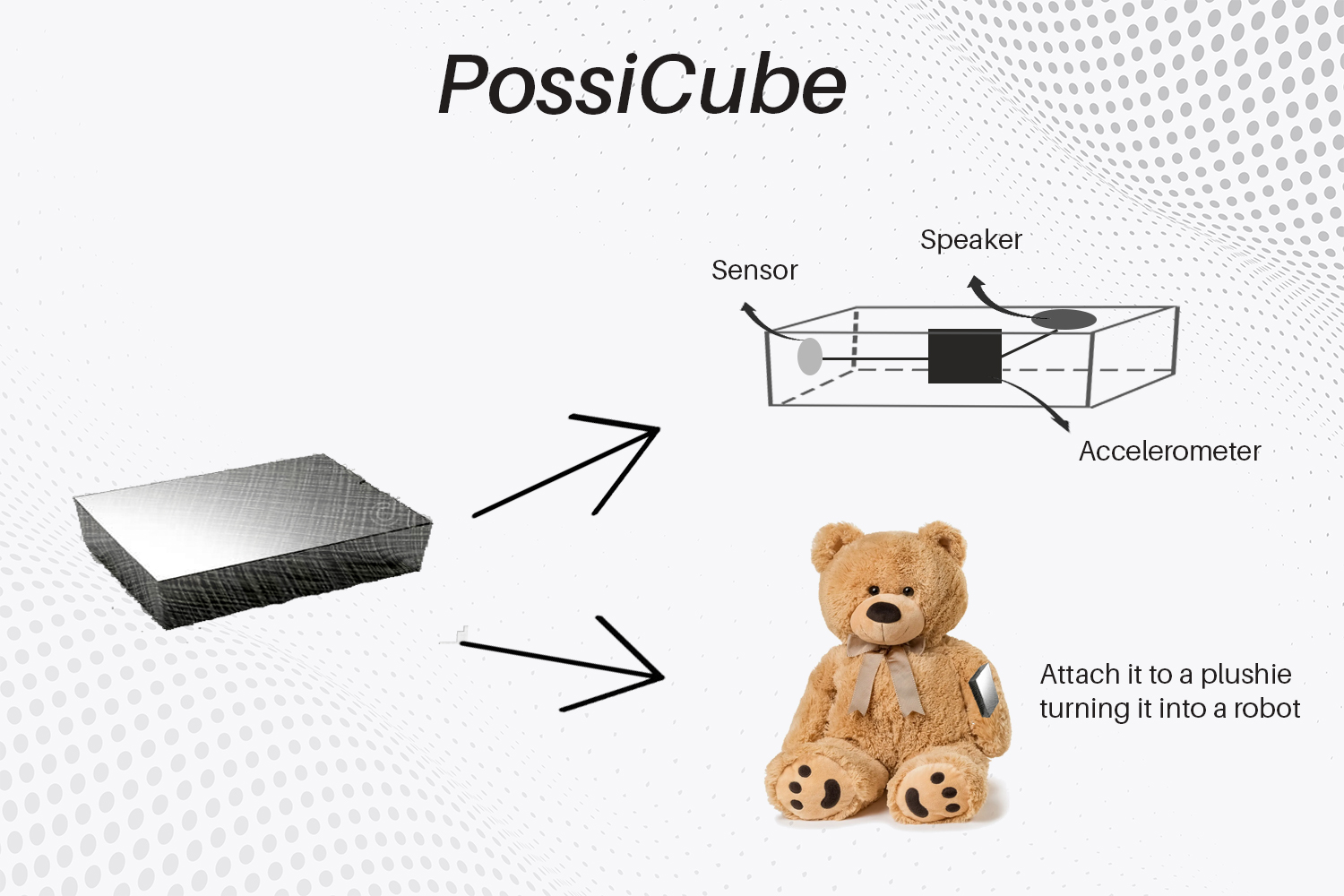
Simple, soft shapes are everywhere. In our home environment you can find pillows, blankets, balls, bottles, clothes, etc. Robots are often expensive and complex. But couldn’t they be thought of in a completely different way? How could social robots emerge from simple, soft shapes? As part of their final thesis at the School of Business FHNW, Nhi Tran Hoang Yen and Thang Hoang Vu from Ho Chi Minh City have answered this question posed by their supervisor Prof. Dr. Oliver Bendel. They have submitted eleven proposals for novel robots. All are shown on informationsethik.net. The sixth proposal is PossiCube, the cube of possibilities (go here to the previous). Possicube is an element that can be integrated into any simple soft shape. It transforms them into a simple social robot. For example, thanks to PossiCube, a teddy bear can perceive its environment and react to it with sounds or sentences. It would be ideal to be able to select different categories with different models. This would make it possible to robotize things in a simple and appropriate way. Two books by Oliver Bendel on social robots – „300 Keywords Soziale Robotik“ and „Soziale Roboter“ – will be published in October 2021.
Fig.: Possicube (image: Trần Hoàng Yến Nhi & Hoàng Vũ Thắng, Thành phố Hồ Chí Minh, Việt Nam)