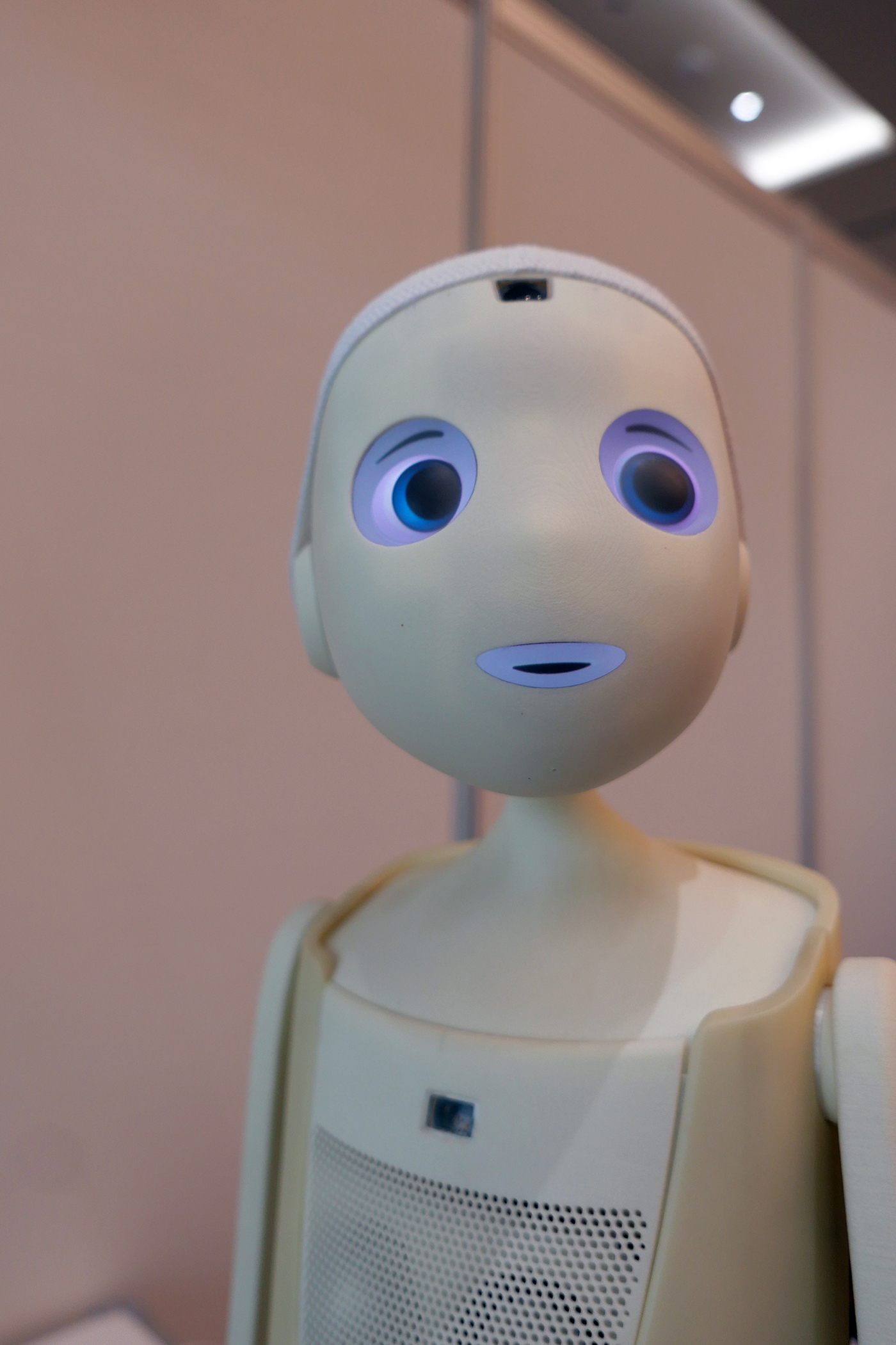
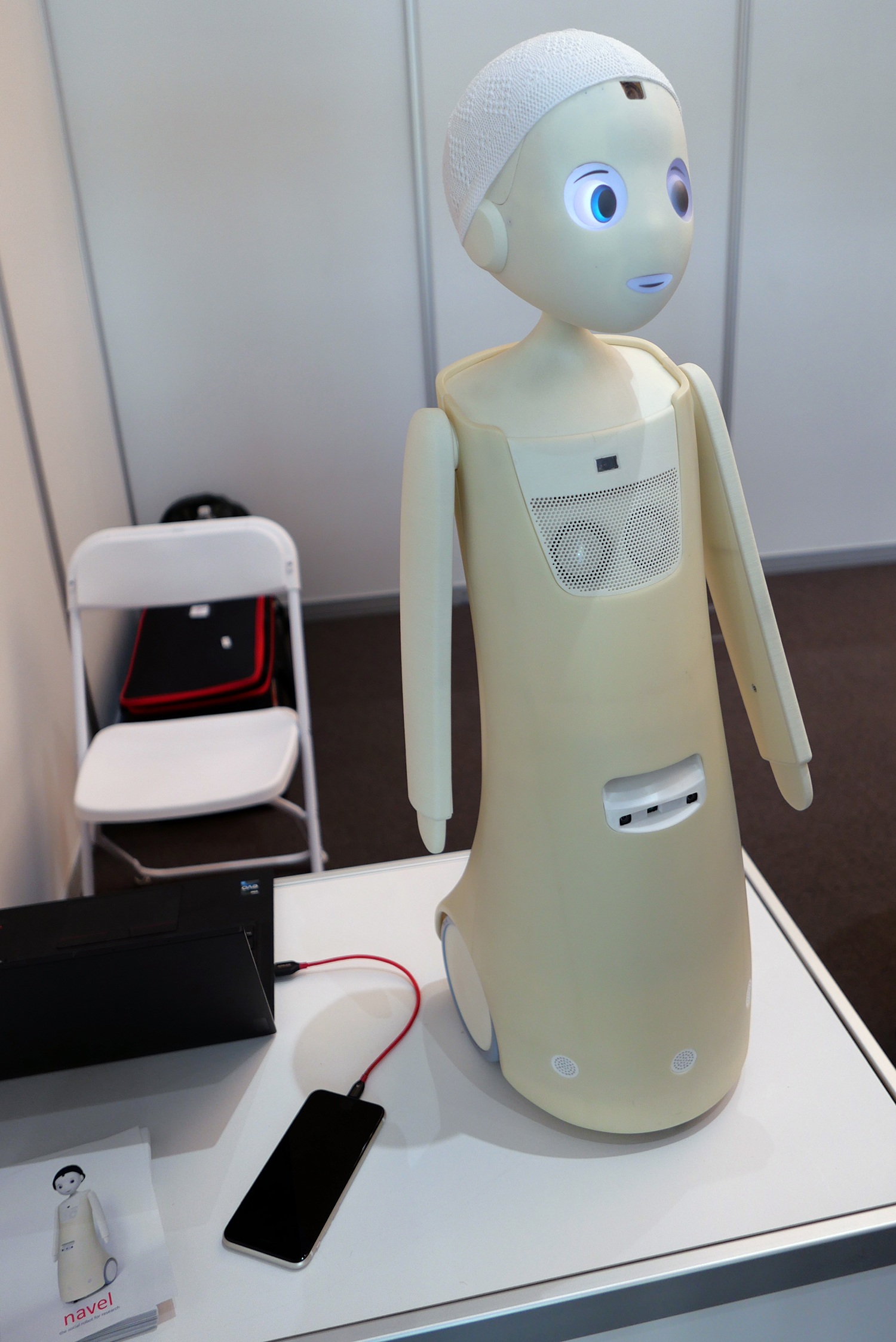
Im Future Lab „Soziale Roboter und GPTs“ am 6. Juni 2024 auf der LEARNTEC kann man mit Navel und Alpha Mini interagieren und kommunizieren. Man kann sie etwa zu Bewegungen des Körpers veranlassen, ihre gestischen und mimischen Fähigkeiten bewundern oder mit ihnen ein Gespräch führen. Bei beiden Modellen handelt es sich um soziale Roboter, die auf dem neuesten technischen Stand sind und im Lernkontext eingesetzt werden können. Die drei Sessions leitet Prof. Dr. Oliver Bendel von der Hochschule für Wirtschaft FHNW mit seinem Impulsvortrag „Soziale Roboter und GPTs im Lernbereich“ ein. Die Ansprechpartner für die beiden Roboter sind Claude Toussaint von navel robotics aus München und Rainer E. Becker von BECKER ROBOTICS aus Wuppertal. Man hat zudem die Möglichkeit, mit einem GPT namens Social Robotics Girl zu kommunizieren, das Prof. Dr. Oliver Bendel in seinem Unterricht einsetzt.
ACM Designing Interactive Systems 2024 (DIS 2024) will be held from 1-5 July 2024 at IT University, Copenhagen, Denmark. The Call for Papers for the Creative Robotics Theatre workshop is open to workshop papers, videos, pictorials, design explorations and performances. The roboticist and artist Hooman Samani is one of the organizers. He calls for participation on his website: „Join us at DIS 2024 for an innovative workshop exploring the confluence of robotics, theatre, and societal change. We are seeking artists, technologists, researchers, and practitioners interested in pushing the boundaries of Creative Robotics Theatre to enhance societal well-being and address global challenges.“ (Website Hooman Samani) Topics of interest include creative robotics theatre, robotics performance, embodied and tangible interfaces and performances, and performance with embodied objects. The deadline for submissions is 15 May 2024. Further information on the workshop is available at hoomansamani.com.
Fig.: The Little Mermaid sits on a rock at Langelinie Pier, Copenhagen
In addition to the ICSR in Odense, which focuses on social robotics and artificial intelligence, there is also the ICSR in Naples this year, which organizes a robot competition. In addition, an ICSR conference focusing on biomedicine and the healthcare sector will take place in Singapore from August 16-18, 2024. The website states: „The 16th International Conference on Social Robotics + BioMed (ICSR + BioMed 2024) focuses on interdisciplinary innovation on Bio-inspired, Biomedical, and Surgical Robotics. By fostering the much-needed merging of these disciplines, together with fast emerging Biotech, the conference aims to ensure the lesson learned from these communities blend to unleash the real potential of robots. … The conference will serve as the scientific, technical, and business platform for fostering collaboration, exploration, and advancement in these cutting-edge fields. It will showcase the latest breakthroughs and methodologies, shaping the future of robotics design and applications across several sectors including Biomedical and healthcare.“ (Website ICSR) Papers must be submitted by June 5, 2024. Further information on the conference is available at robicon2024.org.
Vom 4. bis zum 6. Juni 2024 findet die Learntec, die größte E-Learning-Messe und -Konferenz Europas, in Karlsruhe statt. Kurator des Future Lab zu sozialen Robotern und Virtual Learning Companions (VLCs) ist Prof. Dr. Oliver Bendel, der seit einem Vierteljahrhundert sogenannte Conversational Agents als verkörperte oder nichtverkörperte Entitäten erforscht. Um die Jahrtausendwende waren es vor allem Pedagogical Agents, die sein Interesse erregten. Inzwischen geht es u.a. um Pflege- und Therapieroboter, Lehrerroboter und Polizeiroboter sowie VLCs der zweiten Generation. Man wird auf der Learntec mit zwei sozialen Robotern interagieren und kommunizieren können, die den neuesten Stand der Technik darstellen. Zugesagt haben hierfür Navel Robotics und Becker Robotics. Zudem wird man an einer Station mit Social Robotics Girl chatten können, einem von Oliver Bendel entwickelten GPT. Videos und Impulsvorträge zu sozialen Robotern und Virtual Learning Companions vermitteln Wissen zum Thema und geben Einblicke in Projekte. Weitere Informationen gibt es ab Mai 2024 auf informationsethik.net und auf der Website der Learntec. Oliver Bendel hat bereits 2002 bis 2004 als Referent zum Programm beigetragen. Seit 2022 ist er wieder mit an Bord.
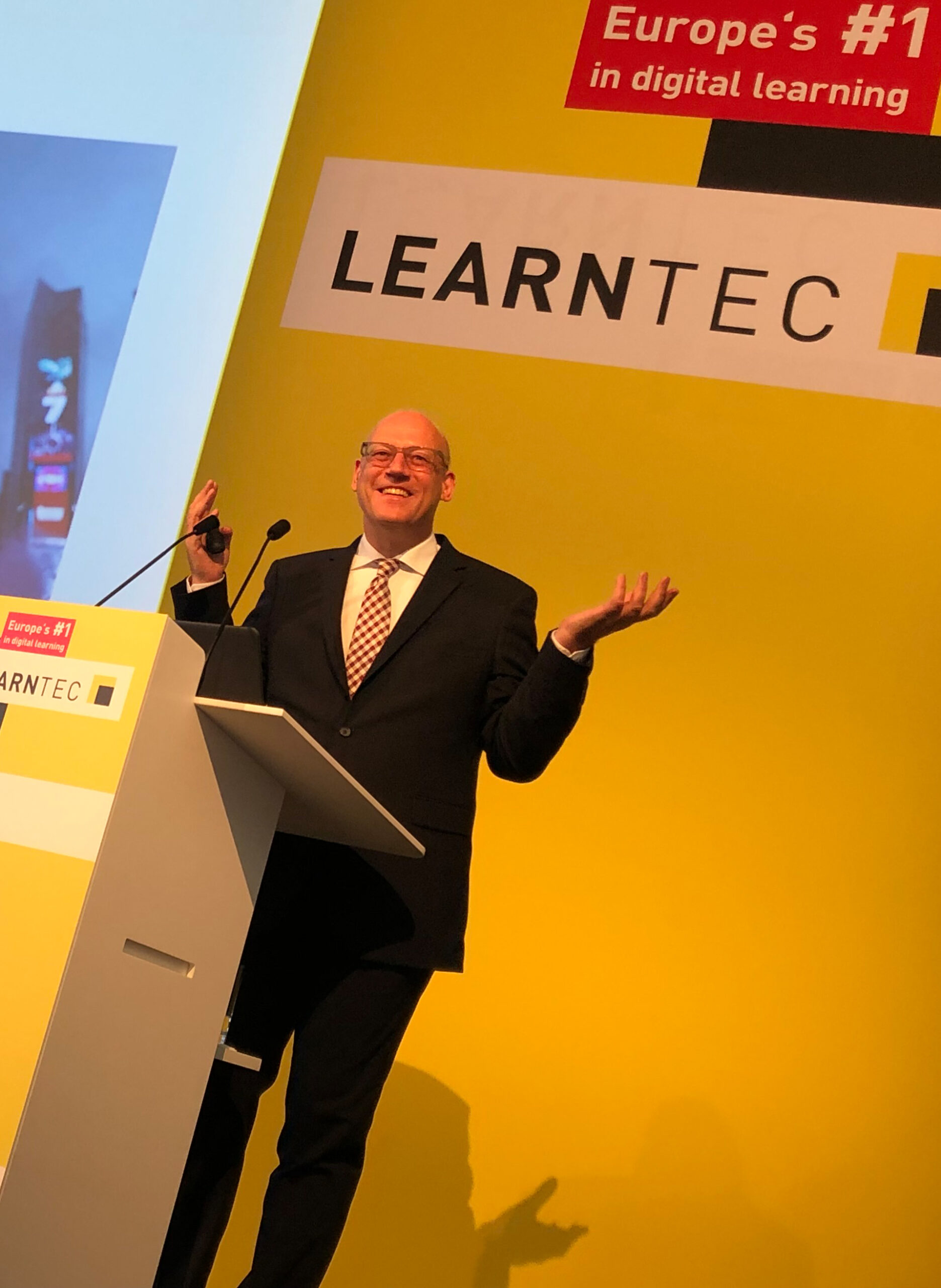
Abb.: Oliver Bendel bei der Learntec 2022 (Foto: Learntec)
Der Bundeswettbewerb KI unter der Schirmherrschaft des Ministerpräsidenten des Landes Baden-Württemberg, Winfried Kretschmann, geht in eine neue Runde. Auf der Website wird mit den Worten geworben: „Eure Ideen sind gefragt! Verändert die Welt mit Künstlicher Intelligenz und entwickelt euer eigenes KI-Projekt. Setzt eure Idee um und nutzt dazu die Methoden des maschinellen Lernens. Lasst euch von den Projekten aus dem Vorjahr inspirieren.“ (Website BWKI) Der Wettbewerb richtet sich nach den Angaben der Initiatoren und Organisatoren an Schüler und Schülerinnen weiterführender Schulen. Eine Teilnahme im ersten Jahr nach dem Schulabschluss sei ebenfalls möglich. Auf Instagram stehen Materialien und Interviews zu interessanten Themen und Disziplinen zur Verfügung. Dazu gehört die Tier-Maschine-Interaktion (mitsamt Ansätzen der Maschinenethik), die von Prof. Dr. Oliver Bendel erklärt wird, etwa in den Beiträgen „Wie sollen sich Maschinen gegenüber Tieren verhalten“ (14. März 2024), „Können Tiere und Maschinen Freunde werden?“ (17. März 2024) und „Schützt KI Igel vor dem Rasenmähertod?“ (21. März 2024). Im Teaser der Website heißt es: „Meldet euch, euer Team und eure Idee bis zum 2. Juni 2024 an. Euer Projekt könnt ihr dann bis zum 15. September 2024 fertigstellen. Wer ist dabei?“ (Website BWKI) Weitere Informationen über www.bw-ki.de.
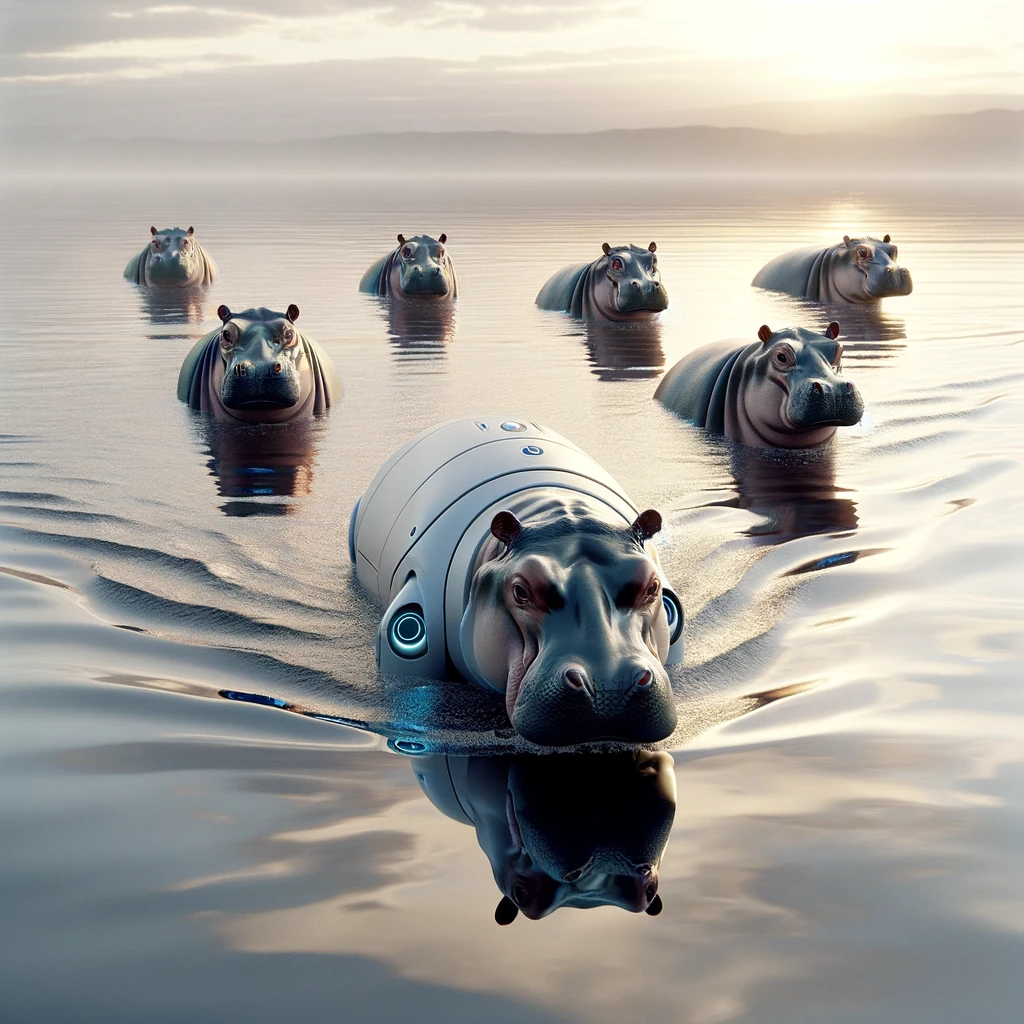
Abb.: Eine mögliche Perspektive ist die Tier-Maschine-Interaktion (Bild: DALL-E 3)
From March 25 to 27, 2024, the AAAI Spring Symposium Series took place at Stanford University. One of the events was dedicated to the question of how generative AI can improve well-being. What do you do after such an AI conference? One option is to go to San Francisco. It is certainly one of the most beautiful cities in the world. Another option is to head south. Not only San Diego is located there, but also Los Angeles. The Griffith Observatory is located in Griffith Park at an altitude of 300 metres. Visitors have a view over the whole of Los Angeles and the surrounding area, from Downtown to Santa Monica and Malibu. The observatory is known for its scientific exhibitions and planetarium. The 190-seat Leonard Nimoy Event Horizon Presentation Theater, built at the turn of the millennium, expands the Observatory’s programming and educational opportunities. Numerous scenes from well-known films and series were shot in and around the building, including „Flash Gordon“ (1936), „Rebel Without a Cause„ (1955), „Terminator“ (1984), „Transformers“ (2007), and „La La Land“ (2017).
Fig.: View from Griffith Observatory in April 2024
From March 25 to 27, 2024, the AAAI Spring Symposium Series took place at Stanford University. One of the events was dedicated to the question of how generative AI can improve well-being. What do you do after such an AI conference? One option is to go to San Francisco. It is certainly one of the most beautiful cities in the world. Another option is to head south. Not only San Diego is located there, but also Los Angeles. There – in Downtown, to be exact – is the Broad Museum, which has a unique collection of modern art, with works by Jean-Michel Basquiat, Andy Warhol, Roy Lichtenstein, and Takashi Murakami, to name but a few. Those who managed to get one of the free tickets were able to visit the „Infinity Mirrored Room – The Souls of Millions of Light Years Away (2013)“ by Yayoi Kusama. A maximum of four people are allowed to stay on the ramp and immerse themselves in the sea of lights.
Fig.: The „Infinity Mirrored Room“ by Yayoi Kusama
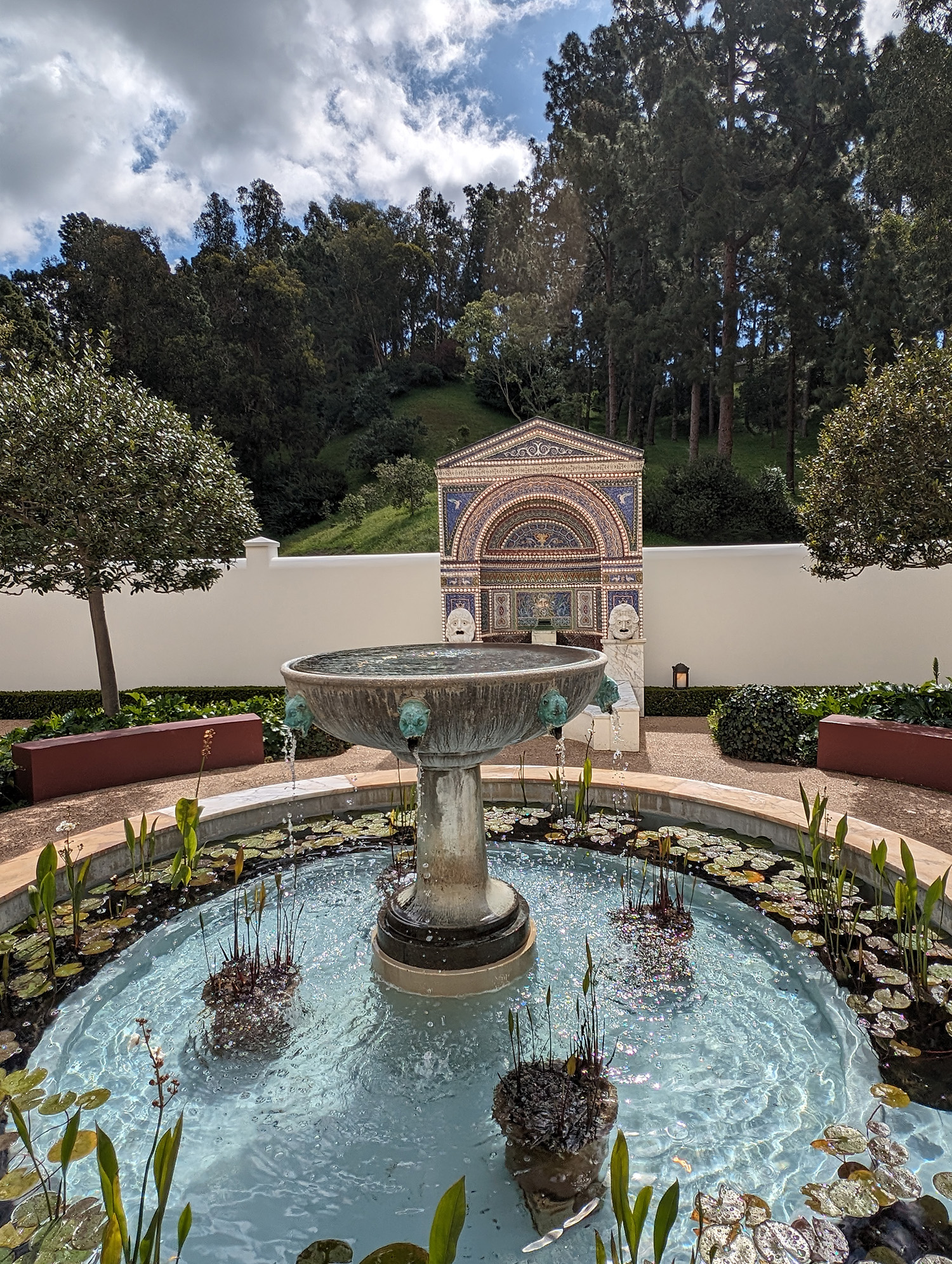
From March 25 to 27, 2024, the AAAI Spring Symposium Series took place at Stanford University. One of the events was dedicated to the question of how generative AI can improve well-being. What do you do after such an AI conference? One option is to go to San Francisco. It is certainly one of the most beautiful cities in the world. Another option is to head south. Not only San Diego is located there, but also Los Angeles. There – more precisely in Brentwood – is the Getty Center, which has a great collection, but also impresses with its building and grounds. You should also definitely visit the Getty Villa in Pacific Palisades. The building, which is modeled on the Villa dei Papiri in Herculaneum, houses a remarkable collection of genuine antique sculptures and everyday objects. There are copies in the outdoor areas – here it is the water basins and fountains that are enchanting.
From March 25 to 27, 2024, the AAAI Spring Symposium Series took place at Stanford University. One of the events was dedicated to the question of how generative AI can improve well-being. What do you do after such an AI conference? One option is to go to San Francisco. It is certainly one of the most beautiful cities in the world. Another option is to head south. Not only Los Angeles is located there, but also San Diego. From there you can go on whale-watching tours. February to April are particularly suitable for this. With a bit of luck, you can see humpback whales and gray whales, dolphins and sea lions. Seagulls and pelicans are always present. The whales are not detected using sonar or radar, nor with the help of transmitters attached to them. Instead, they are searched for the „footprint“ they leave behind. This is a smooth, glassy circle that is a result of the animal’s forward movement. With dolphins, there is nothing to do. They come to the boats of their own accord and swim competitively with them.
From March 25 to 27, 2024, the AAAI Spring Symposium Series took place at Stanford University. One of the events was dedicated to the question of how generative AI can improve well-being. What do you do after such an AI conference? One option is to go to San Francisco. It is certainly one of the most beautiful cities in the world. Another option is to head south. Not only Los Angeles is located there, but also San Diego. The Balboa Park, which has existed since 1868, is well worth a visit. The Panama-California Exposition of 1910-1916 provided the decisive boost. A fantasy city with richly decorated buildings was created. At the Japanese Friendship Garden, hummingbirds can often be seen flitting back and forth between the trees. San Diego also has beautiful beaches to offer. However, the water is sometimes heavily polluted, so swimming is prohibited – this was also the case in spring 2024.
From March 25 to 27, 2024, the AAAI Spring Symposium Series took place at Stanford University. One of the events was dedicated to the question of how generative AI can improve well-being. What do you do after such an AI conference? One option is to go to San Francisco. It is certainly one of the most beautiful cities in the world. Another option is to head south-east. Not only Death Valley and the Mojave Desert are located there, but also cities such as Palm Springs. There you can chill by the pool in one of the many historic hotels or visit the Palm Springs Art Museum. In front of it stands „Forever Marilyn“, a statue created by the sculptor John Seward Johnson II. Those who are drawn to the great outdoors should definitely visit the Indian Canyons. In the 15-mile-long Palm Canyon, there are countless palm trees along a stream that carried a lot of water in the spring of 2024 and led to some flooding on the paths.
Fig.: The Palm Canyon is a part of the Indian Canyons
From March 25 to 27, 2024, the AAAI Spring Symposium Series took place at Stanford University. One of the events was dedicated to the question of how generative AI can improve well-being. What do you do after such an AI conference? One option is to go to San Francisco. It is certainly one of the most beautiful cities in the world. Another option is to head south-east. There you will find one of the most beautiful national parks in the United States, Death Valley. Karl May readers will be familiar with it from the novel „Im Tal des Todes“. In spring 2024, it was home to a natural spectacle. In Badwater, where a layer of salt normally covers the ground, a shallow lake had formed. Many visitors waded through it and it looked as if they were walking on water. In addition to the famous sights such as Zabriskie Point, Artists Palette and Dante’s View, Golden Canyon is recommended, especially in the hours before sunset.
From March 25 to 27, 2024, the AAAI Spring Symposium Series took place at Stanford University. One of the events was dedicated to the question of how generative AI can improve well-being. What do you do after such an AI conference? One option is to go to San Francisco. It’s certainly one of the most beautiful cities in the world. Another option is to head south. Monterey and Carmel-by-the-Sea are worthwhile little towns with a long history. In between, the 17 Miles Drive beckons with beautiful views of the wild sea and the old trees on the hills and along the shore. Famous is the Lonely Pine, which is a popular photo motif. If you want to watch otters, Pacific Grove is the place to be. From Lovers Point, you can watch the animals hunting and playing. There are a few historic hotels right by the sea, such as the Green Gables. If you have the right room, you can watch the otters there until night falls over the bay.
The prestigious International Conference on Social Robotics was last held in Florence (2022) and Qatar (2023). Now it enters its next round. The 16th edition will bring together researchers and practitioners working on human-robot interaction and the integration of social robots into our society. The title of the conference includes the addition „AI“. This is a clarification and demarcation that has to do with the fact that there will be two further formats with the name ICSR in 2024. ICSR’24 (ICSR + AI) will take place as a face-to-face conference in Odense, Denmark, from 23 to 26 October 2024. The theme of this year’s conference is „Empowering Humanity: The role of social and collaborative robotics in shaping our future“. The topics of the Call for Papers include „collaborative robots in service applications (in construction, agriculture, etc.)“, „Human-robot interaction and collaboration“, „Affective and cognitive sciences for socially interactive robots“, and „Context awareness, expectation, and intention understanding“. The general chairs are Oskar Palinko, University of Southern Denmark, and Leon Bodenhagen, University of Southern Denmark. More information is available at icsr2024.dk.
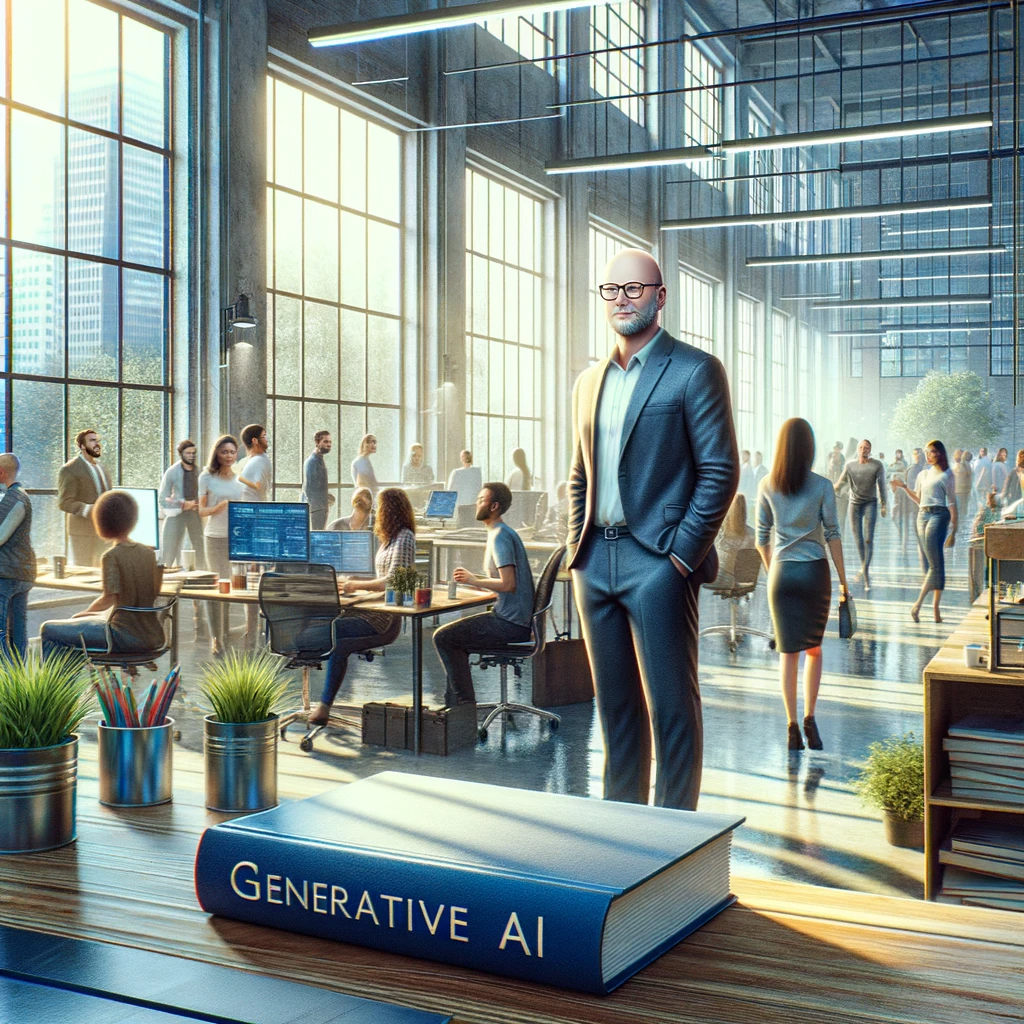
Am 4. März 2024 hat Prof. Dr. Oliver Bendel sein Manuskript zu „300 Keywords Generative KI“ bei Springer Gabler eingereicht. Es ist, wie der Titel schon verrät, der generativen KI gewidmet, im Englischen „generative AI“ oder „GenAI“ genannt. In mehr als 300 Einträgen wird das Thema ausgeleuchtet. Dabei spielen neben technischen und wirtschaftlichen Fragen insbesondere ethische und ästhetische eine Rolle. So wird nach der Schönheit von Artefakten gefragt, es wird die Stellung von Bildern zwischen Kunst und Kitsch ausgeleuchtet, und es wird eine Bias-Diskussion zu Text- und Bildgeneratoren geführt. So spielt der „american smile“ eine Rolle, zudem die Obsession von DALL-E 3 mit Bärten und Hinterteilen. Insgesamt steht der Nutzen der generativen KI im Vordergrund, und die Freude und Lust, sie zu benutzen. Es handelt sich um den fünften „Keywords“-Band des Technikphilosophen und Wirtschaftsinformatikers, nach „400 Keywords Informationsethik“ (2. Auflage), „450 Keywords Digitalisierung“ (2. Auflage), „300 Keywords Soziale Robotik“ (1. Auflage) und „110 Keywords Wirtschaftsethik“ (1. Auflage, zusammen mit Nick Lin-Hi und Andreas Suchanek). Weitere Informationen zum Lexikon gibt es voraussichtlich ab Juni 2024.
Abb.: Am Anfang zierte sich DALL-E 3 weniger bei fotorealistischen Darstellungen
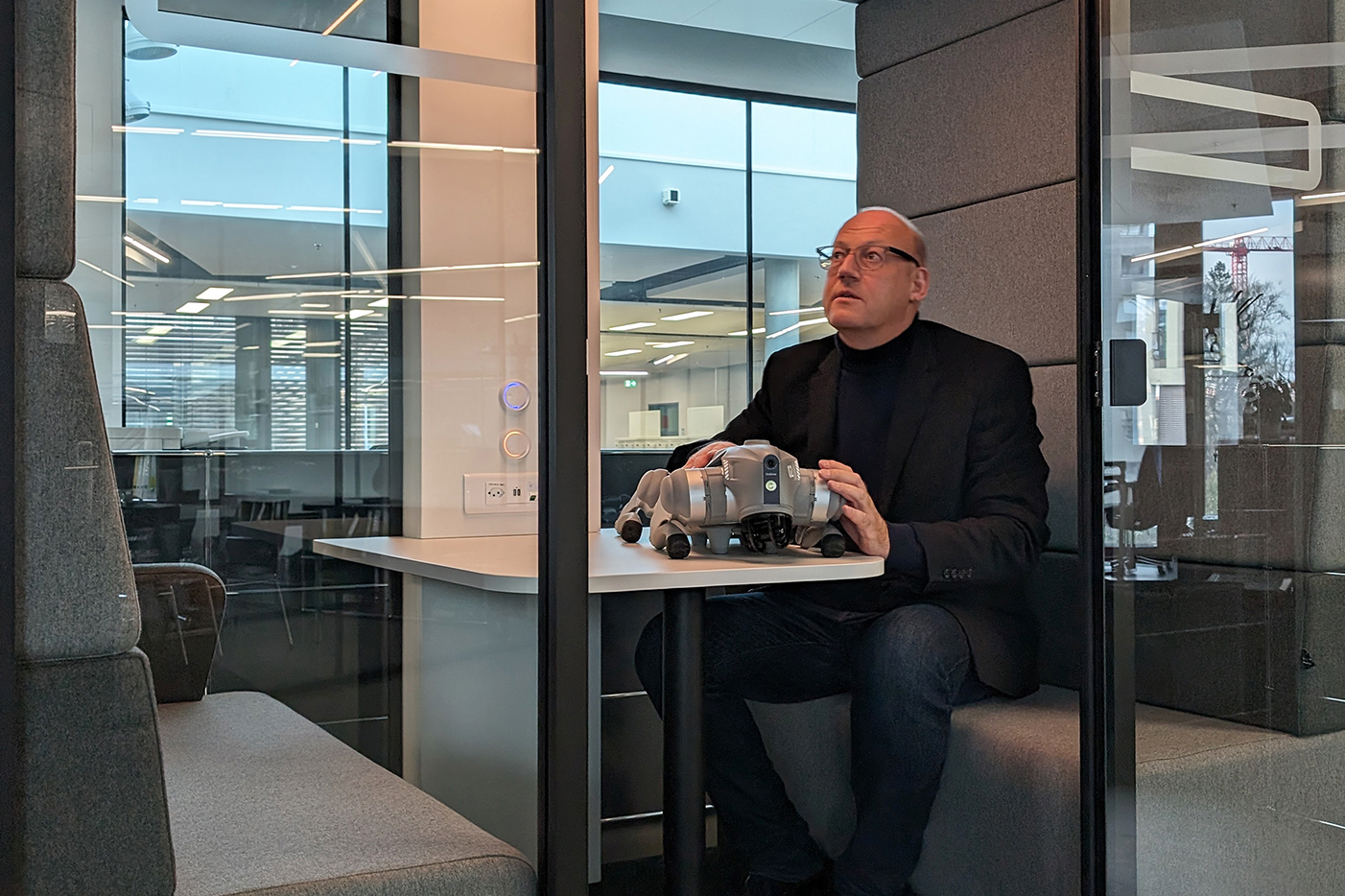
There are dozens of quadruped and bipedal robots. Quadrupeds are of particular interest to consumers because they are highly maneuverable yet safe to operate. Some are available from about $2000. One problem with most quadrupeds is that they have no head or only a hint of a head. This makes them look scary. Initial tests have shown that people are usually only put off by this for a short time and then quickly approach the robotic animals to touch and pet them. However, some users are not satisfied with the appearance and produce additional parts such as heads and tails. This leads to results like SparkyTheRobot, which has its own YouTube channel. Both the head and the tail are 3D printed and look convincing. The underlying Unitree Go2 is fundamentally changed in its appearance. What is being done here is robot enhancement. This term was coined by Prof. Dr. Oliver Bendel. It describes an enhancement with clothing and accessories, additional body parts, new end pieces, or artificial skin. Programming improvements or the integration of AI systems are also included. The two-legged and four-legged animals currently appearing on the market are likely to capture the imagination of many users and lead to the creation of specialized companies.
Fig.: Oliver Bendel with his Unitree Go2 (Photo: Frank Graef)
Am 8. Februar 2024 fand die Vernissage zum Buch „Tender Digitality“ (herausgegeben von Charlotte Axelsson) an der Zürcher Kunsthochschule statt. Enthalten darin ist die Sammlung „The Loneliness of the Female Astronaut“. Es handelt sich um drei Gedichte aus dem Buch „Die Astronautin“, das im Jahre 2000 erschienen ist. Alle Texte sind in 3D-Codes enthalten, sogenannten JAB-Codes, die eine Entwicklung des Fraunhofer-Instituts für Sichere Informationstechnologie SIT sind. Am 9. Februar kam die 2. Auflage heraus, mit einem neuen Cover und zusätzlichen Informationen zum Werk des Autors. Informationen zu weiteren Projekten von Oliver Bendel aus Wissenschaft und Kunst sind verfügbar über www.oliverbendel.net, www.informationsethik.net, www.maschinenethik.net und www.robophilosophy.com … Auf www.oliverbendel.net/publikationen2.html sind auch seine literarischen Werke aufgeführt. Einige davon kann man kostenlos herunterladen, da die Verlage inzwischen aufgelöst wurden oder weil es sich um Open-Access-Projekte handelt. Andere müssen im Buchhandel bzw. auf Amazon erstanden werden.
Abb.: Das Cover des Buchs zeigt die Astronautin in jungen Jahren
Im Buch „Tender Digitality“, herausgegeben von Charlotte Axelsson, ist die Sammlung „The Loneliness of the Female Astronaut“ („Die Einsamkeit der Astronautin“) von Oliver Bendel enthalten. Die drei Gedichte liegen in Form von 3D-Codes vor, genauer gesagt von JAB-Codes. Mit diesen experimentiert der in Zürich lebende Schriftsteller seit 2020. Damals erschien auch der digitale Band „Die Astronautin“ – aus dem die Auswahl entnommen ist. Zum ersten Mal liegt diese in gedruckter Form vor. Man geht mit dem Browser auf jabcode.org, eine Seite des Fraunhofer-Instituts für Sichere Informationstechnologie SIT, scannt einen der 3D-Codes ein und bekommt dann das ganze Gedicht angezeigt. Eine Onlineverbindung ist nicht notwendig. Auf die Idee, mehrdimensionale Codes als Speicher zu verwenden, kam Oliver Bendel im Jahre 2009. Damals entstand sein Band „handyhaiku“ – darin sind alle Texte zusätzlich in QR-Codes enthalten. 2010 erschien er in gedruckter Form beim Hamburger Haiku Verlag. Im gleichen Jahr kam „stöckelnde dinger“ als Handybuch bei Blackbetty heraus. Oliver Bendel schreibt seit 40 Jahren experimentelle Literatur. 1984 wurde er vom Förderkreis deutscher Schriftsteller gefördert. Ab 1985 trug er seine Gedichte auf Lesungen in Ulm und Stuttgart vor. Ab 2007 wurde er für seine Handyromane bekannt. Er trug sie wie seine Handygedichte auf einer Tournee durch die Niederlande vor, zu der ihn zwei Goethe-Institute eingeladen hatten. Das Standardwerk „Die Struktur der modernen Literatur“ von Mario Andreotti widmet seiner digitalen Literatur zwei Seiten. Das Buch „Tender Digitality“ erscheint Anfang Februar 2024 bei Slanted und kann bereits vorbestellt werden.
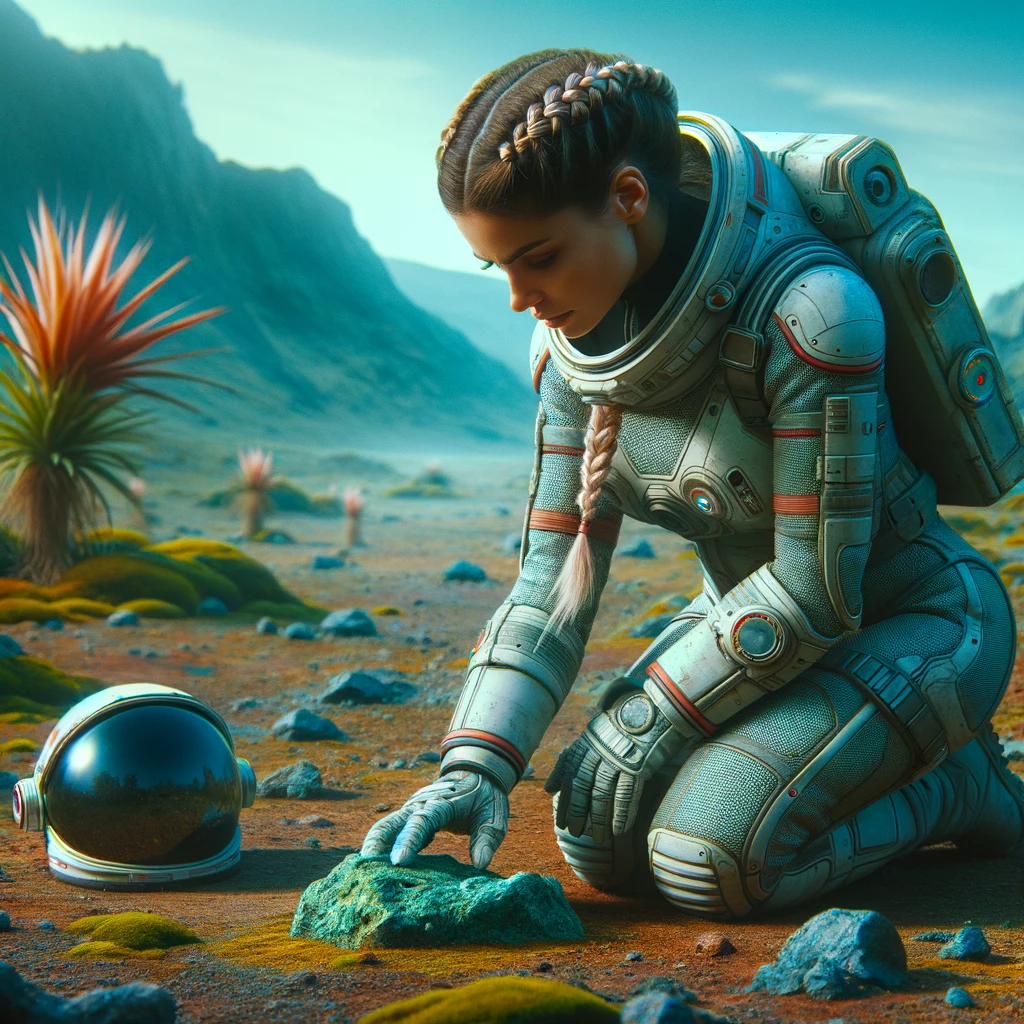
Abb.: Die Astronautin in jungen Jahren (Bild: DALL-E 3)
Im Sommer 2024 erscheint ein weiteres „Keywords“-Buch von Prof. Dr. Oliver Bendel bei Springer Gabler, „300 Keywords Generative KI“. Es ist, wie der Titel schon verrät, der generativen KI gewidmet, im Englischen „generative AI“ oder „GenAI“ genannt. In mehr als 300 Einträgen wird das Thema ausgeleuchtet. Dabei spielen neben technischen und wirtschaftlichen Fragen insbesondere ethische und ästhetische eine Rolle. So wird nach der Schönheit von Artefakten gefragt, es wird die Stellung von Bildern zwischen Kunst und Kitsch ausgeleuchtet, und es wird eine Bias-Diskussion zu Text- und Bildgeneratoren geführt. So spielt der „american smile“ eine Rolle, zudem die Obsession von DALL-E 3 mit Bärten. Insgesamt steht der Nutzen der generativen KI im Vordergrund, und die Freude und Lust, sie zu benutzen. Es handelt sich um den fünften „Keywords“-Band des Technikphilosophen und Wirtschaftsinformatikers, nach „400 Keywords Informationsethik“ (2. Auflage), „450 Keywords Digitalisierung“ (2. Auflage), „300 Keywords Soziale Robotik“ (1. Auflage) und „110 Keywords Wirtschaftsethik“ (1. Auflage, zusammen mit Nick Lin-Hi und Andreas Suchanek). Weitere Informationen zum Lexikon gibt es voraussichtlich ab Juni 2024.
The book „Tender Digitality“, edited by Charlotte Axelsson from the Zurich University of the Arts, will be published in early February 2024. From the publisher’s website: „Tender Digitality introduces an aesthetically oriented concept that intricately intertwines binary systems in a complex manner, setting them in motion. The concept responds to the human desire for sensuality, interpersonal connection, intuition, and well-being in digital environments. It explores ways to (re)transmit these experiences into the analog world of a book, developing its own distinct vocabularies. Readers are guided through the various perspectives of this kaleidoscope, encouraging them to delve into different play-forms of ‚tender digitality‘ and develop their own approach. Assuming the role of researchers, they discover phenomena of extraordinary beauty or bizarreness within the spectrum spanning analogue and digital, social, and technological domains. Through exploration, learning, and the cultivation of ‚tender digitality,‘ readers can envision their own version of a community where individuals and artificial intelligences, avatars and cyborgs, humans and computers navigate digital landscapes with agency, intuition, and sensitivity.“ (Website Slanted) Contributors include Charlotte Axelsson, Oliver Bendel, Dana Blume, Marisa Burn, Alexander Damianisch, Léa Ermuth, Hannah Eßler, Barbara Getto, Leoni Hof, Marcial Koch, Mela Kocher, Friederike Lampert, Gunter Lösel, Francis Müller, Marie-France Rafael, Oliver Ruf, Sascha Schneider, and Grit Wolany. More information at www.slanted.de/product/tender-digitality/.
Researchers at the University of Washington have developed a web app to help children develop skills such as self-awareness and emotional management. They have published their findings in their paper „Self-Talk with Superhero Zip: Supporting Children’s Socioemotional Learning with Conversational Agents“. From the abstract: „Here, we examine whether children can learn to use a socioemotional strategy known as ’self-talk‘ from a conversational agent (CA). To investigate this question, we designed and built ‚Self-Talk with Superhero Zip,‘ an interactive CA experience, and deployed it for one week in ten family homes to pairs of siblings between the ages of five and ten … We found that children could recall and accurately describe the lessons taught by the intervention, and we saw indications of children applying self-talk in daily life.“ (Fu et al. 2023) The paper can be downloaded at dl.acm.org/doi/abs/10.1145/3585088.3589376.
Das Buch „Soziale Roboter: Technikwissenschaftliche, wirtschaftswissenschaftliche, philosophische, psychologische und soziologische Grundlagen“ (Hrsg. Oliver Bendel) hat am 31. Dezember 2023 250.000 Downloads erreicht, nach nur etwas über zwei Jahren. Es besteht aus fünf Teilen: „Grundlagen, -begriffe und -fragen“, „Soziale Robotik und andere Disziplinen“, „Gestaltung, Interaktion und Kommunikation“, „Anwendungsbereiche sozialer Roboter“ und „Die Zukunft sozialer Roboter“. Es sind, das Vorwort mitgezählt, 30 Beiträge, mit ca. 35 Abbildungen, bei ca. 570 Seiten. Der Untertitel lautet: „Technikwissenschaftliche, wirtschaftswissenschaftliche, philosophische, psychologische und soziologische Grundlagen“. Mit dabei sind führende Experten der Sozialen Robotik, der Robotik, der Künstlichen Intelligenz, der Soziologie, der Psychologie und der Philosophie. Sie lehren und forschen an Hochschulen in der Schweiz, in Deutschland, in Österreich, in Dänemark und in Schweden. Auch ein Hersteller ist vertreten, der über den Einsatz seines Produkts berichtet. Das Fachbuch ist Ende 2021 bei Springer Gabler erschienen und kann über link.springer.com/book/10.1007/978-3-658-31114-8 heruntergeladen oder bestellt werden. Zudem ist es in jeder Buchhandlung verfügbar.
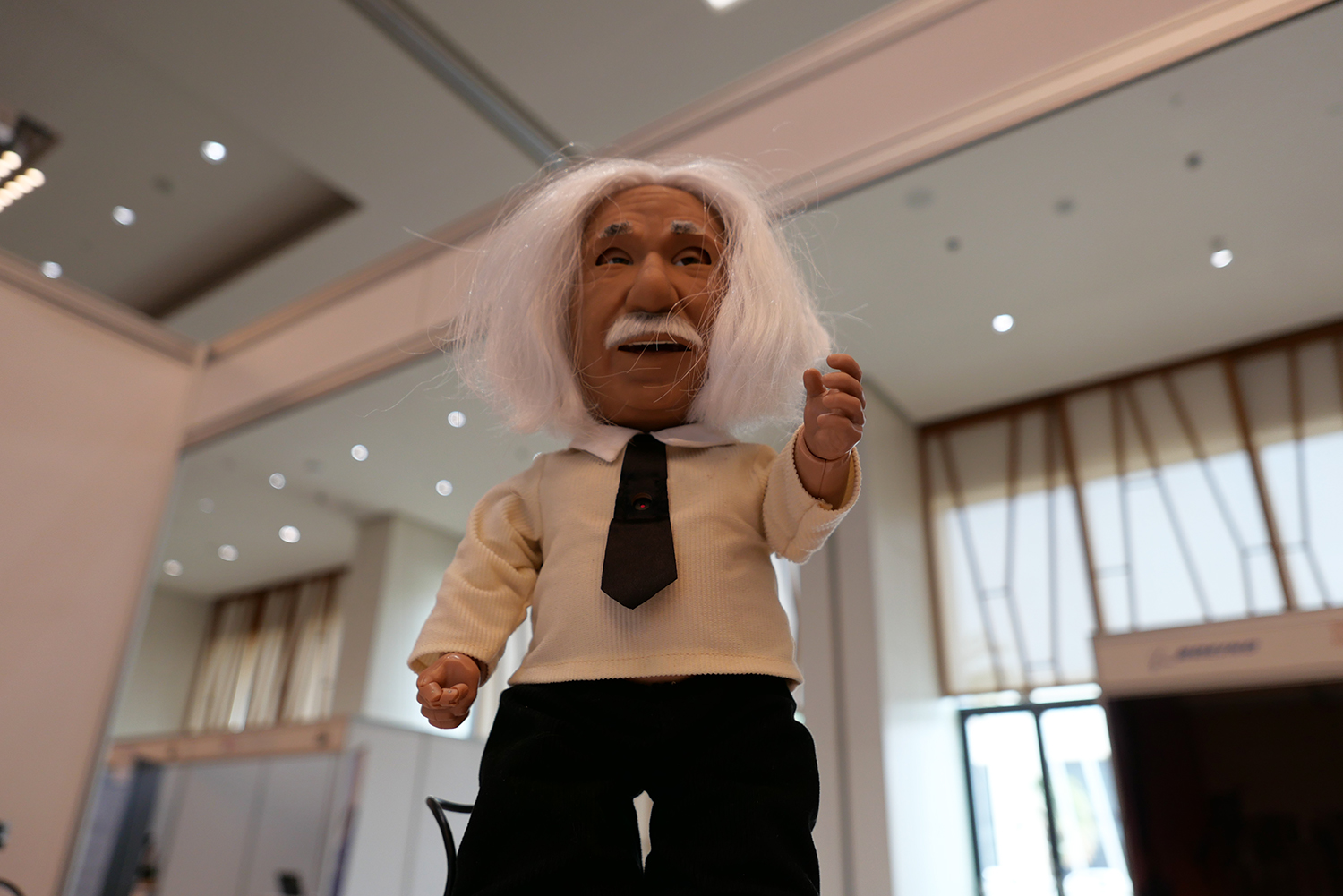
Abb.: Einstein von Hanson Robotics bei der ICSR 2023 in Qatar