In addition to the ICSR in Odense, which focuses on social robotics and artificial intelligence, there is also the ICSR in Naples this year, which organizes a robot competition. In addition, an ICSR conference focusing on biomedicine and the healthcare sector will take place in Singapore from August 16-18, 2024. The website states: „The 16th International Conference on Social Robotics + BioMed (ICSR + BioMed 2024) focuses on interdisciplinary innovation on Bio-inspired, Biomedical, and Surgical Robotics. By fostering the much-needed merging of these disciplines, together with fast emerging Biotech, the conference aims to ensure the lesson learned from these communities blend to unleash the real potential of robots. … The conference will serve as the scientific, technical, and business platform for fostering collaboration, exploration, and advancement in these cutting-edge fields. It will showcase the latest breakthroughs and methodologies, shaping the future of robotics design and applications across several sectors including Biomedical and healthcare.“ (Website ICSR) Papers must be submitted by June 5, 2024. Further information on the conference is available at robicon2024.org.
The last few years have seen the creation of a large number of quadruped and bipedal robots. Many have been inspired by Spot and Atlas from Boston Dynamics. These, in turn, can be traced back to Sparko and Elektro, which became famous around 1940. Atlas paved the way for the so-called general-purpose or universal robots that are now conquering the market, from H1 to Figure 01. They are not yet truly universal, but they are getting there. Most robotic quadrupeds don’t have a real head. A few talented hobbyists have produced their own with a 3D printer. This can be referred to as robot enhancement. Most robotic bipeds have a head that looks creepy or repulsive. This will be a key design problem in the coming years. It may be that people will quickly get used to ugly heads. But it would probably help with adoption and acceptance if the heads were nice to look at and had convincing facial expressions. After the huge technological advances that have been made in recent years, with new approaches to motor skills and the integration of speech models, what is needed most is a change in design.
Fig.: Robot heads can be designed very differently (Image: DALL-E 3)
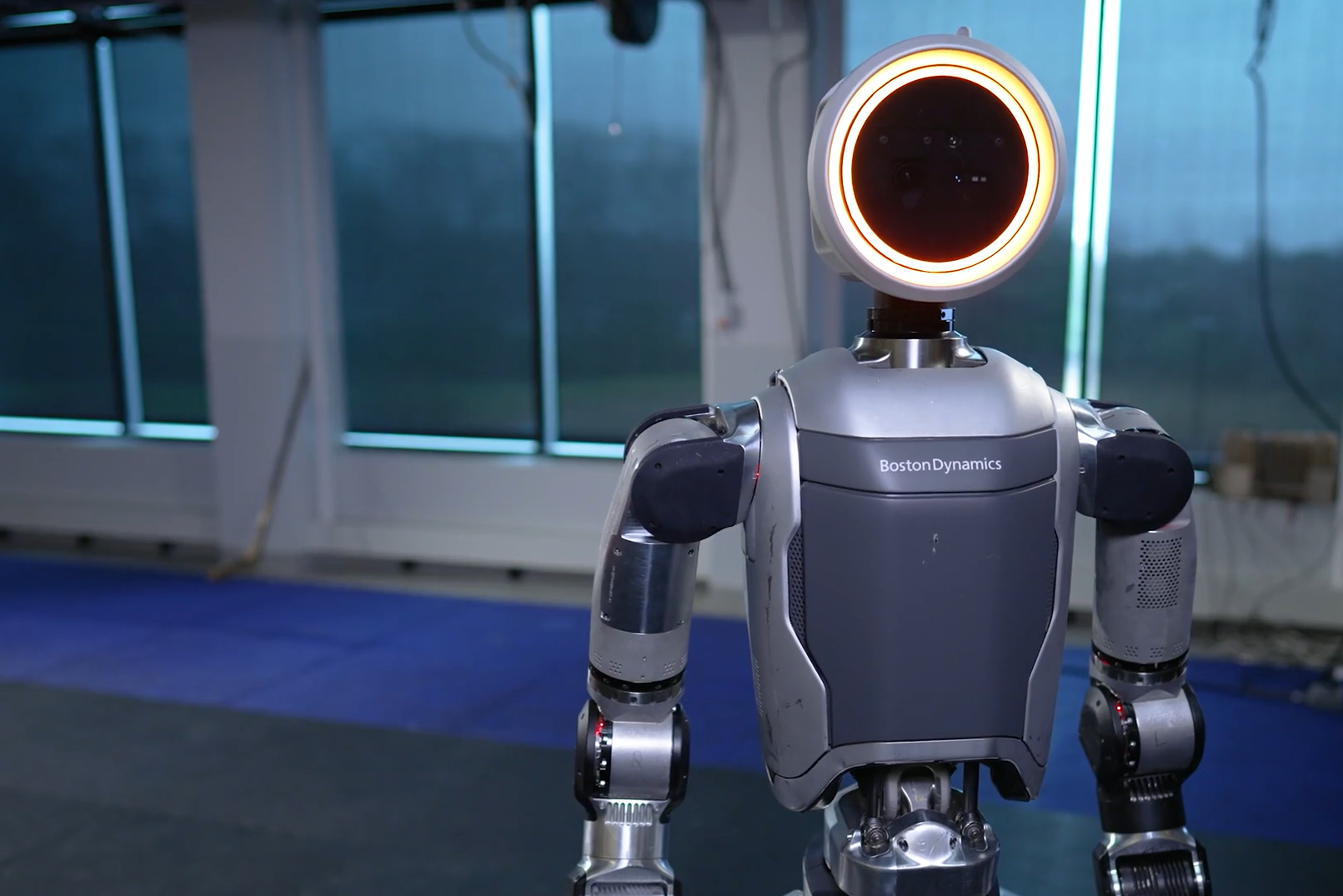
In recent years, a large number of quadruped and bipedal robots have been created. Many of them were inspired by Spot and Atlas from Boston Dynamics. These, in turn, can be traced back to Sparko and Elektro, which became famous around 1940. Atlas paved the way for the so-called general-purpose or universal robots that are now conquering the market, from H1 to Figure 01. They are not yet truly universal, but they are getting there. In these dynamic and productive times, the company, which is part of the Hyundai Motor Group, announces the end of the hydraulic version of the humanoid robot. A post on LinkedIn from April 17, 2024 states: „Atlas has sparked our imagination, inspired new roboticists, and leapt over technical barriers. Now it’s time for our hydraulic Atlas robot to kick back and relax. Take a look at everything we’ve accomplished with the Atlas platform to date.“ (Boston Dynamics, 17 April 2024) At the end of the video, it says that one could meet again. This immediately raised hopes of a successor. In fact, Boston Dynamics presented an electric, extremely mobile version on its blog just a few hours later. The title of the article is: „An Electric New Era for Atlas“.
Fig.: A screenshot from the video of the electric version (Image: Boston Dynamics)
The upcoming international Robophilosophy Conference 2024 in Aarhus is set to tackle the socio-cultural and ethical questions arising from the use of generative multimodal AIs in social robotics. The event will bring together global scholars from humanities, social sciences, social robotics, and computer science, aiming to produce actionable insights and responsibly address the socio-cultural transformations brought about by social robotics. It is part of the Robophilosophy Conference Series, known for its large scale events for humanities research in social robotics. RP2024 highlights the urgency of closer collaboration between tech experts and societal experts to establish research-based regulations. The program committee includes Sherry Turkle (Massachusetts Institute of Technology), Wendell Wallach (The Hastings Center), and Melanie Mitchell (Santa Fe Institute). Among the speakers is Oliver Bendel, who will present his accepted paper „The Universal Robot of the 21st Century“. He has been attending the conference without interruption since 2018.
Fig. A contradictory presentation of an all-purpose robot
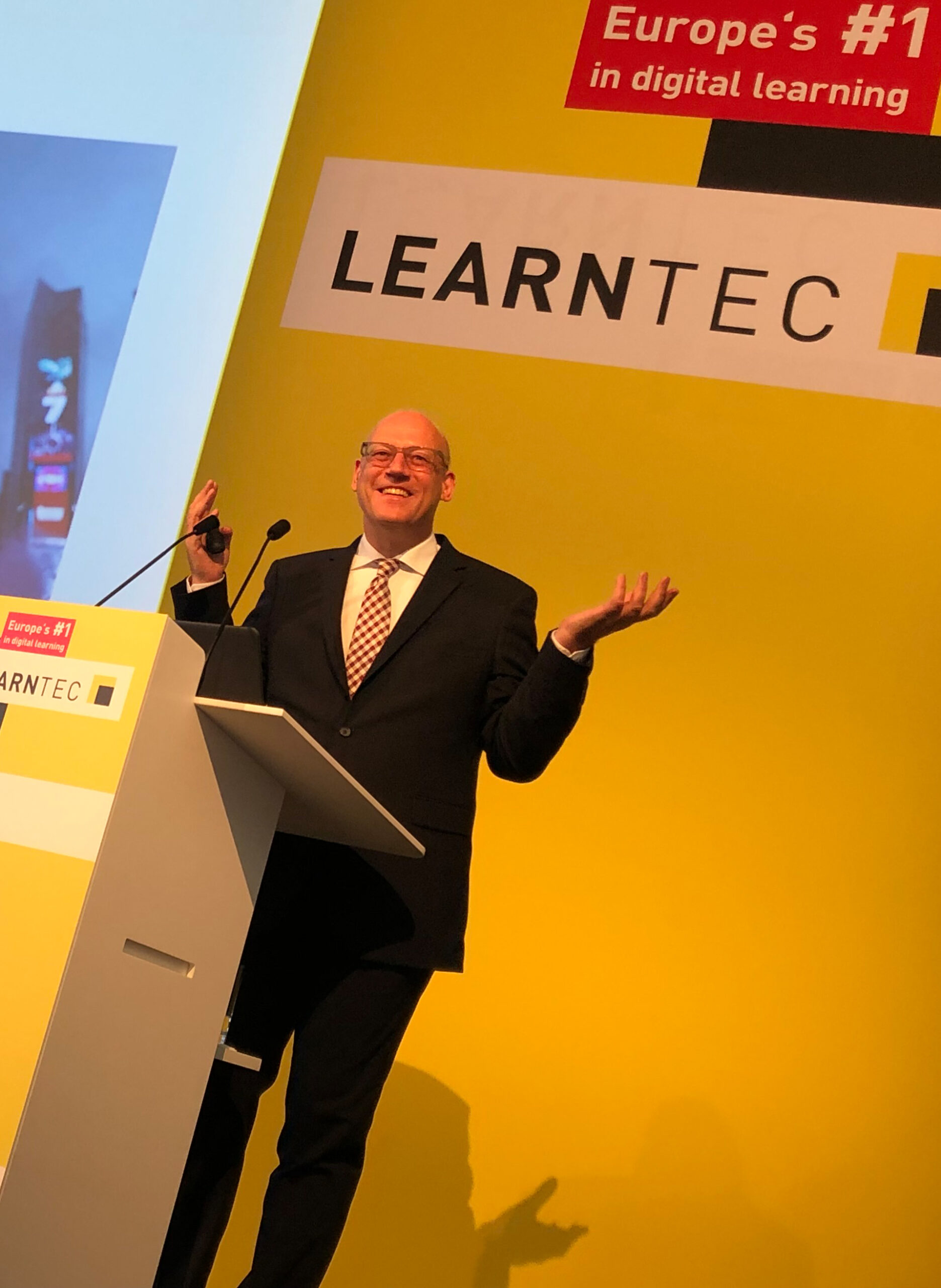
Vom 4. bis zum 6. Juni 2024 findet die Learntec, die größte E-Learning-Messe und -Konferenz Europas, in Karlsruhe statt. Kurator des Future Lab zu sozialen Robotern und Virtual Learning Companions (VLCs) ist Prof. Dr. Oliver Bendel, der seit einem Vierteljahrhundert sogenannte Conversational Agents als verkörperte oder nichtverkörperte Entitäten erforscht. Um die Jahrtausendwende waren es vor allem Pedagogical Agents, die sein Interesse erregten. Inzwischen geht es u.a. um Pflege- und Therapieroboter, Lehrerroboter und Polizeiroboter sowie VLCs der zweiten Generation. Man wird auf der Learntec mit zwei sozialen Robotern interagieren und kommunizieren können, die den neuesten Stand der Technik darstellen. Zugesagt haben hierfür Navel Robotics und Becker Robotics. Zudem wird man an einer Station mit Social Robotics Girl chatten können, einem von Oliver Bendel entwickelten GPT. Videos und Impulsvorträge zu sozialen Robotern und Virtual Learning Companions vermitteln Wissen zum Thema und geben Einblicke in Projekte. Weitere Informationen gibt es ab Mai 2024 auf informationsethik.net und auf der Website der Learntec. Oliver Bendel hat bereits 2002 bis 2004 als Referent zum Programm beigetragen. Seit 2022 ist er wieder mit an Bord.
Abb.: Oliver Bendel bei der Learntec 2022 (Foto: Learntec)
Ethische Leitlinien oder Richtlinien sind seit jeher umstritten. Für die einen sind sie zahnlose Tiger. Schon Albert Einstein hat sich gegenüber Max Born in dieser Richtung geäußert: „Mit einem ethical code haben die Mediziner erstaunlich wenig ausgerichtet, und bei den eigentlichen Wissenschaftlern mit ihrem mechanisierten und spezialisierten Denken dürfte noch weniger eine ethische Wirkung zu erwarten sein.“ (Einstein u. Born, Briefwechsel, 203) Für die anderen sind sie wichtige Instrumente der Regulierung und der Reflexion. Wenn man ethische Leitlinien entwickelt, etwa für einen Berufsstand oder -verband, sollte man dies mit Kompetenz und Sensibilität tun. Man sollte den Hintergrund deutlich machen, die Zielsetzung aufzeigen und Begründungen anführen. Und man sollte eine korrekte, präzise und prägnante Sprache verwenden, letztlich die Sprache der Sprachgemeinschaft, um möglichst verständlich zu sein und möglichst viele anzusprechen. Die „Ethikrichtlinien“ der Schweizer Informatik Gesellschaft – die Schreibweise der Organisation ist nicht zu beanstanden, da es sich um einen Eigennamen handelt – wurden durch die Generalversammlung vom 25. November 2005 verabschiedet. Bis 2017 hat man eine neue Version erarbeitet. Nach intensiven Diskussionen wurde 2019 die endgültige Version unter der Bezeichnung „Ethikrichtlinien“ veröffentlicht. Bei „1. Allgemeine ethische Grundsätze“ heißt es: „Eine Informatikerin soll …“. Unter „1.1.“ folgt „sich der gesellschaftlichen Verantwortung bewusst sein“. Diese movierte Form kann einzig und allein auf weibliche Personen zielen. Damit werden männliche Personen ausgeschlossen, also vermutlich die Mehrzahl der SI-Mitglieder. Bei „2. Berufliche Verantwortung“ heißt es: „Ein Informatiker soll …“. Nachdem oben von einer Informatikerin gesprochen wurde, fragt man sich unweigerlich, ob hier nur männliche Personen gemeint sind. Solche „Ethikrichtlinien“ missachten den allgemeinen Sprachgebrauch, beschädigen die Sprache der Sprachgemeinschaft, grenzen Adressaten und Betroffene aus und lenken von der Sache ab. Sie wurden von Personen verfasst, die die Sprachgemeinschaft verlassen haben und die offenbar mehr an Moralismus als an Moral interessiert sind – und damit ernsthafte Bemühungen um ethische Leitlinien konterkarieren.
Abb.: Nicht Sprache verändern, sondern Wirklichkeit
Der Bundeswettbewerb KI unter der Schirmherrschaft des Ministerpräsidenten des Landes Baden-Württemberg, Winfried Kretschmann, geht in eine neue Runde. Auf der Website wird mit den Worten geworben: „Eure Ideen sind gefragt! Verändert die Welt mit Künstlicher Intelligenz und entwickelt euer eigenes KI-Projekt. Setzt eure Idee um und nutzt dazu die Methoden des maschinellen Lernens. Lasst euch von den Projekten aus dem Vorjahr inspirieren.“ (Website BWKI) Der Wettbewerb richtet sich nach den Angaben der Initiatoren und Organisatoren an Schüler und Schülerinnen weiterführender Schulen. Eine Teilnahme im ersten Jahr nach dem Schulabschluss sei ebenfalls möglich. Auf Instagram stehen Materialien und Interviews zu interessanten Themen und Disziplinen zur Verfügung. Dazu gehört die Tier-Maschine-Interaktion (mitsamt Ansätzen der Maschinenethik), die von Prof. Dr. Oliver Bendel erklärt wird, etwa in den Beiträgen „Wie sollen sich Maschinen gegenüber Tieren verhalten“ (14. März 2024), „Können Tiere und Maschinen Freunde werden?“ (17. März 2024) und „Schützt KI Igel vor dem Rasenmähertod?“ (21. März 2024). Im Teaser der Website heißt es: „Meldet euch, euer Team und eure Idee bis zum 2. Juni 2024 an. Euer Projekt könnt ihr dann bis zum 15. September 2024 fertigstellen. Wer ist dabei?“ (Website BWKI) Weitere Informationen über www.bw-ki.de.
Abb.: Eine mögliche Perspektive ist die Tier-Maschine-Interaktion (Bild: DALL-E 3)
„In Gaza und in der Ukraine werden ethisch umstrittene ‚High-Tech-Hunde‘ und andere autonome Waffen eingesetzt: Sie töten emotionslos, chirurgisch und ‚kostengünstiger‘. Das ist weder moralisch, noch völkerrechtlich vertretbar.“ (Die Furche, 3. April 2024) Mit diesen Worten beginnt ein Artikel von Adrian Lobe, der am 3. April 2024 in der österreichischen Wochenzeitung Die Furche veröffentlicht wurde. Zu Wort kommt Prof. Dr. Oliver Bendel, der sich wiederholt mit autonomen Waffensystemen beschäftigt hat. Im Jahre 2016 diskutierte er auf einem Panel in Krakau u.a. mit Ronald C. Arkin, der im Auftrag des Pentagon militärische Roboter mit einem künstlichen Gewissen ausgerüstet hat, wobei es bei Prototypen geblieben ist. Beide sind im Bereich der Maschinenethik tätig, haben aber z.T. ganz unterschiedliche Positionen. Oliver Bendel betreibt keine militärische Forschung und lehnt den Einsatz autonomer Kampfroboter ab. Er weist immer wieder darauf hin, dass auch Maschinen, die zu zivilen Zwecken entwickelt wurden, zu militärischen genutzt werden können, so wie es bereits der Fall bei Unitree Go1 und Go2 war, die in diesen Fällen ferngesteuert wurden – ihn stört daran nicht nur der Waffeneinsatz an sich, sondern auch, dass man die Akzeptanz gegenüber hilfreichen und sinnvollen Servicerobotern gefährdet. Der Artikel kann über www.furche.at abgerufen werden.
From March 25 to 27, 2024, the AAAI Spring Symposium Series took place at Stanford University. One of the events was dedicated to the question of how generative AI can improve well-being. What do you do after such an AI conference? One option is to go to San Francisco. It is certainly one of the most beautiful cities in the world. Another option is to head south. Not only San Diego is located there, but also Los Angeles. The Griffith Observatory is located in Griffith Park at an altitude of 300 metres. Visitors have a view over the whole of Los Angeles and the surrounding area, from Downtown to Santa Monica and Malibu. The observatory is known for its scientific exhibitions and planetarium. The 190-seat Leonard Nimoy Event Horizon Presentation Theater, built at the turn of the millennium, expands the Observatory’s programming and educational opportunities. Numerous scenes from well-known films and series were shot in and around the building, including „Flash Gordon“ (1936), „Rebel Without a Cause„ (1955), „Terminator“ (1984), „Transformers“ (2007), and „La La Land“ (2017).
Fig.: View from Griffith Observatory in April 2024
From March 25 to 27, 2024, the AAAI Spring Symposium Series took place at Stanford University. One of the events was dedicated to the question of how generative AI can improve well-being. What do you do after such an AI conference? One option is to go to San Francisco. It is certainly one of the most beautiful cities in the world. Another option is to head south. Not only San Diego is located there, but also Los Angeles. There – in Downtown, to be exact – is the Broad Museum, which has a unique collection of modern art, with works by Jean-Michel Basquiat, Andy Warhol, Roy Lichtenstein, and Takashi Murakami, to name but a few. Those who managed to get one of the free tickets were able to visit the „Infinity Mirrored Room – The Souls of Millions of Light Years Away (2013)“ by Yayoi Kusama. A maximum of four people are allowed to stay on the ramp and immerse themselves in the sea of lights.
Fig.: The „Infinity Mirrored Room“ by Yayoi Kusama
From March 25 to 27, 2024, the AAAI Spring Symposium Series took place at Stanford University. One of the events was dedicated to the question of how generative AI can improve well-being. What do you do after such an AI conference? One option is to go to San Francisco. It is certainly one of the most beautiful cities in the world. Another option is to head south. Not only San Diego is located there, but also Los Angeles. There – more precisely in Brentwood – is the Getty Center, which has a great collection, but also impresses with its building and grounds. You should also definitely visit the Getty Villa in Pacific Palisades. The building, which is modeled on the Villa dei Papiri in Herculaneum, houses a remarkable collection of genuine antique sculptures and everyday objects. There are copies in the outdoor areas – here it is the water basins and fountains that are enchanting.
From March 25 to 27, 2024, the AAAI Spring Symposium Series took place at Stanford University. One of the events was dedicated to the question of how generative AI can improve well-being. What do you do after such an AI conference? One option is to go to San Francisco. It is certainly one of the most beautiful cities in the world. Another option is to head south. Not only Los Angeles is located there, but also San Diego. From there you can go on whale-watching tours. February to April are particularly suitable for this. With a bit of luck, you can see humpback whales and gray whales, dolphins and sea lions. Seagulls and pelicans are always present. The whales are not detected using sonar or radar, nor with the help of transmitters attached to them. Instead, they are searched for the „footprint“ they leave behind. This is a smooth, glassy circle that is a result of the animal’s forward movement. With dolphins, there is nothing to do. They come to the boats of their own accord and swim competitively with them.
From March 25 to 27, 2024, the AAAI Spring Symposium Series took place at Stanford University. One of the events was dedicated to the question of how generative AI can improve well-being. What do you do after such an AI conference? One option is to go to San Francisco. It is certainly one of the most beautiful cities in the world. Another option is to head south. Not only Los Angeles is located there, but also San Diego. The Balboa Park, which has existed since 1868, is well worth a visit. The Panama-California Exposition of 1910-1916 provided the decisive boost. A fantasy city with richly decorated buildings was created. At the Japanese Friendship Garden, hummingbirds can often be seen flitting back and forth between the trees. San Diego also has beautiful beaches to offer. However, the water is sometimes heavily polluted, so swimming is prohibited – this was also the case in spring 2024.
From March 25 to 27, 2024, the AAAI Spring Symposium Series took place at Stanford University. One of the events was dedicated to the question of how generative AI can improve well-being. What do you do after such an AI conference? One option is to go to San Francisco. It is certainly one of the most beautiful cities in the world. Another option is to head south-east. Not only Death Valley and the Mojave Desert are located there, but also cities such as Palm Springs. There you can chill by the pool in one of the many historic hotels or visit the Palm Springs Art Museum. In front of it stands „Forever Marilyn“, a statue created by the sculptor John Seward Johnson II. Those who are drawn to the great outdoors should definitely visit the Indian Canyons. In the 15-mile-long Palm Canyon, there are countless palm trees along a stream that carried a lot of water in the spring of 2024 and led to some flooding on the paths.
Fig.: The Palm Canyon is a part of the Indian Canyons
From March 25 to 27, 2024, the AAAI Spring Symposium Series took place at Stanford University. One of the events was dedicated to the question of how generative AI can improve individual and social well-being. What do you do after such an AI conference? One option is to go to San Francisco. It is certainly one of the most beautiful cities in the world. Another option is to head south-east. Not only is Death Valley located there, but also the Mojave Desert. It boasts an attraction, the Kelso Dunes. This is the largest field of aeolian sand deposits in the Mojave Desert. You could just as easily be in the north of Fuerteventura or the south of Gran Canaria. If you continue in the direction of Palm Springs, with a bit of luck you can marvel at another attraction: in some places you can see a Fata Morgana.
Fig.: A Fata Morgana in the Mojave Desert in spring 2024
From March 25 to 27, 2024, the AAAI Spring Symposium Series took place at Stanford University. One of the events was dedicated to the question of how generative AI can improve well-being. What do you do after such an AI conference? One option is to go to San Francisco. It is certainly one of the most beautiful cities in the world. Another option is to head south-east. There you will find one of the most beautiful national parks in the United States, Death Valley. Karl May readers will be familiar with it from the novel „Im Tal des Todes“. In spring 2024, it was home to a natural spectacle. In Badwater Basin, where a layer of salt normally covers the ground, a shallow lake – also known as Lake Manly – had formed. Many visitors waded through it and it looked as if they were walking on water. In addition to the famous sights such as Zabriskie Point, Artist’s Palette and Dante’s View, Golden Canyon is recommended, especially in the hours before sunset.
From March 25 to 27, 2024, the AAAI Spring Symposium Series took place at Stanford University. One of the events was dedicated to the question of how generative AI can improve well-being. What do you do after such an AI conference? One option is to go to San Francisco. It’s certainly one of the most beautiful cities in the world. Another option is to head south. Monterey and Carmel-by-the-Sea are worthwhile little towns with a long history. In between, the 17 Miles Drive beckons with beautiful views of the wild sea and the old trees on the hills and along the shore. Famous is the Lonely Pine, which is a popular photo motif. If you want to watch otters, Pacific Grove is the place to be. From Lovers Point, you can watch the animals hunting and playing. There are a few historic hotels right by the sea, such as the Green Gables. If you have the right room, you can watch the otters there until night falls over the bay.
Ende März 2024 ist der Band „Generative Künstliche Intelligenz: ChatGPT und Co für Bildung, Wirtschaft und Gesellschaft“ erschienen. Herausgeber sind Prof. Dr. Sabine Seufert und Prof. Dr. Siegfried Handschuh von der Universität St. Gallen. Sie informieren wie folgt: „Generative Künstliche Intelligenz beschreibt eine Klasse von KI-Systemen, die in der Lage sind, aus großen Datenmengen zu lernen und auf dieser Grundlage neue, bisher nicht gesehene Inhalte zu generieren, wie beispielsweise Texte, Bilder, Musik oder Videos. Dabei wird die Generierungskapazität der KI mit dem Ziel eingesetzt, kreative Prozesse zu unterstützen, neue Ideen zu generieren und innovative Lösungsansätze zu liefern. Trotz ihrer beeindruckenden Fähigkeiten haben generative KI-Systeme auch ihre Herausforderungen, wie die Kontrolle über den generierten Inhalt, das Verständnis von Kontext und Bedeutung sowie ethische Fragen im Zusammenhang mit der Nutzung von generativer KI. Der Band gibt einen Überblick über generative KI-Systeme und beleuchtet die Auswirkungen auf das Management von Innovationen, Wirtschaft, Bildung und Gesellschaft.“ (Website Verlag) Im Band enthalten ist der Beitrag „Generative KI aus ethischer Sicht“ von Prof. Dr. Oliver Bendel. Weitere Informationen über shop.haufe.de/prod/generative-kuenstliche-intelligenz.
Abb.: Das Buch wird hoffentlich überall auf Interesse stoßen (Bild: DALL-E 3)
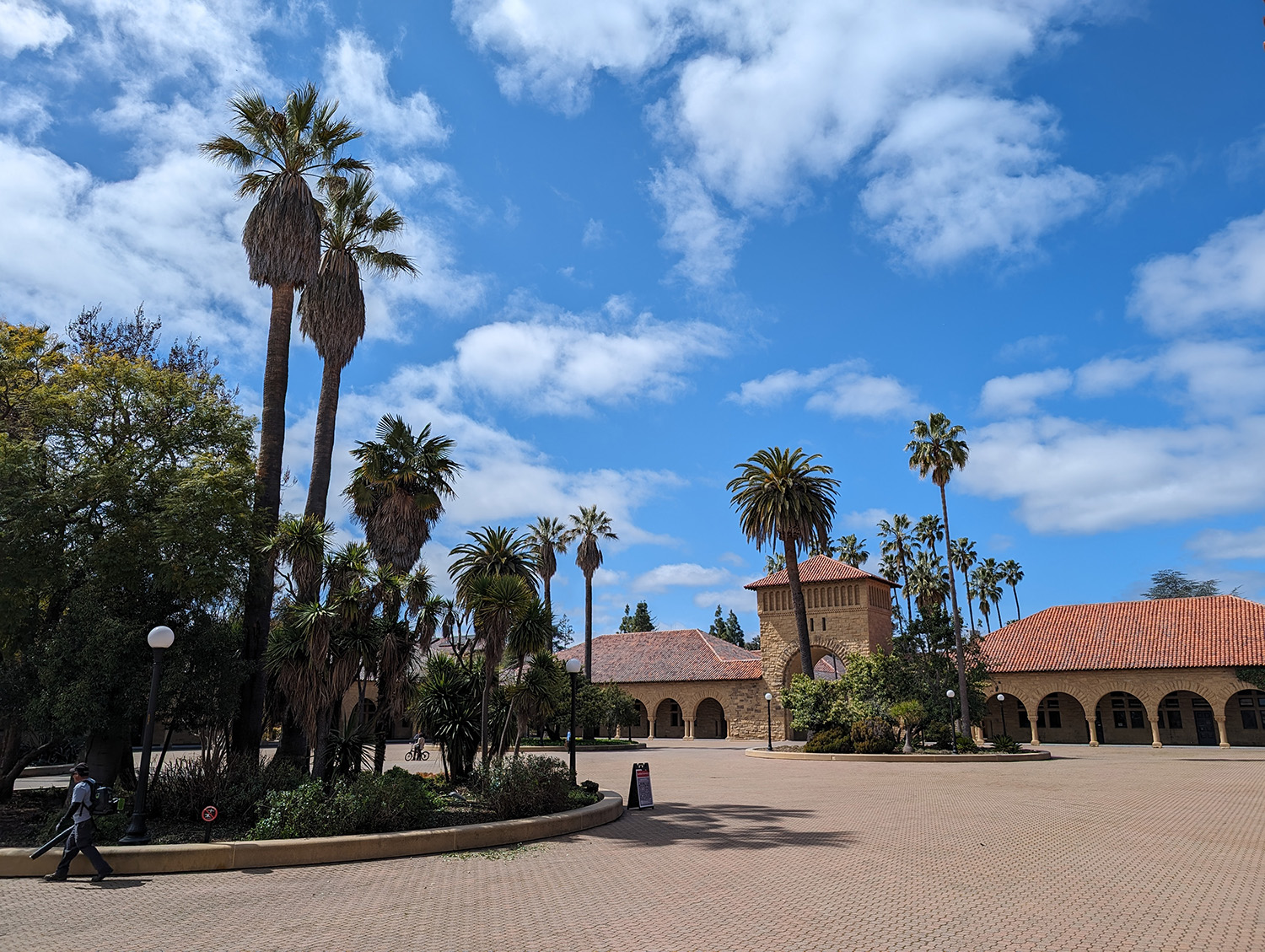
On the second day of the AAAI Spring Symposia, one could already get the impression that the traditional conference has returned to its former greatness. The Covid pandemic had damaged it. In 2023, there were still too few participants for some symposia. Many stayed home and watched the sessions online. It was difficult for everyone involved. But the problems had already started in 2019. At that time, the Association for the Advancement of Artificial Intelligence had decided not to publish the proceedings centrally any more, but to leave it to the individual organizers. Some of them were negligent or disinterested and left the scientists alone with their demands. In 2024, the association took over the publication process again, which led to very positive reactions in the community. Last but not least, of course, the boost from generative AI helped. In 2024, you can see many happy and exuberant AI experts at Stanford University, with mild temperatures and lots of sunshine.
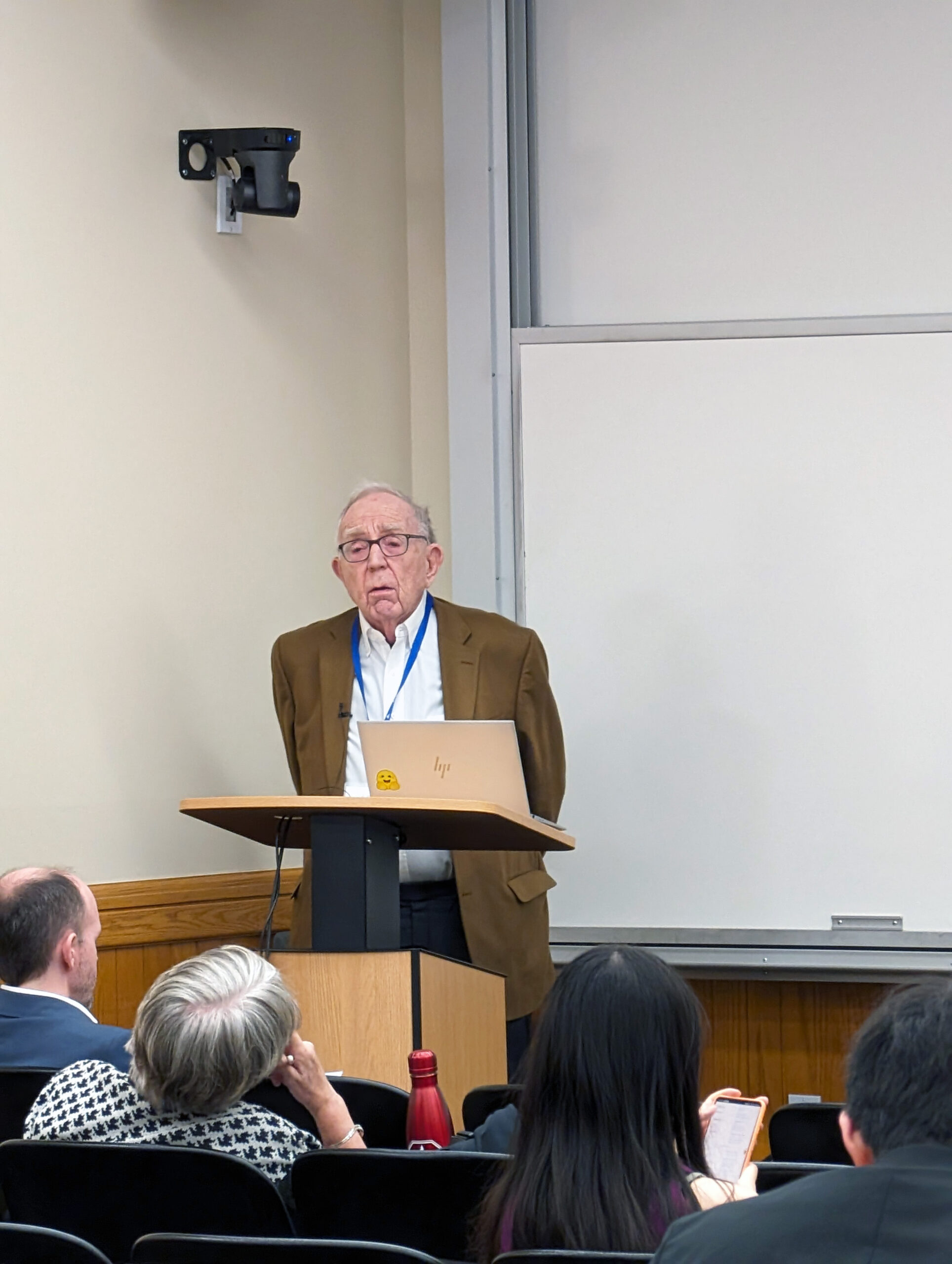
Douglas „Doug“ Bruce Lenat was an American AI researcher and founder and CEO of Cycorp, Inc. in Austin, Texas. He died in 2023 at the age of 72. Not long before, he had participated in the AAAI Spring Symposia. In a touching speech, Edward „Ed“ Albert Feigenbaum remembered his friend and colleague on the afternoon of 26 March 2024 at the symposium „Empowering Machine Learning and Large Language Models with Domain and Commonsense Knowledge (AAAI-MAKE 2024)“. He is a famous American computer scientist who is considered the father of expert systems. Andreas Martin from the FHNW School of Business created the framework in a sensitive manner. He also called up a video that had never been posted online and that most of the audience had never seen before. It showed Doug Lenat giving an online lecture. Back in 1983, he had come to the opinion that heuristics lead to a dead end because a program mostly learns new things that are similar to what it already knows. His conclusion was that the first step was to make it’s knowledge base as large as possible. This led to the Cyc project, which aimed to capture the general knowledge of an average adult. Both Ed Feigenbaum and Doug Lenat proved to be critics of large language models at the event. More information about the AAAI 2024 Spring Symposia is available here.
Fig.: Edward Feigenbaum during his speech at Stanford University
On March 26, 2024, Oliver Bendel (School of Business FHNW) gave two talks on generative AI at Stanford University. The setting was the AAAI Spring Symposia, more precisely the symposium „Impact of GenAI on Social and Individual Well-being (AAAI2024-GenAI)“. One presentation was based on the paper „How Can Generative AI Enhance the Well-being of the Blind?“ by Oliver Bendel himself. It was about the GPT-4-based feature Be My AI in the Be My Eyes app. The other presentation was based on the paper „How Can GenAI Foster Well-being in Self-regulated Learning?“ by Stefanie Hauske (ZHAW) and Oliver Bendel. The topic was GPTs used for self-regulated learning. Both talks were received with great interest by the audience. All papers of the AAAI Spring Symposia will be published in spring. The proceedings are edited by the Association for the Advancement of Artificial Intelligence itself.
Fig.: Oliver Bendel after his talks (Photo: Milan Kostic)
On March 25, 2024, Takashi Kido opened the symposium „Impact of GenAI on Social and Individual Well-being“. It is part of the AAAI 2024 Spring Symposia at Stanford University. Among other things, he reported on a study on the trolley problem. In it, not only humans but also ChatGPT answered the question of whether to set the switch (version by Philippa Foot) or push the fat man off the bridge (version by Judith Jarvis Thomson). In the discussion that followed, Oliver Bendel reported on an experiment that his Data Science student Sahan Hatemo is conducting as part of a mini-challenge. He developed dozens of personas that should lead to corresponding GPTs. They have different ages, ethnicities, genders, life plans, and so on. Once completed, they are also supposed to answer the aforementioned questions of the trolley problem. However, the student is considering reducing the complexity first and using an open source language model. There was a lively discussion about this project. Further information on this symposium is available here.