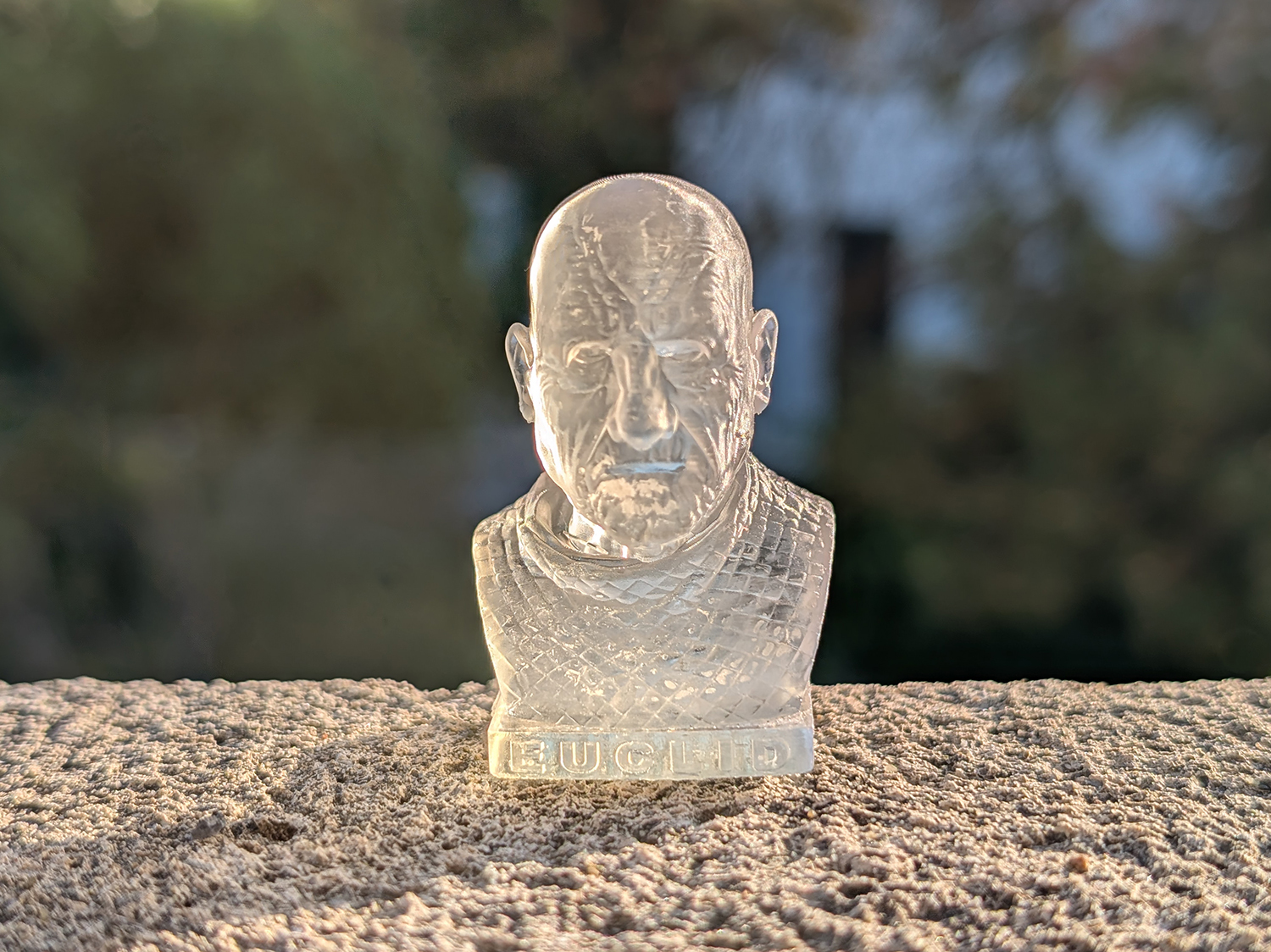
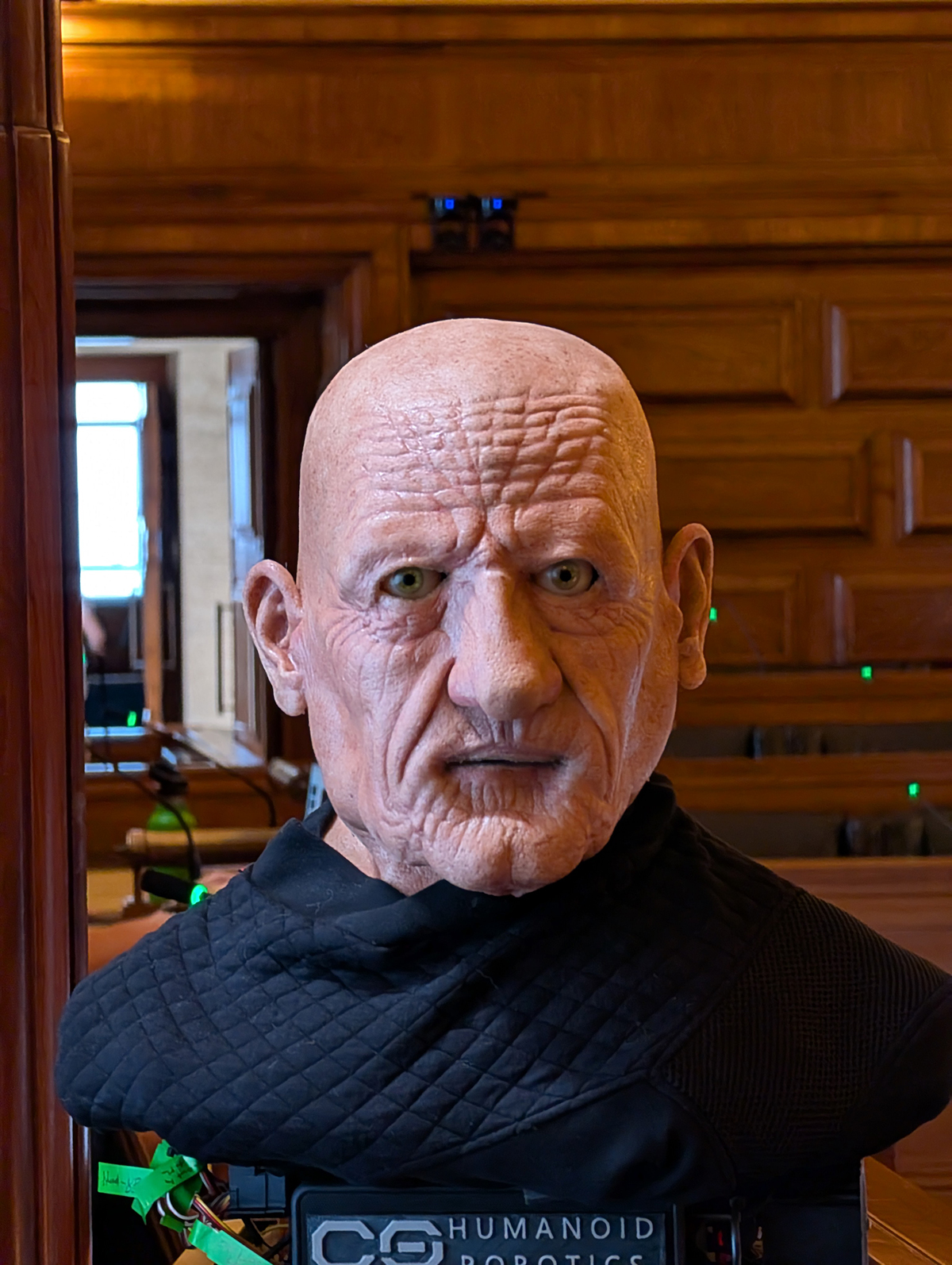
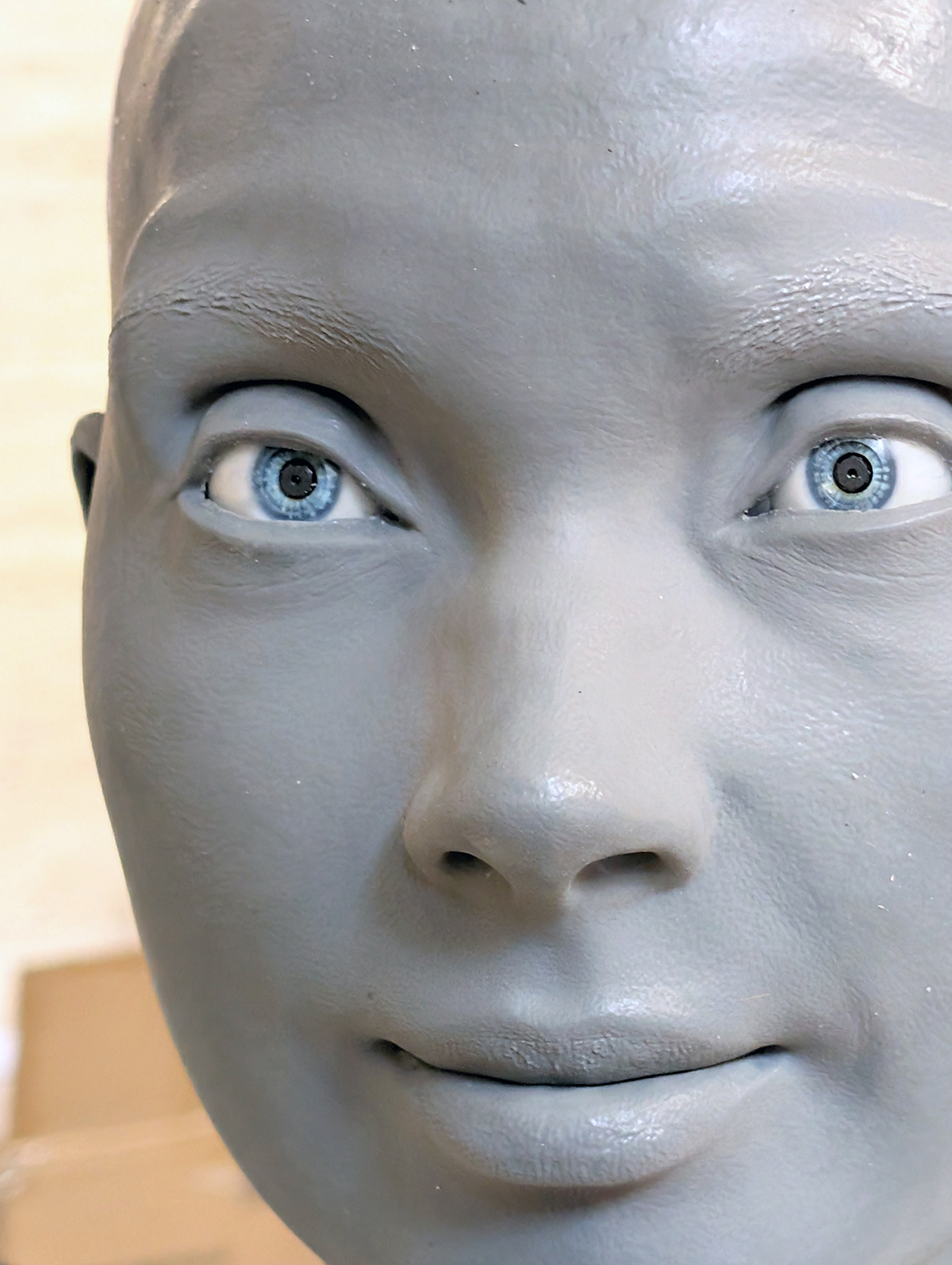
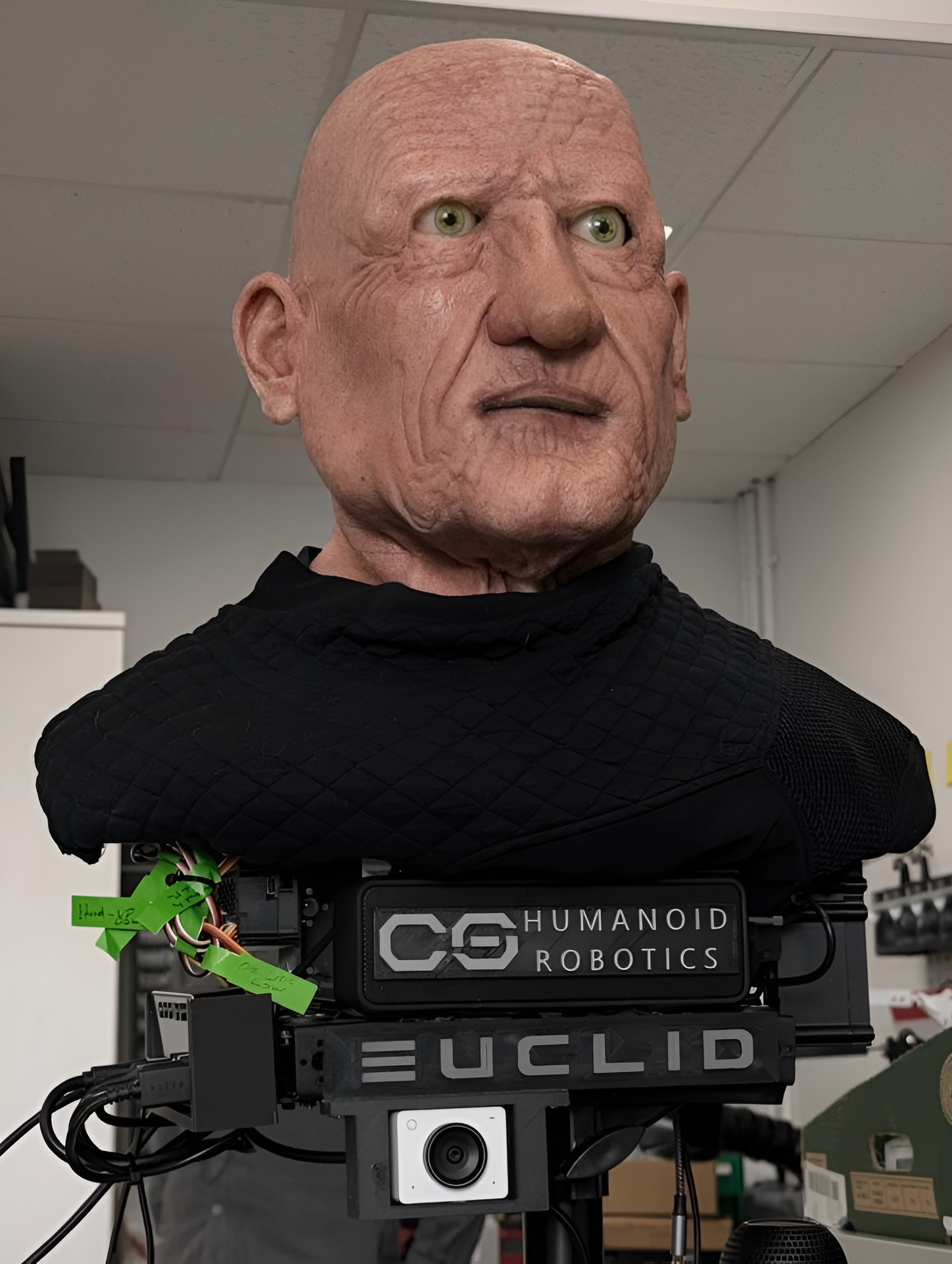
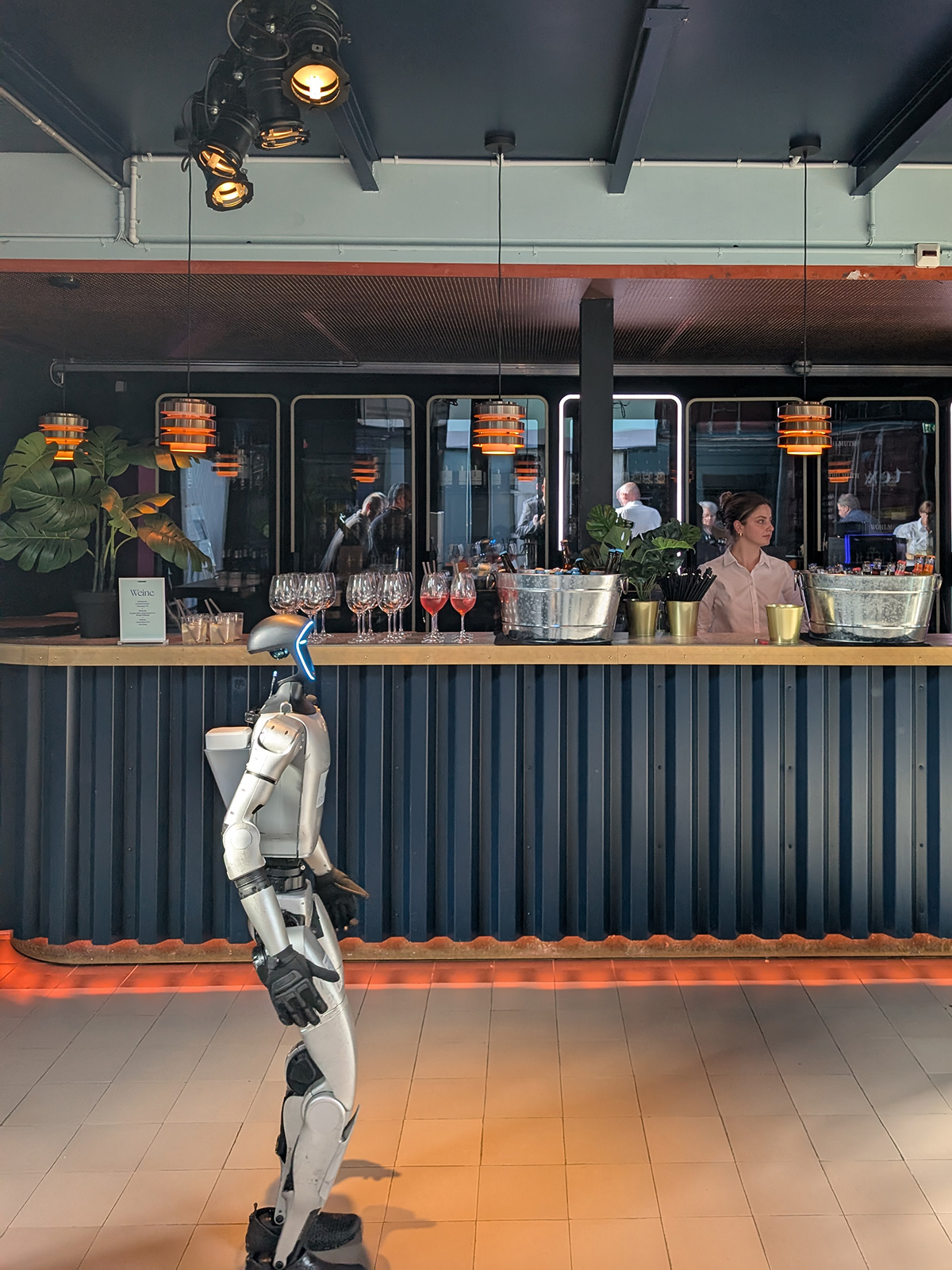
Die ICSR + Art 2026 fand vom 1. bis zum 4. Juli in London statt. Sie brachte Forscher, Wissenschaftler und Fachleute aus aller Welt zusammen, um die neuesten Entwicklungen auf dem Gebiet der Sozialen Robotik zu diskutieren. Zu den Konferenzformaten gehörte eine Reihe von Debatten, die in der Debate Hall des Senate House geführt wurden. Am zweiten Konferenztag hatten die Teilnehmer die Gelegenheit, mit Euclid zu interagieren, einem Androiden, der von Carl Strathearn und Emilia Sobolewska entwickelt wurde. Dies geschah im Rahmen der Session „Innovation Through Creation: The Case for Building Our Own Social Robots for HRI Research“. Euclid ist ein autonomer sozialer Roboter, der über automatische Spracherkennung, Computer Vision, generative KI, Hautsensoren sowie einen robotischen Mund verfügt, der mithilfe von maschinellem Lernen realistische Viseme erzeugt. Der Android wurde für soziale und unterstützende Interaktionen mit älteren Menschen entwickelt und demonstriert, wie Fortschritte in der Künstlichen Intelligenz und Robotik eine immer natürlichere Kommunikation zwischen Mensch und Roboter ermöglichen. Gleichzeitig bietet er eine überzeugende Plattform für die Forschung zur Mensch-Roboter-Interaktion. Nach der Veranstaltung überreichte Carl Strathearn dem Technikphilosophen Oliver Bendel, der als Publicity Chair fungierte, ein 3D-gedrucktes Modell von Euclid. Weitere Informationen sind über www.carlstrathearn.co.uk verfügbar.
Die General Chairs der ICSR + Art 2026 vom 1. bis 4. Juli in London waren Hooman Samani und Saina Akhond, beide von der University of the Arts London, mit John-John Cabibihan, Qatar University, als General Co-Chair. Oliver Bendel hatte unterschiedliche Funktionen inne. In der einjährigen Zeit der Vorbereitung fungierte er als Publicity Chair. Er verfasste Basistexte zu wichtigen Ereignissen, die dann als Posts in seinen Blogs verwendet und vom Social Media Chair, Nihan Karataş, zu geeigneten Texten für die sozialen Medien transformiert wurden. Bei der Session 18 mit dem Titel „Identity, Narratives & Power“ am dritten Tag war er Chair zusammen mit Neziha Akalin. Bei der Design Grand Challenge und der Art Grand Challenge war er Mitglied der Jury, zusammen mit Pramidan Caleb-Solly, Alessandra Sorrentino, Sarah Shelby und Heather Knight. Als Wissenschaftler stellte er sein Paper „Kiss Me More: Artificial Lips for Intimate Encounters“ vor und war Drittautor des Papers „Reading Between the Laughs: A Human-Referenced Audio Evaluation of MLLMs for Social Robotics“ seines Data-Science-Studenten Sahan Hatemo und seiner ehemaligen Doktorandin Katharina Kühne. Ein Booklet der führenden Konferenz zur Sozialen Robotik verzeichnet alle Engagements, Events und Talks. Bei der ICSR + Art 2027 in Potsdam ist Oliver Bendel General Chair neben Katharina Kühne und Ilona Buchem.
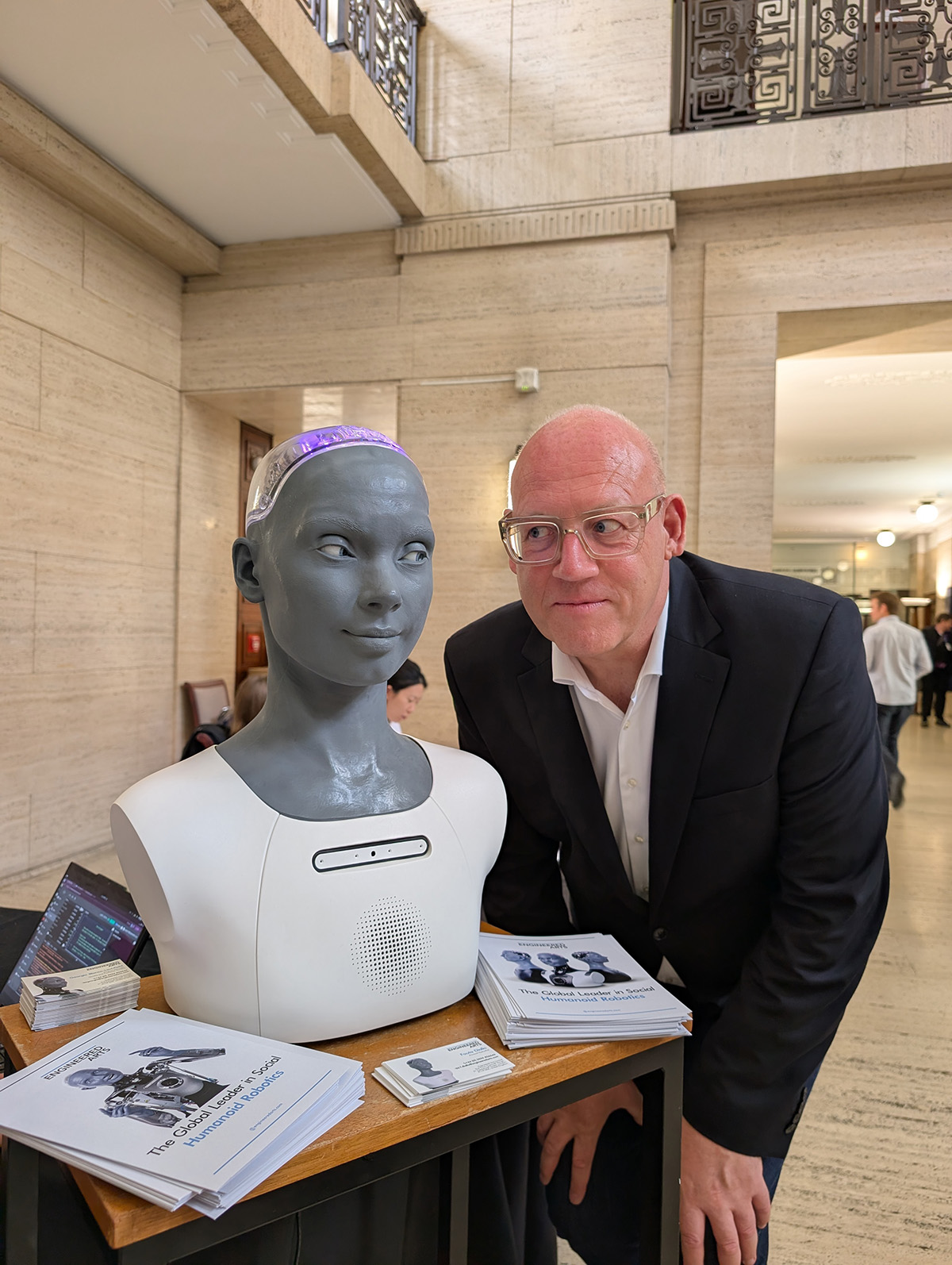
Abb.: Oliver Bendel bei der ICSR + Art 2026 mit Ameca
Humanoid robots are becoming increasingly convincing conversational partners, but can they also become good storytellers? This intriguing question will be explored at New Scientist Live 2026 in London during the Family session „Science Bites: Why are robots bad story tellers?“ on October 10 from 12:40 to 1:20 p.m. Computer scientist Dr. Carl Strathearn and lecturer and computer scientist Emilia Sobolewska will present their two AI-powered humanoid robots, Euclid and Moira, and let them engage in a live conversation. While today’s AI systems can generate impressive text, storytelling remains a difficult challenge because compelling narratives require contextual understanding, shared knowledge, creativity, and the ability to connect ideas in meaningful ways. During the demonstration, the two robots will exchange thoughts and ideas, and the audience may even witness them gradually drifting into hallucinations and constructing a shared fantasy world. The researchers hope that these spontaneous interactions could offer new insights into how imagination and creativity might emerge in autonomous AI systems. Euclid has already attracted considerable attention this summer as one of the highlights of the 18th International Conference on Social Robotics (ICSR + Art 2026) in London, where visitors were able to interact directly with the advanced humanoid robot. Developed by Carl Strathearn and Emilia Sobolewska, Euclid combines automatic speech recognition, computer vision, generative AI, skin sensors, and an innovative robotic mouth that produces highly realistic speech movements through machine learning. Unlike many famous humanoid robots with idealized faces, Euclid deliberately represents an older man with deeply lined features, challenging established design conventions while emphasizing authenticity, diversity, and natural human interaction. The upcoming New Scientist Live session now offers another opportunity to experience Euclid in action, this time in an experiment that explores one of the most fascinating frontiers of artificial intelligence: whether machines can move beyond generating language and begin creating genuinely imaginative stories together.
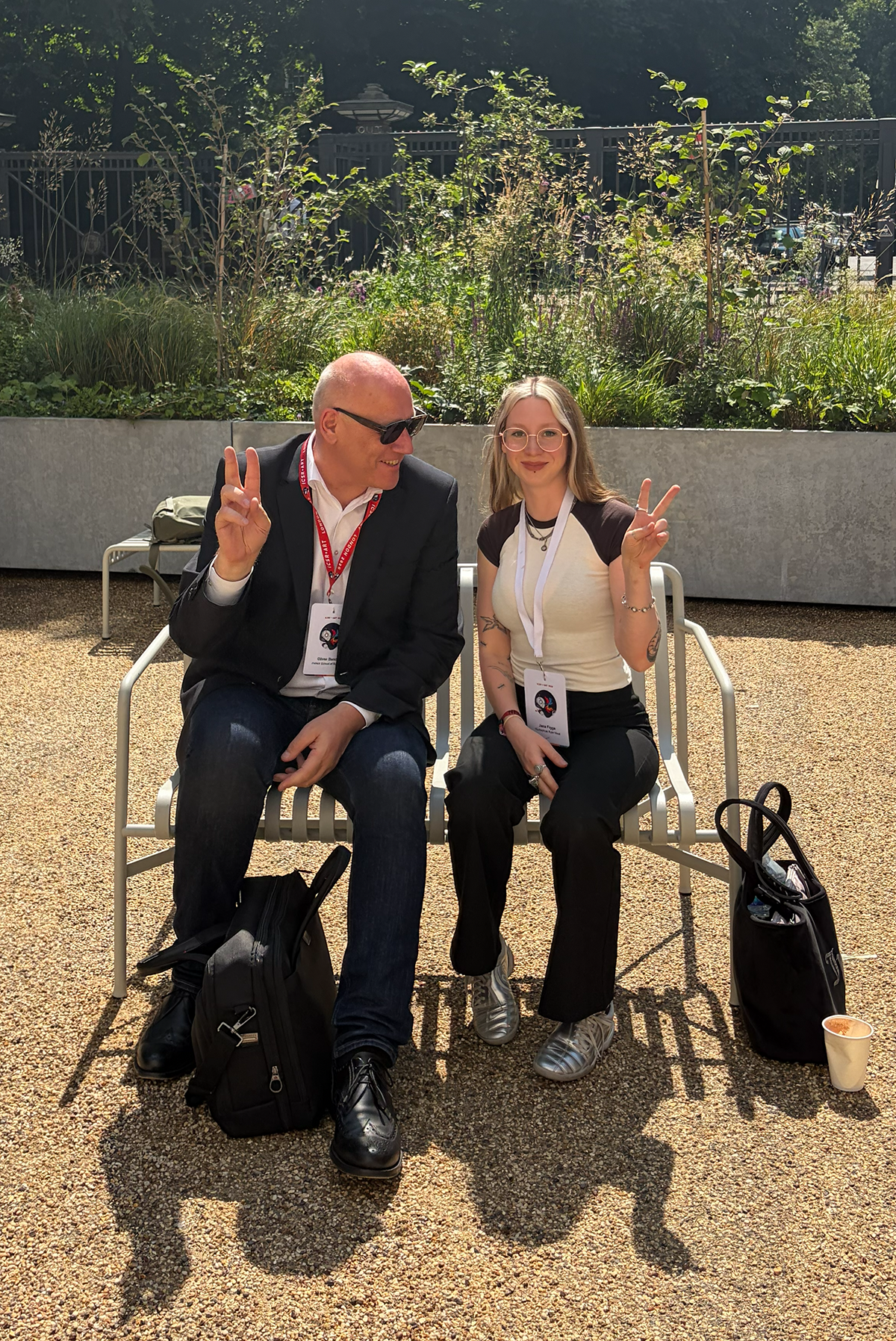
The Victory sign (V sign) first gained worldwide recognition during World War II as a symbol of victory before becoming the iconic gesture of the hippie movement, representing peace. Since then, it has become part of popular culture, appeared in business settings, and today remains a favorite pose among many people in Generation Z. One detail matters, especially in the UK: with the palm facing outward, the gesture means victory or peace. With the back of the hand facing outward, however, it is considered an offensive gesture. At ICSR + Art 2026 in London, Oliver Bendel (Generation X, FHNW School of Business) and Jana Figge (Generation Z, Hochschule Ruhr West) celebrated their presentations on social robots with the same gesture. Across generations, the Victory sign expressed shared success, relief, and the pleasure of seeing their work received with genuine interest by the research community. Do humanoid robots use the Victory sign as well? They certainly can perform expressive hand gestures, but a widely documented example of a robot intentionally using the V sign as a social gesture is surprisingly hard to find. Perhaps that is a small challenge for the next generation of social robots.
Fig.: Oliver Bendel and Jana Figge at ICSR + Art 2026 (Photo: Hooman Samani)
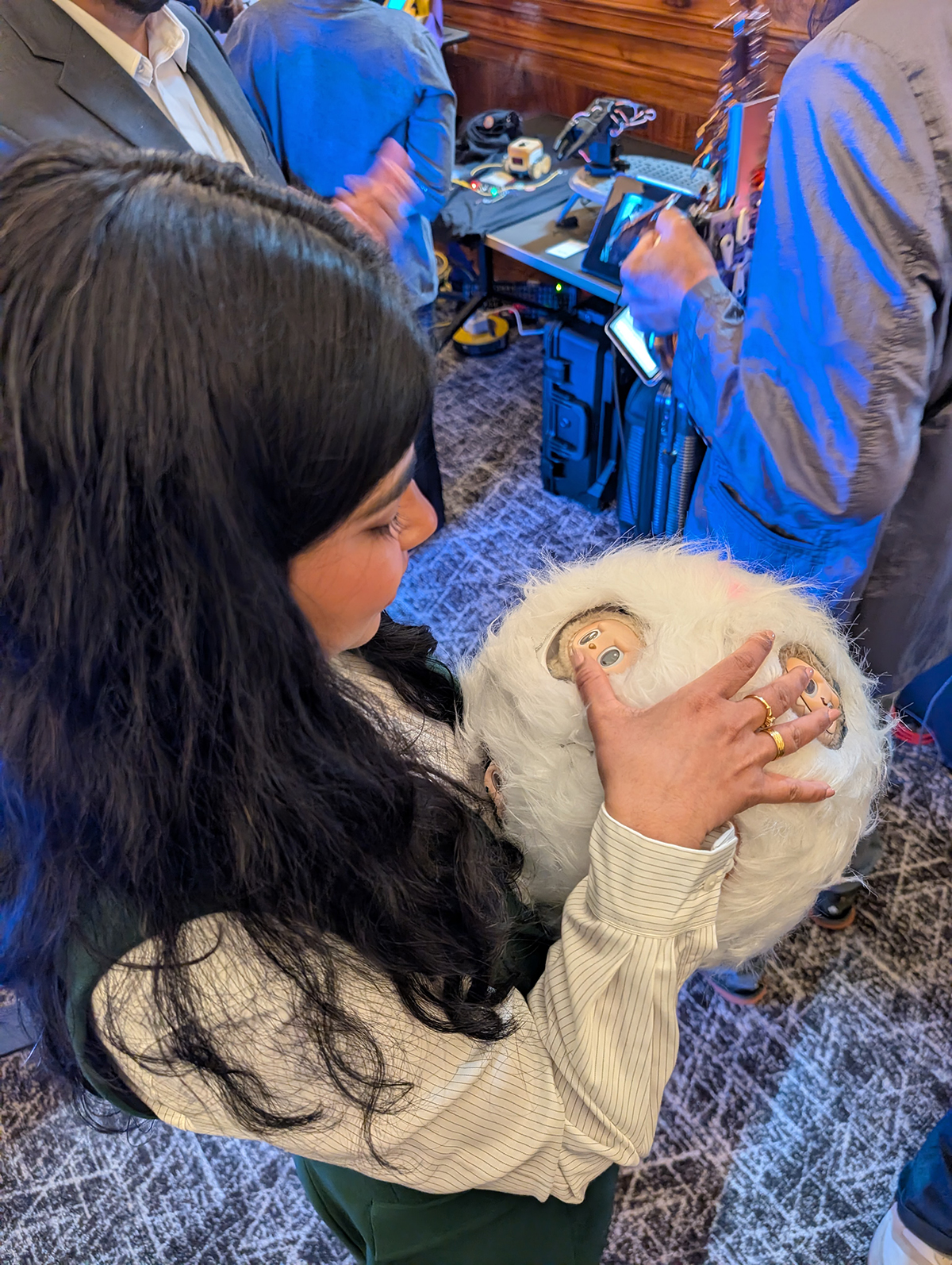
The 18th International Conference on Social Robotics (ICSR + Art 2026) took place from July 1–4, 2026, bringing together researchers, academics, and industry professionals from around the world to discuss the latest advances in social robotics. On the opening day, the ICSR Grand Challenge presentations, including optional demonstrations, took place in the Debate Hall. One of the standout projects was Labububot, presented by Miranda Li and developed by Miranda Li, Jake Read, Dimitar Dimitrov, and Cynthia Breazeal at the Massachusetts Institute of Technology. According to the MIT Media Lab, „This is Labububot — one of the rarest monsters on Earth. Twelve Labubu heads are reconstituted into a single spherical form: a Frankenstein’s Monster of pop culture iconography. Labububot is a playful critique of social robots, and a question made physical – what do the monsters we make reveal about the monsters we are?“ … Instead of following the familiar approach of designing social robots to be cute, friendly, and emotionally unambiguous, Labububot deliberately embraces monster theory and explores the productive potential of the uncanny. From the perspective of Oliver Bendel’s robot classification, Labububot can be regarded as a mythomorphic robot. It consists of twelve monster figures and also belongs to the category of soft robots, although it incorporates rigid structural elements. By combining unconventional design with references to popular culture and fashion, Labububot became one of the most memorable projects presented during the Grand Challenge. Rumor has it that the idea for the spherical monster emerged after its creators had enjoyed a few drinks too many, although this anecdote is best taken as part of the project’s growing mythology rather than established fact.
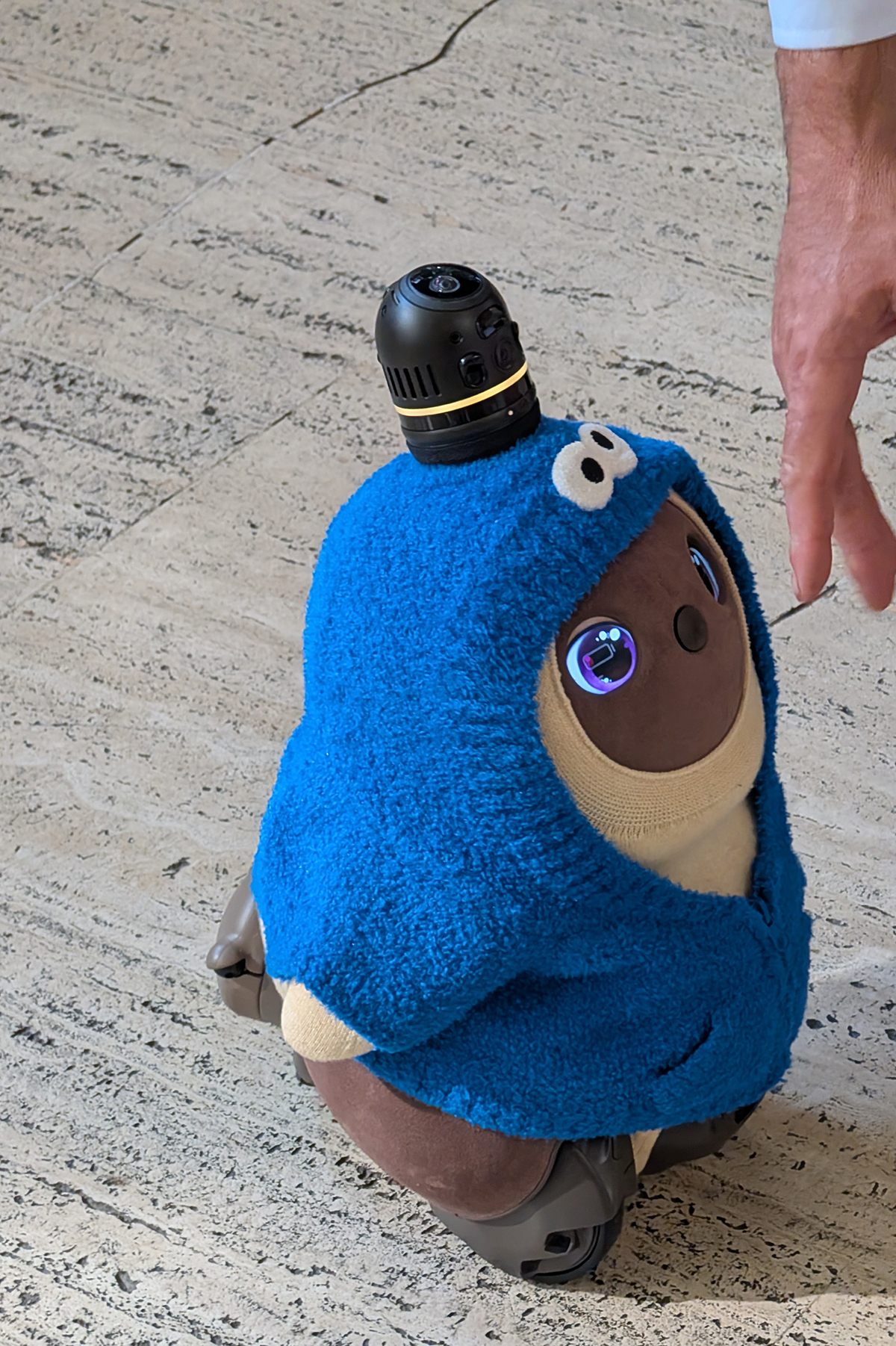
The 18th International Conference on Social Robotics (ICSR + Art 2026) took place in London from July 1–4, bringing together researchers, academics, and industry professionals from around the world to explore the latest advances in social robotics. As in previous years, the conference featured an extensive and impressive exhibition showcasing a wide range of social robots and related technologies. Among the highlights was LOVOT, the companion robot developed by GROOVE X, which exemplifies the concept of Emotional Robotics by focusing not on productivity but on strengthening the human capacity for affection and attachment. Equipped with more than 50 sensors, multiple processors, deep learning capabilities, cameras, microphones, touch sensors, and autonomous navigation, LOVOT continuously perceives its environment and adapts its behavior in real time rather than following fixed scripts. Its expressive eyes, lifelike vocalizations, and highly responsive movements create the impression of interacting with a living creature. Particularly striking are its exceptionally soft body and its warm surface, maintained at a temperature similar to that of a human, making holding and hugging the robot feel surprisingly natural. Another remarkable aspect is Robot Enhancement through clothing and accessories. LOVOT can be dressed in a wide variety of outfits, allowing owners to personalize its appearance and reinforce their emotional bond with the robot. This combination of advanced artificial intelligence, sophisticated sensing, physical softness, warmth, and customization makes LOVOT one of the most distinctive examples of contemporary social robotics.
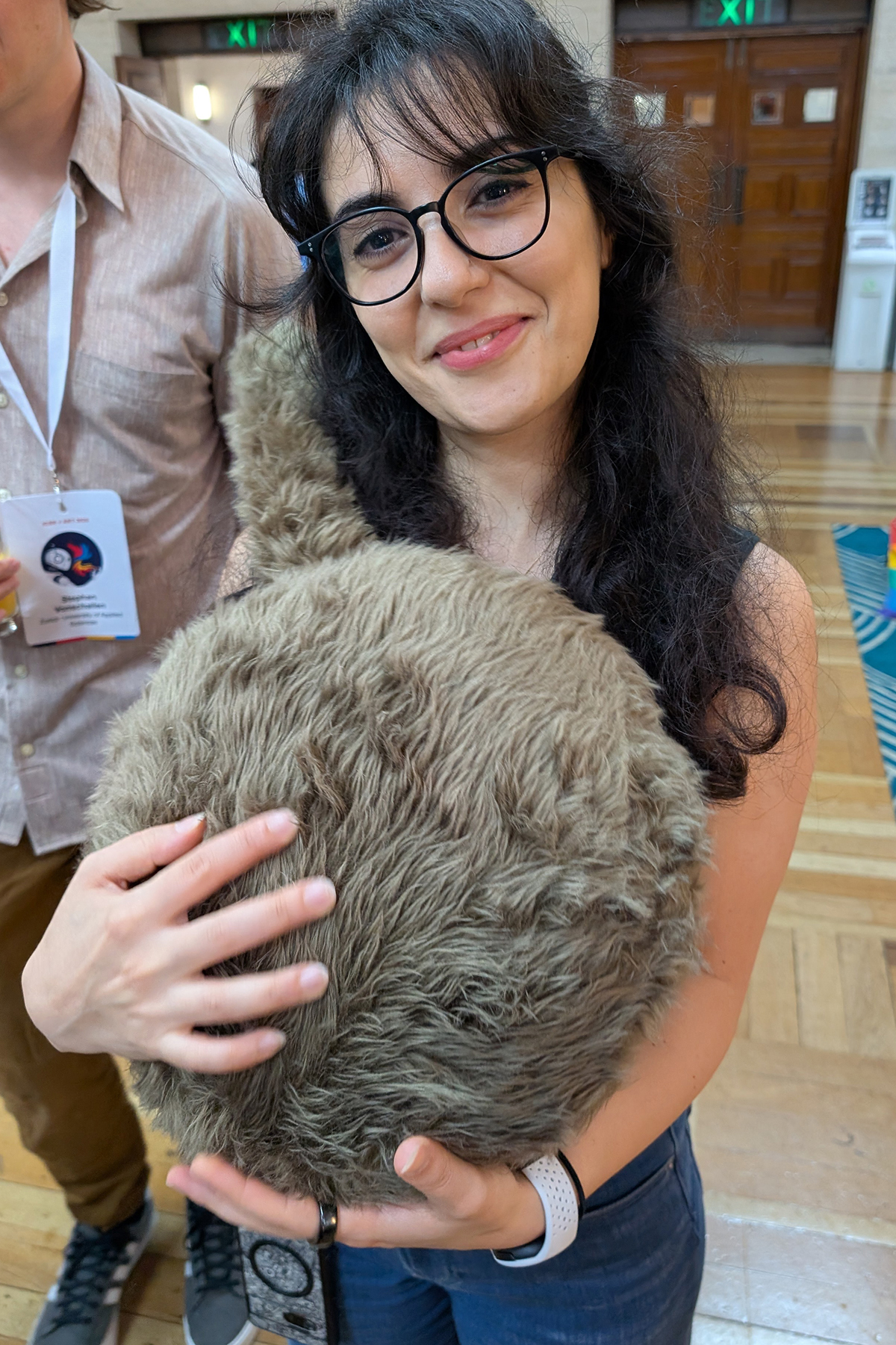
The 18th International Conference on Social Robotics (ICSR + Art 2026) took place in London from July 1–4, bringing together researchers, academics, and industry professionals from around the world to explore the latest advances in social robotics. As in previous years, the conference featured an extensive and impressive exhibition showcasing a wide range of social robots and related technologies. In addition to the official exhibits, some attendees and guests brought their own robots to demonstrate and discuss with other participants. Among the robots on display were Furhat, Euclid, Ameca, LOVOT, Qoobo, and Mirumi, illustrating the remarkable diversity of current approaches to social robotics. One of the most distinctive robots at the exhibition was Qoobo, a therapeutic robot by Yukai Engineering designed as a soft cushion with a lifelike tail. Instead of using facial expressions, speech, or a display, Qoobo communicates entirely through subtle tail movements. When gently stroked, the tail waves softly; when rubbed, it swings playfully, and from time to time it wags spontaneously as if greeting its owner. With its soft fur, comfortable size, and realistic movements inspired by animal behavior, Qoobo is designed to provide a calming and emotionally comforting experience. Studies presented by its developers have shown that interacting with Qoobo can help reduce stress and encourage communication, particularly in elderly care settings, making it an innovative example of how simple, non-verbal interaction can foster emotional well-being. With Mirumi, Yukai Engineering is expanding its classic lineup with another robot that is sure to win over women in particular.
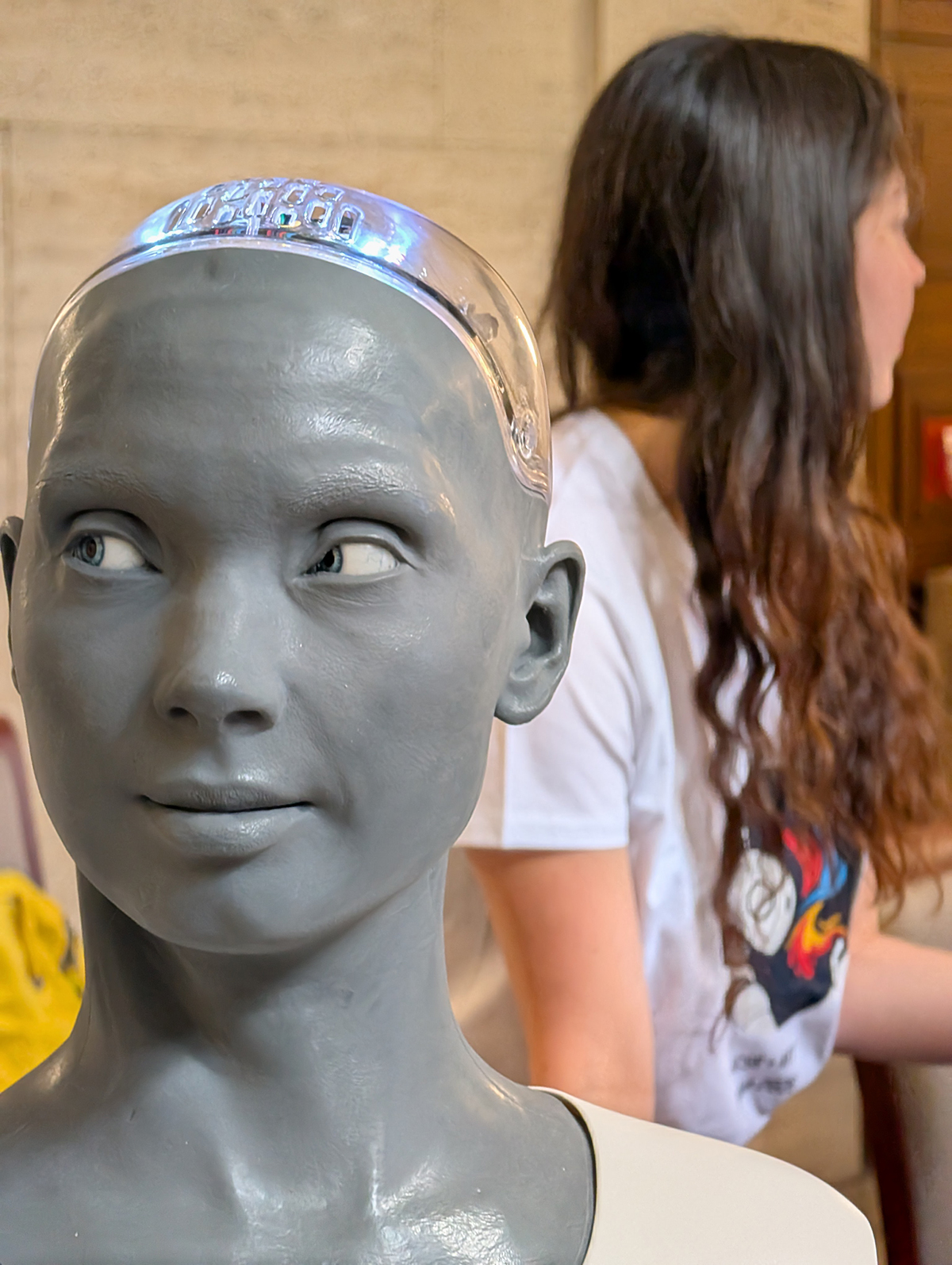
The 18th International Conference on Social Robotics (ICSR + Art 2026) took place in London from July 1–4, bringing together researchers, academics, and industry professionals from around the world to explore the latest advances in social robotics. Among the many impressive humanoid robots on display, both Euclid and Ameca attracted considerable attention, each representing a very different approach to humanoid robotics. While Euclid demonstrated what can be achieved through an innovative low-budget development approach, Ameca showcased the capabilities of a highly sophisticated commercial platform. Developed by the British company Engineered Arts, Ameca is an advanced humanoid robot designed primarily for research into human–robot interaction. Equipped with an artificial intelligence system and 27 facial and motion actuators, it is capable of remarkably lifelike facial expressions and gestures. Ameca comes pre-programmed with more than 50 realistic facial expressions, allowing it to convey a broad spectrum of natural human emotions. Through Engineered Arts‘ web-based Tritium platform, every degree of freedom of its eyes, mouth, eyebrows, and cheeks can be individually customized and fine-tuned, enabling an extraordinary level of expressive precision. Although intended primarily as a stationary platform, Ameca was undoubtedly one of the highlights of ICSR 2026, drawing crowds throughout the conference in the entrance hall of Senate House. Visitors eagerly lined up to take photographs, capturing moments in which the robot appeared face-to-face with people or turned toward them with what seemed like genuine curiosity and openness. Occasionally, Ameca developed a slight cross-eyed gaze, an endearing imperfection that made it seem even more approachable. Its neutral skin tone and deliberately androgynous appearance resist conventional categories of identity, yet with relatively simple enhancements such as a wig or makeup, it could easily be transformed to present a distinctly male or female appearance. Further information is available at icsr2026.uk.
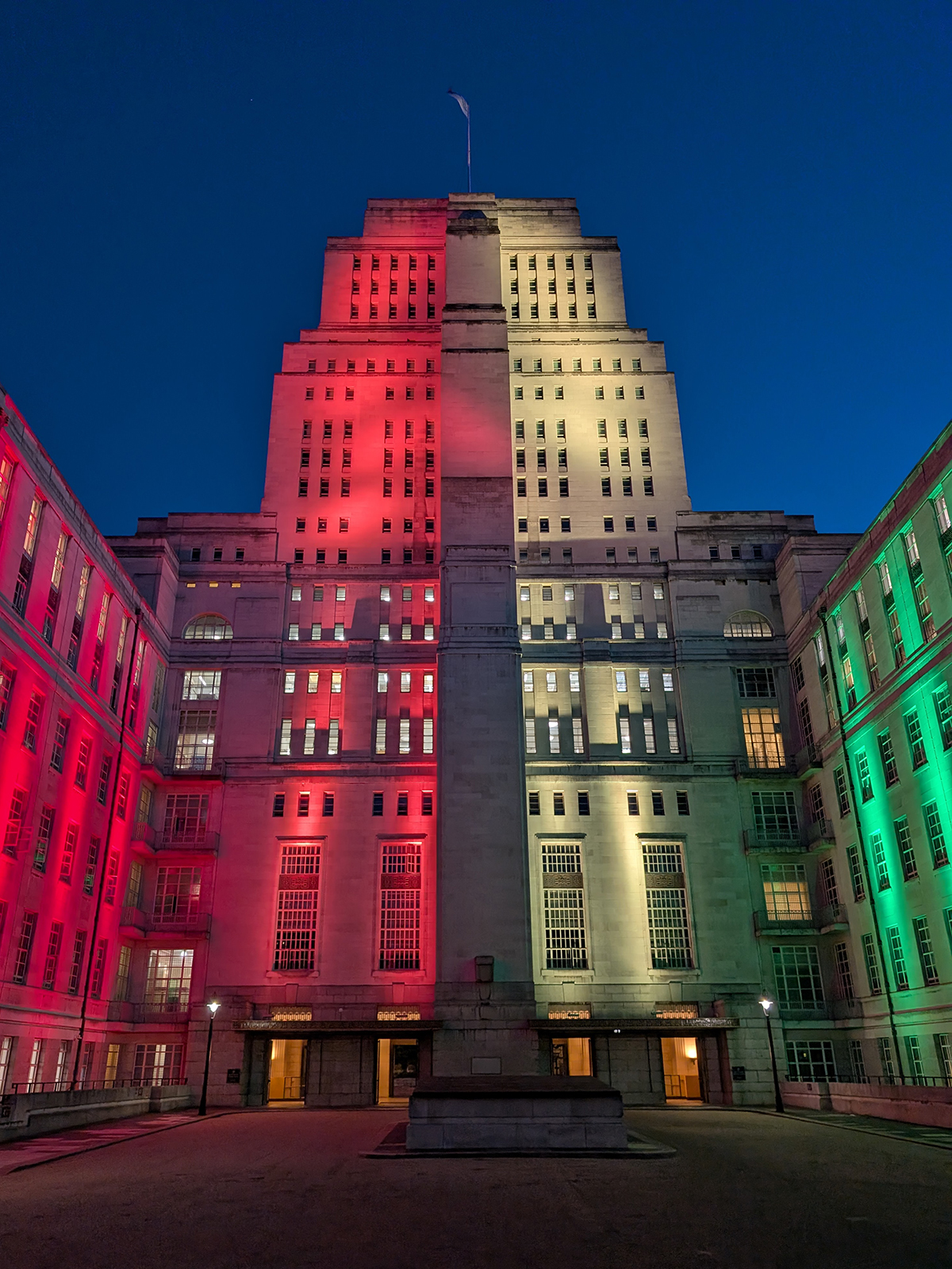
The 18th International Conference on Social Robotics (ICSR + Art 2026) took place in London from July 1–4, bringing together researchers, academics, and industry professionals from around the world to explore the latest advances in social robotics. Hosted by Hooman Samani and Saina Akhond from the University of the Arts London, the conference welcomed around 350 participants who presented their latest research in the main track and special sessions while engaging in lively discussions with both humans and robots in the Debate Room. Teams also competed in the Grand Challenge, showcasing innovative concepts and working prototypes that demonstrated the future potential of social robotics. A series of inspiring keynote presentations explored emerging technologies as well as important methodological questions shaping the field, while robot performances and a memorable robot dance featuring Silke Grabinger added an artistic dimension to the event. Throughout the conference, attendees had the opportunity to meet an impressive range of social robots, including Furhat, Ameca, Euclid, LOVOT, and Mirumi. Furhat and Ameca represented highly expressive humanoid platforms capable of remarkably lifelike interactions, while Euclid attracted particular attention as an open-source humanoid robot built for only a few hundred dollars, proving that affordable hardware can compete with well-known androids such as Sophia and Erika. In contrast, Lovot and Mirumi showcased the softer side of social robotics. Mirumi, a small furry wearable companion robot, charmed visitors with its ability to cling to the handle of a handbag using its tiny arms and is expected to appear soon in pop-up stores, particularly targeting girls and women. On the third evening, after a thought-provoking panel discussion and another series of robot performances, enthusiastic participants left the illuminated Senate House inspired by several days of groundbreaking research, creative collaboration, and a shared vision of how humans and robots will shape the future together. Further information is available at icsr2026.uk.
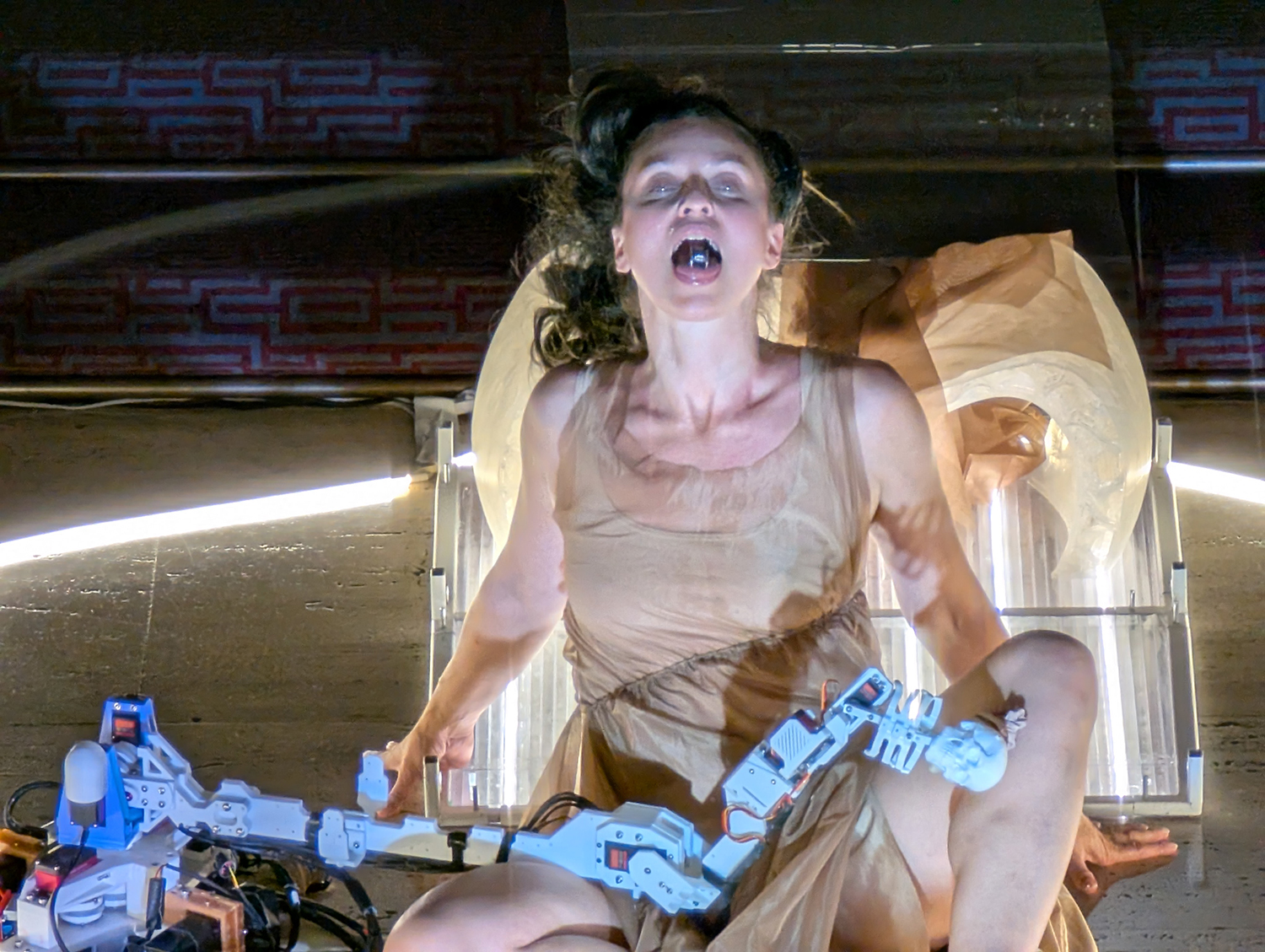
The 18th International Conference on Social Robotics (ICSR + Art 2026) is currently taking place in London from July 1–4, bringing together researchers, academics, and industry professionals from around the world to discuss the latest advances in social robotics. The evening program on the first day of the conference opened with the premiere performance of QUANTWIN by artist Silke Grabinger. The work explores the idea of twins, inspired by Grabinger’s own unborn twin sibling, through an immersive digital twin embodied in a soft robotic entity that interacts with the performer. Rather than creating a perfect copy of oneself, QUANTWIN examines the encounter with the “Other” and the emergence of new hybrid identities. Drawing on the many-worlds interpretation of quantum physics, the performance presents the robotic twin as a possible expression of an alternative reality, inviting the audience to reflect on identity, technology, and human-machine relationships. The premiere demonstrated how art, robotics, and philosophy can come together to open new perspectives on social robotics. Further information is available at icsr2026.uk and www.silkegrabinger.com.
On July 1, 2026, the 18th International Conference on Social Robotics (ICSR + Art 2026) officially opened in London. Participants were welcomed by the General Chairs, Hooman Samani and Saina Akhond of the University of the Arts London, as well as by several robots, including the humanoid robot Ameca and the companion robot Lovot. Following registration and breakfast, the conference immediately moved into its scientific program with several parallel sessions. The Main Track Papers were presented in Conference Hall 1 (Beveridge Hall), while Special Sessions took place in Conference Hall 2 (Chancellor’s Hall). At the same time, authors of Short Papers introduced their work during the Teaser Talks in the Debate Hall (Senate Room). Held from July 1–4, 2026, ICSR is the leading international forum for researchers, academics, and industry professionals working in the field of social robotics. This year’s edition places a special emphasis on the intersection of social robotics and the arts, highlighting artistic and creative applications of robotic technologies. In addition to the technical program, the conference features the Robot Fringe Festival, the Grand Challenge, artistic performances, industry events, and numerous opportunities for networking and collaboration with leading researchers and practitioners from around the world. Further information is available at icsr2026.uk.
The 18th International Conference on Social Robotics (ICSR + Art 2026) will take place from 1–4 July 2026. ICSR is the leading international forum that brings together researchers, academics, and industry professionals from across disciplines to advance the field of social robotics. This year’s conference combines cutting-edge research in social robotics with a unique focus on artistic and creative applications of robotics. The programme features keynote lectures, paper presentations, workshops, special sessions, debates, exhibitions, competitions, and networking opportunities, reflecting both the scientific and cultural dimensions of the field. Hosted at the historic Senate House of the University of London, ICSR + Art 2026 brings together experts from academia, industry, healthcare, design, the arts, and related disciplines. The conference theme highlights how robots can move beyond traditional functional roles to become creative partners and collaborators. At the same time, the event remains open to the full spectrum of social robotics research, including human-robot interaction, artificial intelligence, ethics, education, assistive robotics, and design. On the eve of the conference, anticipation is building for one of the festival’s artistic highlights. The dancer Silke Grabinger is preparing for her performance at 18:00 on 1 July, where she will share the stage with a robot that carries a deeply personal connection to her own past. Participants can look forward to a diverse programme that includes the Robot Fringe Festival, the Grand Challenge, artistic performances, industry events, and opportunities to engage with leading researchers and practitioners from around the world. Further information is available at icsr2026.uk.
Fig.: Silke Grabinger is preparing for her performance
The 18th International Conference on Social Robotics (ICSR + Art 2026) will take place in London, UK, from 1–4 July 2026. ICSR is the leading international forum that brings together researchers, academics, and industry professionals from across disciplines to advance the field of social robotics. This year’s conference combines cutting-edge research in social robotics with a unique focus on artistic and creative applications of robotics. One of the highlights of the conference will be the debate programme on 2 July 2026, which promises a day of lively discussions on some of the most important questions shaping social robotics, society, and the arts. The debates will explore themes ranging from education and healthcare to fashion, human-robot interaction research, and the future of the human body, bringing together researchers, practitioners, artists, and technologists from diverse backgrounds. Combining critical reflection with creative provocation, the programme encourages participants to rethink what social robots can be, what roles they might play, and how they may transform our societies in the future. And who says debates are only for humans? The programme even includes a social robot that will have the opportunity to answer back. Those interested in the full range of debate topics and participants can find further information at icsr2026.uk/debates/.
Fig.: Euclid will be there for the debate (Photo: ICSR)
The 18th International Conference on Social Robotics (ICSR + Art 2026) will take place in London, UK, from 1–4 July 2026. ICSR is the leading international forum that brings together researchers, academics, and industry professionals from across disciplines to advance the field of social robotics. This year’s conference combines cutting-edge research in social robotics with a unique focus on artistic and creative applications of robotics. The programme features keynote lectures, paper presentations, workshops, special sessions, debates, exhibitions, competitions, and networking opportunities, reflecting both the scientific and cultural dimensions of the field. Hosted at the historic Senate House of the University of London, ICSR + Art 2026 brings together experts from academia, industry, healthcare, design, the arts, and related disciplines. The conference theme highlights how robots can move beyond traditional functional roles to become creative partners and collaborators. At the same time, the event remains open to the full spectrum of social robotics research, including human–robot interaction, artificial intelligence, ethics, education, assistive robotics, and design. Participants can look forward to a diverse programme that includes the Robot Fringe Festival, the Grand Challenge, artistic performances, industry events, and opportunities to engage with leading researchers and practitioners from around the world. Please note that the deadline for regular registration is 15 June 2026. Registration details are available at: icsr2026.uk/registration/.
The 18th International Conference on Social Robotics (ICSR + Art 2026) will take place in London, UK, from 1–4 July 2026. ICSR is the leading international forum that brings together researchers, academics, and industry professionals from across disciplines to advance the field of social robotics. The preliminary programme, now available, offers four days of scientific exchange, artistic exploration, and community building, featuring keynote lectures, paper presentations, special sessions, workshops, debates, a Grand Challenge, exhibitions, and a variety of networking opportunities. Reflecting the conference theme ICSR + Art, the programme highlights the growing intersections between social robotics and creative practice through events such as the Robot Fringe Festival, the Rising Stars in Social Robotics event, the premiere performance of Quantwin by Silke Grabinger, the 1001 Nights with Robots Show, Argos, and the Robot Fashion Show, while also covering the full breadth of contemporary social robotics research. Participants will have opportunities to engage with leading experts from academia, industry, healthcare, design, the arts, and other fields. Full details of the programme are available at icsr2026.uk/programme/.
The 18th International Conference on Social Robotics (ICSR + Art 2026) will take place in London, UK, from 1-4 July 2026. ICSR is the leading international forum that brings together researchers, academics, and industry professionals from across disciplines to advance the field of social robotics. Hosted at the University of London, this year’s conference is seeking enthusiastic volunteers to help deliver a dynamic international event at the intersection of robotics, society, and the arts. Volunteering offers a valuable opportunity to gain hands-on experience in organizing a major academic conference, connect with global experts, artists, and innovators, attend selected sessions showcasing cutting-edge developments in social robotics, and build essential organizational, communication, and teamwork skills. Ideal for undergraduate and postgraduate students as well as motivated individuals interested in social robotics or related fields, volunteer responsibilities include supporting registration, assisting with session coordination, guiding attendees, helping with technical presentations and demonstrations, and contributing to general event logistics. In return, volunteers will receive free conference access, a certificate of participation, and exceptional networking opportunities with leading professionals in the field. Applications are open now, with priority given to reliable candidates available throughout the full conference period and comfortable working in an international environment. The deadline to apply is 31 May 2026, with successful applicants notified in early June, and early applications are strongly encouraged. The application form and additional information can be found at: icsr2026.uk/volunteer/.
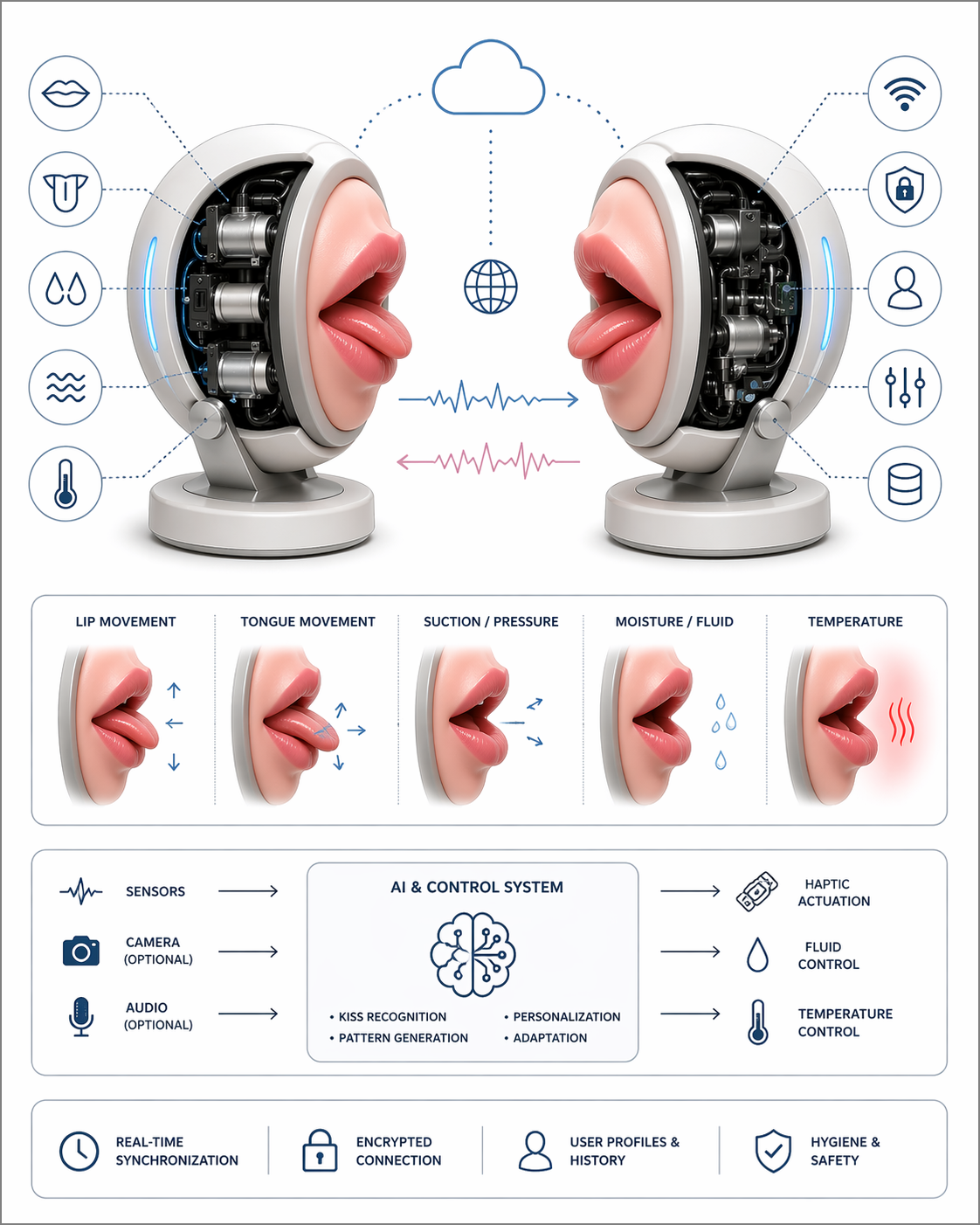
The paper „Kiss Me More: Artificial Lips for Intimate Encounters“ by Oliver Bendel has been accepted at ICSR + Art 2026. Kisses have different functions and meanings depending on culture, context, and partner; they can serve as a greeting, express gratitude, or be part of sexual interaction. When partners are separated but still wish to show affection, teledevices can offer a solution. Since 2011, several prototypes and products for remote kissing have been developed, including the Kissenger, a prototype created by Hooman Samani, to which the present work also pays tribute. Although these systems are already conceptually and technically advanced, there is still room for further development, especially with regard to intimacy and sexuality. The paper therefore formulates specific requirements and outlines possible implementations, resulting in the concept of the KissMachine, which is critically discussed with respect to its technical challenges and ethical implications. The 18th International Conference on Social Robotics will take place in London, UK, from 1–4 July 2026. ICSR is the leading international forum that brings together researchers, academics, and industry professionals from across disciplines to advance the field of social robotics.
Fig.: An illustration of the KissMachine (not part of the paper) (Image: GPT Image 2)
The 18th International Conference on Social Robotics (ICSR + Art 2026) will take place in London, UK, from 1–4 July 2026. ICSR is the leading international forum that brings together researchers, academics, and industry professionals from across disciplines to advance the field of social robotics. The finalists of the ICSR 2026 Grand Challenge have now been announced, showcasing an exciting and diverse range of innovative projects from researchers, artists, and interdisciplinary teams across the globe. This year’s finalists represent institutions from Europe, Asia, North America, and Australia, reflecting the international and creative spirit of the competition. The selected teams will present their work during the first day of the conference on 1 July 2026, with the results and awards to be announced on 3 July 2026. Finalists will also have the optional opportunity to demonstrate their projects during the conference. To support participation in the competition, ICSR offers a special reduced registration rate through the Grand Challenge Competition Finalists Pass, which grants access to the full conference; at least one registration per team is required, and each attendee must hold an individual registration. Further details regarding presentations and demonstrations will be communicated directly to finalists via email. For questions related to the ICSR Grand Challenge, participants may contact Prof. Laura Fiorini at laura.fiorini@unifi.it. A full list of finalists and additional information can be found at: icsr2026.uk/competition-finalists/.
The 18th International Conference on Social Robotics (ICSR + Art 2026) will take place in London, UK, from 1–4 July 2026. ICSR is the leading international forum that brings together researchers, academics, and industry professionals from across disciplines to advance the field of social robotics. As part of the conference programme, ICSR Industry Day will offer a dynamic platform connecting research and industry through a panel debate, a UKRI-led workshop, and a pitch session showcasing emerging robotics start-ups. A key highlight will be the panel discussion „There’s No Place Like Home: Exploring the Next Frontier for Social Robots“, taking place on Friday, 3 July from 2.30-4.00 pm. Bringing together leading voices from industry, the session will examine the growing interest in domestic environments as the next major market for social robotics. While companies increasingly envision robots supporting household tasks, personalised assistance, ageing-in-place, and companionship, the home presents unique challenges as a deeply personal and unpredictable setting where trust, privacy, and reliability are essential. Drawing on firsthand experience in deploying consumer robots, the panellists will discuss both the opportunities and the obstacles of integrating robots into everyday domestic life, addressing issues such as surveillance, dependency, social acceptance, and design limitations. The panel will feature Ira Renfrew, Co-Founder and Chief People Product Officer at Familiar Machines & Magic; Shunsuke Aoki, Founder of Yukai Engineering; Craig Allen, former Chief Creative Officer at Embodied (now Moxie Robots); and Samuel Ader, VP Growth & Supply at Cera (Genie Connect). The discussion will be moderated by Elizabeth Jochum. Together, the speakers will explore how thoughtful, human-centred innovation can help social robots earn a meaningful place in people’s homes and daily lives. Further information and registration details for the Industry Day panel are available at: icsr2026.uk/industry-day/.
The 18th International Conference on Social Robotics (ICSR + Art 2026) will take place in London, UK, from 1–4 July 2026. ICSR is the leading international forum that brings together researchers, academics, and industry professionals from across disciplines to advance the field of social robotics. This year’s conference will feature three distinguished keynote speakers whose work is shaping the future of artificial intelligence, robotics, and human-robot interaction. Hatice Gunes, Professor of Affective Intelligence and Robotics at the University of Cambridge, is internationally recognised for her pioneering research on affective computing, multimodal intelligence, and socially aware AI systems, with a strong emphasis on ethics, fairness, and wellbeing in robotics. Jean Oh, Associate Research Professor at Carnegie Mellon University and Director of the roBot Intelligence Group, is known for her work on collaborative robots, social navigation, and creative physical AI, focusing on developing robots that learn, adapt, and work safely alongside humans in shared environments. Nicolas Heess, Research Scientist and Director at Google DeepMind, leads cutting-edge research on general-purpose robotics and embodied AI, exploring how advances in machine learning, perception, and motor control can bring intelligent robots into the physical world. Together, these keynote speakers represent the forefront of research and innovation driving the next generation of social robotics. Further information on the keynote programme is available at: icsr2026.uk/keynote/.
The 18th International Conference on Social Robotics (ICSR + Art 2026) will take place in London, UK, from 1–4 July 2026. ICSR is the leading international forum that brings together researchers, academics, and industry professionals from across disciplines to advance the field of social robotics. For its 18th edition, the conference will present the special theme ICSR + Art, highlighting how robots can move beyond their conventional roles to become tools, partners, and co-creators within artistic and creative practices. At the same time, the conference remains open to the full breadth of social robotics research, including human–robot interaction, medical and assistive robotics, artificial intelligence and machine learning, ethics, design, education, and cultural applications. Accepted papers will be published in Springer’s Lecture Notes in Artificial Intelligence (LNAI) series and indexed in major academic databases. Due to current extenuating circumstances worldwide and following requests from several authors, the submission deadlines have been extended by a few additional days to allow additional time for final submissions. No further extensions of the submission deadlines are planned, and all submissions must follow the updated schedule. All deadlines are based on Anywhere on Earth (AoE) time. Authors who have already submitted a paper may use the extension to update their submission; if any difficulty occurs when modifying the existing entry in the system, the previous submission may be withdrawn and replaced with a new version. Updated dates are available at icsr2026.uk/dates/ and submission instructions can be found at icsr2026.uk/submission/.
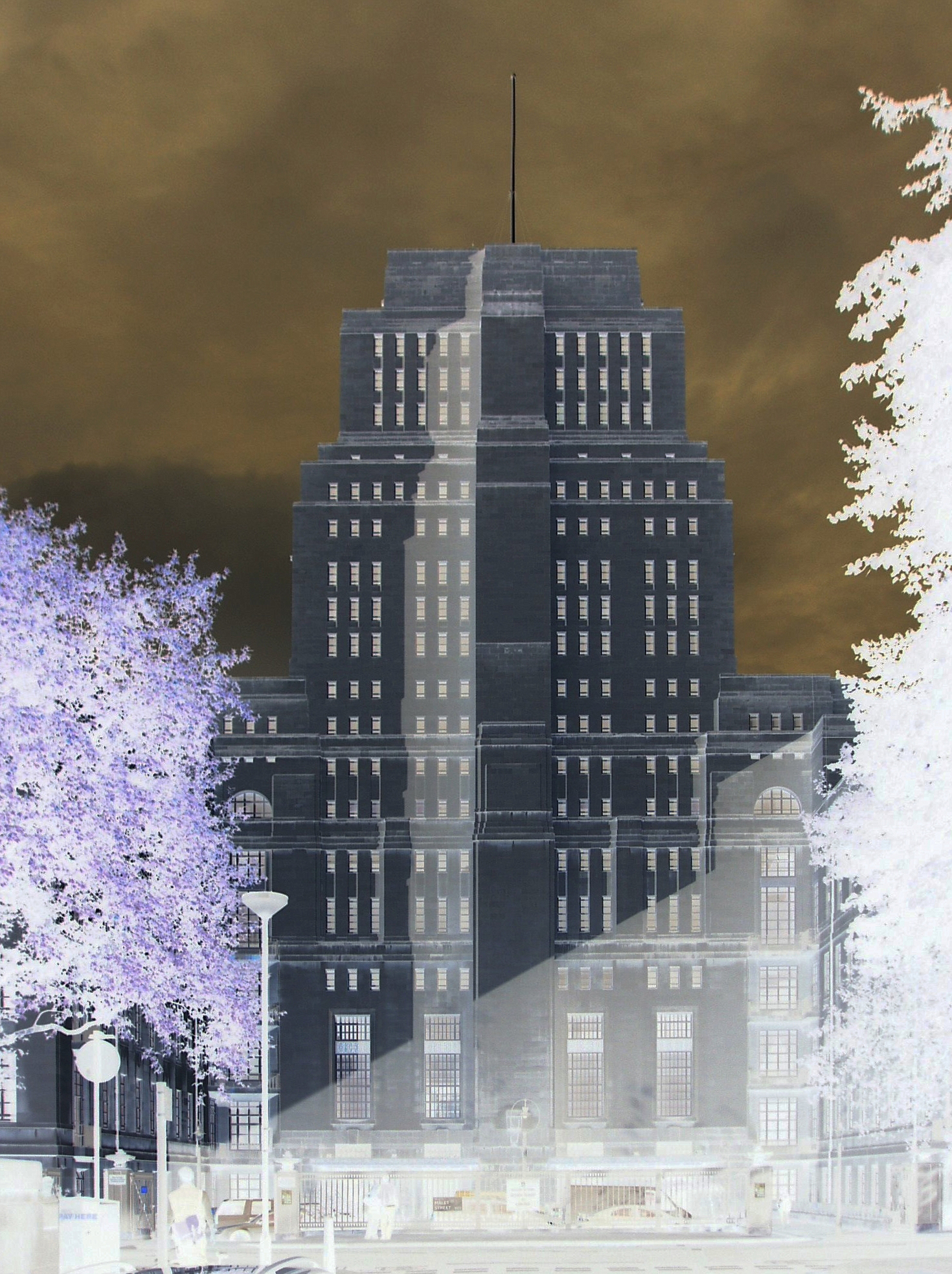
Fig.: An inverted image of the Senate House (Photo: stevecadman/CC BY-SA 2.0)
The 18th International Conference on Social Robotics (ICSR + Art 2026) will take place in London, UK, from 1-4 July 2026. ICSR is the leading international forum that brings together researchers, academics, and industry professionals from across disciplines to advance the field of social robotics. For its 18th edition, the conference will present the special theme ICSR + Art, highlighting how robots can move beyond their conventional roles to become tools, partners, and co-creators within artistic and creative practices. At the same time, the conference remains open to the full breadth of social robotics research, including human-robot interaction, medical and assistive robotics, artificial intelligence and machine learning, ethics, design, education, and cultural applications. Accepted papers will be published in Springer’s Lecture Notes in Artificial Intelligence (LNAI) series and indexed in major academic databases. The conference programme will encompass regular papers, short papers, special sessions, a design and art competition, debates, the Robot Fringe live performance strand, and an Industry Day dedicated to emerging robotics and technology companies. Regular Papers for the main track must follow the submission guidelines provided on the conference website and be submitted via the Springer Meteor system by 6 March 2026. Contributions to Special Sessions should likewise follow the Regular Paper instructions and be submitted to the respective session. Short Papers must comply with the specific Short Paper guidelines and be submitted accordingly. The ICSR Design / Art Competition, proposals for debates, and submissions for the Robot Fringe live robotic performance programme are due by 15 March 2026. Early-stage robotics and technology companies wishing to showcase their work at the Industry Day may apply until 15 May 2026. Further details, submission instructions, and relevant links are available at icsr2026.uk.