Chatbots und Sprachassistenten – sogenannte Conversational Agents – entstanden an der Hochschule für Wirtschaft FHNW von 2012 bis 2022 vor allem im Kontext der Maschinenethik und Sozialen Robotik. Prof. Dr. Oliver Bendel widmet sich nun verstärkt toten, ausgestorbenen und gefährdeten Sprachen. @ve für Latein war 2022 ein erster Versuch in dieser Richtung. Der Chatbot basiert auf dem Sprachmodell GPT-3. Die tote Sprache Latein wurde durch @ve ein Stück weit wieder lebendig. Im März 2023 startete auf Initiative des Technikphilosophen ein weiteres Projekt, in dem der Chatbot @llegra entwickelt wird. Dieser soll das Rätoromanische beherrschen, genauer gesagt das Idiom Vallader, das im Unterengadin zwischen Martina im Nordosten und Zernez im Südwesten sowie im Val Müstair gesprochen wird und gefährdet ist. Der Benutzer kann Text eintippen und bekommt Text ausgegeben. Zudem spricht @llegra mit Hilfe eines Text-to-Speech-Systems der Firma SlowSoft, die das Projekt unterstützt. Die Basis ist wieder, wie bei @ve, das Sprachmodell GPT-3. Für die Umsetzung konnte Dalil Jabou gewonnen werden. Für technische Aspekte steht zusätzlich Prof. Dr. Bradley Richards zur Verfügung. Das Projekt dauert bis August 2023.
Abb.: In Zernez wird das Idiom Vallader gesprochen
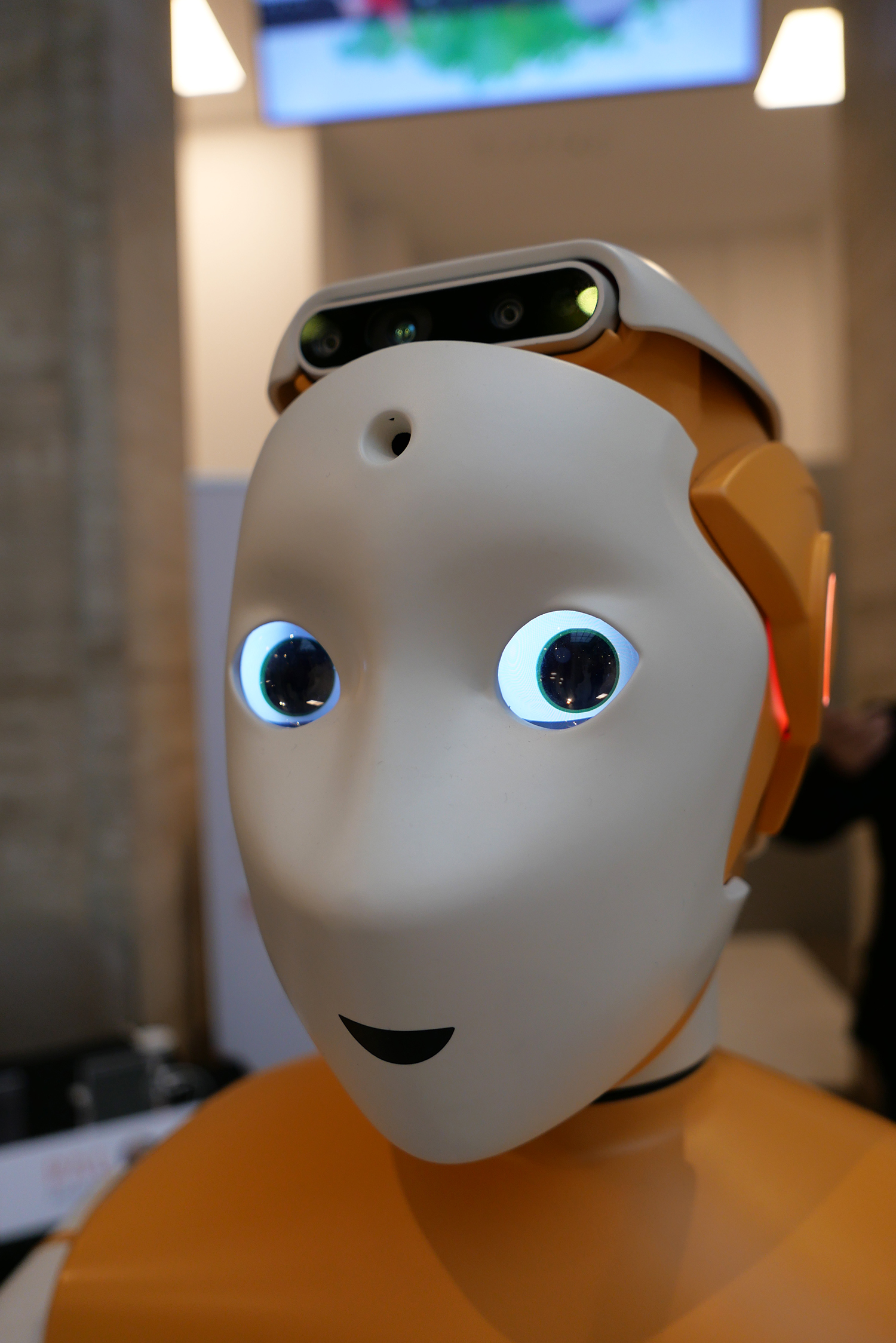
How do social robots emerge from simple, soft shapes? As part of their final thesis in 2021 at the School of Business FHNW, 23-year-old students Nhi Tran Hoang Yen and Thang Hoang Vu from Ho Chi Minh City (Vietnam) have answered this question posed by their supervisor Prof. Dr. Oliver Bendel. They have submitted eleven proposals for novel robots. The first is a pillow to which a tail has been added. Its name is Petanion, a portmanteau of „pet“ and „companion“. The tail could move like the tail of a cat or dog. In addition, the pillow could make certain sounds. It would be optimal if the tail movements were based on the behavior of the user. Thus, as desired, a social robot is created from a simple, soft form, in this case a pet substitute. Petanion is soft and cute and survives a long time. It can also be used if one has certain allergies or if there is not enough space or money in a household for a pet. Last but not least, the ecological balance is probably better – above all, the robot does not eat animals that come from factory farming. The inspiration may have been Qoobo, a pillow with a tail, designed to calm and to „heal the heart“. Panasonic also believes in robots that emerge from simple, soft forms. It promotes its new robot NICOBO as a „yowai robotto“, a “weak” robot that has hardly any functions or capabilities. The round, cute robot has two separate displays as eyes and a tail that it constantly moves. According to the company, it is aimed primarily at singles and the elderly. There could well be a high demand for it, even beyond the target groups.
Fig.: NICOBO in the arms of its owner (Photo: Panasonic)
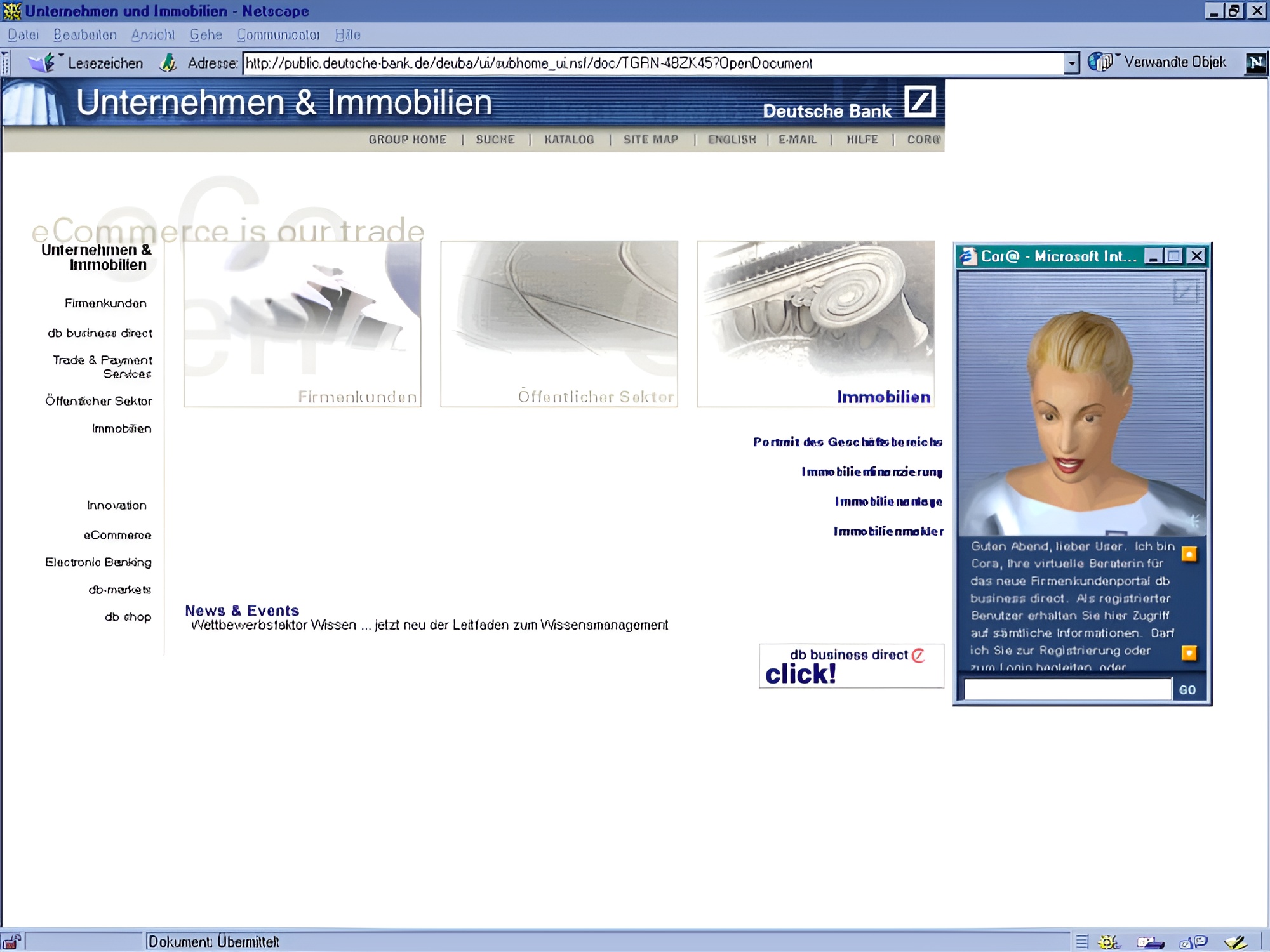
„Conversational Agents (CAs) sind computerbasierte Dialogsysteme mit natürlichsprachlichen Fähigkeiten. Verwenden beide Seiten die Textform, liegen üblicherweise Chatbots oder Social Bots vor. Manche von diesen besitzen Sprachausgabe, wie Cor@ von der Deutschen Bank um die Jahrtausendwende. Nutzen beide Seiten gesprochene Sprache, handelt es sich üblicherweise um Sprachassistenten (auch Voice Assistants oder Voicebots genannt), die auf Smartphones, in Smartspeakers oder in Anwendungen des Smart Home vorkommen. Bekannte Beispiele sind Google Assistant, Siri und Alexa. Chatbots und Sprachassistenten kann man wiederum mit Avataren ergänzen oder in soziale Roboter wie Pepper oder NAO bzw. in Serviceroboter oder Industrieroboter integrieren …“ Mit diesen Worten beginnt ein neuer Beitrag im Gabler Wirtschaftslexikon von Prof. Dr. Oliver Bendel aus Zürich. In einem zweiten Abschnitt wird auf Entwicklung und Merkmale eingegangen, in einem dritten die ethische Perspektive eingenommen. Der Beitrag ist am 18. April 2023 erschienen und kann über wirtschaftslexikon.gabler.de/definition/conversational-agent-125248 aufgerufen werden.
Abb.: Cor@ stand um die Jahrtausendwende auf der Website der Deutschen Bank zur Verfügung
Next to Robophilosophy, ICSR may be the most important conference on social robotics. The fourteenth edition took place in Florence at the end of 2022 and was dedicated to the health sector. „The 15th International Conference on Social Robotics (ICSR 2023) will bring together researchers and practitioners working on the interaction between humans and intelligent robots and on the integration of social robots into our society. ICSR 2023 will take place in Doha as a face-to-face conference on December 4-7, 2023. This will be the first time that the conference will be hosted in Qatar and in the Middle East and North Africa region.“ (Website ICSR) The theme of this year’s ICSR is „Human-Robot Collaboration: Sea, Air, Land, Space and Cyberspace“. According to the organizers, the theme emphasizes on all physical and cyber-physical domains where humans and robots collaborate. More information and CfP via icsr23.qa.
Auf TikTok findet sich ein neuer Musikclip der beiden kanadischen Sänger Drake und The Weeknd. Golem meldete am 17. April 2023: „Der Titel wurde vom Kanal ghostwriter977 veröffentlicht und ist eigenen Angaben zufolge komplett mithilfe einer künstlichen Intelligenz erstellt worden.“ (Golem, 17. April 2023) Das einminütige Stück hat es inzwischen auf YouTube geschafft, in der ursprünglichen – nach zwei Tagen bereits mehr als tausendmal kommentiert – und in einer verbesserten Version. Beide hat man allerdings wohl aus Rechtsgründen entfernt. Golem schreibt weiter: „Für die Musikindustrie dürften derartige Musikstücke, die zumindest beim ersten und zweiten Hinhören sehr echt klingen, ein Problem sein. Drake hatte sich in der Vergangenheit bereits bei anderen KI-Songs mit seiner Stimme kritisch bis verärgert gezeigt. Der Produzent von Jay-Z, Young Guru, spricht von einem Geist, der aus der Flasche gelassen wurde. Zum einen könne man den technologischen Fortschritt nicht aufhalten, zum anderen müssten die Rechte der Kunstschaffenden geschützt werden.“ (Golem, 17. April 2023) Die individuelle Stimme, verbunden mit gesprochener Sprache, kann bereits seit einigen Jahren mit Hilfe künstlicher Intelligenz imitiert werden. Darauf geht etwa der Beitrag „The Synthetization of Human Voices“ von Prof. Dr. Oliver Bendel aus dem Jahre 2017 ein. Inzwischen stellt auch gesungene Sprache lebender und toter Künstler kein Problem mehr dar.
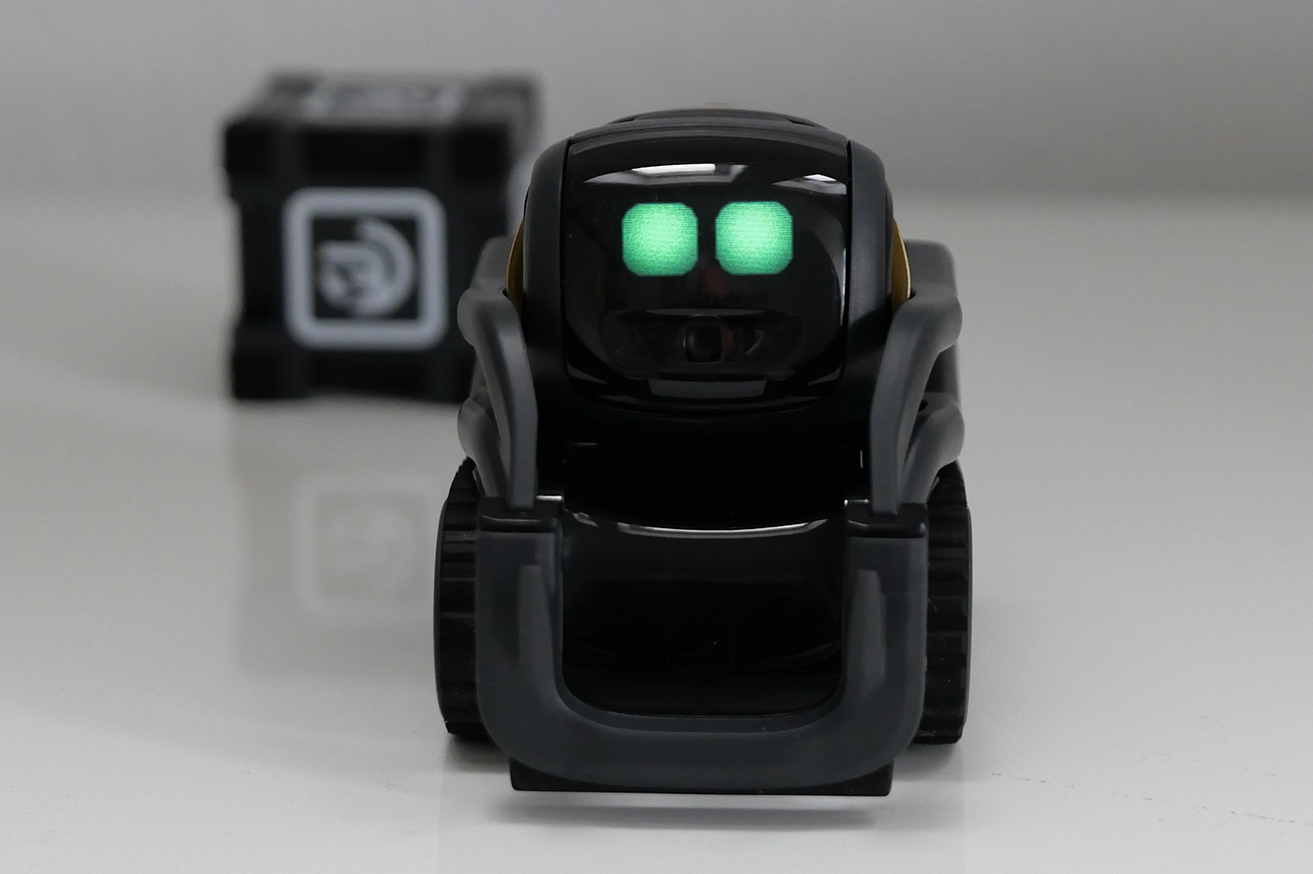
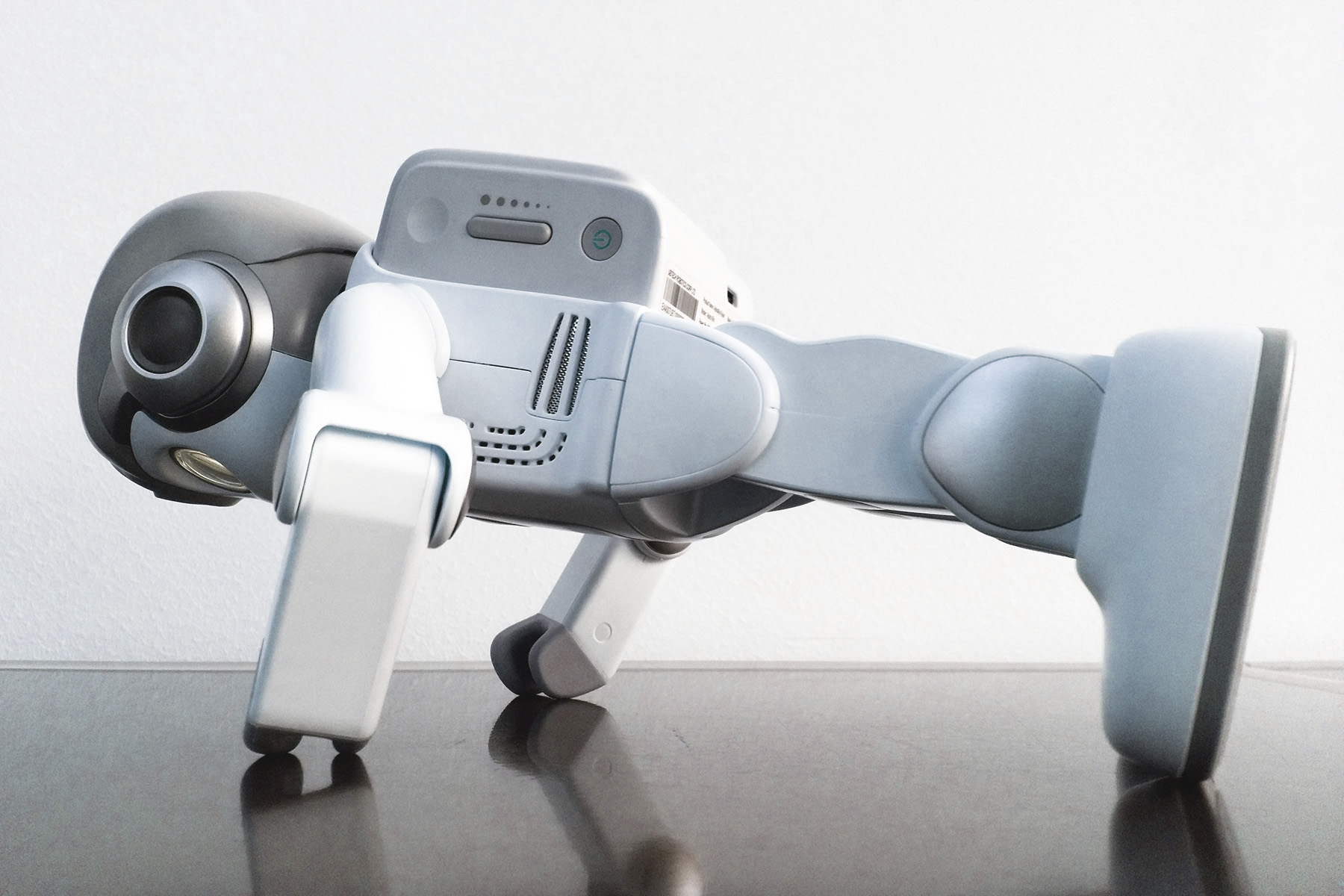
During the first implementation of the elective module „Social Robots“ at the School of Business FHNW, orders were placed for Vector 2.0, the successor to Vector. After a year and a half, the company Digital Dream Labs has delivered the small social robot. The company had bought the rights from Anki, which had failed with its first versions of Cozmo and Vector, although they were very well made and sold a lot. Unlike its brother Cozmo, Vector listens to voice commands. The company writes on its website: „Say hey to Vector, the first home robot that will steal your heart, not your data. Smart right out of the box, Vector is more than a robot companion. Curious, independent and powered by AI and state-of-the-art robotics, he can read the room, share the weather forecast, set a timer (no overcooked dinner on his watch), take a snapshot and so much more. Vector is your sidekick who’s up for anything but mostly just wants to make you laugh.“ (Website DDL) About the robot’s technologies, the company writes: „Qualcomm 200 Platform, HD camera with 120 Ultra Wide FOV, Beamforming Four-Microphone Array, Infrared Laser Scanner, 6-Axis IMU, High-Res Color IPS Display, and WiFi connection.“ (Website DDL) The camera is connected with object recognition and face recognition, as in the case of Cozmo. Vector „can recognize people and objects while detecting and avoiding obstacles“ (Website DDL). The first impression is good. The companion robot is fast, agile, and funny. Edge detection works even on difficult surfaces like glass tables. The sounds are different from Cozmo, but also very appealing and cute. You have to formulate the voice commands very accurately. It helps if you are a native speaker of either American or British English. More Information via www.digitaldreamlabs.com/products/vector-robot.
The Tenth International Conference on Animal-Computer Interaction will be held December 4-8, 2023, in Raleigh, North Carolina, hosted by North Carolina State University. „ACI is the leading International Conference on Animal-Computer Interaction. It is a highly multidisciplinary event drawing researchers and practitioners from diverse backgrounds to share and discuss work and topics related to the research and design of computing-enabled and interactive technology for and with animals.“ (Website ACI) The Ninth International Conference on Animal-Computer Interaction was held in Newcastle upon Tyne at the end of 2022. Also this year the organizers are interested in a variety of topics in animal-computer interaction and animal-machine interaction, as the call for papers (CfP) reveals: „Submissions might address topics such as: the role of technology in shaping human-animal relationships; studies and/or analysis of large-scale technology for animal deployments; considerations on the wider context of technology for animal use; methods and reflections on studying the next generation of technology for animals; or how to conduct ACI research in a world where commercial design and deployment of technology for animals outpaces academic thought.“ (Website ACI) The CfP can be accessed at www.aciconf.org/aci2023.
Fig.: The William B. Umstead State Park in North Carolina
Das New York City Police Department (NYPD) sieht Serviceroboter „für Straßenpatrouillen und Überwachung“ (Golem, 14. April 2023) vor. „Neben dem Roboterhund Spot soll künftig zusätzlich ein eigenständiges Modell vom Typ Knightscope K5 eingesetzt werden.“ (Golem, 14. April 2023) Dies schreibt Oliver Nickel in Golem unter Berufung auf Aussagen des New Yorker Bürgermeisters Eric Adams bei einer Pressekonferenz. Sowohl Spot als auch K5 sind Thema des Papers „Robots in Policing“ von Prof. Dr. Oliver Bendel, das in den Proceedings „Social Robots in Social Institutions“ der Robophilosophy 2022 erschienen ist. Mit Sicherheits- und Überwachungsrobotern wie dem K5 beschäftigt sich der Technikphilosoph aus Zürich seit Jahren. In dem Artikel „Mehr Unsicherheit mit Sicherheitsrobotern?“, erschienen 2016 in der Zeitschrift SicherheitsForum, nahm er u.a. die ethische Perspektive ein. Bereits ein paar Monate vorher veröffentlichte Inside IT den Beitrag „Blechpolizisten mit Elektroschockern: Beobachtungen zu Überwachungsrobotern“. Ohne Zweifel gewinnt das Thema in diesen Tagen an Bedeutung, wegen der Einsätze in den USA, aber auch der Pläne in Deutschland – das Innovation Lab der Polizei Nordrhein-Westfalen in Duisburg testet derzeit Modelle wie Spot.
„Five self-driving vehicles blocked traffic early Tuesday morning in the middle of a residential street in San Francisco’s Balboa Terrace neighborhood, apparently waylaid by fog that draped the southwestern corner of the city.“ (San Francisco Chronicle, 11 April 2023) The San Francisco Chronicle reported this in an article published on April 11, 2023. The fact that fog is a problem for Waymo’s vehicles has been known to the company for some time. A blog post from 2021 states: „Fog is finicky – it comes in a range of densities, it can be patchy, and can affect a vehicle’s sensors differently.“ (Blog Waymo, 15 November 2021) Against this background, it is surprising that vehicles are allowed to roll through the city unaccompanied, especially since Frisco – this name comes from sailors – is very often beset by fog. But fog is not the only challenge for the sensors of self-driving cars. A thesis commissioned and supervised by Prof. Dr. Oliver Bendel presented dozens of phenomena and methods that can mislead sensors of self-driving cars. The San Francisco Chronicle article „Waymo says dense S.F. fog brought 5 vehicles to a halt on Balboa Terrace street“ can be accessed at www.sfchronicle.com/bayarea/article/san-francisco-waymo-stopped-in-street-17890821.php.
„Das Heidelberger KI-Start-up Aleph Alpha hat nach eigenen Angaben erstmals einen Meilenstein auf dem Weg zu inhaltlich korrekter, erklärbarer und vertrauenswürdiger künstlicher Intelligenz erreicht. Eine nun verfügbare Erweiterung des hauseigenen Sprachmodells Luminous sei in der Lage, Zusammenhänge in Informationen und faktische Korrektheit auf Basis von gesicherten Fakten nachzuvollziehen …“ (Spektrum, 13. April 2023) Dies schrieb Spektrum der Wissenschaft am 13. April 2023 unter Berufung auf das Unternehmen. „Gleichzeitig sei das System in der Lage, darzustellen, welche Textstellen in einer Quelle die generierte Antwort verursacht haben oder im Widerspruch dazu stehen.“ (Spektrum, 13. April 2023) ChatGPT ist dafür bekannt, dass es nicht nur in seinen Aussagen halluziniert, etwa wenn es Falschinformationen zu Personen liefert, sondern auch in seinen Verweisen – so werden URLs generiert, die auf den ersten Blick plausibel aussehen und deren Domain oft korrekt ist, die dann aber – da der Pfad erfunden ist – ins Leere verweisen. Grundsätzlich ist die Behauptung von Faktizität und der Erfüllung von Anforderungen der Explainable AI und der Trustworthy AI in diesem Zusammenhang mit Vorsicht zu genießen – aber es wäre erfreulich, wenn Luminous weniger eine Münchhausen-Maschine wäre als der eine oder andere Konkurrent und von Halluzinationen befreit werden könnte.
„Die Shift ist eine exklusive Plattform zur Digitalen Ethik. Was begeistert uns bei neuartigen Angeboten, die dank Big Data, Künstlicher Intelligenz & Co. möglich sind? Was akzeptieren Kundinnen und Kunden sowie die Gesellschaft, was nicht? Und wo sind Grenzen nötig? Diese Fragen stehen im Zentrum der Shift. Es geht um aktuelle Kundenerwartungen sowie Akzeptanz und Vertrauen im digitalen Raum.“ (Website Shift) So steht es auf der Website der Tagung, die 2023 bereits in die fünfte Runde geht. Die Keynote hält Prof. Dr. Oliver Bendel aus Zürich. Er geht zunächst auf soziale Roboter ein und auf die Disziplinen Künstliche Intelligenz, Maschinenethik und Maschinelles Bewusstsein. Dann beschreibt er mehrere soziale Roboter, die auch als Serviceroboter im engeren Sinne eingesetzt werden. Auf dieser empirischen Basis stellt er ethische Überlegungen an. Am Ende behandelt er Sprachmodelle wie GPT-3 bzw. GPT-4 und PaLM-E. Er zeigt, wie soziale Roboter und Serviceroboter von diesen profitieren können, in ihrer Sprachfähigkeit und bei ihrer Wahrnehmung der Welt. Auch Ansätze der Maschinenethik sind ein Thema, von der Einpflanzung moralischer Regeln bis hin zur Nutzung von Moralmenüs. Weitere Informationen zur Shift über digitalresponsibility.ch/digitaleethikkonferenz/ …
„Mit den seit 1998 stattfindenden Hannah-Arendt-Tagen erinnert Hannover an die 1906 in Linden geborene, bedeutende Tochter der Landeshauptstadt.“ (Website Stadt Hannover) Die jüdische Vertreterin der Politischen Theorie, die aus Nazideutschland floh, forschte u.a. zum Totalitarismus. „Ein Kuratorium mit Mitgliedern aus Wissenschaft, Politik, Kunst, Stiftungen und Verwaltung wählt jährlich ein aktuelles Thema aus und stellt es einem breiten Publikum zur Diskussion.“ (Website Stadt Hannover) Dies wird ermöglicht mit Hilfe von Experten und Expertinnen, die von Dr. Sabine Meschkat-Peters – vom Büro des Oberbürgermeisters, der Vorsitzender des Kuratoriums ist – nach Hannover eingeladen werden und dort einen Vortrag halten. Sie müssen zudem ein Manuskript abgeben, das in den jeweiligen Sammelband aufgenommen wird. Allerdings nicht unbedingt im originalen Wortlaut, denn die Herausgeberin Prof. Dr. Franziska Martinsen greift in die Texte ein, auch gegen den ausdrücklichen Willen der Autoren. Sie ist eine Verfechterin gegenderter Sprache und fügt Gendersternchen ein, die in der deutschen Sprache nicht vorgesehen sind. Damit verursacht sie Rechtschreib- und Grammatikfehler in fremden Texten und macht diese missverständlich und unlesbar. Zudem verletzt sie Urheberrecht, Persönlichkeitsrecht und Wissenschaftsfreiheit der Autoren. Diese erhalten von der Stadt Hannover auf Anfrage keine Hilfe in dieser Sache und werden lediglich an die Herausgeberin und die Presseabteilung der Stadt verwiesen. Auch der Verlag Velbrück nimmt seine Verantwortung nicht wahr und diskreditiert sich selbst als Wissenschaftsverlag. Dass dies alles ausgerechnet im Namen einer Totalitarismusforscherin geschieht, die sich nicht mehr wehren kann, gibt zu denken.
The AAAI Spring Symposia is a legendary conference that has been held since 1992. It usually takes place at Stanford University. Until 2018, the leading US artificial intelligence organization itself published the proceedings. Since 2019, each symposium is responsible for its own. Following a restructuring of the AAAI website, the proceedings can be found in a section of the new „AAAI Conference and Symposium Proceedings“ page. In 2016, Stanford University hosted one of the most important gatherings on machine ethics and robot ethics ever, the symposium „Ethical and Moral Considerations in Non-Human Agents“ … Contributors included Peter M. Asaro, Oliver Bendel, Joanna J. Bryson, Lily Frank, The Anh Han, and Luis Moniz Pereira. Also present was Ronald C. Arkin, one of the most important and – because of his military research – controversial machine ethicists. The 2017 and 2018 symposia were also groundbreaking for machine ethics and attracted experts from around the world. The papers can be accessed at aaai.org/aaai-publications/aaai-conference-proceedings.
The ACI took place from 5 to 8 December 2022 in Newcastle upon Tyne. It is the world’s leading conference on animal-computer interaction. The proceedings were published in the ACM Library on March 30, 2023. They include the paper „A Face Recognition System for Bears: Protection for Animals and Humans in the Alps“ by Oliver Bendel and Ali Yürekkirmaz. From the abstract: „Face recognition, in the sense of identifying people, is controversial from a legal, social, and ethical perspective. In particular, opposition has been expressed to its use in public spaces for mass surveillance purposes. Face recognition in animals, by contrast, seems to be uncontroversial from a social and ethical point of view and could even have potential for animal welfare and protection. This paper explores how face recognition for bears (understood here as brown bears) in the Alps could be implemented within a system that would help animals as well as humans. It sets out the advantages and disadvantages of wildlife cameras, ground robots, and camera drones that would be linked to artificial intelligence. Based on this, the authors make a proposal for deployment. They favour a three-stage plan that first deploys fixed cameras and then incorporates camera drones and ground robots. These are all connected to a control centre that assesses images and developments and intervenes as needed. The paper then discusses social and ethical, technical and scientific, and economic and structural perspectives. In conclusion, it considers what could happen in the future in this context.“ The proceedings can be accessed via dl.acm.org/doi/proceedings/10.1145/3565995.
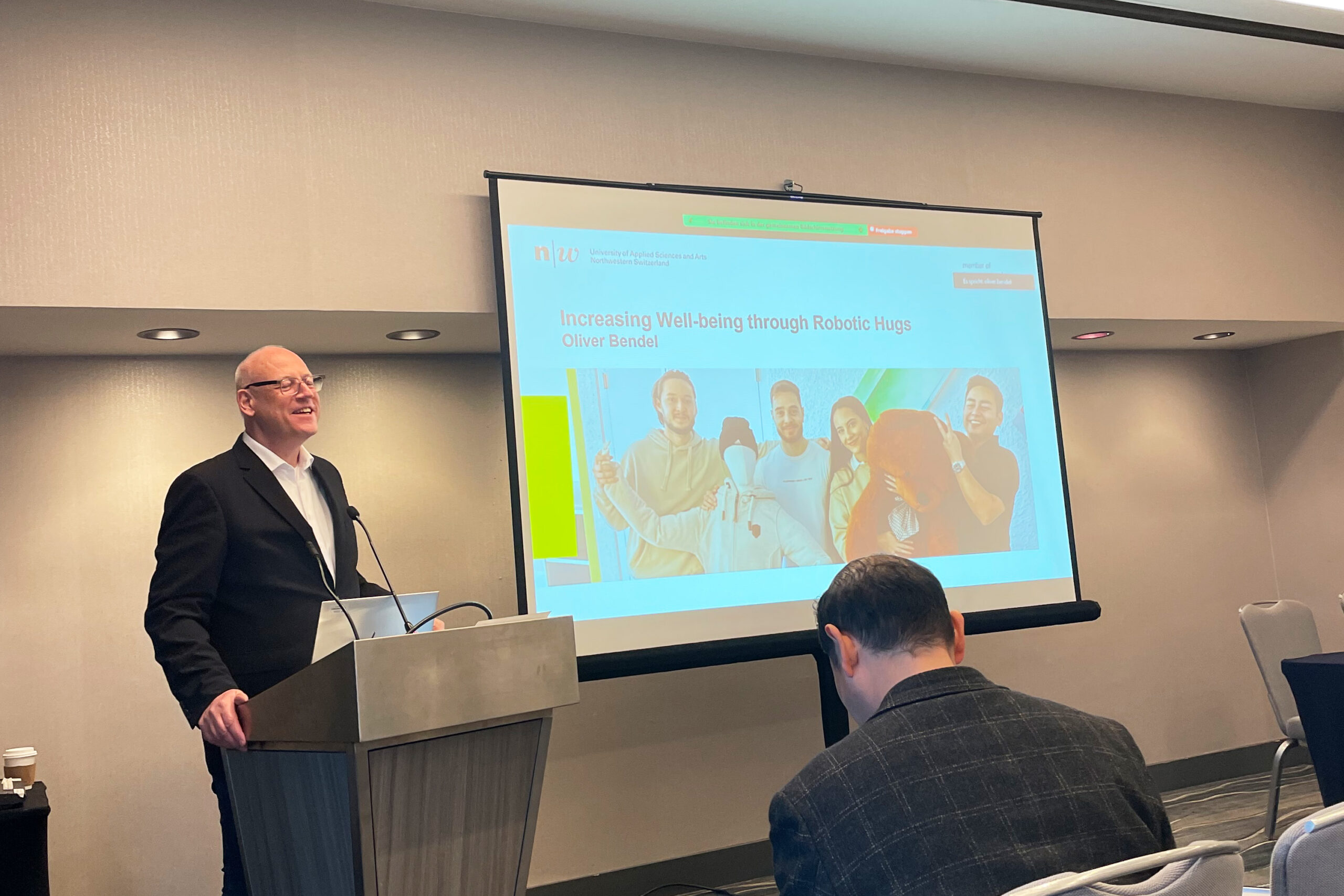
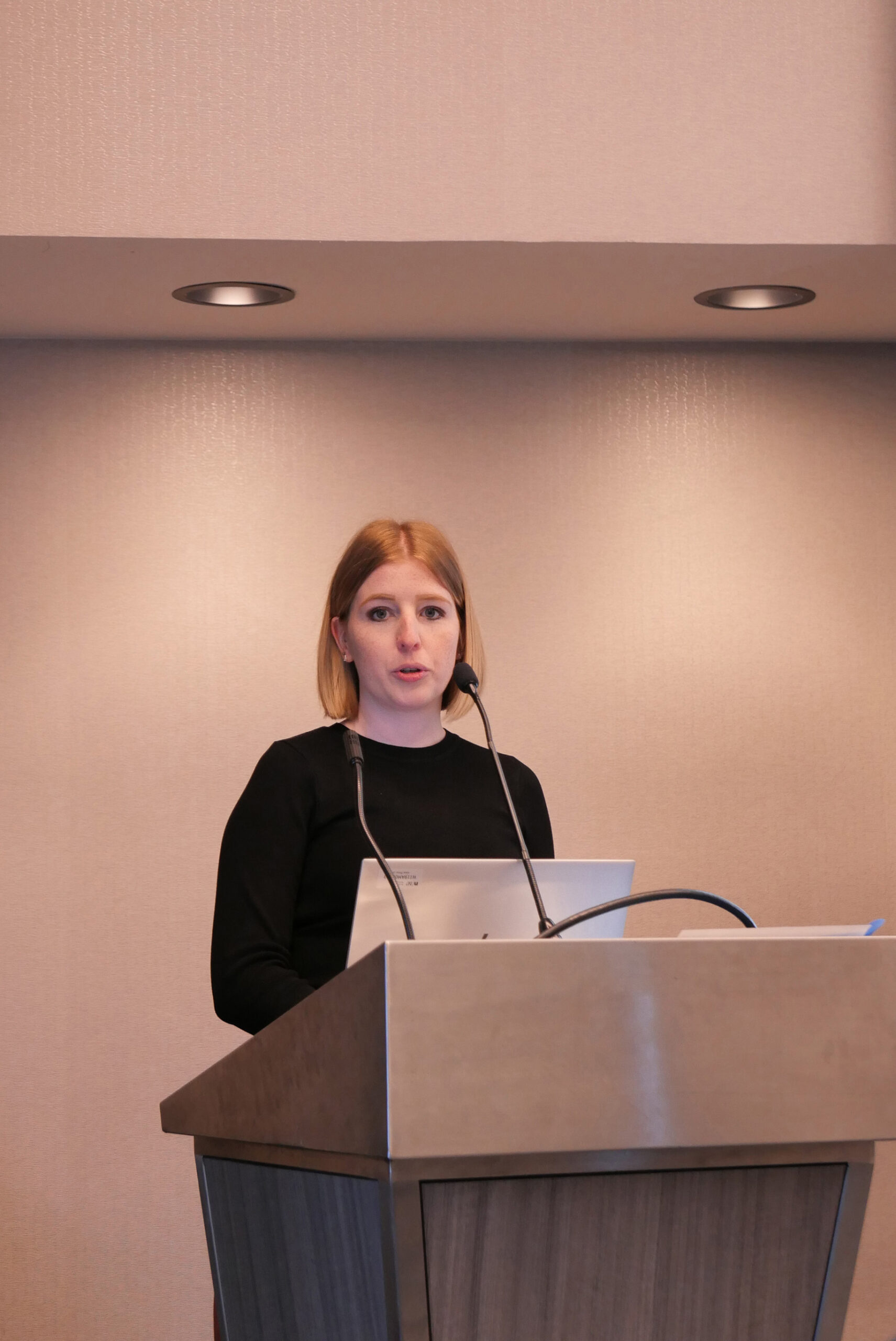
Der 28. März 2023 war der zweite Tag des Symposiums „Socially Responsible AI for Well-being“ im Rahmen der AAAI 2023 Spring Symposia. Veranstaltungsort ist normalerweise die Stanford University. Aus personellen Gründen wurde die Konferenz in diesem Jahr ins Hyatt Regency in San Francisco verlegt. Prof. Dr. Oliver Bendel von der Hochschule für Wirtschaft FHNW stellte am Morgen das Paper „Increasing Well-being through Robotic Hugs“ vor, das von ihm, Andrea Puljic, Robin Heiz, Furkan Tömen und Ivan De Paola verfasst wurde. Das Team hatte einen Umarmungsroboter namens HUGGIE gebaut und an über 130 Probanden getestet. Wärme und Weichheit – dies betonen auch Kuchenbecker und Block – sind wesentlich für die Akzeptanz. Stimme, Geruch und Herzschlag werden sehr unterschiedlich bewertet. Eine weibliche Stimme könnte die Akzeptanz bei einer Umarmung durch den Roboter verbessern. Danach hielten Lea Peier und er ihren Vortrag „How Can Bar Robots Enhance the Well-being of Guests?“. Sie gingen auf zwei Barroboter ein, die in der Schweiz im Betrieb sind bzw. waren. Informationen zur Konferenz sind über aaai.org/conference/spring-symposia/sss23/ erhältlich.
Abb.: Oliver Bendel bei seinem Vortrag zu Umarmungsrobotern (Foto: Lea Peier)
Der 28. März 2023 war der zweite Tag des Symposiums „Socially Responsible AI for Well-being“ im Rahmen der AAAI 2023 Spring Symposia. Veranstaltungsort ist normalerweise die Stanford University. Aus personellen Gründen wurde die Konferenz in diesem Jahr ins Hyatt Regency in San Francisco verlegt. Prof. Dr. Oliver Bendel von der Hochschule für Wirtschaft FHNW stellte am Morgen das Paper „Increasing Well-being through Robotic Hugs“ vor, das von ihm, Andrea Puljic, Robin Heiz, Furkan Tömen und Ivan De Paola verfasst wurde. Das Team hatte einen Umarmungsroboter namens HUGGIE gebaut und an über 130 Probanden getestet. Danach hielten Lea Peier und er ihren Vortrag „How Can Bar Robots Enhance the Well-being of Guests?“. Sie gingen auf zwei Barroboter ein, die in der Schweiz im Betrieb sind bzw. waren. Lea Peier hatte im Rahmen ihrer Abschlussarbeit an der Hochschule für Wirtschaft FHNW die wohl erste empirische Untersuchung zu Barrobotern durchgeführt. Beide Vorträge weckten das Interesse der Zuhörer, die vor allem aus Japan und den USA stammten. Informationen zur Konferenz sind über aaai.org/conference/spring-symposia/sss23/ erhältlich.
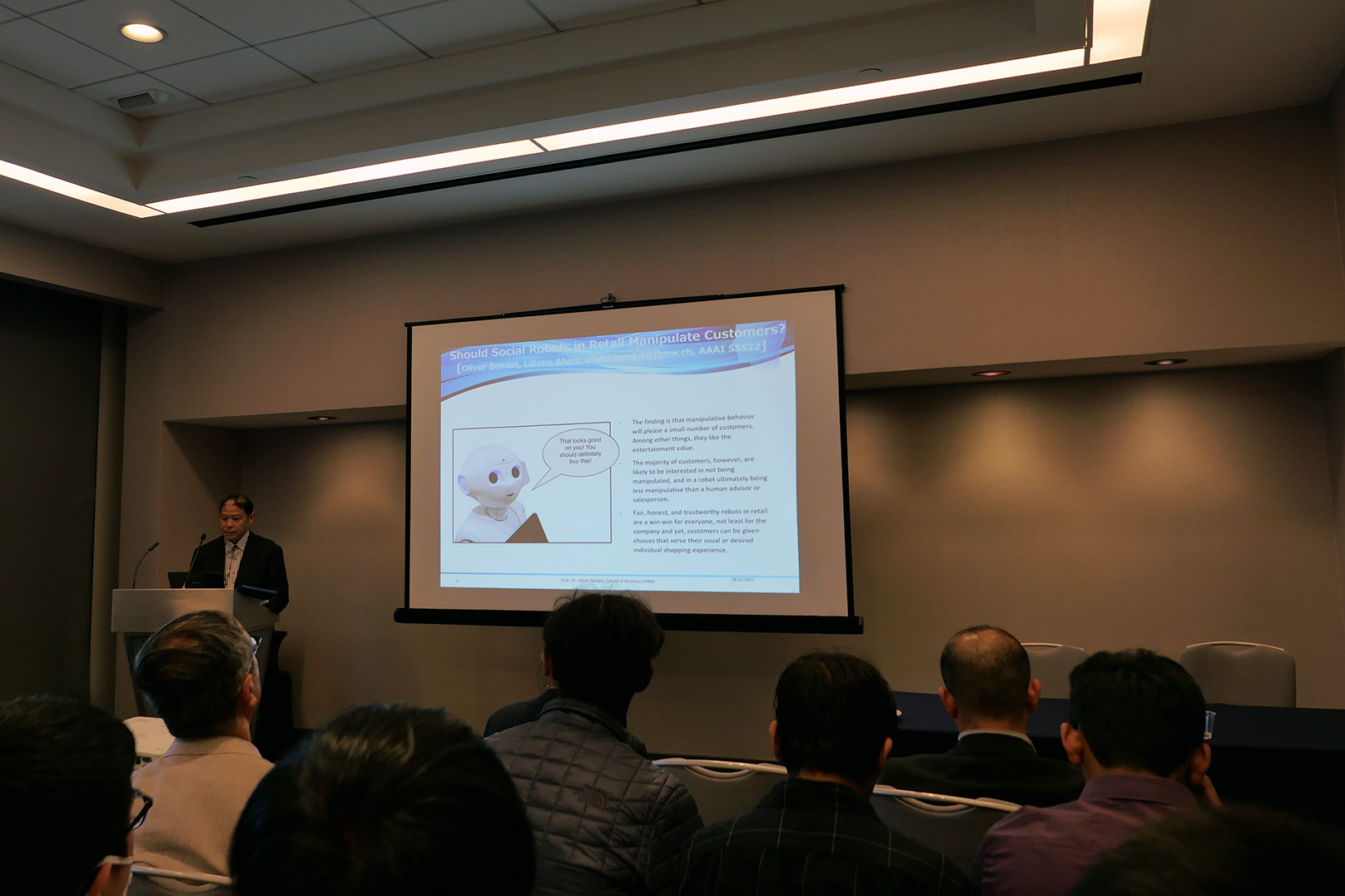
Am 27. März 2023 begann das Symposium „Socially Responsible AI for Well-being“ im Rahmen der AAAI 2023 Spring Symposium Series. Die traditionsreiche Konferenz wurde ausnahmsweise von der Stanford University ins Hyatt Regency SFO Airport verlegt. In seinem Eröffnungsvortrag erklärte Takashi Kido, einer der beiden Organisatoren, was Responsible AI ist, und erwähnte die Begriffe „Accountability“, „Responsibility“ und „Transparency“. Der Fokus des Symposiums ist Well-being und Fairness. Takashi Kido erwähnte den Vortrag „Should Social Robots in Retail Manipulate Customers?“ von Prof. Dr. Oliver Bendel beim Symposium „How Fair is Fair? Achieving Wellbeing AI“ von 2022, der auf dem gleichnamigen Paper von Oliver Bendel und Liliana Alves beruhte. Er leitete dann über zum Begriff “Socially Responsible AI“, wobei er folgende Diskussion benutzte: „Socially Responsible AI is about human responsibility for the development of intelligent systems along fundamental human principles and values, to ensure human flourishing and well-being in a sustainable world, considering for humans and AI ideal relationships“. Am Ende durften auch Überlegungen zu ChatGPT nicht fehlen. Es schloss sich eine intensive Diskussion über den Chatbot an, der zugleich ein Contentgenerator ist. Das Faszinierende ist, dass dieses Thema Laien und Experten gleichermaßen aufwühlt. Informationen zur Konferenz sind über aaai.org/conference/spring-symposia/sss23/ erhältlich.
„Robotainment ist Unterhaltung (Entertainment) mit Hilfe von Robotern, meist sozialen Robotern. Diese singen, tanzen, machen Kampfkunst und stehen für intime und sexuelle Handlungen zur Verfügung. NAO, Pepper und Alpha Mini beherrschen Kung Fu oder Tai Chi. Cozmo singt und ahmt Tiere nach. Harmony ist ein durch Film und Fernsehen bekannt gewordener Sexroboter und wird auch von der Wissenschaft erforscht. Nicht zuletzt sind soziale Roboter auf dem Markt, die Tiere anregen oder aufregen und für deren ausreichende Bewegung sorgen.“ Mit diesen Worten beginnt ein neuer Beitrag im Gabler Wirtschaftslexikon von Prof. Dr. Oliver Bendel aus Zürich. In einem zweiten Abschnitt wird auf die Ideen- und Entwicklungsgeschichte der künstlichen Kreatur von der Antike bis zur Renaissance eingegangen und das Phänomen des Robotainments daraus hergeleitet. Dabei spielt nicht nur der westliche Kulturkreis eine Rolle: „In chinesischen Geschichten aus dem 6. Jahrhundert taucht ein Mann aus Holz auf, der sich dreht, singt und tanzt, und eine Frau aus Holz, deren Schönheit ohnegleichen ist.“ Im dritten Abschnitt wird die Perspektive der Ethik eingenommen, unter besonderer Berücksichtigung der Roboterethik. Der Beitrag ist am 24. März 2023 erschienen und kann über wirtschaftslexikon.gabler.de/definition/robotainment-125138 aufgerufen werden.
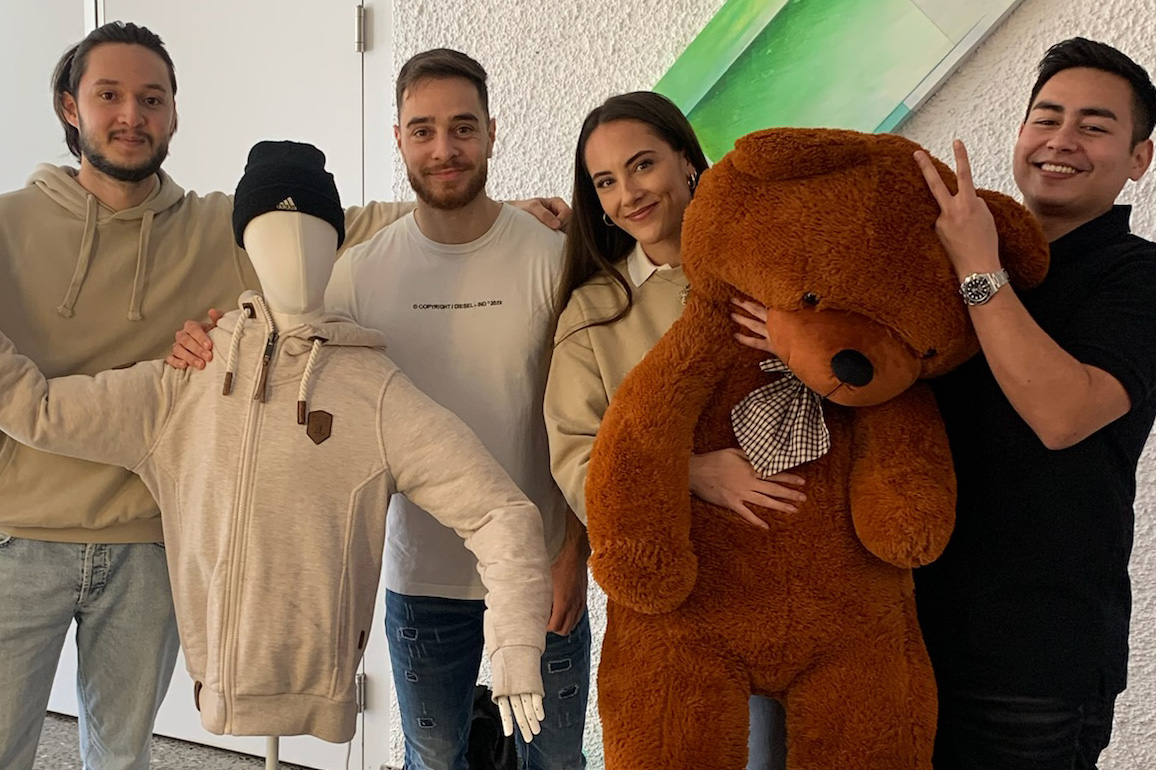
From March 27-29, 2023, the AAAI 2023 Spring Symposia will feature the symposium „Socially Responsible AI for Well-being“ by Takashi Kido (Teikyo University, Japan) and Keiki Takadama (The University of Electro-Communications, Japan). The venue is usually Stanford University. For staffing reasons, this year the conference will be held at the Hyatt Regency in San Francisco. On March 28, Prof. Dr. Oliver Bendel will present the paper „Increasing Well-being through Robotic Hugs“, written by himself, Andrea Puljic, Robin Heiz, Furkan Tömen, and Ivan De Paola. From the abstract: „This paper addresses the question of how to increase the acceptability of a robot hug and whether such a hug contributes to well-being. It combines the lead author’s own research with pioneering research by Alexis E. Block and Katherine J. Kuchenbecker. First, the basics of this area are laid out with particular attention to the work of the two scientists. The authors then present HUGGIE Project I, which largely consisted of an online survey with nearly 300 participants, followed by HUGGIE Project II, which involved building a hugging robot and testing it on 136 people. At the end, the results are linked to current research by Block and Kuchenbecker, who have equipped their hugging robot with artificial intelligence to better respond to the needs of subjects.“ More information via aaai.org/conference/spring-symposia/sss23/.
Fig.: HUGGIE, Teddy, and the team (without Oliver Bendel)
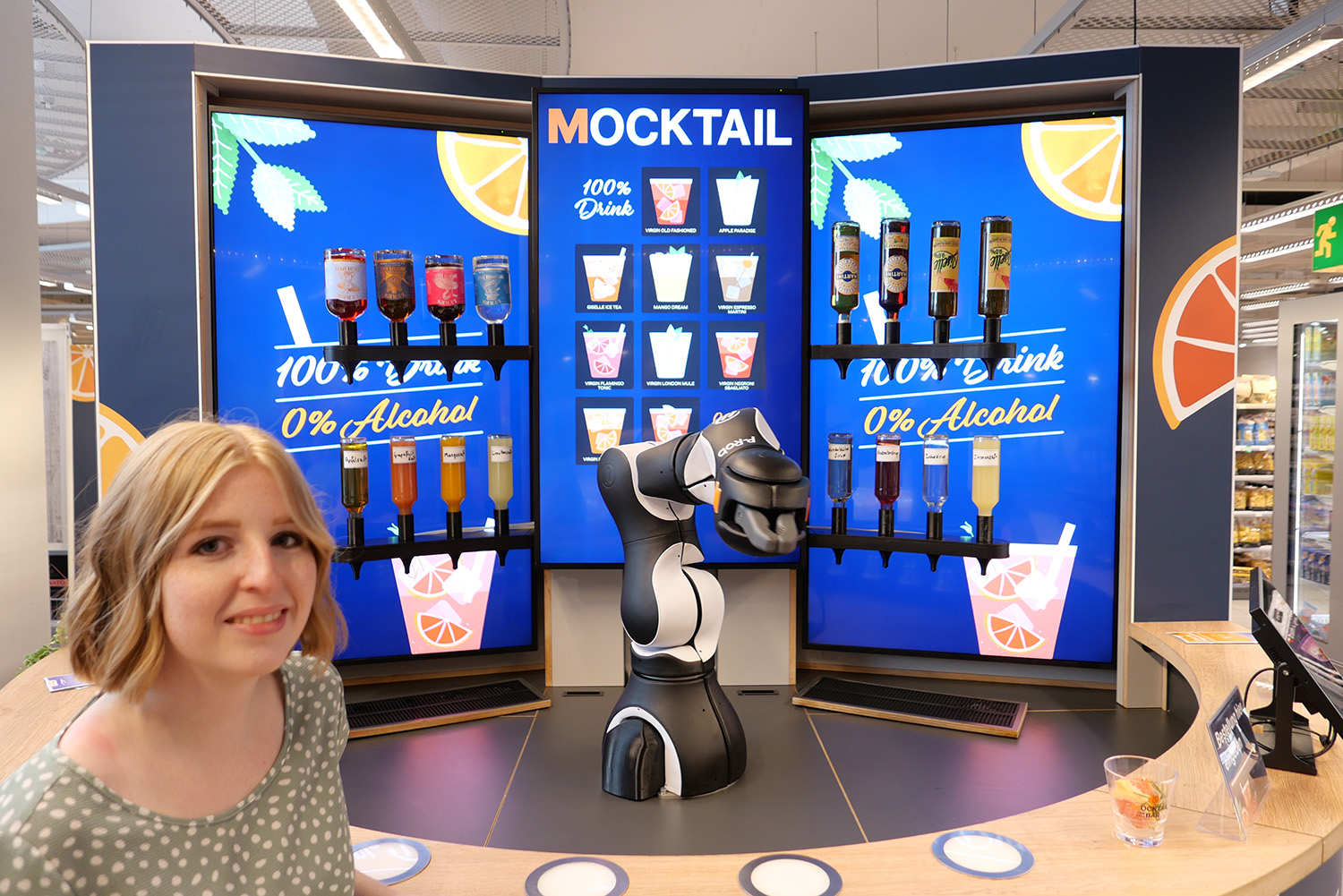
From March 27-29, 2023, the AAAI 2023 Spring Symposia will feature the symposium „Socially Responsible AI for Well-being“ by Takashi Kido (Teikyo University, Japan) and Keiki Takadama (The University of Electro-Communications, Japan). The venue is usually Stanford University. For staffing reasons, this year the conference will be held at the Hyatt Regency in San Francisco. On March 28, Prof. Dr. Oliver Bendel and Lea Peier will present their paper „How Can Bar Robots Enhance the Well-being of Guests?“. From the abstract: „This paper addresses the question of how bar robots can contribute to the well-being of guests. It first develops the basics of service robots and social robots. It gives a brief overview of which gastronomy robots are on the market. It then presents examples of bar robots and describes two models used in Switzerland. A research project at the School of Business FHNW collected empirical data on them, which is used for this article. The authors then discuss how the robots could be improved to increase the well-being of customers and guests and better address their individual wishes and requirements. Artificial intelligence can play an important role in this. Finally, ethical and social problems in the use of bar robots are discussed and possible solutions are suggested to counter these.“ More information via aaai.org/conference/spring-symposia/sss23/.
Der Maschinenethik sind in der Technischen Rundschau 3/2023 ganze vier Seiten gewidmet. Den Kern bilden ein Beitrag von Prof. Dr. Oliver Bendel und ein Interview mit ihm. Der Informations- und Maschinenethiker hatte sich in den 1990er-Jahren mit der Frage nach der Verantwortung von Maschinen beschäftigt und war zum Schluss gekommen, dass diese weder Verantwortung tragen noch zur Verantwortung gezogen werden können. Zudem interessierte er sich dafür, ob Maschinen Pflichten haben können, was er verneint – stattdessen spricht er in einem schwachen Sinne von Verpflichtungen oder von Aufgaben. Ab 2012 widmete er sich dann der Begründung einer funktionalen Moral von Maschinen. Maschinen können nach seiner Meinung keinen guten oder bösen Willen haben, kein Bewusstsein, keine Intuition und keine Empathie. Man kann ihnen aber moralische Regeln beibringen, an die sie sich strikt halten oder die sie selbst abändern und anpassen. Ab 2013 wurden von ihm zahlreiche Prototypen der Maschinenethik entwickelt. Die Disziplin hat auch im Zusammenhang mit generativer KI an Bedeutung gewonnen. Das E-Paper des Hefts kann über epaper.technische-rundschau.ch/?/shelf/ aufgerufen werden. Der Beitrag steht als PDF zur Verfügung.
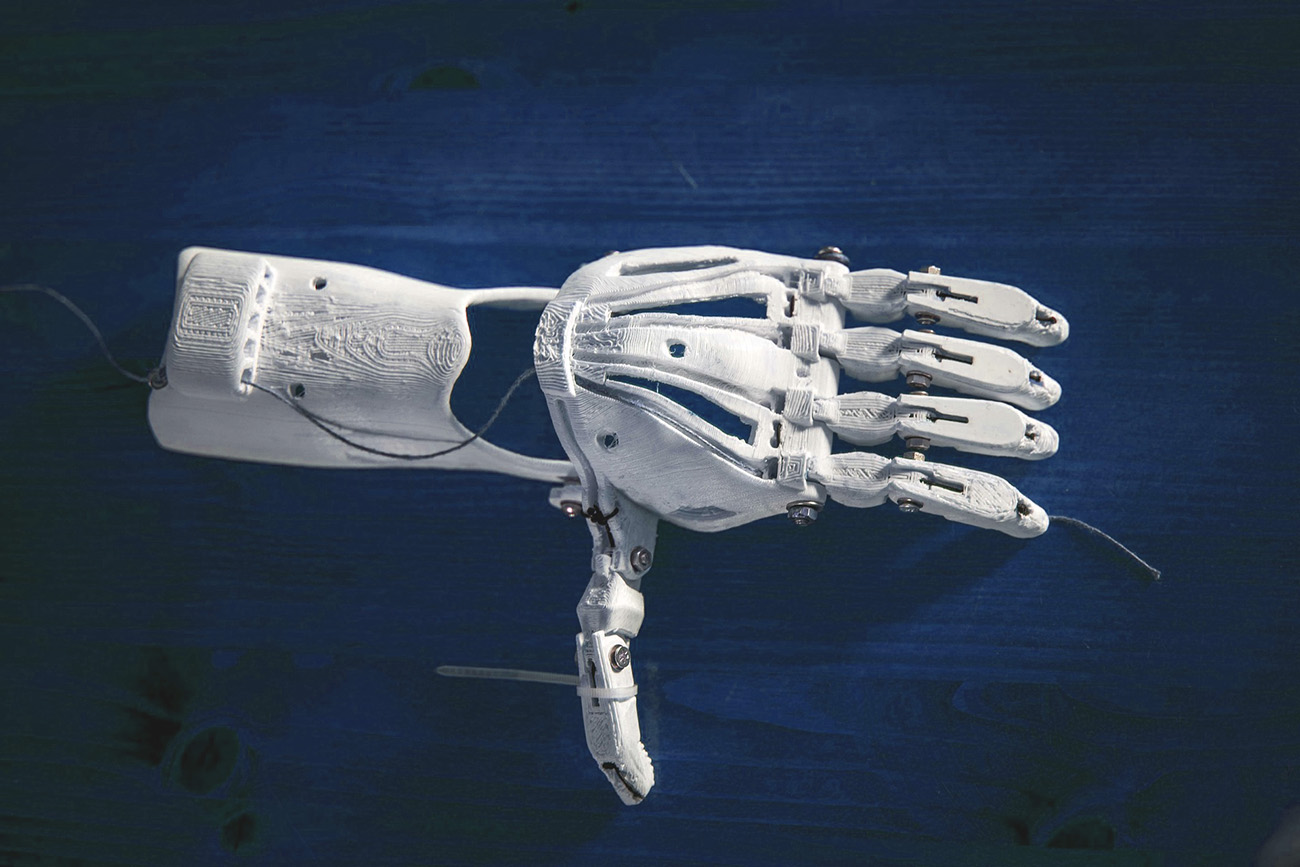
Zeynep Karagöz (Robotel Türkiye) will give a talk on March 20, 2023 on the topic „How to make a difference: Free 3D printed devices for earthquake victims“. She graduated from MSÜ – Architecture and co-founded KOMA Architecture in 2001. With Robotel Türkiye, „she started making 3D printed mechanical hands for children with hand deformation who do not have access to prosthetics“ (Website Orient-Institut Istanbul). On 6 February 2023, a M7.8 earthquake struck southern and central Turkey as well as northern and western Syria. In her talk, Zeynep Karagöz will focus on the efforts of her NGO in the Turkish earthquake region. Her information text states: „This lecture offers an opportunity to learn more about our work at Robotel Türkiye, which I am heading, in providing free 3D-printed prostheses for children who lack access to such devices. I will focus the impact it has had on the lives of those we serve. Our primary focus has been on providing mechanical hands, arms, and fingers to children, although we have also served adults upon request. However, recent events have led us to extend our services to include shoulder mechanisms, adult models, and orthotic prosthesis devices. … I will discuss the impact of our work in the region and the urgent need for volunteers and financial support to continue our efforts.“ (Website Orient-Institut Istanbul) The event is sponsored by Orient-Institut Istanbul, NYU Center for Disability Studies, and Humboldt-Universität zu Berlin. Registration for the webinar is available here.