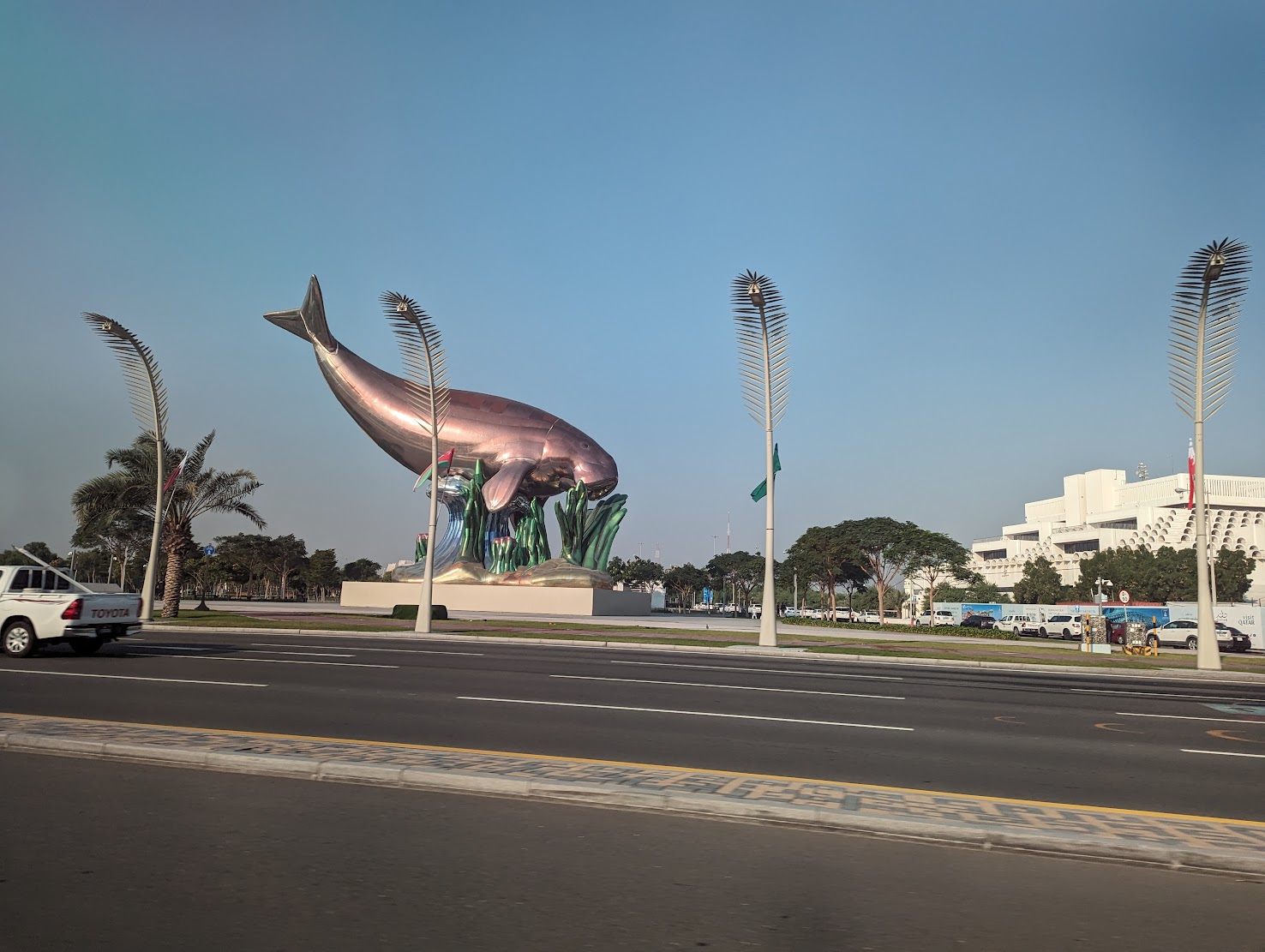
Anyone driving from Doha Old Town to Qatar University to visit the ICSR 2023 would usually pass the DUGONG sculpture by Jeff Koons, one of the world’s most celebrated contemporary artists. According to the Qatar Museums (QM), he often finds inspiration in everyday objects and transforms them into mesmerizing sculptures. Standing over 21 meters tall and 31 meters long, the inflatable dugong is a larger-than-life imagination of the creature gliding effortlessly through a marine habitat. It is nothing less than a celebration of Qatar’s natural heritage. The Emirate is home to the world’s second largest population of dugongs. These unusual and lovable marine mammals are believed to have first appeared in the waters of the Arabian Gulf some 7,500 years ago. According to the website, Qatar Museums commissioned this site-specific installation for the FIFA World Cup Qatar 2022.
Fig.: The DUGONG by Jeff Koons (Photo: Nihan Karataş)
The 15th International Conference on Social Robotics (ICSR 2023) took place in Doha from December 3 to 7, 2023. It was held under the patronage of the Prime Minister and Minister of Foreign Affairs, Sheikh Mohammed bin Abdulrahman bin Jassim Al Thani. The two hosts were Dr. Abdulaziz Al Ali and Prof. Dr. John-John Cabibihan from Qatar University. The two proceedings volumes, „Social Robotics“, Part I (34 papers) and Part II (34 papers), were published in time for the event. „The two-volume set LNAI 14453 and 14454 constitutes the refereed post-conference proceedings of the 15th International Conference on Social Robotics, ICSR 2023, held in Doha, Qatar, during December 4-7, 2023. The 68 revised full papers presented in these proceedings were carefully reviewed and selected from 83 submissions. They deal with topics around the interaction between humans and intelligent robots and on the integration of robots into the fabric of society. This year the special topic is „Human-Robot Collaboration: Sea; Air; Land; Space and Cyberspace“, focusing on all physical and cyber-physical domains where humans and robots collaborate.“ (Information Springer)
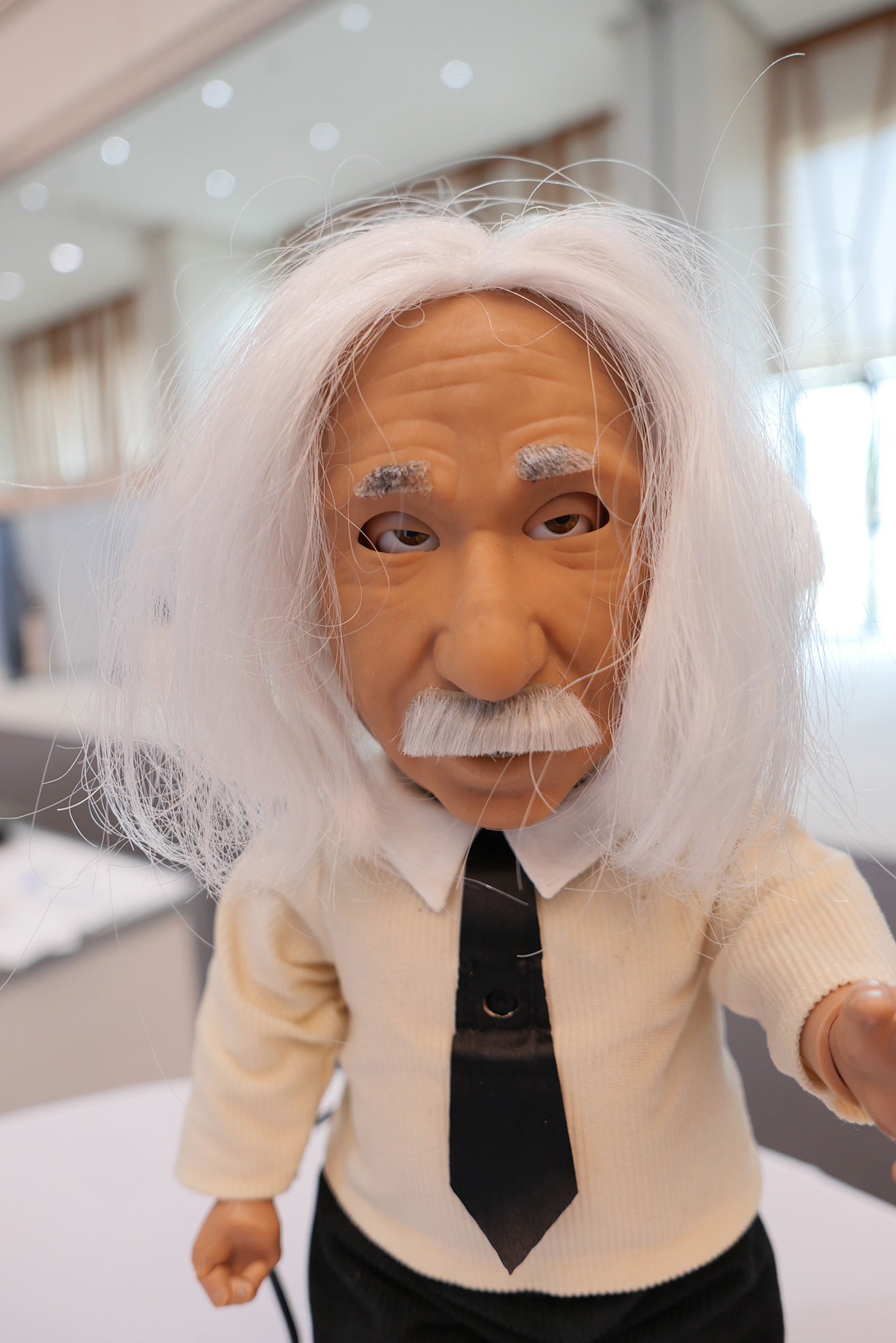
Die 15th International Conference on Social Robotics (ICSR 2023) fand vom 3. bis 7. Dezember 2023 in Doha (Qatar) statt. Sie stand unter der Schirmherrschaft des Premierministers und Außenministers, Sheikh Mohammed bin Abdulrahman bin Jassim Al Thani. Zur Konferenz gehörte eine Messe mit sozialen Robotern wie Einstein, NAO, Navel, Furhat und Paro. Einstein von Hanson Robotics ist eine kleine Figur wie die sehnlichst erwartete Little Sophia. Das Original stammt aus Ulm, ist nach München und Italien und dann vorerst in die Schweiz gegangen, wo es die Matura gemacht und später (in Zürich) gelehrt hat. In Qatar ist Einstein wohl nie gewesen. Aber die Qatar National Library wünschte ihm am 14. März 2021 alles Gute zum Geburtstag. Und es gibt noch die eine oder andere Verbindung. Das Foto vom robotischen Physiker machte ein anderer geborener Ulmer (und Wahlzürcher), Prof. Dr. Oliver Bendel, der auf der ICSR zwei Papers vorstellte, die in Band 1 und Band 2 der Proceedings erschienen sind. Das Programm der Konferenz kann hier heruntergeladen werden. Weitere Informationen über icsr23.qa.
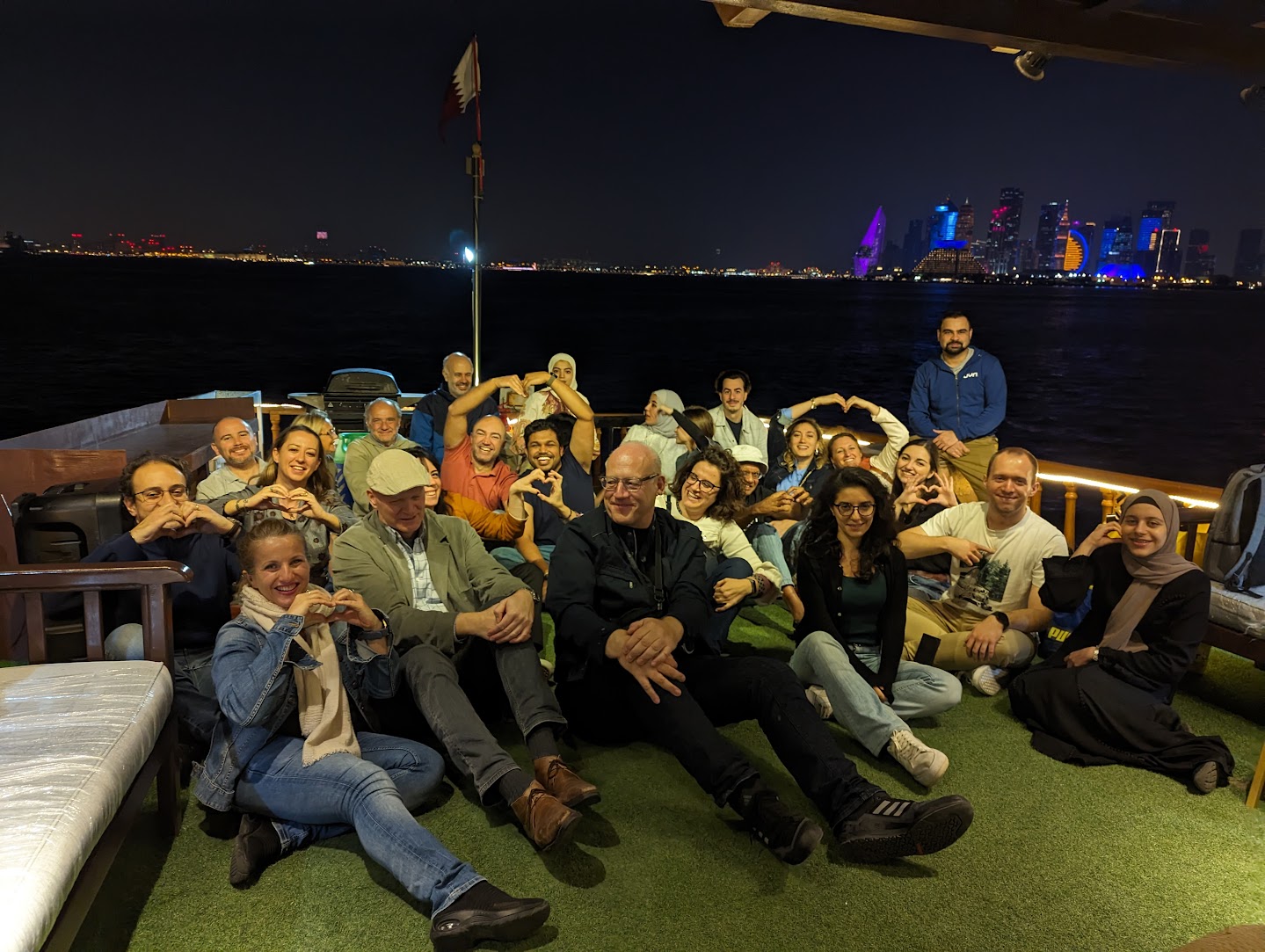
Die ICSR 2023 endete mit einer dreistündigen Bootsfahrt durch die Bucht von Doha. An der Corniche lagern hunderte alte Holzboote, und für den Social Event war ein besonders schönes ausgesucht worden. Es gab ein Dinner und eine Playlist, bei der jeder ein Lied seines Landes angeben konnte. Für Deutschland war „Du hast den Farbfilm vergessen“ von Nina Hagen am Start. Dann wurden Hits aus Indien, Sri Lanka, Bosnien, Italien, Japan etc. gespielt. Die Wissenschaftler und Wissenschaftlerinnen kannten kein Halten mehr und verwandelten das Boot in eine Tanzfläche. Hooman Samani erstellte zwischendurch ein Datenset mit den grundlegenden Emotionen, die auch von sozialen Robotern simuliert werden. Das dazugehörige Video kann unter der Bezeichnung „ICSR 2023 Doha Emotion Dataset“ über www.youtube.com/watch?v=91VWd4MU7ck abgerufen werden. Die ICSR 2023 fand vom 3. bis 7. Dezember 2023 in Qatar statt. Sie gehört neben der Robophilosophy zu den wichtigsten Konferenzen für Soziale Robotik weltweit. Das Programm der Konferenz kann hier heruntergeladen werden. Weitere Informationen über icsr23.qa.
Abb.: Die Gruppe auf dem Boot (Foto: Hooman Samani)
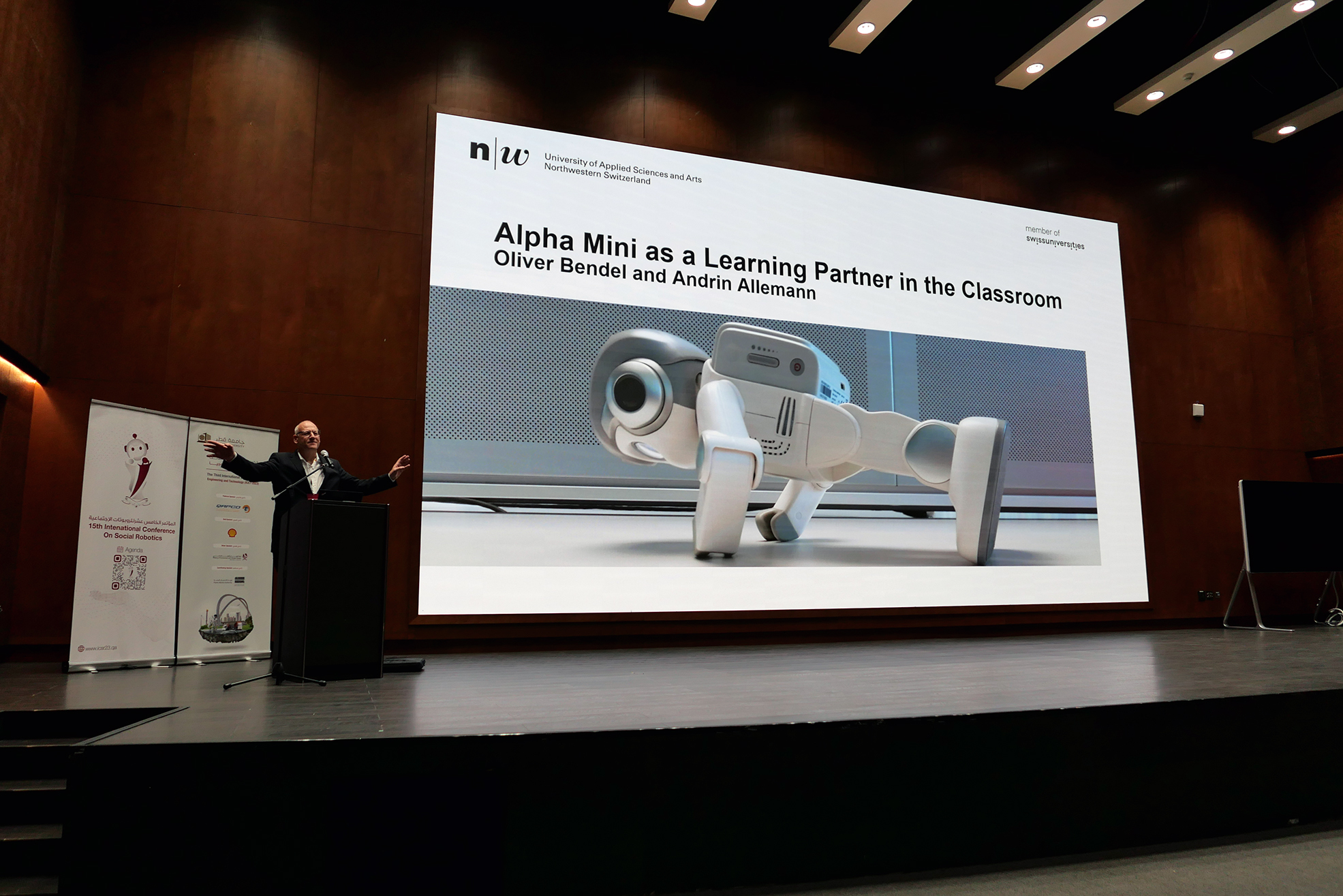
Am 6. Dezember 2023 fand im Rahmen der ICSR 2023 die Nachmittagssession „Social Robots as Advanced Educational Tools“ statt. Chairs waren Amol Deshmukh (für John-John Cabibihan) und Oliver Bendel. Rachel Love (Monash University) trug zum Thema „Teachable Robots Learn What to Say: Improving Child Engagement during Teaching Interaction“ vor. „Enhancing Hand Hygiene Practices through a Social Robot-Assisted Intervention in a Rural School in India“ war das Projekt von Amol Deshmukh (University of Glasgow). Xiaoxuan Hei (Institut Polytechnique de Paris) widmete sich dem Thema „Evaluating Students‘ Experiences in Hybrid Learning Environments: A Comparative Analysis of Kubi and Double Telepresence Robots“. Oliver Bendel (School of Business FHNW) stellte das Paper „Alpha Mini as a Learning Partner in the Classroom“ vor, das er zusammen mit Andrin Allemann geschrieben hatte. Das Programm der Konferenz kann hier heruntergeladen werden. Weitere Informationen über icsr23.qa.
Abb.: Oliver Bendel bei seinem Vortrag (Foto: Amol Deshmukh)
Den Best Paper Award bei der ICSR 2023 in Qatar erhielt Nihan Karataş für ihr Paper „Robotic-Human-Machine-Interface for Elderly Driving: Balancing Embodiment and Anthropomorphism for Improved Acceptance“ (zusammen mit Takahiro Tanaka, Yuki Yoshihara, Hiroko Tanabe, Motoshi Kojima, Masato Endo und Shuhei Manabe). Sie trug es am 6. Dezember 2023 in der Morgensession vor. Aus dem Abstract: „Encouraging self-awareness among elderly drivers while driving with a passenger has the potential to reduce traffic accidents. Highly anthropomorphic Robotic-Human-Machine-Interfaces (RHMIs) have been shown to be effective in providing safe driving and review support by being perceived as fellow passengers. However, it remains unclear which specific anthropomorphic elements in the RHMI’s appearance are necessary to achieve this effect. Identifying these essential elements for elderly driving could lead to a minimal design approach and reduced installation costs in car dashboards. Therefore, in this study, we investigated the effects of RHMI embodiment and anthropomorphism level on drivers’ acceptability and user experience quality through a series of RHMI prototypes by conducting a crowdsource video experiment and a driving simulator experiment, respectively. The findings provide insights into the design of a low-cost, minimal, and efficient RHMI as a driving agent.“ Das Programm der Konferenz kann hier heruntergeladen werden. Weitere Informationen über icsr23.qa.
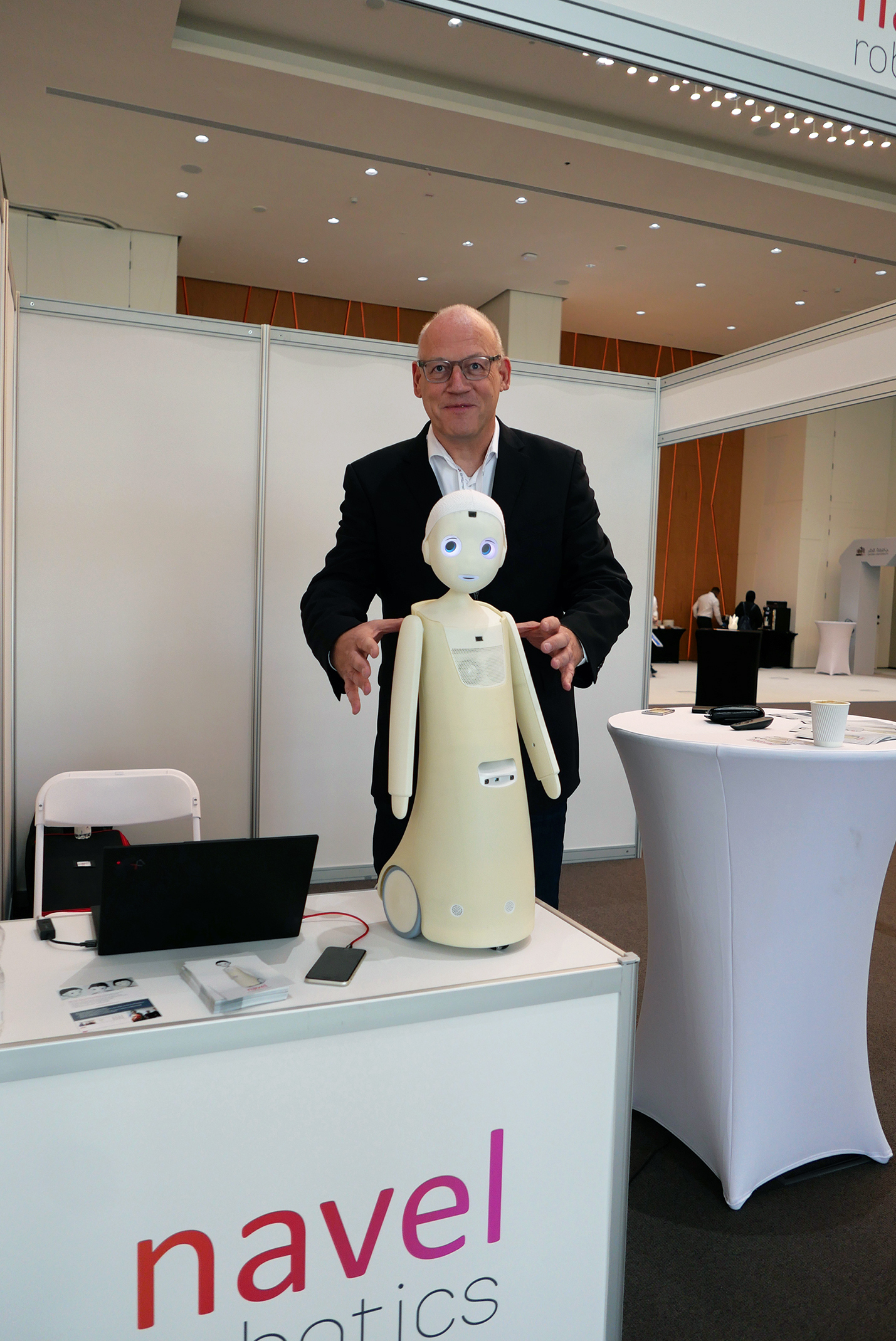
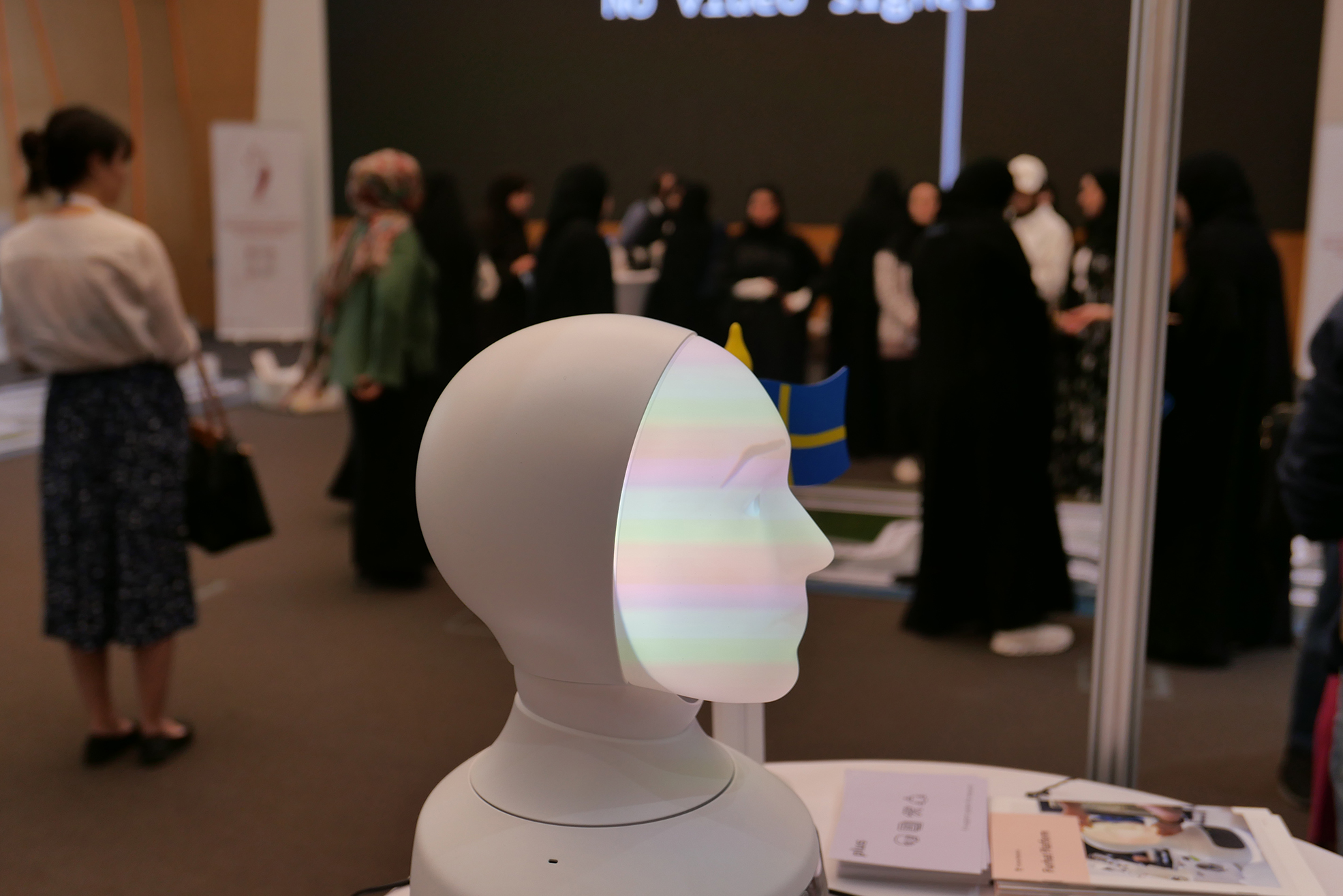
Die 15th International Conference on Social Robotics (ICSR 2023) findet vom 3. bis 7. Dezember 2023 in Qatar statt. Sie steht unter der Schirmherrschaft des Premierministers und Außenministers, Sheikh Mohammed bin Abdulrahman bin Jassim Al Thani. Zur Konferenz gehört eine Messe mit sozialen Robotern wie Einstein, NAO, Navel, Furhat und Paro. Der jungenhafte Roboter Navel lockte am 6. Dezember 2023 einige Besucher an, denn er ist ein neues Produkt einer Münchner Firma und bisher wenig in Erscheinung getreten. Für die ICSR 2023 wurde er mit einer Kopfbedeckung ausgestattet, die in Doha erstanden worden war. Eine solche Erweiterung und Verbesserung (hier mit Blick auf die kulturellen Gepflogenheiten) kann man als Robot Enhancement bezeichnen. Das Programm der Konferenz kann hier heruntergeladen werden. Weitere Informationen über icsr23.qa.
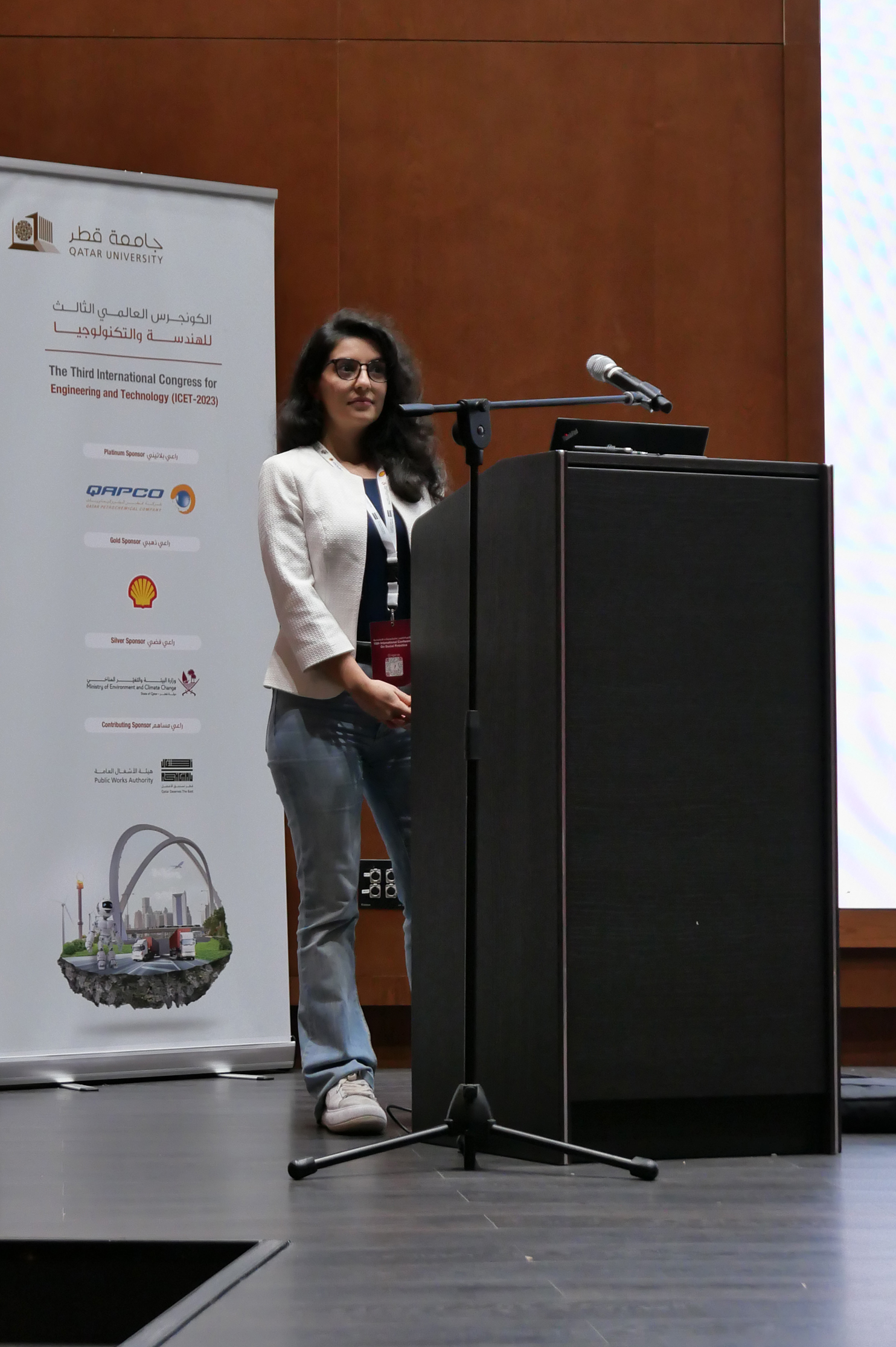
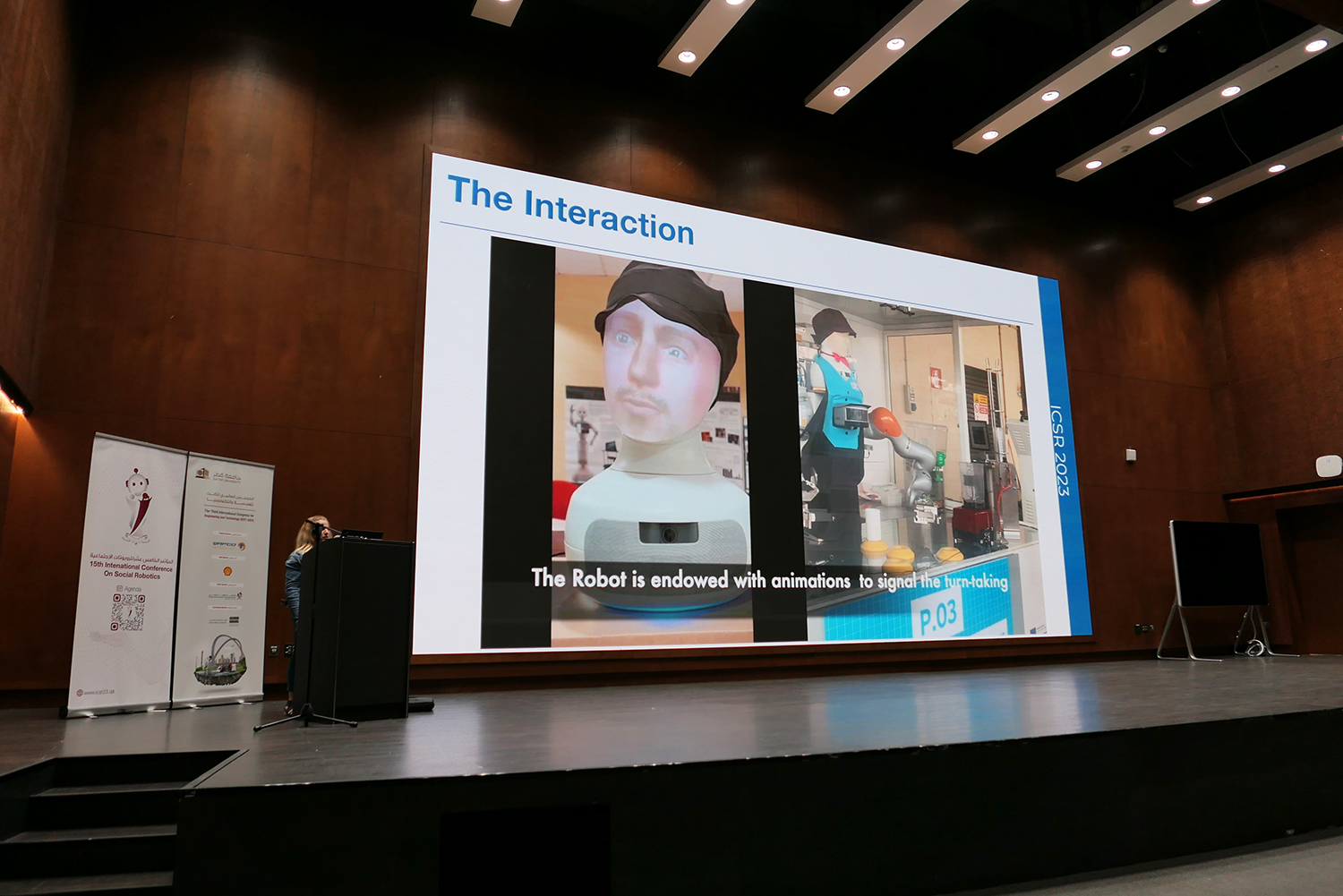
Die ICSR 2023 findet vom 3. bis 7. Dezember 2023 in Qatar statt. Sie gehört neben der Robophilosophy zu den wichtigsten Konferenzen für Soziale Robotik weltweit. Am 6. Dezember 2023 trug Alessandra Rossi von der Universita Degli Studi di Napoli Federico II zum Thema “Evaluating Customers‘ Engagement Preferences for Multi-party Interaction with a Robot Bartender“ vor. Brillo ist ein Barroboter, der aus zwei KUKA-Roboterarmen und einem Furhat-Kopf besteht. Er kann nicht nur Cocktails und Smoothies zubereiten, sondern auch mit den Gästen kommunizieren. In der Studie wurde erhoben, wie Benutzer den Barroboter erleben („The robot has been a great bartender“ or „I would like to have the robot as a usual bartender“). Die Benutzer hatten insgesamt eine positive Interaktion. Eine Personalisierung führte zu einem erhöhten Interesse. Barroboter sind bisher erst wenig erforscht. Vor einem Jahr legten Oliver Bendel und Lea Peier eine empirische Studie zur Nutzung in der Schweiz vor. Das Programm der Konferenz kann hier heruntergeladen werden. Weitere Informationen über icsr23.qa.
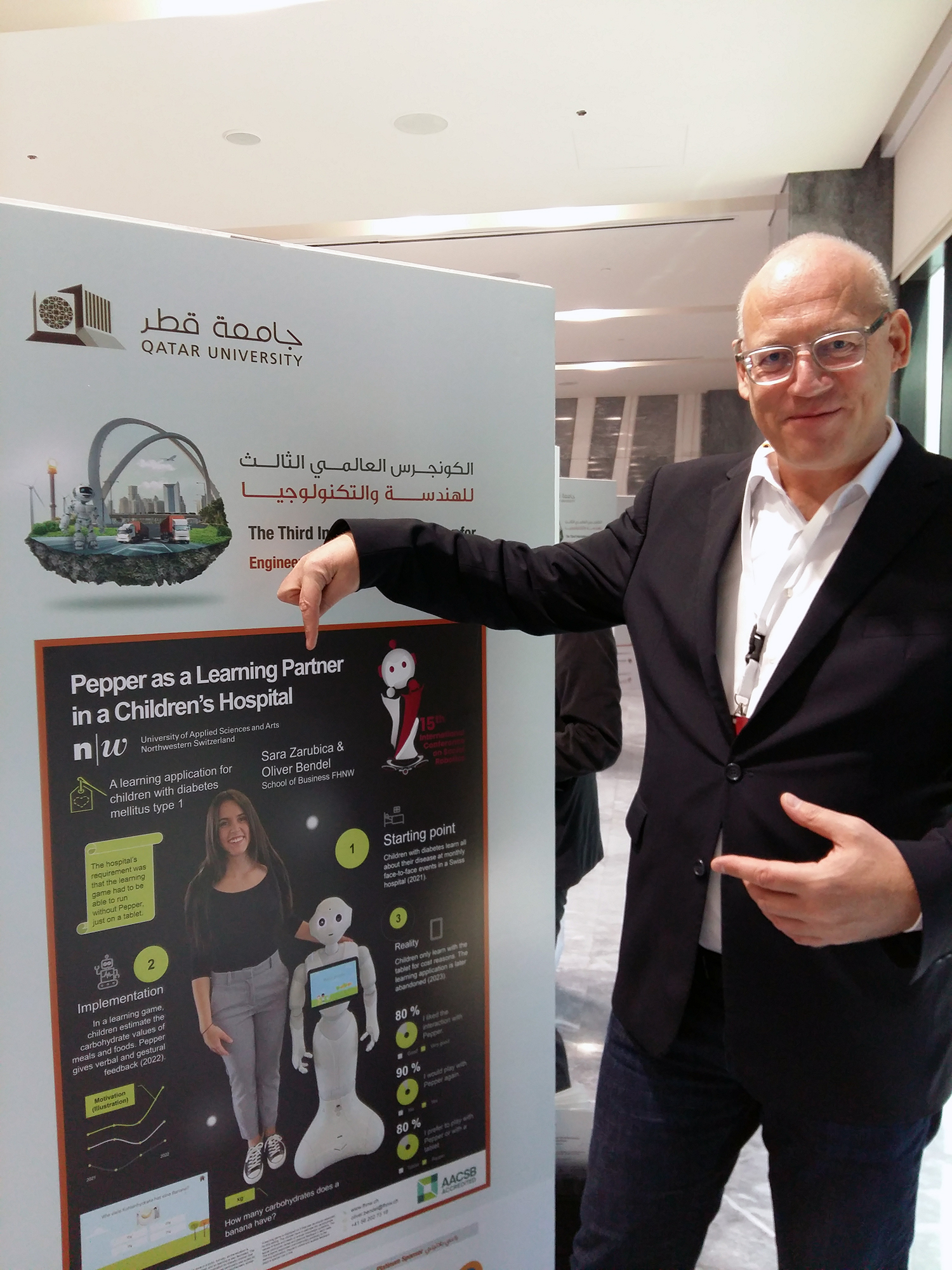
Die ICSR 2023 findet vom 3. bis 7. Dezember 2023 in Qatar statt und gehört neben der Robophilosophy zu den wichtigsten Konferenzen für Soziale Robotik weltweit. Die Hochschule für Wirtschaft FHNW ist mit zwei Papers vertreten. Das Thema der diesjährigen Konferenz lautet „Mensch-Roboter-Zusammenarbeit: See, Luft, Land, Weltraum und Cyberspace“ („Human-Robot Collaboration: Sea, Air, Land, Space and Cyberspace“). Das erste („Pepper as a Learning Partner in a Children’s Hospital“) gehört zum Bereich „Land“ und stammt von Sara Zarubica und Oliver Bendel. Es ist Teil der Posterpräsentationen. Das zweite („Alpha Mini as a Learning Partner in the Classroom“) – ebenfalls dem Bereich „Land“ zugeordnet – stammt von Oliver Bendel und Andrin Allemann. Es wird von Oliver Bendel vor dem Auditorium vorgetragen. Am Morgen des 5. Dezembers erklärte er den interessierten Besuchern zum ersten Mal die wesentlichen Aspekte des Projekts. Weitere Termine sind für den Nachmittag und den 6. Dezember geplant. Das Programm der Konferenz kann hier heruntergeladen werden. Weitere Informationen über icsr23.qa.
Abb.: Oliver Bendel erklärt bei der ICSR das Poster
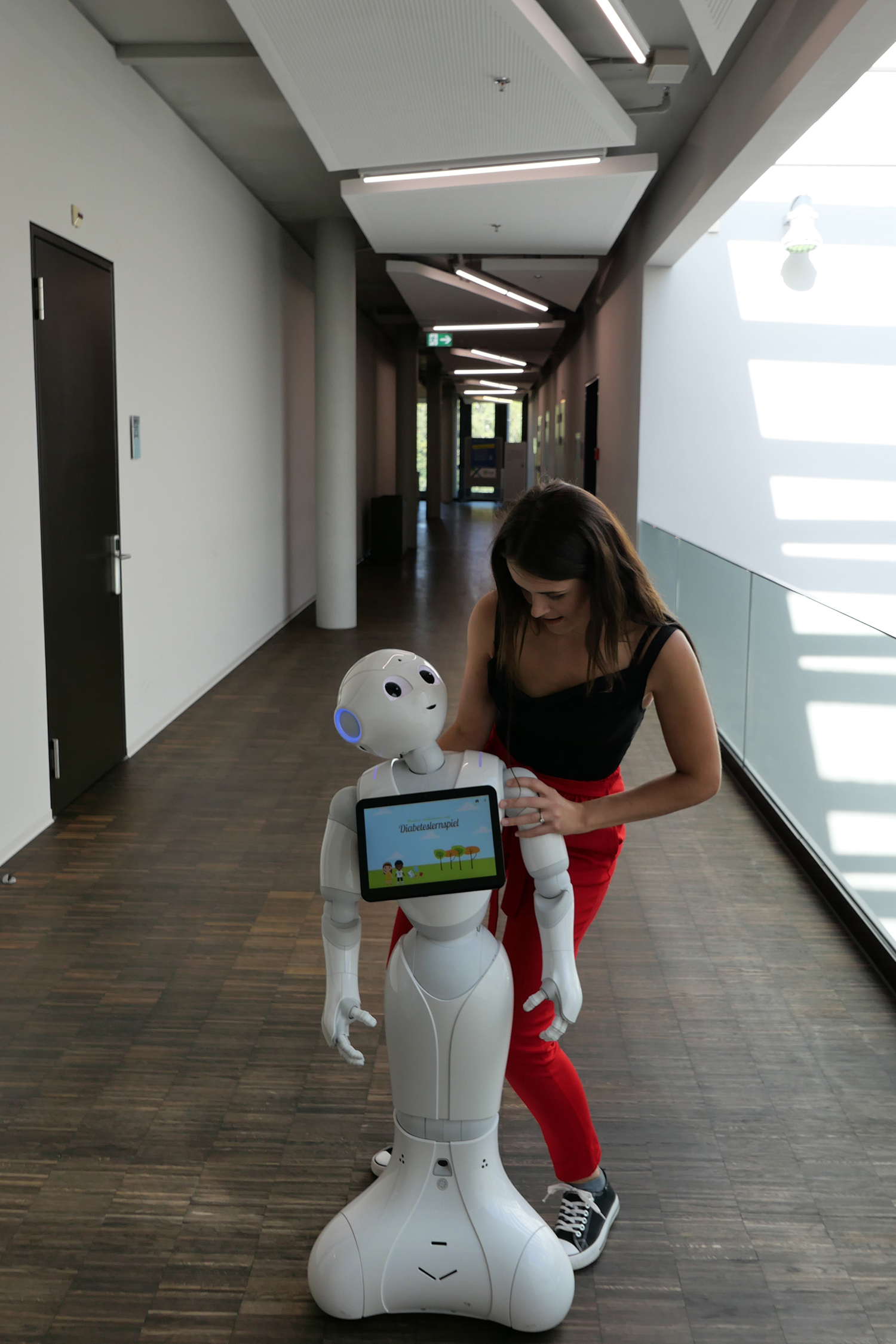
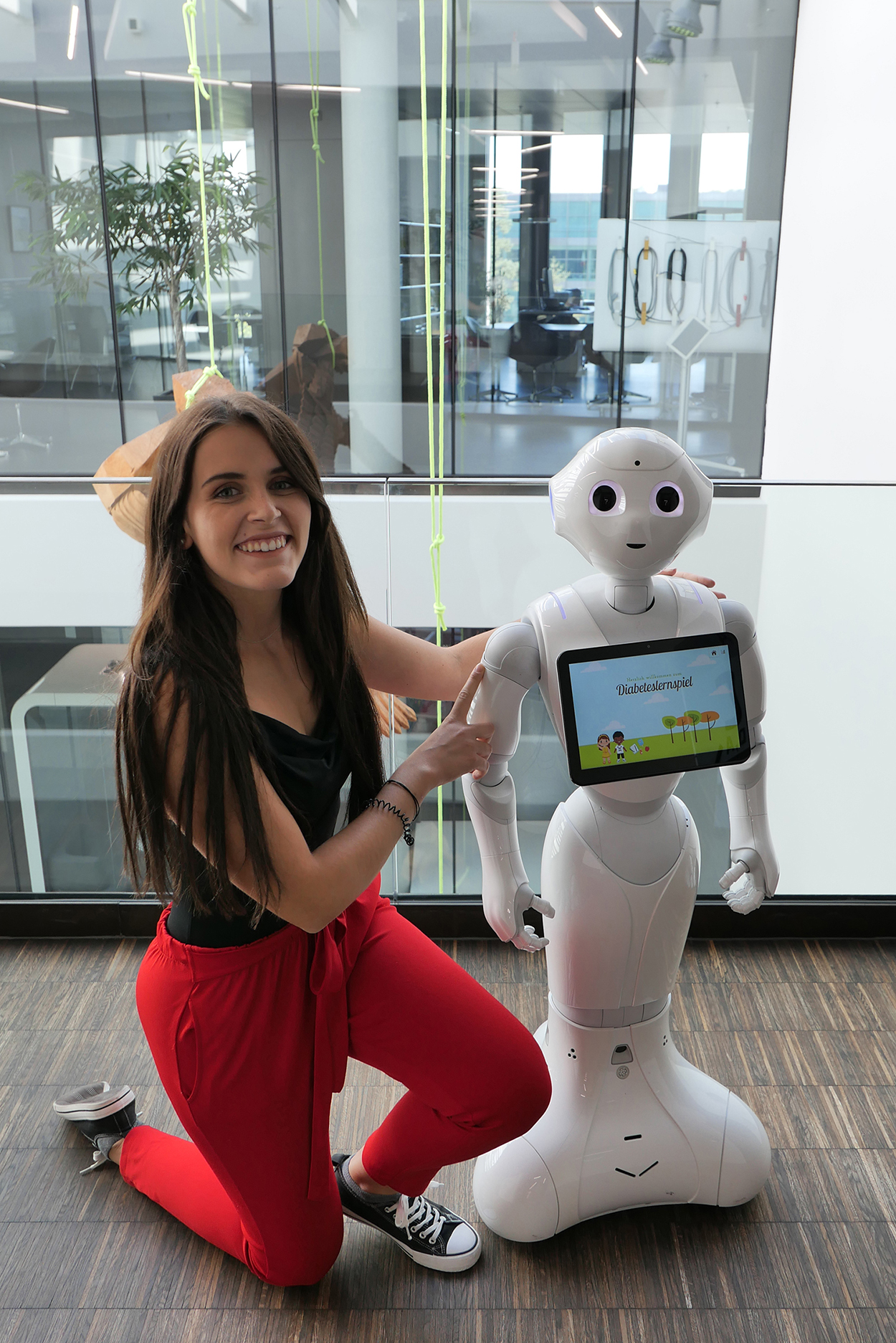
Anfang Dezember 2023 sind die Proceedings der ICSR 2023 erschienen. Der zweite Band enthält den Beitrag „Pepper as a Learning Partner in a Children’s Hospital“ von Sara Zarubica und Oliver Bendel. Aus dem Abstract: „Social robots are increasingly used in learning settings. So far, the main focus of this has been in school lessons and teaching at universities. Another possible setting is the children’s hospital. There, for example, young patients need to acquire basic knowledge about their disease so that they can deal with it appropriately. This should be done in a joyful, fun way, as the situation is stressful enough in itself, and so learning is also facilitated. The paper presents a learning application for diabetic children that runs on Pepper. This social robot was particularly well suited for this task because it has a large integrated touchscreen, similar to a tablet. A learning game is displayed on it that was developed especially for this setting. The children have to estimate the carbohydrate values of foods and meals or answer knowledge questions. The social robot gives verbal and gestural feedback in each case. The subjects responded overwhelmingly positively to the learning application. Pepper’s visible and audible feedback plays a special role in this. Social robots like Pepper are an interesting solution for knowledge transfer in a children’s hospital.“ Der Band kann über link.springer.com/book/10.1007/978-981-99-8718-4 heruntergeladen bzw. bestellt werden.
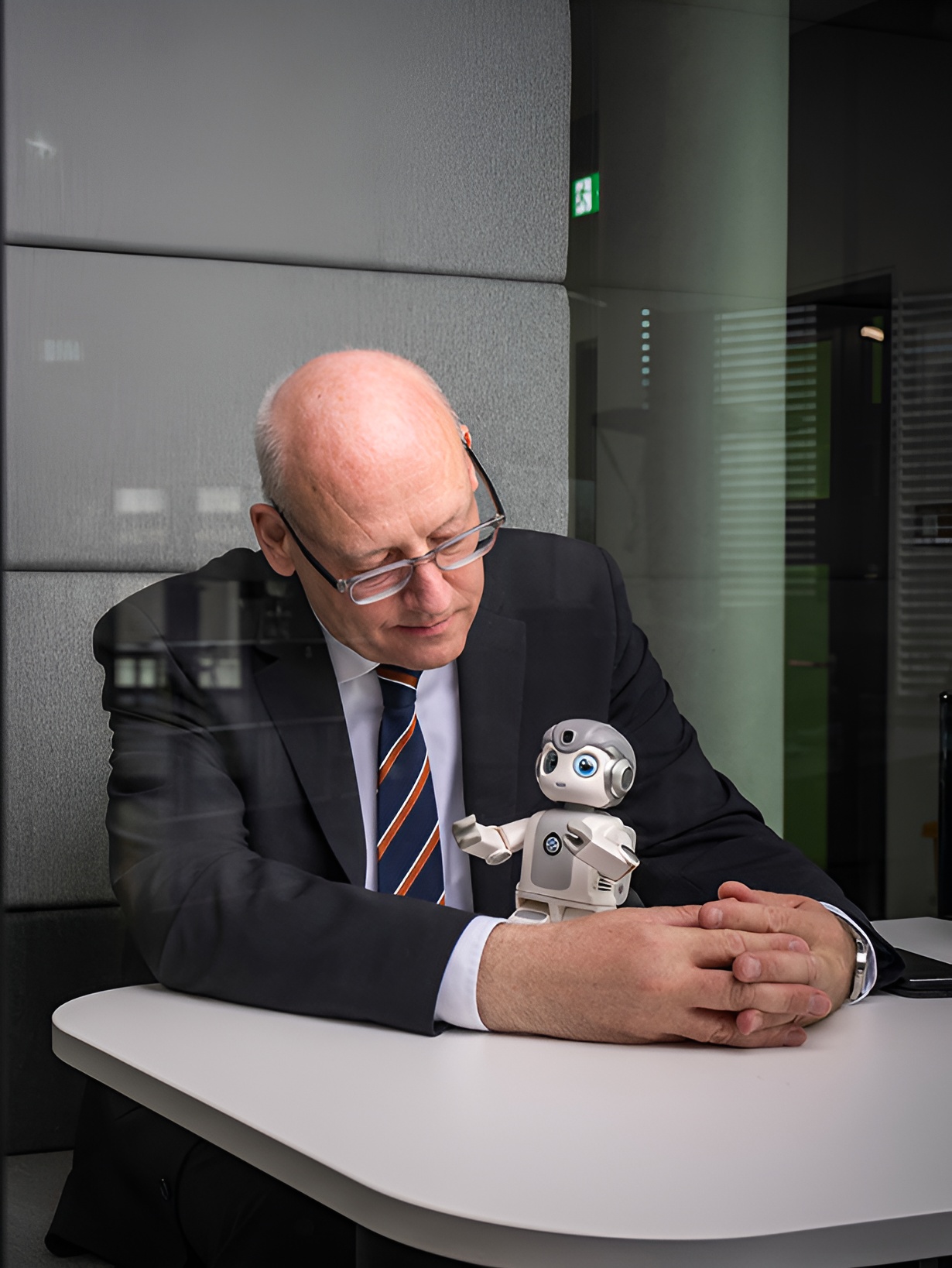
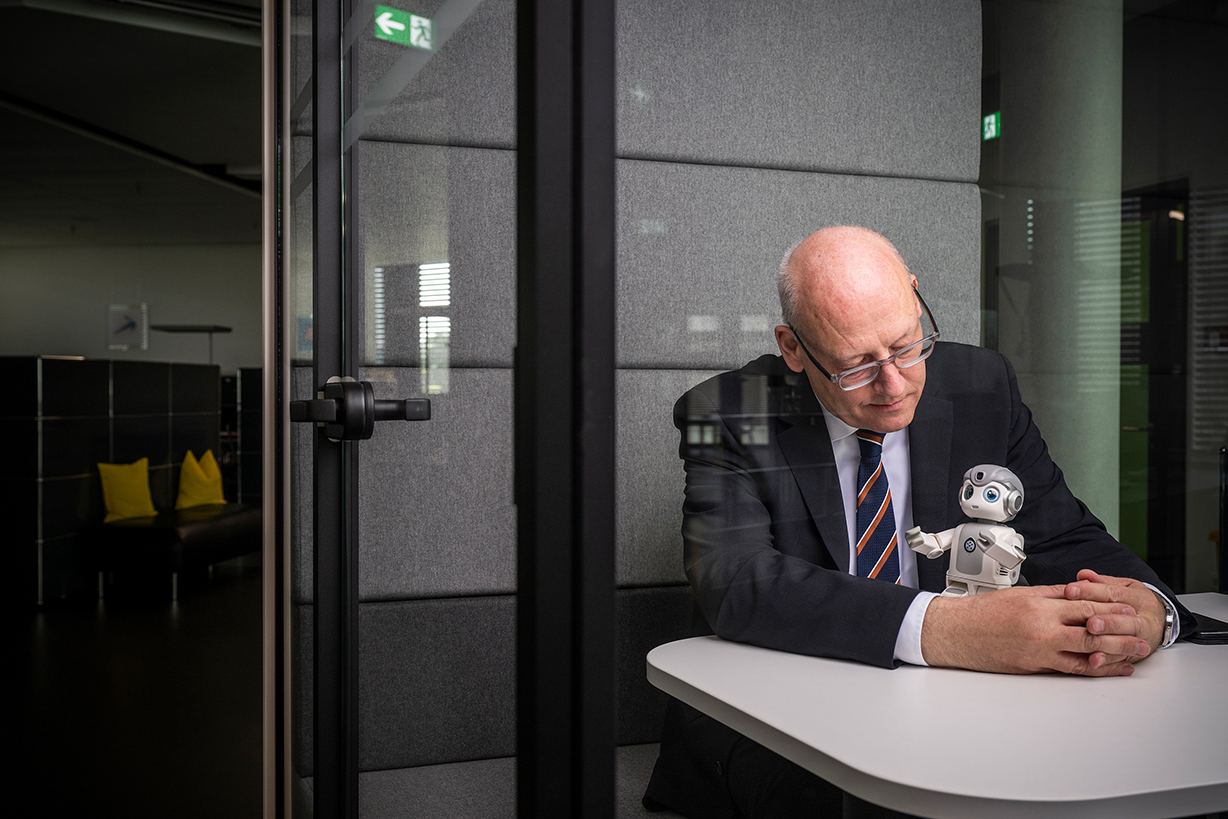
Anfang Dezember 2023 sind die Proceedings der ICSR 2023 erschienen. Der erste Band enthält den Beitrag „Alpha Mini as a Learning Partner in the Classroom“ von Oliver Bendel und Andrin Allemann. Aus dem Abstract: „Social robots such as NAO and Pepper are being used in some schools and universities. NAO is very agile and therefore entertaining. Pepper has the advantage that it has an integrated display where learning software of all kinds can be executed. One disadvantage of both is their high price. Schools can hardly afford such robots. This problem was the starting point for the project described here, which took place in 2023 at the School of Business FHNW. The aim was to create a learning application with an inexpensive social robot that has the same motor capabilities as NAO and the same knowledge transfer capabilities as Pepper. The small Alpha Mini from Ubtech was chosen. It was possible to connect it to an external device. This runs a learning game suitable for teaching at primary level. Alpha Mini provides explanations and feedback in each case. Three teachers tested the learning application, raised objections, and made suggestions for improvement. Social robots like Alpha Mini are an interesting solution for knowledge transfer in schools when they can communicate with other devices.“ Der Band kann über link.springer.com/book/10.1007/978-981-99-8715-3 heruntergeladen bzw. bestellt werden.
Abb.: Alpha Mini mit Oliver Bendel (Foto: Pascal Mora)
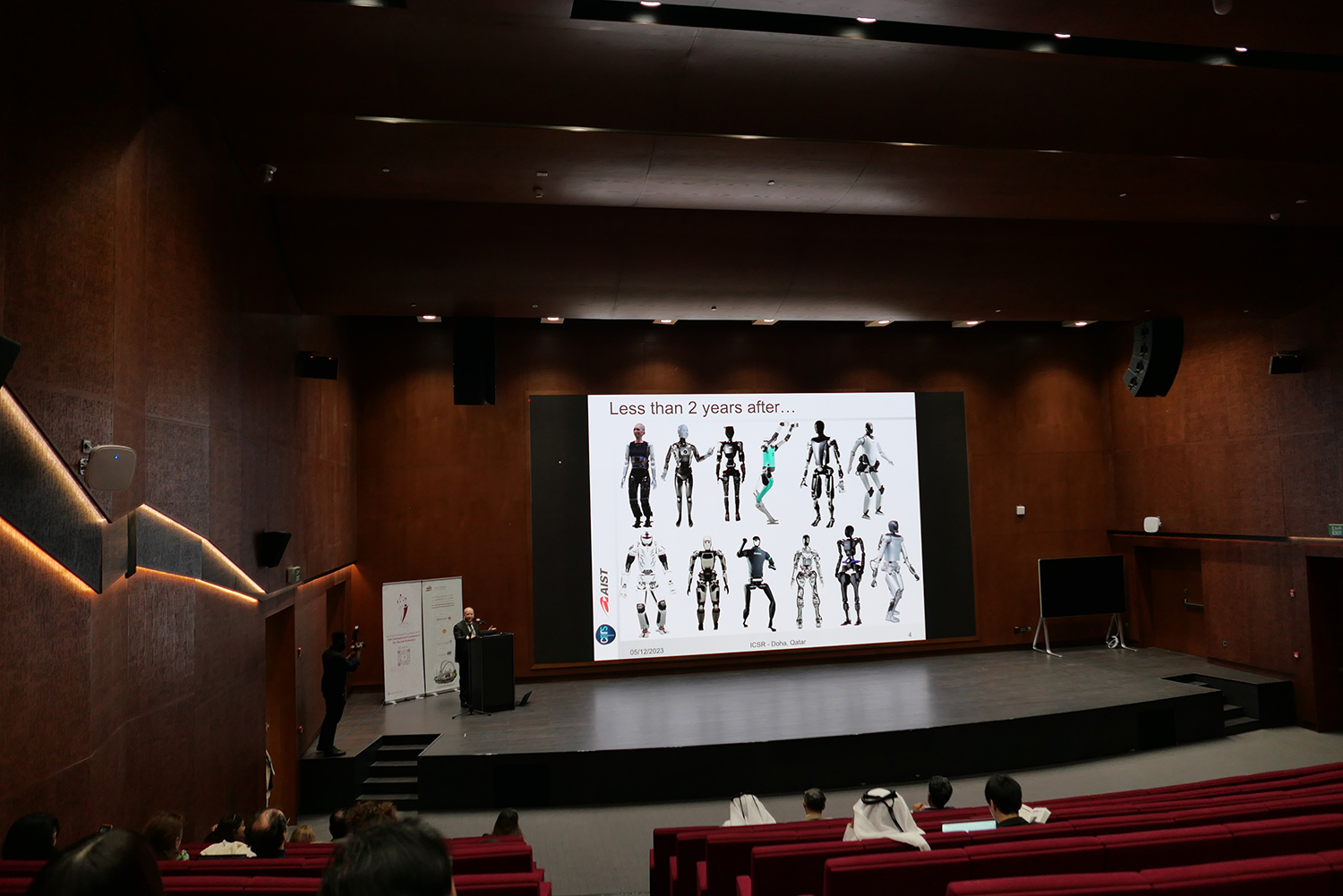
Am 5. Dezember 2023 hielt Prof. Dr. Abderrahmane Kheddar bei der ICSR 2023 in Qatar die Keynote mit dem Titel „Perspectives and Social Impacts of Humanoids as General Purpose Robots“. Der Informatiker und Robotiker ist Full Member of the National Academy of Technology of France und Knight of the National Order of Merits of France. Einige Experten gehen davon aus, dass sich humanoide Roboter zu universellen Maschinen entwickeln, oder zu Allzweckrobotern, wie sie auch genannt werden. Beim Developer Day der SBB in Murten bei Bern hatte Prof. Dr. Oliver Bendel dargestellt, welche Technologien und Entwicklungen hierzu führen und welche Anwendungsgebiete vorhanden sind. Er hatte betont: „Ein Vorteil der humanoiden Gestaltung ist, dass sich der Roboter durch Artefakte bewegen kann, über Straßen und in Gebäuden. Er kann dort auch alle Gegenstände benutzen und manipulieren, die wir für uns geschaffen haben, etwa mit Hilfe seiner Hände oder seines Körpers.“ Abderrahmane Kheddar ging in seinem Vortrag auf Anwendungsfälle wie die Produktion bei Airbus ein. Humanoide Roboter sollen dort Arbeiter unterstützen, nicht ersetzen, bei Tätigkeiten, die weder von Cobots noch von Drohnen erledigt werden können. Goldman Sachs sagt seinen Angaben nach voraus, dass der Markt für humanoide Roboter weltweit 150 Milliarden Dollar pro Jahr betragen könnte. Nach der Meinung von Oliver Bendel könnte aber vor allem das gegenwärtige Design – gesichtslose, unheimliche Roboter herrschen vor – zu einer allgemeinen Verunsicherung führen und letztlich das Wachstum bremsen. Die ICSR 2023 findet vom 3. bis 7. Dezember 2023 in Qatar statt. Das Programm der Konferenz kann hier heruntergeladen werden. Weitere Informationen über icsr23.qa.
Abb.: Abderrahmane Kheddar stellt aktuelle humanoide Roboter vor
Am 4. Dezember 2023 fanden im Rahmen der 15th International Conference on Social Robotics (ICSR 2023) sechs Workshops statt, „Robotic and Smart Solutions for Children with Autism and other learning disabilities“, „Human-Robot Interaction from Bits to Structure: Design Process, Materials, and Robotics“, „Secure Communication Technologies for Social Robotics“, „Global Robotics, Arts, and Sciences Synergies (GRASS)“, „ASIMOV: Adaptive Social Interaction based on user’s Mental mOdels and behaVior in HRI“ und „Robotic Surgery: Myths and Realities“. Daneben konnte man bei den „Games of Drones“ ebensolche durch ein Gehege navigieren. Die Vortragende des erstgenannten Workshops stellte zahlreiche Technologien und Methoden für die Beruhigung, Öffnung, Heranführung und Weiterentwicklung autistischer Kinder vor. Man arbeitet u.a. mit KI-Systemen und -Plattformen wie Chatbots und Magic School sowie mit sozialen Robotern aller Art, unter ihnen Paro, der vor allem bei Dementen, aber auch bei Autisten positive Effekte haben kann. Die ICSR 2023 findet vom 3. bis 7. Dezember 2023 in Qatar statt. Das Programm der Konferenz kann hier heruntergeladen werden. Weitere Informationen über icsr23.qa.
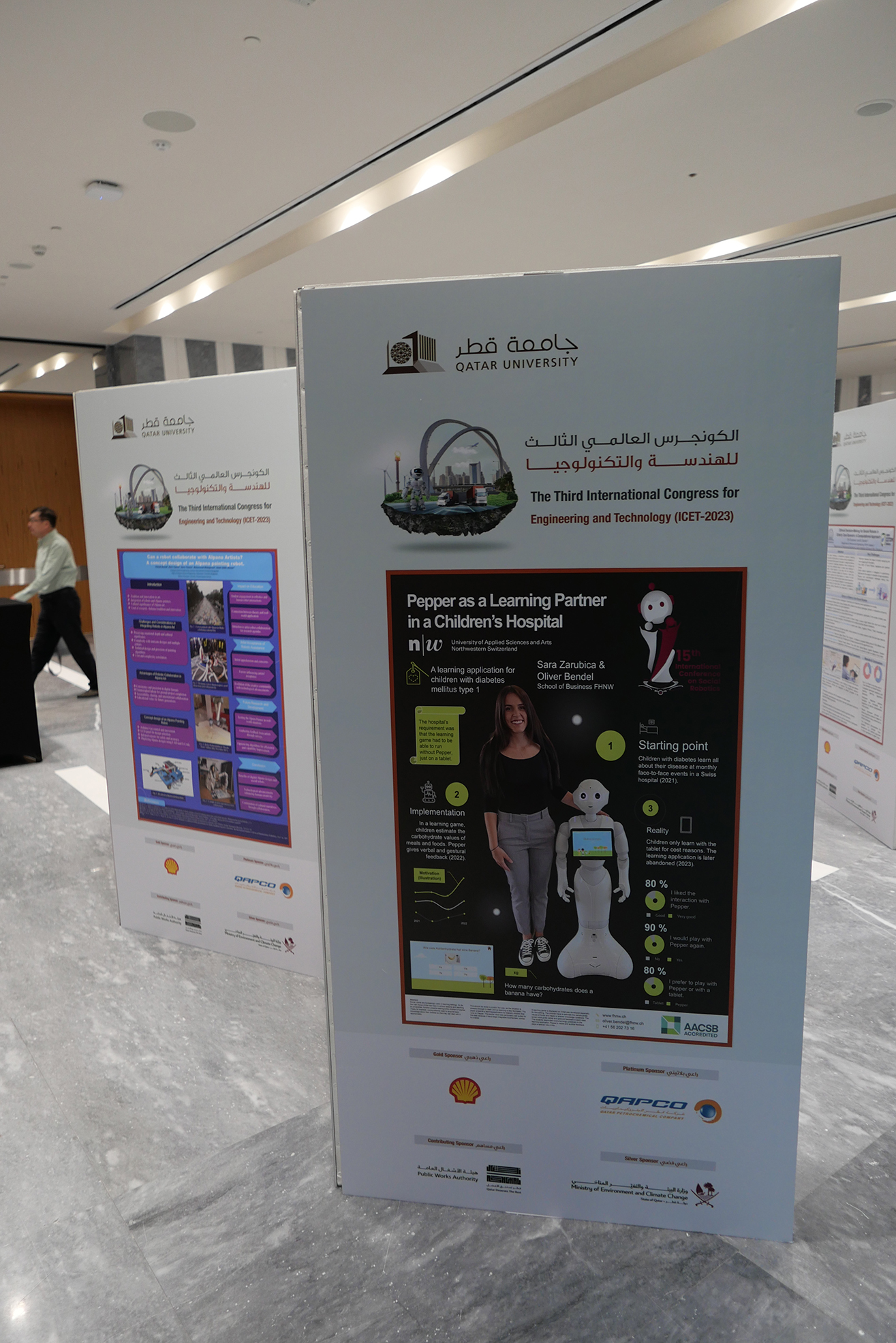
Am 3. Dezember 2023 fand an der Qatar University das Grand Opening der ICSR statt. Diese gehört neben der Robophilosophy zu den wichtigsten Konferenzen für Soziale Robotik weltweit. Die Prominenz aus Politik und Wissenschaft von Qatar besuchte nach dem Grand Opening nicht nur die Messe mit ihren zahlreichen Robotern, sondern auch die Posterpräsentation, die für diesen Zweck von zentraler Stelle vorbereitet worden war. Die Poster sind neben den Vorträgen das wesentliche Element der ICSR. Sie werden durchgehend hängen und am 5. und 6. Dezember von den Verantwortlichen erklärt. Im Bild ist das Poster von Sara Zarubica und Prof. Dr. Oliver Bendel zu sehen. Gegenstand ist das Projekt „Pepper as a Learning Partner in a Children’s Hospital“. Das gleichnamige Paper ist in dem Proceedingsband „Social Robotics, 15th International Conference, ICSR 2023, Doha, Qatar, December 3-7, 2023, Proceedings, Part II“ bei Springer erschienen. Das Programm der Konferenz kann hier heruntergeladen werden. Weitere Informationen über icsr23.qa.
Die 15th International Conference on Social Robotics (ICSR 2023) findet vom 3. bis 7. Dezember 2023 in Qatar statt. Sie wurde am 3. Dezember 2023 – zusammen mit zwei anderen Konferenzen – unter der Anwesenheit von Prominenz aus Politik und Wissenschaft feierlich eröffnet. Sie steht unter der Schirmherrschaft des Premierministers und Außenministers, Sheikh Mohammed bin Abdulrahman bin Jassim Al Thani. Nach dem Grand Opening an der Qatar University fand eine Messe mit sozialen Robotern wie Einstein, NAO, Navel, Furhat und Paro statt. Daneben bewegten sich Reinigungsroboter durch die Gegend, eine Drohne flog in einem Gehege herum, und ein Spielzeugroboter von Ubtech gab eine Tanzeinlage. Das Programm der Konferenz kann hier heruntergeladen werden. Weitere Informationen über icsr23.qa.
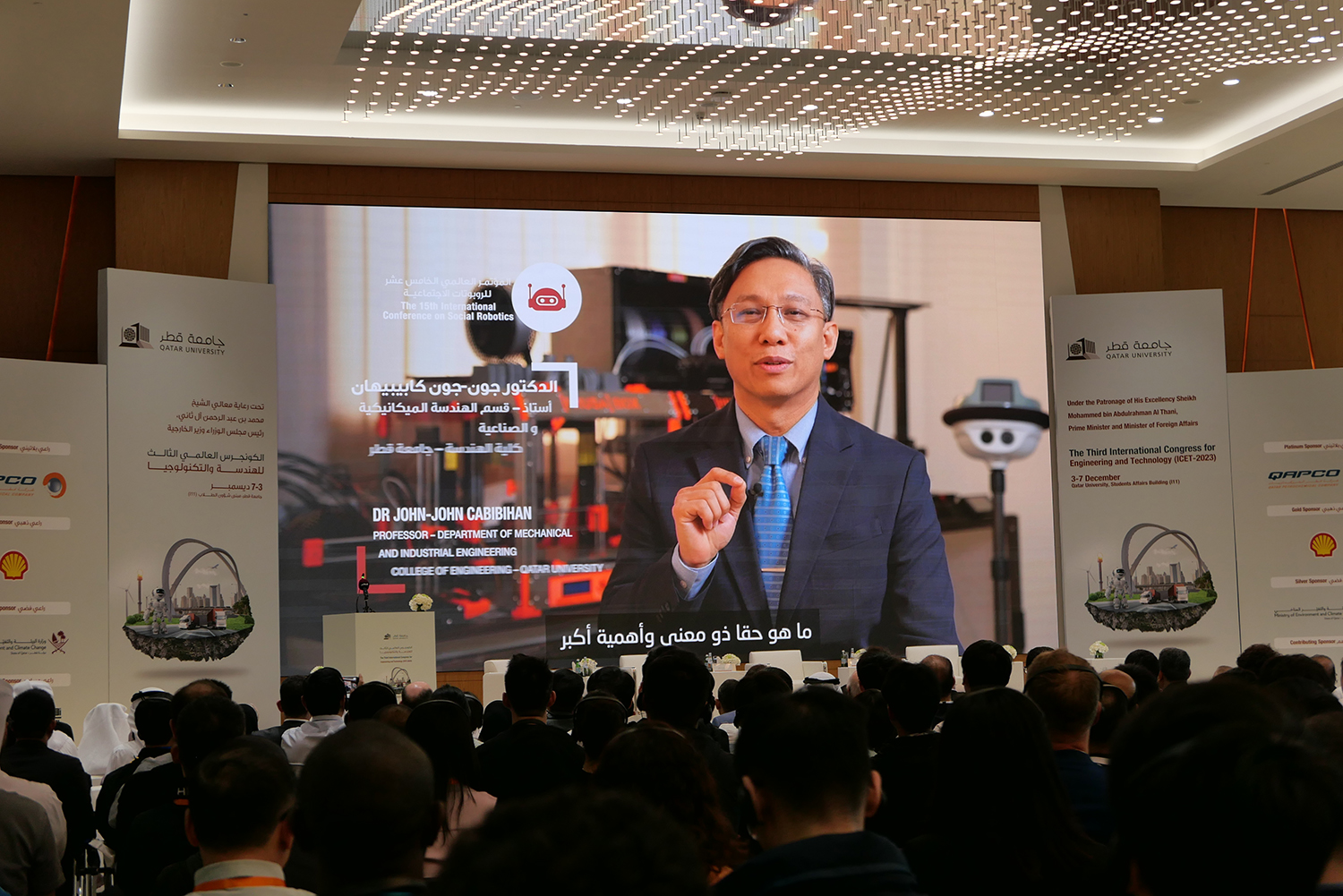
Am 3. Dezember 2023 wurde – zusammen mit zwei anderen Konferenzen – die 15th International Conference on Social Robotics (ICSR 2023) feierlich eröffnet. Sie findet bis zum 7. Dezember 2023 in Qatar statt und gehört neben der Robophilosophy zu den wichtigsten Konferenzen für Soziale Robotik weltweit. Sie steht dieses Mal unter der Schirmherrschaft des Premierministers und Außenministers von Qatar, Sheikh Mohammed bin Abdulrahman bin Jassim Al Thani. Nach mehreren Vorträgen wurde ein Promofilm gezeigt, in dem auch Prof. Dr. John-John Cabibihan zu sehen war. Er bildet zusammen mit Dr. Abdulaziz Al Ali den General Chair der Konferenz. Am Mittwoch wird er zusammen mit Prof. Dr. Bendel der Chair der Session „Social Robots as Advanced Educational Tools“ sein. Der Technikphilosoph aus Zürich hat selbst zwei Papers bei der Konferenz, eines mit Sara Zarubica (Erstautorin), zu dem es ein Poster gibt, eines mit Andrin Allemann (Zweitautor), das er in einem Vortrag vorstellt. Das Programm der Konferenz kann hier heruntergeladen werden. Weitere Informationen über icsr23.qa.
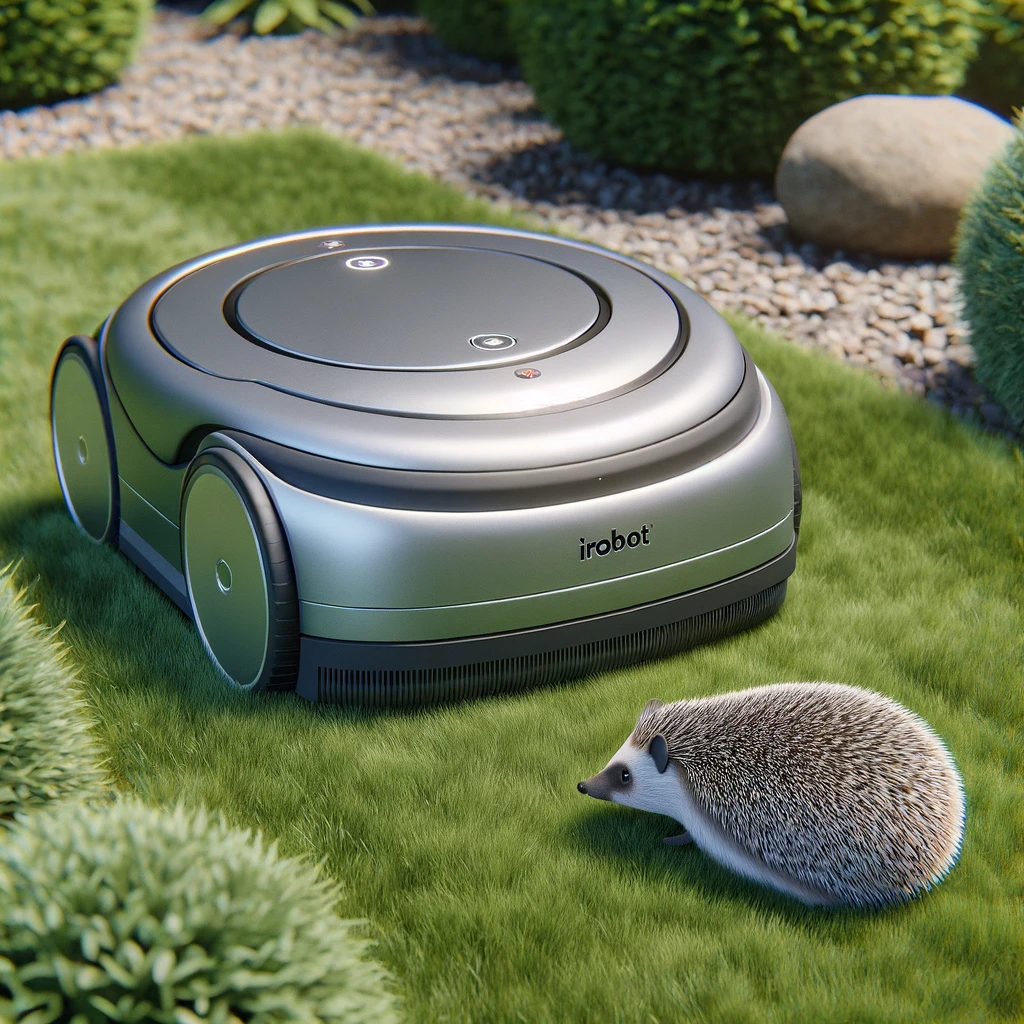
Sebastian Albert ging laut einer Meldung von idw-online beim Bundeswettbewerb Künstliche Intelligenz (BWKI) als Sieger in der Sonderkategorie „Hardware“ hervor. „Angetreten als ‚Igelretter‘, entwickelte der 20-Jährige aus March bei Freiburg einen Algorithmus, der mit Hilfe eines Aufsatzes am Mähroboter Igel erkennt und diesen ausweicht. Er schützt sie so vor dem qualvollen Tod. Ausgezeichnet wurde das Projekt mit einem Geldpreis in Höhe von 750 Euro.“ (iwd-online, 13. November 2023) Damit hat der Nachwuchsforscher ein Projekt wiederholt, das Prof. Dr. Oliver Bendel von August 2019 bis Januar 2020 mit einem Team von drei Studenten und einer Studentin im Kontext der Maschinenethik durchführte. Der Wirtschaftsinformatiker und Technikphilosoph aus Zürich verfasste nach Abschluss zusammen mit Emanuel Graf und Kevin Bollier das Paper „The HAPPY HEDGEHOG Project“ und präsentierte es zusammen mit Emanuel Graf bei den AAAI 2021 Spring Symposia. Der Prototyp eines Mähroboters benutzt eine Wärmebildkamera und Machine Learning. Im ersten Schritt untersucht er seine Umgebung auf warme Objekte in einem bestimmten Temperaturbereich. Wenn er etwas gefunden hat, was zu einem Lebewesen passt, leitet er nähere Untersuchungen ein. Zu diesem Zweck wurde er mit Igelbildern trainiert. Stellt er fest, dass es sich um ein solches Tier handelt, unterbricht er seine Arbeit. HAPPY HEDGEHOG inspiriert seit seiner Erfindung Firmen und Forscher. Mehrere Medien haben seit 2021 über den tierfreundlichen Mähroboter berichtet, etwa der Beobachter und das Magazin der Schweizer Tierschutzes. Die Stuttgarter Zeitung berichtete am 8. November 2023 über den BWKI und erwähnte dabei auch das Original aus der Schweiz.
Abb.: Ein Igel mit einem Mähroboter (Bild: DALL-E 3)
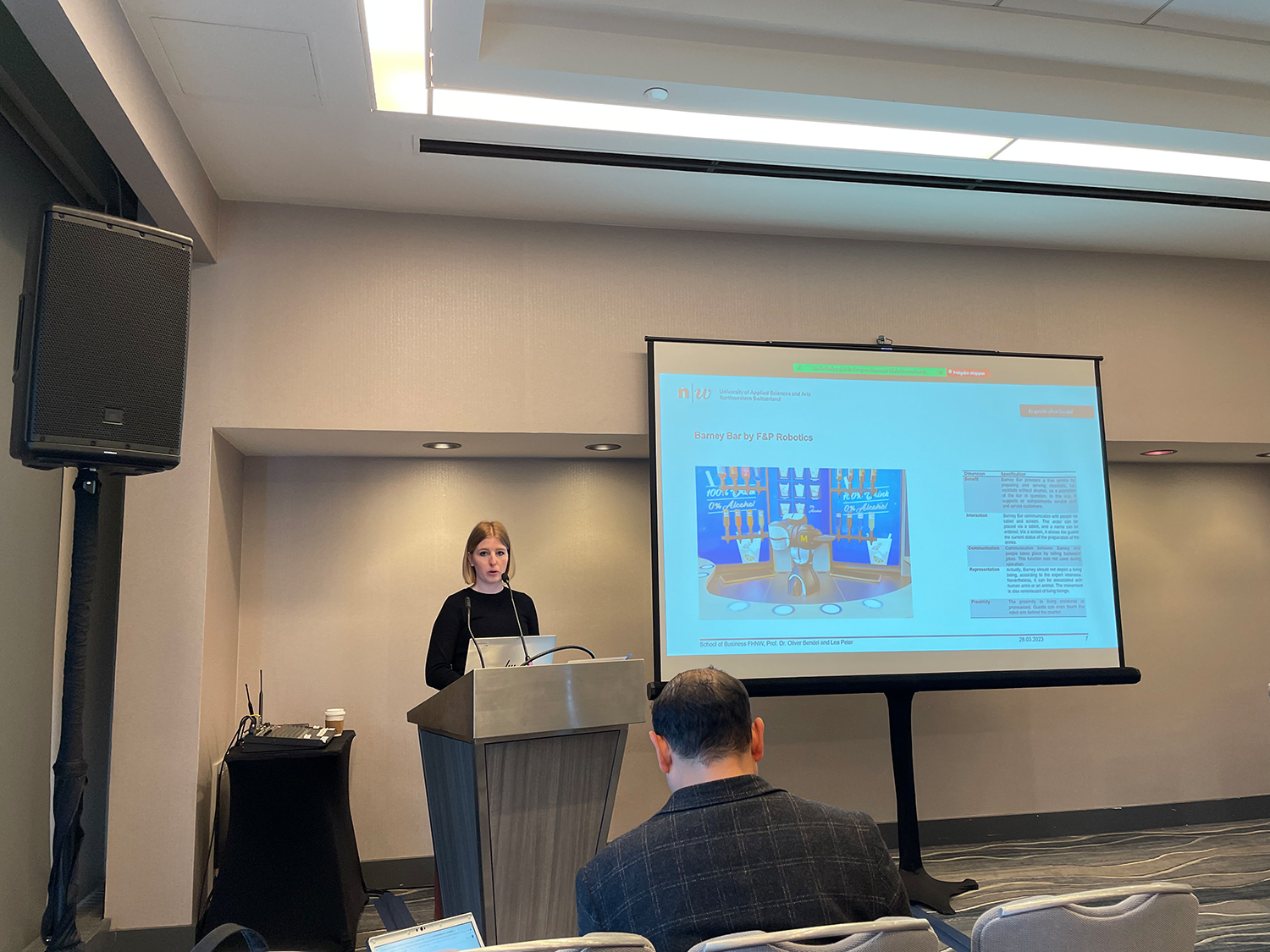
From March 27-29, 2023, the AAAI 2023 Spring Symposia featured the symposium „Socially Responsible AI for Well-being“ by Takashi Kido (Teikyo University, Japan) and Keiki Takadama (The University of Electro-Communications, Japan). This time the venue was exceptionally not Stanford University, but the Hyatt Regency SFO Airport. On March 28, Prof. Dr. Oliver Bendel and Lea Peier presented their paper „How Can Bar Robots Enhance the Well-being of Guests?“. It has now been published and can be downloaded via ceur-ws.org/Vol-3527/. From the abstract: „This paper addresses the question of how bar robots can contribute to the well-being of guests. It first develops the basics of service robots and social robots. It gives a brief overview of which gastronomy robots are on the market. It then presents examples of bar robots and describes two models used in Switzerland. A research project at the School of Business FHNW collected empirical data on them, which is used for this article. The authors then discuss how the robots could be improved to increase the well-being of customers and guests and better address their individual wishes and requirements. Artificial intelligence can play an important role in this. Finally, ethical and social problems in the use of bar robots are discussed and possible solutions are suggested to counter these.“ More information on the conference via aaai.org/conference/spring-symposia/sss23/.
Fig.: Lea Peier during her part of the presentation
The upcoming international Robophilosophy Conference 2024 in Aarhus is set to tackle the socio-cultural and ethical questions arising from the use of generative multimodal AIs in social robotics. The event will bring together global scholars from humanities, social sciences, social robotics, and computer science, aiming to produce actionable insights and responsibly address the socio-cultural transformations brought about by social robotics. It is part of the Robophilosophy Conference Series, known for its large scale events for humanities research in social robotics. RP2024 highlights the urgency of closer collaboration between tech experts and societal experts to establish research-based regulations. The conference will welcome 80-100 talks in plenaries, special workshops, and parallel sessions of reviewed research papers. Virtual attendance is made possible for those unable to attend in person. Interested parties are invited to submit their papers on the conference topics. Key dates to note: Deadline for workshop/panel proposal submissions is January 31, 2024. Deadline for short papers and posters is February 15, 2024. More information at cas.au.dk/en/robophilosophy/conferences/rpc2024.
Das Paper „Alpha Mini as a Learning Partner in the Classroom“ von Prof. Dr. Oliver Bendel und Andrin Allemann wurde bei der ICSR 2023 angenommen. Der Technikphilosoph und Wirtschaftsinformatiker forscht seit einem Vierteljahrhundert über Conversational Agents, seit vielen Jahren auch speziell zu Embodied Conversational Agents und sozialen Robotern. Andrin Allemann entwickelte im Rahmen seiner von Oliver Bendel betreuten Abschlussarbeit an der Hochschule für Wirtschaft FHNW eine Lernanwendung für Kinder. Ziel war es, eine solche mit einem kostengünstigen sozialen Roboter zu erstellen, der über die gleichen motorischen Fähigkeiten wie NAO und die gleichen Fähigkeiten zur Wissensvermittlung wie Pepper (der mit einem Display ausgerüstet ist) verfügt. Die Wahl fiel auf den kleinen Alpha Mini von Ubtech. Es war mit einigem technischen Aufwand möglich, ihn mit einem externen Gerät, einem Microsoft Surface, zu koppeln. Auf diesem läuft ein Lernspiel, das für den Unterricht in der Primarschule geeignet ist. Die ICSR 2023 findet im Dezember 2023 in Qatar statt und gehört neben der Robophilosophy zu den wichtigsten Konferenzen für Soziale Robotik weltweit.
Abb.: Oliver Bendel mit Alpha Mini (Foto: Pascal Mora)
Das Paper „Pepper as a Learning Partner in a Children’s Hospital“ von Sara Zarubica und Prof. Dr. Oliver Bendel wurde bei der ICSR 2023 angenommen. Der Technikphilosoph und Wirtschaftsinformatiker forscht seit einem Vierteljahrhundert über Conversational Agents, seit vielen Jahren auch speziell zu Embodied Conversational Agents und sozialen Robotern. In seinen Projekten werden häufig Prototypen entwickelt, entweder im Kontext der Maschinenethik oder mit Bezug zu Schlagwörtern wie „AI for Good“ oder „AI für Well-being“ (die er allerdings selbst kritisch sieht). Sara Zarubica entwickelte im Rahmen ihrer von Oliver Bendel betreuten Abschlussarbeit an der Hochschule für Wirtschaft FHNW eine auf einem sozialen Roboter laufende Lernanwendung für diabeteskranke Kinder. Das Ziel war es laut Abstract, aus Pepper einen interaktiven Lernpartner zu machen, mit dem die Kinder „das Schätzen von Kohlenhydratmengen in Mahlzeiten üben und so eine Grundlage für den täglichen Umgang mit Diabetes mellitus Typ 1 schaffen können“ (Abstract). Die Kinder absolvieren das Lernspiel auf dem Display des sozialen Roboters und erhalten von ihm gestisches und verbales Feedback. 2022 war Oliver Bendel zusammen mit Marc Heimann auf der ICSR 2022 in Florenz, wo sie das Moralmodul vorgestellt haben. Die ICSR 2023 findet im Dezember 2023 in Qatar statt und gehört neben der Robophilosophy zu den wichtigsten Konferenzen für Soziale Robotik weltweit.
Beim „Digital Ethics Summit“ am 14. September 2023 in Düsseldorf – keine Fachtagung, sondern eine populärwissenschaftliche und mediengetriebene Veranstaltung – trat u.a. der Germanist und Philosoph Richard David Precht auf. Er wird seitdem mit dem Satz „Wir verzeihen Maschinen nicht, was wir Menschen verzeihen müssen.“ zitiert. Dieser Gedanke tritt allerdings im Zusammenhang mit dem autonomen Fahren und in anderen Zusammenhängen seit über zehn Jahren in unterschiedlichen Varianten auf. Die Süddeutsche Zeitung zitiert den Rechtswissenschaftler Eric Hilgendorf im Mai 2012 mit den Worten „Menschen verzeiht man Fehler, Robotern nicht“. In einem Interview mit dem Informations- und Maschinenethiker Oliver Bendel aus dem Jahre 2016, ausgehend von humanoiden Robotern mit hoheitlichen Aufgaben, heißt es: „Eine Möglichkeit ist, dass die Maschinen eines Tages so verlässlich und intelligent werden, dass wir ihnen vertrauen. Eine andere Möglichkeit ist, dass sie wie wir Fehler machen, wir ihnen diese Fehler aber nicht verzeihen, nicht verzeihen können, weil es eben Maschinen sind.“ Im Artikel „Cloud am Steuer“ von 2014 wird er mit Blick auf autonome Autos mit den Worten zitiert: „Vielleicht würden die Menschen den Maschinen dann irgendwann auch mehr erlauben – und mehr verzeihen.“ In Artikeln und Interviews wies Oliver Bendel immer wieder darauf hin, dass man Menschen eher verzeiht als Maschinen und dass dies Folgen hat für die Akzeptanz des autonomen Fahrens, bei dem zwangsläufig Unfälle passieren. Eigentlich stammt die Diskussion aber aus den 1970er- und 1980er-Jahren. In seinem zweiten Studium in den 1990ern hat Oliver Bendel in einer Arbeit zur Informationsethik u.a. William Bechtel zitiert: „If we accept this result that some computers could be held responsible for their decisions if they were adaptable systems that learned to behave in particular ways in their environment, there will be conditions under which we will forgive them and not hold them responsible. These would be much the same as the circumstances under which we would cease to hold humans responsible.“ Schon damals hat sich Oliver Bendel dagegen verwahrt, dass Computer, KI-Systeme und Roboter Verantwortung übernehmen können.