The ICSR is one of the leading conferences for social robotics worldwide. The 17th edition will take place from 10 to 12 September 2025 in Naples, Italy. The deadline for the full paper submission was extended. Papers should consist of 11 pages of body text plus references as appropriate. The most important conferences dates are: Full Paper Submission: April 18th, 2025; Full Paper Notification: June 6th, 2025; Camera-ready: June 30th, 2025; Paper Presentation Days at ICSR’25: September 11th and 12th, 2025. All dates are also listed on the website. „The conference theme, ‚Emotivation at the Core: Empowering Social Robots to Inspire and Connect,‘ highlights the essential role of ‚Emotivation‘ in social robotics. Emotivation captures the synergy between emotion and motivation, where emotions trigger and sustain motivation during interactions. In social robotics, this concept is key to building trust, fostering empathy, and supporting decision-making by enabling robots to respond sensitively to human emotions, inspiring engagement and action.“ (Website ICSR) Participants will meet for two days at the Parthenope University of Naples and for the third day at the Città della Scienza conference center. All buildings and rooms are also listed on the website.
The paper „‚Ick bin een Berlina‘: dialect proficiency impacts a robot’s trustworthiness and competence evaluation“ by Katharina Kühne, Erika Herbold, Oliver Bendel, Yuefang Zhou, and Martin H. Fischer was selected as one of the 11 best papers out of 261 published in Frontiers in Robotics and AI in 2024. The paper says about the background: „Robots are increasingly used as interaction partners with humans. Social robots are designed to follow expected behavioral norms when engaging with humans and are available with different voices and even accents. Some studies suggest that people prefer robots to speak in the user’s dialect, while others indicate a preference for different dialects.“ The winning papers were published in March 2025 in a book entitled „Frontiers in Robotics and AI editor’s picks 2024“ (editor Kostas J. Kyriakopoulos). He states in his message: „As the Field Chief Editor, I would like to stand alongside our journal staff to honor all authors who contributed very high-level papers to the journal last year and are contributing to our success.“ The book is available for free download at www.frontiersin.org/books/Frontiers_in_Robotics_and_AI_editors_picks_2024/13336.
Join us as a sponsor for the 17th International Conference on Social Robotics & AI, taking place on 10-12 September 2025 at Naples, Italy. This prestigious event brings together researchers, leading experts, innovators, and thought leaders in the fields of robotics, AI, and human-robot interaction. Don’t miss the opportunity to align your brand with cutting-edge advancements. We offer different sponsorship/exhibition packages, all information is available at the page: icsr2025.eu/sponsor2/. If you are interested or have any questions, don’t hesitate to contact us at info@icsr2025.eu with the subject line tag [Sponsorship]. The ICSR is one of the leading conferences for social robotics worldwide. Participants will meet for two days at the Parthenope University of Naples and for the third day at the Città della Scienza conference center. More information on icsr2025.eu.
The ICSR is one of the leading conferences for social robotics worldwide. The 17th edition will take place from 10 to 12 September 2025 in Naples, Italy. The deadline for the full paper submission is approaching. Papers should consist of 11 pages of body text plus references as appropriate. The most important conferences dates are: Full Paper Submission: March 28th, 2025; Full Paper Notification: May 9th, 2025; Camera-ready: June 30th, 2025; Paper Presentation Days at ICSR’25: September 11th and 12th, 2025. All dates are also listed on the website. „The conference theme, ‚Emotivation at the Core: Empowering Social Robots to Inspire and Connect,‘ highlights the essential role of ‘Emotivation’ in social robotics. Emotivation captures the synergy between emotion and motivation, where emotions trigger and sustain motivation during interactions. In social robotics, this concept is key to building trust, fostering empathy, and supporting decision-making by enabling robots to respond sensitively to human emotions, inspiring engagement and action.“ (Website ICSR) Participants will meet for two days at the Parthenope University of Naples and for the third day at the Città della Scienza conference center. All buildings and rooms are also listed on the website.
ICSR’25 allows for special sessions on topics of particular interest to attendees. The goal is to complement the regular program with new and emerging topics of interest in social robotics. Proposals will be evaluated on a rolling basis until the deadline below, and organizers will be notified of the outcome. Once accepted, the invited session will be published on the ICRS website along with an invited session code to be used at the time of paper submission. Special session papers will go through the same review process as regular papers and will be published in the same way. Papers should be submitted as PDF documents of no more than 3-4 pages. More information is available at icsr2025.eu/ss-ws-proposal/.
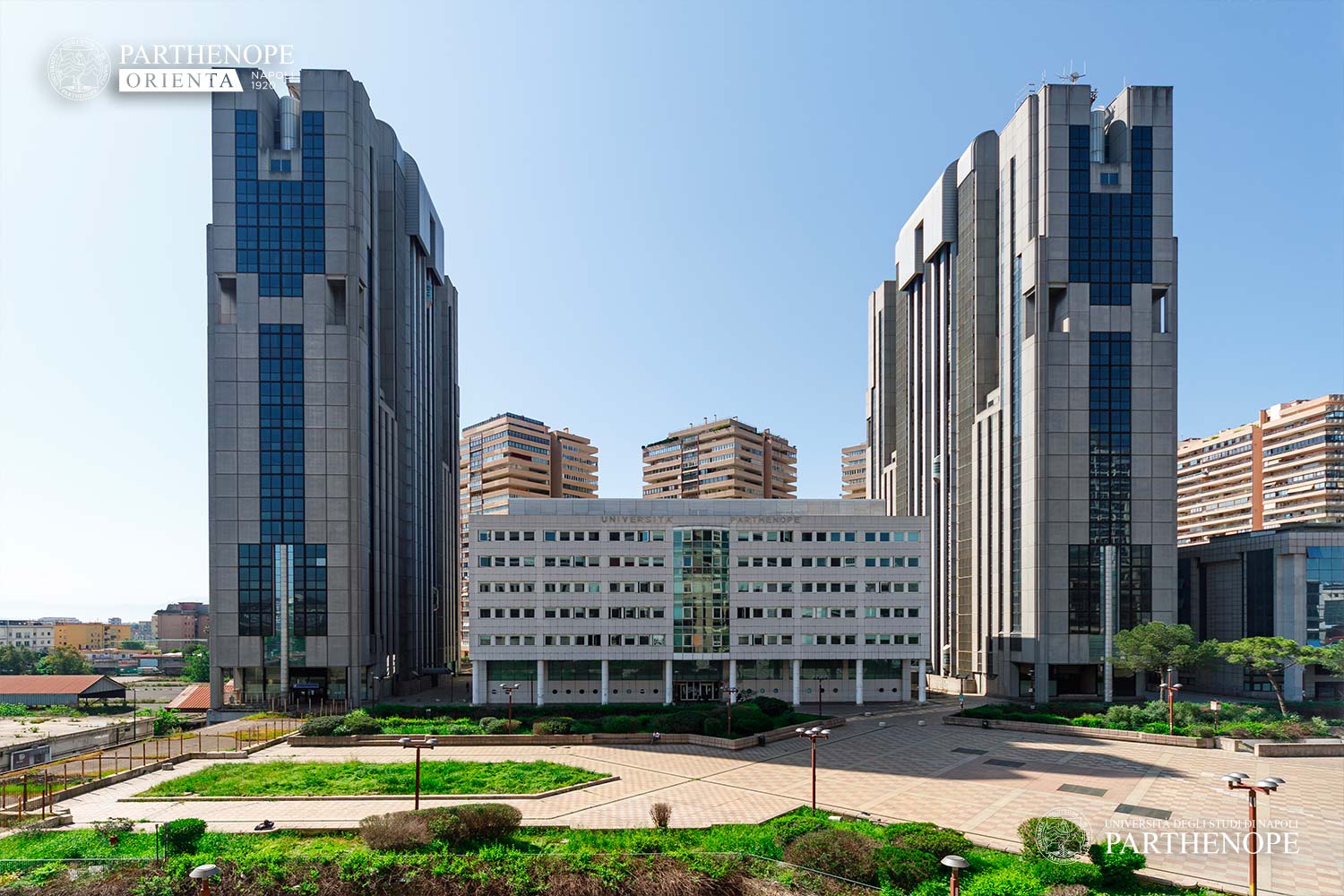
Fig.: The Parthenope University of Naples (Photo: Parthenope)
The first two days of ICSR 2025 will be held „on the industrial side of Naples“. This has been announced by the General Chairs, Mariacarla Staffa (University of Naples Parthenope, Italy) and John-John Cabibihan (Qatar University, Qatar). The Honorary Chair is Bruno Siciliano (University of Naples Federico II, Italy). „The University of Naples Parthenope will host the social robotics conference and showcase the technological advancements of this innovative city. Since 1919, the University of Naples Parthenope has been dedicated to fostering young talent, offering internationally oriented education and cutting-edge research. With 15,000 students, 320 faculty, and 250 staff, it combines a strong maritime tradition with excellence in economics, law, engineering, technology, and sports sciences. Innovation and real-world impact are at the core of its mission.“ (Announcement General Chairs) On the third day, the participants will meet at the Città della Scienza conference center. The conference website of ICSR 2025 is online since January: icsr2025.eu.
Fig.: The Parthenope University of Naples (Photo: Parthenope)
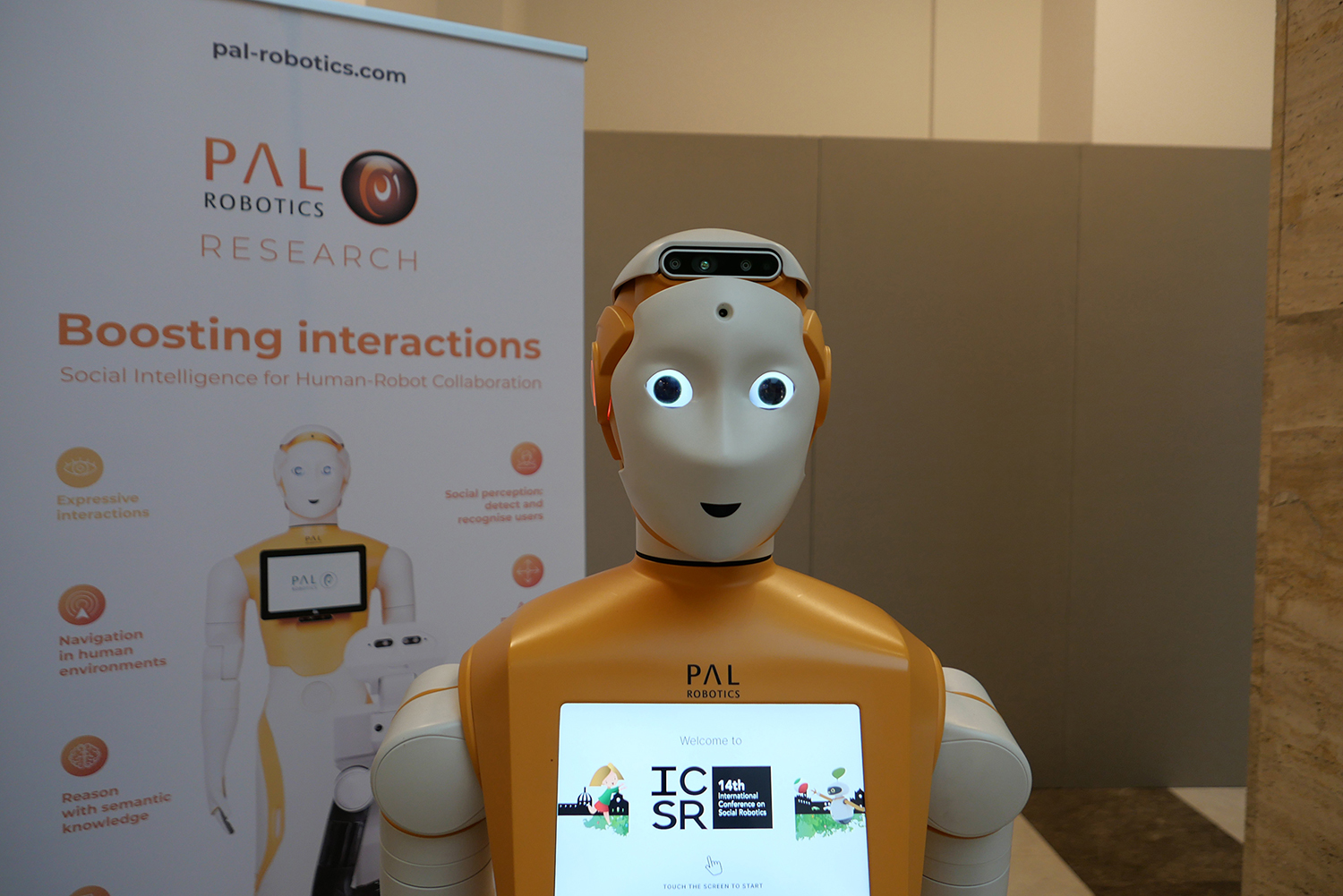
ICSR is one of the leading conferences for social robotics worldwide. The 17th edition will take place from 10 to 12 September 2025 in Naples, Italy. Participants will meet for two days at the Parthenope University of Naples and for the third day at the Città della Scienza conference center. In 2022, the conference took place in Florence, Italy. Scientists from all over the world met at the Camera di Commercio di Firenze. Dozens of robots were exhibited in the spacious inner courtyard, including the then new ARI from PAL Robotics. Lectures and workshops were held in the rooms on the sides. The conference website of ICSR 2025 is online since January: icsr2025.eu.
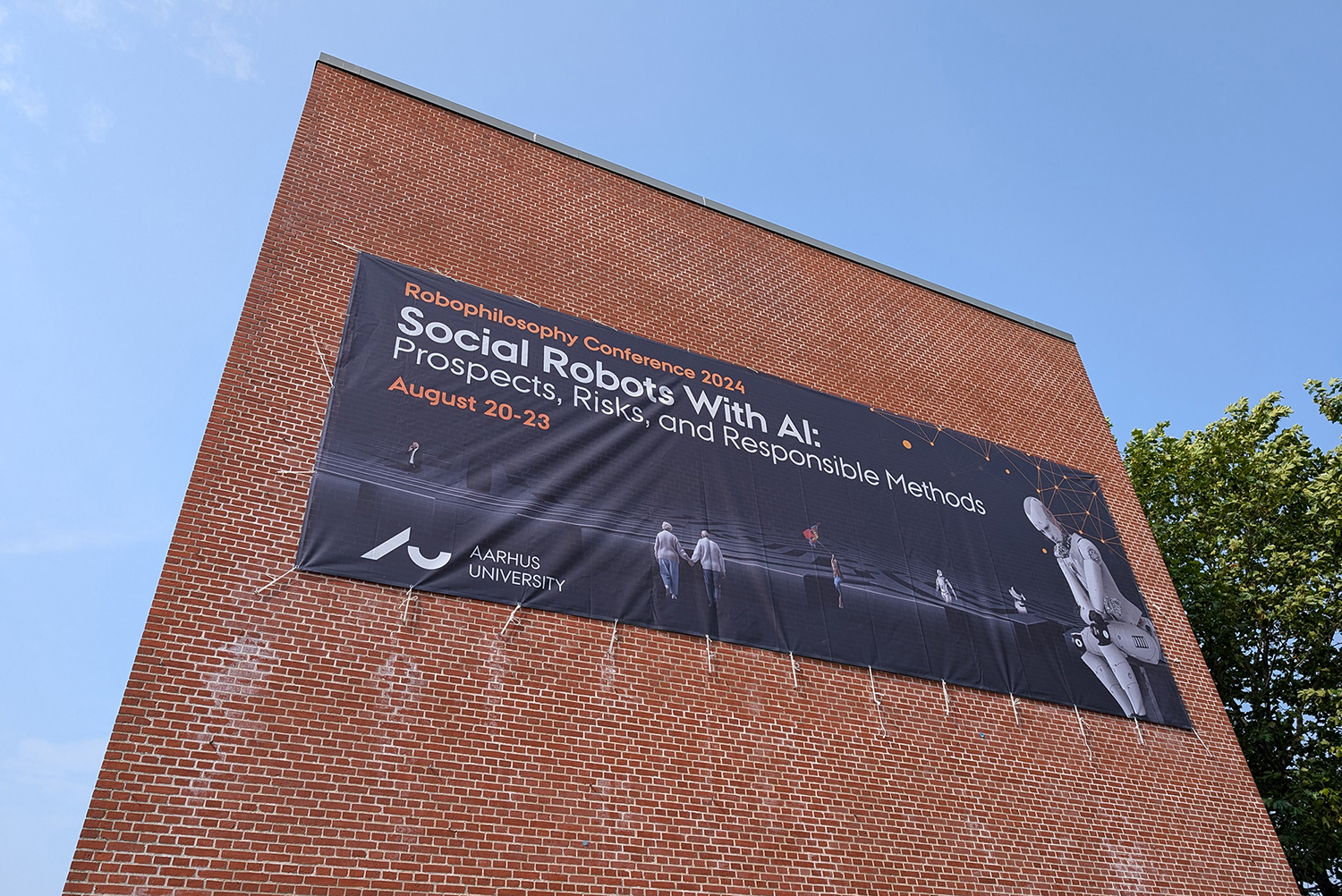
The paper „The Universal Robot of the 21st Century“ by Oliver Bendel was published in February 2025 in the proceedings volume „Social Robots with AI: Prospects, Risks, and Responsible Methods“ … From the abstract: „Developments in several areas of computer science, robotics, and social robotics make it seem likely that a universal robot will be available in the foreseeable future. Large language models for communication, perception, and control play a central role in this. This article briefly outlines the developments in the various areas and uses them to create the overall image of the universal robot. It then discusses the associated challenges from an ethical and social science perspective. It can be said that the universal robot will bring with it new possibilities and will perhaps be one of the most powerful human tools in physical space. At the same time, numerous problems are foreseeable, individual, social, and ecological.“ The proceedings volume comprises the papers presented at Robophilosophy 2024 in Aarhus. Leading philosophers, computer scientists and roboticists met there in August. Like the ICSR, the conference is one of the world’s leading conferences on social robotics.
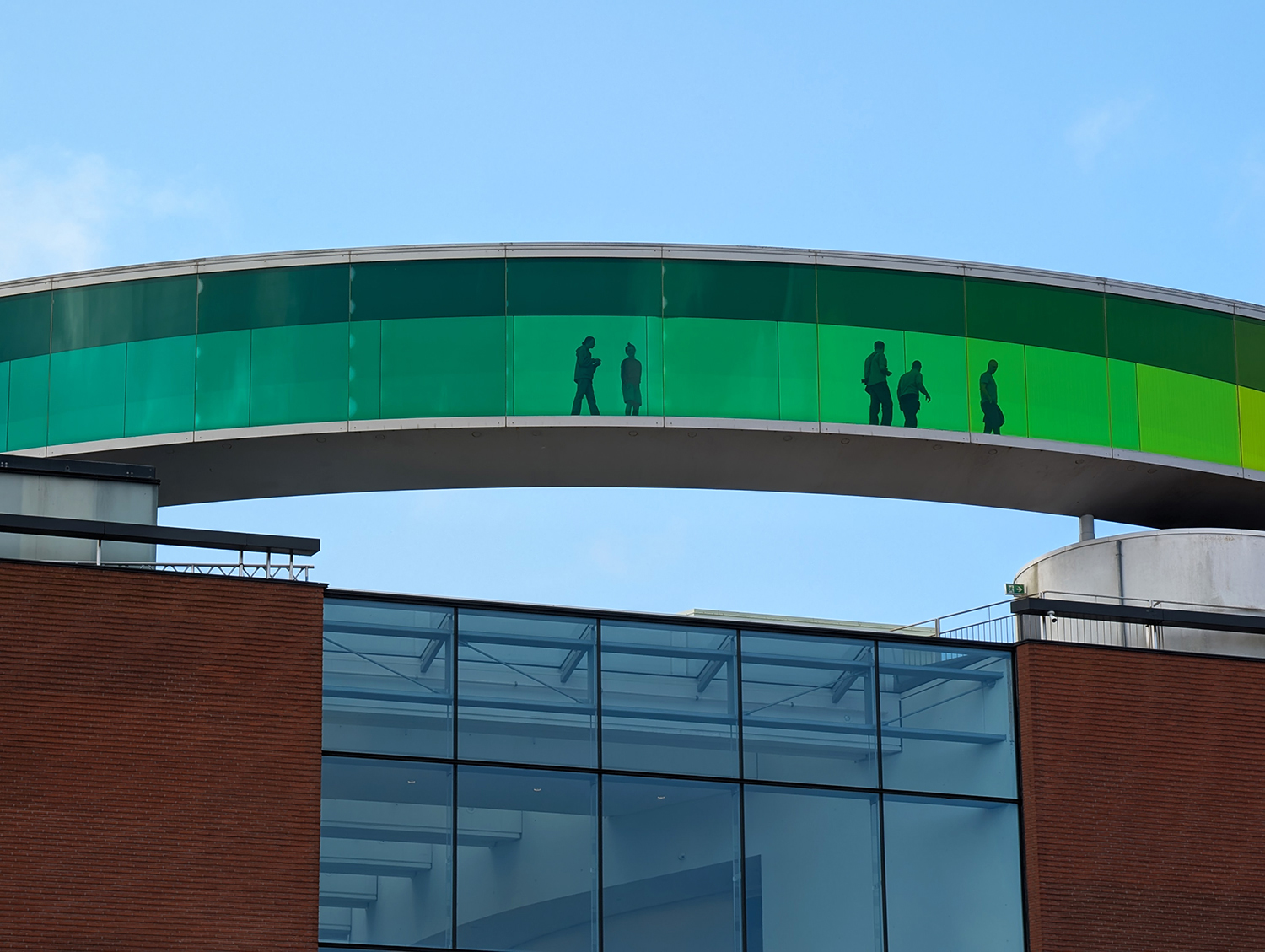
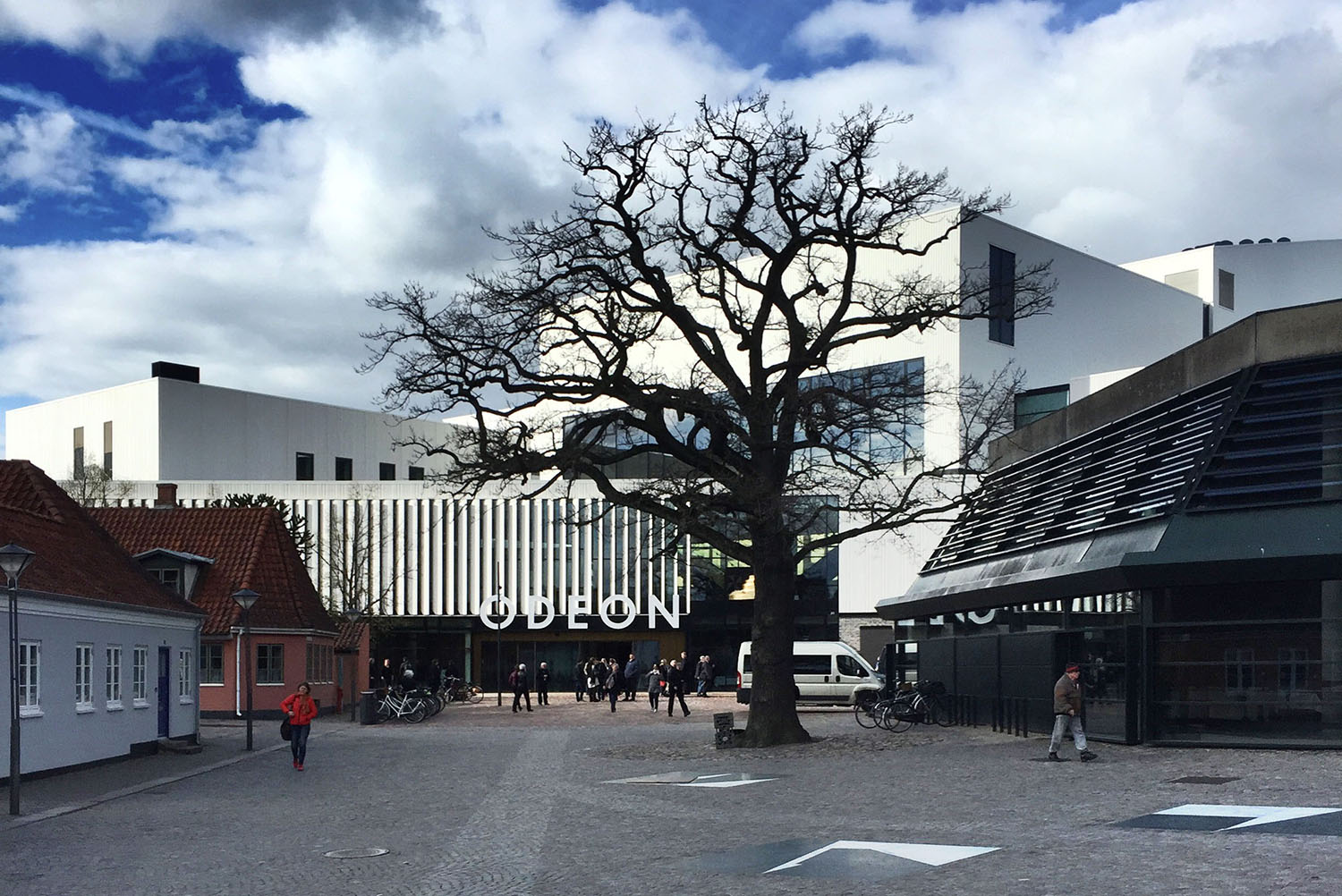
Fig.: The conference gala dinner took place in this building
ICSR is one of the leading conferences for social robotics worldwide. The 17th edition will take place from 10 to 12 September 2025 in Naples, Italy. Participants will meet for two days at the Parthenope University of Naples and for the third day at the Città della Scienza conference center. In 2023, the conference took place in Doha, Qatar. A video on YouTube by Hooman Samani provides insights into the presentations and events: www.youtube.com/watch?v=MtgM8pTPw8c … It not only shows that numerous top-class presentations take place, but also that the members of the community are highly motivated and have a lot of fun. The high level of internationality and diversity of the conference should also be emphasized. The conference website of ICSR 2025 is online since January: icsr2025.eu.
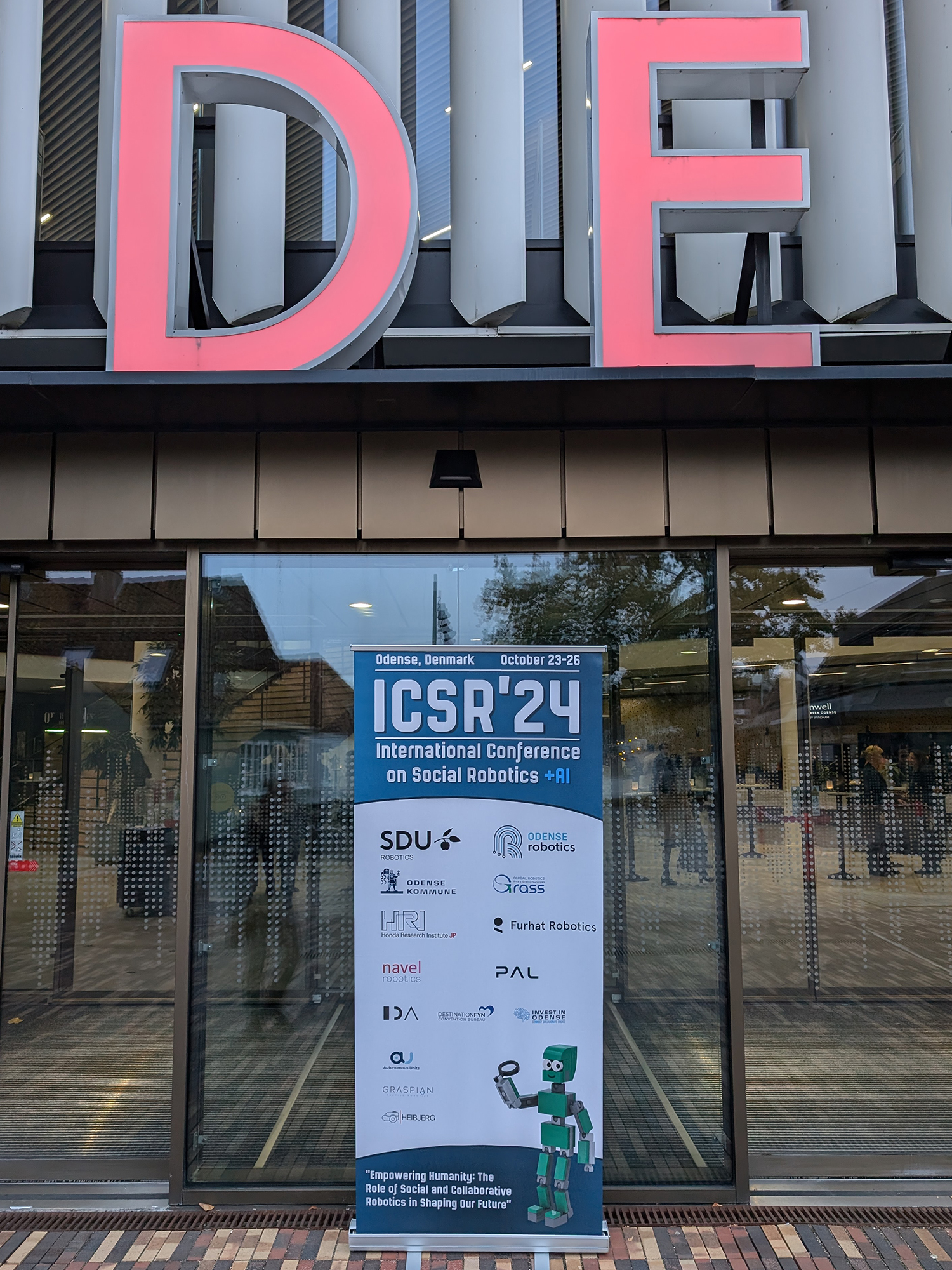
ICSR is one of the leading conferences for social robotics worldwide. The 17th edition will take place from 10 to 12 September 2025 in Naples, Italy. Participants will meet for two days at the Parthenope University of Naples and for the third day at the Città della Scienza conference center. In 2024, the conference took place in Odense, Denmark. A video on YouTube by Hooman Samani provides insights into the presentations and events: www.youtube.com/watch?v=Xj6p2yguYBk … It not only shows that numerous top-class presentations take place, but also that the members of the community are highly motivated and have a lot of fun. The high level of internationality and diversity of the conference should also be emphasized. The conference website of ICSR 2025 is online since January: icsr2025.eu.
The 17th International Conference on Social Robotics will again bring together researchers and practitioners working on human-robot interaction and the integration of social robots into society. ICSR 2025 will be held in Naples, Italy in September. Mariacarla Staffa from the Università degli Studi di Napoli ‚Parthenope‘ made this announcement at the ICSR 2024 in Odense. The institution is one of the state universities in the metropolitan region. Parthenope has been the city goddess of Naples since ancient times and is a poetic term for the city. With the help of a promotional video, the researcher drew attention to the numerous sights in the city and the surrounding area. World-famous are archaeological sites such as Pompeii and sights such as the Amalfi Coast. The active volcano Vesuvius is located in the Gulf of Naples, nine kilometres from the city. Italy is one of the most important countries in the world for social robotics. The ICSR had already taken place there in 2022, in Florence to be precise. Naples will certainly also be an outstanding host.
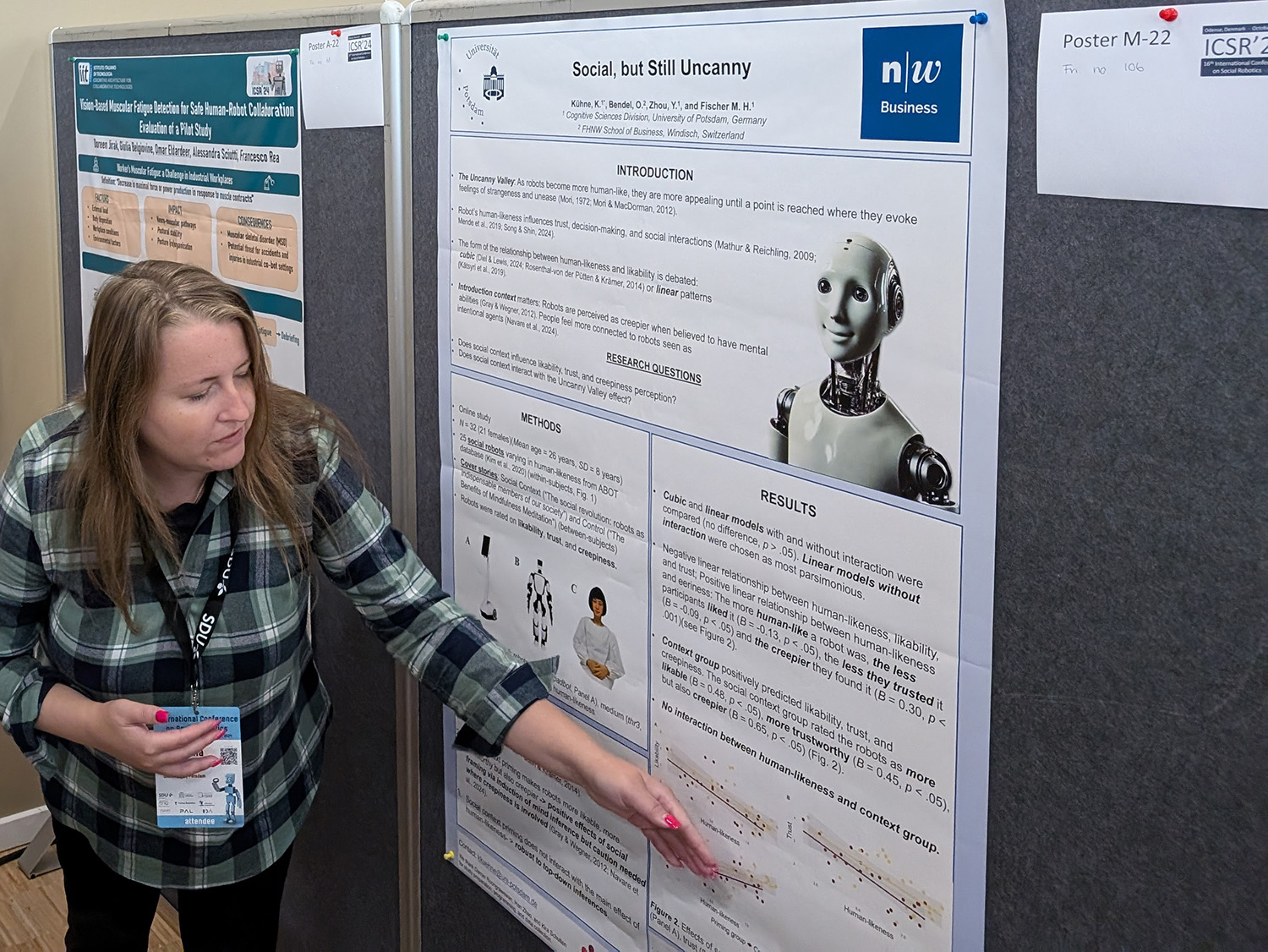
The Uncanny Valley effect is a famous hypothesis. Whether it can be influenced by context is still unclear. In an online experiment, Katharina Kühne and her co-authors Oliver Bendel, Yuefang Zue, and Martin Fischer found a negative linear relationship between a robot’s human likeness and its likeability and trustworthiness, and a positive linear relationship between a robot’s human likeness and its uncaniness. „Social context priming improved overall likability and trust of robots but did not modulate the Uncanny Valley effect.“ (Abstract) Katharina Kühne outlined these conclusions in her presentation „Social, but Still Uncanny“ – the title of the paper – on 25 October 2024 at the International Conference on Social Robotics 2024 in Odense, Denmark. Like Yuefang Zue and Martin Fischer, she is a researcher at the University of Potsdam. Oliver Bendel teaches and researches at the FHNW School of Business. Together with Tamara Siegmann, he presented a second paper at the ICSR.
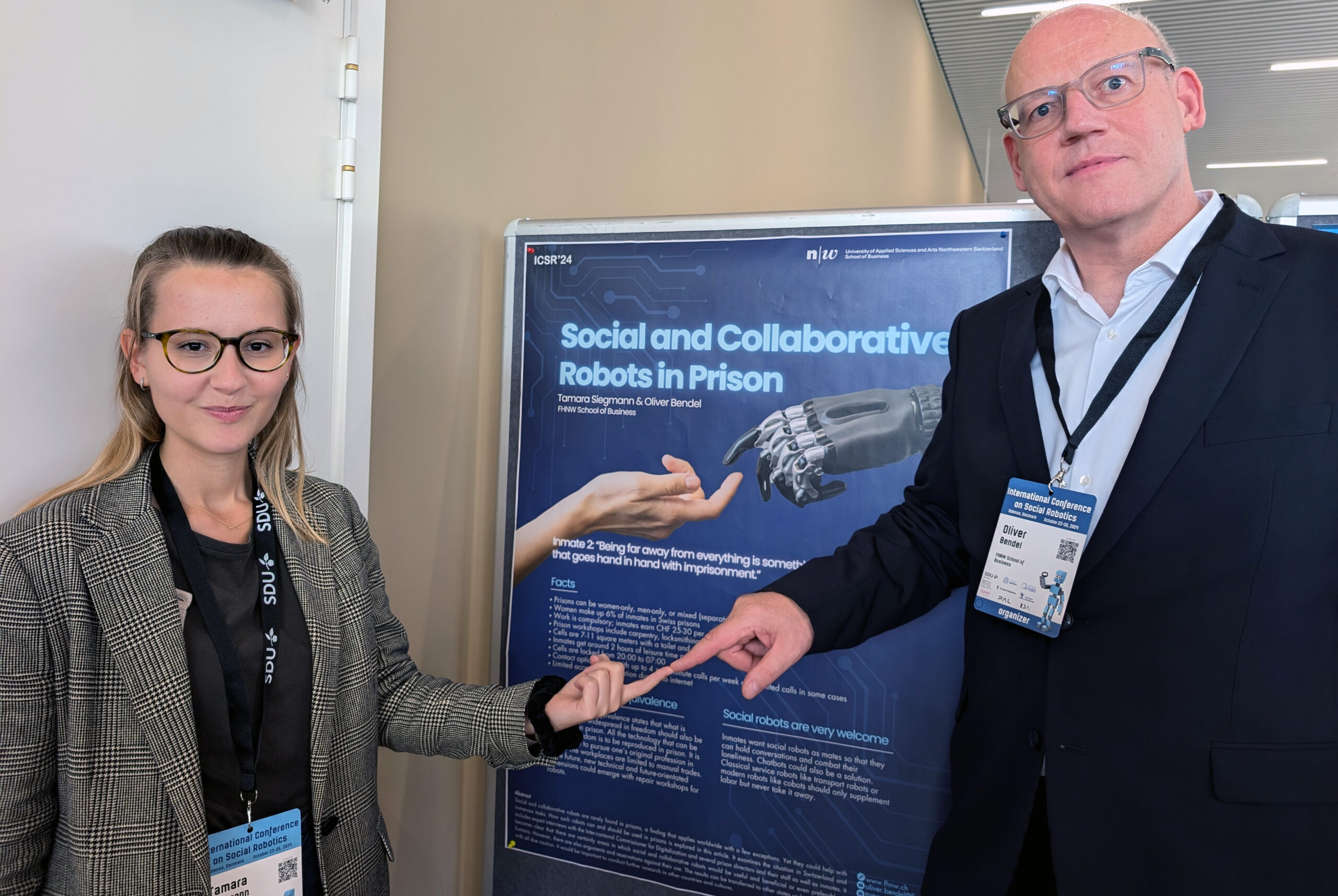
On October 24, 2024, Tamara Siegmann and Prof. Dr. Oliver Bendel (School of Business FHNW) presented their project „Robots in Prison“ at the ICSR in Odense (Denmark). They investigated whether collaborative and social robots can and should be used in prisons. One result was that modern industrial robots such as cobots and classic service robots such as transportation and cleaning robots hardly create any added value. Instead, they take work away from inmates. In contrast, social robots are conceivable and useful. They bring something to imprisonment that is common in freedom. And – an important point for resocialization – they can combat the loneliness of inmates. The International Conference on Social Robotics is the most important conference for social robotics alongside Robophilosophy. The paper „Social and Collaborative Robots in Prison“ will be published in a proceedings volume by Springer at the end of the year.
Fig.: Tamara Siegmann and Oliver Bendel at the ICSR 2024 (Photo: Katharina Kühne)
Tamara Siegmann and Prof. Dr. Oliver Bendel carried out the „Robots in Prison“ project in June and July 2024. The student, who is studying business administration at the FHNW School of Business, came up with the idea after taking an elective module on social robots with Oliver Bendel. In his paper „Love Dolls and Sex Robots in Unproven and Unexplored Fields of Application“, the philosopher of technology had already made a connection between robots and prisons, but had not systematically investigated this. They did this together with the help of expert interviews with the intercantonal commissioner for digitalization, several prison directors and employees as well as inmates. The result was the paper „Social and Collaborative Robots in Prison“, which was submitted to the ICSR 2024. The International Conference on Social Robotics is the most important conference for social robotics alongside Robophilosophy. The paper was accepted in September 2024 after a revision of the methods section, which was made more transparent and extensive and linked to a directory on GitHub. This year’s conference will take place in Odense (Denmark) from October 23 to 26. Last year it was held in Doha (Qatar) and the year before last in Florence (Italy).
On the fourth day of Robophilosophy 2024, Oliver Bendel, Professor at the FHNW School of Business, gave a talk entitled „The Universal Robot of the 21st Century“. From the abstract: „Developments in several areas of computer science, robotics, and social robotics make it seem likely that a universal robot will be available for the mass market in the foreseeable future. Large language models for communication, perception, and control play a central role in this. This article briefly outlines the developments in the various areas and uses them to create the overall image of the universal robot. It then discusses the associated challenges from an ethical and social science perspective. It can be said that the universal robot will bring with it new possibilities and will perhaps be one of the most powerful human tools in physical space. At the same time, numerous problems are foreseeable, individual, social, and ecological.“ (Website Robophilosophy 2024) This was followed by an intensive plenary discussion on the design and usefulness of universal robots. In an individual discussion, Oliver Bendel suggested designing universal robots like early humans or apes. They can move on all fours, but can also stand up on two legs if the situation requires it. This would at least solve some of the safety problems posed by bipeds.
Fig.: Oliver Bendel after his talk (Photo: Katharina Kühne)
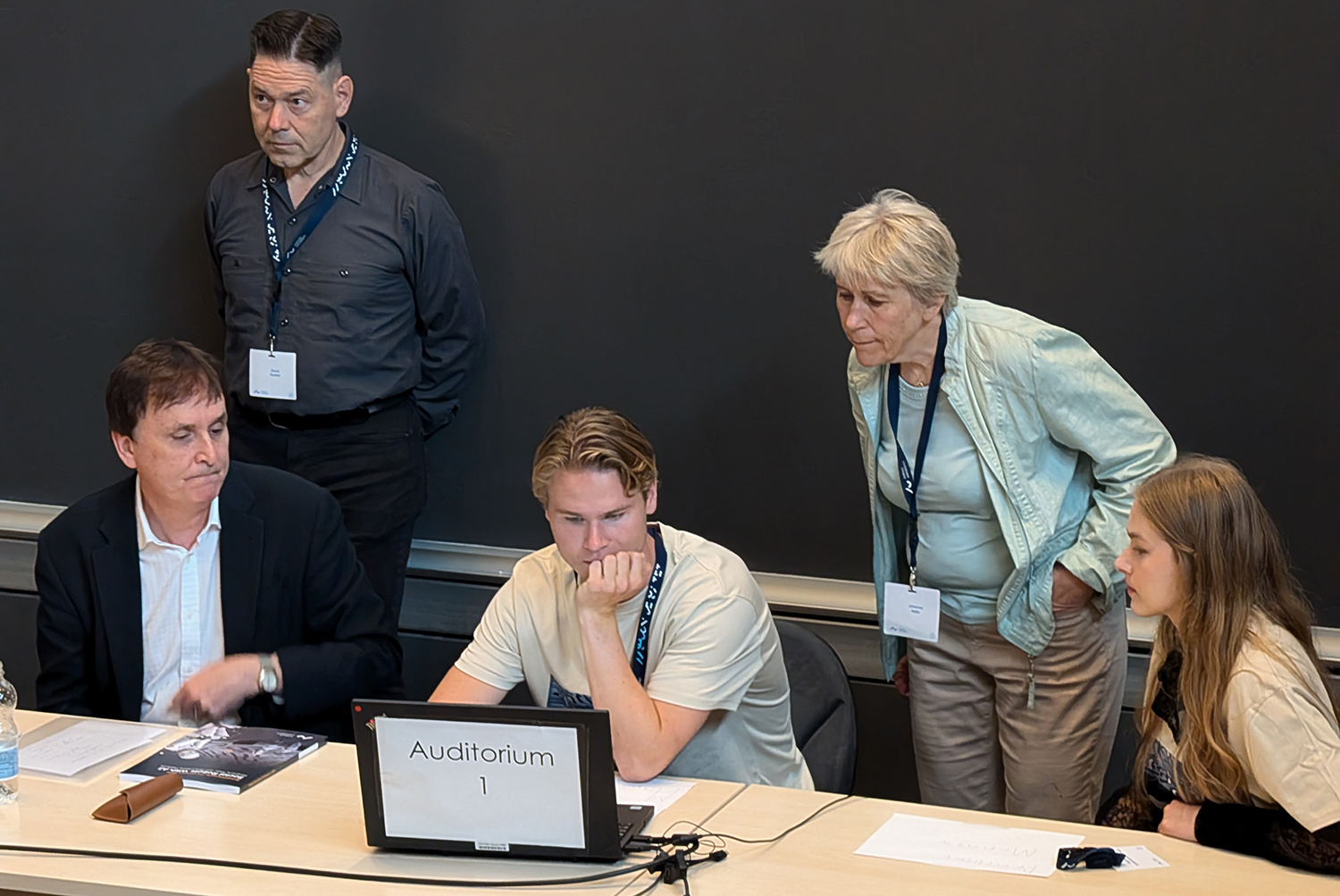
On the second day of Robophilosophy 2024, Anthony Elliott, Distinguished Professor of Sociology at the University of South Australia, gave a keynote speech entitled „May AI Be With You: Agency and Automation in the Age of Algorithmic Modernity“. From the abstract: „From industrial robots to ChatGPT, and from driverless cars to military drones: AI is transforming all aspects of our lives, from the changing nature of work, employment and unemployment to the most intimate aspects of personal relationships. In this presentation, Anthony Elliott focuses on the complex systems of AI – spanning intelligent machines, chatbots, advanced robotics, accelerating automation, big data – and their centrality to new forms of social interaction, organizational life and governance. He argues, provocatively, that today modernity has come to mean smartphones, tablets, cloud computing, big data, automated recommendation systems and predictive analytics. This has heralded the arrival of what he terms ‚algorithmic modernity‘, an altogether new ’stage‘ in the ordering techniques of envisioned human mastery. In this automated order of algorithmic modernity, human agency is increasingly outsourced to smart machines. We should understand this phenomenon, Elliott argues, in terms of a containment of both uncertainty and complexity which the digital revolution in social relations poses, but which ultimately denies answers.“ (Website Robophilosophy 2024) In his presentation, the sociologist emphasised the risks of AI rather than the opportunities.
Fig.: Anthony Elliott before his lecture (seated far left; standing David Gunkel and Johanna Seibt)
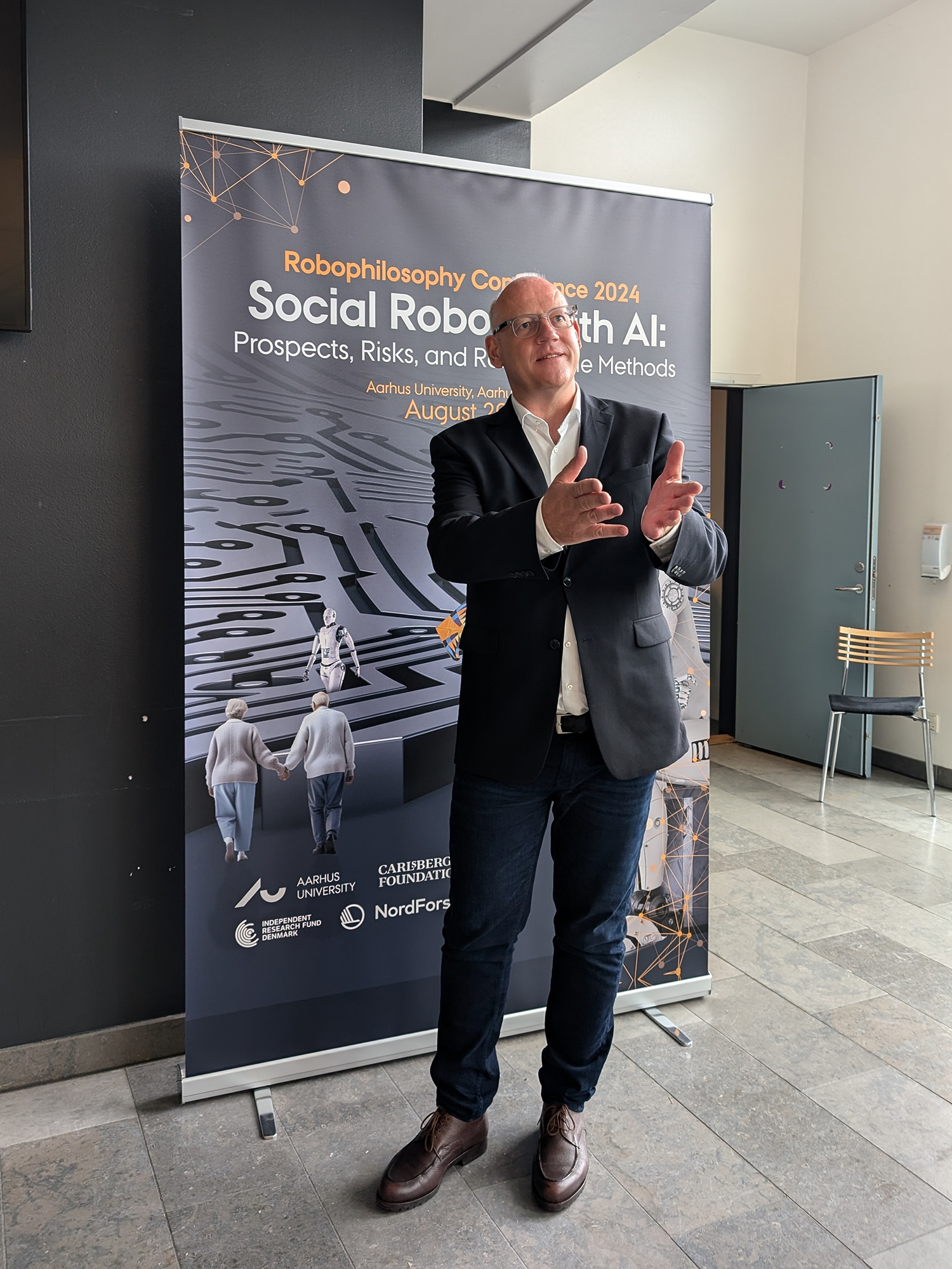
On August 20, 2024, Robophilosophy 2024 was opened with words of welcome from Maja Horst, Dean of the Faculty of Arts at Aarhus University, and Johanna Seibt, Professor of the School of Culture and Society at Aarhus University. The website says: „The international research conference RP2024 will discuss the questions that really matter in view of the new technological potential of social robotics. In over 100 research talks, RP2024 will address concrete and deep issues that reach far beyond safety and privacy concerns into the conceptual and normative fabric of our societies and individual self-comprehension.“ (Website Robophilosophy 2024) The first keynote on the first day of the conference was given by Wendell Wallach, one of the world’s best-known machine ethicists. With his book „Moral Machines“ (2009), he laid the foundation for a discipline that has been developing in science fiction and science for years and decades. This was followed in 2011 by „Machine Ethics“ by Michael Anderson and Susan Leigh Anderson. In addition to machine ethics, Robophilosophy is dedicated to robot ethics and other interesting perspectives on social robots.
The deadline for the International Conference on Social Robotics 2024 (ICSR 2024) has been extended again. Experts in social robotics and related fields have until July 19 to submit their full papers. The prestigious event was last held in Florence (2022) and Qatar (2023). Now it enters its next round. The 16th edition will bring together researchers and practitioners working on human-robot interaction and the integration of social robots into our society. The title of the conference includes the addition „AI“. This is a clarification and demarcation that has to do with the fact that there will be two further formats with the name ICSR in 2024. ICSR’24 (ICSR + AI) will take place as a face-to-face conference in Odense, Denmark, from 23 to 26 October 2024. The theme of this year’s conference is „Empowering Humanity: The role of social and collaborative robotics in shaping our future“. The topics of the Call for Papers include „collaborative robots in service applications (in construction, agriculture, etc.)“, „Human-robot interaction and collaboration“, „Affective and cognitive sciences for socially interactive robots“, and „Context awareness, expectation, and intention understanding“. The general chairs are Oskar Palinko, University of Southern Denmark, and Leon Bodenhagen, University of Southern Denmark. More information is available at icsr2024.dk.
The deadline for the International Conference on Social Robotics 2024 (ICSR 2024) has been extended. Experts in social robotics and related fields have until July 12 to submit their full papers. The prestigious event was last held in Florence (2022) and Qatar (2023). Now it enters its next round. The 16th edition will bring together researchers and practitioners working on human-robot interaction and the integration of social robots into our society. The title of the conference includes the addition „AI“. This is a clarification and demarcation that has to do with the fact that there will be two further formats with the name ICSR in 2024. ICSR’24 (ICSR + AI) will take place as a face-to-face conference in Odense, Denmark, from 23 to 26 October 2024. The theme of this year’s conference is „Empowering Humanity: The role of social and collaborative robotics in shaping our future“. The topics of the Call for Papers include „collaborative robots in service applications (in construction, agriculture, etc.)“, „Human-robot interaction and collaboration“, „Affective and cognitive sciences for socially interactive robots“, and „Context awareness, expectation, and intention understanding“. The general chairs are Oskar Palinko, University of Southern Denmark, and Leon Bodenhagen, University of Southern Denmark. More information is available at icsr2024.dk.
Fig.: The venue of the conference (Photo: Jacob Christensen)
The deadline for the International Conference on Social Robotics 2024 (ICSR 2024) is approaching. Experts in social robotics and related fields have until July 5 to submit their full papers. The prestigious event was last held in Florence (2022) and Qatar (2023). Now it enters its next round. The 16th edition will bring together researchers and practitioners working on human-robot interaction and the integration of social robots into our society. The title of the conference includes the addition „AI“. This is a clarification and demarcation that has to do with the fact that there will be two further formats with the name ICSR in 2024. ICSR’24 (ICSR + AI) will take place as a face-to-face conference in Odense, Denmark, from 23 to 26 October 2024. The theme of this year’s conference is „Empowering Humanity: The role of social and collaborative robotics in shaping our future“. The topics of the Call for Papers include „Collaborative robots in service applications (in construction, agriculture, etc.)“, „Human-robot interaction and collaboration“, „Affective and cognitive sciences for socially interactive robots“, and „Context awareness, expectation, and intention understanding“. The general chairs are Oskar Palinko, University of Southern Denmark, and Leon Bodenhagen, University of Southern Denmark. More information is available at icsr2024.dk.
The article „‚Ick bin een Berlina‘: dialect proficiency impacts a robot’s trustworthiness and competence evaluation“ by Katharina Kühne, Erika Herbold, Oliver Bendel, Yuefang Zhou, and Martin H. Fischer has been granted the UFSKW Paper-of-the-Month Award for March 2024. All authors are researchers in the Potsdam Embodied Cognition Group (PECoG) at the University of Potsdam, with the exception of Oliver Bendel, who works at the FHNW School of Business and is an associated researcher in the group. „UFSKW“ stands for „Universitärer Forschungsschwerpunkt Kognitionswissenschaften“. It is based at the University of Potsdam. The UFSKW Paper of the Month provides a special stage for current cognitive science research at the UFSKW. It is chosen monthly by the selection committee from all submissions. The paper says about the background of the project: „Robots are increasingly used as interaction partners with humans. Social robots are designed to follow expected behavioral norms when engaging with humans and are available with different voices and even accents. Some studies suggest that people prefer robots to speak in the user’s dialect, while others indicate a preference for different dialects.“ The following results are mentioned: „We found a positive relationship between participants‘ self-reported Berlin dialect proficiency and trustworthiness in the dialect-speaking robot. Only when controlled for demographic factors, there was a positive association between participants‘ dialect proficiency, dialect performance and their assessment of robot’s competence for the standard German-speaking robot. Participants‘ age, gender, length of residency in Berlin, and device used to respond also influenced assessments. Finally, the robot’s competence positively predicted its trustworthiness.“ The article can be accessed at www.frontiersin.org/articles/10.3389/frobt.2023.1241519/full.
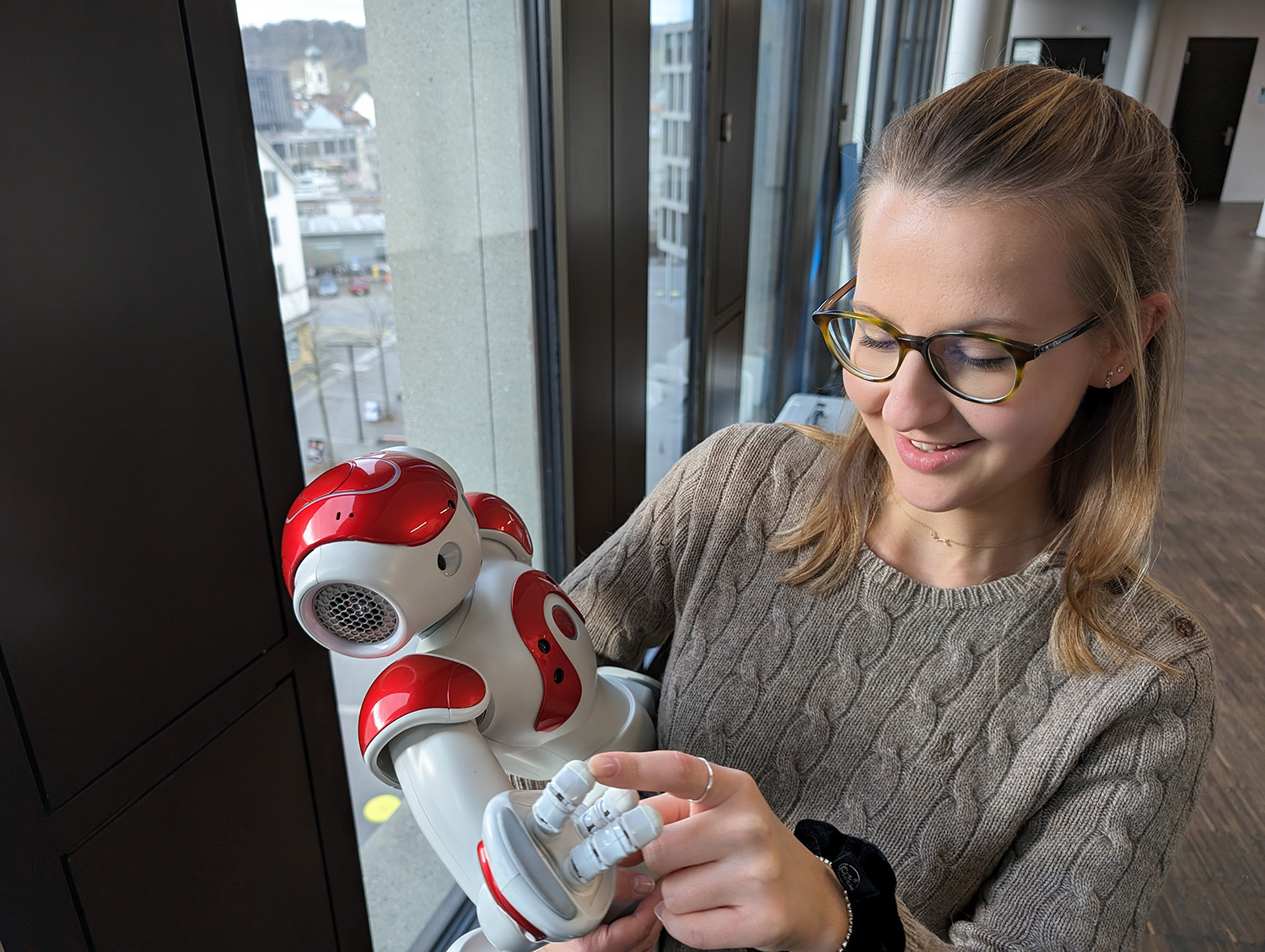
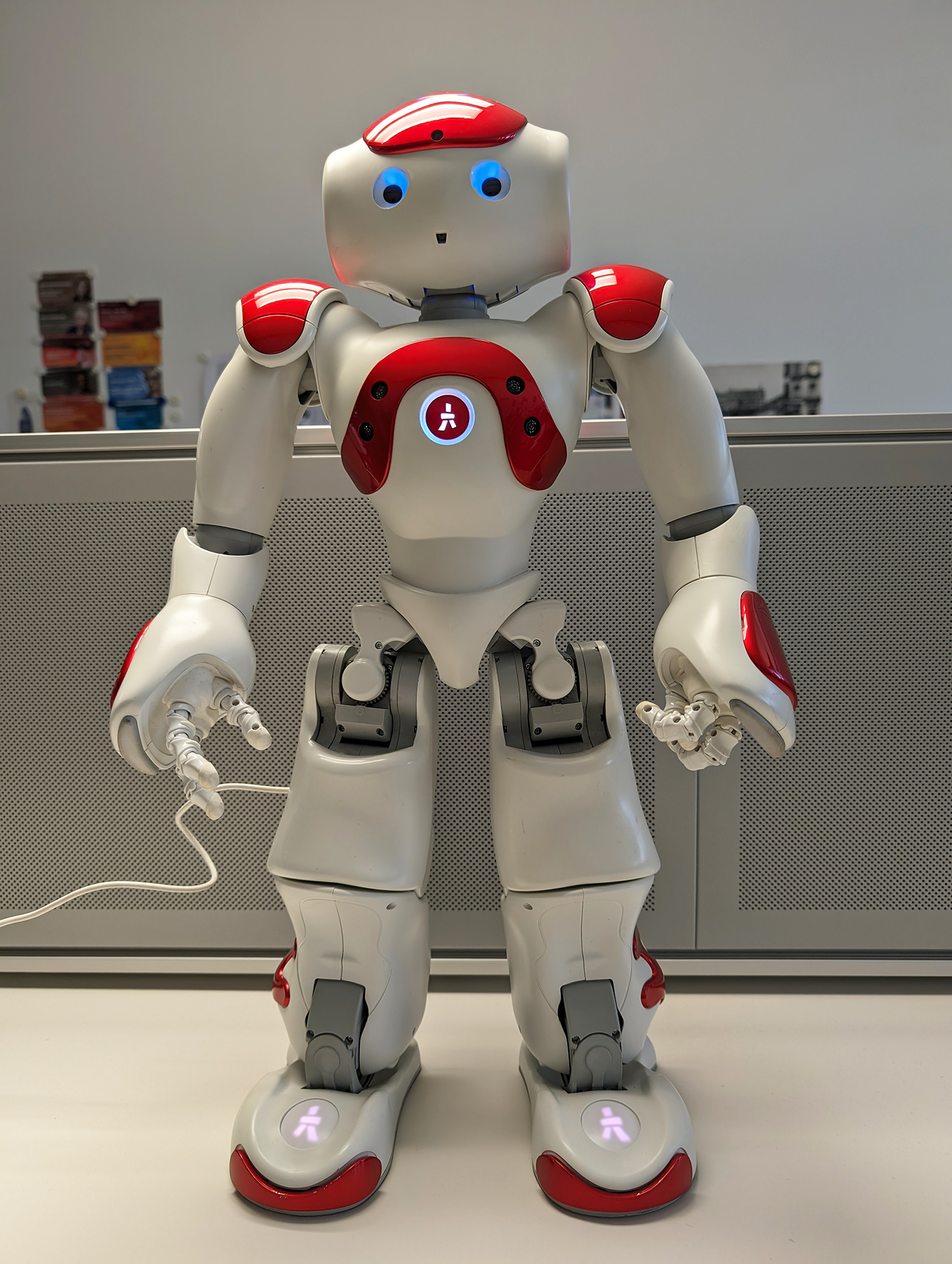
Fig.: NAO in Oliver Bendel’s office in Switzerland
Im Future Lab „Soziale Roboter und GPTs“ am 6. Juni 2024 auf der LEARNTEC kann man mit Navel und Alpha Mini interagieren und kommunizieren. Man kann sie etwa zu Bewegungen des Körpers veranlassen, ihre gestischen und mimischen Fähigkeiten bewundern oder mit ihnen ein Gespräch führen. Bei beiden Modellen handelt es sich um soziale Roboter, die auf dem neuesten technischen Stand sind und im Lernkontext eingesetzt werden können. Die drei Sessions leitet Prof. Dr. Oliver Bendel von der Hochschule für Wirtschaft FHNW mit seinem Impulsvortrag „Soziale Roboter und GPTs im Lernbereich“ ein. Die Ansprechpartner für die beiden Roboter sind Claude Toussaint von navel robotics aus München und Rainer E. Becker von BECKER ROBOTICS aus Wuppertal. Man hat zudem die Möglichkeit, mit einem GPT namens Social Robotics Girl zu kommunizieren, das Prof. Dr. Oliver Bendel in seinem Unterricht einsetzt.