Das Kapitel „Barrierefreiheit“ von Anne Haage und Christian Bühler erklärt unter Berufung auf das Behindertengleichstellungsgesetz, Medien sollten „ohne besondere Erschwernis“ zugänglich sein, und zählt das Verstehen ausdrücklich zu den Dimensionen der Barrierefreiheit. Ausgerechnet in einem Abschnitt über Screenreader und blinde Menschen begegnet einem dann die Form „blinde_r Nutzer_innen“ – und das keineswegs im Genitiv. Später ist von „Schüler_innen“, „Lehrer_in“, „Kursleiter_innen“ und „Pädagog_innen“ die Rede. Noch widersprüchlicher wirkt das Kapitel „Leichte Sprache – ein Mittel zur Barrierefreiheit?“ von Saskia Schuppener, Anne Goldbach und Bettina M. Bock. Seine drei Autorinnen warnen zu Recht davor, gut gemeinte sprachliche Regeln automatisch für verständlich zu halten. Regeln müssten empirisch daraufhin überprüft werden, ob sie ihren Adressaten tatsächlich helfen. Untersuchungen mit Menschen mit Lernschwierigkeiten und geringer Lesekompetenz zeigten sogar, dass manche sprachlichen und typographischen Maßnahmen das Verständnis erschweren können – „auch und gerade für schwächere Leser_innen“. Die Skepsis gegenüber sprachlichen Eingriffen erstreckt sich jedoch nicht erkennbar auf die eigene Orthografie. Im selben Kapitel finden sich „Nutzer_innen“, „Mitarbeiter_innen“, „Leser_innen“, „Anbieter_innen“ und sogar die bemerkenswerte Konstruktion „Adressat_inn_enkreis“. Besonders treffend ist, dass die Autoren selbst vor Barrierefreiheit als bloßem „Aushängeschild“ warnen: Anbieter könnten damit signalisieren, sich um Barrierefreiheit zu kümmern, ohne hinreichend zu prüfen, ob ihre Texte für die Adressaten tatsächlich funktionieren. Genau diese Frage müsste man auch an Gendersprache stellen: Dient die sprachliche Markierung tatsächlich dem Leser oder signalisiert sie vor allem die angeblich inklusive Haltung des Schreibenden? …
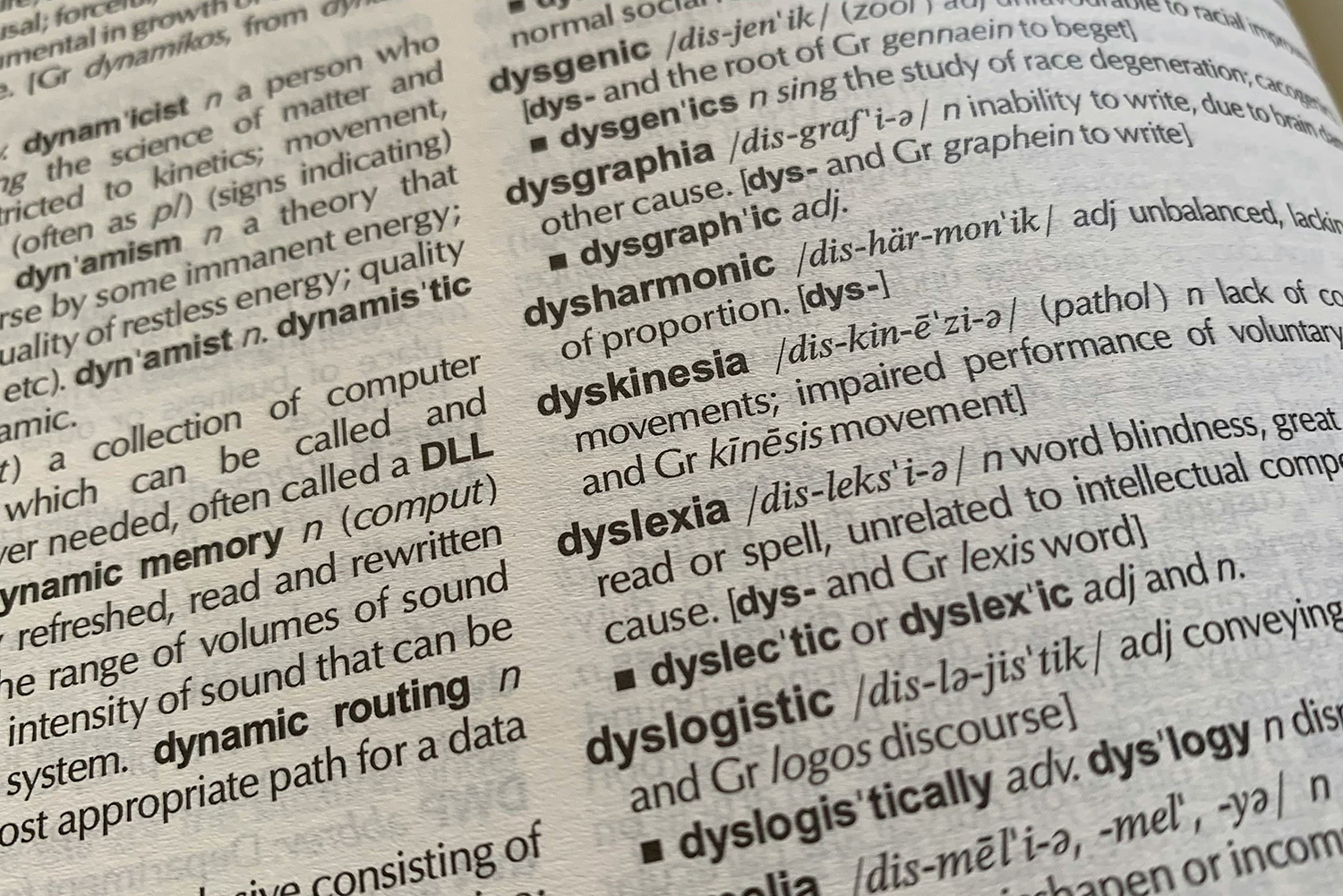
Abb.: Menschen mit Dyslexie haben kaum eine Chance
Ein „Handbuch Inklusion und Medienbildung“ (Beltz Juventa, 2019) ist wohl einer der letzten Orte, an denen man sprachliche Barrieren erwarten würde. Gerade hier geht es um Zugänglichkeit und Verständlichkeit, um Hilfestellungen wie Leichte Sprache, um Assistenztechnologien wie Screenreader und um die unterschiedlichen Voraussetzungen von Lesern. Umso bemerkenswerter ist die Sprache des Handbuchs selbst. Da es sich um einen Herausgeberband handelt, sollte man die von Kapitel zu Kapitel wechselnden Schreibweisen nicht vorschnell den Herausgebern – Ingo Bosse, Jan-René Schluchter und Isabel Zorn – anlasten. Vielleicht gab es eine allgemeine Erwartung oder eine Empfehlung des Verlags, sogenannte geschlechtergerechte Sprache zu verwenden, während die konkrete Umsetzung den einzelnen Autoren überlassen blieb; belegen lässt sich eine solche Vorgabe anhand des Buches allerdings nicht. Das Ergebnis ist jedenfalls ein bemerkenswertes Durcheinander aus Unterstrich, Genderstern, Schrägstrich, Paarformen und gewöhnlichen Personenbezeichnungen. Wirklich interessant wird dieser Befund dort, wo einzelne Beiträge ihre eigenen Maßstäbe für Barrierefreiheit formulieren. …
Das heutige Waldhotel Davos wurde 1911 als Waldsanatorium Professor Jessen erbaut. 1912 kurte hier Katia Mann ihren Lungenspitzenkatarrh aus. Thomas Mann besuchte sie und sammelte Eindrücke, die später – neben seinen Beobachtungen auf der Schatzalp – in „Der Zauberberg“ (1924) einflossen. Auch architektonisch ist das Haus bedeutend. Seine prosaische Rückseite zeigt zum Wald, wo Eichhörnchen herumflitzen. Seine charakteristische, fast lyrische Südkurve wurde gezielt auf Licht und Sonne ausgerichtet, bei freiem Blick auf die Davoser Bergwelt und, mit etwas Glück, kühn herumfliegende Alpendohlen. Nun soll unmittelbar davor ein hoher Neubau entstehen. Die Bauprofile sind bereits angebracht und lassen die beunruhigenden Dimensionen erkennen. Teile des historischen Hauses würden künftig auf einen nur wenige Meter entfernten Baukörper blicken; Personal und Gäste würden einen erheblichen Teil der heutigen Aussicht verlieren. Zugleich wäre das Waldhotel vom Tal aus teilweise verdeckt. Die Frage ist, wie viel Schutz ein architektonisch sowie kultur- und literaturgeschichtlich bedeutender Ort mitsamt seiner Umgebung verdient. Es ist auf jeden Fall ein Thema, das weit über Davos hinaus beachtet und von den Medien in der Schweiz und in Deutschland aufgegriffen werden sollte. Bisher herrscht Schweigen im Walde.
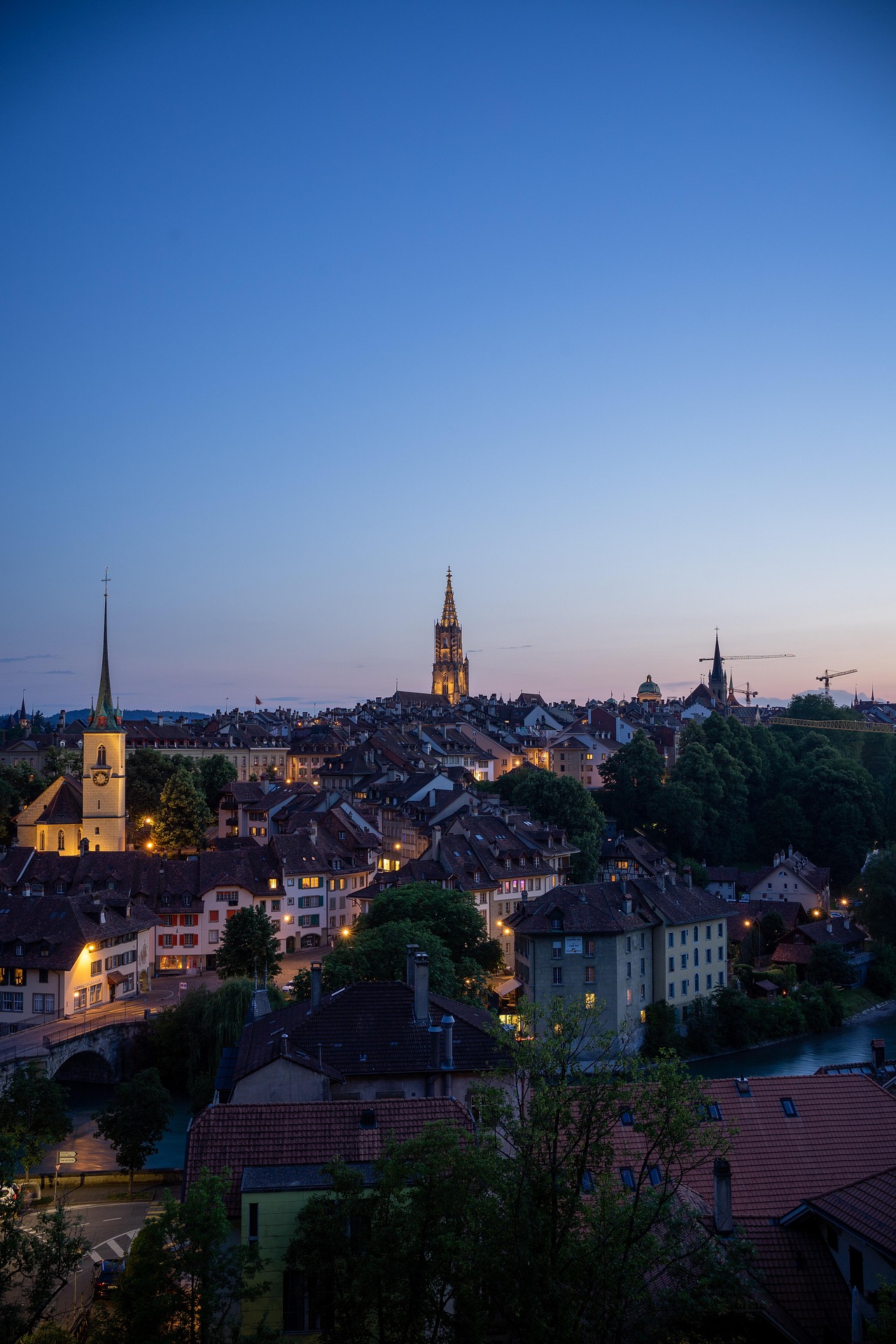
Abb.: Das Sanatorium im Jahre 2012 (Foto: Die Kunst, Bd. 26, Universitätsbibliothek Freiburg)
Innosuisse ist die Innovationsagentur des Bundes in der Schweiz und verfügt über ein Jahresbudget von rund 300 Millionen Franken. Mit diesen öffentlichen Geldern fördert sie Unternehmen, Start-ups und Forschungsprojekte. Eine Recherche von RTS/SRF zeigt nun, dass ausgerechnet Personen aus den Leitungsgremien der Agentur direkt oder indirekt mit Unternehmen verbunden sind, die selbst Innosuisse-Fördergelder erhalten haben. Das wirft Fragen nach möglichen Interessenkonflikten und der Kontrolle der Förderentscheide auf. Laut der Recherche gingen rund 20 Förderzahlungen an Unternehmen, die mit Personen aus den Leitungsgremien von Innosuisse verbunden sind. In einem Fall bekamen mehrere Unternehmen eines Mitglieds des Innovationsrats allein 2021 insgesamt rund eine Million Franken. Besonders problematisch erscheint die Entscheidungsstruktur: Über Fördergesuche entscheiden teilweise Gruppen von lediglich drei bis fünf Personen. RTS fand Fälle, in denen ein Mitglied an Beratungen über Projekte eines anderen Mitglieds beteiligt war, während dieses in den Ausstand trat. Später waren die Rollen vertauscht. Innosuisse betont, seine Regeln zu Interessenkonflikten seien dabei eingehalten worden. Auch Innosuisse-Präsident André Kudelski steht im Fokus. Er präsidiert zugleich den Verwaltungsrat von Montreux Media Ventures, das 440.000 Franken Innosuisse-Fördergelder einstreichen konnte. Die Agentur sieht darin keinen Interessenkonflikt, da der Verwaltungsrat nicht über einzelne Fördergesuche entscheidet. Ein von SRF befragter Governance-Experte beurteilt dies anders. Die Recherche belegt keine unrechtmäßige Vergabe. Sie wirft jedoch die grundsätzliche Frage auf, ob Ausstandsregeln und Aufsicht genügen, wenn Personen in den Entscheidungsgremien zugleich vom Fördersystem profitieren können.
Man muss sich ebenso darüber im Klaren sein, dass Eingriffe in ein solches System Folgen haben können, die sich später nicht ohne Weiteres zurücknehmen lassen. Gewohnheiten bilden sich aus, Regeln verändern sich, neue Konventionen entstehen und werden an die nächste Generation weitergegeben. Gerade deshalb sollte eine solche Veränderung nicht allein danach beurteilt werden, ob ihre Absicht derzeit als moralisch oder politisch wünschenswert gilt. Auch ihre Folgen für das sprachliche System selbst müssen betrachtet werden. So wie man sorgsam mit der Natur umgehen sollte, sollte man sorgsam mit der Kultur umgehen. Sprache und Schrift sind nicht bloß Material, das für den jeweils gewünschten Zweck beliebig umgeformt werden kann. Die Schrift ist ein historisch junges, über Jahrtausende entwickeltes Kulturwerkzeug, die Schriftsprache ein über Generationen geformtes Kulturgut. Beide haben wesentliche Errungenschaften der Zivilisation erst möglich gemacht. Wer in ihre gewachsenen Strukturen eingreift, sollte deshalb nicht nur wissen, was er erreichen will. Er sollte auch wissen, worin er eingreift. Und wenn man am Ende noch einmal aufsteigt und über diese Sprachlandschaft hinwegfliegt, sieht man vielleicht deutlicher, was auf dem Boden leicht aus dem Blick gerät, nämlich dass ihre Formen zusammengehören, dass Wege, Grenzen, Erhebungen und Täler eine über lange Zeit entstandene Ordnung bilden. Man kann in diese Landschaft der Sprache eingreifen. Man kann neue Pfade anlegen, Schneisen ziehen und den Verlauf des Geländes verändern. Aber bevor man es tut, sollte man diese Landschaft kennen, denn wer tief genug in ihre gewachsenen Strukturen eingreift, verändert nicht nur ihr Aussehen. Er riskiert, dass aus Wegen Irrwege, aus Grenzen Hindernisse werden und die Landschaft schließlich ihre wichtigsten Eigenschaften verliert, nämlich dass man sich in ihr zurechtfindet und zueinander findet.
Wenn man nun Zeichen wie den Asterisk, den Unterstrich oder den Doppelpunkt ins Wortinnere einfügt und ihnen dort eine neue strukturelle Funktion zuweist, greift man in diese Topografie ein. Aus „Lehrer“ und „Lehrerinnen“ wird „Lehrer*innen“, „Lehrer_innen“ oder „Lehrer:innen“. Die Zeichen stehen nicht zufällig an dieser Stelle. Sie sollen eine Grenze im Inneren der Wortform sichtbar machen und ihr zugleich eine grammatische und semantische Funktion geben. Der Eingriff betrifft daher nicht nur das Schriftbild. Er verändert die graphematische und orthografische Struktur der Wortform und wirkt auf ihre morphologische Gliederung ein. Das ist kein langsames Verschieben von Platten, kein gemächliches Aufstülpen von Bergen und Ausformen von Tälern. Es ist vielmehr das Einziehen von Schneisen, das Bohren von Löchern. Gewiss kann auch das Ergebnis bewusster Eingriffe irgendwann Teil eines Sprachwandels werden. Aber damit ist noch nicht beschrieben, wie dieser Wandel zustande kommt. Wo neue Formen gezielt vorgeschlagen, propagiert, institutionell gefördert oder normativ verlangt werden, haben wir es nicht allein mit ungesteuertem Sprachwandel zu tun, sondern auch mit Sprachlenkung. Man mag seine Gründe dafür haben, moralische, politische oder sprachpolitische. Aber man muss sich im Klaren darüber sein, dass man ein gewachsenes Gebilde mit seinen einzeln geformten und aufeinander bezogenen Teilen verändert und beeinträchtigt. Dabei war bisher nur von der geschriebenen Wortgestalt, von Graphematik, Orthografie und Morphologie die Rede, noch nicht von anderen Bereichen der Grammatik und des Sprachgebrauchs. …
Wenn man über einen Text deutscher Sprache hinwegfliegt, wenn man seine Topografie erkundet, fallen einem schnell einige Regelmäßigkeiten und Besonderheiten auf. Am Anfang des Satzes steht ein Großbuchstabe. Auch innerhalb des Satzes beginnen manche Wörter mit einem Großbuchstaben. Geschlossene Wortformen sind in der Regel durch Leerzeichen voneinander abgegrenzt. Das Leerzeichen zeigt an, dass ein Wort aufhört und ein neues beginnt. Im Wortinneren steht es nicht. Deutsche Wörter können sehr lang sein. Weithin bekannt ist der Donaudampfschifffahrtsgesellschaftskapitän, und man weiß vielleicht, dass man dieses Wort noch weiter verlängern kann. Es ist ein Kompositum. Seine Bestandteile werden nicht durch Leerzeichen voneinander getrennt. Die deutsche Orthografie kennt allerdings einige Zeichen, die innerhalb von Wortformen auftreten können und dort bestimmte, konventionalisierte Funktionen erfüllen. Dazu gehört der Bindestrich, etwa wenn bestimmte Zusammensetzungen durchgekoppelt werden, wie bei „Künstliche-Intelligenz-Konferenz“. Eine „Künstliche Intelligenz-Konferenz“ ließe dagegen die Zuordnung von „Künstliche“ zumindest grafisch uneindeutig werden. Man könnte gar an eine künstliche Intelligenzkonferenz denken. Auch der Apostroph kann innerhalb einer Wortform erscheinen, etwa in „D’dorf“ oder in „Ku’damm“. So fliegt man dahin und erkennt in der über viele Jahrhunderte gewachsenen Struktur eine bemerkenswerte Regelmäßigkeit. Groß- und Kleinschreibung, die Bildung und Abgrenzung von Worteinheiten sowie die Getrennt- und Zusammenschreibung gehören zu den grundlegenden Strukturen der deutschen Schriftsprache. Sie betreffen ihre Graphematik und Orthografie und stehen zugleich in enger Beziehung zur Morphologie, zur inneren Struktur der Wörter. …
Der Tages-Anzeiger befragte am 25. August 2026 den Technikphilosophen Oliver Bendel zu den World Humanoid Robot Games 2026 in Peking. Dort fanden 30 Sportwettkämpfe mit Allzweckrobotern (General-Purpose Robots) oder Robotern auf General-Purpose-Robot-Plattformen statt, die etwa für das Rennen oder den Hochsprung angepasst worden waren. Zudem wurden 21 Szenariowettkämpfe durchgeführt, in denen sich die humanoiden Roboter bei praktischen Aufgaben in Produktion, Logistik, Haushalt, Pflege etc. behaupten mussten. Oliver Bendel war fasziniert von den Bewegungen beim Kickboxen, wobei diese wohl bei den meisten Auftritten ferngesteuert waren. Noch mehr fasziniert war er von den Allzweckrobotern auf dem Tennisplatz. Diese hatten vielleicht die Fähigkeiten von kleinen Kindern, wie Oliver Bendel meinte, der früher selbst Tennis gespielt hatte, und eine ungewöhnliche Schlägerhaltung. Aber im Unterschied zu den anderen waren sie selbstständig unterwegs. Vor ein paar Jahren noch wäre ein solches Bespielen des Platzes undenkbar gewesen. Es ist erklärtes Ziel der Spiele, die unter anderem von chinesischen Medien- und Robotikorganisationen und der Pekinger Stadtregierung ausgerichtet werden, die Autonomie von Jahr zu Jahr zu erhöhen und sie in immer mehr Disziplinen durchzusetzen. Das Interview ist am 26. August in der Onlineausgabe unter dem Titel „Dieser Roboter ist eine Rakete auf zwei Beinen – nur bremsen kann er nicht“ erschienen, was ein Zitat des Technikphilosophen ist. Am 28. August kommt es in den Printausgaben verschiedener Schweizer Tageszeitungen.
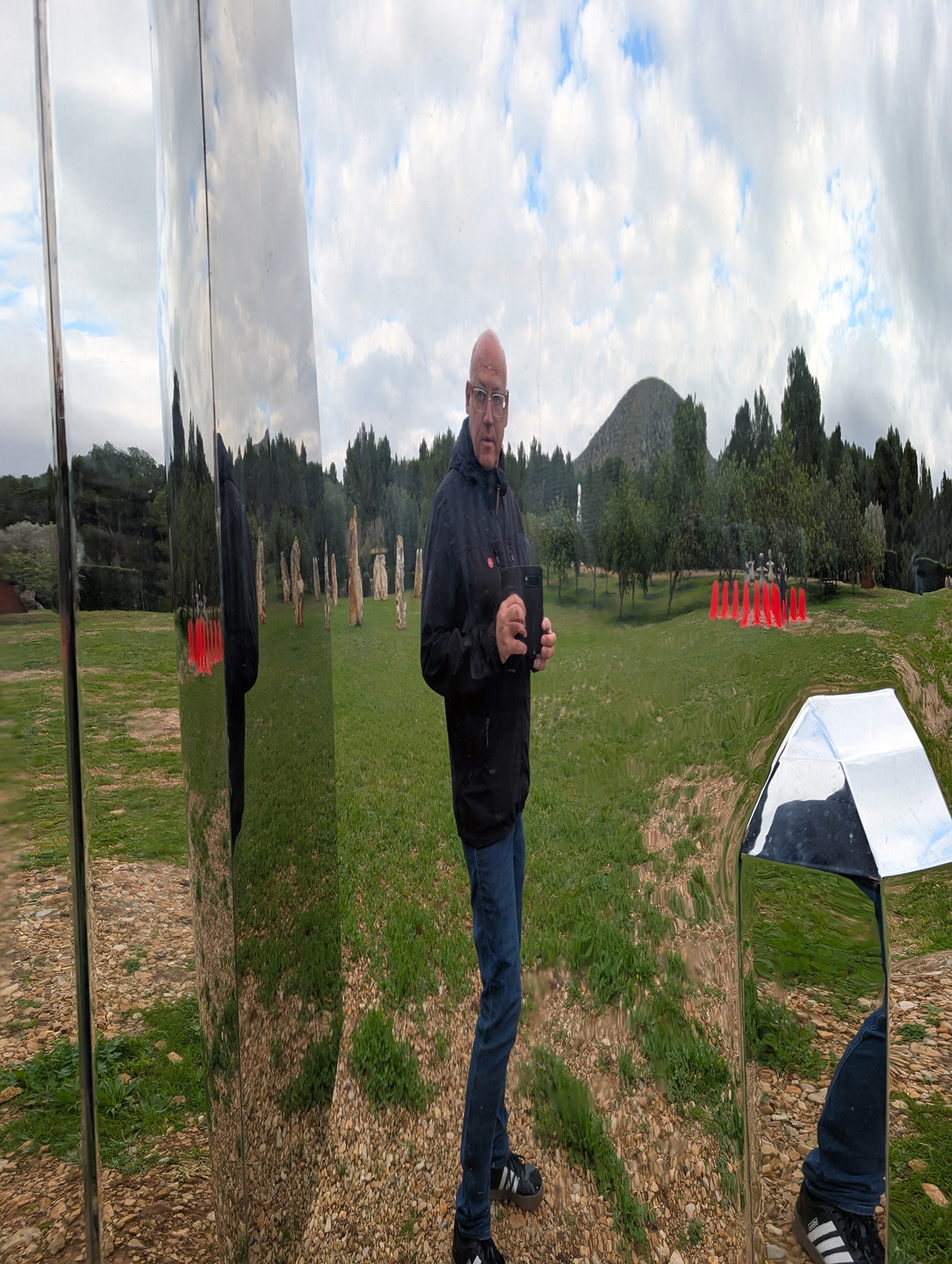
Abb.: Oliver Bendel spiegelt sich im Modell einer Rakete auf Mallorca
ChatGPT spricht – wie viele andere LLM-basierte Chatbots – in der ersten Person Singular. Damit gibt es vor, eine Person zu sein, die es nicht ist. Zumindest wird gefördert, dass man es für eine Person hält. Es ist natürlich die Frage, ob Alternativen vorhanden sind. Es handelt sich um Dialogsysteme, die auf natürlicher Sprache beruhen, und es ist naheliegend, den Chatbot als Gesprächspartner zu konstruieren. Michelle Cohn et al. haben herausgefunden, dass schon die Wahl zwischen „Ich“ und „das System“ die Wahrnehmung eines Sprachmodells beeinflussen kann. Murray Shanahan et al. stellen die Frage „How are we to understand what is going on when an LLM-based dialogue agent uses the words ‚I‘ or ‚me‘?“ … Das „Ich“ sollte ihrer Meinung nach als sprachliche Konvention des Dialogsystems verstanden werden und nicht als Hinweis auf Selbstbewusstsein. Cristian González-Arias et al. machen den Vorschlag, anstatt „I can help you with that“ eine unpersönliche Formulierung wie „ChatGPT can help you with that“ auszugeben. Interessant ist, dass der Chatbot bei der Bilderstellung – etwa mit GPT Image 2 – in die erste Person Plural wechselt, etwa mit Sätzen wie „Wir verfeinern gerade die Details“. Was will man damit bezwecken? Vielleicht will man suggerieren, dass ein ganzes Team hinter der Bilderstellung steht und es auch deshalb etwas länger dauert als eine übliche Textantwort. Vielleicht will man die Benutzer einbeziehen, wobei diese in diesem Moment nicht eingreifen und nichts beitragen können. Vielleicht will man auch nur allgemein einen Unterschied zwischen Text- und Bilderstellung markieren. Hier ist offensichtlich noch Erklärungs- und Forschungsbedarf vorhanden.
Der deutsche Sprachwissenschaftler Helmut Glück hat mit „Vom Gendern und seinen Grenzen“ (J. B. Metzler, 2026) ein kenntnisreiches und unterhaltsames Buch zum Thema vorgelegt. Er spart nicht mit Seitenhieben und Direkttreffern bei den Totengräbern der Sprache, die auch in der Linguistik – genauer gesagt, in der „Genderlinguistik“ – zu finden sind. Dabei ist immer wieder von „postgrammatischem Unsinn“ die Rede. Der Schaden, den Medien, Behörden und Hochschulen anrichten, wird umfangreich dargestellt. Die „Reduktionsgrammatik der Gleichstellungsbeauftragen (die RGG)“ wird eindrucksvoll zerpflückt. Über den Duden heißt es, dass er „bedauerlicherweise immer noch häufig als Autorität in Sachen Rechtschreibung betrachtet“ wird. Man hätte sich gewünscht, dass belletristischen und wissenschaftlichen Verlagen und ihren Herausgebern mehr Platz gewidmet wird. Sie erzwingen häufig Schreibweisen und schließen Autoren aus – oder sie verfälschen mit Übersetzungen die Originale. Der altehrwürdige Verlag Metzler selbst, inzwischen zu Springer gehörend, lässt in der Titelei keinen Zweifel darüber, wo er steht. Immerhin lässt er Abhandlungen wie diese zu. Insbesondere Kapitel 1 bis 5 überzeugen, während Kapitel 6 ein wenig wie ein Sammelsurium wirkt. Ein gründliches Korrektorat würde der zweiten Auflage, sofern sie geplant ist, formal guttun. Die Vertreter der Gendersprache dürfte das Buch kaum erreichen und umstimmen, denn sie sind nicht nur für die Sprachgemeinschaft verloren, sondern auch für die Wissenschaft. Dennoch wird „Vom Gendern und seinen Grenzen“ wie schon die „Studien zum genderneutralen Maskulinum“ von Eckhard Meineke, auf die immer wieder verwiesen wird, sicherlich ein Standardwerk werden, mit Lesern, die Grundlagen verstehen und sich von Argumenten überzeugen lassen wollen, und mit Lesenden, die die zahlreichen Pointen zu würdigen wissen und darüber herzlich lachen.
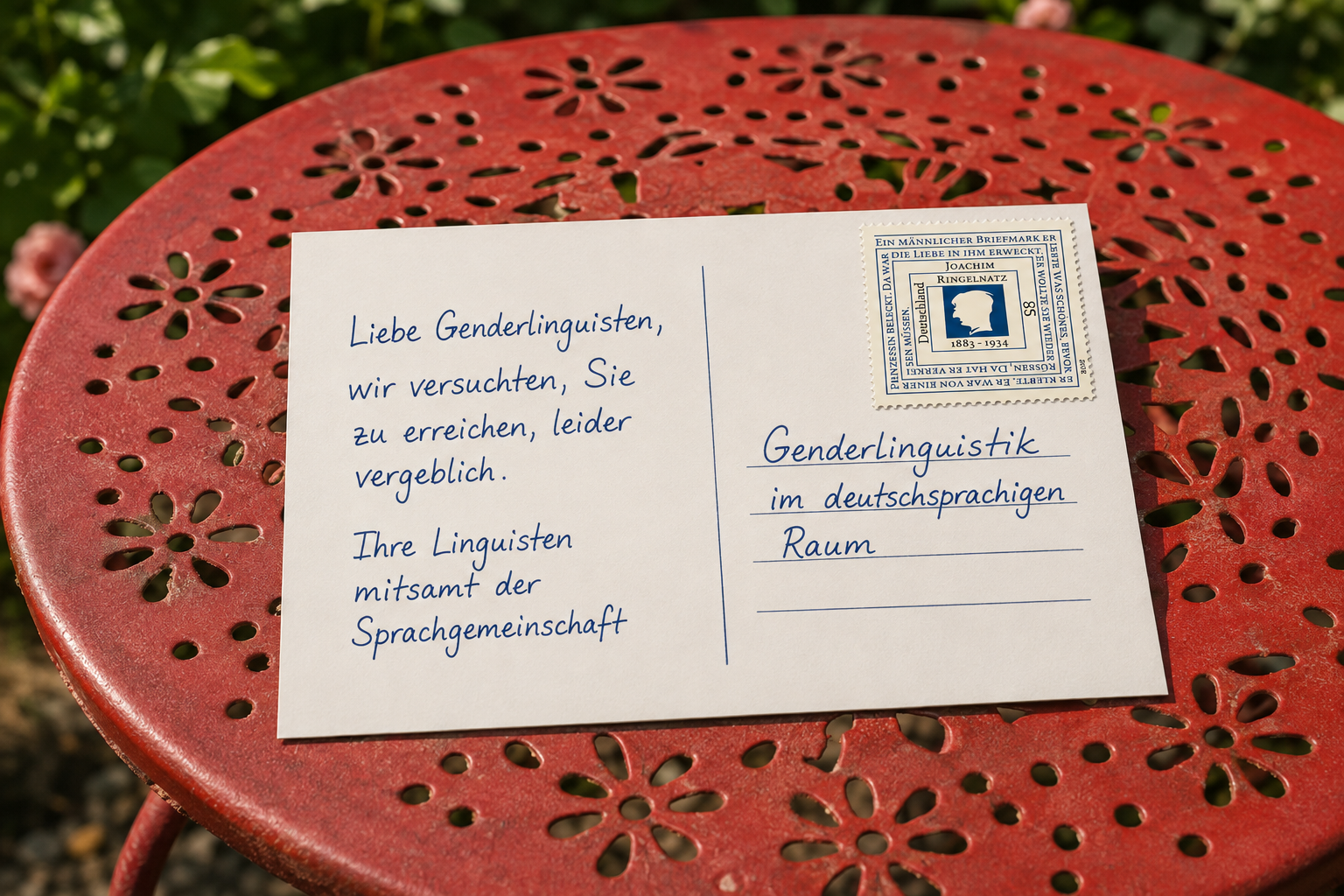
Abb.: Auch das Ringelnatz-Gedicht vom Briefmark wird zitiert (Bild: GPT Image 2)
The master’s thesis „Inclusive AI for Wearables: Assistive Glasses as a Case Study“ by Myriam Rellstab, a student at the FHNW School of Business, has reached an important milestone. In the summer of 2026, she completed her comprehensive thesis proposal under the supervision of Prof. Dr. Oliver Bendel. The proposal already provides some interesting preliminary findings. Consumer-oriented smart glasses and assistive systems are increasingly based on the same technological foundations, including computer vision, speech recognition, natural language processing, contextual awareness, and real-time information processing. Nevertheless, research and development still tend to treat mainstream and assistive smart glasses as separate categories. This suggests an important opportunity for Inclusive AI: future smart glasses could be conceived as shared technological platforms serving people with and without disabilities rather than as separate mainstream and assistive products. A central question emerging from the proposal concerns the appropriate design strategy. Rellstab distinguishes between universal, specialized, and modular approaches. Universal solutions promise a coherent and inclusive experience but may not adequately address highly specific needs. Specialized solutions can provide targeted support but risk maintaining the separation between mainstream and assistive technologies. Modular systems could offer a middle ground by combining a common platform with components and functions that can be adapted to individual requirements, although this comes with greater complexity. The next stages of the thesis will combine a structured literature review and comparative analysis of existing smart-glasses systems with qualitative interviews involving blind, low-vision, and Deaf or hard-of-hearing users. The ultimate goal is to derive design requirements and develop a conceptual framework for future inclusive AI-supported smart glasses.
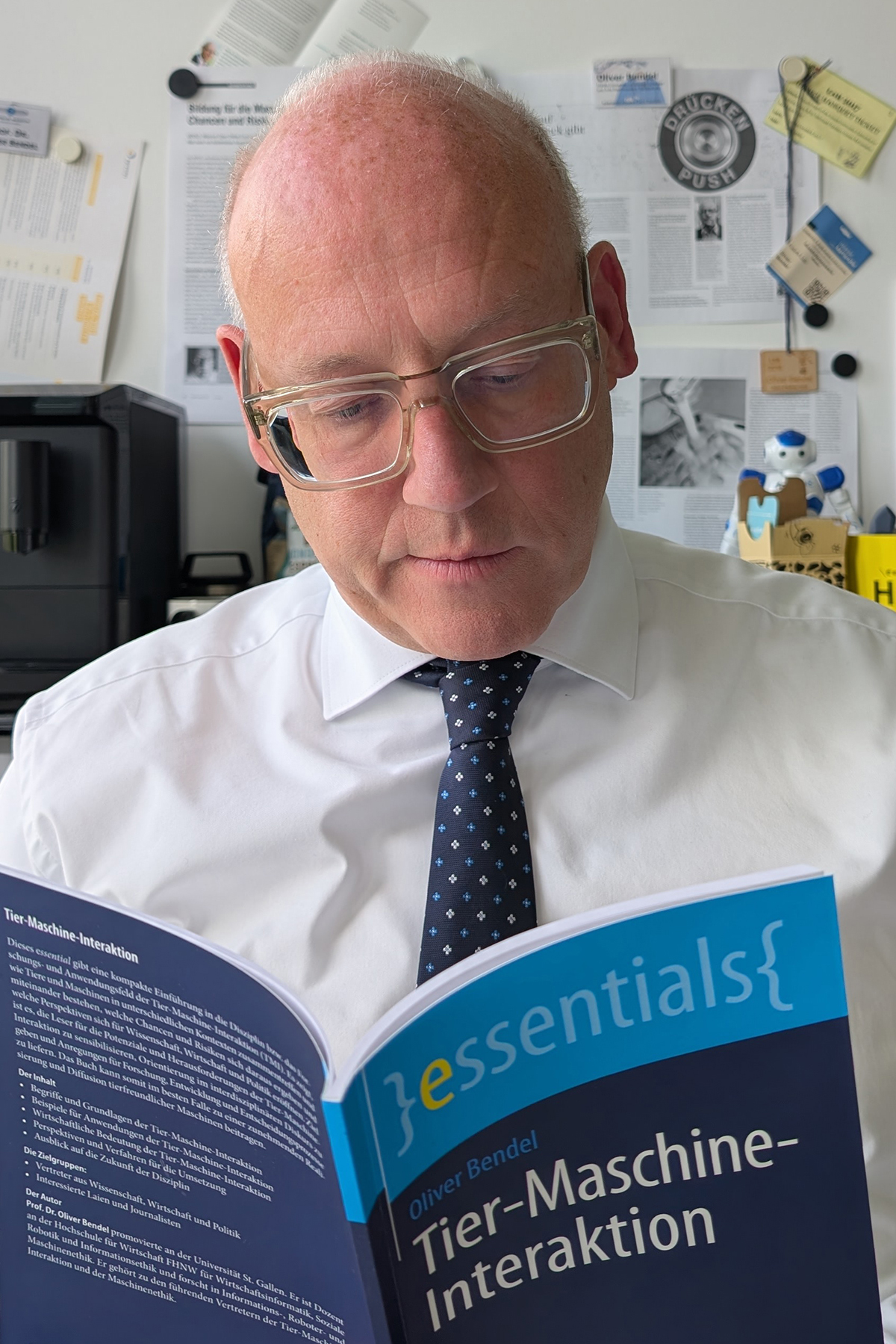
Robophilosophy 2026 kicked off on August 11, 2026, at University College Dublin (UCD) in Dublin, Ireland. Held under the theme „Connected Futures – Nature, Robots, and Society“, the conference runs from August 11–14 and brings together researchers from a wide range of disciplines to explore how robotics and artificial intelligence are transforming human societies and the natural world. On the first day, Prof. Dr. Oliver Bendel from the FHNW School of Business presented his paper „Towards a Discipline of Animal-Machine Interaction: Ethical and Design Challenges of Machines in Animal Habitats“ in the session „Environmental Robotics and Society“. From the abstract: „As autonomous and semi-autonomous machines such as robots and drones increasingly enter animal habitats, new ethical and conceptual challenges emerge. This article proposes animal-machine interaction (AMI) as a distinct discipline concerned with the design and governance of technologies operating in relation to animals. After clarifying core concepts and delineating AMI from related fields, the article highlights the role of machine ethics in developing animal-friendly systems. Selected application examples illustrate how machines can reduce negative impacts on animals and, in some cases, support animal survival through animal-friendly design. The ethical discussion addresses both opportunities and risks of technological intervention in animal habitats. It is becoming clear that AMI is an increasingly important field of research, but one that must remain open to critical reflection and reorientation.“ The proceedings, containing all conference papers, will be available in late 2026. For those who don’t want to wait: Oliver Bendel recently published a short book on animal-machine interaction with Springer.
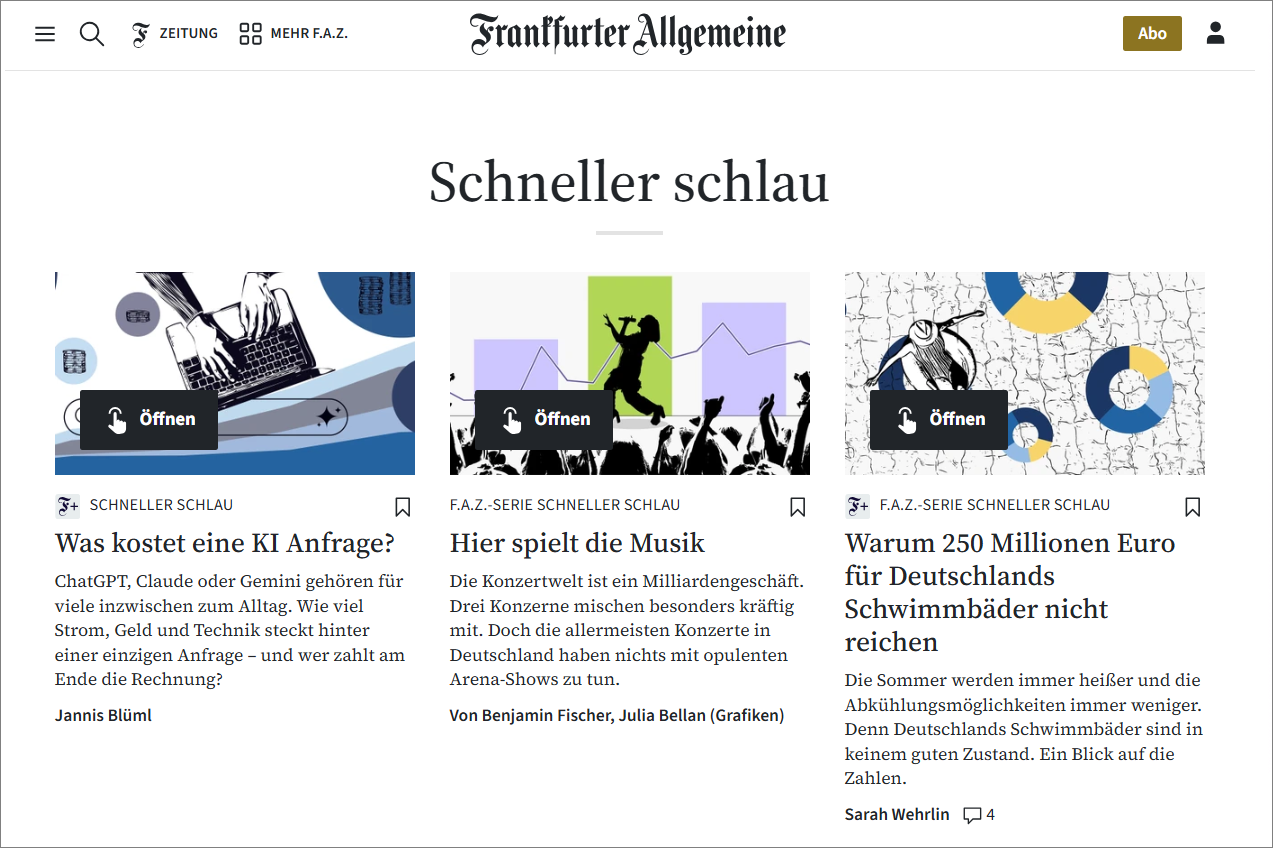
Was für die einen das Kreuzworträtsel ist, ist für die anderen das Zählen von Rechtschreib- und Grammatikfehlern in Zeitungen. In der einst so sprachsicheren FAZ findet man kaum noch fehlerfreie Teaser und Überschriften. Und auch die Texte lassen immer mehr zu wünschen übrig. Über Deklinationsfehler und Fehler bei Zusammen- und Getrenntschreibung wurde schon berichtet, ebenso über andere Fehler bei der Wortbildung. Eine weitere besprochene Kategorie waren redundante Geschlechtsspezifizierungen. In der Ausgabe vom 9. April 2026 hieß es über Averil Cameron: „Die Pionierin inspirierte ganz besonders ihre weiblichen Kolleginnen.“ Ein weiteres Beispiel für Fehler bei Zusammen- und Getrenntschreibung findet sich in der FAZ vom 8. August 2026. Die Überschrift in der Vorschau der Rubrik „Schneller schlau“ lautet „Was kostet eine KI Umfrage?“. Wenn man auf den Artikel selbst geht, wird das Fragezeichen weggenommen, der Fehler aber belassen. Die Komposita sind im Folgenden richtig geschrieben, wie bei „KI-Modelle“ und „KI-Chatbots“ (wobei alle Chatbots auf KI basieren). Womöglich ist also nicht der Autor für den Kopplungsfehler verantwortlich, sondern der Praktikant, der die Überschrift ins System getippt hat. Ferner wird der Name der Firma OpenAI nicht richtig geschrieben, was sich in vielen Medien findet – man will den Schreibweisen der Hersteller nicht folgen, und so wird aus „OpenAI“ einfach „Open AI“, aus „ChatGPT“ wird „Chat GPT“. Aber warum sollte das richtiger sein? Zu den Rechtschreibfehlern kommen Rechenfehler. Für diese sind aber andere zuständig.
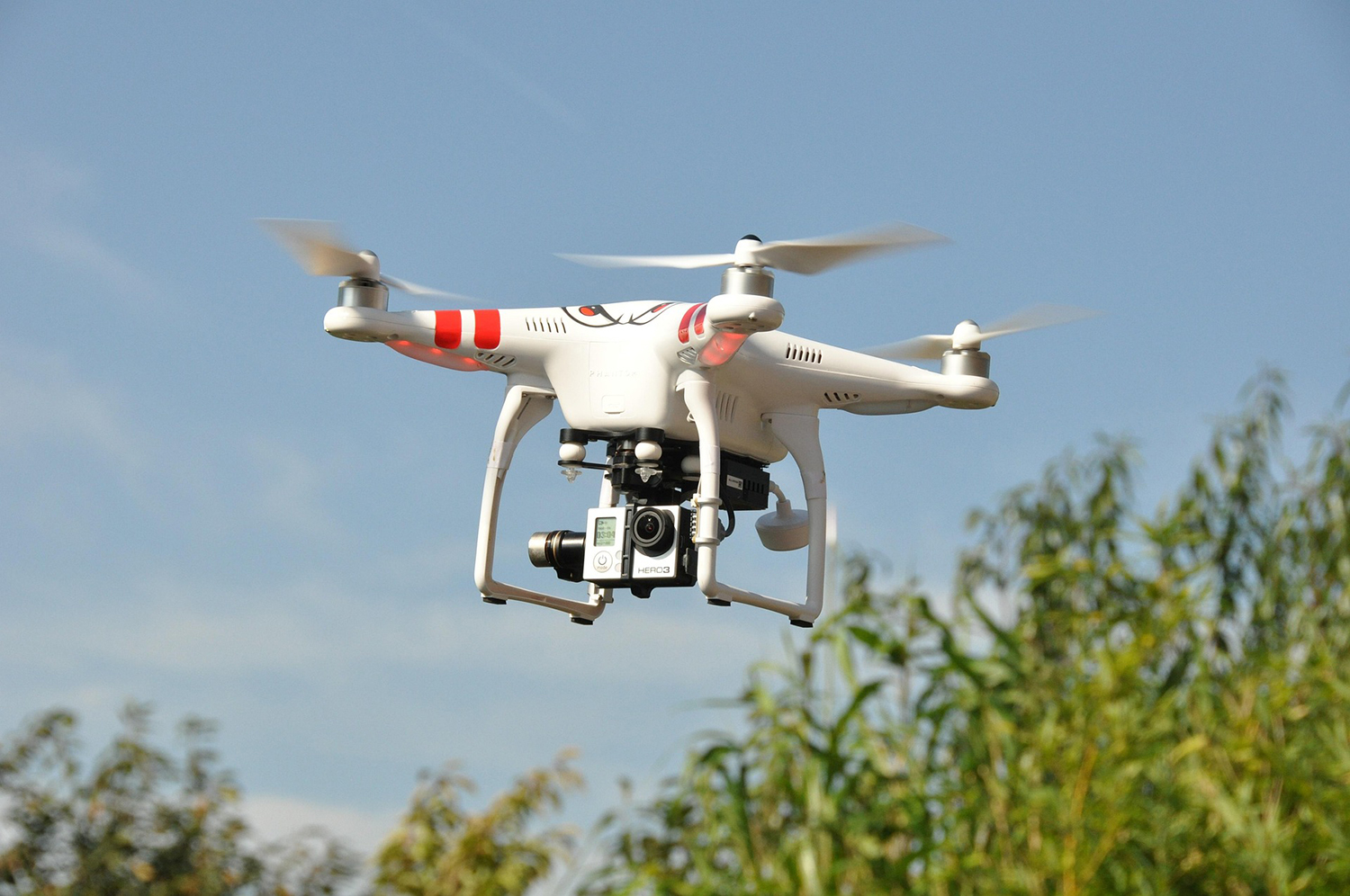
Am Flughafen Leipzig wurde Anfang August 2026 eine Drohne mit Sprengstoff entdeckt. Eine weitere kollidierte vermutlich mit einem Flugzeug. In seinem Mitte 2014 geschriebenen und Anfang 2015 veröffentlichten Artikel über private Drohnen aus informationsethischer Sicht beschrieb Oliver Bendel nicht nur Risiken für Privatsphäre und informationelle Autonomie, sondern wies auch ausdrücklich auf Sicherheitsgefahren im Luftverkehr hin. Er warnte davor, dass private Drohnen mit Flugzeugen zusammenstoßen, abstürzen oder Menschen verletzen können und dass selbst vergleichsweise leichte Fluggeräte ein erhebliches Zerstörungspotenzial besitzen. Ebenso thematisierte er die Möglichkeit, Drohnen zu kapern, um Schaden anzurichten, Überflugverbote zu umgehen oder Angriffe gegen Leib und Leben vorzubereiten. Besonders aufschlussreich erscheint aus heutiger Sicht der Ausblick des Beitrags, in dem kriminelle und terroristische Aktivitäten ausdrücklich erwähnt werden, einschließlich des Szenarios, sogenannte UAV für Sprengstoffanschläge zu instrumentalisieren. Die jüngsten Ereignisse machen deutlich, dass diese damals noch überwiegend theoretischen Überlegungen inzwischen reale sicherheitspolitische Relevanz besitzen und die Forderung nach einem angemessenen rechtlichen und technischen Rahmen aktueller denn je ist. Bereits 2009 hatte Oliver Bendel seinen Roman „Verlorene Schwestern“ vorgestellt, der sich um eine winzige Fotodrohne dreht, mit der ein Junge in Dresden und Umgebung prominente Personen auskundschaftet.
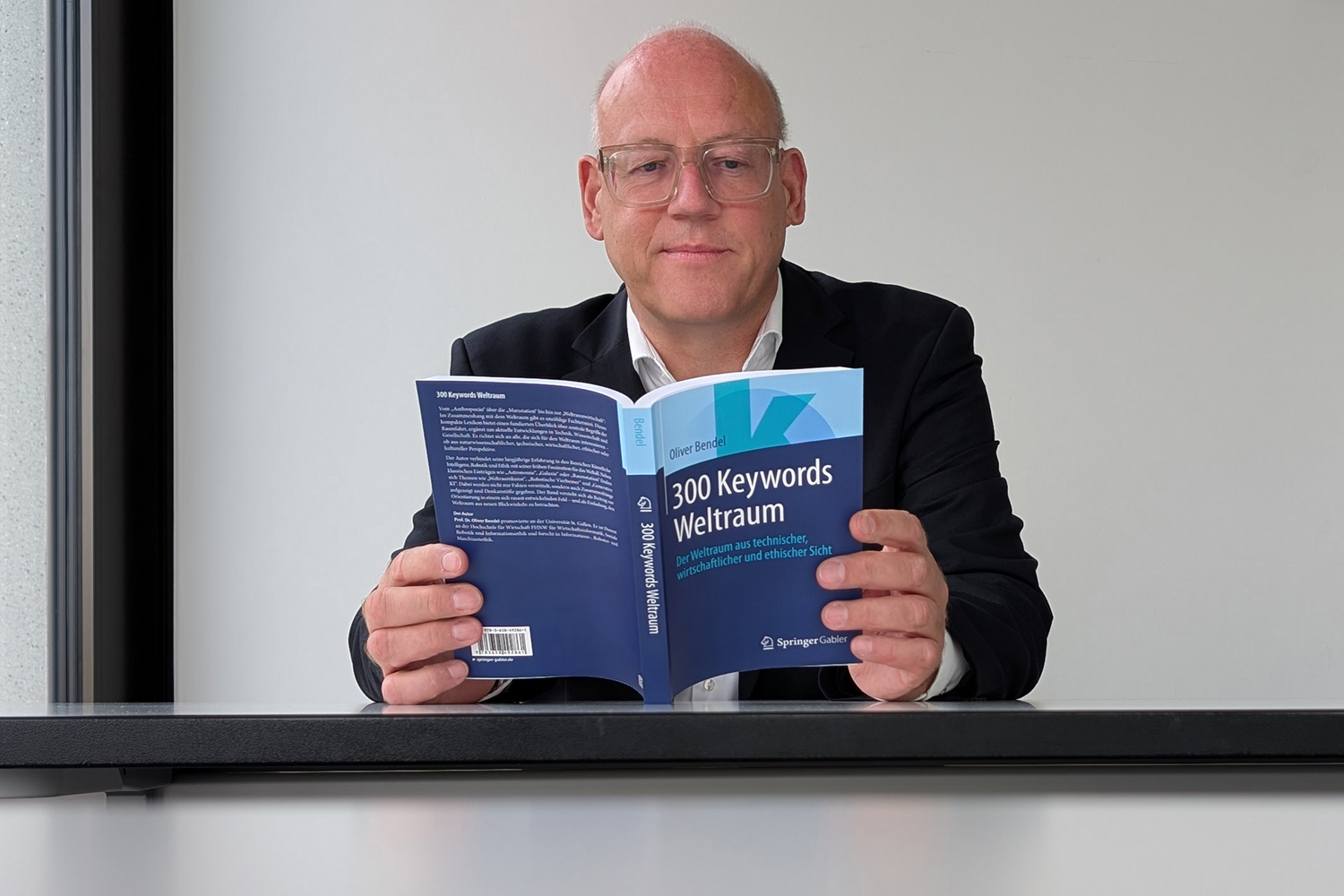
Latein war einst eine wichtige Wissenschaftssprache. Später Französisch. Und Deutsch. Englisch kam (bzw. war schon da), sah (was auch immer) und siegte (über Deutsch und Französisch, während Latein schon am Boden lag). Es wurde nicht nur eine Wissenschaftssprache, es wurde die Wissenschaftssprache. Wer als deutschsprachiger Wissenschaftler deutsche Publikationen in einem englischsprachigen Paper referenziert, wird von den Gutachtern, den Reviewern, schnell zurechtgewiesen. Man kapitulierte vor dem Sprachimperialismus und nahm den Linguizismus – die Geringschätzung und die Ablehnung von Sprachen ohne driftigen Grund – einfach hin. 2022 begann der Siegeszug der Large Language Models (LLMs). Bereits Jahre zuvor hatten diese von sich reden gemacht, etwa im Zusammenhang mit humanoiden Robotern wie Harmony, wie im Buch „Maschinenliebe“ nachzulesen ist, aber OpenAI schuf mit der Bereitstellung von ChatGPT eine neue Ausgangslage. Heute gibt es viele LLMs, und während ihr Deutsch nicht immer zufriedenstellend (ja sogar oft verheerend) ist, ist es ihr Englisch durchaus. Auch die Übersetzung vom Deutschen ins Englische ist bei wissenschaftlichen Texten meist problemlos. Damit stellt sich die Frage, ob Deutsch als Wissenschaftssprache nicht zurückkehren könnte. Viele Geistes- und Sozialwissenschaftler veröffentlichen nach wie vor in dieser Sprache und können sich in ihr – oft anders als im Englischen – präzise und korrekt ausdrücken. Eigentlich könnte der Linguizismus nun enden. Jeder Wissenschaftler könnte wieder in seiner Muttersprache schreiben, und es wäre jedem anderen Wissenschaftler zuzumuten, seine Texte in die eigene Muttersprache (oder eben ins Englische) zu übersetzen. Das wird vermutlich nicht geschehen – der Sprachimperialismus hat längst die Machtverhältnisse geändert. DAAD und Goethe-Institut setzen sich zwar für die deutsche Sprache in der Wissenschaft ein, letzteres freilich eher für eine Karikatur davon, wenn man sich seine Website anschaut („Deutsch Sprechen Online. … Üben Sie mit Muttersprachler*innen in online live Sessions Deutsch zu sprechen!“). Deutsch scheint also für die Wissenschaft verloren. Dennoch könnten Gutachter heutzutage etwas großzügiger in dieser Hinsicht sein. Profitieren würden Autoren in doppelter Hinsicht, nämlich als Urheber von Artikeln, die sie bei Journals und Konferenzen einreichen, und als Urheber von Artikeln, Buchbeiträgen und Büchern, die in deutscher Sprache sind und zwar gelesen, jedoch nicht zitiert werden.
Abb.: Oliver Bendel als Autor eines deutschsprachigen Buchs
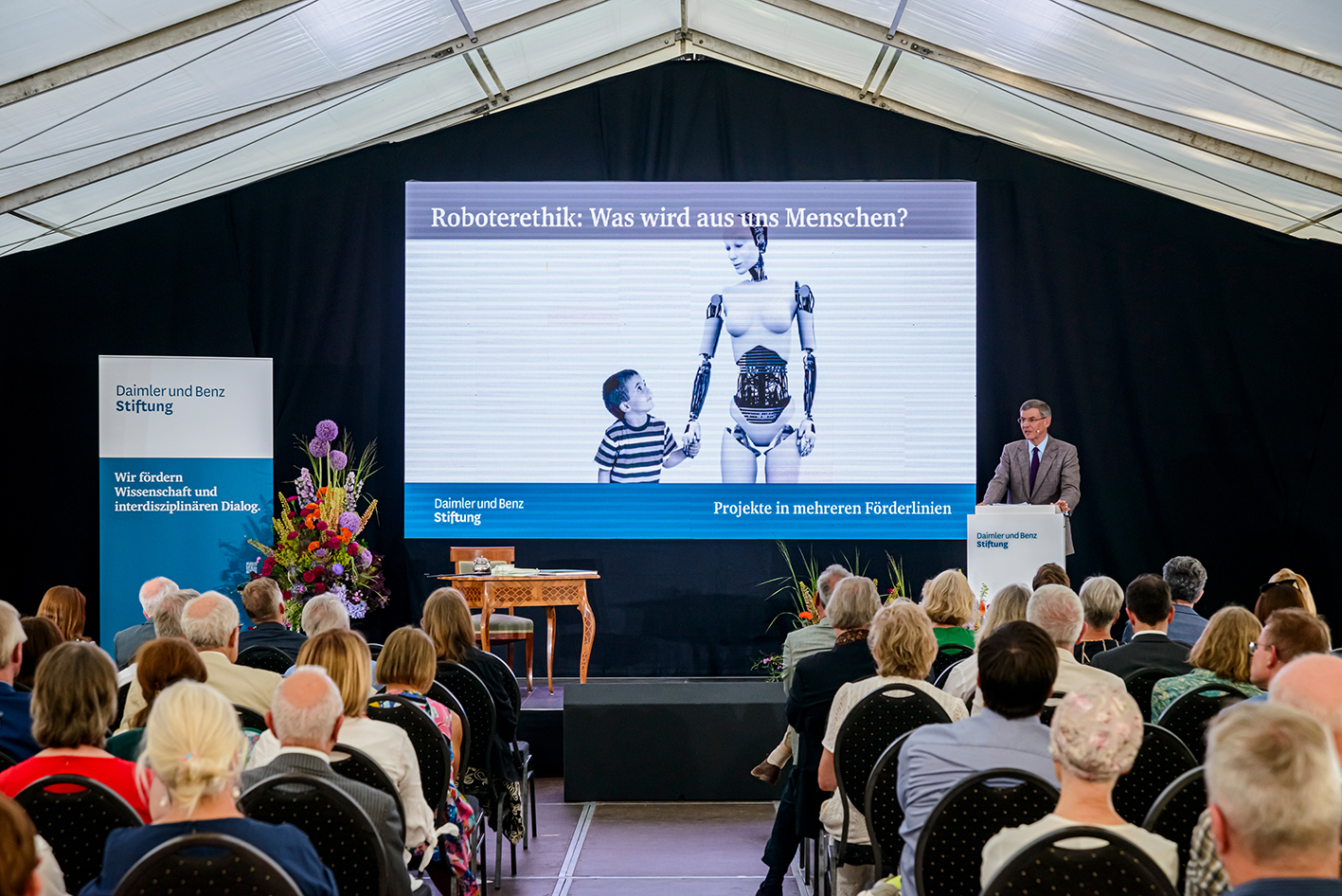
Die Daimler und Benz Stiftung feierte am 24. Juli 2026 das Jubiläum ihres 40-jährigen Bestehens. Die Gäste strömten auf das Areal beim Carl-Benz-Haus in Ladenburg. Die Darstellerin Angela Pfenninger stieg als Bertha Benz in den Benz Patent-Motorwagen Nummer 3. Der Fotograf Jessen Oestergaard drückte ständig auf den Auslöser. Vorstand Prof. Dr. Lutz Gade ging in seinem Vortrag auf die Geschichte der Stiftung ein. Dabei hob er eine Tagung zur Roboterethik (und zur Maschinenethik) hervor, die am 24. November 2015 in Berlin stattgefunden hatte. Eingeladen hatten Cologne Center for Ethics, Rights, Economics and Social Sciences of Health (ceres) und Daimler und Benz Stiftung. Vor dem eigentlichen Programm mit Beginn um 10 Uhr wurde eine Pressekonferenz mit Prof. Dr. Eckard Minx, Prof. Dr. Christiane Woopen, Prof. Dr. Alin Albu-Schäffer und Prof. Dr. Oliver Bendel abgehalten. Im Karl-Storz-Besucher- und Schulungszentrum begann dann der wissenschaftliche Marathon. Minx begrüßte und eröffnete, Woopen führte ein, nicht in ihrer damaligen Funktion als Vorsitzende des Ethikrats, sondern als Leiterin von ceres. Die Grundlagen autonomer Systeme erklärte Albu-Schäffer in seinem Vortrag „Autonomie und Kognition für menschzentrierte Robotik“. Mit „Autonome Systeme und die Selbstbestimmung des Menschen“ war der nächste Komplex betitelt. „Roboterlernen ohne Grenzen?“ von Prof. Dr. Jochen Steil schuf weitere Grundlagen. Dann ging es tief in die Maschinenethik hinein. Bendel referierte über „Die Moral in der Maschine“, wobei er die Designstudien CLEANINGFISH und LADYBIRD und den Prototyp GOODBOT vorstellte, Prof. Dr. Catrin Misselhorn über „Maschinen mit Moral? Theoretische Grundlagen und eine Roadmap für autonome Assistenzsysteme in der Pflege“. Nach der Mittagspause waren Prof. Dr. Hartmut Hirsch-Kreinsen und Prof. Dr. Johannes Weyer an der Reihe. Prof. Dr. Norbert Lammert, damaliger Bundestagspräsident, sprach zur Rolle der Politik, wetterte gegen die Verwendung des Begriffs der Autonomie in den Technikwissenschaften und missverstand damit deren Autonomie bei der Begriffsbildung. Christiane Woopen rundete mit ihrem Schlusswort die Veranstaltung ab. Der Fotograf Matti Hillig war pausenlos umhergeeilt, um die schönsten Bilder einzufangen. All dies hatten diejenigen in Ladenburg wieder vor dem geistigen Auge, die vor elf Jahren in Berlin dabei gewesen waren und nun nach dem Vortrag von Gade begeistert applaudierten.
Abb.: Prof. Dr. Lutz Gade bei seinem Vortrag (Foto: Daimler und Benz Stiftung/Oestergaard)
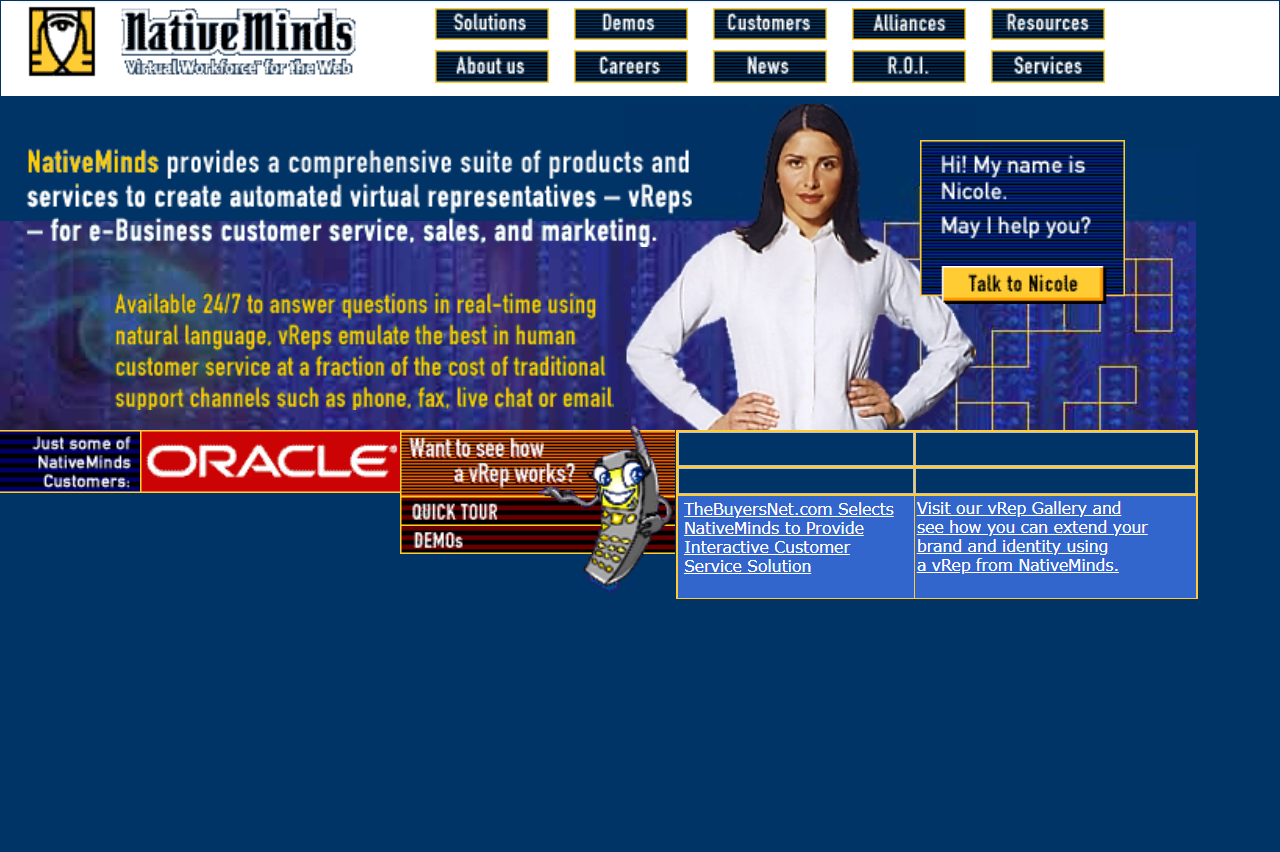
Um das Jahr 2000 zählte NativeMinds zu den bedeutendsten Pionieren ambitionierter Chatbots und virtueller Assistenten und gehörte neben Artificial Life zu den technologischen Vorreitern der Branche. Das Unternehmen entwickelte sogenannte vReps (Virtual Representatives), also Avatare mit Dialogfunktion, die Kunden auf Unternehmenswebsites begrüßten, Fragen in natürlicher Sprache beantworteten und sie bei Support, Vertrieb oder Marketing unterstützten. Anders als viele einfache Chatbots jener Zeit verfügten die vReps über eine eigene Persönlichkeit, konnten den Gesprächskontext berücksichtigen und auf Wissensdatenbanken zugreifen. NativeMinds bezeichnete diese virtuellen Assistenten treffend als „Virtual Workforce for the Web“ – virtuelle Mitarbeiter, die rund um die Uhr verfügbar waren und menschlichen Kundendienst ergänzen oder ersetzen sollten. Auf der eigenen Website begrüßte Nicole die Besucher. Mit ihrer aufrechten Haltung und den in die Hüften gestützten Händen strahlte sie Selbstbewusstsein und Kompetenz aus. Zu den Kunden gehörten unter anderem Oracle, Ford und Nissan. Mit seiner Kombination aus Chatbot, Avatar und KI-gestütztem Kundenberater nahm NativeMinds viele Konzepte moderner KI-Agenten und Conversational-AI-Systeme vorweg. Nach dem Platzen der Dotcom-Blase wurde das Unternehmen 2004 von Verity übernommen, doch seine Technologie gilt bis heute als wichtiger Meilenstein in der Entwicklung intelligenter Dialogsysteme.
Abb.: Die Website von NativeMinds im Jahre 2000 ohne die Newsmeldungen in den rechteckigen Boxen
Vor fünfzehn Jahren veröffentlichte Oliver Bendel den Artikel „Die kleine Schwester der Filmmusik: Soundtracks für E-Books“. Die Idee war ebenso naheliegend wie ungewöhnlich: Warum sollten Bücher nicht – ähnlich wie Filme – von Musik und Klängen begleitet werden? Passende Soundtracks könnten Atmosphäre schaffen, Emotionen verstärken und das Leseerlebnis bereichern. Die Entwicklung verlief allerdings anders als erwartet und erhofft. Zwar entstanden Projekte wie Booktrack, die Musik, Geräusche und Töne sogar an die individuelle Lesegeschwindigkeit anpassten. Größere Aufmerksamkeit und eine entsprechende Nachfrage blieben jedoch aus. Heute konzentriert sich das Unternehmen auf Hörbücher, also ein Medium mit festem zeitlichem Verlauf, bei dem sich Musik wesentlich leichter synchronisieren lässt als beim freien Lesen. Mit generativer KI erhält die Idee nun neue Aktualität. LLMs können den Inhalt eines Buches analysieren, während Audiogeneratoren in Echtzeit eine passende Klangkulisse erzeugen – dynamisch, personalisiert und ohne aufwändig produzierte Soundtracks. Denkbar sind musikalische Motive für Figuren, spezifische Töne für wechselnde Atmosphären oder dezente Geräuschkulissen, die sich dem Lesefortschritt und den Vorlieben des Lesers anpassen. Freilich könnte sich erneut zeigen, dass die meisten Leser gerade die Stille schätzen und ihre eigene Vorstellungskraft keiner musikalischen Interpretation unterordnen möchten. Dennoch könnte die Idee, die vor langer Zeit in die Welt kam, heute unter anderen technischen Voraussetzungen eine zweite Chance erhalten.
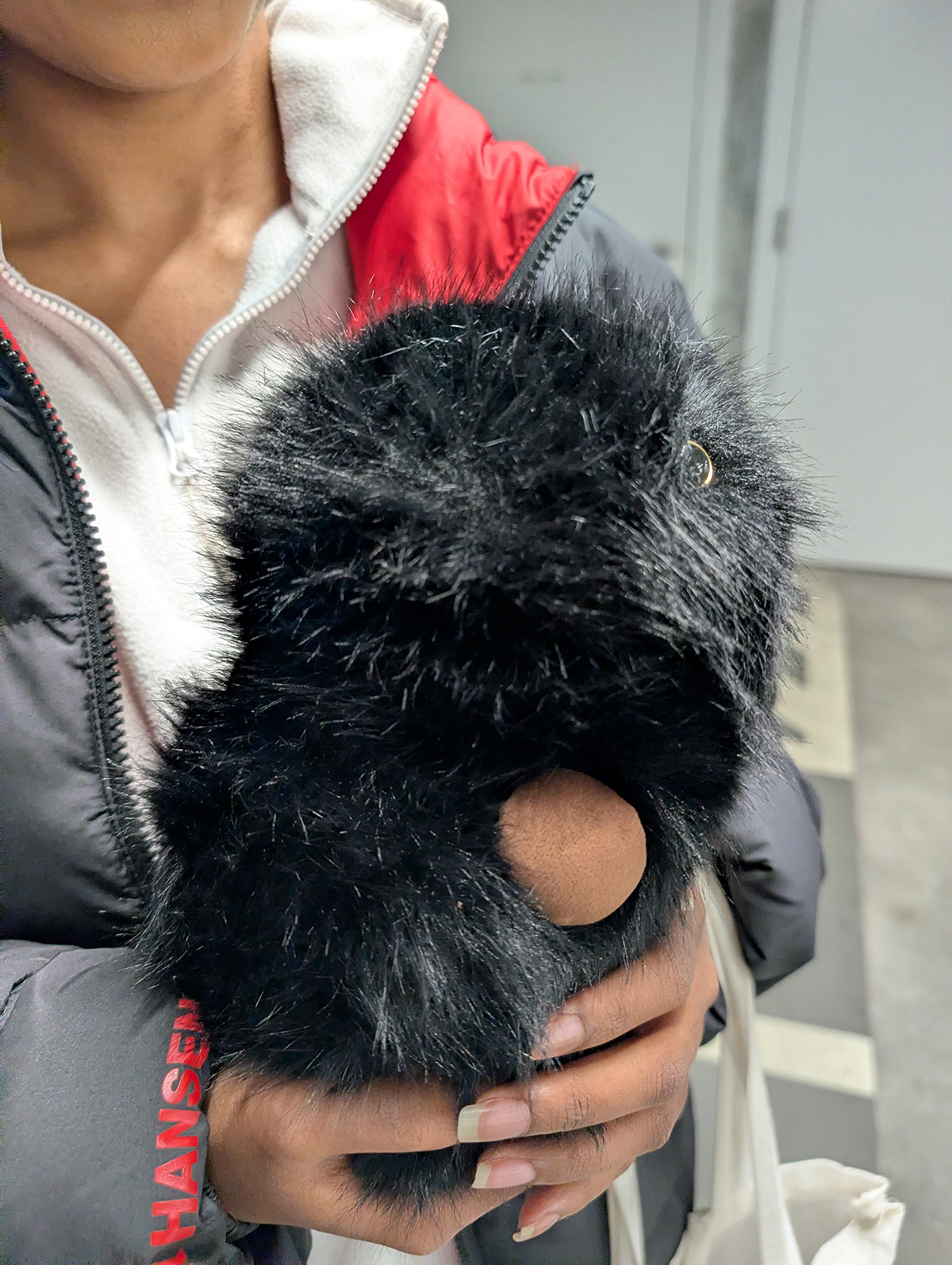
Wie können soziale Roboter den Alltag in Alters- und Pflegeheimen unterstützen? Dieser Frage gehen Cora Pauli, Samira-Salomé Hüsler und Simone Eicher von der Ostschweizer Fachhochschule in einer aktuellen Studie nach. Im Mittelpunkt steht Moflin, dessen Einsatz in drei Schweizer Alters- und Pflegeheimen aus der Perspektive von Fachpersonen untersucht wurde. Die Autorinnen bezeichnen ihn als Sozial Assistiven Roboter (SAR). Die Ergebnisse zeigen, dass Moflin vielfältig eingesetzt werden kann, etwa zur Beruhigung, Aktivierung und Förderung der Kommunikation. Besonders wichtig war dabei, dass die Fachpersonen selbst entscheiden konnten, wann und wie sie den Roboter einsetzen. Diese selbstbestimmte, personenzentrierte Nutzung sowie die einfache Handhabung von Moflin erwiesen sich als wichtige Voraussetzungen für eine nachhaltige Integration in den Pflegealltag. Die drei Autorinnen plädieren dafür, soziale Roboter dieser Art nicht anhand starrer Nutzungsszenarien zu bewerten, sondern Fachpersonen aktiv in die Erprobung einzubeziehen. So lassen sich praxisnahe Einsatzmöglichkeiten identifizieren und die Einführung solcher Systeme in der Langzeitpflege besser verstehen. Die Open-Access-Publikation vom 17. Juli 2026 ist verfügbar über link.springer.com/article/10.1007/s00391-026-02616-8.
Abb.: Auch mit Booboo könnte man eine solche Studie durchführen
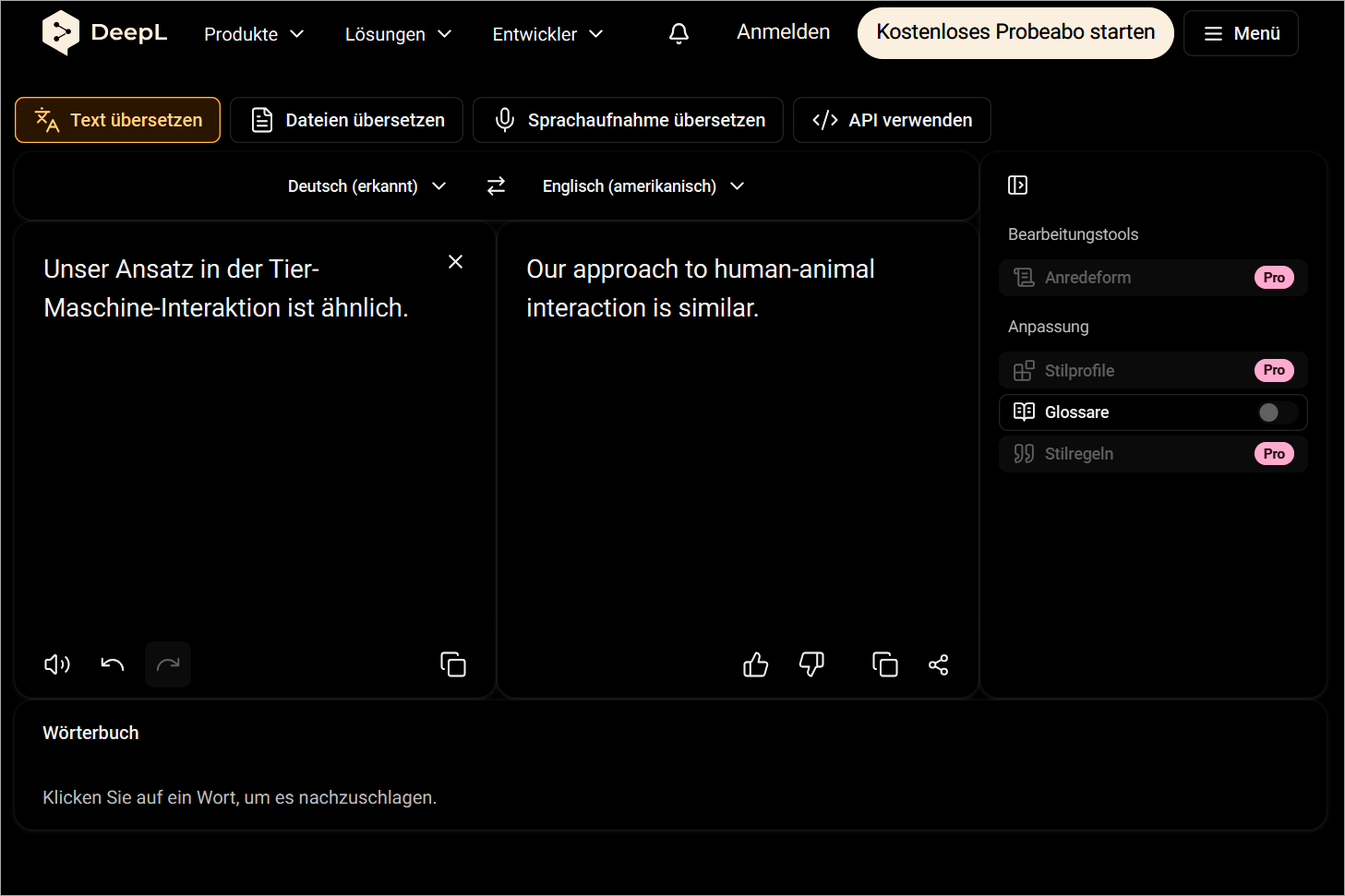
DeepL wirbt für sich mit dem Spruch „Der präziseste Übersetzer der Welt“. Trifft diese Selbsteinschätzung zu? Das kann man durch Tests schnell selbst herausfinden. Teilweise werden Begriffe völlig falsch übersetzt. So macht DeepL aus dem deutschen Satz „Unser Ansatz in der Tier-Maschine-Interaktion ist ähnlich.“ den englischen Satz „Our approach to human-animal-interaction ist similar.“ – korrekt wäre „Our approach to animal-machine interaction ist similar.“ gewesen. Dadurch gewinnt der Text eine ganz andere Bedeutung, und das Tier, das bei dieser Disziplin im Fokus steht, verschwindet. Aus „She is one of the best-known writers in the world“ wird „Sie ist eine der bekanntesten Schriftstellerinnen der Welt“. Dies ist auch bei menschlichen Übersetzern und Autoren ein beliebter Fehler, mit dem die Leistung von Mädchen und Frauen geschmälert wird. Korrekt wäre „Sie ist einer der bekanntesten Schriftsteller der Welt.“ oder „Sie gehört zu den bekanntesten Schriftstellern der Welt.“ … In vielen Fällen verwendet DeepL, wie in früheren Tests gezeigt wurde, nicht einmal Standardsprache. Dies ist auch ein Problem bei ChatGPT und Claude. Sie alle verfolgen eine sprachpolitische Agenda, umgesetzt durch Auswahl der Trainingsdaten, Reinforcement Learning from Human Feedback und Alignment bzw. Prompt Engineering. Man kann in den Einstellungen oder durch Prompts vorgeben, dass Standardsprache verwendet wird, doch zumindest bei ChatGPT wird dies oft ignoriert oder erst nach einer Beschwerde im zweiten Anlauf berücksichtigt. Der präziseste Übersetzer der Welt? Davon kann leider keine Rede sein.
Abb.: DeepL beim Halluzinieren von Wörtern (invertierte Darstellung)
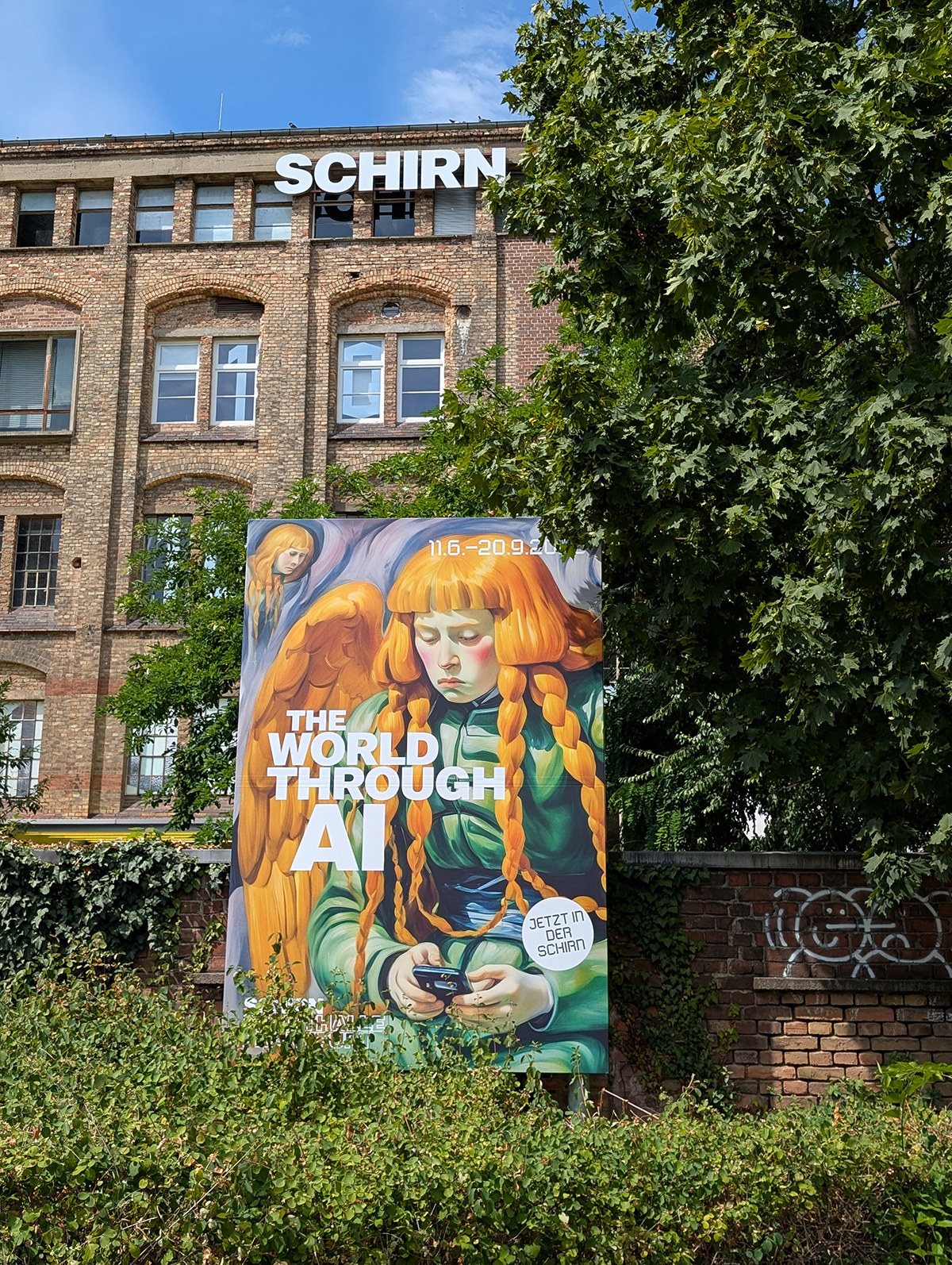
„Die große Sommerausstellung zeigt Kunstwerke aus den letzten zehn Jahren, die sich mit den kognitiven, politischen und ökologischen Dimensionen der KI auseinandersetzen. Eine Reihe von Zeitkapseln – kleine Kuriositätenkabinette – verbinden die Gegenwart mit der Vergangenheit.“ Mit diesen Worten wird die Ausstellung „The World Through AI“ in der Frankfurter Schirn angekündigt, die den Besucher mit manchen Objekten, Videos und Installationen erfreut, etwa mit denen von Holly Herndon und Mat Dryhurst, mit vielen Texten aber in einer Weise belehrt und verwirrt, dass man letztlich enttäuscht das Provisorium in Bockenheim – eine alte Druckerei – verlässt. Es fängt damit an, dass künstliche Intelligenz schon in den beiden ersten Räumen vor allem als böse präsentiert wird. Man fragt sich schnell, warum denn eine Ausstellung mit diesem Fokus stattfindet, wenn man so wenig davon hält. Es ist indes nicht nur so, dass vor allem die Risiken und kaum die Chancen thematisiert werden, sondern auch so, dass man anscheinend gar keine andere Meinung duldet. Es wird Behauptung an Behauptung gereiht, ganz und gar erdrückend, doch ohne jeden Beweis. Manche Darstellungen sind ungenau, einige falsch. So wird suggeriert, dass Halluzinationen ein bewusst eingesetztes Werkzeug psychologischer Beeinflussung seien. Tatsächlich sind sie aber unerwünschte Fehler eines KI-Modells, und gezielte Manipulationen sind davon begrifflich und technisch zu unterscheiden. Man hätte sich insgesamt weniger Aktivismus und mehr Expertise gewünscht. Es gibt seit Jahren zahlreiche Ausstellungen zu und mit künstlicher Intelligenz. In Frankfurt wurde eine Chance vertan.
Abb.: Das Ausstellungsplakat vor dem Druckereigebäude
Oliver Bendel hat seit 2012 eine Reihe von Begriffen und Konzepten in die wissenschaftliche Diskussion eingeführt oder wesentlich geprägt, insbesondere in der Maschinenethik, der Sozialen Robotik und der Technikphilosophie. Die Münchhausen-Maschine (Munchausen Machine) bezeichnet eine unmoralische Maschine, die systematisch Unwahrheiten erzeugt oder verbreitet: Der LÜGENBOT (LIEBOT) ist eine konkrete Ausprägung davon. Er ist ein von Bendel konzipierter und prototypisch realisierter Chatbot, der systematisch lügt. Damit wurden die Möglichkeiten, Gefahren und ethischen Implikationen täuschender Dialogsysteme erforscht. Der umgekehrte Cyborg (Reversed Cyborg, Inverted Cyborg) beschreibt das Gegenstück zum klassischen Cyborg: Es werden keine technischen Strukturen in biologische eingefügt, sondern biologische in technische. „Robot Enhancement“ bezeichnet die gezielte Erweiterung und Verbesserung von Robotern durch zusätzliche sensorische, motorische, kognitive oder kommunikative Fähigkeiten und bildet das Gegenstück zum Human Enhancement. Ein Wearable Social Robot ist ein sozialer Roboter, der am Körper getragen oder an der Kleidung befestigt wird und seinen Benutzer durch Kommunikation, Assistenz oder soziale Interaktion im Alltag begleitet. Mit der mythomorphen Gestaltung beschreibt Bendel einen Gestaltungsansatz für Roboter, bei dem nicht Menschen oder Tiere, sondern Figuren aus Mythologie, Fantasy oder Science-Fiction als Vorbilder dienen. Die Animal-Machine Interaction (Tier-Maschine-Interaktion) bezeichnet ein von Bendel nicht erfundenes, aber geprägtes Forschungs- und Anwendungsfeld, das die Interaktion zwischen Tieren und Maschinen systematisch untersucht und dabei sowohl technische als auch ethische Fragestellungen berücksichtigt. Es geht vor allem um die Gestaltung von Maschinen, nicht um die Erforschung von Tieren, bis hin zur Entwicklung tierfreundlicher Maschinen. Dabei spielt auch die Maschinenethik eine Rolle. Die Stellvertretermaschine mit einer Stellvertretermoral ist ein Konzept der Maschinenethik, bei dem eine Maschine von Menschen vorgegebene moralische Regeln stellvertretend ausführt, ohne selbst über Bewusstsein oder Verantwortlichkeit zu verfügen. Weitere wichtige Ansätze in dieser Disziplin sind annotierte Entscheidungsbäume und Moralmenüs.
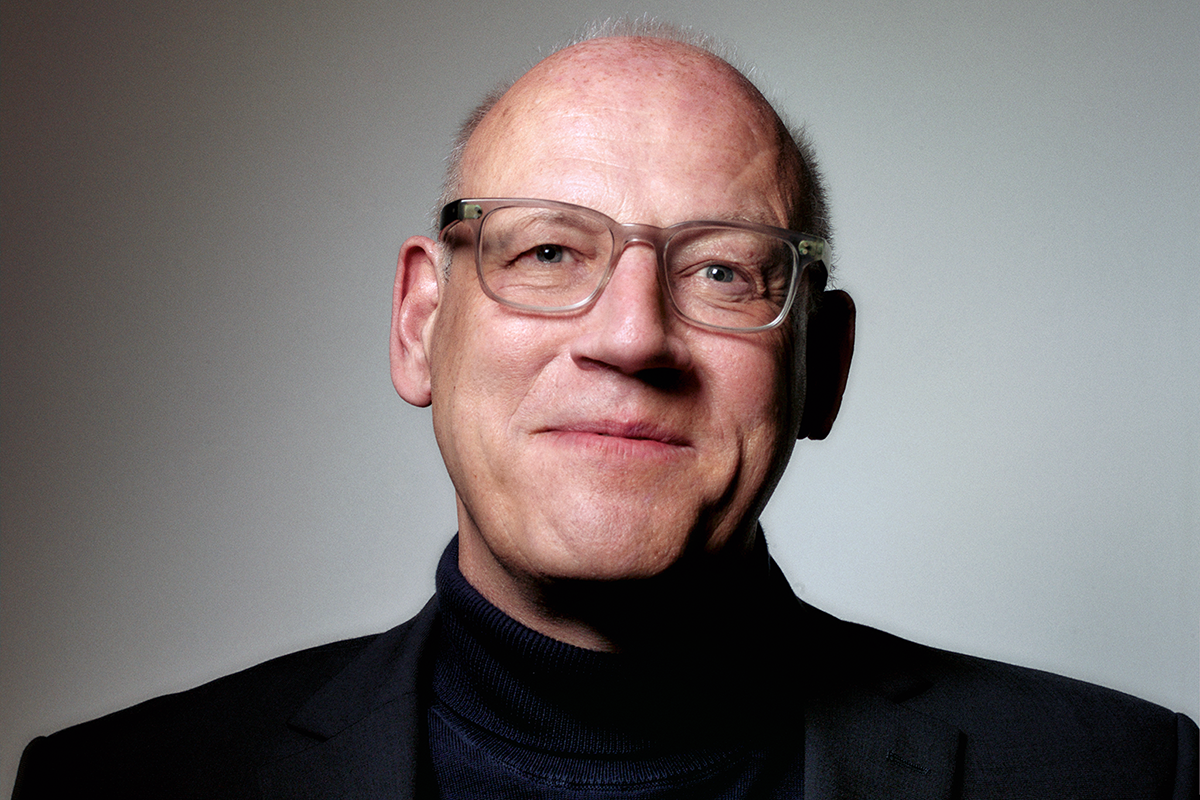
Abb.: Oliver Bendel in Windisch (Foto: Jork Weismann)