With just over two months to go, preparations for the thirteenth edition of the Animal-Computer Interaction International Conference (ACI 2026) are entering their final phase. The conference will take place from December 2 to 5, 2026, at the FHNW Campus Brugg-Windisch in Switzerland – the first ACI conference to be held in continental Europe. Participants can still benefit from the Early-Bird registration rate until September 30, 2026. Researchers and practitioners interested in Animal-Computer Interaction (ACI), Animal-Machine Interaction (AMI), animal welfare, robotics, interaction design, and related fields are encouraged to register soon. ACI 2026 is pleased to receive support from the City of Brugg, the Municipality of Windisch, and Rehkitzrettung Schweiz. Their involvement underlines the strong connection between the international conference and its host region. Rehkitzrettung Schweiz will also be present at the conference. The organization’s work is particularly relevant to this year’s focus on Animal-Machine Interaction. Its activities demonstrate in a very concrete way how humans, animals, and machines can interact for the benefit of animals: drones equipped with thermal imaging cameras are used to locate young deer hidden in fields before agricultural mowing takes place, helping to prevent injuries and deaths. This practical application provides an excellent example of questions at the heart of ACI 2026: How can technologies and autonomous systems interact with animals and their environments? How can such systems support animal welfare? And how should they be designed and deployed responsibly? Further information on registration, the program, workshops, and participation is available on the ACI 2026 website.
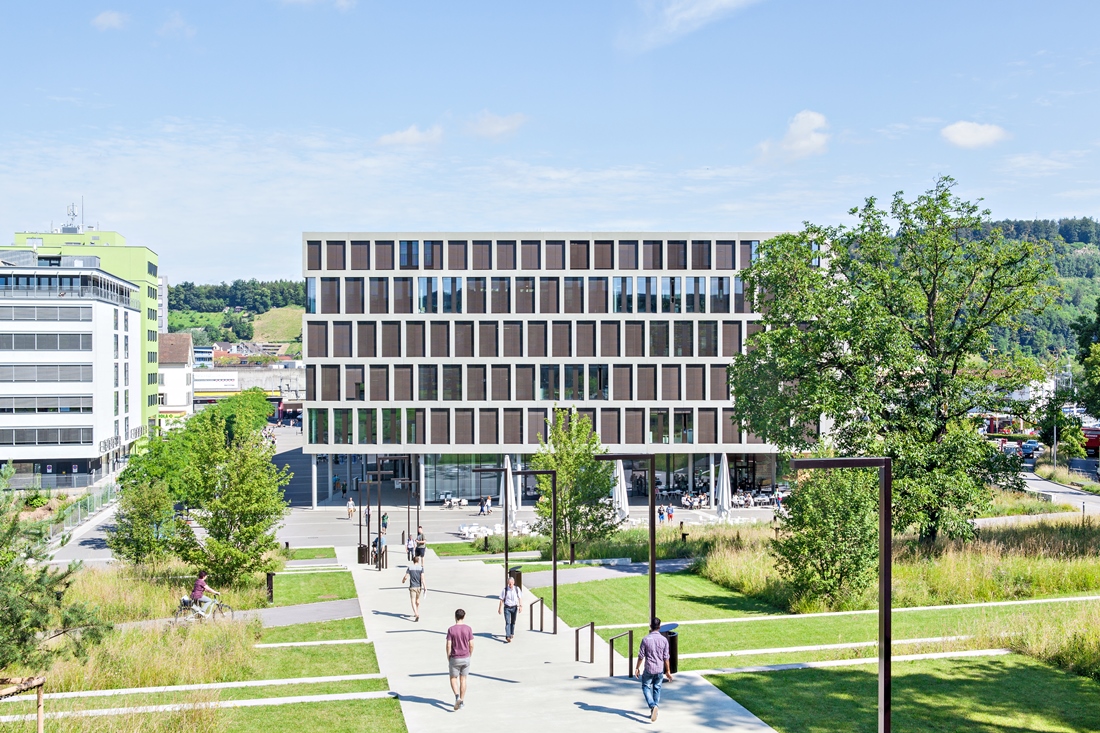
Fig.: The Haller Building on the FHNW Brugg-Windisch Campus
In exactly three months, the thirteenth edition of the Animal-Computer Interaction International Conference (ACI 2026) will begin. The conference will take place from December 2 to 5, 2026, at the FHNW Campus Brugg-Windisch in Switzerland. For the first time in its history, the ACI conference will be held in continental Europe. Registration has been open since the end of July, and preparations for the conference are well underway. All submitted papers have now been peer-reviewed, and acceptance and rejection notifications have been sent to the authors. General Chair Oliver Bendel is pleased to see the conference program taking shape and looks forward to welcoming the ACI community to Brugg-Windisch in December. This year’s conference will also feature three workshops, providing opportunities for focused discussion, exchange, and collaboration on topics relevant to Animal-Computer Interaction and related fields. ACI 2026 brings together perspectives from computer science, informatics, engineering, interaction design, animal behavior and welfare science, veterinary science, ecology, sociology, philosophy, and related disciplines. The conference provides a forum for theoretical, methodological, empirical, and ethical work that advances dialogue around animal-centered research and the design of computing-enabled systems. In an increasingly networked world shaped by pervasive technologies, animals – both human and nonhuman – are entangled in complex webs of interaction. ACI 2026 will explore how technology shapes human-animal relationships, how large-scale technological deployments affect animals, and how future systems can be designed responsibly and ethically. The conference also includes work in Animal-Machine Interaction (AMI), exploring interaction and communication between animals and machines, including autonomous systems such as drones and robots. All information about the conference, program, workshops, and participation is available on the ACI 2026 website: www.aciconf.org.
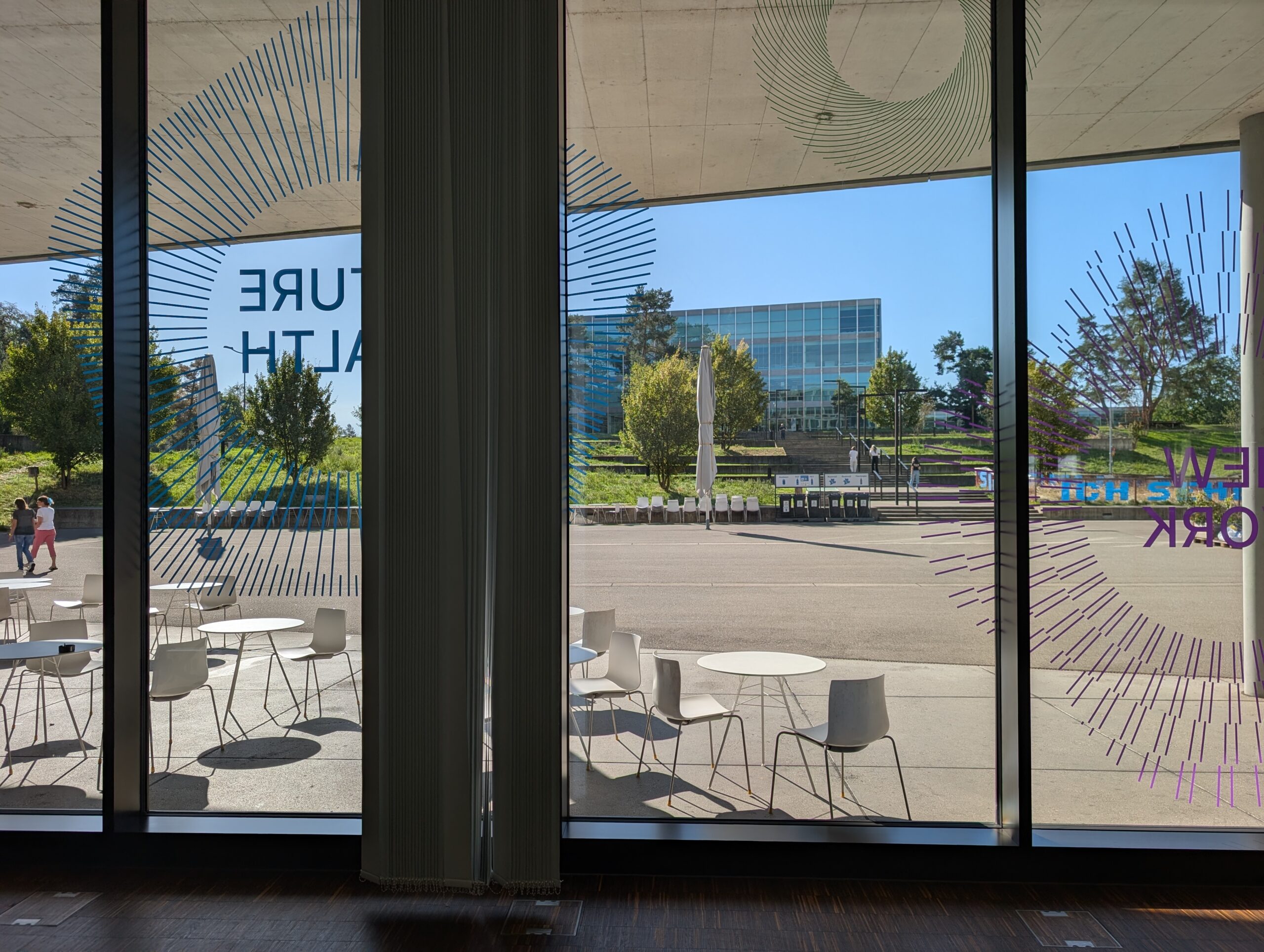
Abb.: A view from the conference hall toward the iconic Haller Building
Robophilosophy 2026 kicked off on August 11, 2026, at University College Dublin (UCD) in Dublin, Ireland. Held under the theme „Connected Futures – Nature, Robots, and Society“, the conference runs from August 11–14 and brings together researchers from a wide range of disciplines to explore how robotics and artificial intelligence are transforming human societies and the natural world. On the first day, Prof. Dr. Oliver Bendel from the FHNW School of Business presented his paper „Towards a Discipline of Animal-Machine Interaction: Ethical and Design Challenges of Machines in Animal Habitats“ in the session „Environmental Robotics and Society“. From the abstract: „As autonomous and semi-autonomous machines such as robots and drones increasingly enter animal habitats, new ethical and conceptual challenges emerge. This article proposes animal-machine interaction (AMI) as a distinct discipline concerned with the design and governance of technologies operating in relation to animals. After clarifying core concepts and delineating AMI from related fields, the article highlights the role of machine ethics in developing animal-friendly systems. Selected application examples illustrate how machines can reduce negative impacts on animals and, in some cases, support animal survival through animal-friendly design. The ethical discussion addresses both opportunities and risks of technological intervention in animal habitats. It is becoming clear that AMI is an increasingly important field of research, but one that must remain open to critical reflection and reorientation.“ The proceedings, containing all conference papers, will be available in late 2026. For those who don’t want to wait: Oliver Bendel recently published a short book on animal-machine interaction with Springer.
Die Robophilosophy ist neben der ICSR die vielleicht wichtigste Konferenz, wenn es um philosophische und soziale Aspekte in der Sozialen Robotik geht. Der Begriff der Roboterphilosophie wird unterschiedlich verstanden. Während die Organisatoren ihn auf die Soziale Robotik beziehen, hat ihn Oliver Bendel – Technikphilosoph und Betreiber der Plattform robophilosophy.com – gegenüber der Robotik insgesamt geöffnet, bezieht also z.B. auch ontologische, ästhetische und ethische Aspekte der Industrierobotik und der Servicerobotik mit ein. Die Robophilosophy ist eine Biennale, die zuletzt in Aarhus und Helsinki stattfand. Dieses Mal trifft man sich vom 11. bis 14. August 2026 in Dublin. Am Nachmittag des ersten Tags wird Session 2 zu „Environmental Robotics and Society“ durchgeführt, mit Oliver Bendel als Chair. Janko Munjić referiert zum Thema „Posthuman Victims in the Anthropocene: Environmental Social Robots, Layered Harm, and the Edges of Criminal Law“. Oliver Bendel selbst hält den Vortrag „Towards a Discipline of Animal-Machine Interaction: Ethical and Design Challenges of Machines in Animal Habitats“. Es folgen Catherine F. Botha mit „Ecobots and Ecological Capabilities: Ethical Reflections on Robots as Functional Ecological Agents“ und Ghulam E. Mustafa Abro and Johanna Seibt mit „Aerial Robotics in Society: Energy, Ethics, and Accountability for Sustainable Monitoring“. Parallel findet Session 1 zu „Responsible Technology Development“ statt, mit Sun Park als Chair. Zu den Vortragenden gehört Katharina Kühne, die das Paper „No Red Romance for Robots? Investigating the Red Attraction Effect in Humanlike Robots“ von E. L. M. Waller, Diana P. Edenburger, Oliver Bendel, Martin H. Fischer und Katharina Kühne vorstellt.
The ACI 2026 International Conference will take place from December 2–5, 2026, on the FHNW campus in Brugg-Windisch, Switzerland, marking the first time the event is held in continental Europe. Registration is now open, with Early Bird rates available until September 30, 2026. The conference continues a tradition that has brought the Animal-Computer Interaction community to Glasgow, North Carolina, Newcastle, Bloomington, Milton Keynes, Haifa, and Atlanta, reinforcing its position as a leading venue for research at the intersection of animals and technology. As the field continues to grow, researchers and practitioners explore how technology shapes animals’ lives, welfare, cognition, and social dynamics while developing animal-centered systems and methods that embrace multispecies perspectives. The conference maintains its commitment to interdisciplinary collaboration across biology, technology, and cultural studies, supporting work that seeks to design ethically grounded, welfare-enhancing, and inclusive technological futures for all animals, humans included. ACI 2026 also features a Special Issue on Animal-Machine Interaction. The proceedings will be published in the ACM library. The conference will be hosted by Prof. Dr. Oliver Bendel, FHNW School of Business.
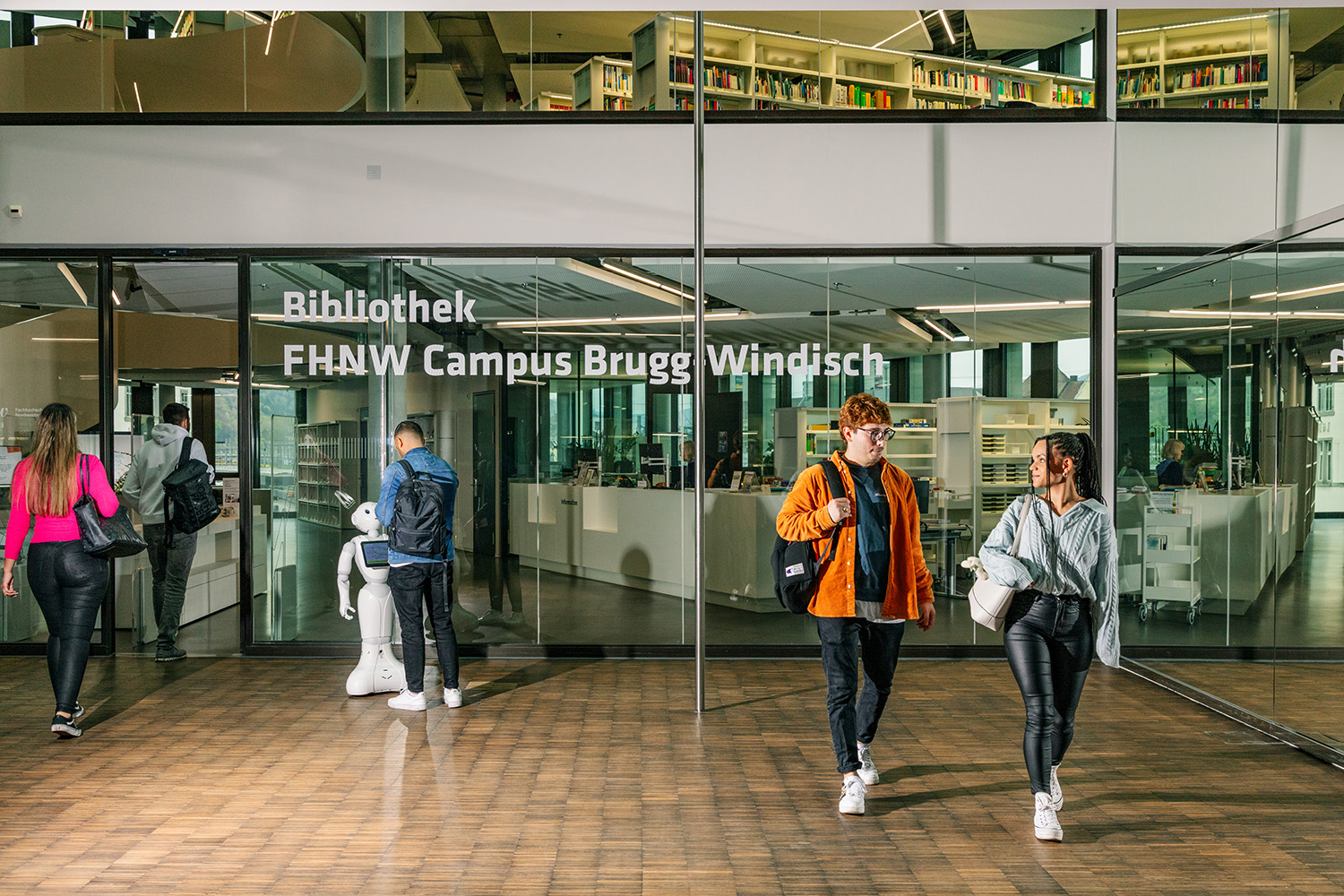
Fig.: At Campus Brugg-Windisch (Photo: Pati Grabowicz)
On June 23, 2026, Oliver Bendel gave a presentation on animal-machine interaction to Prof. Dr. Emily Cross’s research group at ETH Zurich. He had been invited by Dr. Amol Deshmukh, whom he had met at the ICSR in Qatar and had seen several times since then. From the announcement text of „Fundamentals and Examples of Animal-Machine Interaction“: „Animal-Machine Interaction (AMI) explores encounters and interactions between animals and machines – from traditional devices, vehicles, aircraft, and agricultural machinery to networked autonomous robots and AI systems. At its core are perception through sensors and senses, interaction and communication between animals and machines, and the question of how these encounters can be designed from technical, organizational, and ethical perspectives to reduce risks for animals while unlocking benefits for both animals and humans. In his lecture, Prof. Dr. Oliver Bendel presents the fundamentals of Animal-Machine Interaction and describes prototypes and research projects in the field. He also outlines what may become possible and what can be expected in this area of research over the coming years.” The participants were very interested and asked several questions about this new and fascinating field. Springer Gabler recently published a slim volume titled „Tier-Maschine-Interaktion (Animal-Machine Interaction)“ by Oliver Bendel.
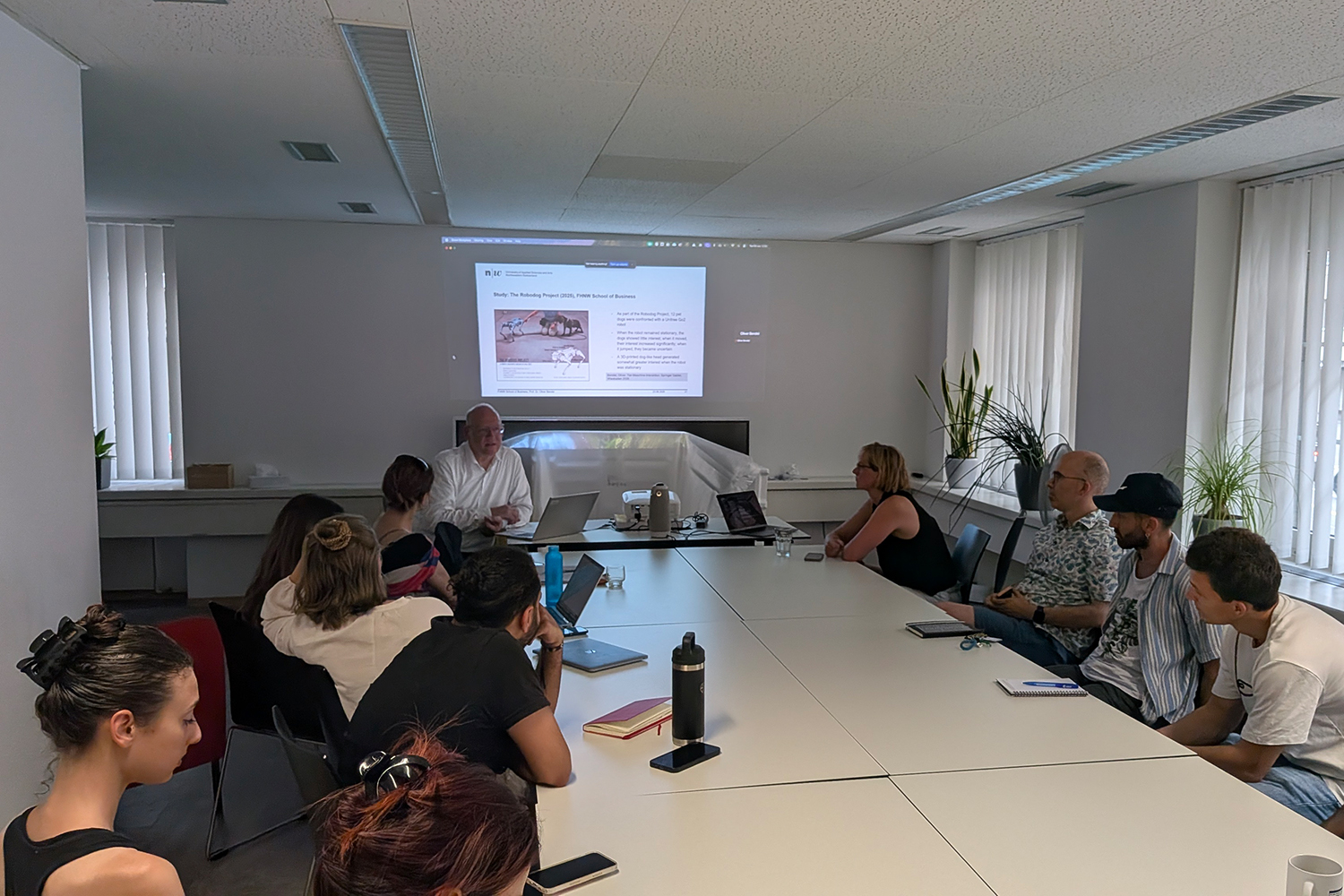
Fig.: Oliver Bendel during his talk (Photo: Amol Deshmukh)
The Animal-Computer Interaction International Conference 2026 (ACI 2026) invites contributions for its thirteenth edition. The conference seeks theoretical, methodological, empirical, and ethical work that advances dialogue around animal-centered research and the design of computing-enabled systems. ACI brings together perspectives from computer science, informatics, engineering, interaction design, animal behavior and welfare science, veterinary science, ecology, sociology, philosophy, and related disciplines, with the aim of further developing Animal-Computer Interaction as a field. In an increasingly networked world shaped by pervasive technologies, animals – both human and nonhuman – are entangled in complex webs of interaction. These interactions may be direct or indirect, physical or cognitive, distributed or dyadic, synchronous or asynchronous. Contributions are encouraged that critically examine how technology shapes human-animal relationships, how large-scale technological deployments affect animals, and how future systems can be designed responsibly and ethically. The conference also welcomes submissions in Animal-Machine Interaction (AMI), which explores interaction and communication between animals and machines, including autonomous systems such as drones and robots. AMI focuses on designing machines that benefit animals and safeguard their interests, supporting survival and well-being. The submission deadline for Research Papers and Emerging Work Papers has been extended by one week and is now May 22, 2026. The deadline for Workshop Proposals remains unchanged at June 1, 2026. All submissions will be peer-reviewed. Further information is available at www.aciconf.org, and submission details can be found at www.aciconf.org/call-for-contributions.
Fig.: Extension of the submission deadline for ACI 2026
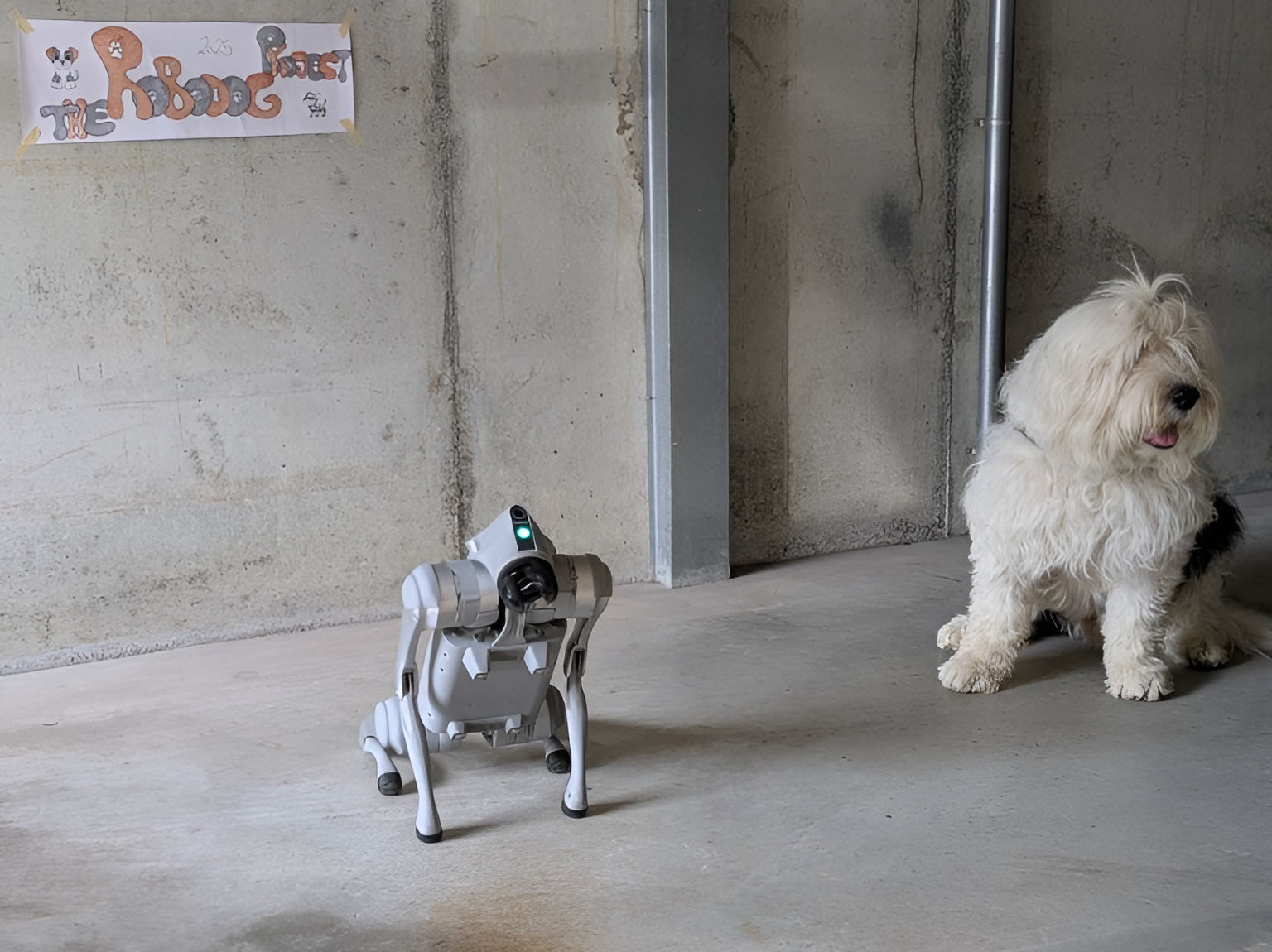
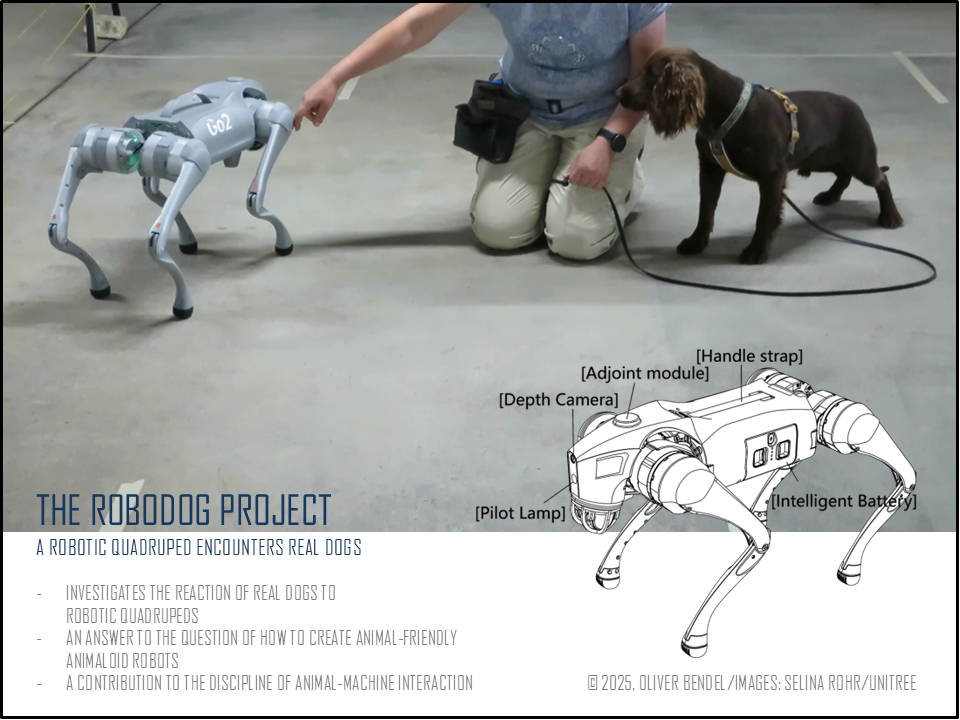
Im neuen Buch „Tier-Maschine-Interaktion“ von Oliver Bendel (Springer Gabler, 2026) werden zahlreiche Projekte vorgestellt, die Begegnungen zwischen Tieren und Robotern bzw. Drohnen zum Gegenstand haben. Dazu gehört die „Robodog“-Studie, die 2025 an der Hochschule für Wirtschaft FHNW durchgeführt wurde. Selina Rohr untersuchte, wie Haushunde auf den vierbeinigen Roboter Unitree Go2 – von Projektinitiator Oliver Bendel Bao genannt – reagieren und wie ihre Besitzer solche Roboter in gemeinsam genutzten öffentlichen Räumen wahrnehmen. Es zeigte sich, dass die meisten Hunde vorsichtig, aber nicht aggressiv waren. Das Interesse nahm zu, sobald sich der Roboter bewegte, während visuelle Modifikationen kaum Wirkung zeigten. Solche Projekte sind wichtig, weil Begegnungen zwischen Tieren und Robotern ständig zunehmen, in der Landwirtschaft, aber auch in Ballungsgebieten und Haushalten. Gerade erleben robotische Vierbeiner wie Spot und Unitree Go2 sowie robotische Zweibeiner wie Digit, Apollo, Figure 03 und NEO einen Boom, wobei letztere als Allzweckroboter vermarktet werden. Sie alle müssen nicht nur menschenfreundlich, sondern auch tierfreundlich gestaltet werden. Das Buch „Tier-Maschine-Interaktion“ kann über link.springer.com/book/10.1007/978-3-658-50921-7 heruntergeladen bzw. erstanden werden.
Abb.: Eine Begegnung im „Robodog“-Projekt (Foto: Selina Rohr)
Am 20. April 2026 ist das Buch „Tier-Maschine-Interaktion“ von Prof. Dr. Oliver Bendel bei Springer Gabler erschienen. Es gehört zur Essentials-Reihe, in der schmale Bücher (50 – 60 Seiten) erscheinen, in denen alles auf den Punkt gebracht wird. Das Forschungsfeld hat Überschneidungen mit der Tier-Computer-Interaktion (Animal-Computer Interaction). Man spricht auch von Animal-Machine Interaction. Aus dem Klappentext: „Dieses essential gibt eine kompakte Einführung in die Disziplin bzw. das Forschungs- und Anwendungsfeld der Tier-Maschine-Interaktion (TMI). Es zeigt, wie Tiere und Maschinen in unterschiedlichen Kontexten zusammentreffen und miteinander bestehen, welche Chancen und Risiken sich daraus ergeben und welche Perspektiven sich für Wissenschaft, Wirtschaft und Politik eröffnen. Ziel ist es, die Leser für die Potenziale und Herausforderungen der Tier-Maschine-Interaktion zu sensibilisieren, Orientierung im interdisziplinären Diskurs zu geben und Anregungen für Forschung, Entwicklung und Entscheidungsprozesse zu liefern.“ Oliver Bendel beschäftigt sich seit 2012 mit der Tier-Maschine-Interaktion und hat mehrere tierfreundliche Maschinen entwickelt. Dies ist nach zahlreichen Artikeln und Buchbeiträgen sein erstes Buch zu diesem Forschungsfeld. Es enthält zwei Abbildungen, drei Tabellen und mehrere Boxen mit Definitionen und Hintergrundinformationen. Es kann über link.springer.com/book/9783658509200 heruntergeladen bzw. erstanden werden.
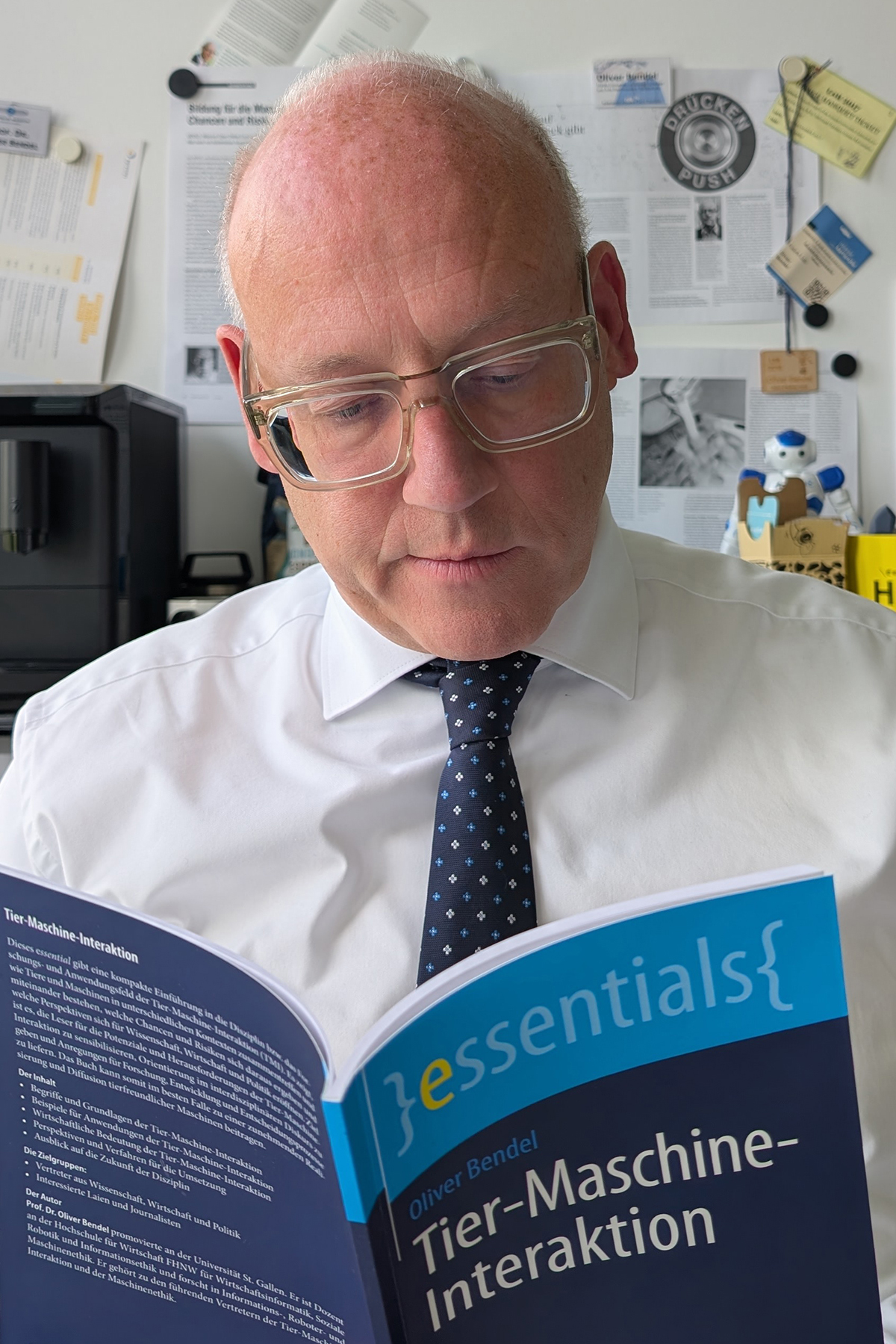
Abb.: Oliver Bendel in seinem Büro (Foto: Jork Weismann)
The Animal-Computer Interaction International Conference 2026 (ACI 2026) invites contributions for its thirteenth edition. The conference seeks theoretical, methodological, empirical, and ethical work that advances dialogue around animal-centered research and the design of computing-enabled systems. ACI brings together perspectives from computer science, informatics, engineering, interaction design, animal behavior and welfare science, veterinary science, ecology, sociology, philosophy, and related disciplines, with the aim of further developing Animal-Computer Interaction as a field. In an increasingly networked world shaped by pervasive technologies, animals – both human and nonhuman – are entangled in complex webs of interaction. These interactions may be direct or indirect, physical or cognitive, distributed or dyadic, synchronous or asynchronous. Contributions are encouraged that critically examine how technology shapes human-animal relationships, how large-scale technological deployments affect animals, and how future systems can be designed responsibly and ethically. The conference also welcomes submissions in Animal-Machine Interaction (AMI), which explores interaction and communication between animals and machines, including autonomous systems such as drones and robots. AMI focuses on designing machines that benefit animals and safeguard their interests, supporting survival and well-being. The submission deadline for Research Papers and Emerging Work Papers has been extended by two weeks and is now May 15, 2026. The deadline for Workshop Proposals remains unchanged at June 1, 2026. All submissions will be peer-reviewed. Further information is available at www.aciconf.org, and submission details can be found at www.aciconf.org/call-for-contributions.
Ticro Goto ist Historiker und Ethnologe. Er studierte an der Kunsthochschule Kassel, der Freien Universität Berlin und der Humboldt-Universität zu Berlin. Zu seinen Veröffentlichungen zählen „Cyberfakte“ (2016), „Der Ewige Palast“ (2024) und „Kreativer Suizid: Rauchen, Hunger und die Lüge vom inneren Kind“. Er schreibt und forscht auch zu Schweinen und hat ihnen in seinem Buch „Seuchen“ ein ganzes Kapitel gewidmet. Mit Prof. Dr. Oliver Bendel war er im Gespräch über Tierethik, Maschinenethik und Tier-Maschine-Interaktion. Der Podcast erschien am 28. März 2026 auf kokos-und-zitrone.de. Zuletzt kamen dort Pero Mićić, Falco Aust und Gunter Dueck zu Wort. Auf seiner Website schreibt Ticro Goto: „Oliver Bendel und ich sprechen darüber, warum wir Maschinen bauen mussten, um zu beweisen, dass Tiere keine Maschinen sind. Über Mähroboter mit Gewissen und Schweine, die klüger sind als Hunde. Über KI, die Walgesang entschlüsselt und Fledertieren beim Streiten zuhört.“ Der Podcast mit dem Titel „Die Sprache der Tiere“ kann über kokos-und-zitrone.de/p/die-sprache-der-tiere angehört werden.
Arianna Ferrari, PhD, and Dr. iur. Dr. h.c. Antoine F. Goetschel will deliver the conference keynote addresses at the Animal-Computer Interaction International Conference 2026 (ACI 2026) at the FHNW Campus Brugg-Windisch, Switzerland. Arianna Ferrari, PhD, is based at the AIT Austrian Institute of Technology, Austria’s largest research and technology organization. She is an ethicist and philosopher of science and technology with extensive experience in technology assessment, the critical evaluation of visions of technological futures (vision assessment), foresight, and human-animal studies. Dr. iur. Dr. h.c. Antoine F. Goetschel is a lawyer and former official animal lawyer for the Canton of Zurich in Switzerland. For more than three decades, he has worked at the intersection of law, ethics, and public policy, representing the interests of animals within legal systems and contributing to the development of animal protection standards at both national and international levels. The ACI International Conference is the leading conference in the field of animal-computer interaction. This year, the conference, hosted by Prof. Dr. Oliver Bendel, will include a dedicated call for contributions on animal-machine interaction. Further information is available at www.aciconf.org.
Fig.: The FHNW Campus Brugg-Windisch (Foto: WEISSWERT C. Morin & M. Indermaur)
The Animal-Computer Interaction International Conference 2026 (ACI 2026) invites contributions for its thirteenth edition. The conference seeks theoretical, methodological, empirical, and ethical work that advances dialogue around animal-centered research and the design of computing-enabled systems. ACI brings together perspectives from computer science, informatics, engineering, interaction design, animal behavior and welfare science, veterinary science, ecology, sociology, philosophy, and related disciplines, with the aim of further developing Animal-Computer Interaction as a field. In an increasingly networked world shaped by pervasive technologies, animals – both human and nonhuman – are entangled in complex webs of interaction. These interactions may be direct or indirect, physical or cognitive, distributed or dyadic, synchronous or asynchronous. Contributions are encouraged that critically examine how technology shapes human-animal relationships, how large-scale technological deployments affect animals, and how future systems can be designed responsibly and ethically. The conference also welcomes submissions in Animal-Machine Interaction (AMI), which explores interaction and communication between animals and machines, including autonomous systems such as drones and robots. AMI focuses on designing machines that benefit animals and safeguard their interests, supporting survival and well-being. Research Papers and Emerging Work Papers are due May 1, 2026, and Workshop Proposals are due June 1, 2026. All submissions will be peer-reviewed. Further information is available at www.aciconf.org, and submission details can be found at www.aciconf.org/call-for-contributions.
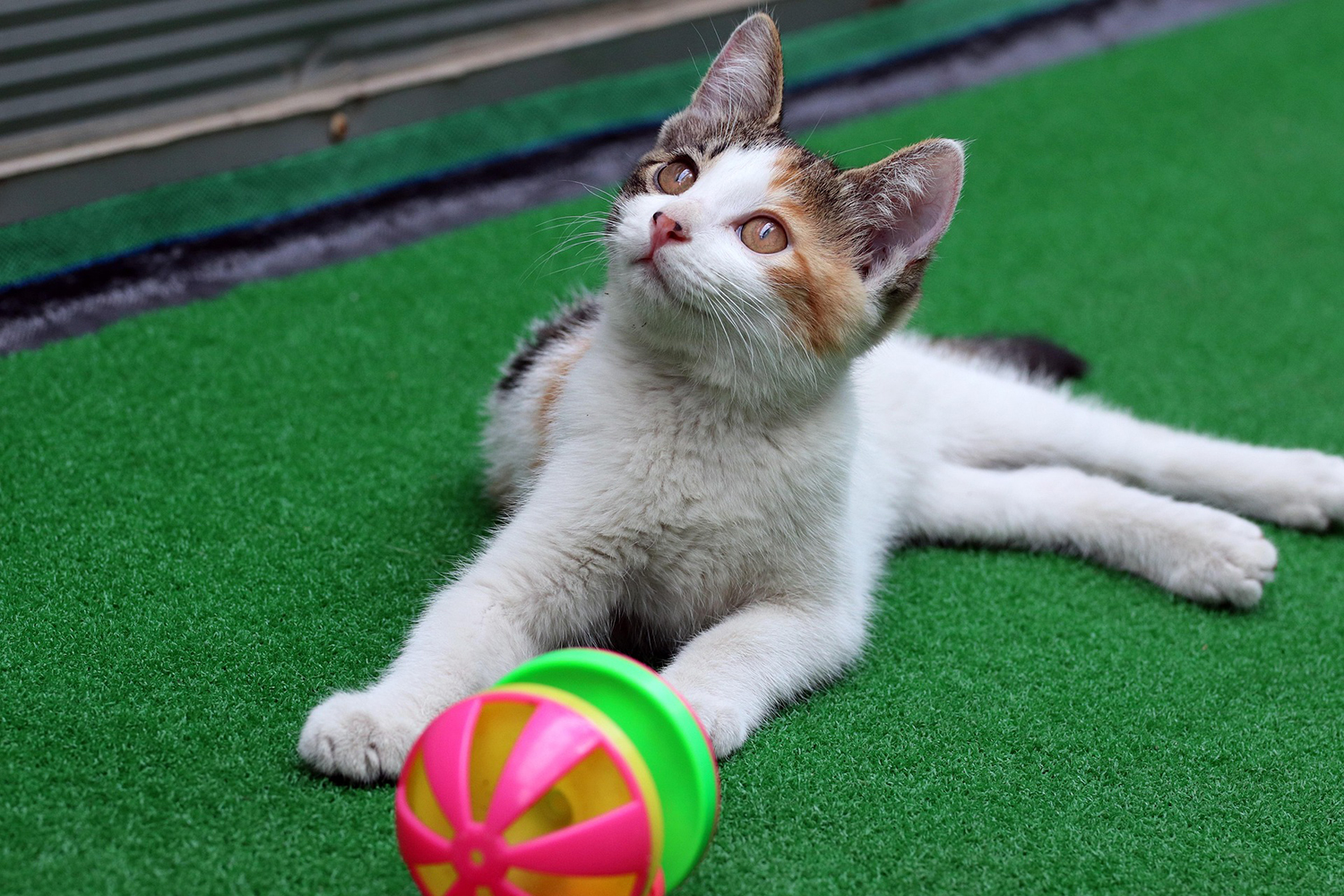
The project PetPause was announced by Oliver Bendel at the FHNW School of Business and is set to begin in February 2026. It introduces a pet-controlled pause system for devices and machines used in everyday domestic environments. Pets such as dogs and cats regularly interact with automated systems including feeding machines, toys, robots, and smart home devices, yet they usually have no way to influence when these machines operate. Continuous activity, noise, or movement can cause stress, anxiety, or even injury. PetPause enables animals to actively pause machines through a simple, physically accessible interface such as a button, floor sensor, or capacitive switch. When triggered, the machine automatically enters a predefined pause or rest mode, for example by stopping movement or silencing sounds. The system avoids cameras, animal detection, and data collection, relying solely on deliberate physical interaction. By combining technical simplicity with ethical consideration, PetPause demonstrates how machines can respect animal well-being without monitoring or surveillance.
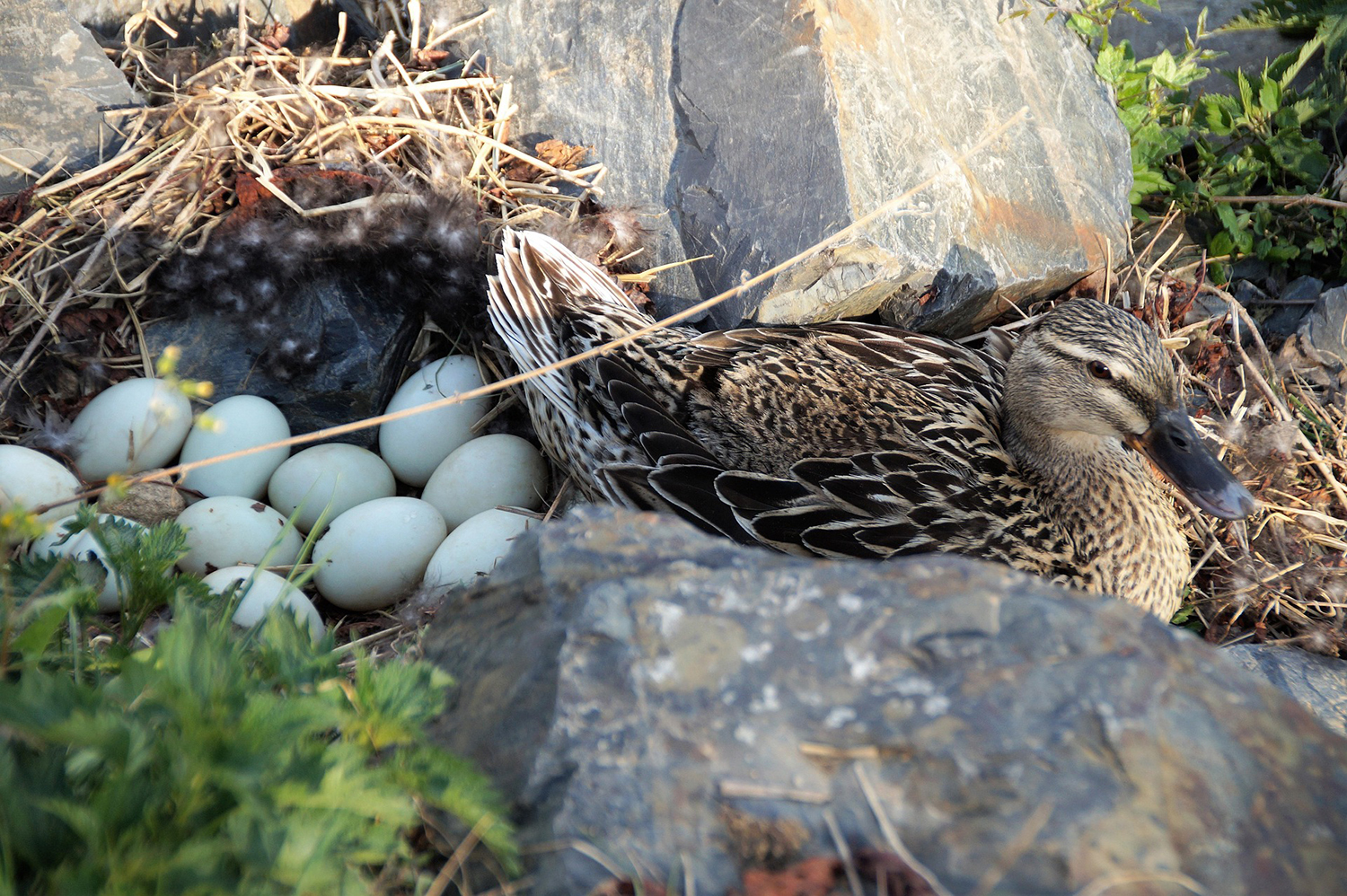
The project NestGuard Lite was announced by Oliver Bendel at the FHNW School of Business and is set to begin in February or September 2026. NestGuard Lite is a lightweight protection system designed to safeguard nesting and breeding sites of wild animals such as ground-nesting birds, small mammals, and amphibians. These animals are often endangered by lawn mowers, robotic mowers, agricultural machines, drones, and construction or maintenance vehicles, which can unintentionally destroy nests or cause serious injuries. Unlike existing approaches that rely on cameras, animal detection, or manual markings, NestGuard Lite avoids surveillance and classification altogether. Instead, the environment provides the signal: passive markers or local radio zones inform machines that they are approaching a sensitive area. Upon detection, a machine automatically switches into a predefined protection mode, for example by slowing down, disabling tools, rerouting, or stopping. The system does not identify animals or assess their condition; it merely signals the need for caution. The project focuses on technical simplicity, robustness, and ethical soundness. It will result in a functional prototype that is tested in a controlled setting, demonstrating how machines can protect wildlife without monitoring or tracking animals.
Fig.: A system designed to safeguard nesting and breeding sites
Prof. Dr. Oliver Bendel will host the next ACI Conference, bringing the event to continental Europe for the first time as it convenes on the FHNW campus in Brugg-Windisch, Switzerland, from December 2-5, 2026. The conference website is already online at www.aciconf.org, where the most important information is available; individual deadlines may still change. In the meantime, the website has been updated and expanded. It now includes visual elements that reference both the animal world of Switzerland and the thematic focus of the conference, strengthening its visual identity and contextual framing. Building on a tradition that has taken the community from Glasgow to North Carolina, Newcastle, Bloomington, Milton Keynes, Haifa, and Atlanta, this edition continues the conference’s role as a leading venue for advancing Animal-Computer Interaction. As the field grows, researchers and practitioners explore how technology shapes animals’ lives, welfare, cognition, and social dynamics while developing animal-centered systems and methods that embrace multispecies perspectives. The conference maintains its commitment to interdisciplinary collaboration across biology, technology, and cultural studies, supporting work that seeks to design ethically grounded, welfare-enhancing, and inclusive technological futures for all animals, humans included. ACI 2026 will also feature a Special Issue on Animal-Machine Interaction, a research field shaped in important ways by Oliver Bendel. The conference proceedings will be published in a volume of a renowned organization, ensuring wide visibility and long-term accessibility for the contributions presented.
Seit 20. Dezember 2025 ist das Buch „Tier-Maschine-Interaktion“ von Prof. Dr. Oliver Bendel bei Springer Nature Link verzeichnet. Laut Verlag erscheint es im März 2026. Am Anfang wird der Inhalt skizziert: „Dieses essential gibt eine kompakte Einführung in die Disziplin bzw. das Forschungs- und Anwendungsfeld der Tier-Maschine-Interaktion (TMI). Es zeigt, wie Tiere und Maschinen in unterschiedlichen Kontexten zusammentreffen und miteinander bestehen, welche Chancen und Risiken sich daraus ergeben und welche Perspektiven sich für Wissenschaft, Wirtschaft und Politik eröffnen. Ziel ist es, die Leser für die Potenziale und Herausforderungen der Tier-Maschine-Interaktion zu sensibilisieren, Orientierung im interdisziplinären Diskurs zu geben und Anregungen für Forschung, Entwicklung und Entscheidungsprozesse zu liefern.“ Es ist das erste Buch zu diesem Forschungsfeld. Es enthält zwei Abbildungen, drei Tabellen und mehrere Boxen mit Definitionen und Hintergrundinformationen.
Am 18. November 2025 hat Prof. Dr. Oliver Bendel bei Springer Gabler sein neues Manuskript abgegeben. Im Frühjahr 2026 erscheint das schmale Buch mit dem Titel „Tier-Maschine-Interaktion“. Am Anfang wird der Inhalt skizziert: „Dieses Essential gibt eine kompakte Einführung in die Disziplin bzw. das Forschungs- und Anwendungsfeld der Tier-Maschine-Interaktion (TMI). Es zeigt, wie Tiere und Maschinen in unterschiedlichen Kontexten zusammentreffen und miteinander bestehen, welche Chancen und Risiken sich daraus ergeben und welche Perspektiven sich für Wissenschaft, Wirtschaft und Politik eröffnen. Ziel ist es, die Leser für die Potenziale und Herausforderungen der Tier-Maschine-Interaktion zu sensibilisieren, Orientierung im interdisziplinären Diskurs zu geben und Anregungen für Forschung, Entwicklung und Entscheidungsprozesse zu liefern.“ Es ist das erste Buch zu diesem Thema. Es enthält zwei Abbildungen, drei Tabellen und mehrere Boxen mit Definitionen und Hintergrundinformationen.
Abb.: Oliver Bendel am Campus Brugg-Windisch (Foto: Jork Weismann)
„Just.Us + Animal Welfare“ is a lecture series organized by Department 10 Veterinary Medicine to promote animal welfare at Justus Liebig University Giessen. On November 12, 2025, Prof. Dr. Oliver Bendel gave a lecture on „Bao meets Pluto: Grundlagen und Beispiele der Tier-Maschine-Interaktion“ („Bao meets Pluto: Fundamentals and examples of animal-machine interaction“). Animal-machine interaction deals with the encounter and coexistence of animals and machines – from classic devices to vehicles, aircraft, and agricultural machinery to networked, autonomous robots and AI systems. The focus is on perception through sensors and senses, interaction and communication between animals and machines, and the question of how these encounters can be designed technically, organizationally, and ethically in such a way that risks for animals are reduced and potential for them and for humans is tapped. In his lecture, Oliver Bendel laid out the fundamentals of animal-machine interaction and described prototypes and projects. He also outlined what is possible and to be expected in this field of research in the coming years, for example in connection with robotic quadrupeds and bipeds. The online lecture was followed by 660 listeners. Further information is available at www.uni-giessen.de/de/fbz/zentren/icar3r/akademie/justus.
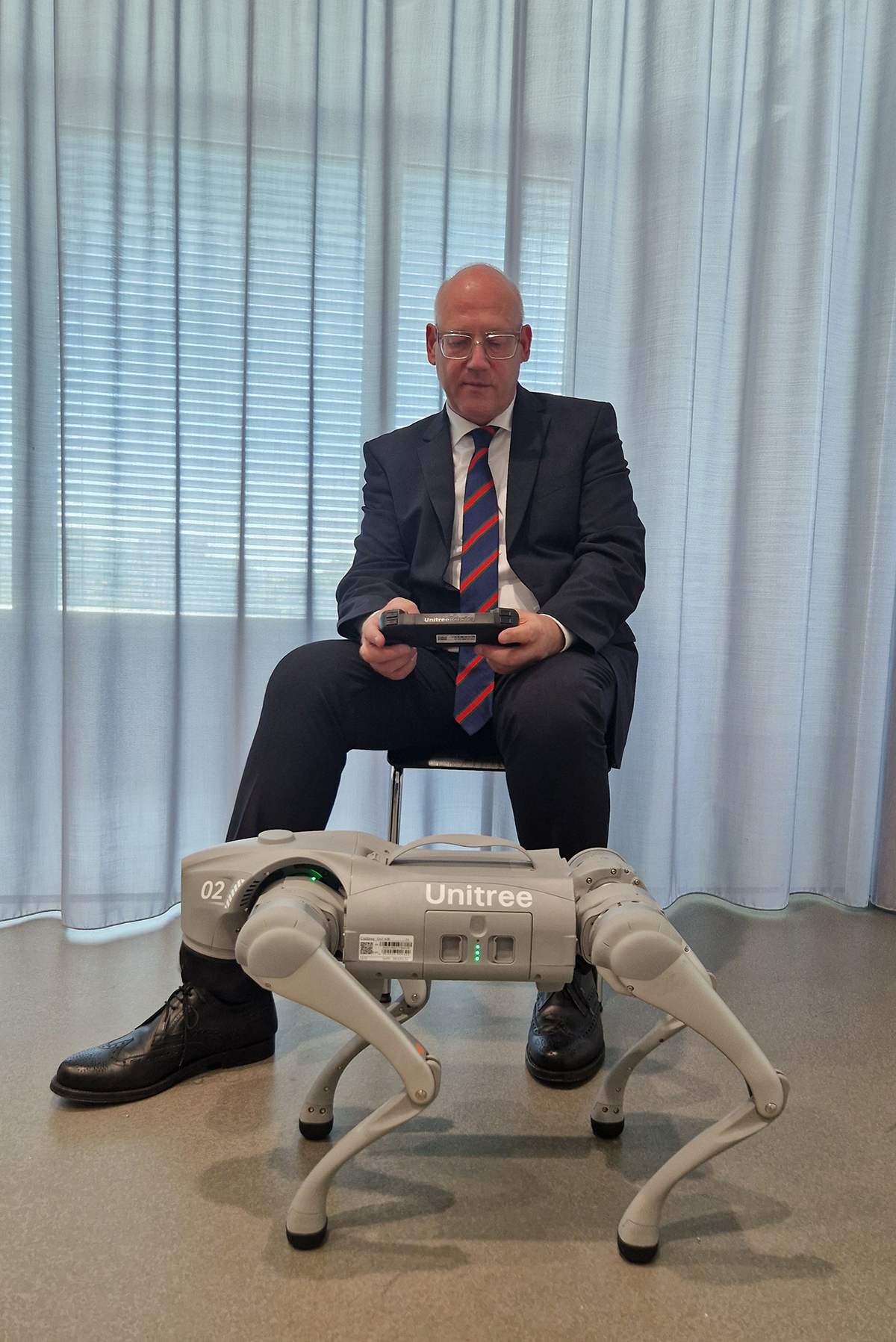
Fig.: Oliver Bendel with his Bao (Photo: Selina Rohr)
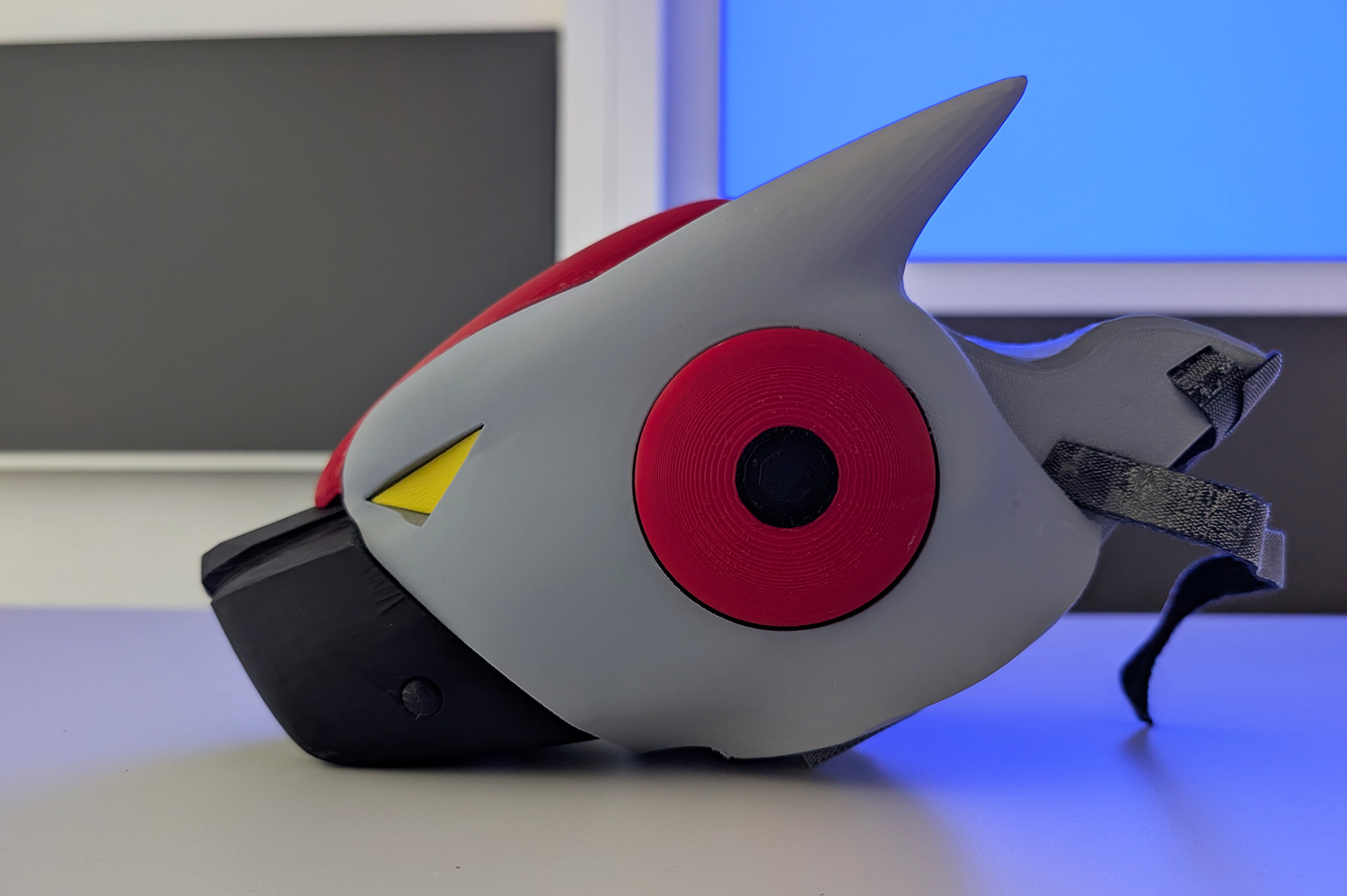
Das Projekt „The Robodog Project: Bao Meets Pluto“ untersuchte, wie Haushunde auf den vierbeinigen Roboter Unitree Go2 – von Projektinitiator Prof. Dr. Oliver Bendel Bao genannt – reagieren und wie ihre Halter solche Roboter in gemeinsam genutzten öffentlichen Räumen wahrnehmen. Das Projekt begann Ende März 2025 und wurde Anfang August 2025 abgeschlossen. Die Studie befasste sich mit drei Fragen: 1. Wie reagieren Hunde verhaltensmäßig auf einen vierbeinigen Roboter in sechs definierten Durchläufen, nämlich stationär, gehend und springend im Originalzustand sowie stationär, gehend und springend mit einem zusätzlichen 3D-gedruckten Hundekopf? 2. Welche Erwartungen und Bedenken haben die Halter? 3. Welche regulatorischen Rahmenbedingungen könnten eine sichere Integration unterstützen? Zwölf Hunde wurden in sechs strukturierten Interaktionsphasen beobachtet; ihr Verhalten wurde mithilfe von BORIS videokodiert. Vorgespräche mit acht Haltern sowie ein Experteninterview mit der Biologin und Hundetrainerin Dr. Sabrina Karl lieferten zusätzliche Erkenntnisse. Die Studie unter der Leitung von Selina Rohr ergab, dass die meisten Hunde vorsichtig, aber nicht aggressiv waren. Das Interesse nahm zu, sobald sich der Roboter bewegte, während visuelle Modifikationen kaum Wirkung zeigten. Ein 3D-gedruckter Hundekopf hingegen schien die Hunde im Standmodus zu faszinieren. Hergestellt und zur Verfügung gestellt wurde er von Norman Eskera. Häufig suchten die Tiere die Orientierung bei ihren Haltern, was die Bedeutung menschlicher Vermittlung unterstreicht. Die Halter zeigten sich vorsichtig aufgeschlossen, betonten jedoch Bedenken hinsichtlich Sicherheit, Unberechenbarkeit und Haftung. Die Ergebnisse sprechen für eine an Drohnen orientierte Regulierung beim Einsatz solcher Roboter im öffentlichen Raum.
Animal-machine interaction (AMI) is a discipline or field of work that deals with the interaction between animals and machines. This is how Prof. Dr. Oliver Bendel explains it in the Gabler Wirtschaftslexikon. It is primarily concerned with the design, evaluation, and implementation of complex machines and computer systems with which animals interact and which in turn interact and communicate with animals. There are close links to animal-computer interaction (ACI). Increasingly, the machine is a robot that is either remote-controlled or (partially) autonomous. In „The Robodog Project“ – also known as „Bao Meets Pluto“ – the encounters between robotic quadrupeds and small to medium-sized dogs are explored. The project collaborator is Selinar Rohr, who is writing her bachelor’s thesis in this context. The walking, running, and jumping Unitree Go2 from Oliver Bendel’s private Social Robots Lab is in its original state or is wearing a head made with a 3D printer provided by Norman Eskera. The project is being carried out at the FHNW School of Business and will end on August 12, 2025, after which the results will be presented to the community and, if possible, to the general public.
Fig.: The project is about encounters between robotic quadrupeds and dogs
The edited volume „Animals, Ethics, and Engineering: Intersections and Implications“ will be published by Jenny Stanford in August 2025. It can already be pre-ordered via online stores. These provide the following information: „‚Animals, Ethics, and Engineering: Intersections and Implications‘ is a seminal work that explores the intricate relationship between technology, ethics, and the welfare of nonhuman animals. Edited by Rosalyn W. Berne, this volume brings together leading scholars and practitioners to examine the ethical responsibilities inherent in technological progress and its impact on animal well-being.“ (Information Publisher) The authors include Clara Mancini, Fiona French, Abraham Gibson, Nic Carey, Kurt Reymers, and Oliver Bendel. Rosalyn W. Berne is the Anne Shirley Carter Olsson Professor of Applied Ethics and Chair of the Department of Engineering and Society, School of Engineering and Applied Sciences, University of Virginia, where she has been a faculty member since 1999 and co-directs the Online Ethics Center for Engineering and Science (OEC).